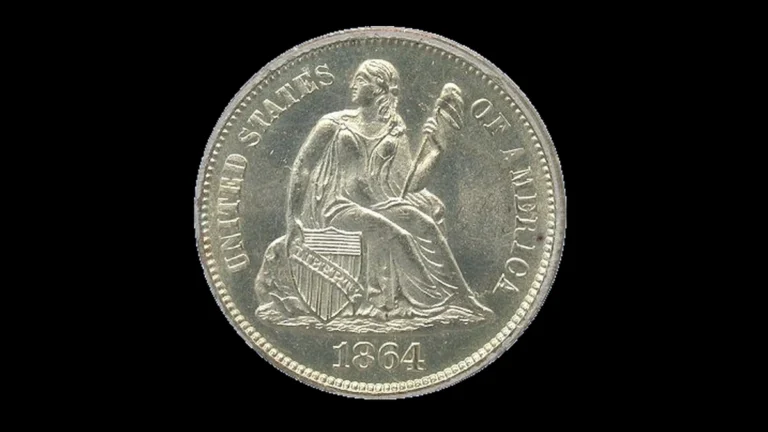
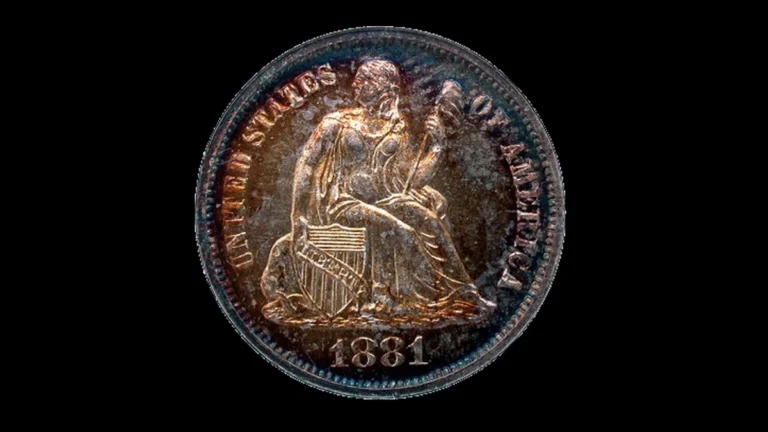
Rare 1845 Dime Errors (List & Pictures)
A rare 1845 Proof brought $71,300 in February 2008, but repeated date digits alone do not explain that price. This guide to 1845 Liberty Seated Dime errors separates ordinary coins, estimated at $30–$6,000, from rare Proofs at $7,000–$80,000.
Begin with the date fragments, then trace cracks and transferred design shapes. Several features can belong to the same coin without creating several complete prices.
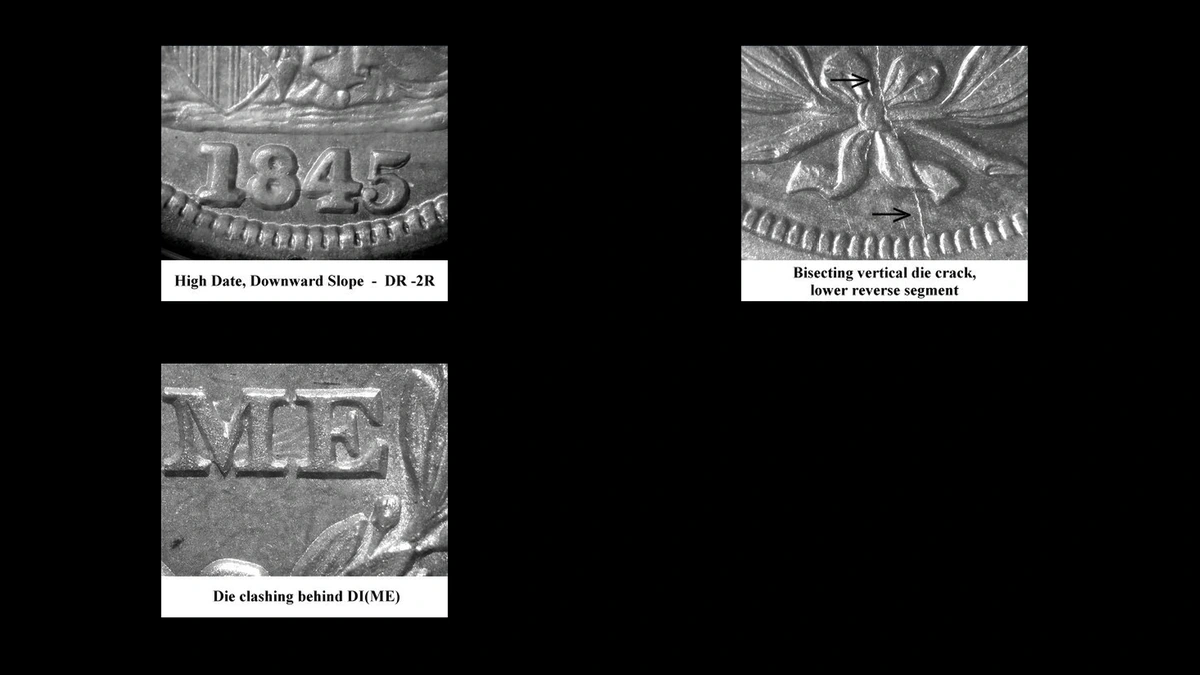
1. 1845 Dime Earlier Digit Pieces Remain beside 4 and 5: Repunched Date Error
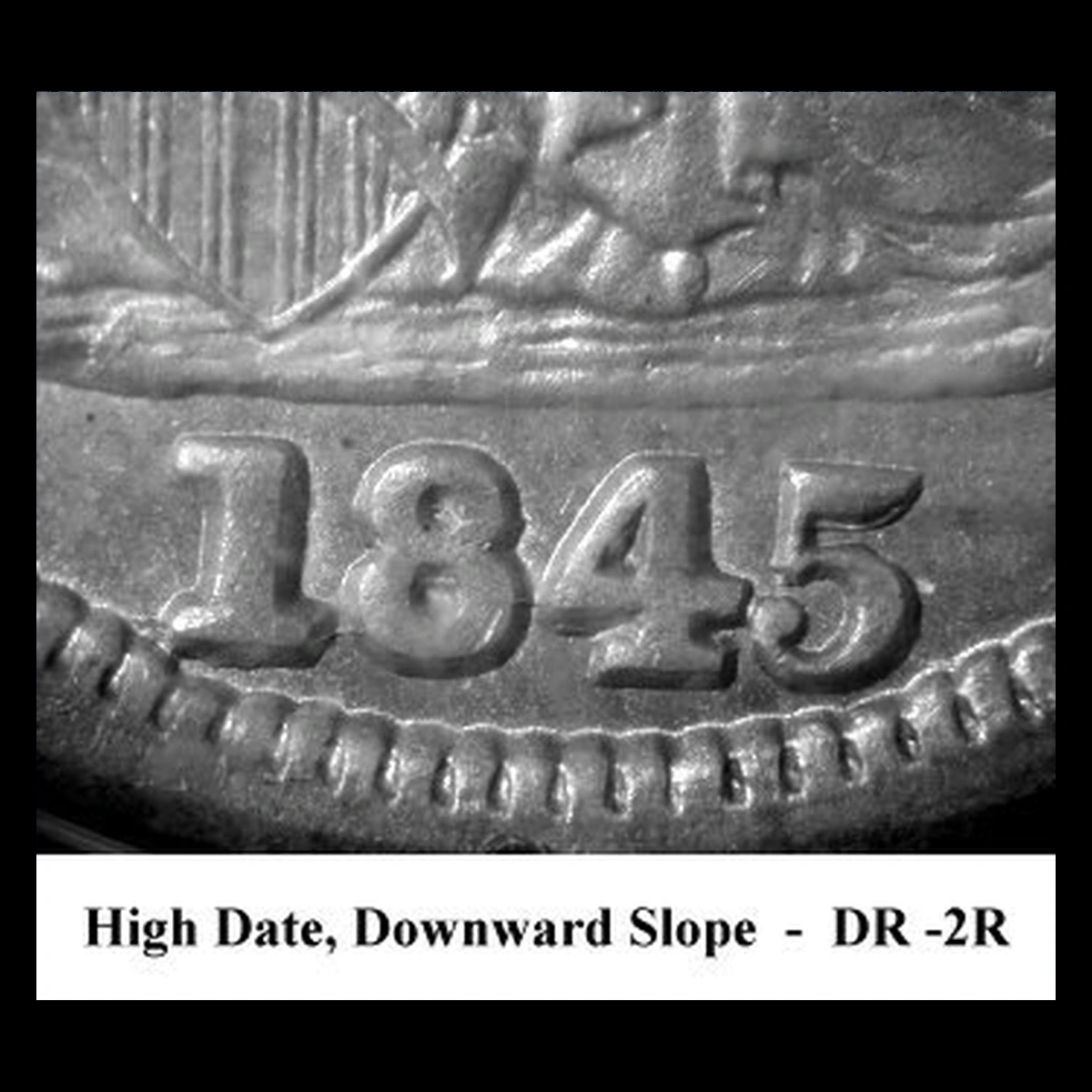
On one recorded ordinary variety, 5 preserves parts of three outlines and 4 is also repunched. Workers entered the date punch into the die more than once, leaving pieces of earlier positions.
The coin copied those remnants in a single design impression. Three surviving date outlines do not require three separate strikes to the coin.
Other varieties have fragments around additional digits. A rare collector Proof also has repunching at 4 and 5, but belongs to a different production and price category.
How to Identify
Magnify the edges and openings of 4 and 5, looking for raised pieces that fit those digit shapes in an earlier position. If extra detail also appears around 1 and 8, use the reference for that particular pattern.
A nick or flat shelf beside a numeral does not establish repunching. Match the complete date instead of combining fragments from several different examples.
Identify Proof manufacture through the complete coin and suitable records. Polishing an ordinary dime can make it shiny without giving it a genuine Proof finish.
What It’s Worth
$40–$6,000 is an estimated range for ordinary repunched-date examples. An F-107 in MS66 sold for $3,055 in October 2015.
Rare Proofs have a separate whole-coin estimate of $7,000–$80,000. PCGS records results of $71,300 in February 2008 and $30,550 in May 2015 for two Proof examples.
The high figures reflect rare collector coinage and preservation. They are not extra repunching premiums to add to an ordinary dime.
2. 1845 Dime Raised Lines Reach Letters or the Rim: Die Cracks and Cud Error
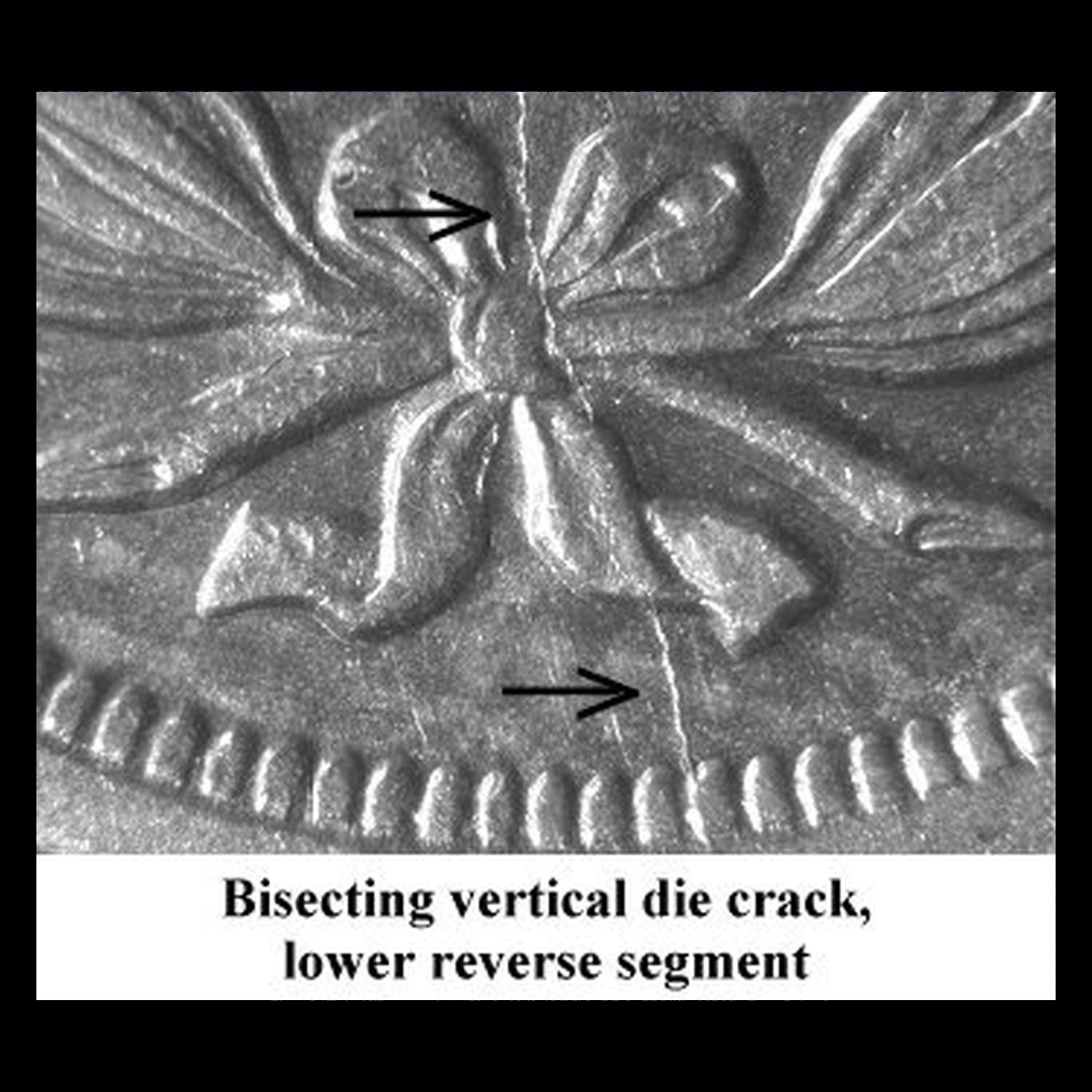
Reverse cracks can pass through STATES or UNITED, with different routes on different tools. Silver entered the narrow die openings and reproduced them as raised lines.
If an edge piece breaks away, metal can instead form a larger rim-connected patch called a cud. F-107a has this break at twelve o’clock on the reverse, paired with a cracked, repunched front date.
How to Identify
Compare the whole reverse with one example in the 1845 variety gallery at a time. Trace the raised route through the correct letters without merging separate varieties’ lines.
For F-107a, follow the upper patch all the way to the rim and check the missing border detail. Later squeezing, added metal, or a scratch needs a different explanation.
A normal coin began near 2.67 grams and 17.90 mm, with grooves around the edge. Allow for wear when measuring, and inspect the edge for filing or pressure damage.
What It’s Worth
$30–$6,000 is an estimated whole-coin range from worn examples with small cracks to well-preserved coins with obvious breaks. Tiny lines usually contribute much less interest than a clear substantial cud.
The F-107 MS66 at $3,055 is a condition comparison. Its sale did not identify the later F-107a rim-cud stage, so it should not be presented as that stage’s recorded sale.
3. 1845 Dime Faint Pieces of the Other Design Appear: Die Clash Error
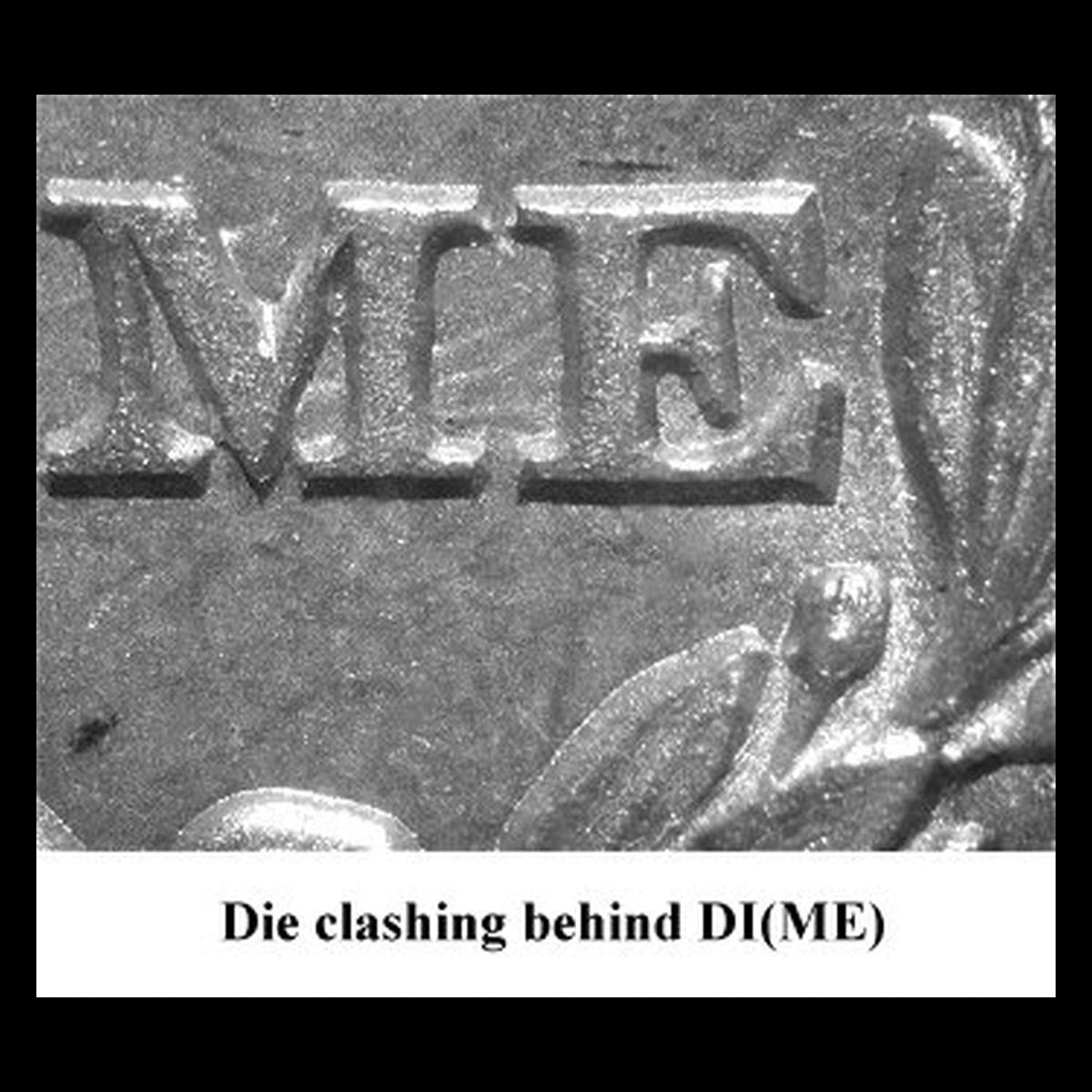
F-108 has clash traces on both faces as well as a repunched date and a crack through the date. The clash happened when the dies met without a blank and marked one another.
Later coins received fragments of those transferred shapes. The crack records a separate split in the tool rather than the same collision effect.
How to Identify
Compare full views of both faces and look for a recognizable fragment of the opposite design. Its outline and location should fit the reference rather than simply look like an extra line.
The date crack can support the F-108 die match, but does not turn every adjacent mark into a clash. Separate normal design, cuts, and raised ridges before interpreting the transferred shape.
What It’s Worth
$30–$2,500 is an estimated range for complete worn through attractive unworn examples with matching clashes. Clear marks can add interest without dominating the entire price.
An ordinary NGC MS65 1845 dime sold for $1,680 in August 2025. That is an underlying date-and-condition comparison, not a specifically identified F-108 clash result.
Cleaning can reduce appeal more than a faint clash adds. Judge the whole surface rather than pricing each trace separately.
Conclusion
Use the repeated date to choose the right variety, then distinguish raised cracks from traces of the opposite design. Keep separate die stages separate, especially the later F-107a rim break.
Ordinary coins and rare Proofs need different price comparisons. A shared date feature does not make them interchangeable, and several features on one dime still belong to one complete coin’s value.