Rare 1847 Dime Errors (List & Pictures)
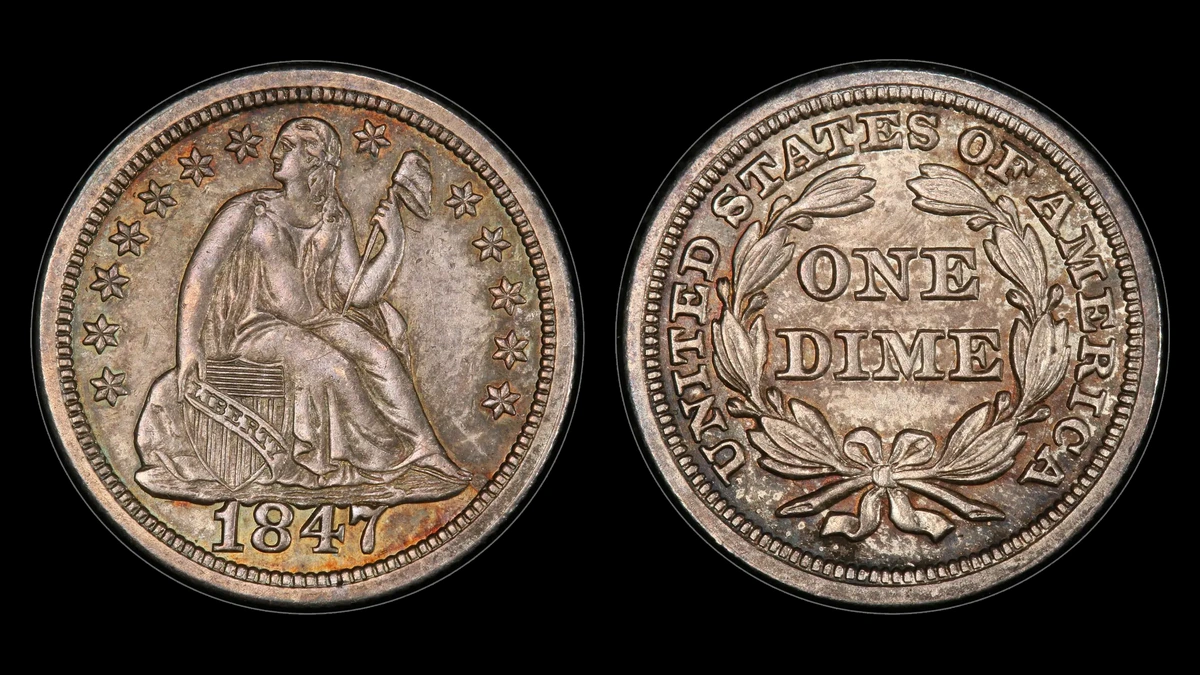
An 1847 F-101 dime graded XF45 sold for $271 in January 2022. The 1847 dime errors below carry estimated whole-coin values of $75–$1,000 in circulated condition.
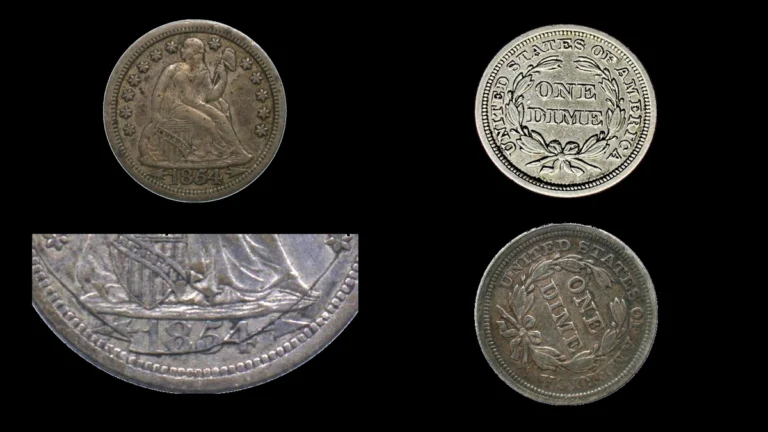
Look beside the final date digit, then follow the reverse bow and wreath. This Philadelphia issue has no mintmark, with a normal weight of 2.67 grams, diameter of 17.9 millimeters, and reeded edge.
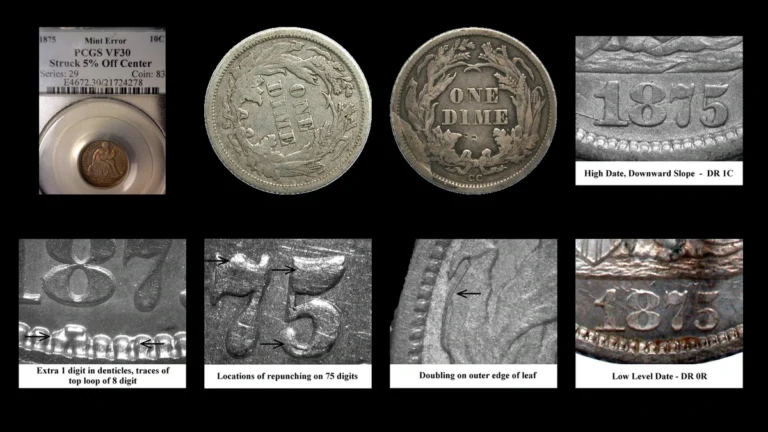
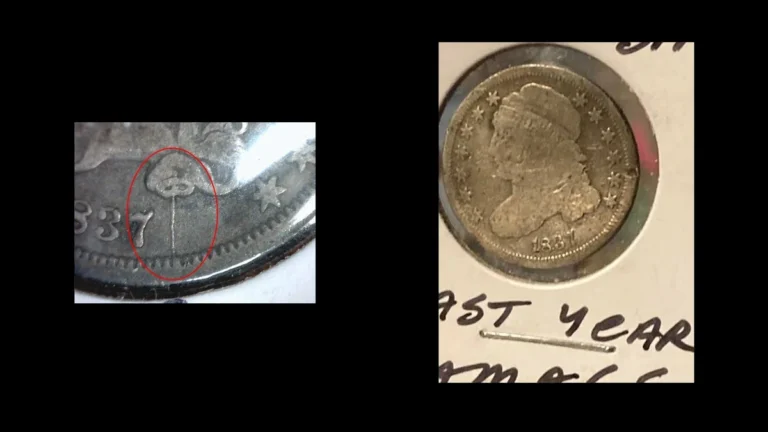
1847 Dime A raised shape below the date: die defect beside the 7 Error
A small projection appears just left and below the 7, near the little teeth around the border. The shape has been described as a misplaced 7, but specialist listings also use the broader term die defect.
The visible feature can be identified without claiming certainty about its origin. It belongs to the F-103 variety of Philadelphia circulation dimes.
How to Identify
Level the date and examine the narrow area between the 7 and the border. Compare the projection’s exact outline and position with an attributed F-103 example.
The ordinary border teeth form the surrounding reference points. A damaged tooth, dirt, or an unrelated bump should not be called a misplaced digit merely because it resembles part of a number.
Change the light to see how the raised shape joins the struck surface. Also inspect the nearby rim and edge for cuts or impacts that might have displaced metal.
A convincing match involves the whole small shape in the expected place. The auction label alone does not prove that an incorrectly placed numeral punch caused it.
What It’s Worth
Estimated whole-coin values are $100–$1,000 for circulated F-103 examples. Original surfaces and more remaining detail can support a higher price than a worn or problem coin.
A PCGS Genuine XF Details example sold for $168.75 in the GreatCollections archive. The Details designation indicates a condition problem in addition to the coin’s wear level.
That result is a comparison for one complete coin in problem condition. It neither sets a fixed price for every F-103 nor resolves the disputed explanation for the projection.
1847 Dime Lines crossing the bow and letters: reverse die cracks Error
The bow under ONE DIME already contains folds, so an extra line there can be easy to overlook. A reported crack crosses the knot and ribbons rather than simply following their intended contours.
The fuller route runs from the lower-right rim, near 5:30, toward the left stem and lower-left leaves. A separate line enters from the right through ME in AMERICA toward the wreath.
These features are raised because metal entered cracks in the die during striking. They record damaged tooling rather than scratches cut into the finished dime.
How to Identify
First learn the bow’s normal outline from a clear comparison coin. Then follow the suspected extra line beyond the folds to see whether it continues along the reported route.
Trace the ME line separately instead of assuming every mark belongs to one continuous crack. Its course through the letters and toward the wreath provides additional landmarks.
Use low-angle light to distinguish a ridge from a sunken scratch. Where a line approaches the edge, inspect for crushed rim metal or later cuts that could confuse the reading.
A variety attribution and a crack stage are not identical claims. The specific raised paths still need to be visible before a coin is described as matching this pattern.
What It’s Worth
Circulated examples with genuine reverse cracks have an estimated whole-coin range of $75–$700. Preservation and original surfaces matter more than counting how many lines are visible.
PCGS lists an F-101 graded XF45 at $271 in January 2022. That sale provides a variety-and-condition reference, but does not establish the exact crack pattern on every F-101.
The full auction price is therefore not a separate payment for the bow or lettering cracks. Compare similar wear and surface quality before deciding whether a particular crack stage adds collector interest.
Conclusion
The normal border teeth and bow folds are useful landmarks for recognizing these small extra features. Match the projection beside the 7 or trace the raised reverse paths before naming the variety.
The two supplied sales describe different whole coins, including one with a problem grade. Keep those condition differences in view, and leave the cause of the F-103 projection open when the evidence does not settle it.