Rare 1885 Dime Errors (List & Pictures)
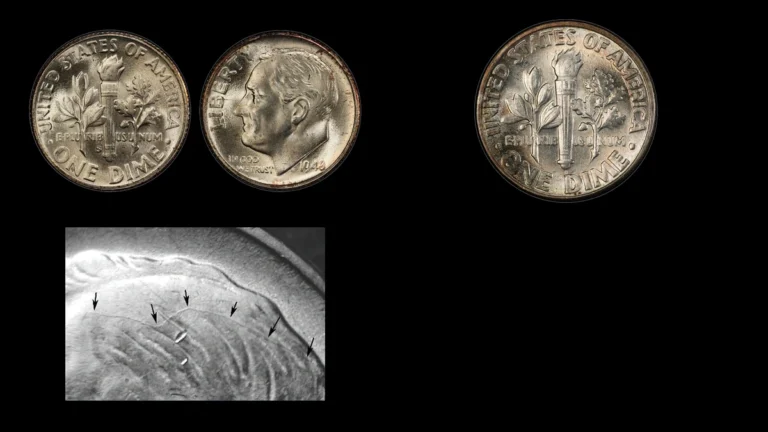
An ordinary 1885 Proof graded PCGS PR64 Cameo with CAC approval sold for $840 in April 2025. Estimated whole-coin values for 1885 dime errors range from $25 to $4,000.
Inspect the date and the border below it before turning to the reverse. Normal specifications are 2.50 grams, 17.9 millimeters, and 90% silver; these Philadelphia coins have no mintmark.
| Location | Feature | Estimated whole-coin range |
|---|---|---|
| Beside normal date digits | Repunched date | $40–$1,500 circulation; $400–$4,000 Proof |
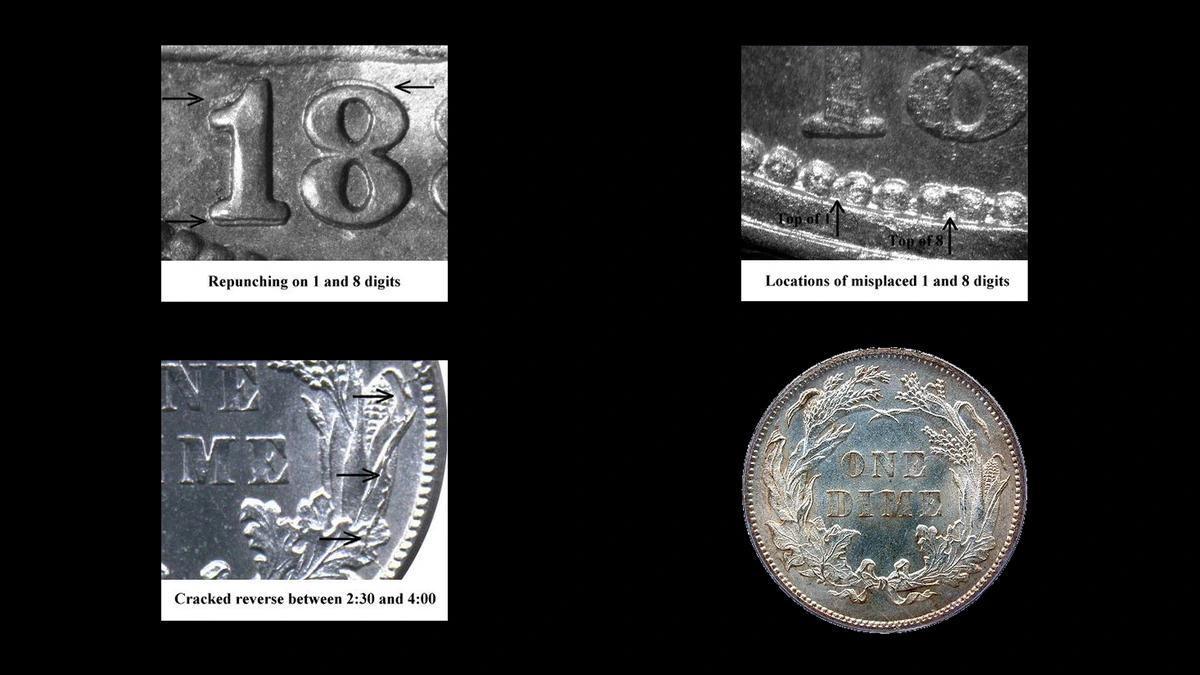
| Border below date | Misplaced digits | $50–$1,500 |
| Right side of reverse | Die cracks | $25–$1,200 |
| Open areas near the design | Die clash | $25–$1,200 |
1. 1885 Dime Extra outlines beside the normal numbers: repunched date Error
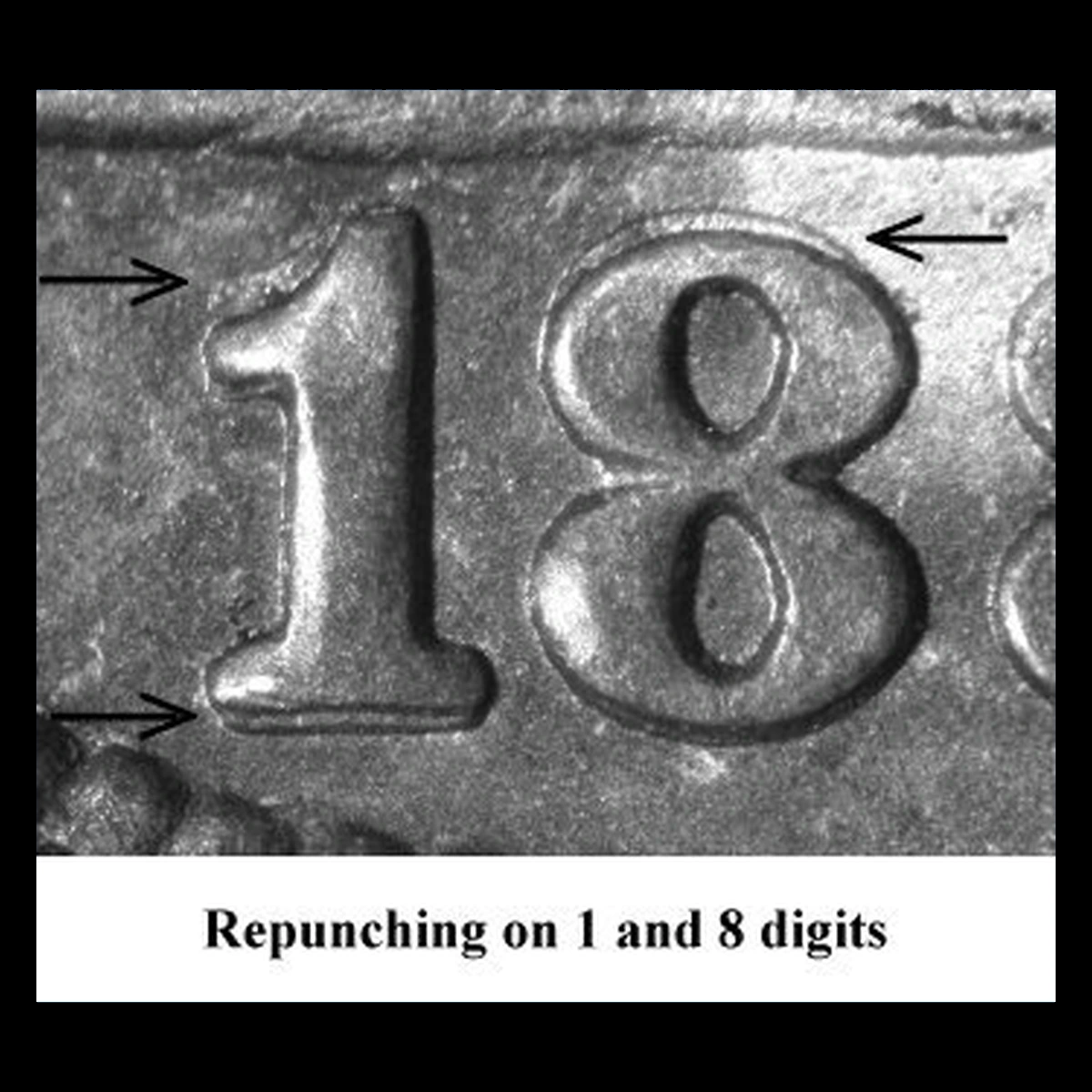
A repeated date entry can leave earlier numeral outlines close to the final date. The F-101 Proof has a repeated 1, also seen after the die was used for F-101a circulation coins.
Other circulation varieties have repeated 18 or 5 patterns. These belong to separate examples, so finding one does not mean that every digit should have a second outline.
How to Identify
Compare the complete date with the relevant variety image before concentrating on a particular stroke. Look for a surviving numeral contour in the expected location, not merely a thick edge.
A scratch or flat shelf differs from an earlier raised number shape. Changing the light can help separate a reflection from a repeated outline.
Determine the finish from the whole coin, since F-101-related tools served both Proof and circulation production. One shiny area or a matching repeated 1 does not establish that the coin is a Proof.
What It’s Worth
Estimated whole-coin values are $40–$1,500 for circulation coins through lower-grade unworn condition, and $400–$4,000 for collectible Proofs. These are distinct comparison groups.
An ordinary PCGS PR64 Cameo CAC sold for $840 in April 2025. The lot was not identified as a specific repunched-date variety.
Cameo describes contrast between the design and background. That Proof result provides condition context without measuring an added value for one of these date patterns.
2. 1885 Dime Number fragments among the border teeth: misplaced date Error
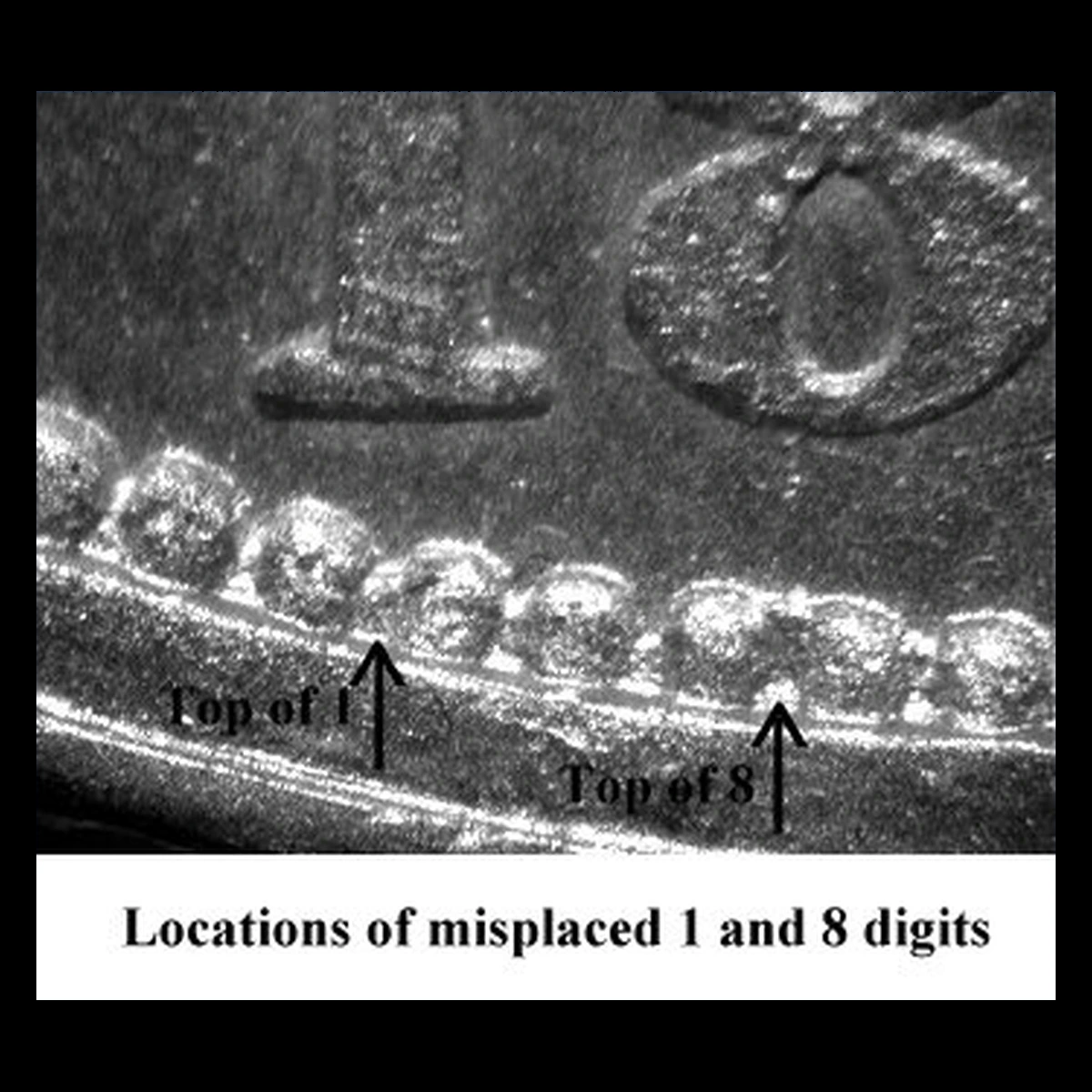
Look lower than the normal date for fragments that interrupt the small border teeth. F-103 has misplaced 18 remnants, while F-104 has a separate misplaced 8.
The punch entered the die in the wrong position before the intended date was placed normally. Coins struck from the tool can retain evidence of both placements.
How to Identify
Keep the date visible while comparing the lower border with the 1885 variety photographs. The exact relationship between a fragment and the normal digits helps establish the match.
For F-103, compare the 1 and 8 together; for F-104, compare the single 8 without inventing a nearby 1. Both are Philadelphia circulation varieties.
Inspect the adjacent rim for a flattened tooth or pushed-up metal from an impact. Such damage can resemble a curve without preserving the shape of an earlier punched digit.
What It’s Worth
The estimated whole-coin range is $50–$1,500 for worn through attractive lower-grade unworn examples. Legible fragments and original surfaces improve the basis for comparison.
An 1859 F-103 misplaced-date dime graded VF30 sold for $118.12 at GreatCollections in October 2024. That is a different-year circulated coin with a similar kind of feature, not an 1885 sale.
The shared F-103 label does not make varieties of different years interchangeable. Rarity, preservation, and the specific misplaced-digit pattern still require their own assessment.
3. 1885 Dime Raised lines on the right reverse: die cracks Error
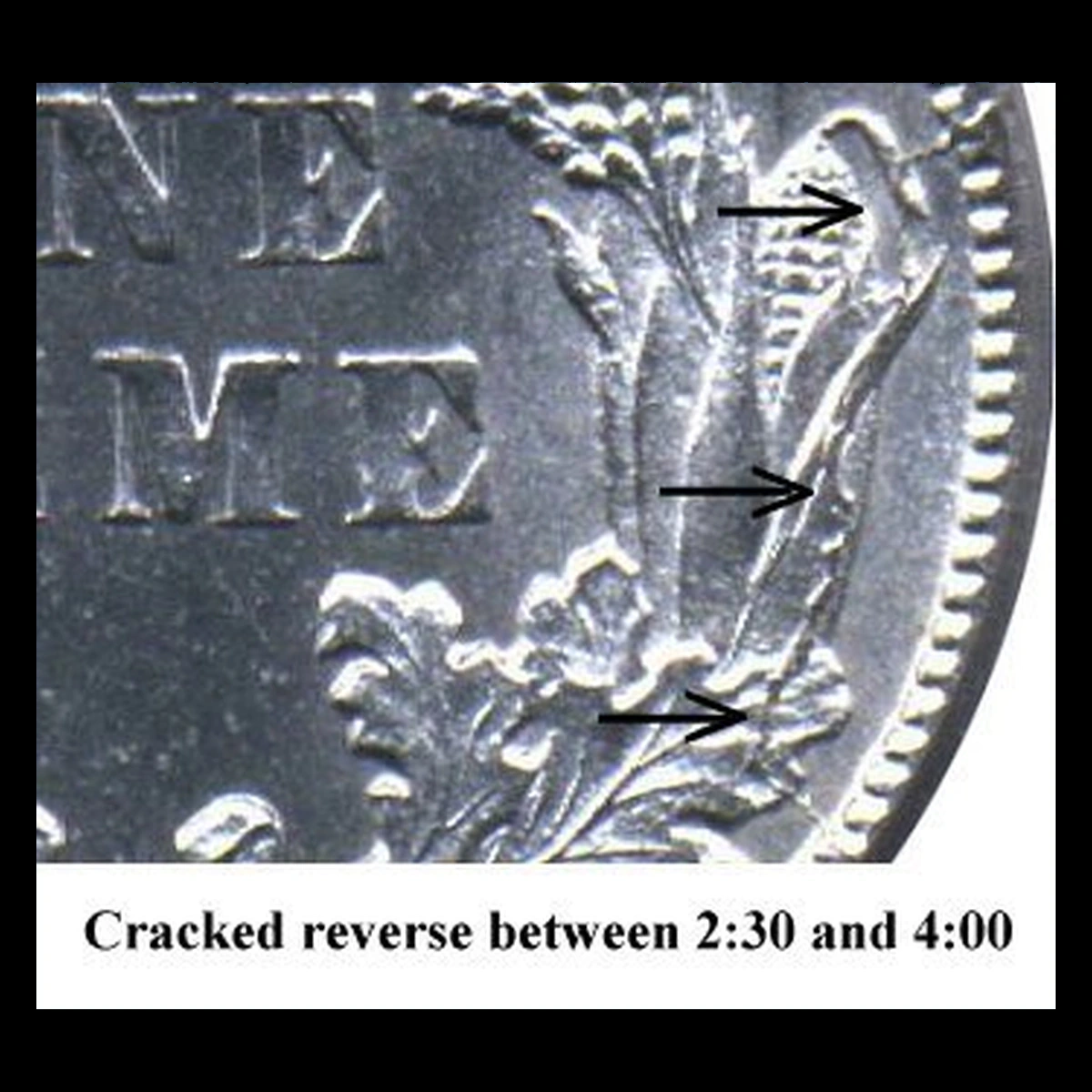
F-102a shows cracks between roughly 2:30 and four o’clock on the reverse, along with front-side cracks. The earlier F-102 reverse is uncracked.
A crack in the die fills with metal during striking and produces a raised ridge on the coin. Another reported variety has cracks on both faces with its own pattern.
How to Identify
Trace the right-side lines with low-angle light, checking their routes through the nearby design. A scratch in the same general area is not a match unless the feature has the expected raised form.
Compare the front date position and accompanying cracks as well. Naming the earlier F-102 variety does not prove that its reverse has developed the F-102a lines.
Keep other two-sided crack patterns separate. Nearby scratches or unrelated die lines should not be joined into the documented route.
What It’s Worth
Worn through lower-grade unworn coins with identifiable cracks have an estimated whole-coin range of $25–$1,200. Preservation and original surfaces remain important even when the lines are clear.
PCGS lists an F-102 graded MS63 at $469 from an eBay sale in November 2022. This is the earlier variety, not a documented sale of the cracked F-102a reverse.
Use it as general unworn-coin context rather than an isolated price for each ridge. A later crack stage needs its own matching example for a more precise comparison.
4. 1885 Dime Unwanted shapes from the other face: clashed dies Error
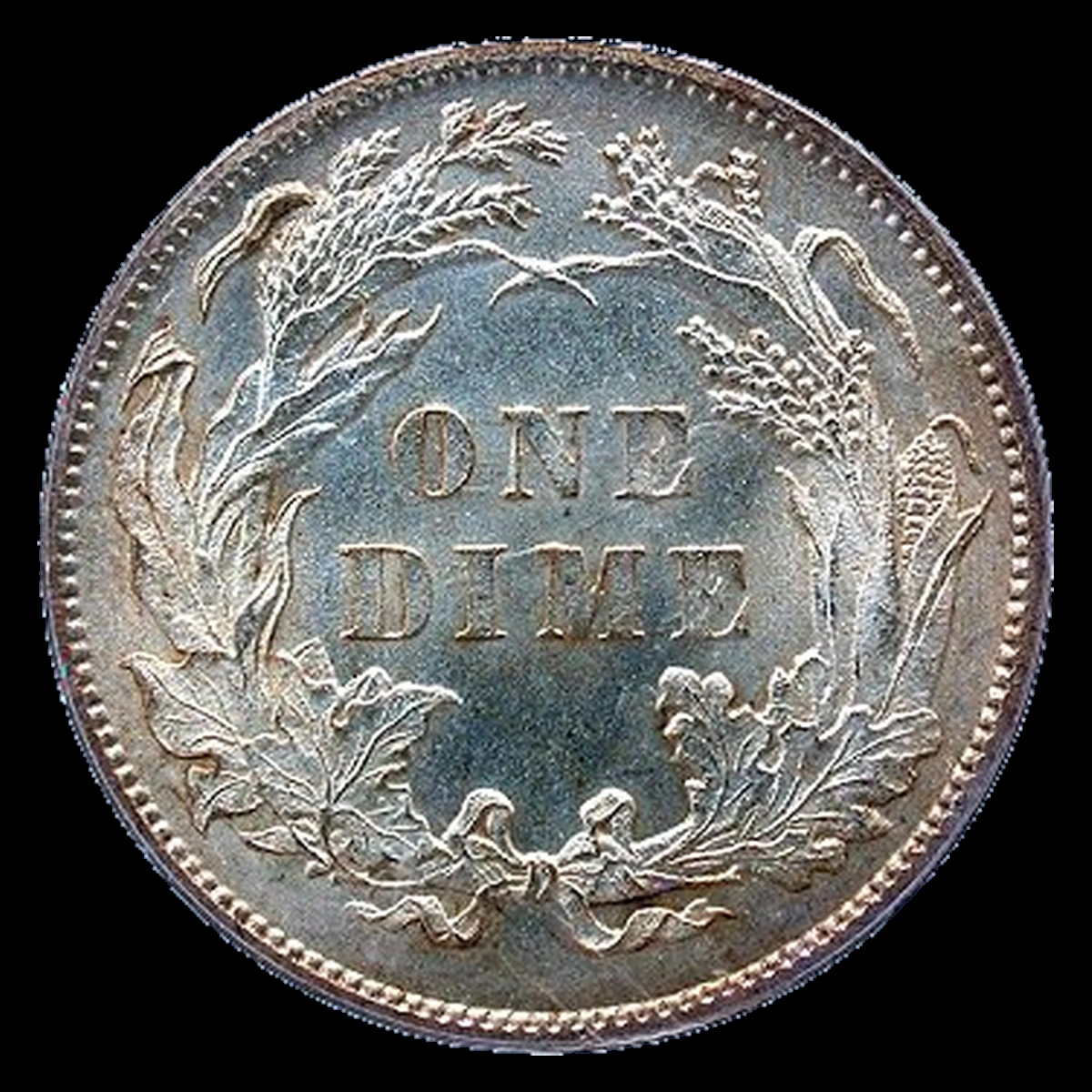
Clash marks are fragments of the opposing design that appear where they do not belong. They can form after the two dies strike each other without a blank between them.
F-106 has light reverse clashing, while F-111 has marks on both faces. Those descriptions refer to distinct varieties and do not establish one combined pattern.
How to Identify
Compare both normal designs and look for an extra contour that can be connected to the opposite face. Begin on the reverse for F-106, and inspect both faces for F-111.
Fine polishing lines, spreading lines, and scratches can crowd a field without tracing another design. Their number or darkness does not prove a clash.
Match the specific variety photograph under changing light. A recognizable transferred shape is stronger evidence than an unexplained line by itself.
What It’s Worth
The estimated whole-coin range is $25–$1,200 for worn through lower-grade unworn circulation examples. Clear clashes can add interest, but damaged surfaces may outweigh that appeal.
The $469 MS63 F-102 sale belongs to a different variety and is not a sale of either clash pattern. It provides a condition reference only, rather than a guaranteed price for a faintly clashed dime.
Conclusion
The feature’s location narrows the search: repeated outlines sit beside the date, misplaced fragments sit in the border, and reverse marks need either a crack route or a connection to the opposite design. Match the specific pattern rather than accumulating unrelated clues.
Proof and circulation finishes remain separate price groups. The supplied sales offer context, but none establishes a fixed premium for every 1885 variety described here.