Rare 1911 Dime Errors (List & Pictures)
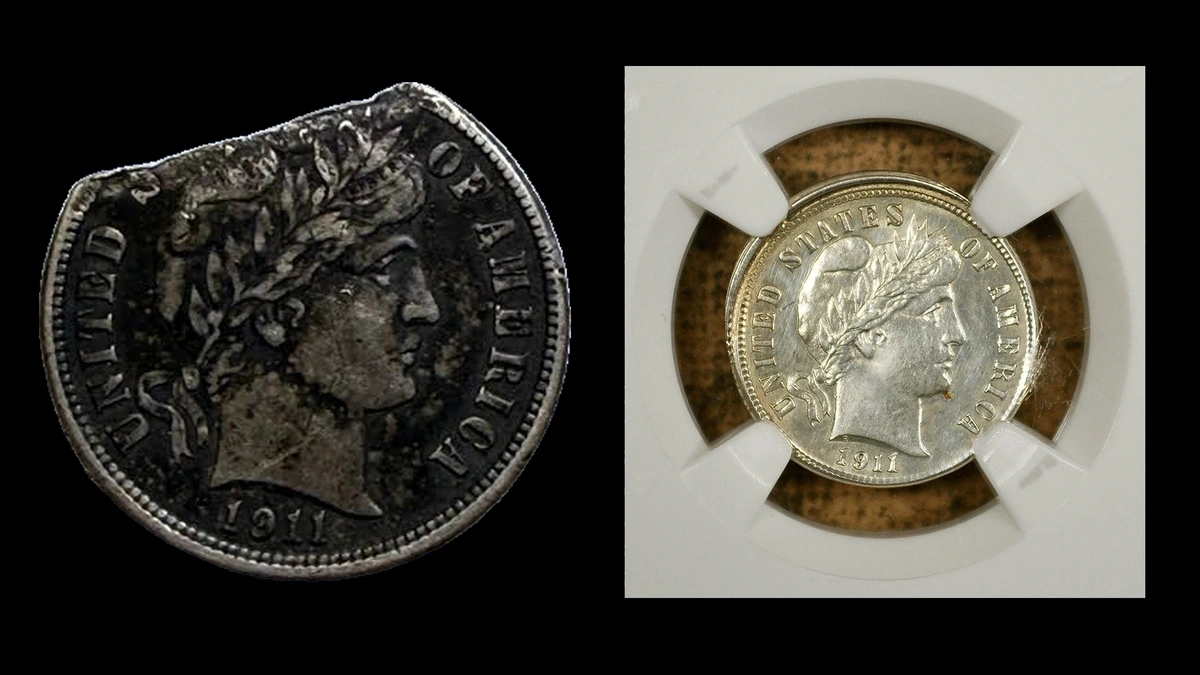
A 10% off-center Philadelphia example reportedly brought $360 in February 2025, but some 1911 dime errors are much smaller than a displaced design. The five reported categories below have estimated values of $25–$1,500.
Begin with the mintmark and front design, then inspect the edge closely enough to separate a tiny clip, a collar step, and an off-center strike.
| Visible clue | Category | Estimated range |
|---|---|---|
| Extra D or S outline | Repunched mintmark | $25–$400 |
| Consistent repeated front contour | Reported doubled die | $100–$600 |
| Small missing rim sliver | Rim clip | $25–$250 |
| Two edge levels | Partial collar | $150–$700 |
| Untouched margin and shifted designs | Off-center strike | $60–$1,500 |
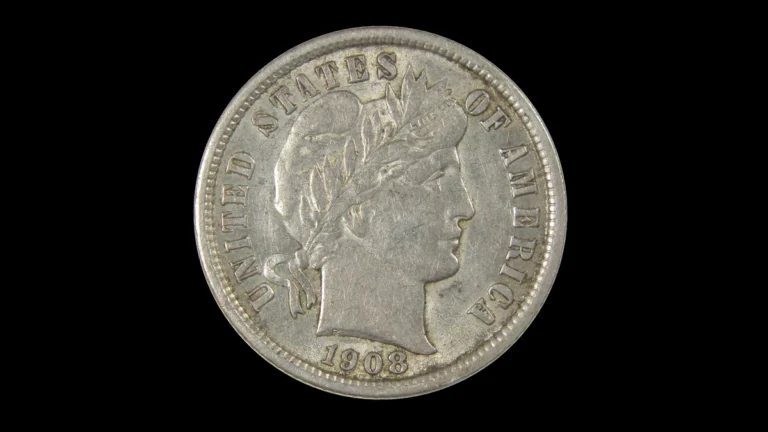
Normal Barber dimes start at about 2.50 grams and 17.9 millimeters, with grooved edges. Measurements can help with a loose coin, but there is no need to remove a certified example from its holder for these basic checks.
1. 1911 Dime An Earlier Curve above D: Repunched Mintmark Error
Some Denver examples preserve part of an earlier D above the main letter below the reverse bow. The mintmark punch entered the die more than once, with the final entry positioned lower.
A San Francisco S/S is also reported. Its extra letter requires a separate match rather than the assumption that it follows the Denver pattern.
How to Identify
Compare the full D with Wexler’s Barber dime photographs, looking for the earlier rounded curve in the correct position. A thick top or a lump left by an impact is less meaningful than a recognizable letter fragment.
For an S-mint coin, use an S/S reference and follow its own extra outline. Mintmark repunching occurred in the die and does not require a second strike on the finished coin.
What It’s Worth
Estimated values are $25–$400, with a year guide suggesting $25–$100 for circulated examples. An 1899-O repunched mintmark with slight wear and a condition problem sold for $115 in May 2023, a different-year comparison.
2. 1911 Dime A Repeated Front Contour: Reported Doubled Die Obverse Error
The annual guide lists a doubled-die obverse without naming a confirmed mint or an exact letter or portrait feature. A genuine doubled die would repeat an extra design contour already present in the striking tool.
How to Identify
Examine rounded separation or small splits under several lighting angles, checking that the feature stays fixed as reflections move. A flat shelf that reduces the main design can have a different cause during striking.
Because the supplied report lacks a mapped diagnostic, do not borrow one from another date and call it a 1911 match. A candidate needs a consistent extra shape and a suitable attribution before the broad report becomes a specific identification.
What It’s Worth
A clearly identified example is provisionally estimated at $100–$600; the guide’s circulated estimate is $100–$300. No documented auction sale accompanies this reported category.
Wear can conceal a small pattern, but a blurry edge does not justify the upper estimate. Flat strike-related shelves should not inherit a doubled-die premium.
3. 1911 Dime A Tiny Missing Piece at the Edge: Rim Clip Error
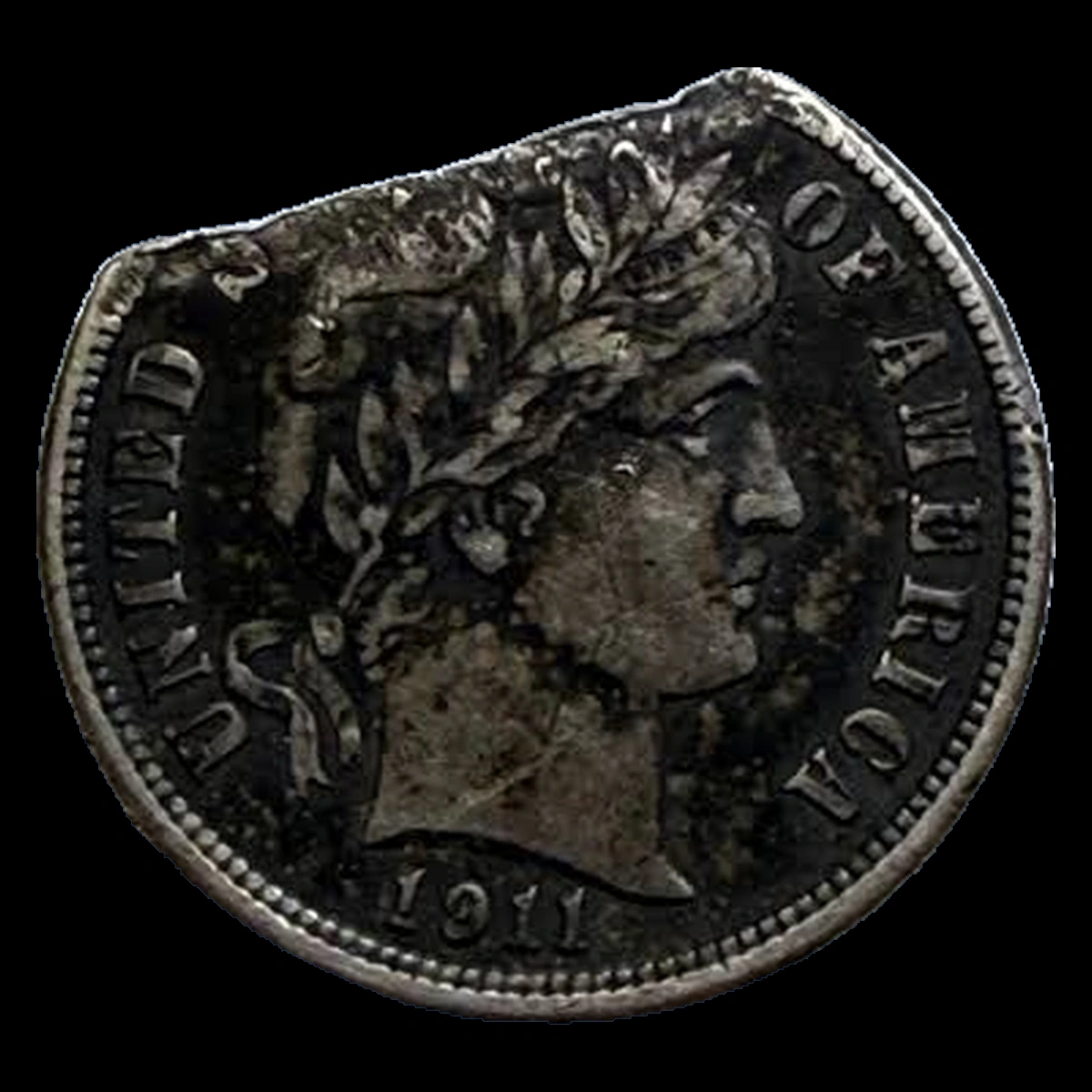
The Denver dime from the Rippere collection has a small rim clip rather than a large curved gap. The shortage existed in the blank before the design was struck.
It was listed for a November 2025 sale as ANACS AU50 Details. That description combines circulation wear with a separate condition problem and does not supply a completed sale price here.
How to Identify
Examine how the edge grooves, rim, and nearby design meet the missing sliver. Saw marks, filing, or fresh impact damage can explain a shortage that occurred after minting.
Opposite-rim weakness may support an original clip but is not mandatory. A tiny shortage can also remove too little weight to separate confidently from normal wear by weighing alone.
What It’s Worth
Circulated small rim clips are estimated at $25–$250. An unstruck, undated silver dime blank with a clip sold for $59 as PCGS MS60 in March 2025, which is a modest missing-metal comparison rather than a dated 1911 sale.
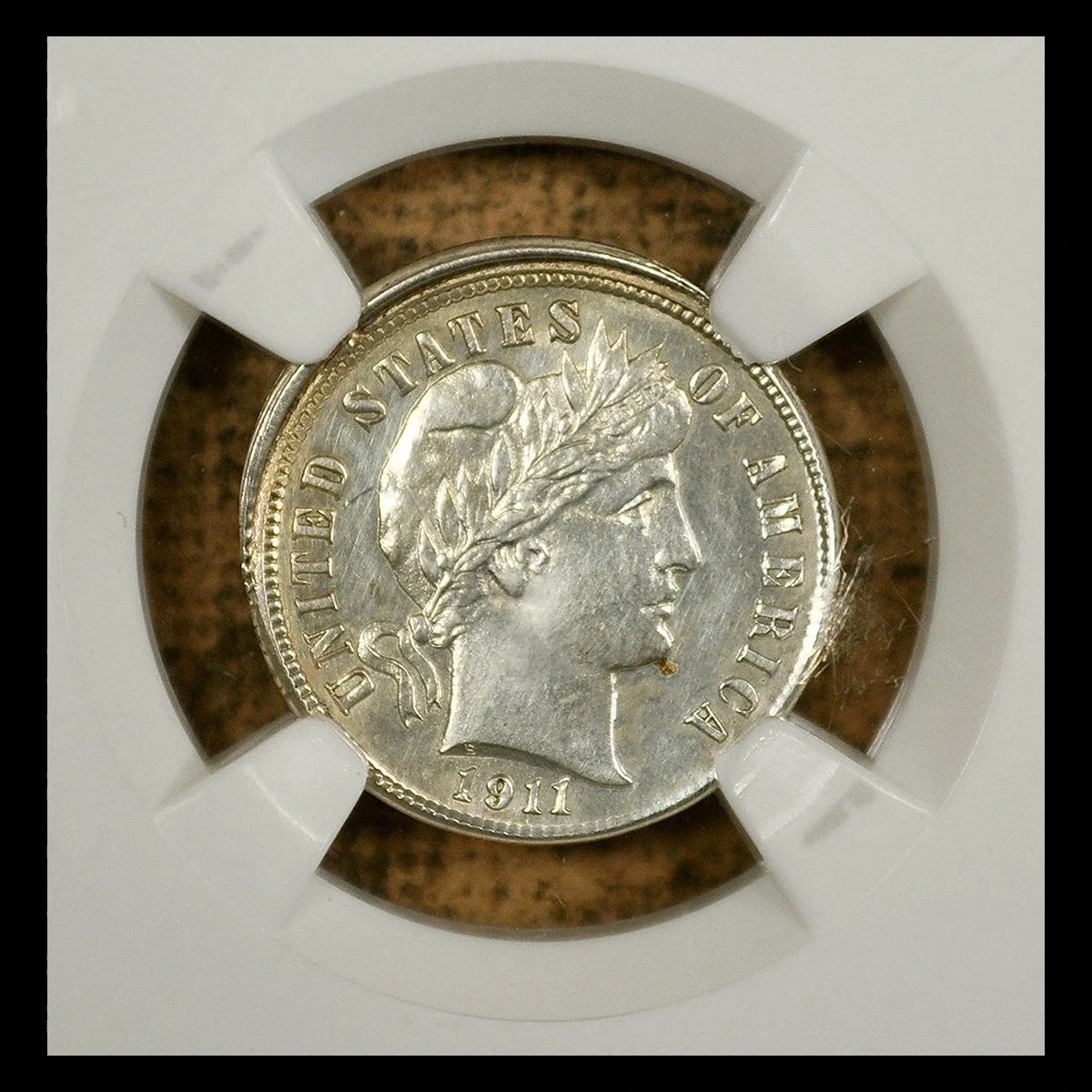
4. 1911 Dime A Step around the Side: Partial Collar Strike Error
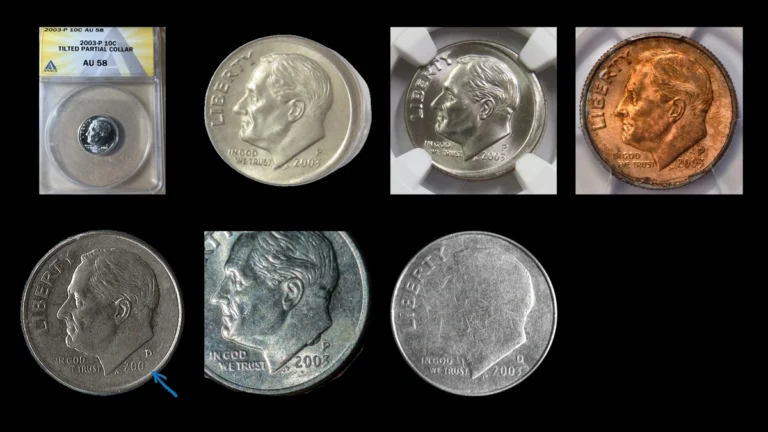
A partially seated blank can have one band contained by the collar while another spreads outward. The resulting two-level edge is sometimes called a railroad rim.
A dealer listed a San Francisco example graded NGC Uncirculated Details. The edge step describes the minting error; the Details designation records a separate surface or condition problem.
How to Identify
Use a direct side view and follow the narrower band beside the expanded portion. Note where the normal grooves survive, since a face-on photograph can hide the step entirely.
A localized dent or compressed ridge from later squeezing differs from two connected levels formed during striking. Document the full edge relationship rather than relying on one bulge.
What It’s Worth
Recognizable examples are estimated at $150–$700. The DJF Coins listing asks $289 with offers accepted for the Uncirculated Details coin.
That is an asking price, not evidence of what a buyer paid. Strong edge definition can aid identification while the noted condition problem still affects value.
5. 1911 Dime A Blank Margin beside Displaced Designs: Off-Center Strike Error
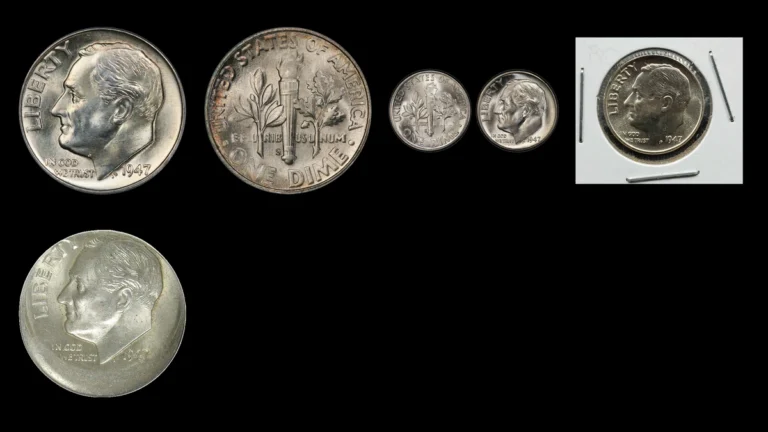
A published Denver AU58 was struck 20% off center, while a separate San Francisco VG8 has a 5% shift toward 2 o’clock. Both reflect a blank positioned partly outside the dies’ intended striking area.
The untouched metal remains beside the struck portion, and some outer design falls beyond the opposite edge. The Denver coin does not inherit the San Francisco specimen’s direction.
How to Identify
Read the surviving date and mintmark before assigning identity, then inspect the struck-to-blank boundary on both faces. A one-sided design shift can have a different explanation.
Check for grinding or cutting around the unstruck area and remaining edge grooves. Genuine displacement should explain the design boundary and untouched metal together.
What It’s Worth
Estimated value is $60–$1,500, depending on displacement, legibility, and condition. The San Francisco VG8 sold for $61 in October 2017, while a separate Philadelphia AU50 struck 10% off center reportedly brought $360 in February 2025.
Neither result belongs to the Denver 20% specimen. Heavier wear and a smaller shift make the VG8 a different comparison from a better-preserved dramatic error.
Conclusion
Small details and whole-coin shape call for different photographs: the mintmark needs a close-up, while a clip or off-center strike needs the outline and a partial collar needs the edge. Match the actual feature before borrowing a variety name or price.
Keep the generic doubled-die report provisional, separate damage from minting errors, and distinguish the partial-collar asking price from the recorded auction results.