Rare 1865 Dime Errors (List & Pictures)
The scarce date contributes heavily to 1865 dime errors: an ordinary Philadelphia VF25 sold for $1,150 in 2010 without an advertised error premium. Estimated whole-coin values for the reported features below run from $200–$15,000.
Inspect the date and nearby surface marks, turn to the reverse letters and rim, and finish by testing the alignment of any suspected rotated Proof.
| Place or test | Feature | Estimated range |
|---|---|---|
| Date | Repunched numerals | $200–$5,000 |
| Date, forearm, and upper reverse stalks | Die clash | $1,000–$6,000 |
| Shield and gown on Proof | Rusted-die texture | $1,000–$6,000 |
| D in DIME | Die defect | $700–$3,000 |
| Top reverse rim on S-mint coin | Cud | $300–$5,000 |
| Controlled flip of Proof | 180-degree rotation | $3,000–$15,000 |
Both regular strikes and Proofs normally contain 90% silver, weigh about 2.49 grams, and measure 17.9 millimeters with grooved edges. Those specifications cannot establish Proof manufacture, and recorded measurements can be used for coins already sealed in grading holders.
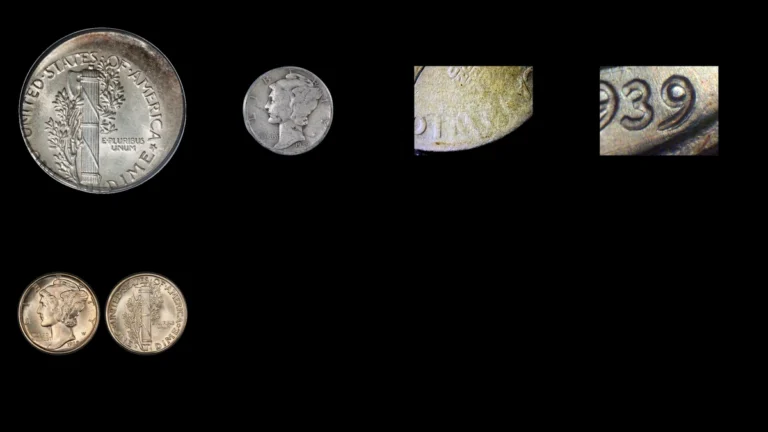
1. 1865 Dime A Small Loop between 8 and 6: Repunched Date Error
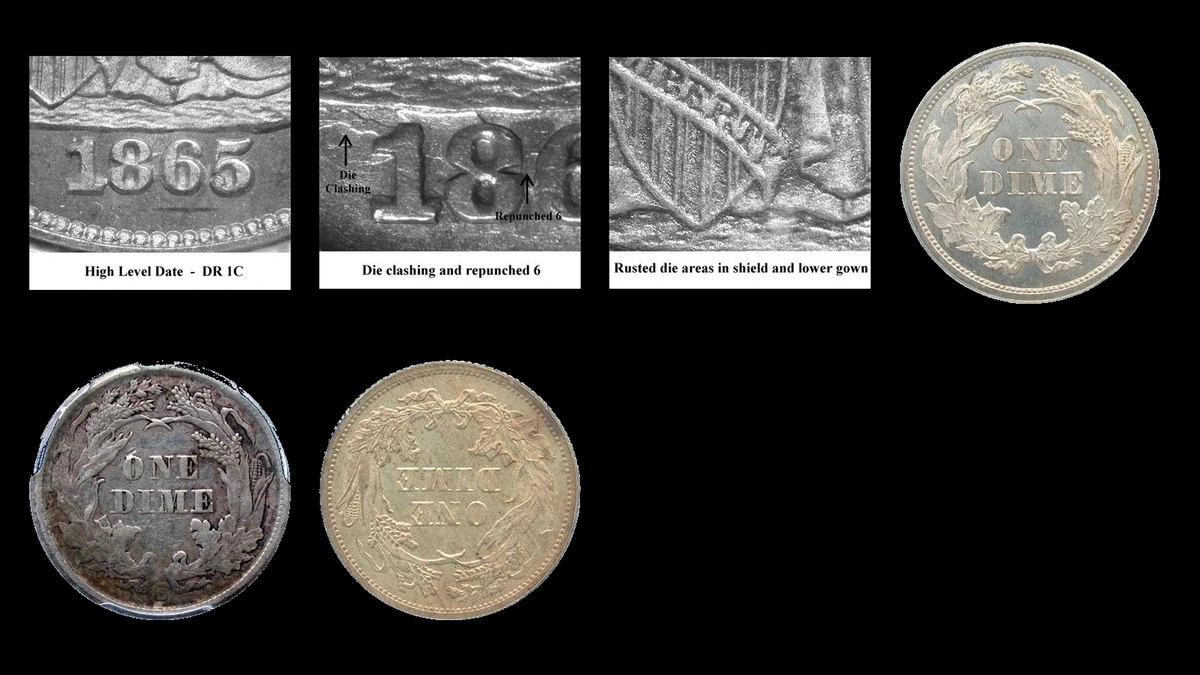
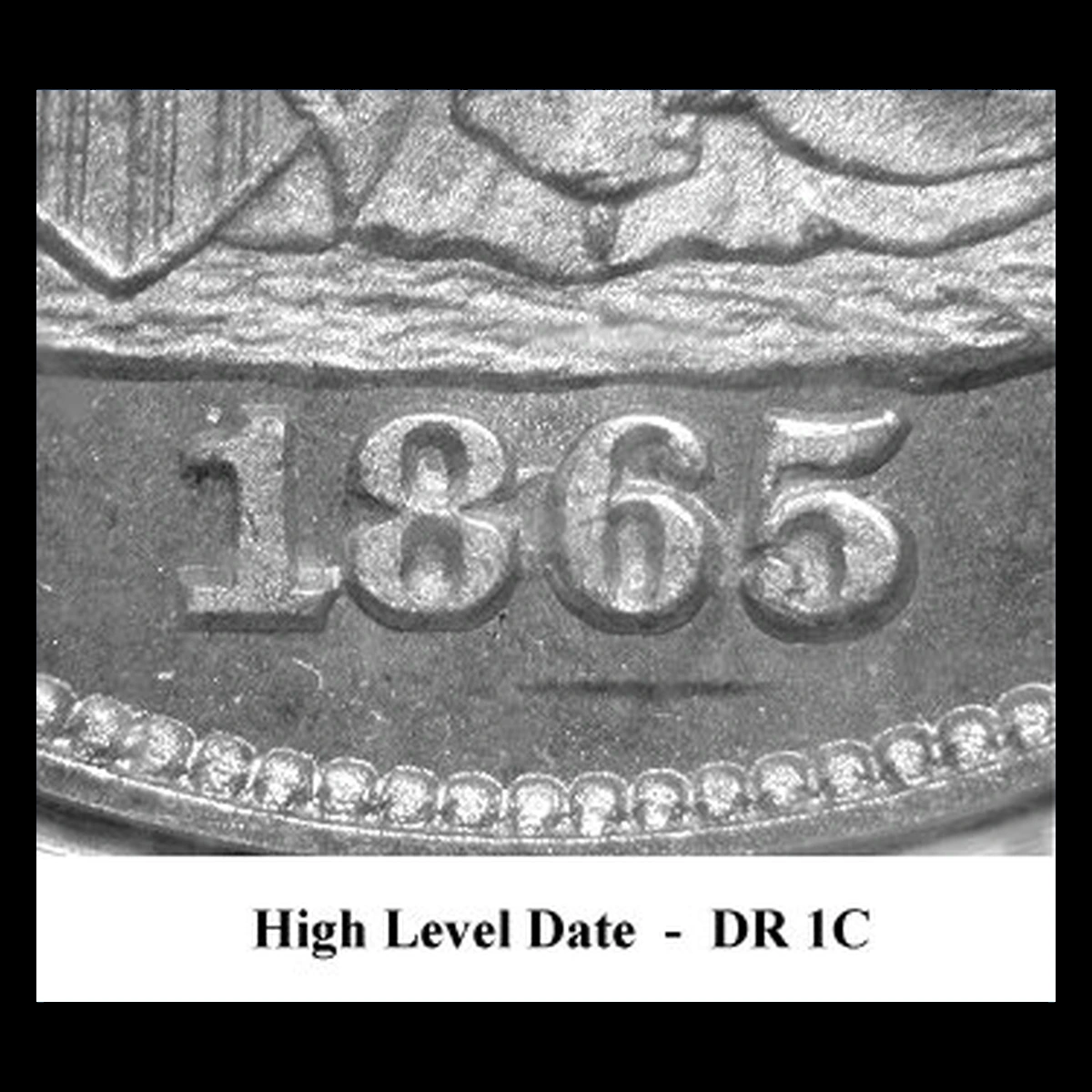
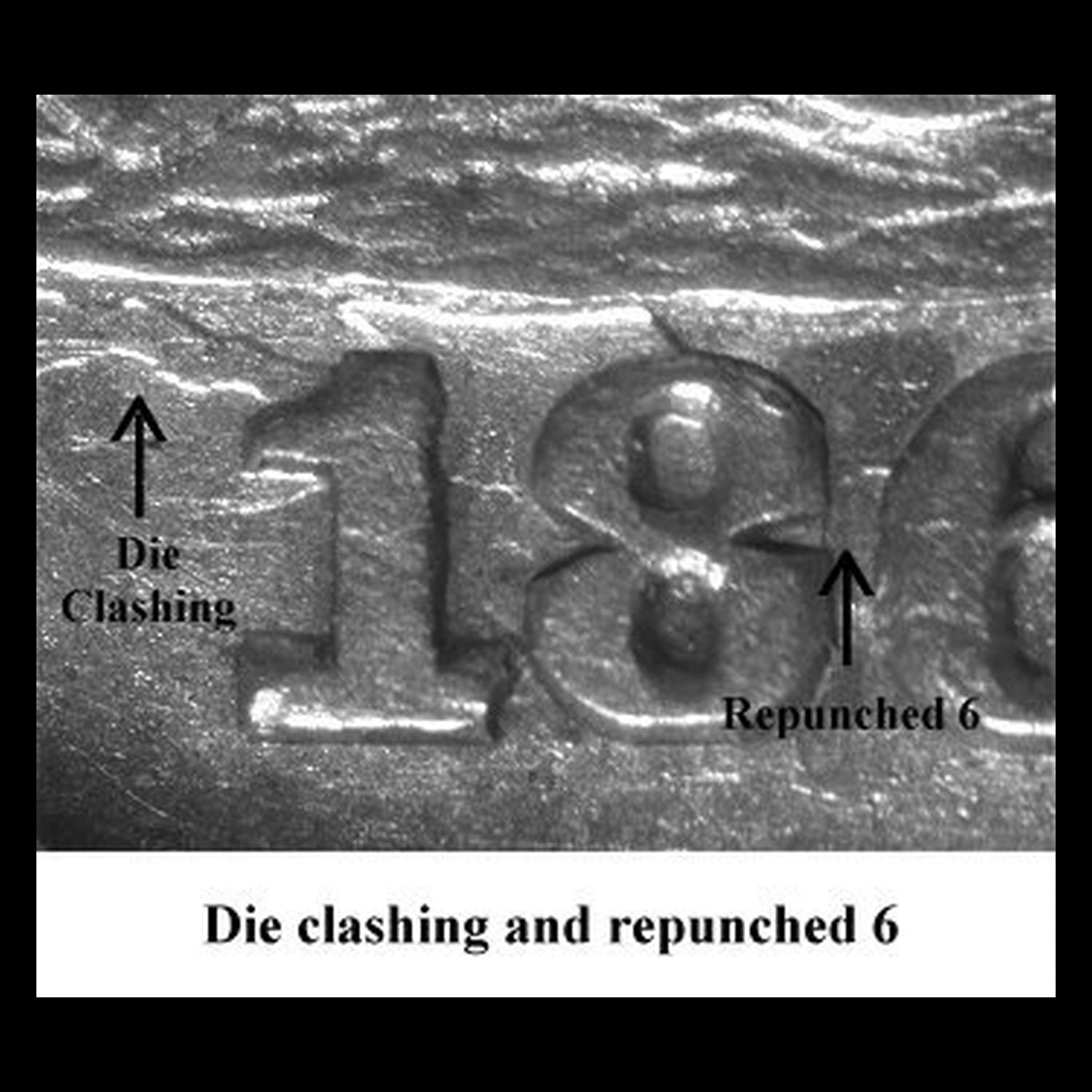
On the illustrated Philadelphia AU50, the top loop of an earlier 6 remains between 8 and the final 6. Repeated entry of the date punch left the earlier curve partly uncovered in the die.
San Francisco varieties have different extra pieces involving 86 or 5. An older account proposed early Proof use of the Philadelphia dies, but Gerry Fortin had not seen such a coin; the illustrated specimen is a regular strike.
How to Identify
Check for a reverse S before selecting the date reference. On a Philadelphia candidate, compare the extra loop in the gap between 8 and 6 with the photographed example.
The remnant should follow a raised numeral shape rather than a cut or flat shelf. An S-mint dime needs its own 86 or 5 pattern, and the date feature alone cannot establish a Proof.
What It’s Worth
Circulated repunched dates across the two mints are estimated at $200–$5,000. Philadelphia’s ordinary VF25 sale at $1,150 in 2010 supplies underlying-date context, not a direct result for the illustrated extra-loop variety.
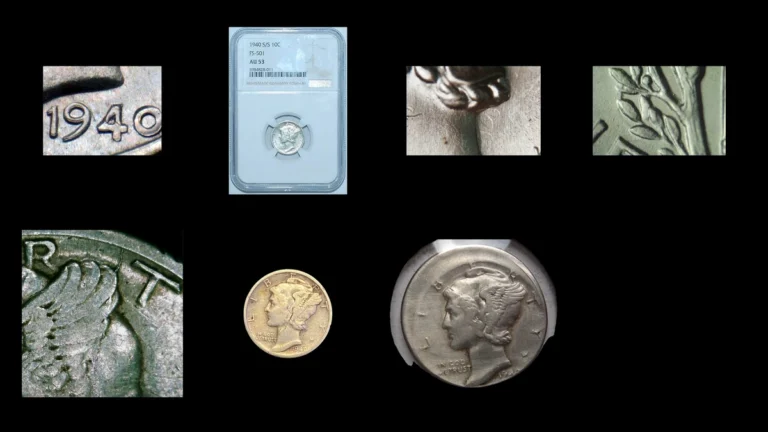
2. 1865 Dime Extra Shapes near the Forearm and Stalks: Clashed Dies Error
The illustrated Philadelphia ANACS AU50 has unexpected shapes near the first date numeral and Liberty’s left forearm, with more traces between the upper reverse wheat stalks. The dies contacted one another without a blank and transferred parts of their opposing designs.
These traces are separate from the extra date-punch pieces nearby. An older account describes a stronger clash with date detail at the top of the reverse, but Fortin had not located that reported example.
How to Identify
Inspect above and left of the flag at the top of 1, then beside the left forearm. Compare the reverse space between the upper stalks while keeping normal grain and stalk details distinct.
A convincing trace should relate to the opposite design, which equal-sized images of both faces can help show. A random cut or straight crack does not necessarily have that relationship.
What It’s Worth
Clear circulated through lightly worn Philadelphia examples are estimated at $1,000–$6,000. Specialist guidance suggests a substantial premium for this later die stage, but supplies no completed sale of the pictured AU50.
The already scarce ordinary coin accounts for much of the total. Recognizable matching traces on both faces are more useful than an unexplained line near the date.
3. 1865 Dime Raised Texture on the Shield and Gown: Rusted Proof Die Error
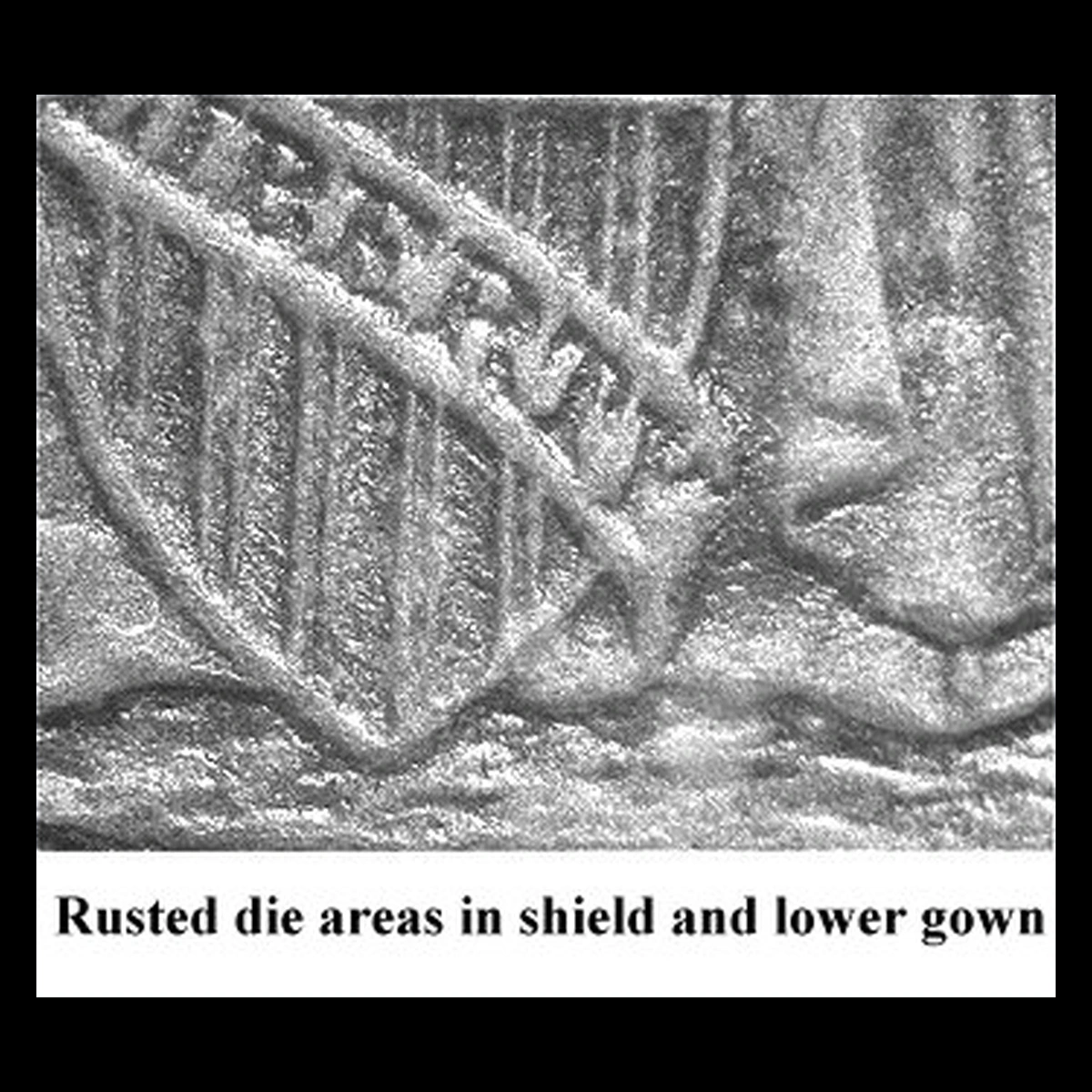
On the illustrated PF64, the shield, lower gown, and area below Liberty’s left armpit have a rough texture. Small rust pits in the die filled during striking and left raised specks on the silver.
How to Identify
Compare the distribution in all three recorded areas under low side lighting. Raised specks from die cavities differ from holes caused by corrosion eating into the coin after manufacture.
Preserve the reflective Proof surface instead of cleaning it to emphasize the marks. One unrelated rough patch is weaker evidence than the repeated pattern on an otherwise matching coin.
What It’s Worth
Collectible Proofs are estimated at $1,000–$6,000, depending on grade, surfaces, and contrast between devices and fields. The PF64 illustration and a 2025 PR65 Cameo listing document the die texture but supply no auction result used here.
The marks record the tool’s condition; they do not mean the silver coin itself rusted. Several textured areas still belong to one complete Proof value.
4. 1865 Dime An Altered D in DIME: Reverse Die Defect Error
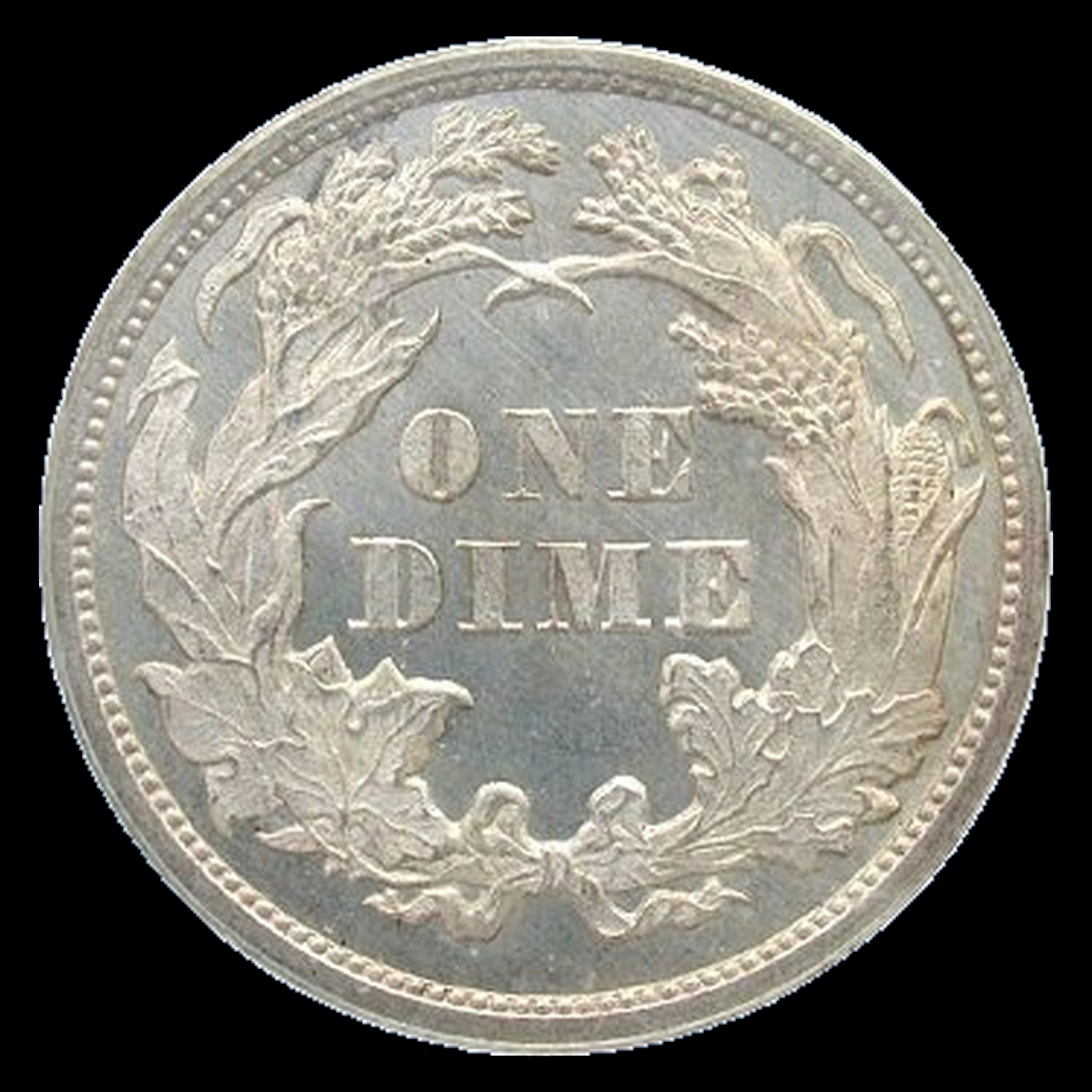
A Philadelphia catalog entry identifies a defect at D in DIME without describing one precise outline in its short text. The relevant evidence is a repeated shape from the die, not merely any damage located at D.
A separate report about M on a Proof concerns another tool. It cannot supply the missing diagnostic description for this D feature.
How to Identify
Photograph the whole word DIME with surrounding field, then match the actual D shape to the variety reference. A dent can push metal beside a cut, while residue can hide the normal letter outline.
Confirm the Philadelphia identity and examine the letter with changing light. Its position alone cannot prove a tool-made defect without the matching shape.
What It’s Worth
Collectible circulated Philadelphia examples are estimated at $700–$3,000. The ordinary PCGS VF25 sold for $1,150 in 2010, without an advertised premium for this defect.
That price shows how scarcity of the underlying issue can outweigh a small letter feature. It is a complete-coin comparison rather than a measured fee for an unusual D.
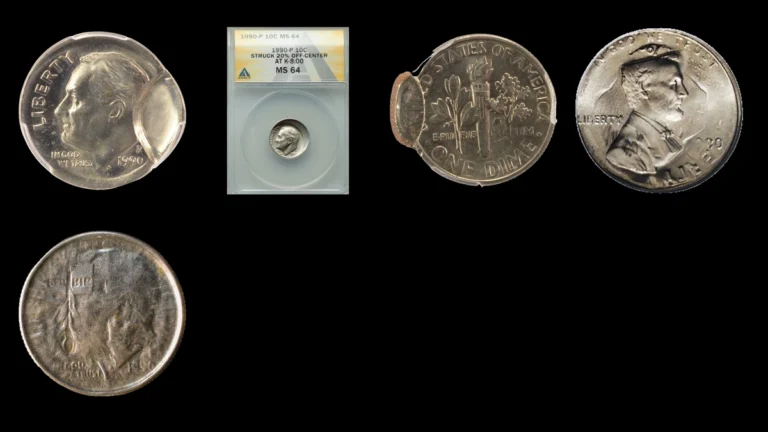
5. 1865 Dime A Raised Patch at the Top Rim: San Francisco Cud Error
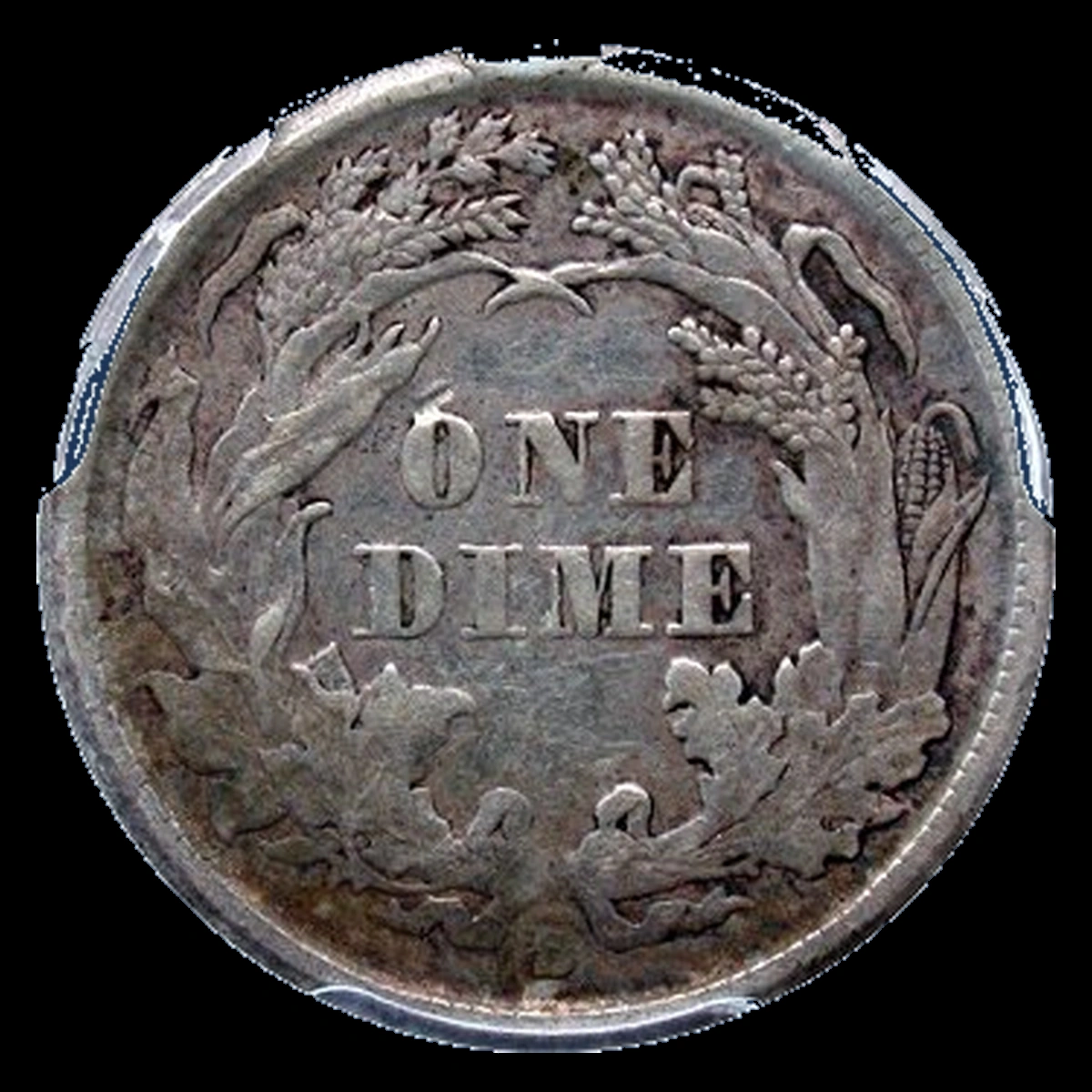
With DIME upright, the San Francisco example has a raised patch attached to the rim at 12 o’clock. A piece broke from the die’s edge, leaving room for silver to flow into the missing section.
The reference pairs the feature with a small, thin S mintmark. This is raised coin metal caused by tool failure, not a missing segment of the blank.
How to Identify
Trace the patch to its rim connection and compare its border with the known example. Then check the small S and the rest of the reverse pairing.
View the edge from the side for evidence of a dent or metal squeezed inward after striking. A similar lump without the proper boundary and mintmark relationship needs another explanation.
What It’s Worth
Matching circulated examples are estimated at $300–$5,000. No completed sale is supplied for the pictured cud, so the estimate depends on preservation, clarity of the break, and the underlying San Francisco issue.
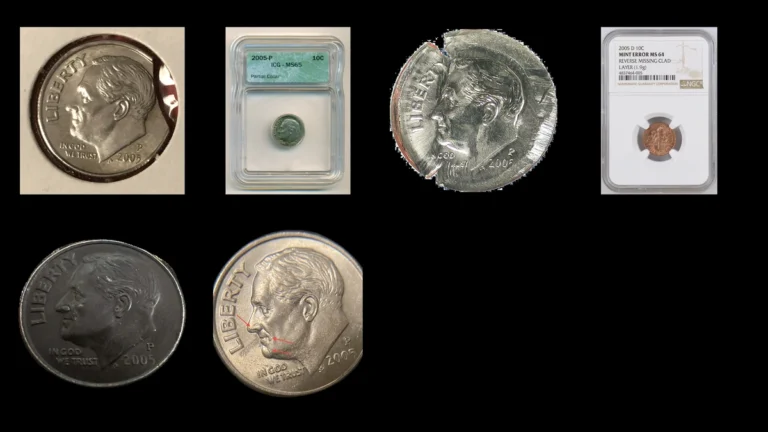
6. 1865 Dime Both Faces Upright after a Sideways Flip: 180-Degree Proof Rotation Error
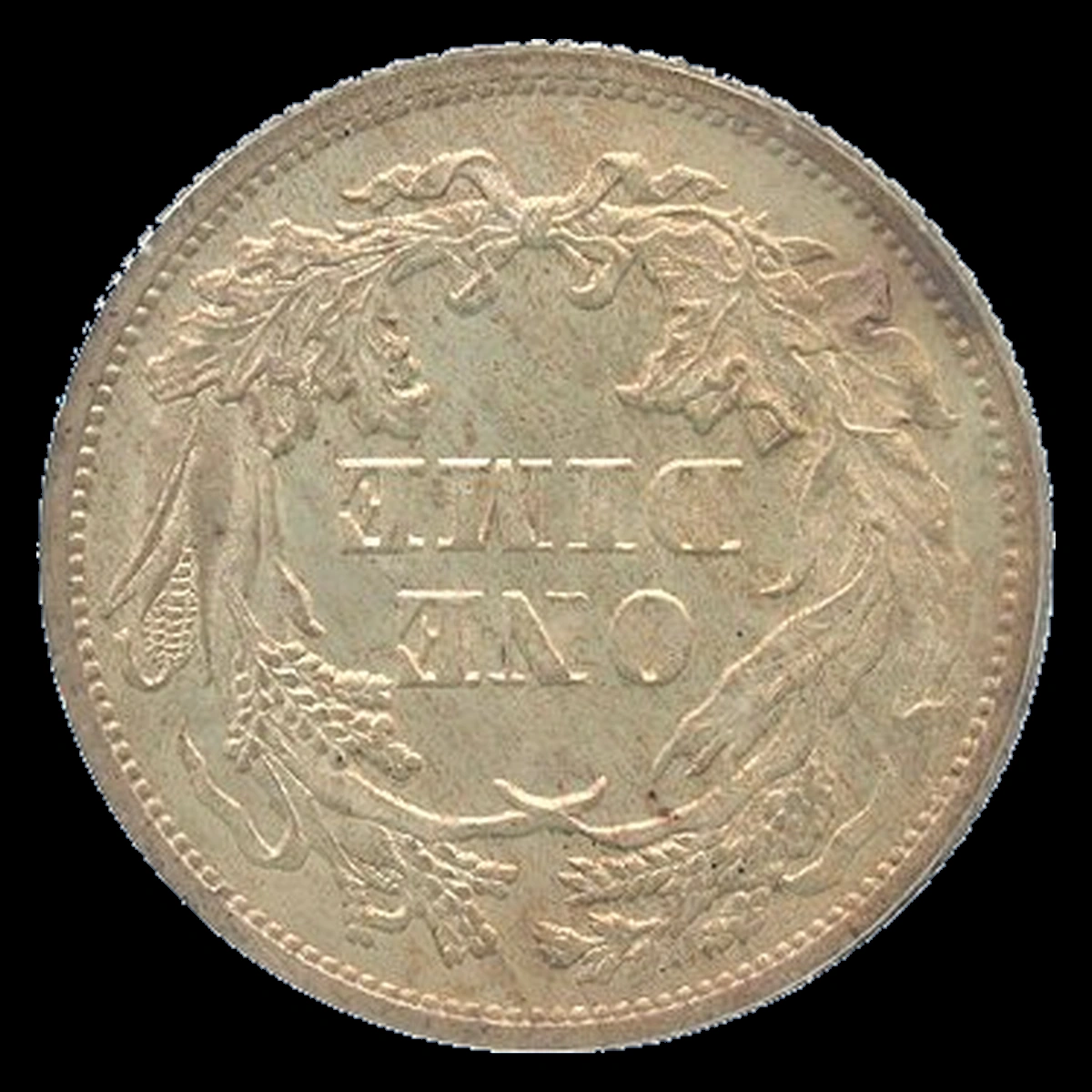
The recorded Proofs show medal alignment: both designs remain upright when the coin is flipped side to side. Their reverse is a half-turn from the usual United States coin alignment.
Although an older account mentioned a circulation coin, Fortin’s photographed examples are certified Proofs ranging from PF62 through PF65 Cameo. The PF63 also lacks clash marks, and whether the alignment was intentional remains unresolved.
How to Identify
Fix the coin so it cannot spin, hold Liberty upright, and flip side to side to check that the reverse remains upright. Reset it and flip top to bottom; the reverse should then appear upside down.
Compare the whole coin with the photographed Proof examples, since the rotation test alone cannot establish manufacture. Photographs independently straightened afterward do not demonstrate the angle.
What It’s Worth
Matching Proofs around PF62–PF65 Cameo are estimated at $3,000–$15,000. The specialist guide’s suggested premium is not a completed auction result.
Assess preservation, surfaces, and the demonstrated alignment together. Associated die-rust texture can assist identification without adding a second complete Proof price.
Conclusion
Keep Philadelphia, San Francisco, regular strikes, and Proofs distinct before interpreting their small marks or estimated values. The date loop, clash traces, rust texture, letter defect, and rim cud each need the correct photographic match.
For the half-turn Proof, demonstrate the actual orientation through controlled flips, and leave its historical intent unresolved while valuing the coin’s confirmed identity and condition.