Rare 1937 Dime Errors (List & Pictures)
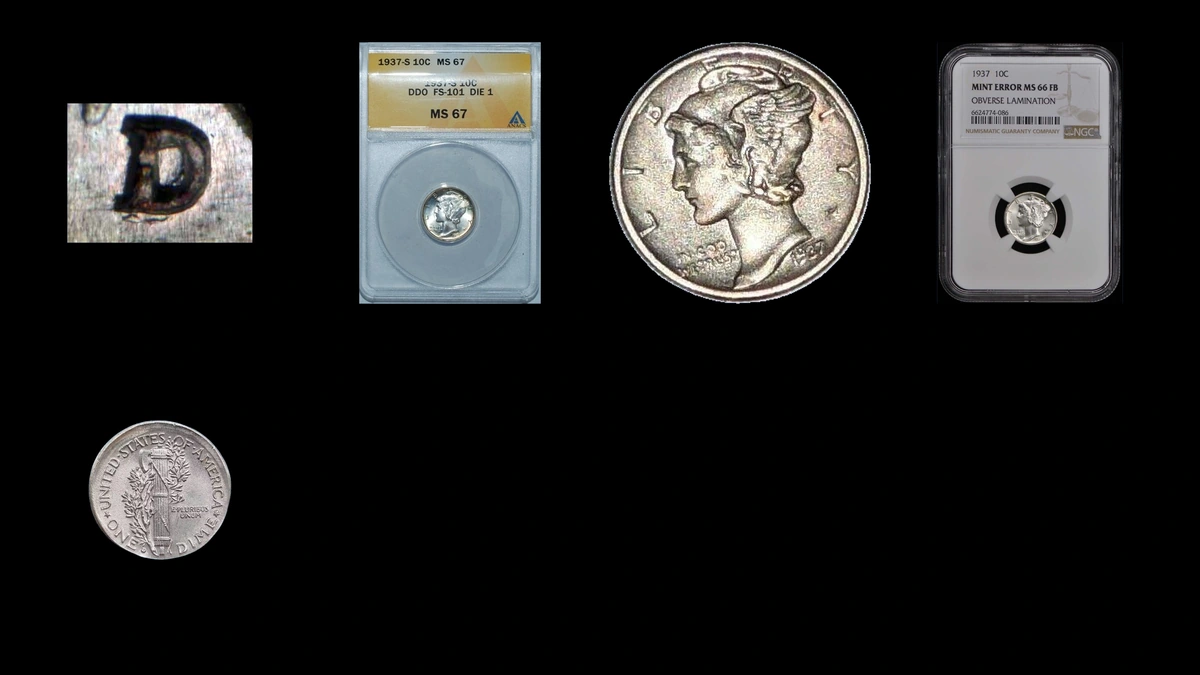
A San Francisco doubled die sold for $1,500 in August 2022, while a different-year wrong-blank Mercury dime reached $11,400 in July 2023. The 1937 dime errors below have a working estimate of $30–$6,000, with the highest tier conditional on authenticating the reported cent-blank candidate.
Match small design features first, inspect metal and rim changes next, and use measurements and composition together for unusual blanks.
| Observation | Category | Estimated range |
|---|---|---|
| Extra D fragment | Reported repunched mintmark | $30–$300 |
| Repeated front details | Doubled die obverse | $100–$2,000 |
| Repeated back details | Unconfirmed reverse variety | $75–$400 conditional |
| Peeling metal, missing edge, or rim lump | Lamination, clip, or cud | $30–$600 |
| Gradual thickness change | Tapered planchet | $250–$1,200 |
| Blank crescent and incomplete design | Off-center strike | $150–$1,500 |
| Wrong metal and dimensions | Reported cent planchet | $1,500–$6,000 conditional |
The normal silver dime starts at 2.50 grams and measures 17.9 millimeters with a grooved edge. Full Bands describes clear separation of the central reverse bands; it does not establish an error, Proof finish, or unusual metal.
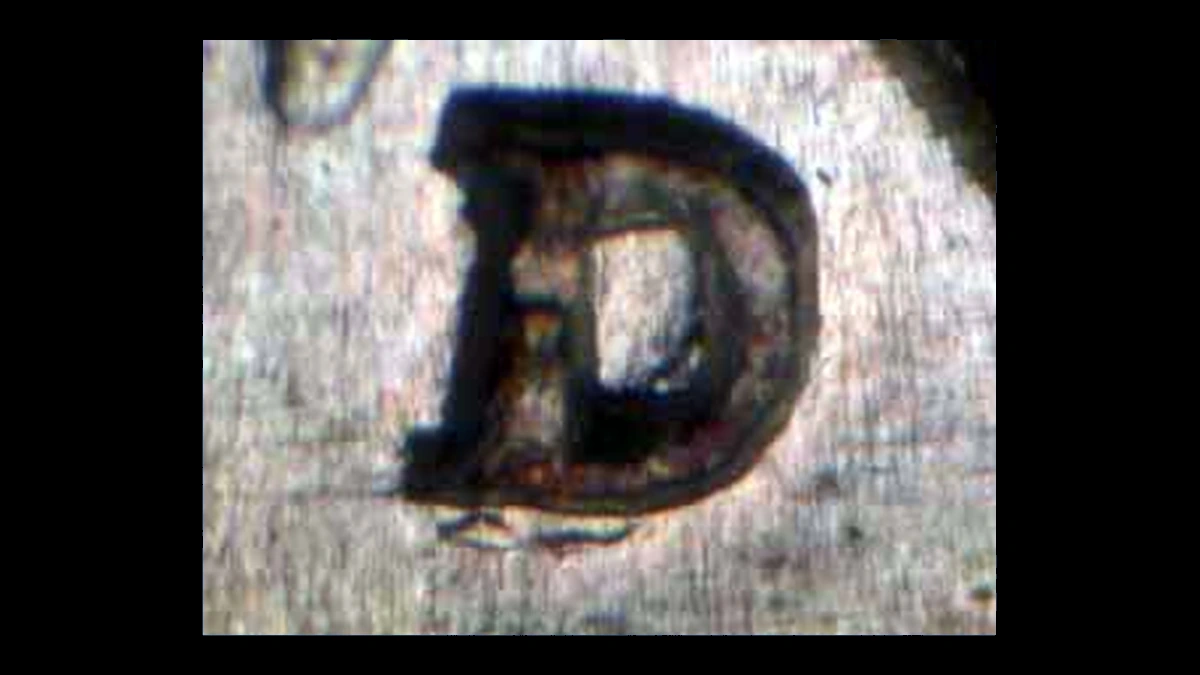
1. 1937 Dime A Small Earlier Curve below D: Reported Repunched Mintmark Error
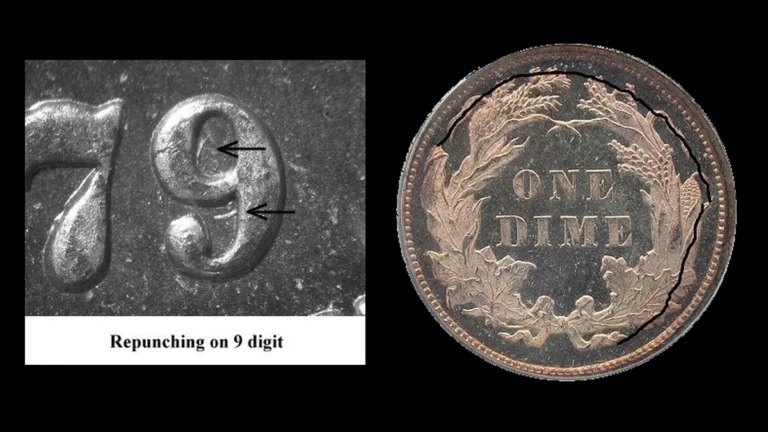
The Denver report points to an extra piece beneath D as evidence of repeated mintmark punching. If the punch shifted during die preparation, part of the earlier letter could remain beside the final one.
How to Identify
Find D below the olive branch and left of the reverse bundle, then trace the lower remnant. It should fit a recognizable earlier D rather than form an isolated lump.
The reported position is a starting clue, not a universal confirmed pattern. Compare an appropriate photograph without merging upper and lower remnants from separate coins.
What It’s Worth
Estimates are $30–$100 for circulated examples and $100–$300 for sharper unworn coins. No completed sale is supplied for this reported variety, and a thick letter or flat shelf does not establish repunching.
2. 1937 Dime Repeated Date or Motto Contours: Doubled Die Obverse Error
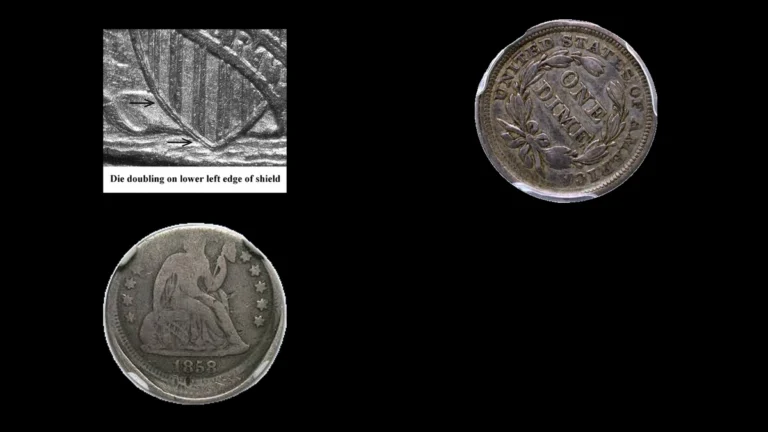
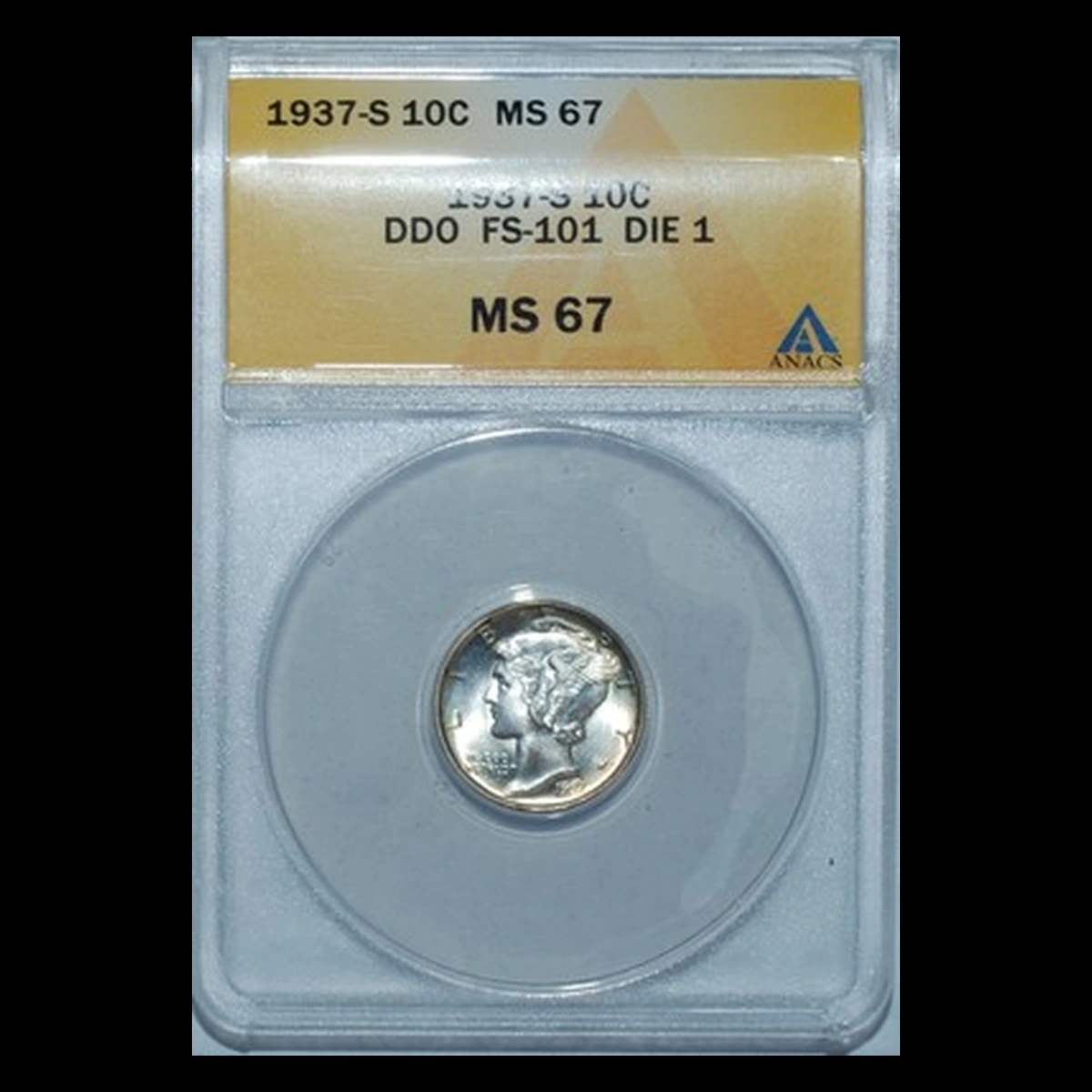
Philadelphia and San Francisco have separately cataloged doubled front designs. The duplication existed in the die before striking, and their individual extra contours require different references.
San Francisco FS-101 is a regular-strike variety, including examples with Full Bands. Philadelphia’s production of Proofs does not turn these regular-strike varieties into Proof coins.
How to Identify
Check the mintmark before tracing the date and motto against the corresponding reference. Repeated raised contours differ from flat shelves or lettering distorted by wear.
Assess the reverse bands separately from front doubling. Sharp band detail says nothing by itself about which obverse die struck the coin.
What It’s Worth
Identified lower-grade examples are estimated at $100–$500, with stronger high-grade San Francisco coins around $500–$2,000. PCGS records $1,500 for the FS-101 MS67FB sold on August 31, 2022.
That price includes excellent preservation and sharp bands. A Philadelphia candidate needs its own attribution and condition comparison.
3. 1937 Dime Extra Detail on the Back: Reported Doubled Die Reverse Error
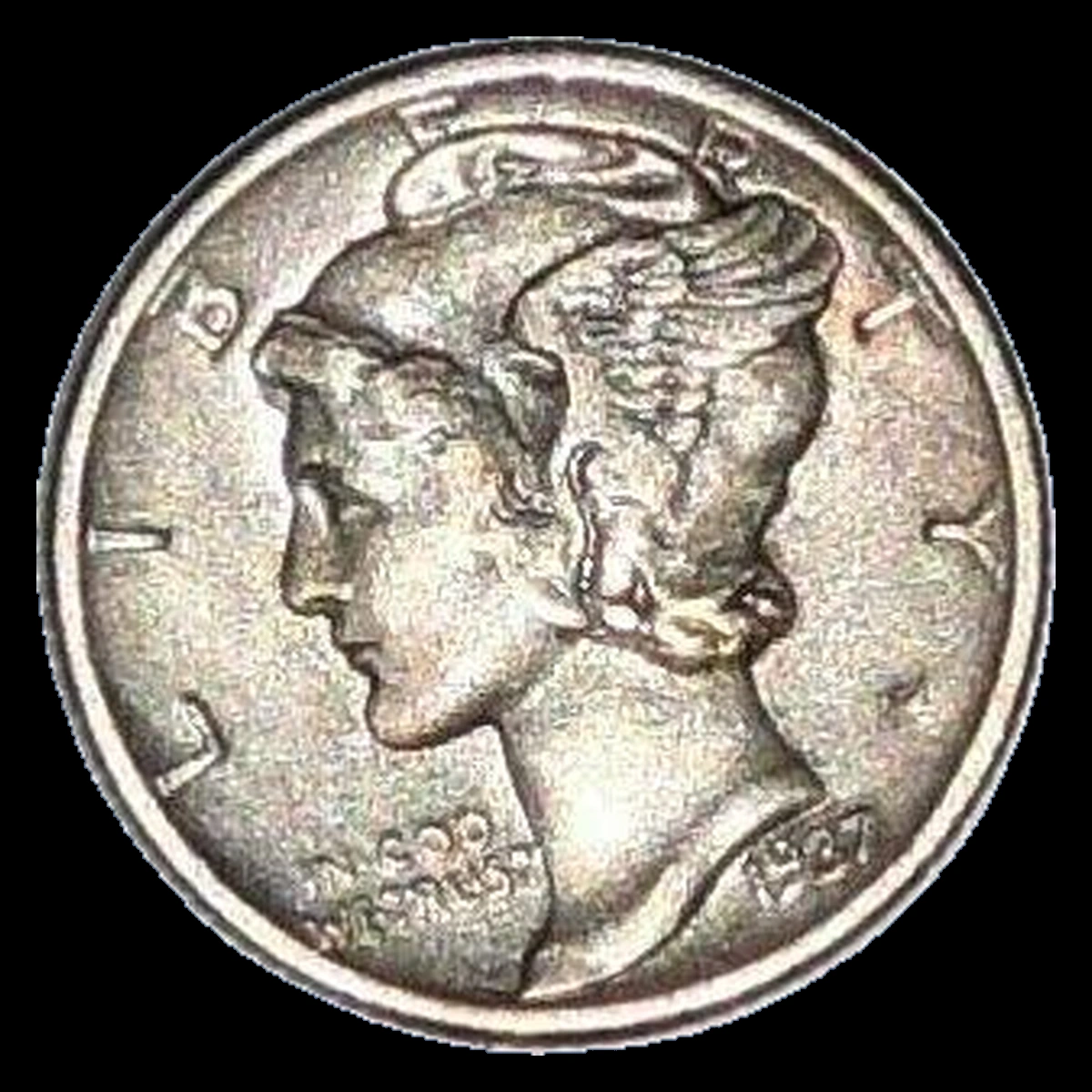
The reverse-doubling claim has no matched authenticated specimen in the supplied description. A genuine example would require repeated back-design detail already present in its die.
The designer’s AW initials are on the obverse, so they cannot serve as evidence for this reverse claim. Normal paired bands on the back also belong to the intended design.
How to Identify
Stay with the reverse bundle and inscriptions when comparing suspected doubling to a normal dime. Look for stable rounded contours or splits beyond the normal design, not shelves or ordinary band separation.
The generic claim supplies no exact letter or position to borrow. Record what is actually visible before seeking a specific variety attribution.
What It’s Worth
A minor genuine doubled reverse has a conditional estimate of $75–$400. This is neither a confirmed 1937 sale nor a premium for normal Full Bands; actual repeated reverse detail must first be established.
4. 1937 Dime A Layer Lifting from the Surface: Lamination Error
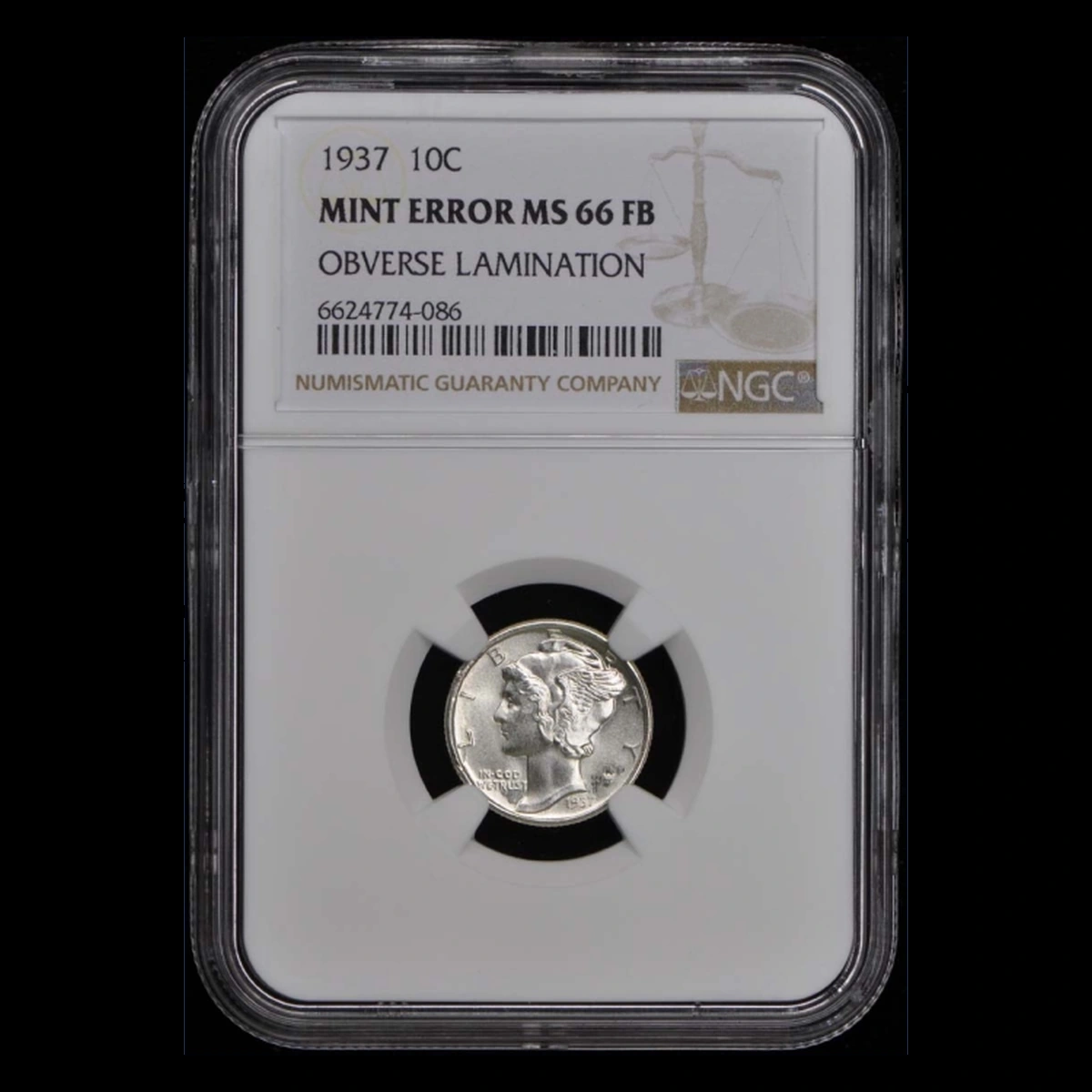
A Philadelphia MS66FB was offered with a lamination, showing that strong preservation and sharp bands can coexist with a metal flaw. Weakness in the silver-copper alloy allowed a layer to separate.
The supplied listing does not give an exact location. Locate the actual flaw in the complete image before assigning any face or position.
How to Identify
Inspect the thin boundary and its connection to the coin under side light. A gouge cuts into solid metal, while residue can sit over intact detail without being part of the alloy.
Leave any flap attached. A very thin peel may have little effect on weight, making the visible separation more informative than the scale reading.
What It’s Worth
Estimated values are $30–$350. The archived dealer listing asked $115 for the MS66FB, without establishing a completed sale.
A large attached flap and a faint small peel can appeal differently to collectors. High grade alone does not guarantee a major error premium.
5. 1937 Dime An Original Shortage in the Edge: Reported Clip Error
A clipped blank was already incomplete when the dies struck it. The rim and surrounding design formed around that existing shortage.
The supplied 1937 reports establish neither a specific mint nor whether the gap was curved or straight. Its shape, location, and percentage must come from an actual coin.
How to Identify
Study both endpoints for original metal flow and examine the opposite rim for possible weakness. Tool marks cutting through finished detail can reveal a later removal.
Low weight documents a shortage but cannot distinguish a mint clip from a subsequent cut. Do not require a curved arc when the source has not established that form.
What It’s Worth
Smaller circulated clips are estimated at $50–$150, with larger or better-preserved examples around $150–$500. A documented 1934 curved clip graded ANACS MS63 illustrates the class but supplies neither a 1937 price nor its missing shape and grade.
6. 1937 Dime A Raised Patch Joined to the Rim: Reported Cud Error
A cud replaces normal design with a rim-connected raised area after a piece breaks from the die’s edge. Silver fills the resulting gap during the strike.
The guide names the category without a confirmed original specimen’s mint or location. A thin crack or an enclosed chip is not automatically the same rim-break error.
How to Identify
Trace the patch’s connection to the rim and determine whether it replaces detail. A deposit lying over complete design or a lip raised by impact has a different boundary.
Inspect for solder or a seam and examine possible weakness opposite the affected area. A lump alone does not establish missing die steel.
What It’s Worth
Small genuine rim breaks are estimated at $50–$150, and larger clearer cuds at $150–$600. These are comparisons rather than verified sales of the unnamed report, with condition still contributing to the total.
7. 1937 Dime The Coin Gradually Becomes Thinner: Tapered Planchet Error
The documented San Francisco MS67 Full Bands has a blank whose thickness varies gradually. This differs from a uniformly thin blank or a local peeling layer.
Thin metal may fill the die less completely in one region while the central bands remain sharp. No exact weight for this specimen is supplied here.
How to Identify
Compare thickness at several points and relate the thinner area to any nearby strike weakness. A single low weight cannot establish taper, and another cataloged coin’s weight must not be transferred to this one.
Look for abrasive marks or altered surfaces where grinding might have thinned the coin. Use recorded measurements and edge views for a sealed example instead of opening its holder.
What It’s Worth
Genuine high-grade examples of this general type are estimated at $250–$1,200. The Heritage archive records $312 on September 16, 2024 for the NGC MS67FB.
The result includes its San Francisco identity and preservation. The upper estimate is not an amount that this specimen actually realized.
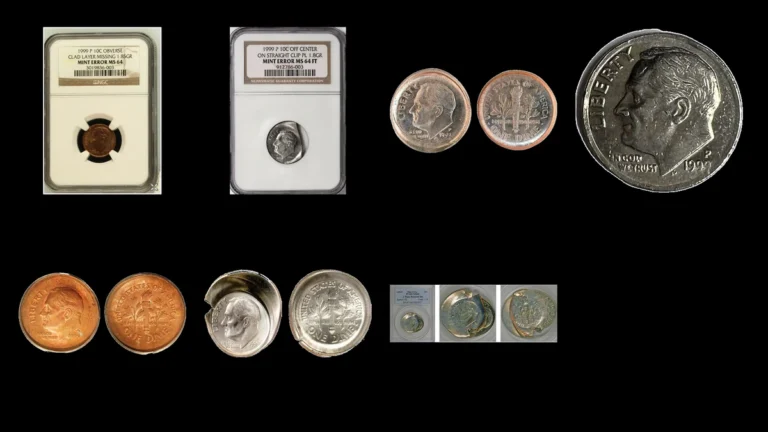
8. 1937 Dime A Blank Crescent beside Cropped Design: Off-Center Strike Error
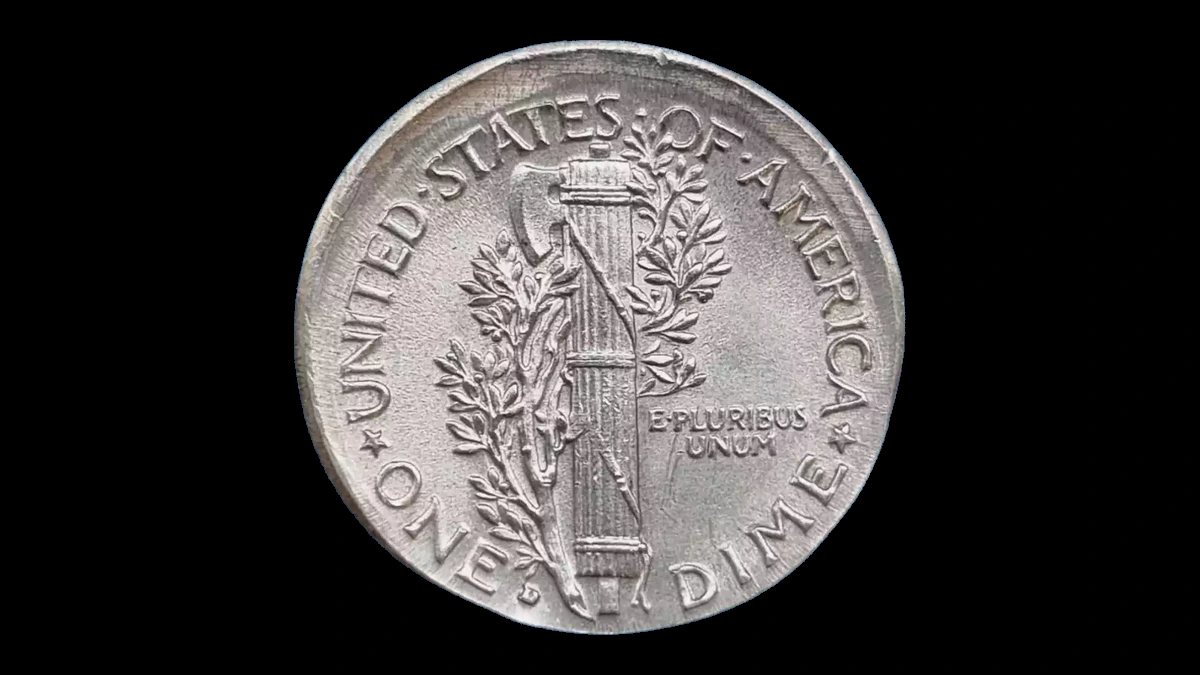
A misplaced blank receives only part of the intended design while leaving other metal untouched. Both faces should show that shared striking position.
The sources establish no confirmed 1937 auction specimen’s direction or percentage. A missing mintmark area also cannot be used to prove Philadelphia manufacture.
How to Identify
Compare the full outlines and struck-to-blank boundaries on both sides. A one-face shift can reflect a moved die, while a broadstrike retains complete design inside its expanded outline.
Read the date and surviving mintmark directly, then check the blank area for filing or polishing. An unstruck crescent remains metal rather than a cut-away gap.
What It’s Worth
Readable-date circulated examples are estimated at $150–$500, extending to $500–$1,500 for stronger unworn or more displaced coins. A dealer’s $350 offer for a 1934-D AU50 struck 10% off center is a nearby-year asking-price comparison, not a 1937 sale.
9. 1937 Dime Dime Design on Bronze: Reported Cent-Blank Candidate Error
The proposed error combines a 1937 dime design with a bronze cent blank. A contemporary cent blank started around 3.11 grams and 19.05 millimeters, making it larger and heavier than the normal dime blank.
No authenticated 1937 specimen is established in the supplied description. Copper color cannot prove the claim, and cropped design must not be explained by calling the cent blank smaller.
How to Identify
Assess composition, weight, and actual dimensions together, with nondestructive specialist testing where needed. Inspect for plating, seams, or an altered surface and verify that the readable 1937 design belongs to that same metal.
The original cent blank lacked dime grooves, but the final edge depends on its interaction with the collar. Edge appearance alone is therefore not a substitute for confirming the bronze blank.
What It’s Worth
An authenticated dime on a cent blank has a conditional estimate of $1,500–$6,000. That is not a realized-price range for a verified 1937 example.
NGC describes a 1942 Mercury dime on an Ecuador five-centavos blank that brought $11,400 in July 2023 as MS62FB. Its foreign blank, date, and rarity make it broader wrong-planchet context rather than a direct cent-blank comparison.
Conclusion
1937 reports range from established mint-specific obverse doubling to categories still lacking a confirmed specimen. Keep that evidence level visible while distinguishing die marks, metal separation, rim defects, taper, and misplaced striking.
The cent-blank estimate remains conditional on authentication, and Full Bands or high grade should be assessed separately from whatever manufacturing event is proposed for the coin.