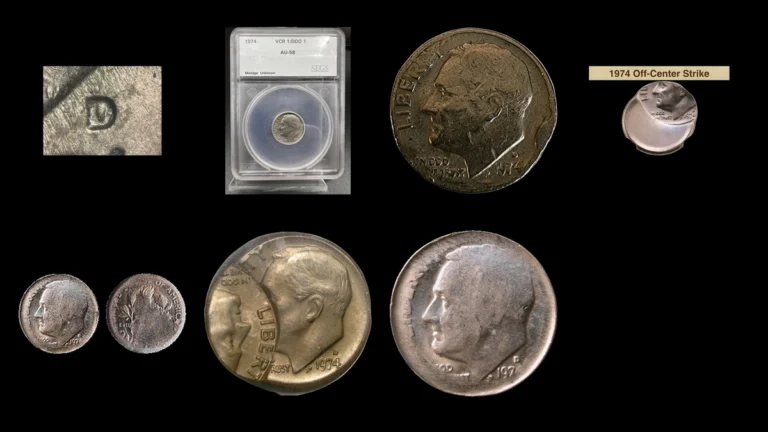
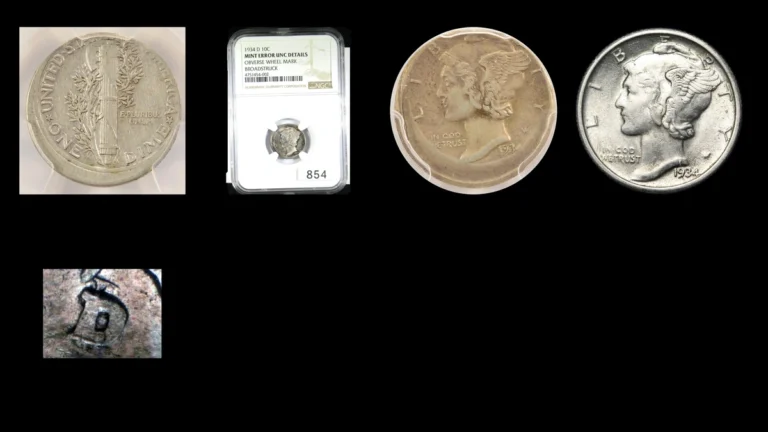
Rare 2008 Dime Errors (List & Pictures)
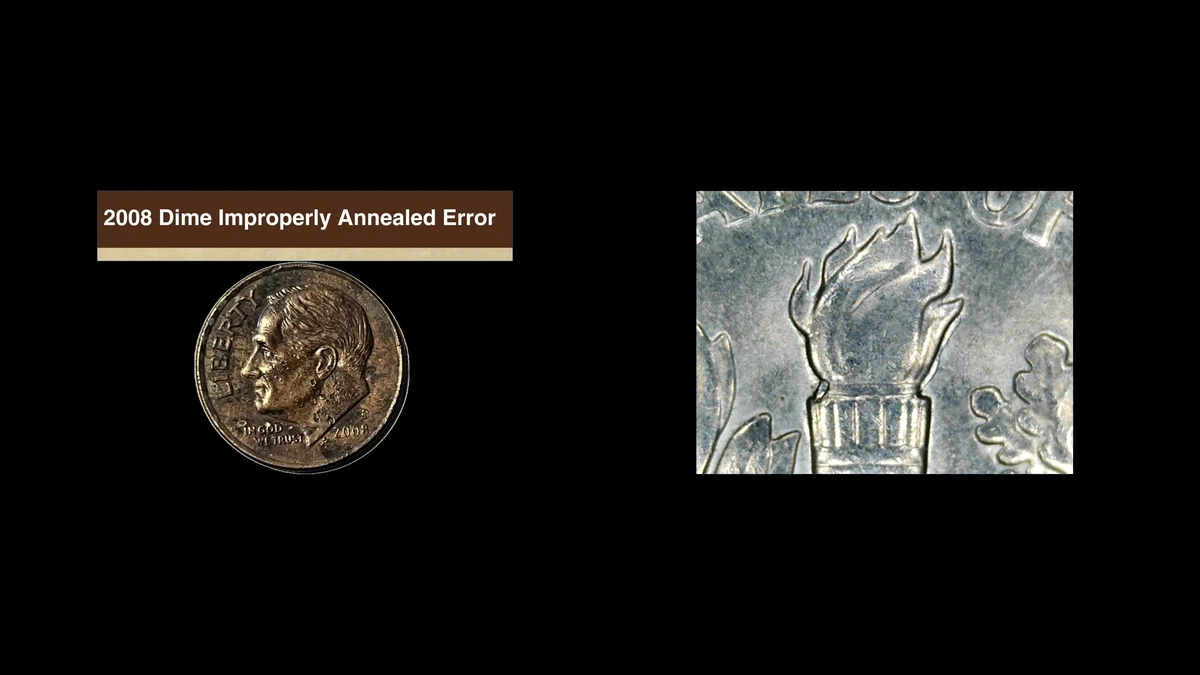
Color, a sideways opening, and a second portrait can make a dime look unusual for entirely different reasons. This guide groups ten reported 2008 dime errors within an estimated $10–$1,200 range.
A year guide reports $1,050 for a 2008-D clamshell split, while the supplied documented auction comparison for a double strike is $264 for a 1978-D dime. Begin with the metal and edge, then decide whether the design is weak, displaced, or repeated.
| Visible change | Category | Estimated value |
|---|---|---|
| Dark or brown surface | Improper annealing | $25–$350 |
| Copper face with reduced weight | Missing clad layer | $75–$550 |
| Sideways split with a joined hinge | Clamshell split | $100–$1,200 |
| Raised line or rim patch | Die crack or cud | $10–$400 |
| Broadly shallow designs | Low-pressure strike | $100–$500 |
| Localized weak front detail | Grease strike-through | $10–$600 |
| Incomplete designs beside plain metal | Off-center strike | $50–$650 |
| Two separate impressions | Double strike | $150–$1,100 |
| Opposite-design traces near portrait | Die clash | $20–$400 |
| Extra contours on each face | Doubled designs | $50–$700 |
Ordinary Philadelphia and Denver dimes are clad: two copper-nickel outer layers surround a copper core. Their normal weight is 2.268 g, diameter about 17.9 mm, and edge grooved.
A 2008-S silver Proof is a different collector issue containing 90% silver and weighing 2.50 g. Identify mint and finish before applying clad-coin measurements or interpreting an edge color.
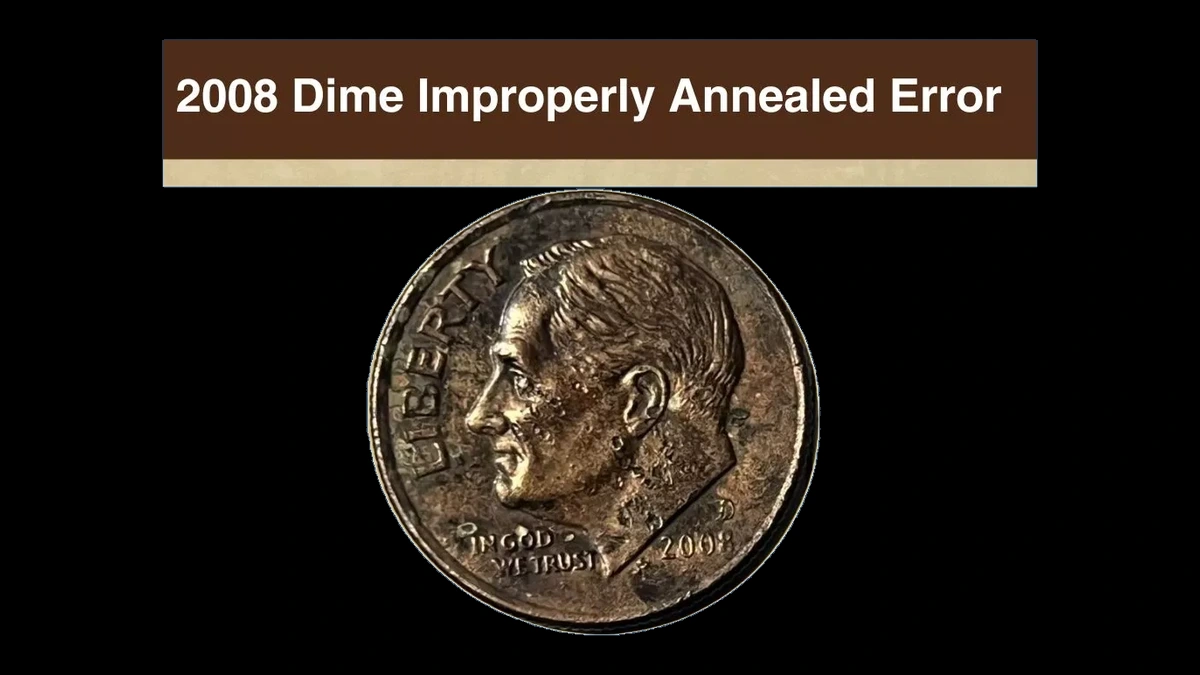
1. 2008 Dime Unusual Dark Color: Reported 2008-D Improper Annealing Error
Heating blanks to soften them before striking is called annealing. Problems during that step can alter the surface metal and produce brown, dark gray, or coppery colors.
The reported Denver example concerns this treatment of an ordinary blank. Genuine annealing-related color can be uneven, so complete coverage is not a requirement.
How to Identify
Inspect both faces and the edge under neutral light with a 10× magnifier. Look for residue, corrosion, coatings, or damage that could explain the appearance after minting.
Preserved original surfaces and specialist identification matter more than darkness alone. Neither normal measurements nor even color proves an annealing cause, and rubbing or dissolving the color damages useful evidence.
What It’s Worth
Professionally identified examples have an estimated $25–$350 range. The guide reports $315 for a 2008-D described as MS60, an unworn grade allowing substantial marks.
That report is not an adopted primary auction record here. Later staining or heat damage does not qualify for the same mint-error estimate.
2. 2008 Dime Exposed Copper and Missing Weight: Reported 2008-P Missing Clad Layer Error
A copper-colored face may have received its design without one outer covering in place. The missing material leaves both an exposed core and a lighter finished dime.
The year guide reports a Philadelphia coin but does not securely identify the affected face in the supplied description. An ordinary silver Proof has a different construction and should not be judged by this layered-metal explanation.
How to Identify
Use a precise scale to check the weight and inspect the edge for the absent covering. Original detail should be struck into the exposed copper.
Pits, parallel grinding lines, or a stain over intact layers can tell a different story. Do not clean the face to improve its color before examining it.
What It’s Worth
The estimated range is $75–$550 for identified examples in collectible worn through unworn condition. Clear exposed detail and undamaged surfaces support stronger comparisons.
The guide reports $530 for an MS62 coin, an unworn grade with noticeable marks. That reported figure does not make every copper-colored dime a missing-layer error.
3. 2008 Dime A Sideways Opening in the Metal: Reported 2008-D Clamshell Split Error
A clamshell split opens through the dime while part of its metal remains joined like a hinge. Internal weakness allows separation along a plane that need not divide the coin into equal halves.
The reported Denver example needs its exposed interior examined to establish whether the split follows a layer boundary or passes within the core. The name alone does not identify that plane.
How to Identify
Observe the edge opening and surviving connection without inserting anything between the sides. Forcing it wider or pressing it shut can damage the hinge and original surfaces.
Check for saw cuts, pry marks, and squeezed edges that suggest alteration. A connected split can retain all its metal, so half the usual weight is not a requirement.
What It’s Worth
Identified examples have an estimated $100–$1,200 range, depending on the opening, intact connection, and preservation. A damaged fragment is a weaker comparison than a naturally split coin.
The year guide reports $1,050 for an MS60 example. Its original marketplace transaction is not established here, and the reported high should not be treated as a routine price.
4. 2008 Dime Raised Lines and Edge Patches: Reported 2008-P Die Cracks and Cuds Error
A crack in the die, the steel stamping tool, allows metal to rise into a narrow ridge. If a larger piece breaks from its edge, a rim-connected raised patch can form instead.
That rim break is called a cud. The Philadelphia report does not locate a specific crack or patch, so each coin’s path must be examined independently.
How to Identify
With side lighting, determine whether the feature stands above the surface or cuts into it. Trace a ridge through nearby design, or follow a suspected cud all the way into the rim.
A fracture through the coin differs from a ridge transferred by a cracked die. Dirt, solder, and corrosion can also produce lumps without a mint-made tool break.
What It’s Worth
Small identifiable cracks have an estimated $10–$50 range, while clearer large rim breaks can fall around $50–$400. Together they span $10–$400.
No individual auction amount is supplied for the 2008-P report. Length alone does not determine a crack’s appeal; visibility and its effect on the design matter too.
5. 2008 Dime Shallow Detail Across Both Faces: Reported 2008-P Low-Pressure Strike Error
A very weak portrait and back design can indicate that the metal never filled the dies’ recesses completely. Too little striking force is one possible cause.
The phrase die adjustment strike is sometimes applied to these coins, but weakness alone cannot establish what Mint workers were doing. The pattern of incomplete formation is the evidence to examine.
How to Identify
Compare both faces and the rim for widespread shallow detail on original surface texture. Circulation wear instead smooths features that were once fully formed, usually beginning at exposed high points.
A local missing word beside otherwise sharp design may suggest an obstruction. The edge and rim should also fit incomplete formation rather than later crushing.
What It’s Worth
Identified low-pressure examples have an estimated $100–$500 range when their surfaces preserve the evidence. Wear can make the cause difficult to establish.
The guide reports $515 for a 2008-P MS63, slightly above this working range. That unworn grade and the degree of incomplete design both belong in any comparison.
6. 2008 Dime One Weak Patch on the Front: Reported 2008-P Grease Strike-Through Error
A localized interruption surrounded by sharp detail suggests material blocked part of the die’s design. The reported Philadelphia category describes grease affecting the front without fixing a location for every example.
The obstruction prevents detail from forming rather than removing completed metal. Its pattern differs from broadly insufficient pressure across both faces.
How to Identify
Compare the front with a normal 2008-P at the same size, keeping enough surrounding design visible to map the weak area. Inspect the transition for original surface rather than scraping, polishing lines, or displaced metal.
Check the reverse’s overall strength as well. Do not name grease solely because one letter is faint when another obstruction or wear could explain it.
What It’s Worth
The broad estimated range is $10–$600, with a small blocked letter around $10–$50. Large interruptions on clean unworn coins provide the stronger comparisons.
The guide reports $585 for a 2008-P MS63. That upper-end report is not the expected price for an ordinary small grease-filled detail.
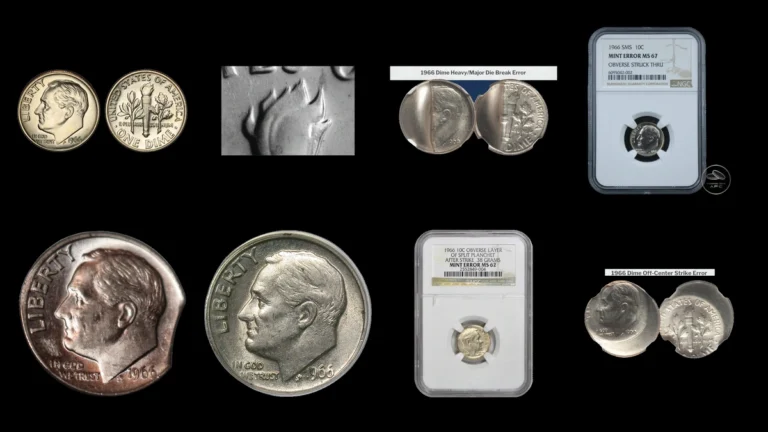
7. 2008 Dime Design Beside Unstruck Metal: Reported 2008-D Off-Center Strike Error
The reported Denver example has a modest displacement rather than a fully centered design. The blank sat partly outside the intended striking area and retained metal that the dies did not reach.
This blank area differs from a clip, where a portion of metal is absent. Ordinary handling marks can still occur on original unstruck metal.
How to Identify
Compare where the designs stop on both sides. Incomplete impressions beside the same plain area support a displaced blank; mainly one-sided imbalance may instead involve one misaligned die.
Preserve the readable date and D in photographs before estimating an offset percentage. Grinding lines can reveal a normal design erased after striking.
What It’s Worth
Clear, readable-date examples have an estimated $50–$650 range. The guide reports $635 for a 2008-D MS65, an unworn grade with relatively few marks.
That amount is not separately verified as a primary sale here. Fine preservation can influence a small-displacement coin’s reported value substantially.
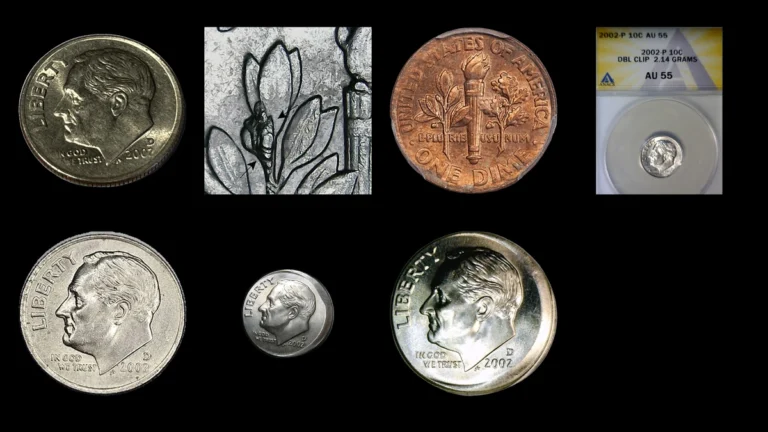
8. 2008 Dime Two Displaced Impressions: Reported 2008-D Double Strike Error
A second portrait or set of letters in another position can show that an already-struck dime received another blow. The later strike may overlap or distort the first impression.
The Denver report supplies no exact direction or percentage. Normal repeated blows during Proof production do not by themselves create this displaced-strike error.
How to Identify
Separate one recognizable feature from the first impression and its counterpart in the second. Coherent displaced designs differ from tiny shelves along the edges of a single set of letters.
Inspect overlap zones for later damage or an artificially pressed-on design. Confirm 2008 and D where they survive without borrowing an angle from another coin.
What It’s Worth
Identified 2008 double strikes have an estimated $150–$1,100 range. The year guide reports $1,020 for an MS63 example in 2022.
An actual 1978-D MS63 double strike brought $264 in 2022. The same grade does not make the differing strike patterns equivalent, and the 2008 guide report remains separate from that documented comparison.
9. 2008 Dime Back-Design Traces near Roosevelt: Reported 2008-P Die Clash Error
A torch or branch fragment near the portrait may come from contact between the two dies without a blank between them. The collision marks can transfer opposite-design traces to later coins.
The Philadelphia report concerns the front of an ordinary circulation issue. Its brief description does not locate every trace on one certified specimen.
How to Identify
Compare photographs of the two normal designs at matching size. Trace a suspected opposite-design fragment and check whether its position fits contact between the dies.
Random scratches and unfamiliar lines need not be clash marks. Examine nearby surfaces for evidence of a design pressed against the coin later.
What It’s Worth
Clear clashes have an estimated $20–$400 range from worn examples through attractive unworn coins. Recognizable fragments usually make stronger comparisons than faint unexplained lines.
A 1978-S Proof with strong clashes sold for $159 in October 2022. Its special collector finish differs from the ordinary 2008-P report.
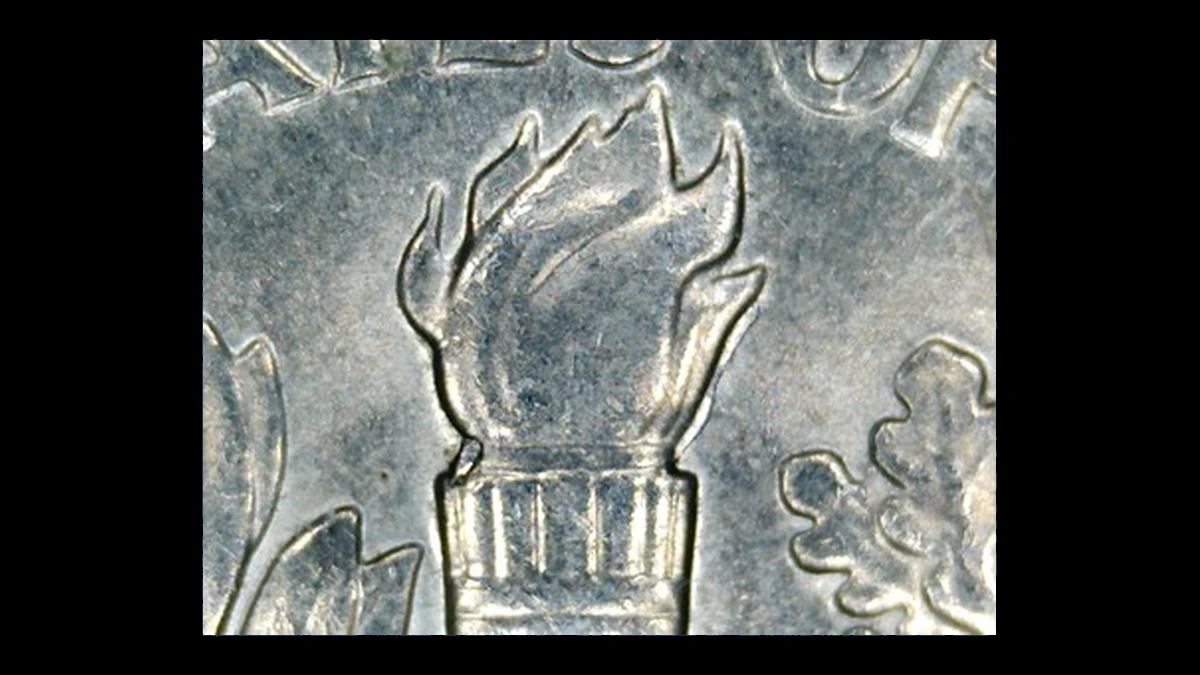
10. 2008 Dime Extra Contours on Both Sides: Reported 2008-D Doubled Designs Error
The reported combination includes front and back doubling. Each die must be evaluated separately because evidence on one face cannot establish a doubled pattern on the other.
The guide suggests front lettering or portrait detail and back torch or branches as inspection areas. It provides no precise variety number or matching pattern for the combination.
How to Identify
Choose the clearest suspected contour on each face and make separate close-ups. Rounded extra outlines or split letter corners are more useful than broad, flat strike ledges.
Retain full views showing the date and D, and seek a match for both patterns. Thick letters on two faces do not establish two doubled dies.
What It’s Worth
Identified examples have an estimated $50–$700 range from minor worn features to distinct doubling on clean unworn coins. The guide reports $620 for a 2008-D MS65.
Value the whole coin after establishing each face’s evidence. Two uncertain photographs do not justify combining two separate premiums.
Conclusion
For a 2008 dime, dark color does not mean missing cladding, and weak design does not automatically mean low pressure. Begin with the physical evidence and compare both faces before choosing a name.
The $10–$1,200 estimates include broad reported categories as well as comparisons from other years. Preserve an opening or unusual surface, and keep guide-reported prices distinct from documented auctions when judging a candidate.