Rare 2000 Penny Errors (List & Pictures)
Two different coin designs can survive on one piece of metal. A 2000 cent struck over a Virginia state quarter sold for $26,400 in November 2022, with traces of the earlier quarter still visible.
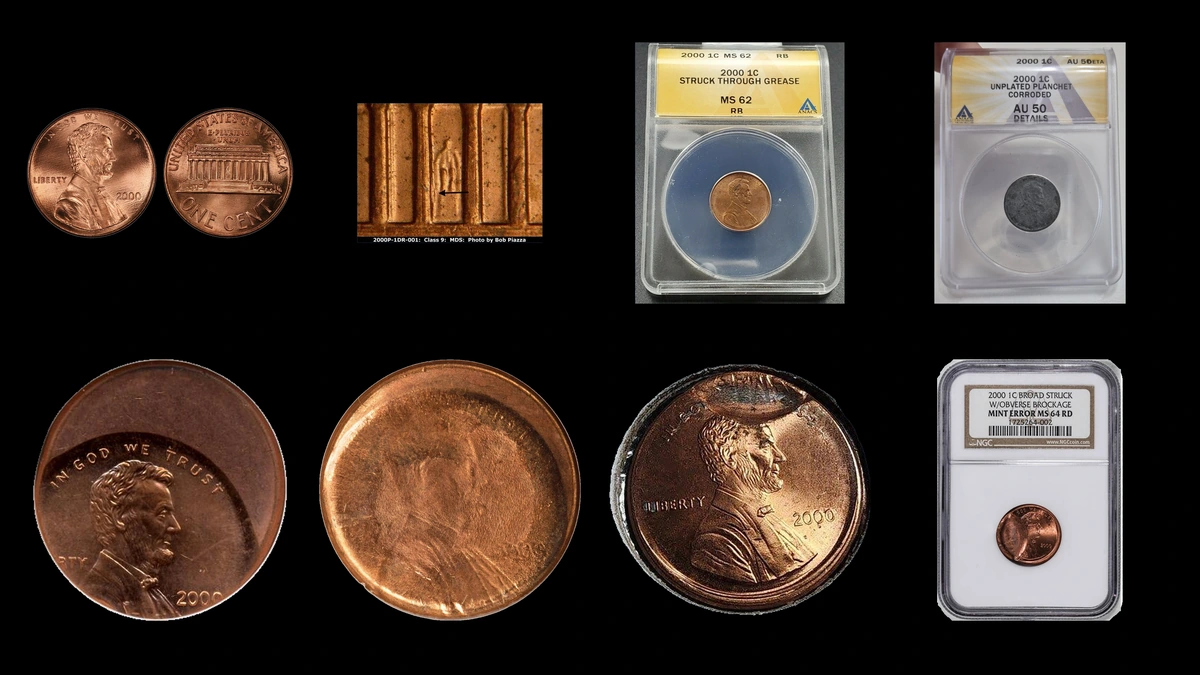
The 2000 penny errors here span estimated whole-coin values of $5–$30,000. Start with the familiar AMERICA lettering, then separate changes to the coating, strike, and underlying coin or blank.
| Clue | Key question |
|---|---|
| Gap in AMERICA | Is this a circulation Wide AM or a normal Proof? |
| Gray surface | Uneven copper, no original coating, or later stripping? |
| Repeated or reversed design | Doubled die, second strike, or sunken brockage? |
| Cup or distorted face | The die cap itself or a coin struck beneath it? |
| Different size or another denomination | Wrong unused blank or cent struck over a finished coin? |
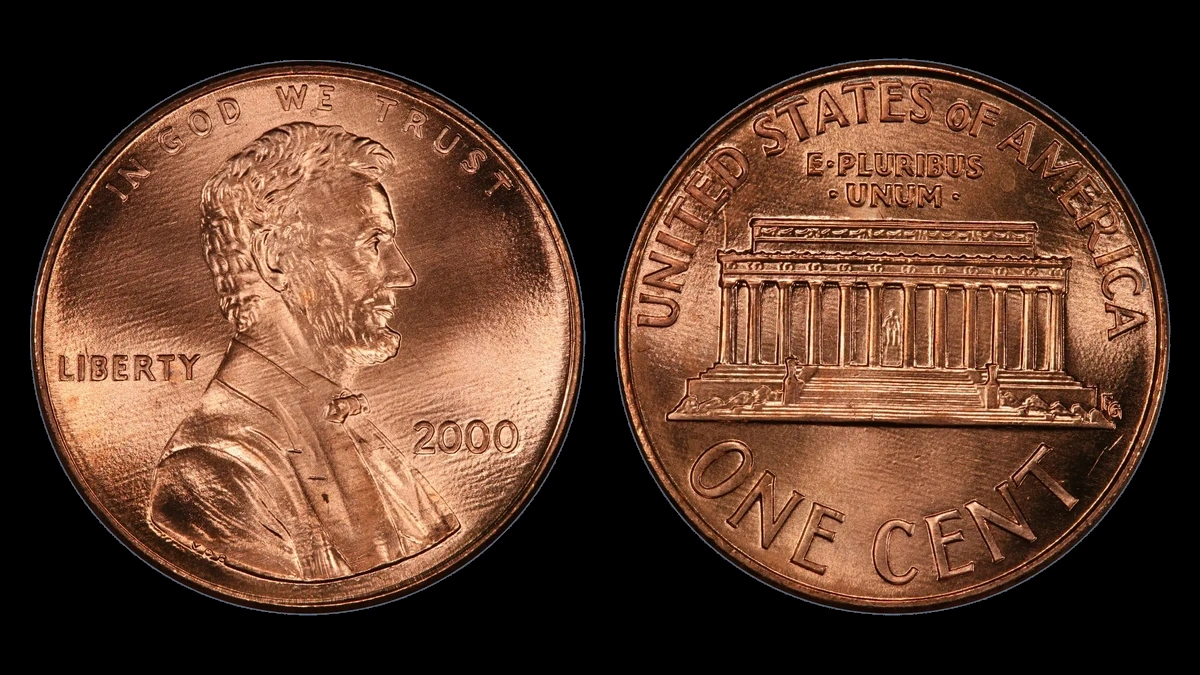
1. 2000 Penny A and M Have a Clear Gap: Wide AM Error
Ordinary 2000 circulation cents use close spacing between A and M in AMERICA. The Wide AM variety uses the reverse design normally associated with collector Proofs.
The collectible mismatch concerns Philadelphia circulation coins. A normal 2000-S Proof already has Wide AM, so its gap is not this error.
How to Identify
Check the front for the coin’s mint and finish before enlarging AMERICA. No mintmark is normal for Philadelphia; S points to the Proof context.
Compare the clear A–M separation with an identified Wide AM and check FG beside the Memorial as supporting design detail. Reflections or a blurry crop can hide the true letter edges.
What It’s Worth
$5–$100 is the estimate for worn and ordinary unworn examples. Exceptional highly preserved red coins have a higher $100–$800 comparison range.
PCGS lists an $800 eBay result from April 2012 for MS68. That exceptional historical result is not a typical pocket-change price or a value for an ordinary S Proof.
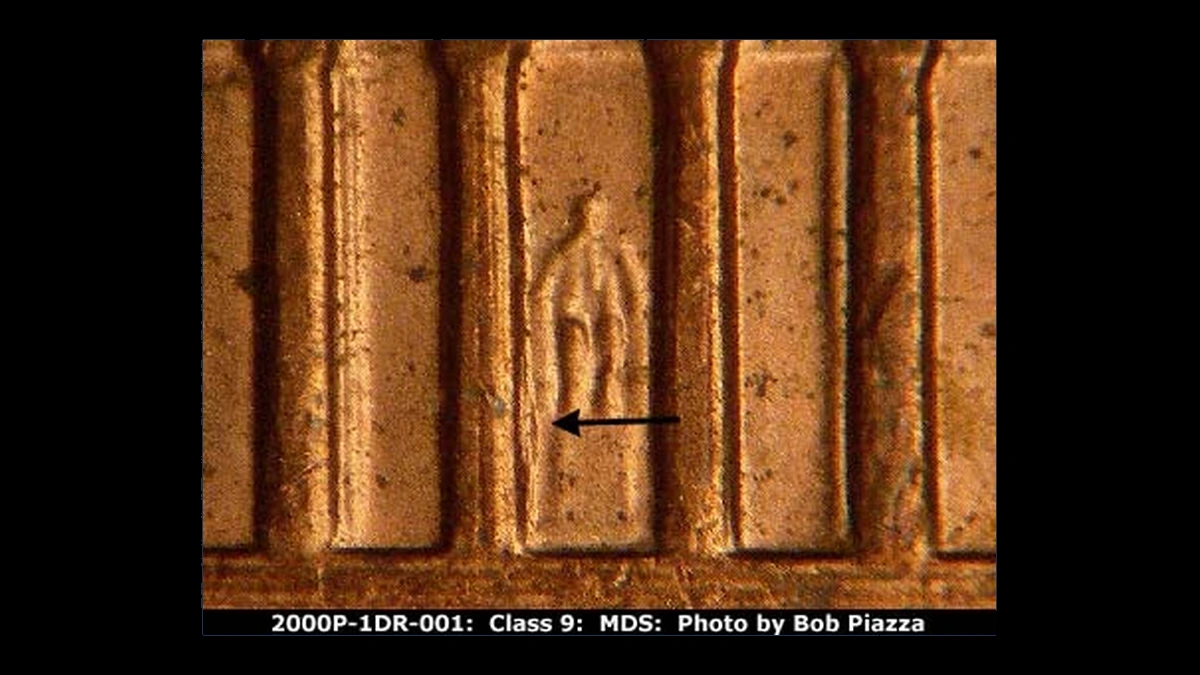
2. 2000 Penny Small Design Contours Repeat: Doubled Die Error
A doubled die already carries repeated detail before striking any coins. It can copy the same extra shape onto many cents without giving each coin a second blow.
Philadelphia and Denver entries cover separate front and reverse patterns. Their locations should not be combined into one expected set of doubled details.
How to Identify
Choose the actual mint and face in the Memorial-cent variety catalog. Trace the matching raised contour rather than general letter thickness.
Flat shelves can result from movement during striking. Worn tools and gray zinc exposed beside torn copper can also create misleading extra edges.
What It’s Worth
$5–$30 is the estimate for minor matched patterns, with about $30–$150 for stronger clear detail on attractive coins. These compare modest modern varieties.
No single sale amount prices all the 2000 entries. A small feature does not inherit the famous 1955 doubled-date premium, and two affected faces do not mean adding two whole-coin estimates.
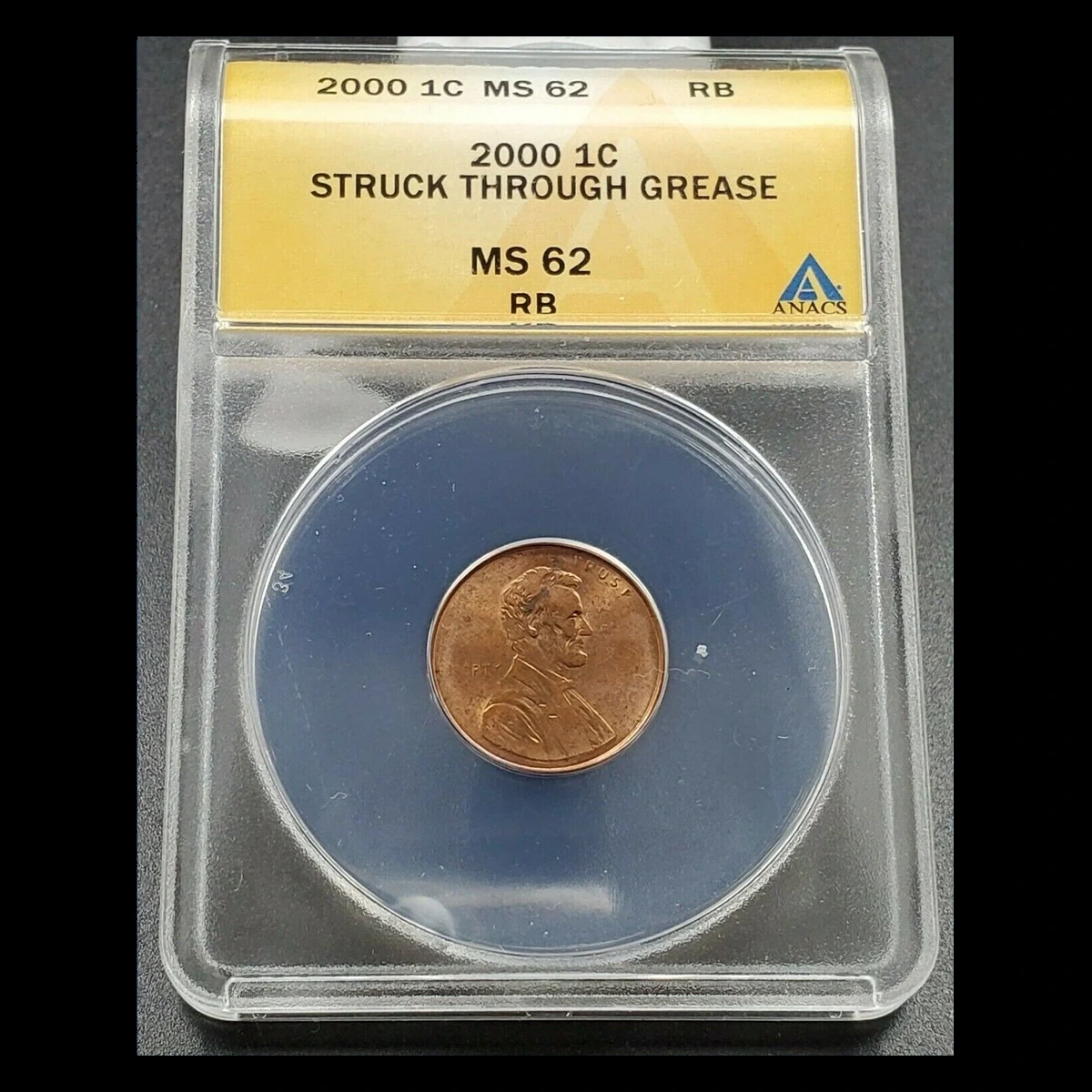
3. 2000 Penny A Narrow Impression Interrupts the Picture: Struck-Through Error
A collector reported finding a line-shaped strike-through on a Philadelphia 2000 cent in a Mint set. The account does not certify what material caused it.
An obstruction between a die and blank can interrupt the design as the coin forms. A later scratch can look similar, so the boundary matters.
How to Identify
Follow the line into a letter or portrait detail and observe where the design stops or changes. A later scrape can cut through finished features and push metal along its sides.
Keep the date and both full faces with the close-up, and leave any attached material in place. Do not call the mark wire, cloth, or retained debris without evidence for that specific description.
What It’s Worth
$10–$250 is the estimate for a genuine line-shaped strike-through. Size, visible boundaries, and surviving design affect the comparison.
The Mint-set discovery has no supplied sale amount. A 2021-D grease strike-through sold for $84 in September 2025, but its different year and softer obstruction make it general context rather than an exact match.
4. 2000 Penny Copper Coverage Is Uneven: Improper Plating Error
An auction record identifies a 2000 cent struck on an improperly copper-plated blank, graded NGC MS63. MS63 means unworn with noticeable marks.
Uneven original coverage is different from a completely unplated blank. The record does not establish one fixed face or copper pattern for every example.
How to Identify
Inspect where struck detail crosses the differing coating areas. Compare the remaining copper with the exposed or differently plated surface.
Rough chemical damage, corrosion, and scraping can disrupt an ordinary coating later. A normal cent is about 2.50 grams and 19.05 millimeters with a smooth edge, but a thin plating change may barely affect weight.
What It’s Worth
$20–$300 is the estimate for confirmed original plating defects. The affected area and preservation of the surrounding design help place a coin within it.
The recorded MS63 establishes an example without a selling amount used here. Its uneven coating does not prove a fully unplated blank, and later stripping needs a different valuation.
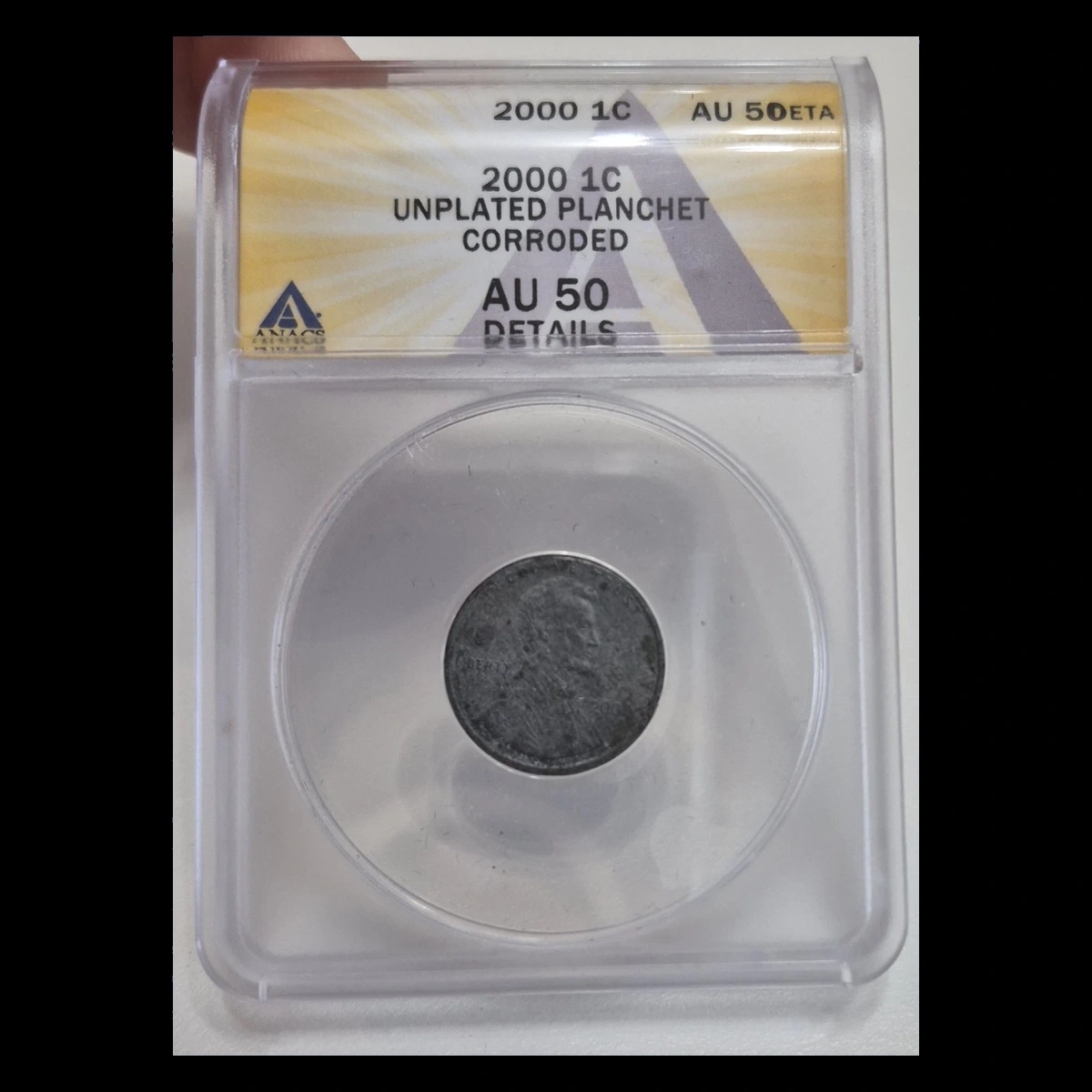
5. 2000 Penny The Whole Zinc Surface Lacks Copper: Reported Unplated Blank Error
A fully unplated blank would have lacked its normal copper skin before the cent design was struck. This remains a reported 2000 category requiring an identified specimen.
The recorded improperly plated coin is not proof of complete absence. Chemical stripping can expose the same gray zinc on a previously ordinary penny.
How to Identify
Inspect both faces and the edge for corrosion, chemical roughness, or protected copper remnants. Gray zinc is the normal core of the cent, not silver.
Original design formed on an uncoated surface needs professional confirmation. The absence of obvious scratches alone cannot establish that the Mint omitted the coating.
What It’s Worth
$100–$500 is the conditional estimate for an authenticated fully unplated 2000 cent. It compares original plating omissions on modern zinc cents.
No confirmed fully unplated 2000 sale is claimed. The range should not be applied to chemical stripping or automatically transferred from the separate uneven-plating record.
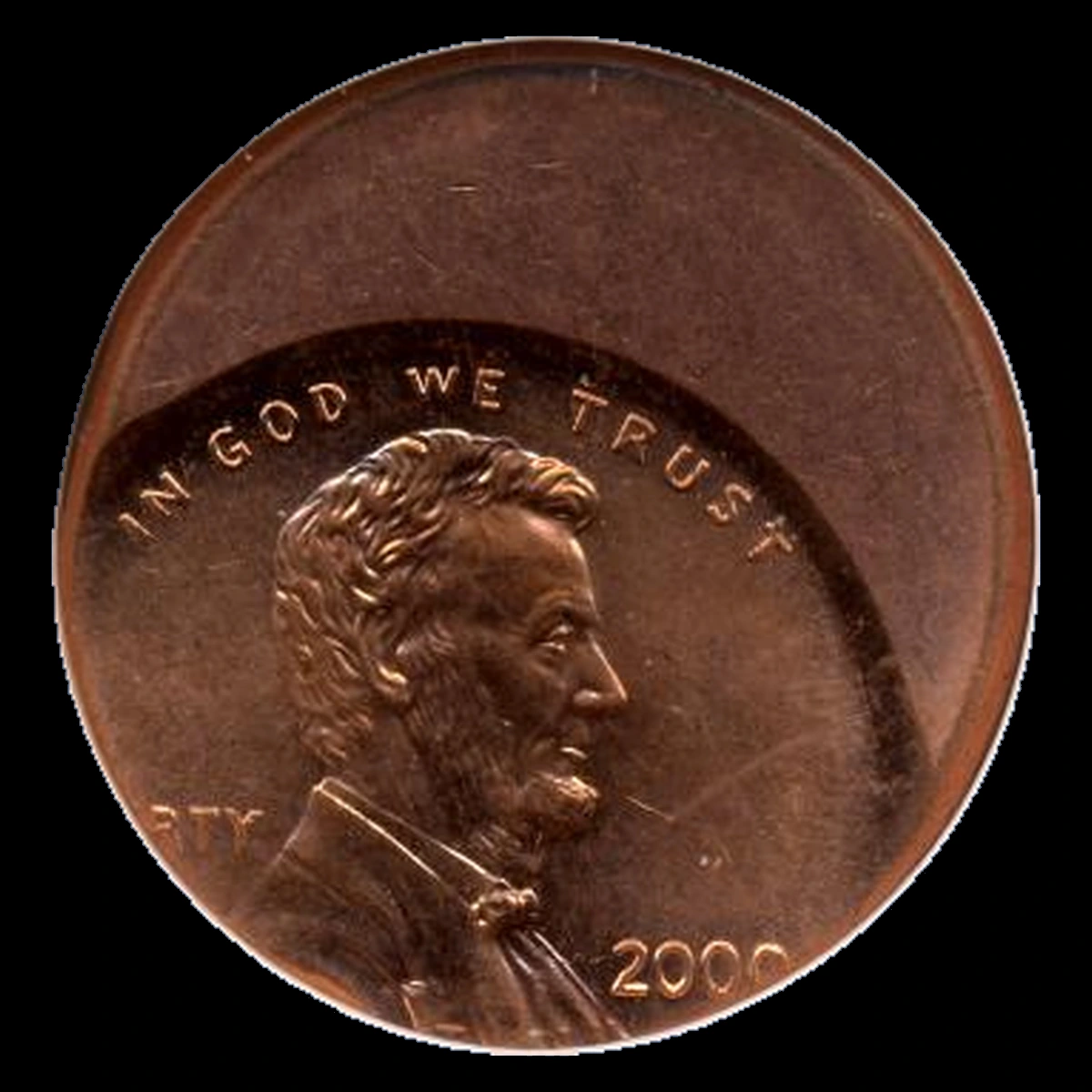
6. 2000 Penny Missing Design Borders a Plain Crescent: Off-Center Strike Error
When the blank sits partly outside the dies, some intended design misses the metal and another area remains unstruck. The same misplaced blank affects the portrait and Memorial sides.
Reported 2000 examples do not establish one universal mint, offset amount, or direction. Each coin’s surviving date and design need to be read directly.
How to Identify
Compare complete views of both faces and trace their related design loss. A centered face behind a shifted face can indicate one misaligned tool instead.
The crescent should remain intact original metal, unlike a clip where metal is absent. Check the plain area and edge for grinding or cutting that could remove completed design.
What It’s Worth
$20–$100 is the estimate for smaller clearly dated shifts. Larger attractive examples may fit about $100–$500.
These are modern-cent comparisons rather than a sale record for every pictured 2000 example. A dramatic crescent can lose appeal if the date disappears or surfaces are damaged.
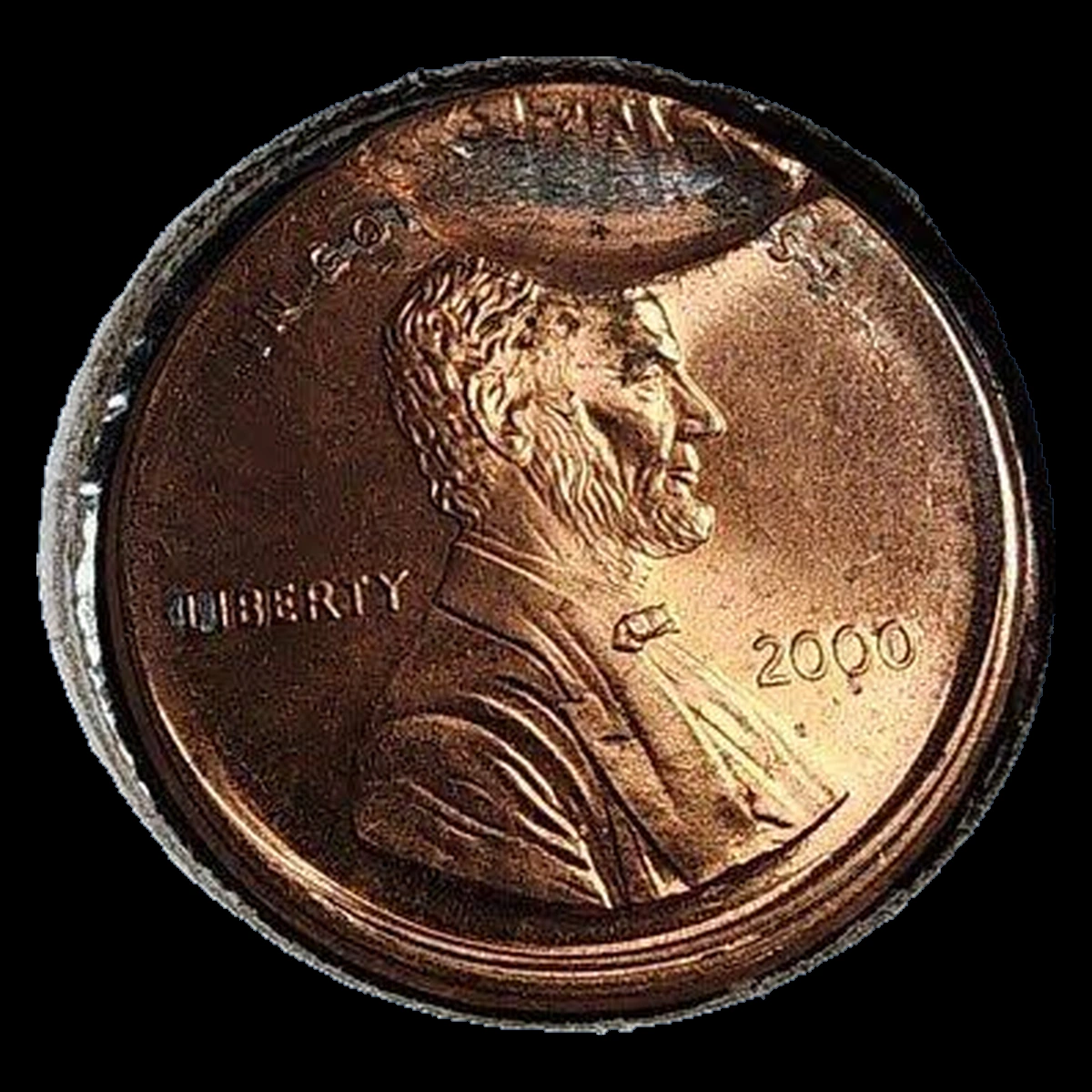
7. 2000 Penny A Depression Meets an Expanded Outline: Broadstrike with an Indent Error
One 2000 coin from a related pair is broadstruck with an indent near the upper front edge. An overlapping blank blocked that area while the metal spread during striking.
NGC graded the first coin MS63 Red. Its partner received a second strike about 80% off-center, which belongs to that other piece rather than the indented cent.
How to Identify
Follow the upper depression and the surrounding design into the wider outline. An original overlapping-blank impression should fit the strike rather than a later punch through finished detail.
If both coins are available, compare their contact features while keeping their separate designs and strike sequences clear. Look for later tool marks or displaced metal from impacts.
What It’s Worth
$75–$600 is the estimate for one genuine broadstruck cent with a clear indent. Depth, placement, and surviving design determine the closer comparison.
No separate sale amount is assigned to the first coin. A related-pair price cannot automatically be divided into equal individual prices, and the broadstrike and indent should be valued together.
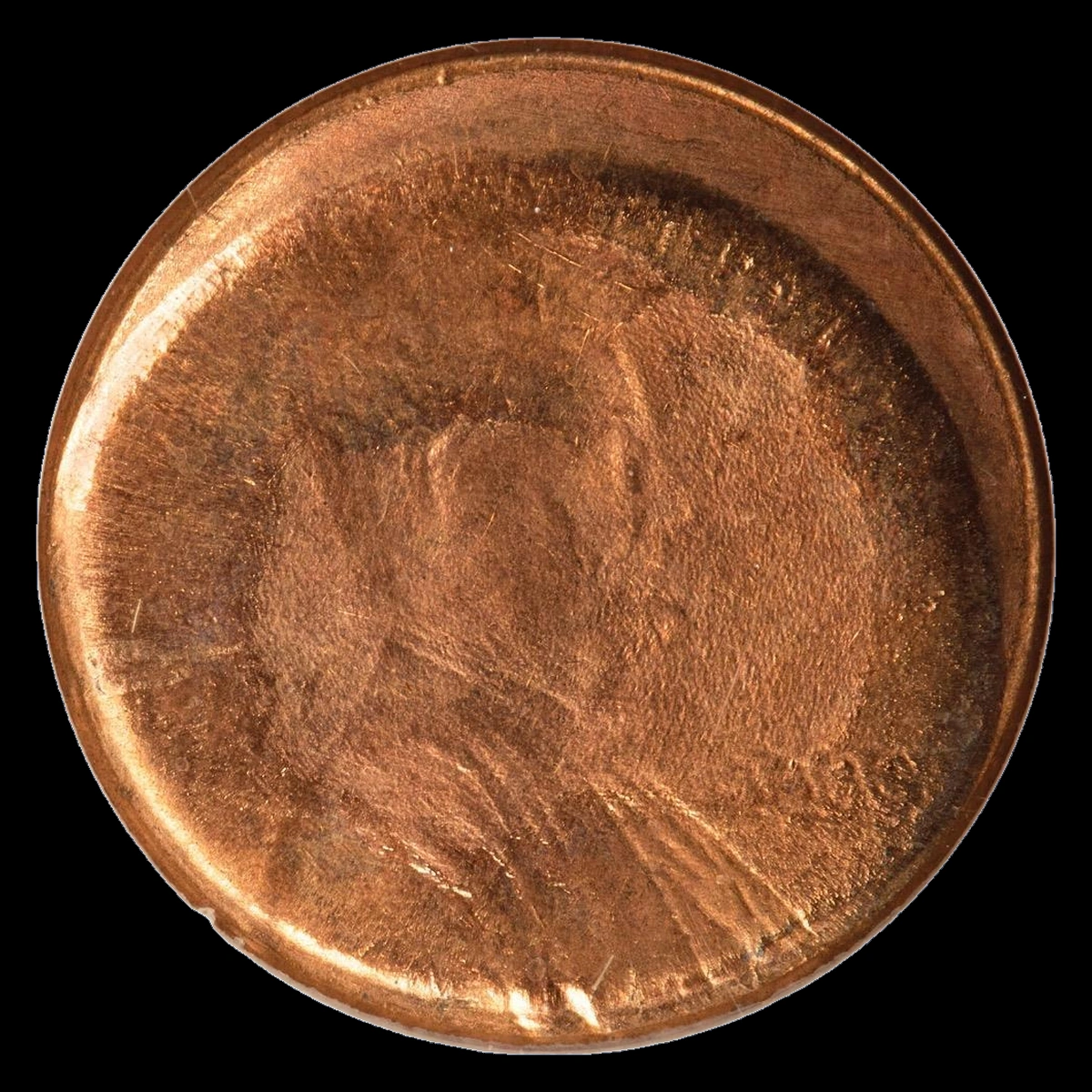
8. 2000 Penny A Coin Has Grown a Cup-Shaped Wall: Die Cap Error
A struck cent can remain attached to a die as more blanks enter the press. Repeated blows spread its metal around the tool and build a raised wall.
The recorded 2000 front-side die cap is PCGS MS64 Red, meaning unworn with some marks and copper-red color. This is the trapped coin itself.
How to Identify
View the wall from the side without flattening or squeezing it. Its curve and base should fit repeated striking around a tool rather than a simple later fold.
Keep the surviving design and full cup shape together in photographs. Altered dimensions are expected, so do not force calipers across a fragile wall to obtain an ordinary cent diameter.
What It’s Worth
$150–$750 is the estimate for genuine caps with varying wall height, completeness, and preservation. The recorded 2000 example sold for $312 in June 2025.
That same-year sale supports a comparison for an original cup-shaped error. An ordinary penny bent after minting does not qualify merely because it now holds a similar shape.
9. 2000 Penny The Memorial Is Distorted by a Covering Coin: Capped-Die Strike Error
A different coin can be struck beneath the cap attached to the tool. Its reverse receives distorted or softened detail because the cap blocks direct contact with the normal Memorial die.
A 2000 reverse capped-die strike graded NGC MS67 Red appeared in a group of five errors. The group also contained a different-year die cap, which is a separate object.
How to Identify
Compare the altered Memorial side with the clearer opposite face. Match the distortion to a covered-tool effect rather than ordinary wear on high points.
Keep the 2000 identity tied to this particular coin in the group. It is a coin struck through a cap, not automatically the cup-shaped cap that remained on the die.
What It’s Worth
$50–$600 is the estimate for genuine 2000 capped-die strikes. Strong visible distortion and an attractive surviving face support greater interest.
The five-coin group does not provide a separate selling price for its MS67 Red member here. The whole group’s amount must not be presented as the price of that one cent.
10. 2000 Penny Two Raised Impressions Overlap: Double Strike Error
An auctioned 2000 cent flipped between strikes and received its second blow about 80% off-center. NGC graded it MS64 Brown, meaning unworn with some marks and brown surfaces.
A flip can place portrait and Memorial details on the same face. This is another strike on the coin, unlike fine repeated detail already present on a doubled die.
How to Identify
Find two recognizable impressions and trace how a date, portrait edge, or building fragment belongs to each. For a flipover, check that the opposite face supports the same sequence.
Flat shelves or a vague extra outline cannot establish another blow. The second design must fit how the coin moved, and the documented 80% amount belongs only to that specimen.
What It’s Worth
$75–$1,000 is the estimate for genuine dated double strikes. Clear separate impressions, a readable year, and a visible flipover can support stronger prices.
A 1979 cent with its second strike off-center sold for $204 in September 2023. Its older copper alloy differs from the 2000 plated-zinc blank, and no sale amount is assigned here to the recorded 80% flipover.
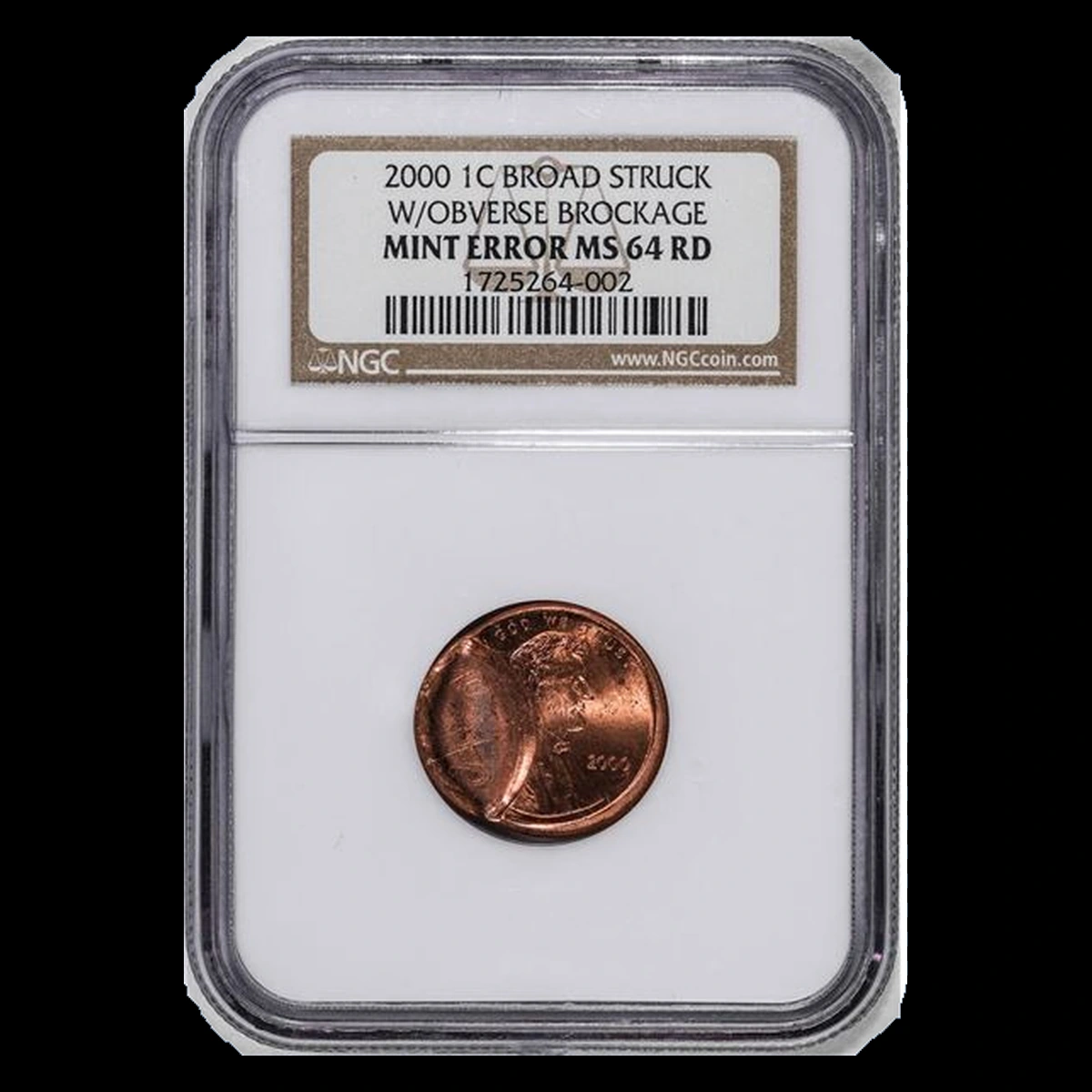
11. 2000 Penny A Backward Design Sinks into the Metal: Brockage Error
A struck coin pressing into another blank can leave a mirror-image impression called a brockage. The copied design is sunken, unlike the normally raised overlap of a double strike.
A collector-recorded example also has a broadstruck outline. Its label places 2000 in parentheses, indicating an assigned year rather than a fully readable date on the coin.
How to Identify
Choose a recognizable letter and check both its backward direction and recessed shape. Compare it with the ordinary raised design on the other face.
Keep the assigned-year distinction in any description of the example. Later squeezing between finished coins can imitate a backward impression, so original surfaces and the complete striking evidence matter.
What It’s Worth
$100–$1,000 is the estimate for genuine brockages with suitable condition and identification. Coverage and clarity of the mirror image influence the price.
An undated Lincoln cent with a full front-design brockage sold for $192 in March 2025. It is a mechanism comparison, and a broadstruck brockage should still receive one combined whole-coin valuation.
12. 2000 Penny Lincoln Is Struck on a Dime or Quarter Blank: Wrong Planchet Error
Recorded 2000 cents were made on both dime and quarter blanks. The smaller dime blank loses outer cent details, while the larger quarter blank can leave extra metal around the cent-sized design.
Neither blank had already received another denomination’s design. The recorded dime-blank example was PCGS MS64, and the quarter-blank example was MS65.
How to Identify
A dime blank starts around 2.268 grams and 17.9 millimeters; a quarter blank is about 5.67 grams and 24.26 millimeters. Compare those standards with actual measurements while allowing for spreading in the cent press.
Inspect the layered copper-nickel metal at the edge rather than relying on silver color. An unused blank does not need a finished dime’s or quarter’s edge grooves, and stripped zinc is different metal.
What It’s Worth
$250–$1,500 is the estimate for the dime-blank type, while a comparable quarter-blank rarity has an $8,000–$15,000 range. The exact blank makes a major difference.
The 2000 dime-blank cent brought $184 in August 2003; the quarter-blank coin sold for $14,400 in October 2021. The 1981-D dime-blank cent’s $372 September 2025 sale provides a more recent comparison for the smaller type.
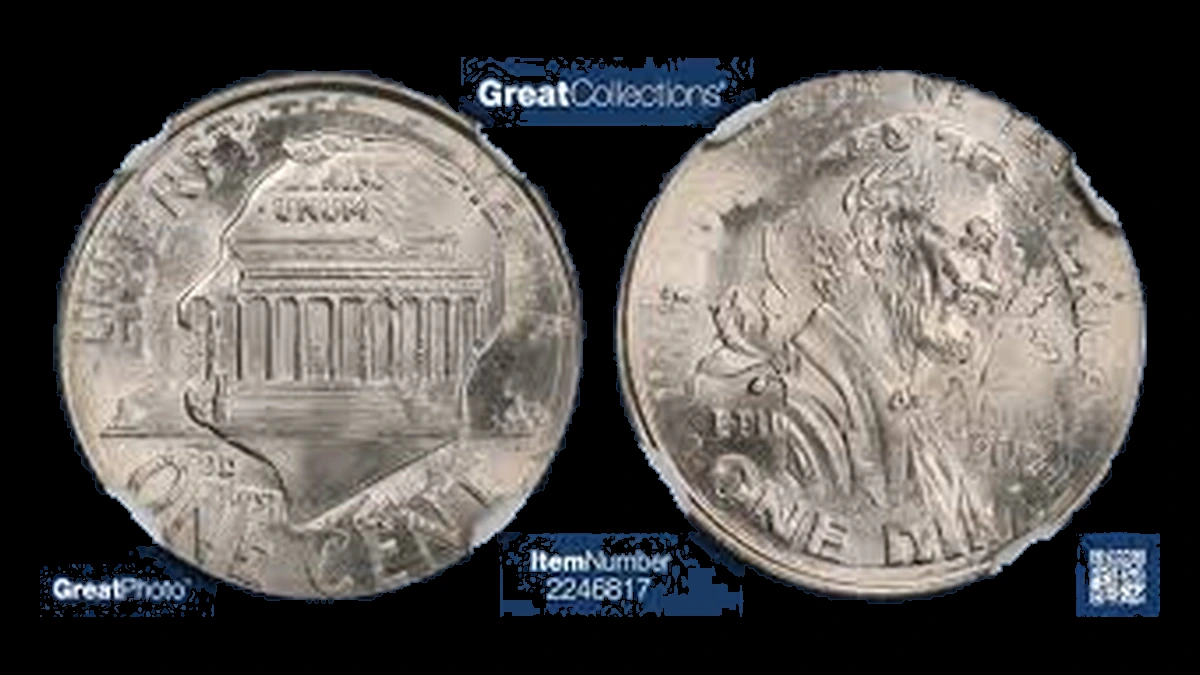
13. 2000 Penny Another Denomination Survives beneath Lincoln: Double Denomination Error
A finished dime or quarter can enter the cent press and receive Lincoln’s design over its existing picture. Surviving details of both denominations distinguish this from an unused wrong blank.
Recorded 2000 examples include cents over 2000-P dimes and over New Hampshire or Virginia state quarters. The two state-quarter pieces are separate specimens with their own orientation and sales.
How to Identify
Find recognizable remnants of Roosevelt, Washington, the torch, or the actual state design. Trace how the later cent impression crosses the earlier raised detail.
Weight and layered metal should fit the underlying denomination, allowing for changed shape. Earlier edge grooves may survive on a finished overstruck coin, unlike a blank that never received a dime or quarter design.
What It’s Worth
$1,000–$4,000 is the planning estimate for authenticated dime overstrikes. Comparable state-quarter pieces have a much higher $9,000–$30,000 estimate.
The New Hampshire-quarter overstrike sold for $9,400 in January 2016, while the Virginia piece brought $26,400 in November 2022. The Heritage archive keeps their individual records separate.
The dime figures are estimates rather than a transaction used here. Judge each coin’s actual overlap, preserved identity, and surfaces.
Conclusion
The everyday Wide AM search and a cent over a state quarter belong to very different collecting categories. Establish the coin’s issue and visible feature before reaching for the largest price.
Keep a die cap separate from a coin struck beneath one, and distinguish an unused wrong blank from an already finished denomination. Group lots, pairs, and multiple features on one cent still need their own whole-coin comparisons.