Rare 1947 Penny Errors (List & Pictures)
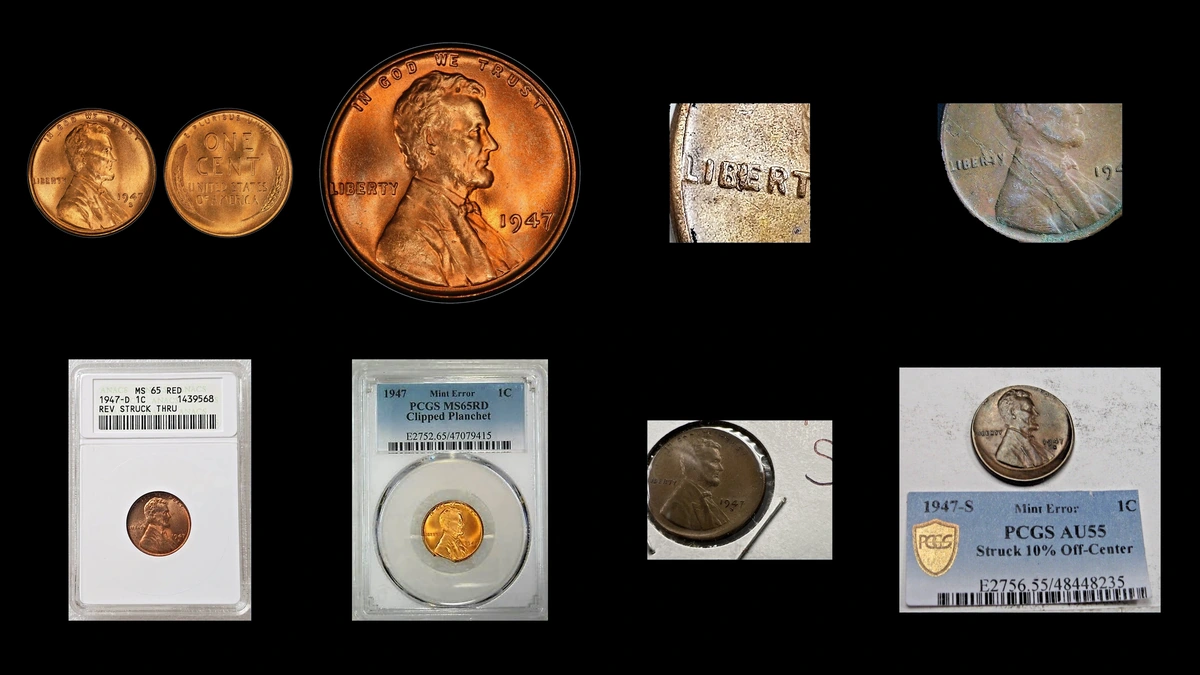
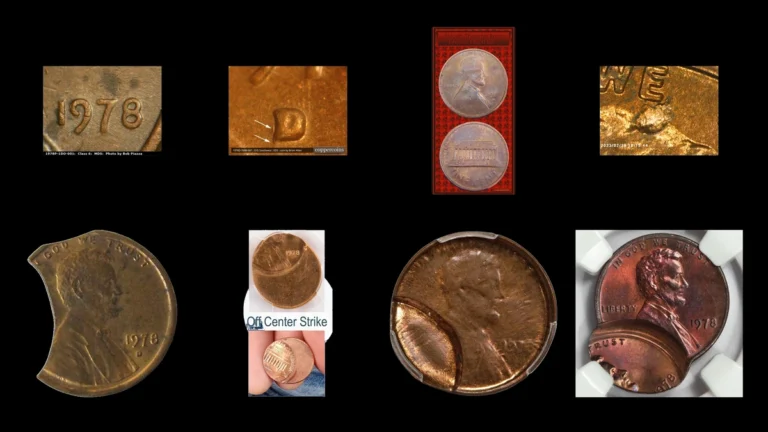
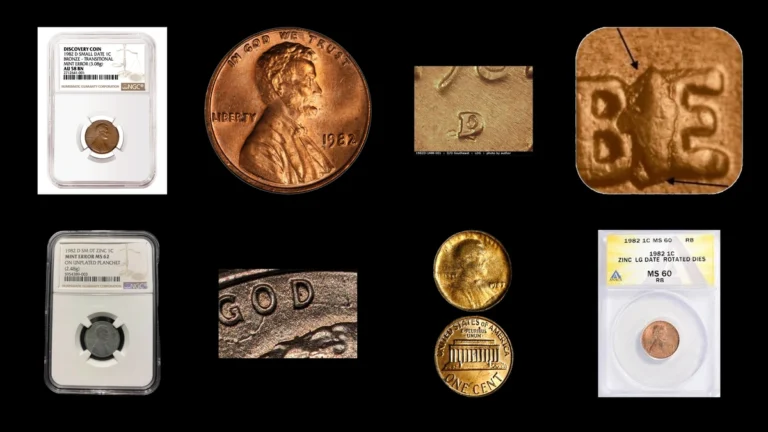
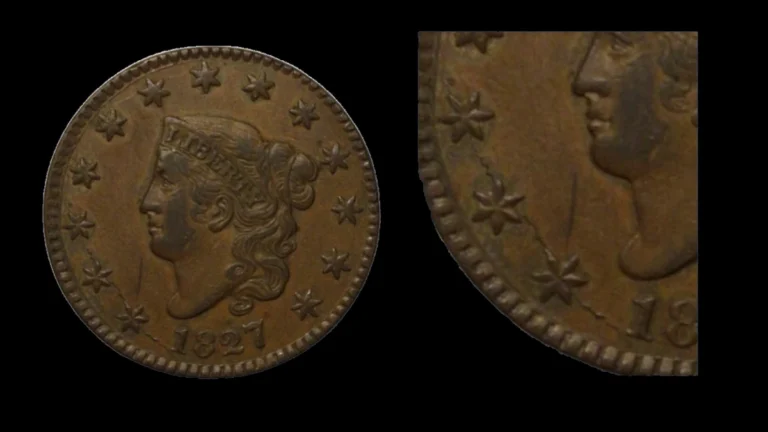
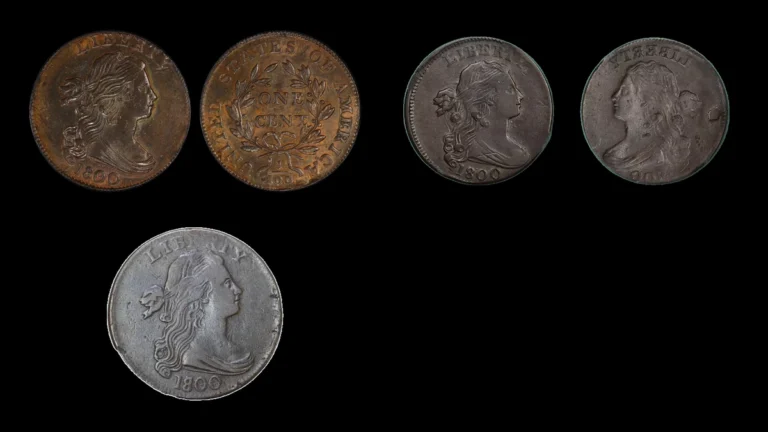
A Philadelphia doubled-die cent sold for $550 at GreatCollections in August 2014. A higher $1,350 eBay result concerns an exceptional repunched S; estimated values for 1947 Wheat penny errors span $2–$1,500.
Begin with small repeated outlines, then check raised defects, separated metal, and the edge. Ordinary cents of this date are copper alloy throughout, with a normal 3.11-gram weight, 19.05-mm diameter, and smooth edge.
| First observation | Error or variety | Estimated value |
|---|---|---|
| Extra D or S outline | Repunched mintmark | $5–$1,500 |
| Repeated eyelid or letters | Doubled die | $10–$800 |
| Raised line, bar, or patch | Crack, chip, or cud | $2–$250 |
| Loose layer or rough exposed metal | Lamination | $5–$100 |
| Design crosses a partial split | Pre-strike partial split | $50–$300 |
| Embedded foreign material | Retained scrap strike-through | $150–$600 |
| Missing outline section | Clipped planchet | $15–$150 |
| Wide coin, complete design | Broadstrike | $25–$200 |
| Plain crescent beside partial design | Off-center strike | $25–$400 |
1. 1947 Penny Overlapping D or S Strokes: Repunched Mintmark Error
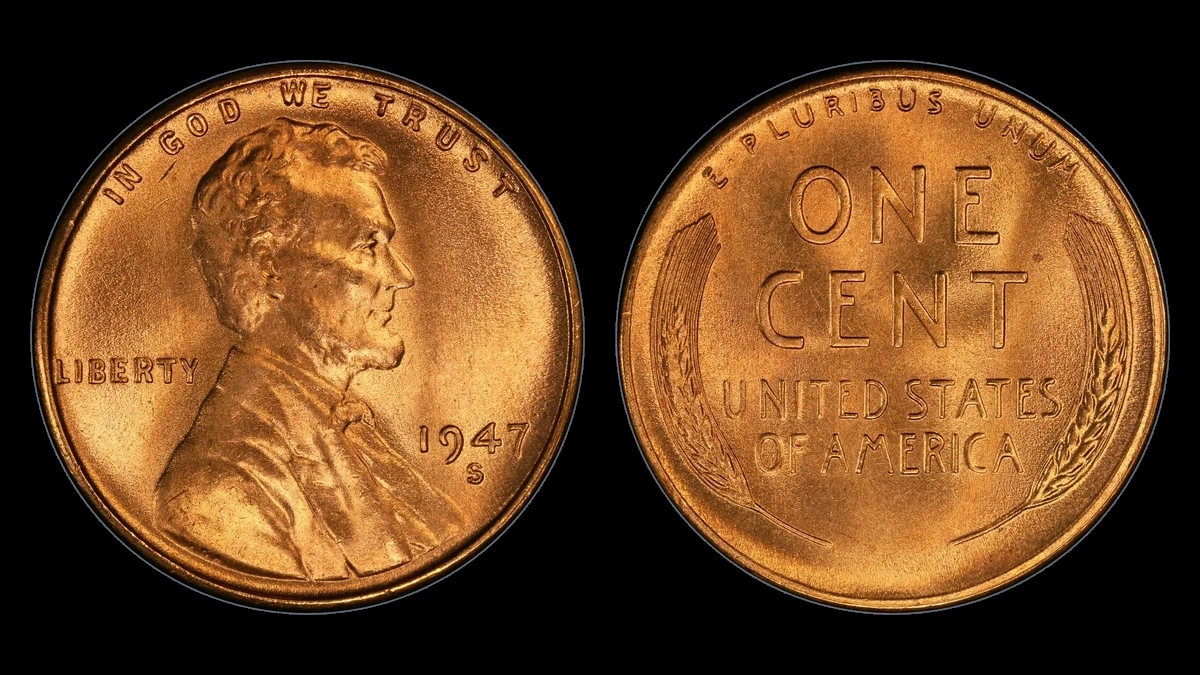
Mint workers added D and S to dies by hand, and a changed punch position could leave an earlier letter partly visible. Some 1947 varieties preserve three impressions rather than two.
How to Identify
Follow the actual extra curve or upright under changing light. The distinctive 1947-S FS-504 combines a short-ended S over an earlier flared-ended S; both impressions remain the same letter.
Other Denver and San Francisco patterns have different directions, including an inverted earlier S on another variety. Match the exact pattern and check for an added mintmark rather than assigning a variety to any nearby bump.
What It’s Worth
The estimated range is $5–$1,500, with many minor repunches around $5–$100 and stronger examples such as FS-504 around $100–$1,500. Preservation creates substantial differences.
PCGS lists a $1,350 eBay result for MS67 Red FS-504 on December 25, 2018. That high-grade marketplace result is not a typical circulated-coin price.
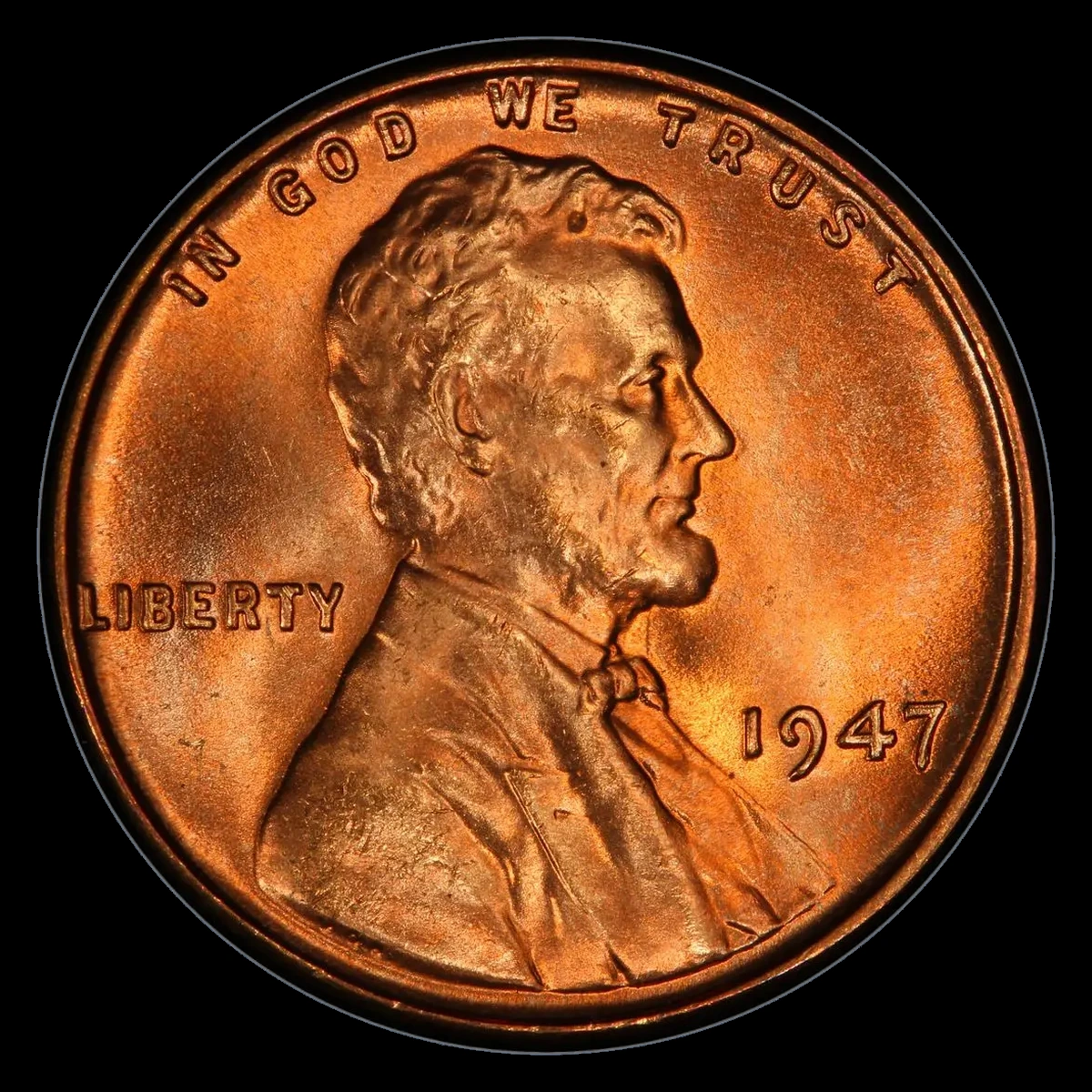
2. 1947 Penny An Extra Eyelid or Inscription Edge: Doubled Die Error
Some 1947 dies carried repeated portrait or letter details before striking coins. Philadelphia reports include FS-101, other eyelid varieties, and reverse-lettering doubling.
Denver has separate eyelid and reverse patterns, while San Francisco WDDO-006 concerns front inscriptions. These descriptions belong to different dies.
How to Identify
Choose the correct mint before comparing enlarged details. A Philadelphia FS-101 photograph cannot automatically identify another eyelid variety or a Denver coin.
For WDDO-006, match inscription doubling rather than a doubled S. Mintmark repunching has a separate origin, and flat shaved-looking ledges can be mechanical doubling instead.
What It’s Worth
Confirmed 1947 doubled dies have an estimated value of $10–$800. Minor examples fit roughly $10–$100, with stronger or better-preserved coins estimated around $100–$800.
PCGS records a Philadelphia doubled-front example graded MS65 selling for $550 at GreatCollections on August 31, 2014. That result does not assign the same price to every extra eyelid.
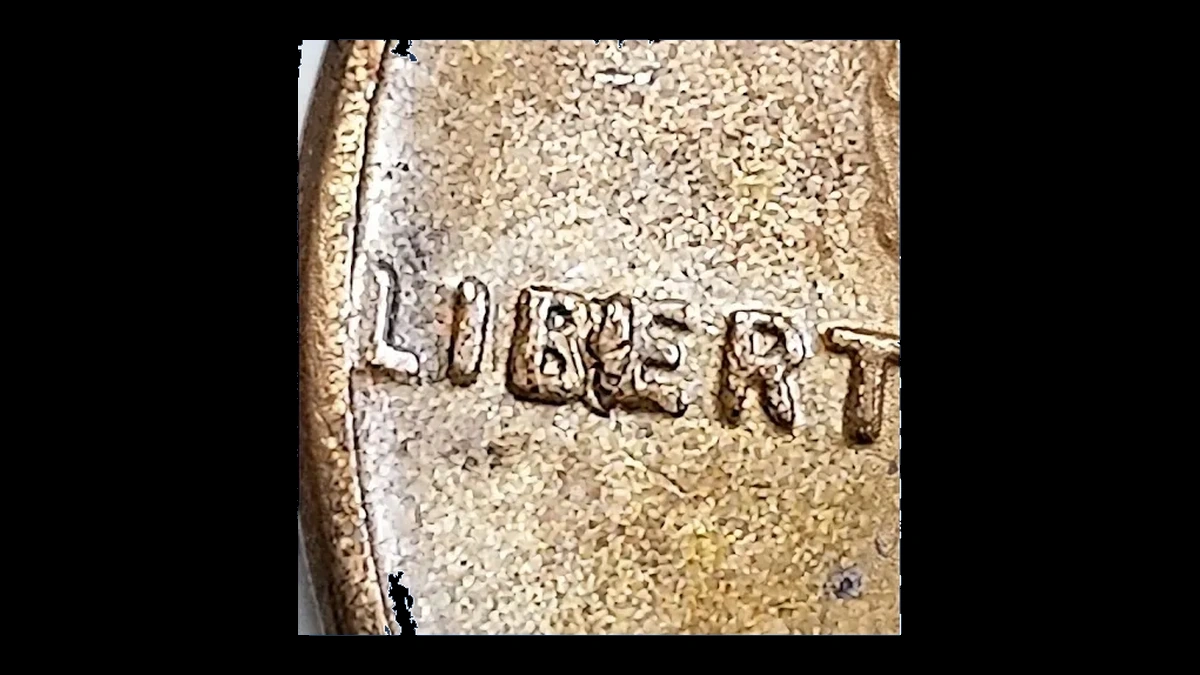
3. 1947 Penny Raised Lines, Letter Bars, and Rim Patches: Die Damage Error
A die crack leaves a ridge when metal fills it during striking. A small missing chip can create a lump or a BIE bar between B and E, while a larger rim-connected break produces a cud.
How to Identify
Use low light to distinguish raised metal from a scratch cutting into the coin. Trace the whole feature to its ends before choosing the name.
BIE belongs in the B–E gap, and a cud needs a real rim connection. An internal bump or metal pushed up by later edge damage requires a different description.
What It’s Worth
The overall estimated range is $2–$250, with small cracks and BIE chips around $2–$30 and clearer rim cuds around $25–$250. These are whole-coin estimates.
No specific sale is supplied for this broad group. Tiny breaks on heavily worn coins can attract little additional interest despite their genuine mint origin.
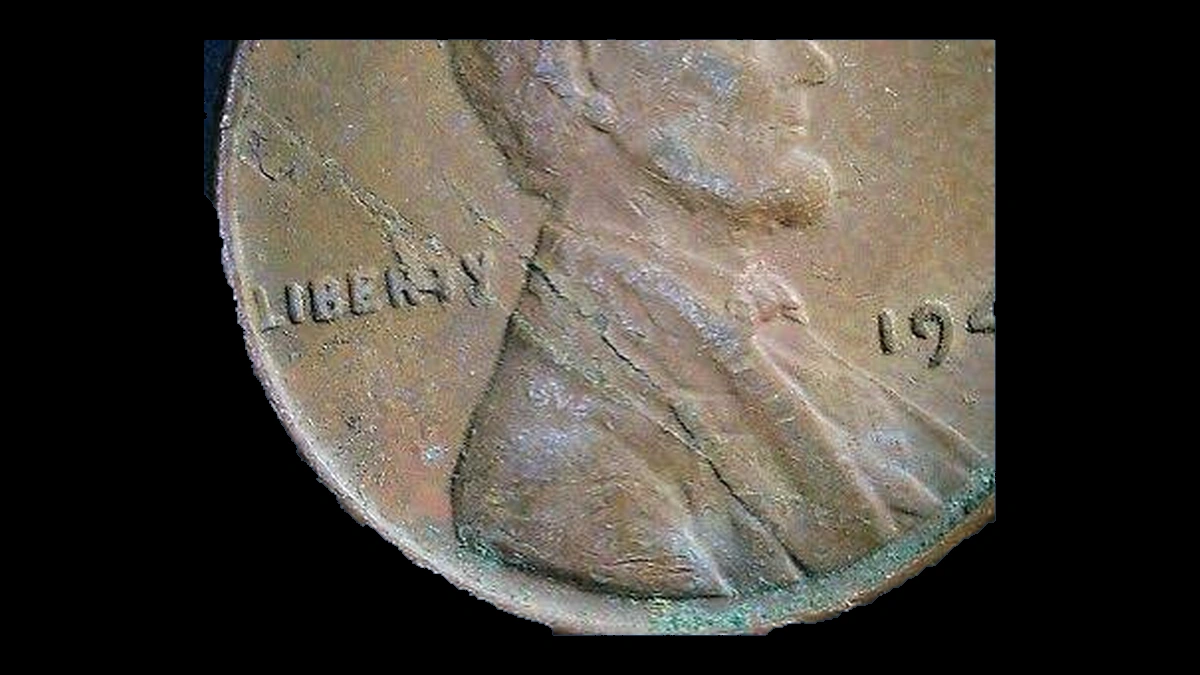
4. 1947 Penny A Surface Layer Lifts Away: Lamination Error
A weakness within copper alloy can let a layer lift or fall away. The result may be a retained flap or a rough exposed patch rather than a cleanly cut hollow.
How to Identify
Examine the separation boundary and nearby original surface without bending a flap. Look for layered metal rather than scattered corrosion pits or scraping marks.
No fixed location is established for the reported 1947 laminations. These coins have no modern zinc core, and an attached flap may leave weight almost unchanged.
What It’s Worth
A minor genuine 1947 lamination has an estimated value of $5–$100. A clearly retained layer can be more instructive than a small uncertain rough spot.
A 1966 front-lamination cent graded NGC MS63 Brown sold for $61 in July 2021. That later copper-alloy result is a mechanism comparison, not a 1947 transaction.
5. 1947 Penny The Design Forms over Separated Metal: Partial Split Before Striking Error
The recorded 1947-S cent has a partial split that existed before the dies impressed the design. Its disturbed or lowered surface can therefore carry evidence of the later strike.
How to Identify
Confirm S, then follow the stamped detail where it meets the separated area. The timing is what makes this more specific than simply identifying a peeling patch.
Only part of the disc separated; the description does not mean two complete thin halves. Do not pull the metal apart, and distinguish fresh tearing through finished letters from design struck onto an existing split.
What It’s Worth
A comparable genuine 1947 pre-strike partial split has an estimated whole-coin value of $50–$300. The clarity of the strike relationship matters more than a dramatic-looking opening alone.
The PCGS AU58 1947-S example sold for $144 at Heritage on June 29, 2026. Its slight wear and original split describe one coin, without assigning a separate price to any fragment.
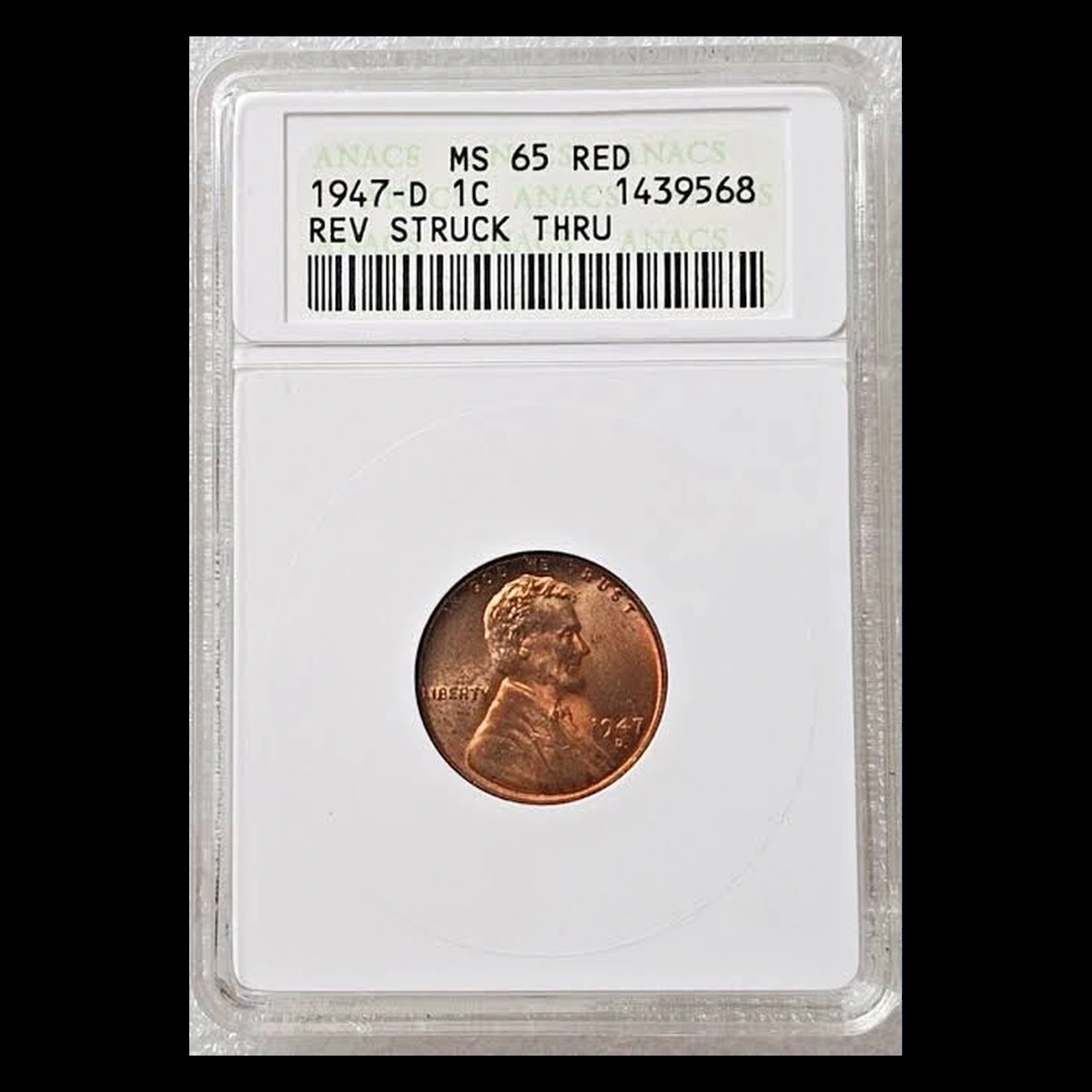
6. 1947 Penny Scrap Remains Pressed into the Coin: Retained Strike-Through Error
A foreign piece caught between blank and die can stay embedded after striking. The documented Philadelphia 1947 cent retains scrap in the surface, with design affected around it.
How to Identify
Examine the pressed-in boundary and surrounding design with changing light. Metal shaped around the object differs from glue or a fresh attachment on a finished coin.
The supplied description does not identify the scrap as wire, a staple, or another specific material. Leave it attached because the contact boundary preserves essential evidence.
What It’s Worth
An authenticated 1947 retained-scrap strike-through has an estimated value of $150–$600. The object’s visibility, size, and security affect its appeal.
The ANACS XF40 example sold for $324 on March 20, 2023. It was a circulated coin retaining substantial detail, not a plain depression or glued-on object.
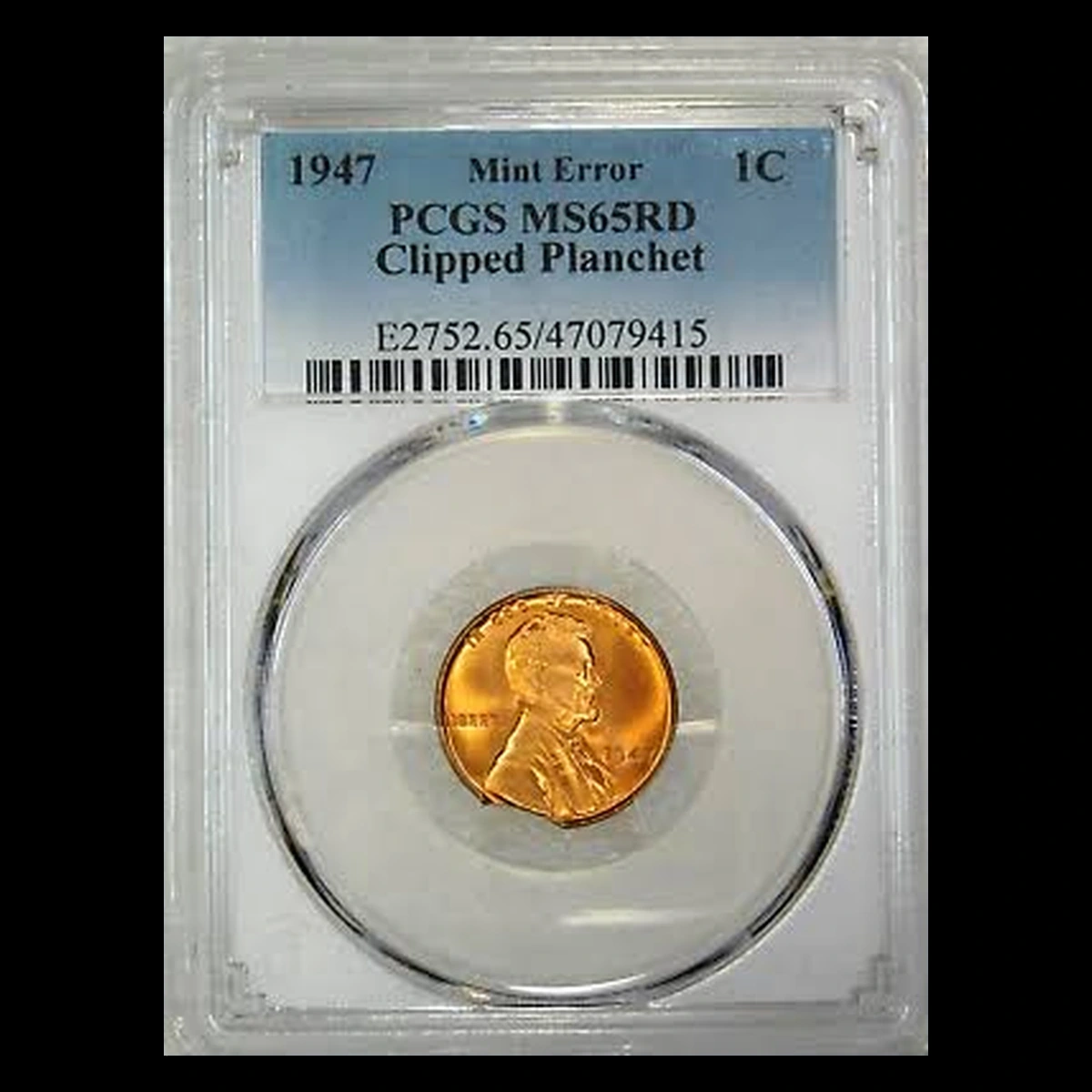
7. 1947 Penny Part of the Original Outline Is Missing: Clipped Planchet Error
A clipped planchet is a prepared blank that was incomplete before striking. The rim and nearby design formed around the area where metal was already absent.
How to Identify
Inspect the gap from both faces and the side for natural struck boundaries rather than saw or file marks. A smooth-looking curve alone cannot establish a mint error.
Opposite-rim weakness and reduced weight can support the identification without proving it alone. The reports supply no single clip size or shape for every 1947 coin.
What It’s Worth
A genuine 1947 clip has an estimated value of $15–$150. Readable date, original boundaries, and condition improve the comparison.
A 1955 ragged-clip Wheat cent graded NGC MS66 Red sold for $124 in March 2026. That different-year, specific-shape result is not a sale of a recorded 1947 specimen.
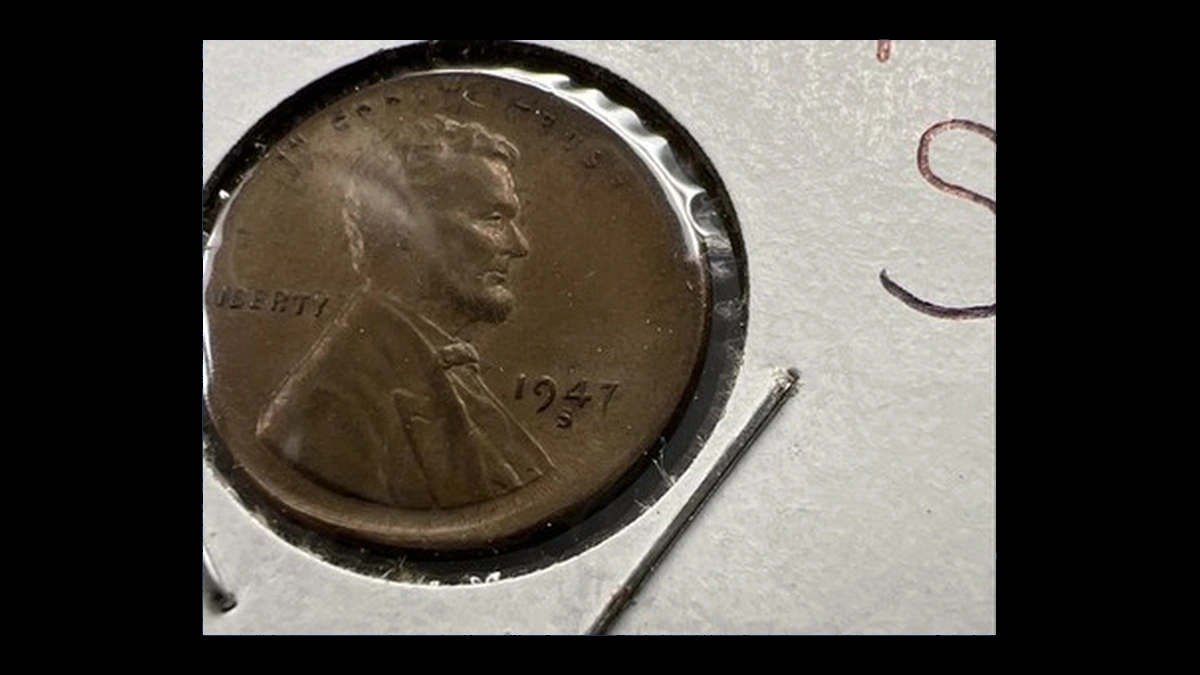
8. 1947 Penny Complete Designs Inside Extra Width: Broadstrike Error
A broadstrike forms when the collar ring fails to limit outward flow normally. The coin spreads while the intended designs remain on the metal.
How to Identify
Follow all outer words on both faces, then measure several widths. Expansion need not be even or place the portrait perfectly in the center.
Crushed lettering, sharp edge dents, or flattened high points can indicate later hammering. A slight measurement difference alone does not establish a broadstrike.
What It’s Worth
A genuine dated 1947 broadstrike has an estimated value of $25–$200. Obvious original spread and clear remaining detail improve its display.
A 1999 PCGS MS65 Red broadstrike sold for $67 in March 2023. Its different design and metal construction make it only a general mechanism comparison.
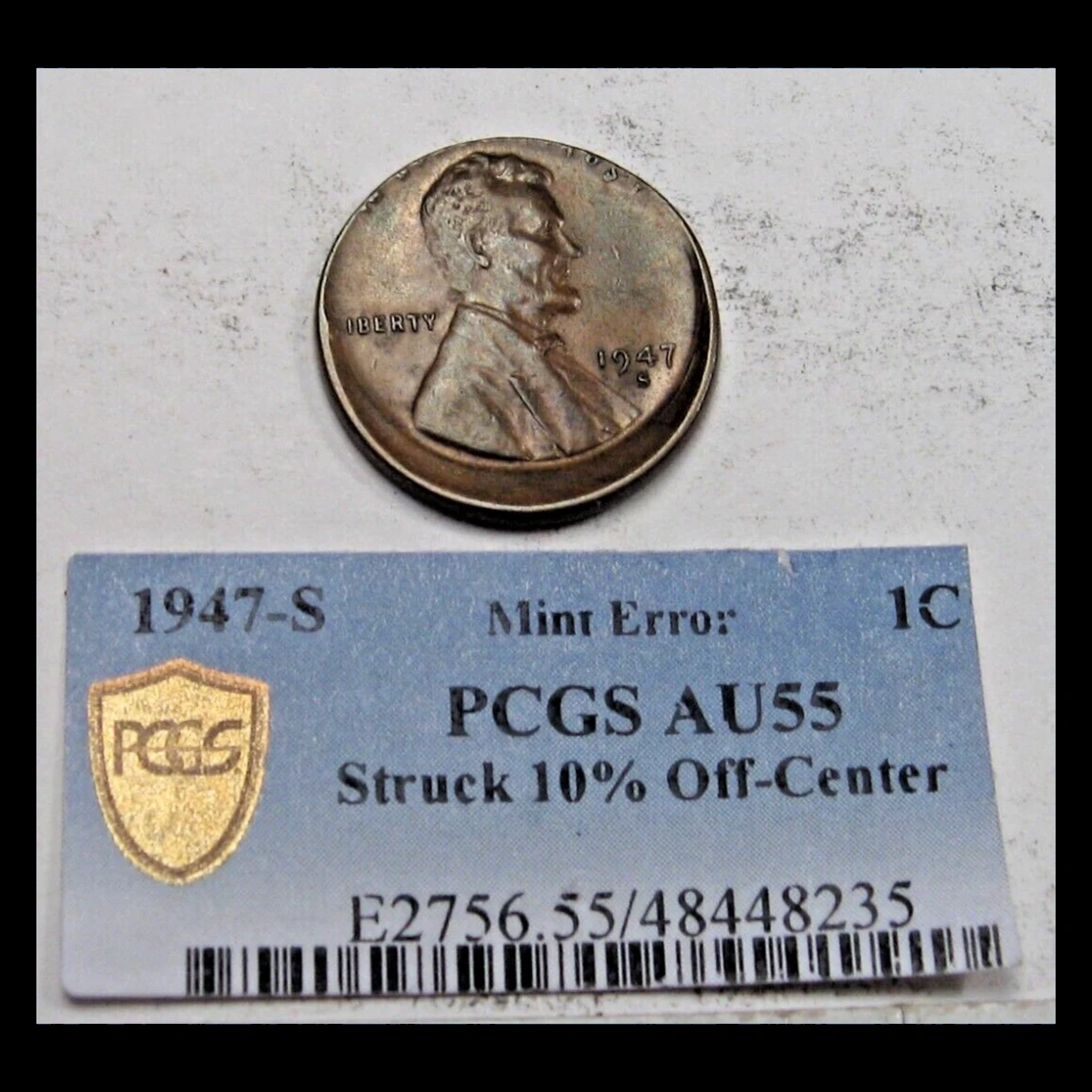
9. 1947 Penny An Unstruck Crescent beside Missing Design: Off-Center Strike Error
A blank out of position can retain plain metal while part of the intended design falls beyond its boundary. This differs from broadstriking, where the complete design remains on an expanded coin.
How to Identify
Read the surviving 1947 date and compare both faces for compatible displacement. Original unused metal should adjoin incomplete design without polishing or grinding explaining the plain area.
No fixed direction or percentage applies to the year report. Check the edge for cutting or hammer damage rather than judging the coin from a dramatic crescent alone.
What It’s Worth
A genuine 1947 off-center cent has an estimated value of $25–$400. Date visibility, displacement, and surface condition all affect appeal.
A 1968-D cent struck 60% off center and graded NGC MS62 Red and Brown sold for $47 in July 2021. That different-year result shows why a large shift is not a guarantee of a high price.
Conclusion
Small repeated outlines require the correct mint and variety match, while a split or retained object needs evidence of when it met the design. These checks explain why superficially similar marks can belong to different errors.
Keep loose metal and embedded scrap undisturbed, and compare the full coin with the supplied grade and sale context. The exceptional repunched-S result should stay separate from the more modest prices of ordinary chips, clips, and laminations.