Rare 1993 Penny Errors (List & Pictures)
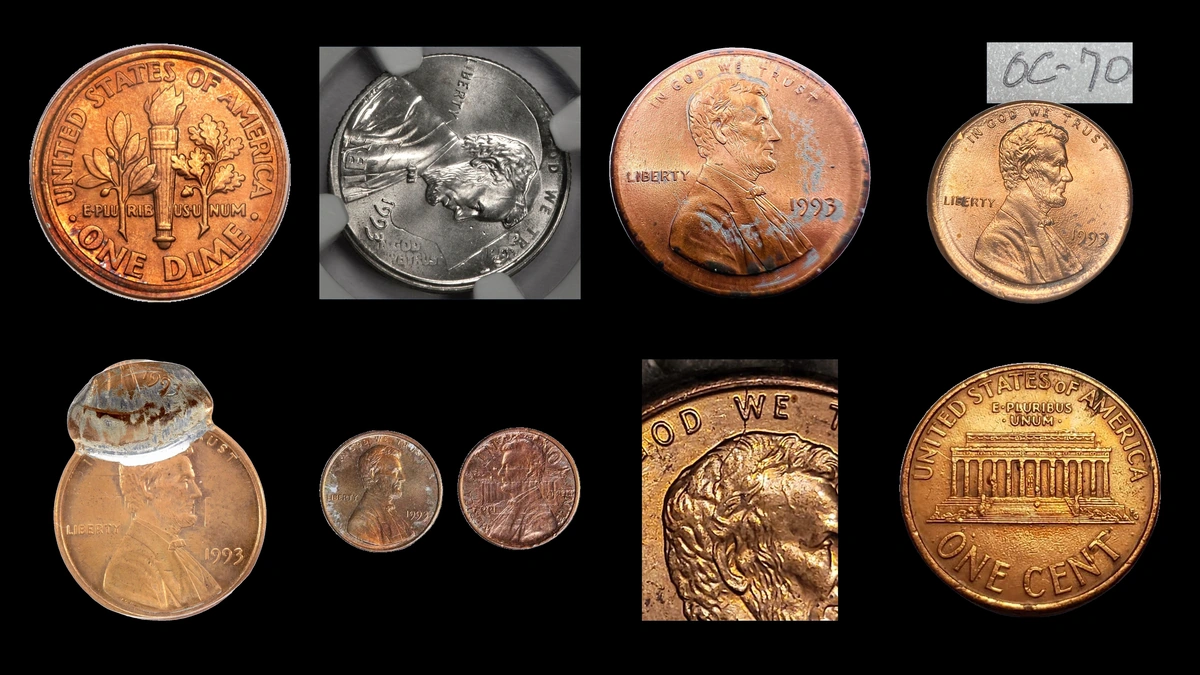
A dime design on a penny can mean two very different things: an earlier dime was struck again, or the press paired the wrong dies. The documented 1993-D cent-and-dime mule sold for $51,750 in January 2010.
These seventeen groups of 1993 penny errors span estimated values of $0.01–$100,000. Compare both faces first, then inspect the metal, outline, and small raised or sunken details.
| First clue | Category | Estimated value |
|---|---|---|
| Separate Lincoln front and dime back | Mule | $50,000–$100,000 |
| Dime details beneath cent designs | Cent over finished dime | $500–$3,000 |
| Cent designs on dime metal | Dime blank | $200–$2,000 |
| Gray zinc with missing copper | Partial or absent plating | $75–$1,500 |
| Complete designs on enlarged metal | Broadstrike | $10–$125 |
| Incomplete designs beside plain metal | Off-center strike | $20–$450 |
| Overlapping or stretched impressions | Repeated strikes | $40–$750 |
| Backward recessed front design on back | Fallen die-filling brockage | $150–$1,000 |
| Broad distorted front impression | Strike through a die cap | $30–$300 |
| Local front interruption | Strike-through | $15–$400 |
| Ridge entering Lincoln’s portrait | Die crack | $2–$40 |
| Letter-gap bar or rim patch | BIE or cud | $3–$400 |
| Faint opposite-design traces | Clash | $10–$250 |
| Thin raised shadow beside design | Plating disturbance | $0.01–$10 |
| Shallow lines above reverse motto | Die wear | $0.01–$5 |
| Extra front lettering or earlobe | Front doubled die | $10–$200 |
| Extra column or statue detail | Reverse doubled die | $5–$150 |
A normal copper-plated zinc cent weighs 2.50 g and measures 19.05 mm across a plain edge. A clad dime starts near 2.268 g and 17.9 mm, with pale outer layers surrounding a copper center.
Check accessible coins with a scale, calipers, and a 10× magnifier without altering their surfaces. Use recorded measurements for coins sealed in holders.
1. 1993 Penny Lincoln on the Front, a Torch on the Back: 1993-D Mule Error
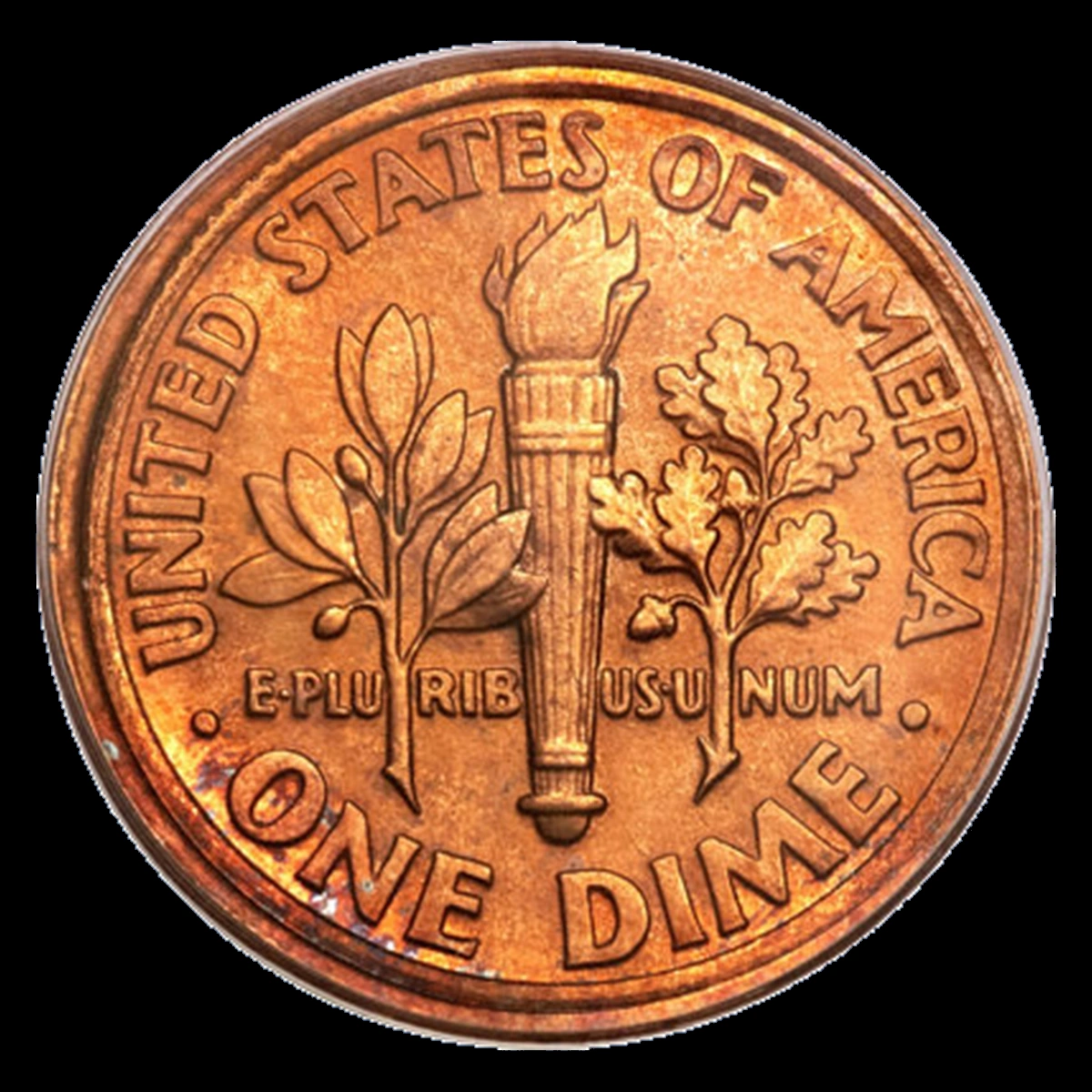
The normal Memorial is replaced by the dime’s torch and branches on this documented coin. A Lincoln front die and a Roosevelt dime reverse die were paired in the press.
The designs occupy separate faces rather than overlapping as remnants of two strikes. The auctioned specimen has a broad high reverse rim and some weaker front detail near the edge.
How to Identify
Confirm the 1993-D Lincoln front and dime reverse as the principal designs. Neither should need an underlying earlier coin to explain the pairing.
Inspect the edge for a joining seam and compare the reverse rim with the known specimen. Two ordinary coins assembled together can imitate the general idea without being a genuine mule.
What It’s Worth
The estimated range for this documented kind of major pairing error is $50,000–$100,000. It concerns a rare authenticated object rather than any cent with unusual back-side marks.
The PCGS MS65 Red specimen sold for $51,750 in January 2010. Its actual historical price does not guarantee a future result.
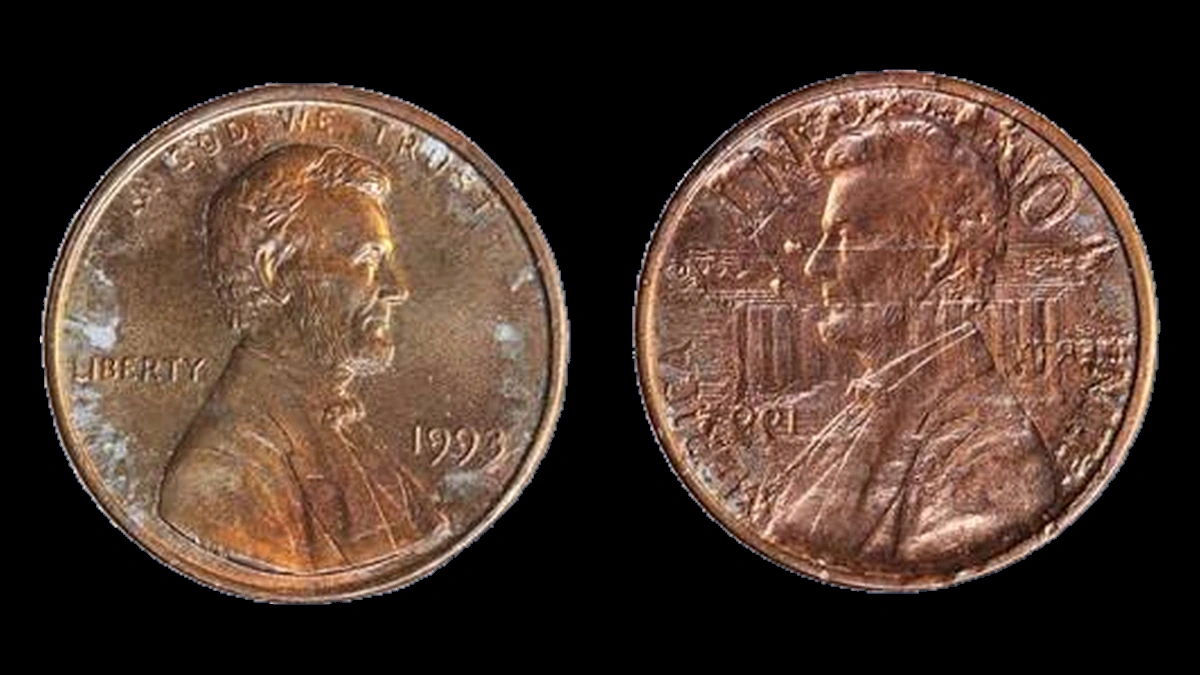
2. 1993 Penny Dime Remnants under Both Cent Designs: 1993 Overstrike Error
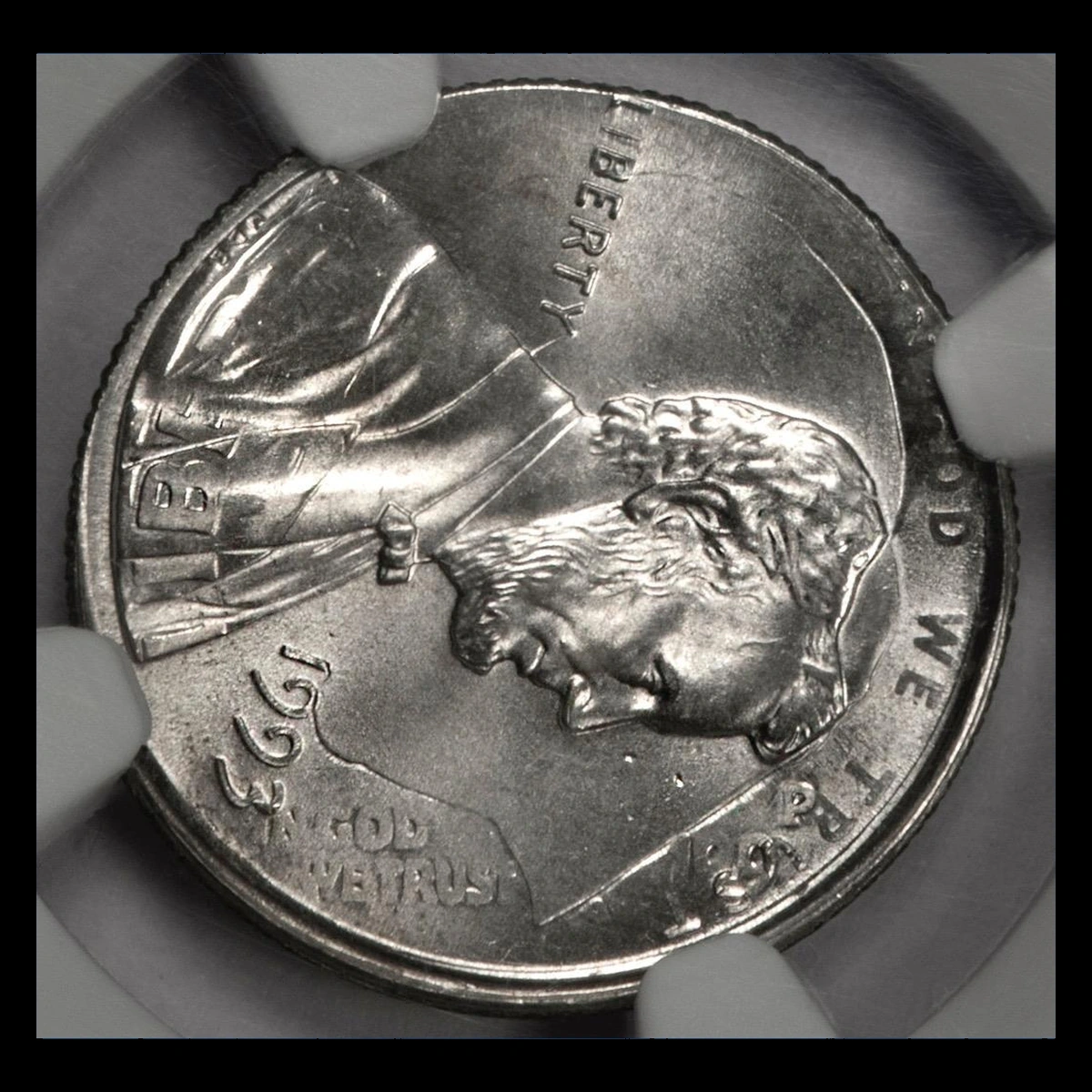
The recorded Philadelphia example has an olive branch across Lincoln and Roosevelt’s outline beneath the Memorial. A finished dime received the cent designs in a second denomination’s press.
A separate guide report concerns a Denver cent over a Denver dime. Its identity should not be inferred from the Philadelphia auction specimen.
How to Identify
Trace the branch and older portrait through the later impressions. On the Philadelphia specimen, portions of the dime date lie near CA in AMERICA and a P survives.
Keep each mintmark and date with its own design, without filling gaps from another coin. Overlapping authentic details distinguish an overstrike from the cleanly separated face designs of a mule.
What It’s Worth
Identified cent-over-dime examples have an estimated $500–$3,000 range. Readable old design and original surfaces influence appeal.
The Philadelphia coin in NGC MS67 brought $862.50 in April 2010. That high unworn grade and recorded sale do not establish a transaction for the separate Denver report.
3. 1993 Penny Lincoln on an Unused Dime Blank: 1993 Wrong Planchet Error
A pale coin showing only cent designs may have started as a dime blank. The recorded ANACS MS65 example has both cent impressions shifted toward the viewer’s left but still readily recognizable.
This blank had not received a dime design before reaching the cent press. Its bonded layers differ from zinc exposed on an unplated ordinary cent.
How to Identify
Compare weight and layered metal with dime specifications, allowing for expansion during striking. Inspect how the cent design fits the smaller starting disc.
Search both faces for an earlier Roosevelt portrait, torch, or branch. Such details change the explanation to a finished-dime overstrike.
What It’s Worth
An identified example has an estimated $200–$2,000 range. The readable date, design strength, and condition guide the comparison.
No sale amount is assigned to the ANACS MS65 listing here. A 2001 dime-blank cent in MS66 brought $446.20 in January 2009 as a different-year example of the same mechanism.
4. 1993 Penny Copper Coverage Is Incomplete: 1993 Missing or Partial Plating Error
Absent copper leaves zinc to receive the strike directly, while partial plating can leave copper beside exposed gray areas. The original surface must establish that the covering was missing before striking.
A GreatCollections unplated example was recorded at 2.4 g. A separate Denver coin was described as partially plated; its weight should not be borrowed from that first specimen.
How to Identify
Inspect both faces and the edge, noting where copper ends and zinc begins. Corrosion and chemical stripping can remove copper from a finished coin and imitate the colors.
Look for undisturbed struck zinc and a convincing coating boundary. A reading near 2.4 g alone does not establish an original plating failure.
What It’s Worth
Identified partial and fully unplated coins have an estimated $75–$1,500 range. Coverage, originality, and preservation determine the useful comparisons.
The 1993-D partially plated example brought $750 in September 2024 in NGC MS66 Red. Red is a color designation here, not a statement that the coin has complete copper coverage.
5. 1993 Penny Complete Designs on an Expanded Cent: 1993 Broadstrike Error
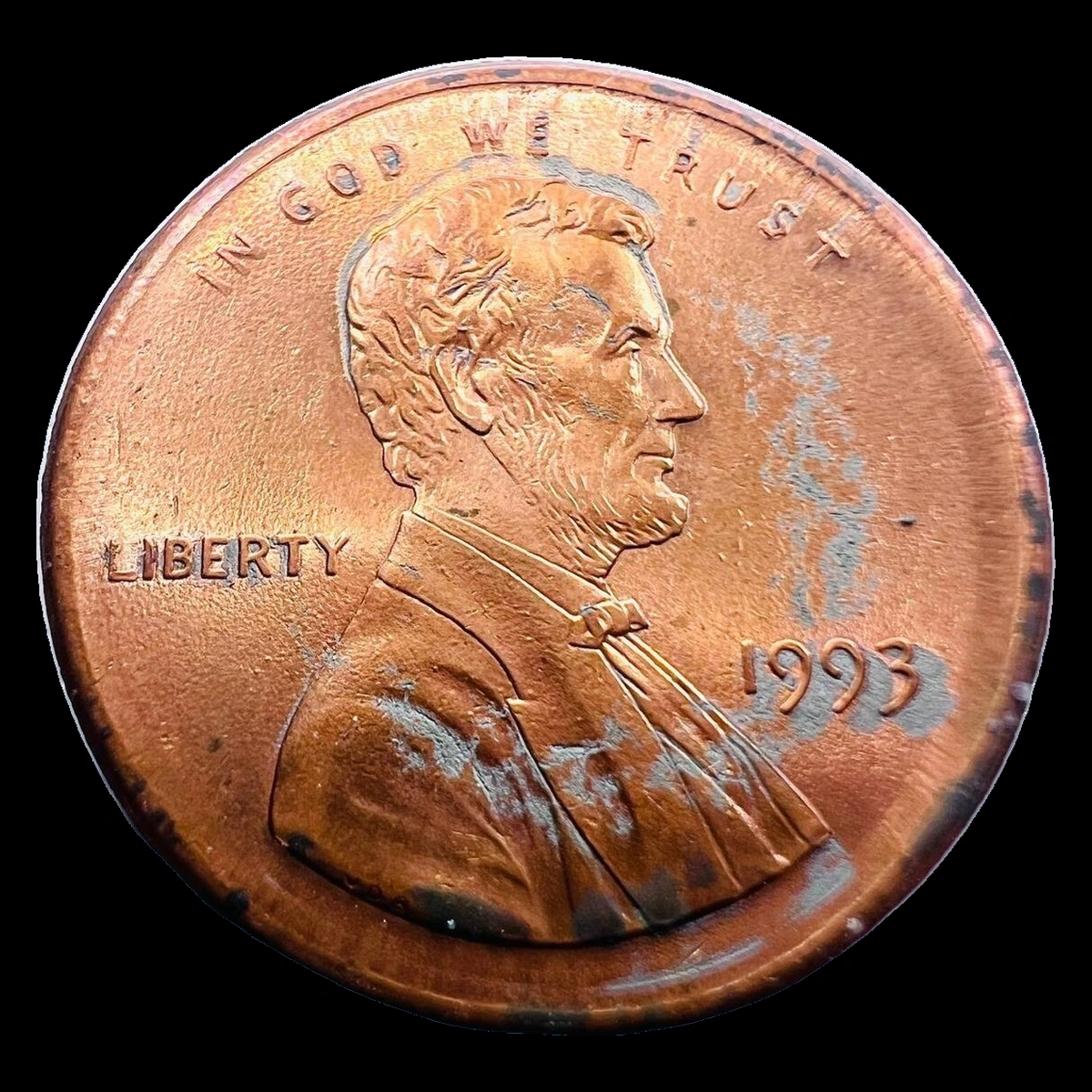
A broadstrike occurs without the collar’s normal restraint on outward metal movement. The coin can become wider while preserving all of its intended design.
A Heritage group lot included a 1993 example described as MS64 Red. Its design need not sit perfectly centered within the expanded border.
How to Identify
Trace the outer letters on both sides and measure the enlarged outline. Complete designs separate a broadstrike from a displaced blank that lost part of the picture.
Check for hammering, worked edges, and flattened lettering from later pressure. Widening after minting can imitate size without original strike formation.
What It’s Worth
Ordinary identified broadstrikes have an estimated $10–$125 range. Clear spread, readable designs, and original surfaces strengthen a comparison.
The cataloged 1993 coin belonged to a mixed group of dates and error types. The group’s total cannot be assigned to this one cent.
6. 1993 Penny Most of the Blank Remains Plain: 1993 Off-Center Strike Error
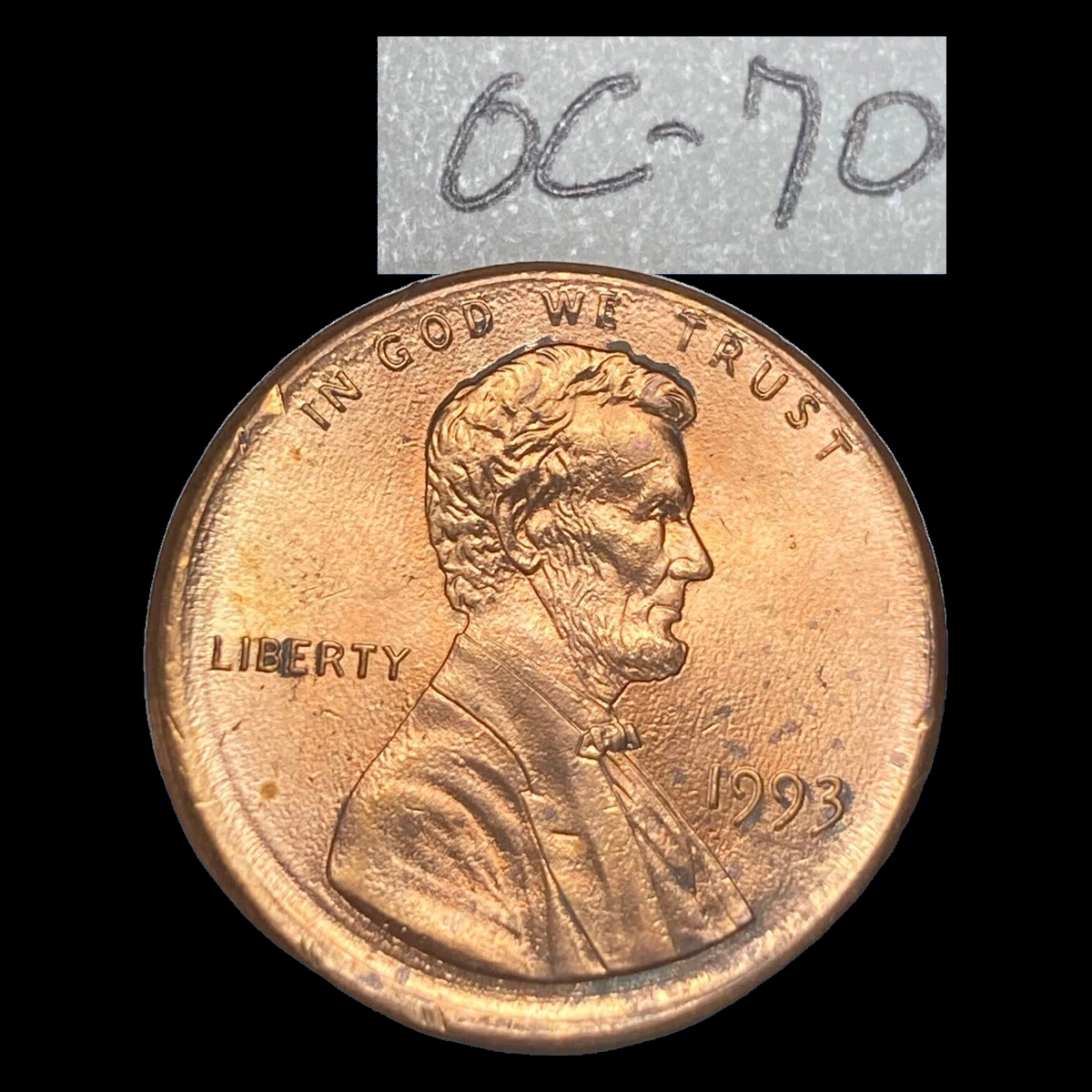
The Philadelphia cent in a Heritage group was described as about 75% off center. A separate guide report concerns a Denver example around 50% off center.
Only metal caught between the dies received the design. The rest remains part of the coin, unlike a clipped blank whose missing segment is absent.
How to Identify
Follow the boundary between design and original blank metal on both faces. A complete design inside uneven wide borders may instead be broadstruck.
Verify the surviving date and check plain areas for grinding. Neither reported percentage establishes another coin’s direction, mint, or grade.
What It’s Worth
The estimated range is $20–$450 across modest and dramatic identified examples. A missing date or substantial damage can limit interest despite a large shift.
The guide reports its Denver coin above $60 without adopted primary sale details. The Philadelphia piece’s mixed lot supplies no individual selling price.
7. 1993 Penny Impressions Overlap or Stretch: 1993 Repeated Strikes Error
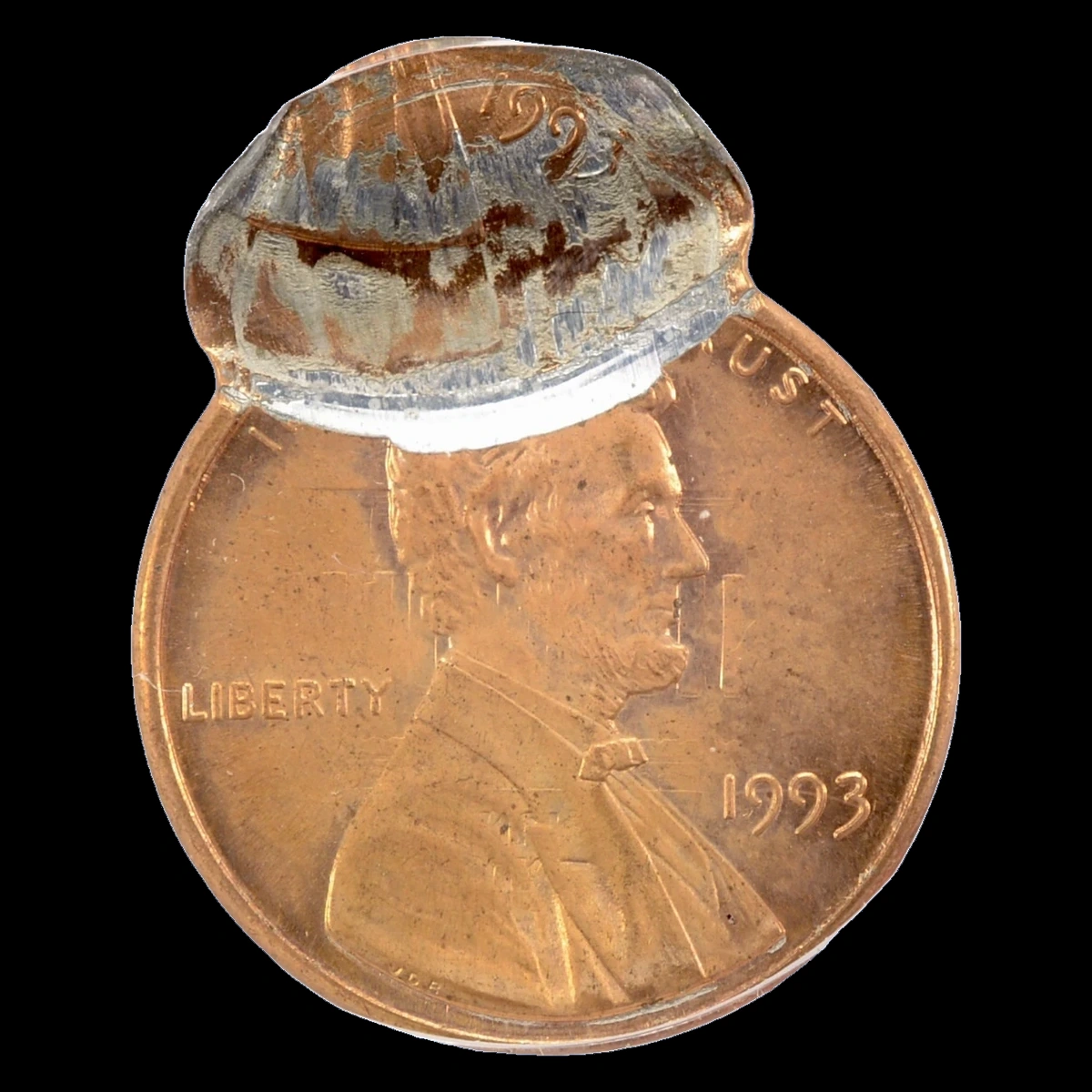
Separate 1993 records show a double strike with an off-center second impression and a flipover followed by a ninety-percent off-center blow that stretched the date. Another coin first broadstruck, then received an eighty-percent off-center strike with a new blank blocking its front.
Each sequence belongs to its own specimen. Their percentages and blocked faces must not be merged into one generalized example.
How to Identify
Trace an earlier date or word separately from the later design to establish the movement. A flipover should produce a different relationship from rotation or sideways displacement alone.
In the blocked-front combination, distinguish the obstruction’s effect from surviving earlier detail. Flat shelves around letters do not demonstrate multiple full strikes.
What It’s Worth
Identified repeated strikes have an estimated $40–$750 range. A clear sequence and attractive surviving design can matter more than the number of blows.
A 1993 double strike graded NGC MS66 Red brought $276 in December 2020. That sale values the complete coin once rather than a separate amount for each strike.
8. 1993 Penny A Recessed Front Design on the Back: 1993 Fallen-Filling Brockage Error
The studied example has a backward Lincoln-side impression on the reverse. Error-Ref explains it as a brockage from a large piece of compacted material that fell from a die carrying a design shape.
The fragment impressed that shape into the fresh blank during its first strike inside the collar. The cent did not need a prior normal strike of its own.
How to Identify
Check that the unexpected reverse image is both backward and sunken, then compare its shapes with the studied front-design transfer. The exact route taken by the fragment should not be invented.
Look for crushed detail and impact damage from coins pressed together after minting. A generic mirrored mark cannot establish this unusual fallen-filling explanation without a matching examination.
What It’s Worth
The estimated range is $150–$1,000 for this identified unusual mechanism. Readable reverse detail and intact surfaces make the explanation more demonstrable.
The studied coin has no realized price used here. A simpler 2001 partial-front brockage in MS64 Red brought $79 in March 2025, a different cause and arrangement rather than a 1993 sale.
9. 1993 Penny A Distorted Portrait beside a Clearer Back: 1993 Strike through a Die Cap Error
A cent stuck over the front die can block the next blank from receiving a normal Lincoln impression. Its thickness and wear influence how much distortion passes through.
The stuck coin is the cap, while the coin discussed here was struck beneath it. This affected coin can remain fairly flat rather than acquiring tall cup-shaped walls.
How to Identify
Compare broad front distortion with the reverse’s separately struck detail. That difference can be more informative than a single weak letter.
Inspect for scratches, crushed high points, or uniform circulation wear. The surviving date and mintmark must be read from the coin, not supplied from an expectation.
What It’s Worth
An identified capped-die strike has an estimated $30–$300 range. Clear front distortion against a better-preserved back supports stronger comparisons.
A year guide reports a $70 example without primary sale details. A flat coin struck beneath a cap should not automatically receive the value of a deep cap itself.
10. 1993 Penny A Local Hollow on the Front: 1993 Strike-Through Error
GreatCollections listed a Philadelphia cent with material interrupting the front strike. The description does not identify what lay between die and blank.
A hollow can preserve an obstruction’s shape, but it should not be called thread, wire, or cloth without appropriate texture or outline. Nearby unaffected detail provides the comparison.
How to Identify
Follow letters or portrait detail into the interruption and inspect its boundary. A later dent can crush finished design and push a lip of metal around the depression.
Preserve any fine texture inside the mark by leaving it untouched. A plain hollow cannot reveal the exact material merely because another strike-through used cloth.
What It’s Worth
Identified front strike-throughs have an estimated $15–$400 range. Larger clear impressions may attract more than small indistinct interruptions.
The listed coin was PCGS MS65 Red, describing unworn preservation with relatively few marks and retained red color. That grade supplies context but is not a selling price.
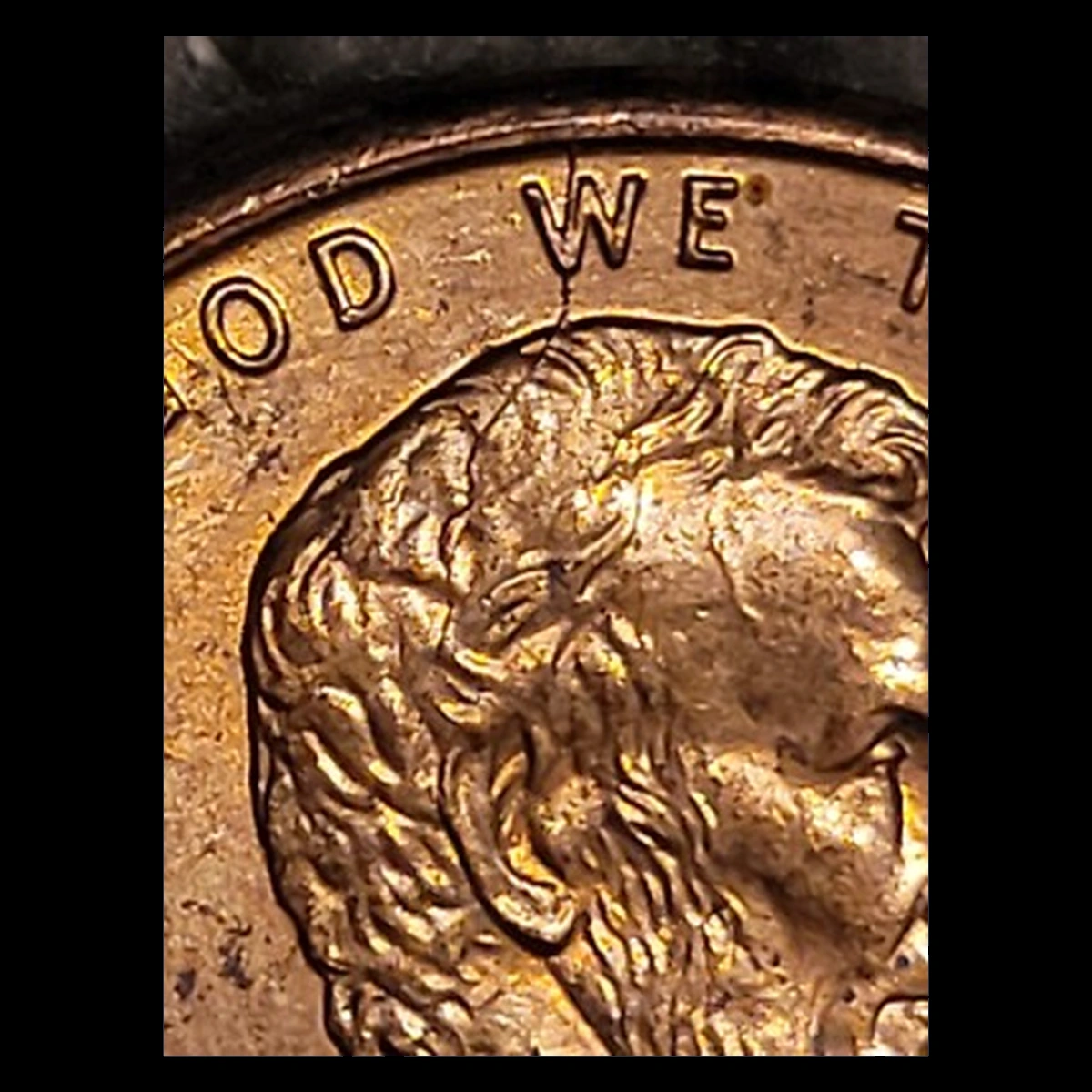
11. 1993 Penny Ridges Enter Lincoln’s Portrait: 1993 Die Cracks Error
Metal entering a crack in the die leaves a raised line on the coin. Many cataloged 1993 examples run from the rim into Lincoln’s head along different routes.
Some also have bow-tie cracks, chips, or reverse cracks. Those additional features belong to specific specimens rather than every portrait-crack coin.
How to Identify
Trace the actual route inward from the rim under side lighting. The ridge should stand above the metal without a cut beneath it.
A scratch can raise edges along a groove, and a fracture through the coin is a different condition. Check the back for a separately matching crack rather than assuming one.
What It’s Worth
Ordinary identified portrait cracks have an estimated $2–$40 range. Clear visible ridges make stronger teaching or collecting examples than tiny faint segments.
Catalog numbers identify different paths rather than a known sale or automatic price tier for each one. Wear and damage can obscure the pattern.
12. 1993 Penny A LIBERTY Bar or Raised Rim Patch: 1993 BIE and Cuds Error
A small broken spot between B and E can form the I-like bar called BIE. A larger break reaching the die’s edge creates a raised patch connected to the coin’s rim, called a cud.
The 1993 rim-break catalog includes separate reverse examples with clash marks. Loose die fragments can also contribute additional marks, so the full pattern needs its own comparison.
How to Identify
Check the precise B-to-E position for a solid raised bar. For a cud, trace the patch into the rim and record the normal design it replaces.
Distinguish coin metal from plating bubbles, dirt, or solder without pressing the feature. If clash traces accompany a rim break, document both on that same specimen.
What It’s Worth
Ordinary BIE chips have an estimated $3–$25 range, while identified rim cuds are estimated at $30–$400. Larger clear design replacement generally attracts more attention.
The guide reports a $175 reverse break without the dated primary sale details adopted here. That account does not price every raised patch.
13. 1993 Penny Faint Opposite-Design Fragments: 1993 Die Clash Error
When the dies meet without a blank, contact can leave traces of one design on the opposing tool. Later coins receive those marks alongside their normal impressions.
A specialist index lists two unusual 1993 clash examples. Their actual outlines need individual examination, and not every crack or raised patch on a compound-error coin is a clash.
How to Identify
Compare both faces in a clear orientation and trace a recognizable part of the opposing portrait or building. Random scratches cannot be assembled into a reliable match.
Use each cataloged coin’s photographs for exact placement. A generic line beside Lincoln does not identify either indexed specimen.
What It’s Worth
Identified clash patterns have an estimated $10–$250 range from faint to clearer examples. Readable shapes and preserved surfaces support stronger comparisons.
No completed sale is assigned to either indexed coin. A simultaneous rim break requires assessing the complete combination rather than adding two maximum estimates.
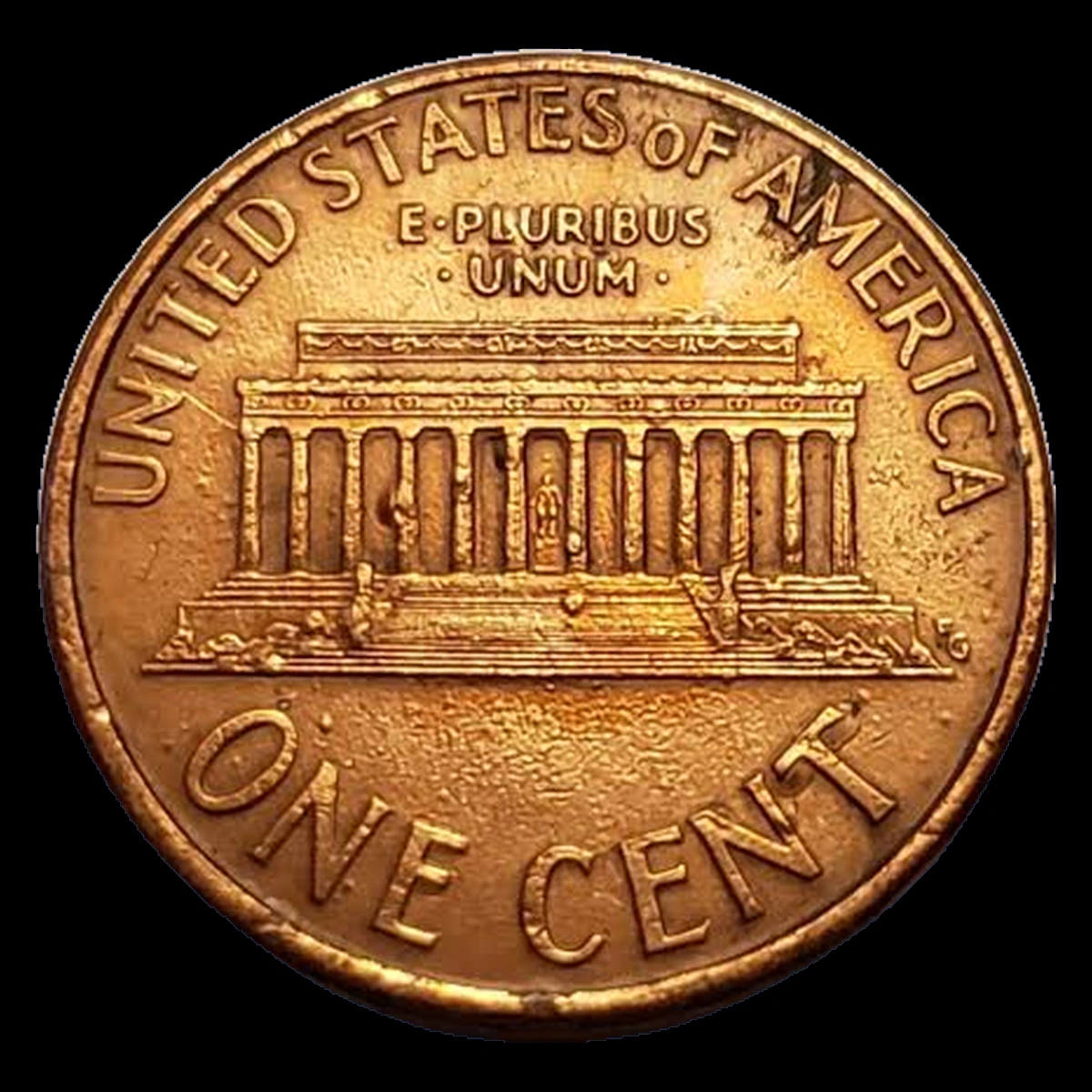
14. 1993 Penny A Thin Raised Shadow beside the Design: 1993 Plating Disturbance Error
Movement in a cent’s thin copper skin can create a second-looking ridge beside normal detail. The coating changes without the die carrying a genuinely doubled design.
Error-Ref illustrates a Philadelphia shadow right of Lincoln’s facial outline and a separate Denver example above E PLURIBUS UNUM. Their locations should remain distinct.
How to Identify
Compare the shadow with the solid normal design while changing the light. A very thin lifted copper ridge can look different from a full raised letter.
Do not press or scrape a loose-looking edge. Its attachment and original surface help distinguish disturbed plating from a doubled die or scratch.
What It’s Worth
The estimated range is $0.01–$10. Most small disturbances have modest collector interest, and ordinary examples may carry no meaningful premium.
A sharp shadow on an otherwise clean coin can illustrate the mechanism. No auction result is supplied for the two illustrated specimens.
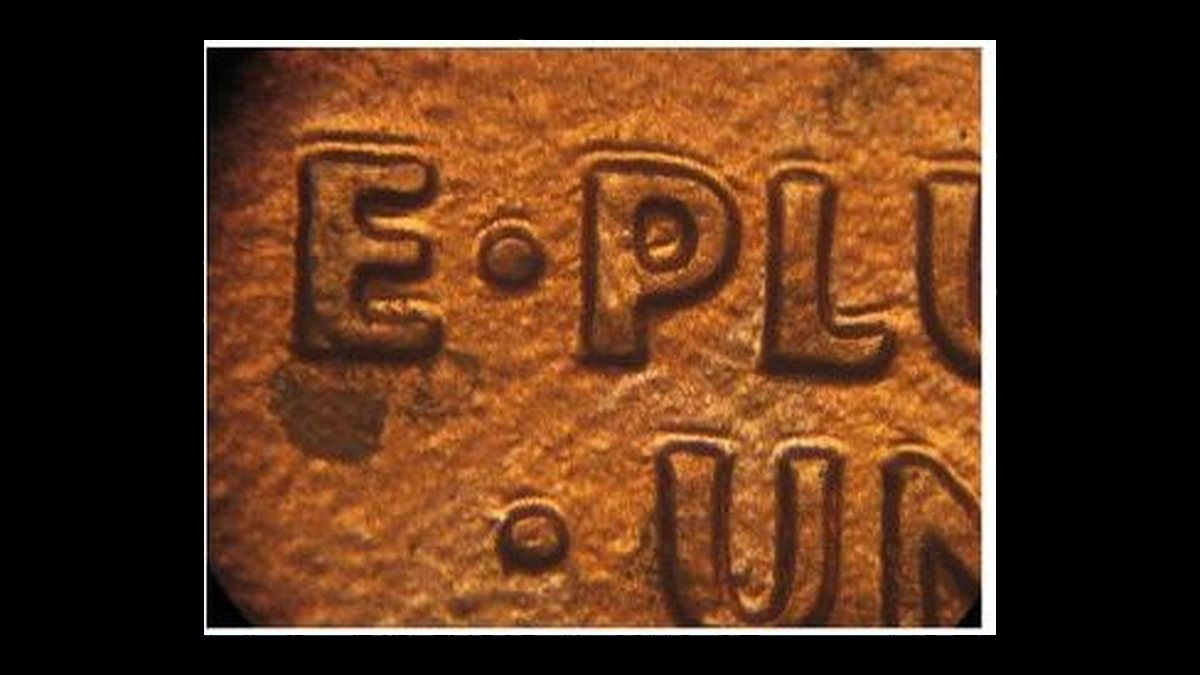
15. 1993 Penny Sunken Lines above the Motto: 1993 Die Wear Error
Faint shallow outlines above E PLURIBUS UNUM can make the wording look doubled. The illustrated Philadelphia example records wear in the die’s surface rather than a second rounded raised design.
This distinction matters even though the feature originated during minting. A Mint-made appearance does not automatically produce a valuable variety.
How to Identify
Tilt the reverse so light crosses the motto and determine whether the extra lines are shallow hollows. Keep the normal letters separate from the surrounding worn-die outlines.
A raised plating ridge or an ordinary scrape needs its own explanation. Compare depth and shape rather than accepting doubled-looking wording as a diagnosis.
What It’s Worth
Ordinary examples have an estimated $0.01–$5 range. Faint marks on a worn coin may leave it worth face value.
A clearer piece can be useful for demonstrating die wear. The range is an estimate, and grading costs can exceed the value of a typical example.
16. 1993 Penny Extra Motto or Ear Detail: 1993 Front Doubled Dies Error
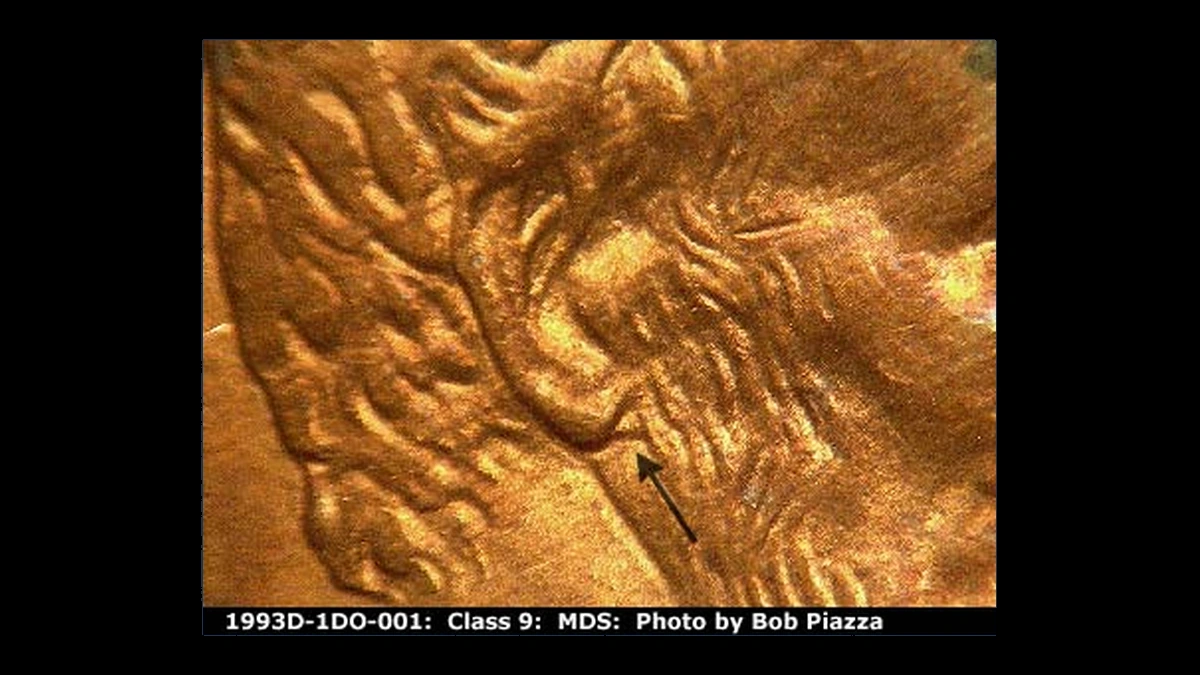
A Philadelphia variety repeats small parts of GOD WE TRUST and the upper hairline. A different Denver variety adds an earlobe below and to the right of the normal ear.
The extra design existed in the die before striking. Those two patterns should not be combined into one required set of features.
How to Identify
Use the correct mint’s 1993 variety photographs. The Philadelphia example also has supporting raised marks below D in GOD and near the front hair curl.
For Denver, match the actual lower-right extra earlobe. Flat shelves and scratches may imitate portions of the design without reproducing the documented pattern.
What It’s Worth
Identified front varieties have an estimated $10–$200 range. Strength, clarity, and condition guide the comparison for each separate pattern.
Neither catalog specimen has an adopted sale price here. Famous 1997 doubled-ear auction values should not be transferred to these modest 1993 varieties.
17. 1993 Penny Extra Architecture or Statue Parts: 1993 Doubled Memorial Error
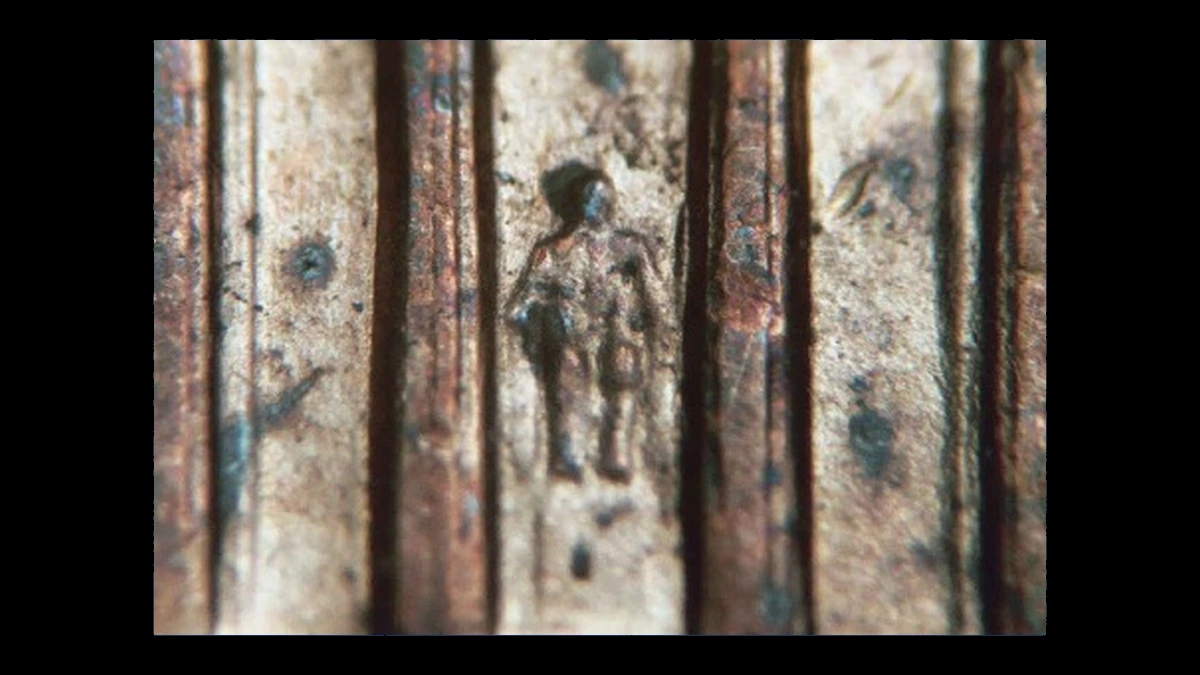
Some reverse dies repeat small column edges or statue details in the Memorial’s open spaces. Philadelphia and Denver examples place that extra design differently.
A Philadelphia pattern repeats detail near the seventh column and upper statue. Separate Denver varieties include the lower-left sixth-column edge and extra statue feet with lower chair-arm detail.
How to Identify
Keep the whole building visible while counting columns from the left. Match the mint and precise position before enlarging a suspicious line.
Wavy steps, a plating bubble, or an unrelated ridge do not establish a doubled Memorial. A repeated piece of architecture or statue needs the same shape as the referenced variety.
What It’s Worth
Identified minor reverse varieties have an estimated $5–$150 range. Strong extra detail on an unworn coin can be easier to appreciate than a faint worn line.
These are working estimates rather than realized prices for every catalog entry. Match the design before using condition to refine the comparison.
Conclusion
Two complete denomination designs on separate faces point toward the mule, while overlapping dime remnants point toward an overstrike. Even the smallest marks benefit from the same distinction between what is actually raised, recessed, or part of the coating.
The $0.01–$100,000 estimates cover ordinary wear-related effects and rare authenticated errors. Preserve each coin’s surfaces, keep separate specimens’ measurements distinct, and compare the identified mechanism before comparing prices.