Rare 1990 Penny Errors (List & Pictures)
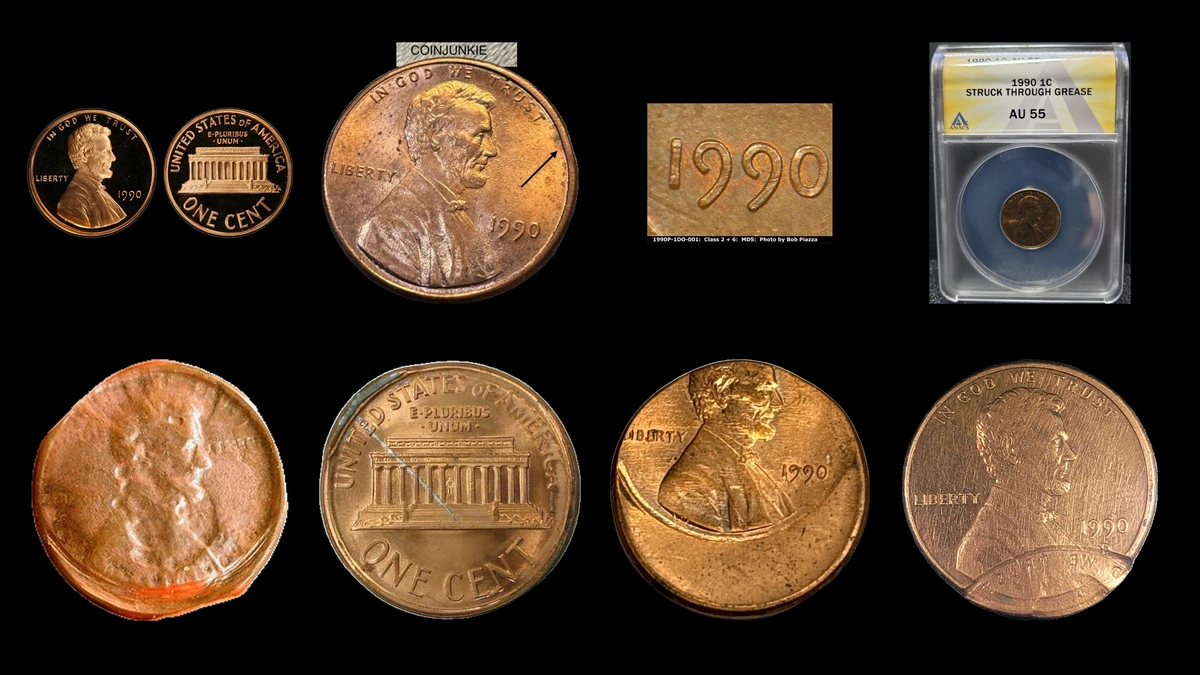
A 1990 No S Proof sold for $20,700 in August 2007. That rare collector coin anchors a guide to 1990 penny errors with estimated values from $2–$22,000.
Establish the normal coin type before inspecting missing or extra detail. Ordinary Philadelphia cents have no mint letter, while San Francisco Proofs should have S; both normally weigh 2.50 grams, measure 19.05 mm, and use copper-plated zinc with a smooth edge.
| Visible clue | Possible identification | Estimated value |
|---|---|---|
| No S on genuine Proof | No S Proof | $3,000–$22,000 |
| Raised B–E bar | BIE chip | $2–$75 |
| Repeated outline | Doubled die | $5–$200 |
| Local interrupted design | Strike-through | $5–$500 |
| Weak portrait and sunken detail | Shifted-cap strike | $100–$1,000 |
| Backward recessed image | Brockage with broadstrike | $75–$1,000 |
| Small plain depression | Indent with broadstrike | $50–$750 |
| Missing edge section | Clipped blank | $10–$250 |
| Oval original blank | Elliptical planchet | $100–$600 |
| Widened complete designs | Broadstrike | $15–$350 |
| Plain metal beside partial design | Off-center strike | $20–$500 |
| Split metal and displaced design | Split blank off center | $50–$650 |
| Multiple design positions | Repeated strikes | $50–$1,500 |
| Two matching separate coins | Mated pair | $500–$2,500 per pair |
| Gray exposed zinc | Unplated cent | $50–$700 |
| Smaller clad blank | Dime-planchet error | $350–$1,500 |
| Dime image beneath cent | Double denomination | $700–$4,000 |
| Verified older copper alloy | Older copper blank | $3,000–$20,000 |
1. 1990 Penny A Genuine Proof Without S: No S Proof Error
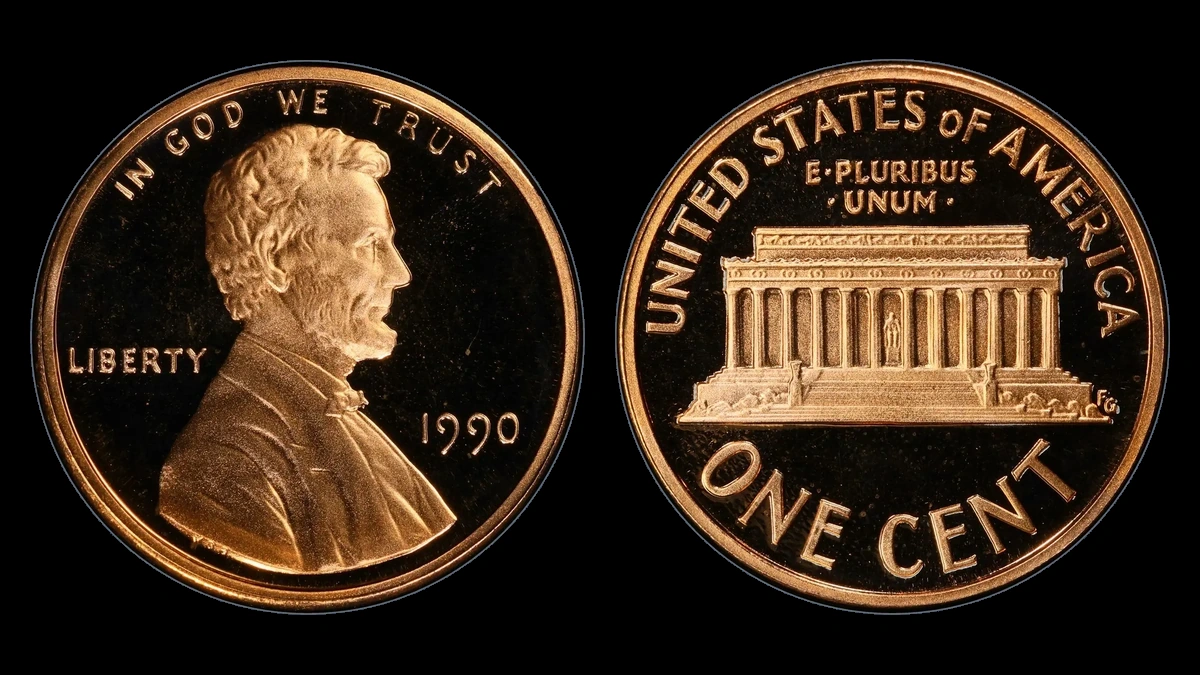
The valuable missing letter belongs to a specially made San Francisco collector coin. Some 1990 Proof cents received their design from a front die lacking the S that should have been present.
How to Identify
Compare the entire coin with a genuine 1990-S Proof, including prepared fields, raised details, and rims. Shine alone is insufficient because polishing an ordinary Philadelphia cent does not make it a Proof.
Inspect below the date for an undisturbed original surface rather than evidence of an erased letter. Normal weight and diameter cannot distinguish these Proofs from ordinary cents.
What It’s Worth
Authenticated 1990 No S Proofs have an estimated value of $3,000–$22,000. Preservation and contrast between frosted design and mirrored fields affect the comparison.
PCGS records a PR69 sale of $20,700 at Bowers & Merena in August 2007. That exceptional-grade result has no application to an ordinary no-letter Philadelphia penny.
2. 1990 Penny An I-Like Bar Between B and E: BIE Chip Error
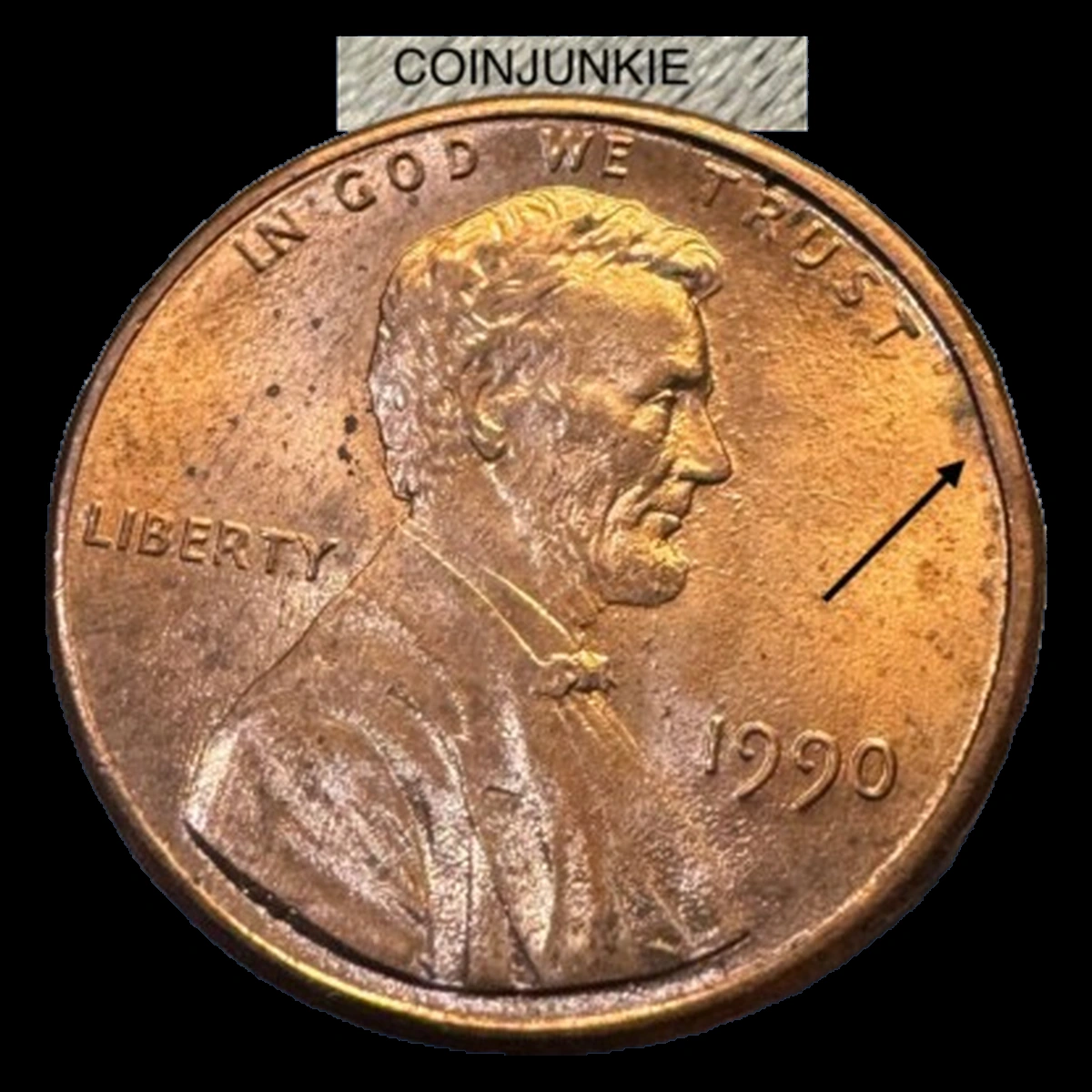
A small piece missing from a die can fill with metal during striking and produce a raised bar. When it occupies the B–E gap in LIBERTY, collectors call the feature BIE.
How to Identify
Locate the correct letter gap and examine the bar with light from different directions. It should belong to the original struck surface, rather than sit on it as dirt or attached material.
Rounded copper bubbles and metal pushed up beside a scratch need separate explanations. The supplied report does not assign one mint or exact bar shape to every 1990 example.
What It’s Worth
An identified 1990 BIE chip has an estimated value of $2–$75. A clear bar on an unworn surface is more useful than a tiny lump hidden by wear.
No recorded sale is supplied for the report. Most small chips remain modest collectibles despite an eye-catching nickname.
3. 1990 Penny A Repeated Letter or Portrait Edge: Doubled Die Error
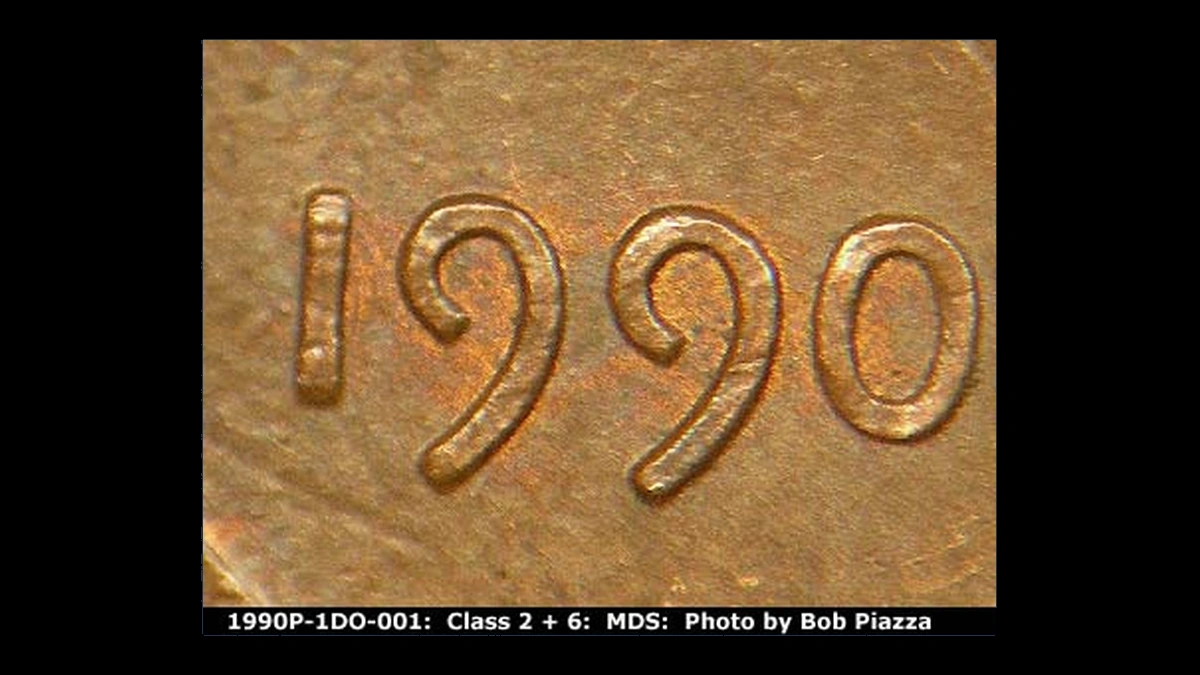
A doubled die already carries overlapping detail in the stamping tool. The coin can therefore receive a repeated contour without undergoing a second full strike.
How to Identify
Compare the correct mint and face with an identified 1990 variety. The general reports do not establish one letter, direction, or pattern shared by all candidates.
Flat ledges from strike movement, split copper, corrosion, and scratches can imitate an extra edge. A specific repeated shape is more useful than general thickness.
What It’s Worth
Matched minor 1990 doubled dies have an estimated value of $5–$200. Visibility and preservation help place a coin within that range.
The supplied reports give no realized price for each possible pattern. An unrelated major doubled die from another year is not a suitable price to assign to an uncertain 1990 mark.
4. 1990 Penny Material Interrupts the Design: Struck-Through Error
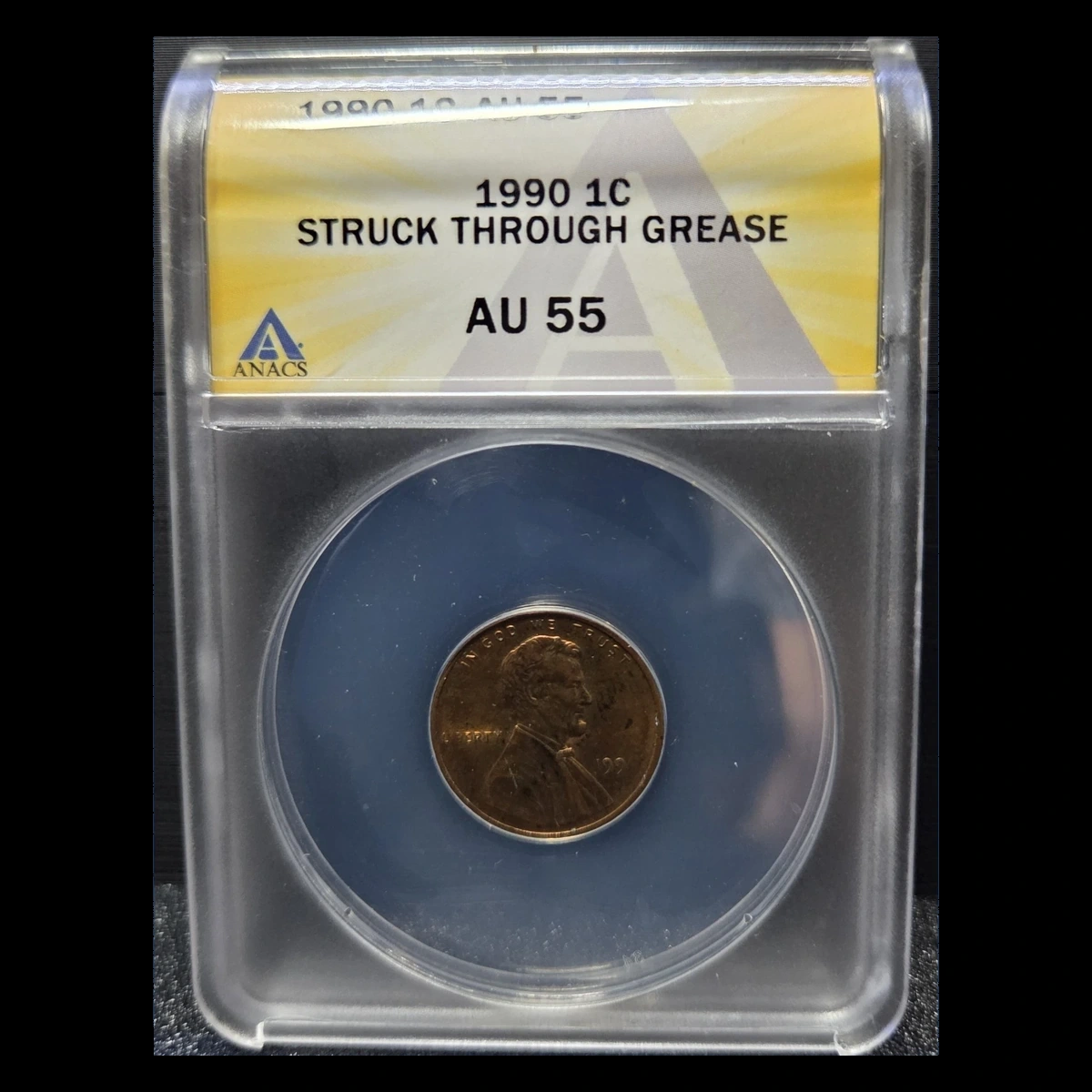
A local depression or absent detail can form when material separates a die from the blank. Ordinary 1990 examples are reported, along with a separate S Proof showing an interruption at the date.
How to Identify
Follow the affected area into sharper surrounding detail and inspect for original surface. Wear, a later dent, or polishing can remove already formed design without an obstruction during striking.
The recorded Proof is PR67 Deep Cameo, describing its condition and strong design-to-field contrast. Its blocked date area does not establish the separate No S variety.
What It’s Worth
A genuine 1990 strike-through has an estimated value of $5–$500. A distinct impression on a well-preserved Proof differs from minor weakness on an ordinary strike.
A 2017-D front-side strike-through sold for $228 in March 2025. That different-year result provides context without pricing the 1990-S Proof directly.
5. 1990 Penny A Weak Portrait with Added Sunken Detail: Shifted-Cap Strike Error
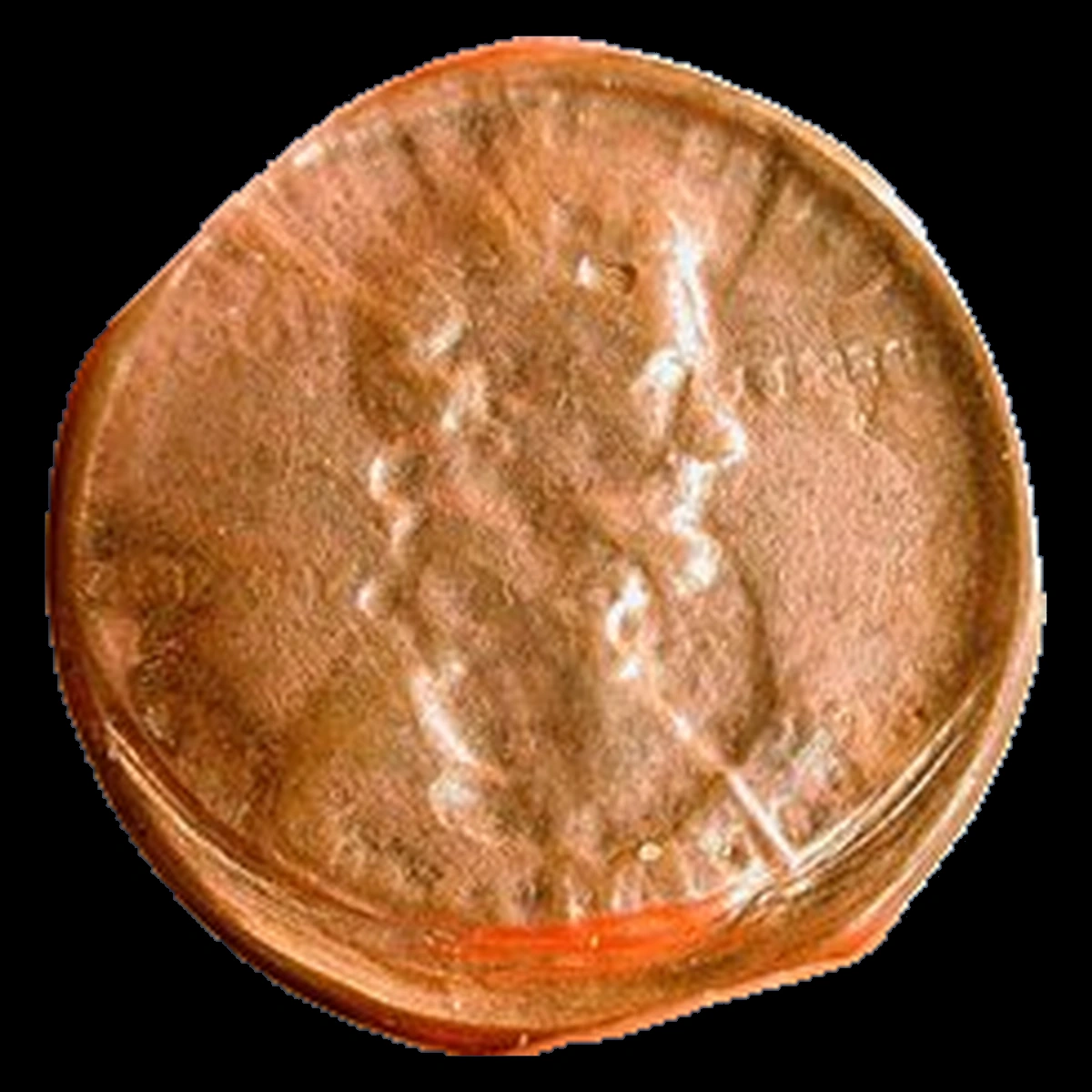
A coin trapped on a die can become a thin cover called a cap. In the illustrated 1990 event, that cover rotated 180 degrees and shifted upward before the next coin was struck through it.
How to Identify
Compare the weakened Lincoln portrait and recessed additions together with the shifted-cap example. Some sunken detail reads normally, so not every recessed image is a simple backward brockage.
This is the coin that received the covered-tool impression, not the cap itself. Inspect the edge and both faces for later scraping or crushing rather than requiring a cup-shaped outline.
What It’s Worth
A recognizable 1990 shifted-cap impression has an estimated value of $100–$1,000. The relationship between the portrait and extra sunken design is central.
A 1995 late-stage cap strike sold for $180 in March 2025. It is a related mechanism, not the same shifted pattern or a sale of the 1990 specimen.
6. 1990 Penny A Mirrored Front Image with Expansion: Brockage Error
A previously struck coin can press its raised design into another piece and leave a backward, sunken copy. One 1990 catalog entry combines front brockage with outward spreading from a broadstrike.
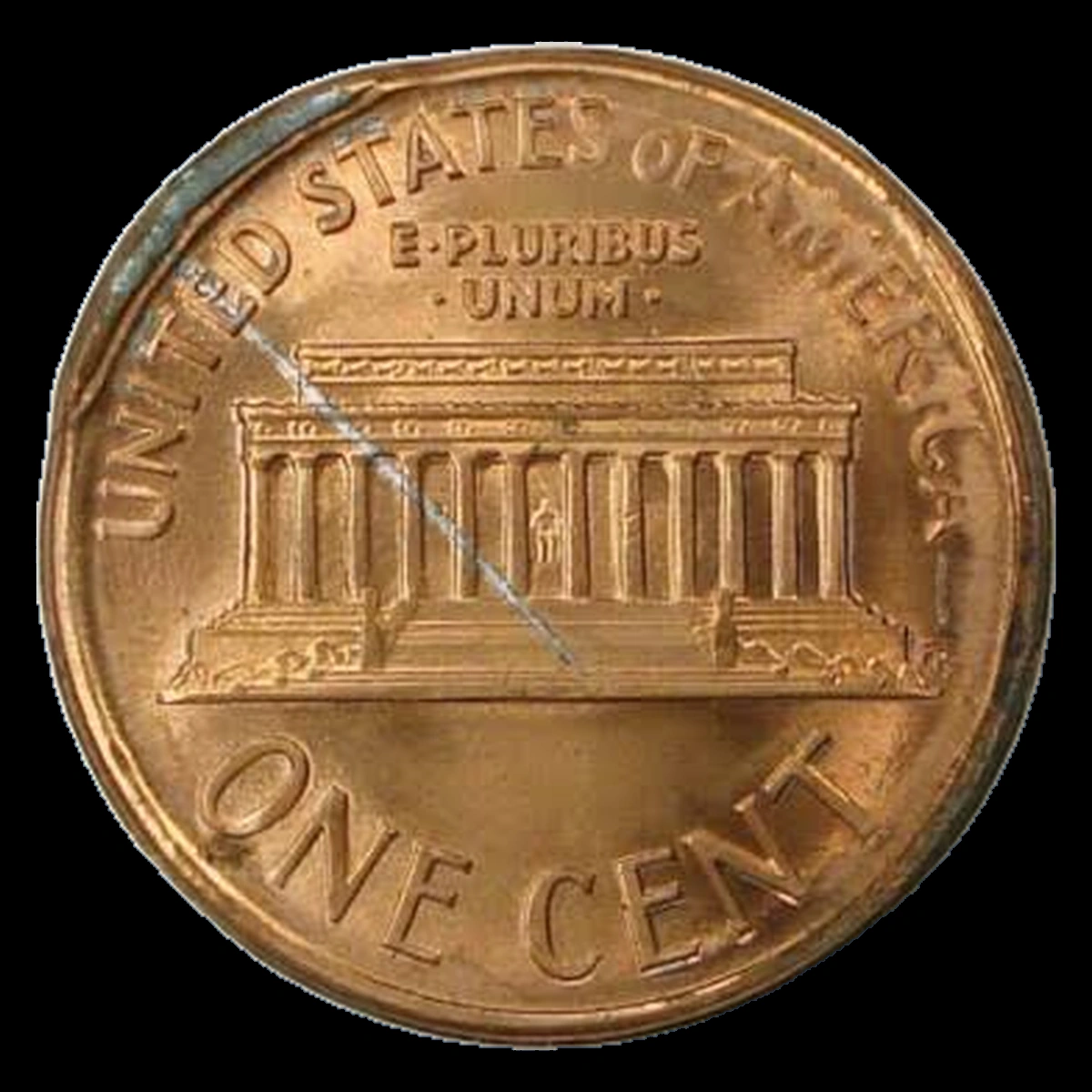
How to Identify
Find recognizable detail that reads correctly when reversed and establish that it is recessed. Trace its boundary into the normally struck surface and compare both faces.
The NGC MS65 Red and Brown description does not establish a full-face brockage. Later squeezing between coins can create misleading mirror marks, so check the edge and surrounding metal for damage.
What It’s Worth
A genuine 1990 front brockage with broadstrike has an estimated whole-coin value of $75–$1,000. Readable transferred design helps determine the appropriate comparison.
A 2001 partial-front brockage sold for $79 in March 2025. That different-year reference does not price the cataloged 1990 coin, and its expansion should not be counted again as a separate full-coin premium.
7. 1990 Penny A Small Smooth Hollow: Indent with Broadstrike Error
An overlapping blank can block the design and press a featureless depression into another cent. The cataloged 1990 example combines an approximately 5% indent with a broadstrike.
How to Identify
Follow the depression’s boundary and study how surrounding design formed around it. A readable reversed image would point toward contact with a struck surface rather than a plain blank.
The listing gives neither a specific face nor a clock position. Do not invent either, and exclude later dents that crushed an already finished design.
What It’s Worth
The estimated whole-coin value is $50–$750 for a confirmed 1990 indent-and-broadstrike combination. Size, clarity, and preserved surface guide the comparison.
The documented coin is PCGS MS64 Red, but its grade supplies no sale price. A small 5% overlap should not automatically be valued like a dramatic full-face indent.
8. 1990 Penny A Missing Curved or Straight Section: Clipped Blank Error
Clipped blanks can begin with curved gaps, straight missing edges, or more than one absent section. The cutting punch overlapped an earlier hole or an unsuitable boundary in the metal strip.
How to Identify
Inspect the nearby rim and letters to see how they formed against the incomplete blank. Opposite-rim weakness can support the diagnosis, but it is not a complete test by itself.
Check for saw marks or filing and compare weight with the missing metal. The 1990 reports do not fix one mint or percentage for every shape.
What It’s Worth
An original 1990 clip has an estimated value of $10–$250. Amount missing, readable identity, and preserved boundaries influence appeal.
A 2021 straight-clip cent sold for $114 in September 2025. That result is a different-year comparison and does not establish the mint or exact shape of a 1990 candidate.
9. 1990 Penny An Oval Blank Received the Design: Elliptical Planchet Error
A cataloged 1990 cent was struck on an elliptical planchet, an unusually shaped blank. The recorded example weighs 2.24 grams and is graded NGC MS65 Red.
How to Identify
Photograph the whole oval and inspect where the design meets its original boundary. Measure both long and short dimensions rather than treating it as a circle.
The listing supplies no exact length and width, and its weight should not be assigned to every oval coin. Later squeezing or filing can change a normal cent’s shape while damaging finished detail.
What It’s Worth
An authenticated 1990 elliptical-planchet cent has an estimated value of $100–$600. A readable date and clear original blank boundary support its appeal.
No recovered sale amount is supplied for the 2.24-gram example. Its MS65 Red grade describes an unworn copper-red coin with relatively few marks.
10. 1990 Penny The Full Design Fits a Wider Outline: Broadstrike Error
A broadstrike expands beyond normal limits because the collar does not contain the blank. A listed 1990 example also has torn reverse copper exposing zinc as the metal spread.
How to Identify
Follow the outermost design on both sides, then compare width in several directions. Complete designs inside original spreading are more useful than a merely uneven rim.
The reverse plating tear does not prove the blank started unplated. Look for crushed details and edge marks that could instead indicate later hammering.
What It’s Worth
A genuine 1990 broadstrike has an estimated value of $15–$350. Amount of spread and preservation determine the most useful comparison.
A 1999 example graded MS65 Red sold for $67 in March 2023. The split copper on the reported 1990 coin is part of its striking history, not an automatic separate premium.
11. 1990 Penny A Plain Crescent Accompanies Lost Design: Off-Center Strike Error
A misplaced blank can receive only part of the intended design while retaining untouched metal. Recorded examples include a Philadelphia cent around 50% off center and a separate Denver coin around 60% off center.
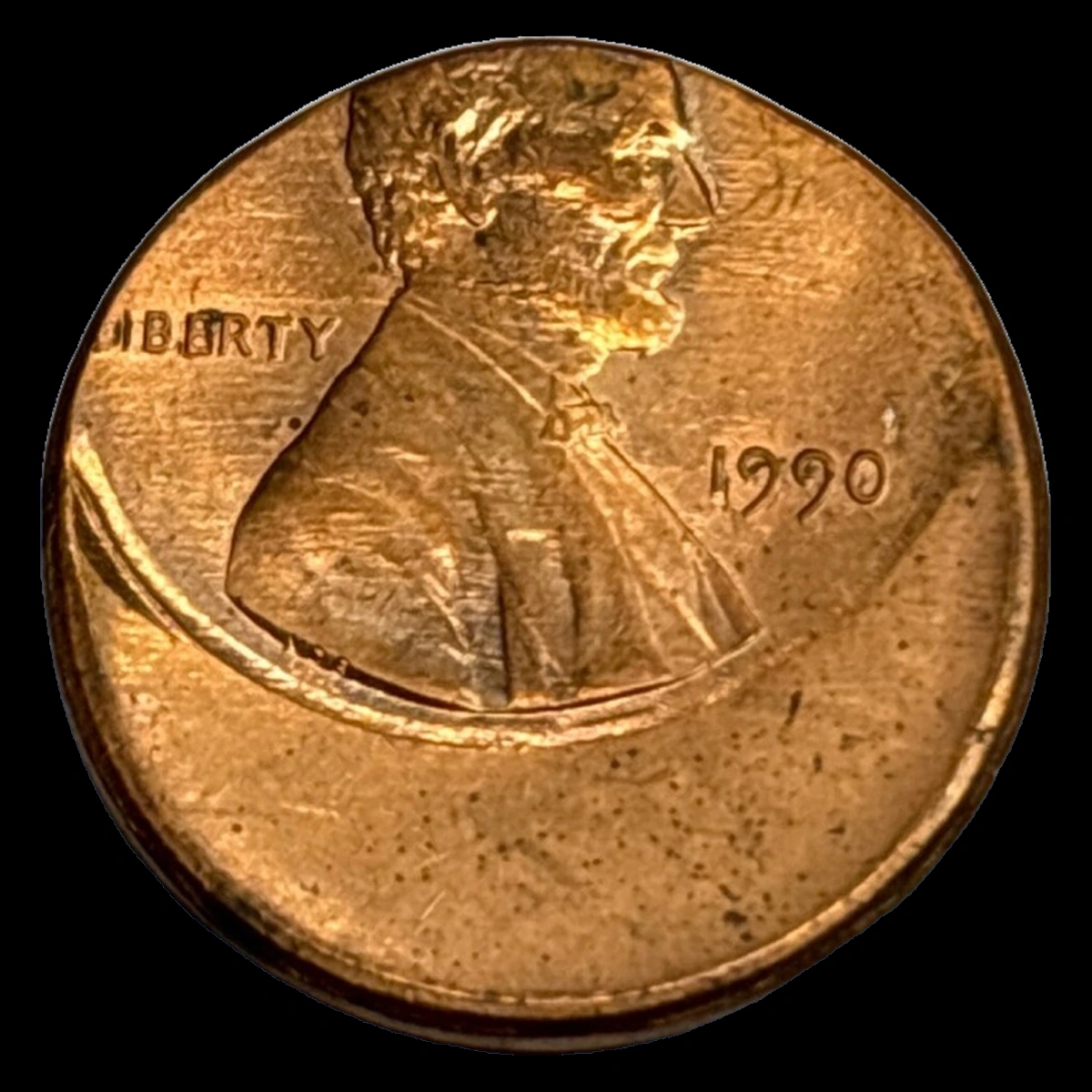
How to Identify
Locate the actual surviving date digits and compare both faces for compatible displacement. A shift limited to one face may indicate a die-alignment problem instead.
Inspect the plain area for grinding or polishing and the edge for cuts. Displacement percentages describe design placement, not an equal percentage of missing metal or lost weight.
What It’s Worth
A genuine dated 1990 off-center cent has an estimated value of $20–$500. Retained identity and surface quality matter alongside a dramatic shift.
A 2006 cent struck only 4% off center sold for $39 in March 2025. That modest different-year example is not a sale of either recorded 1990 coin.
12. 1990 Penny The Metal Splits and the Design Shifts: Split Blank Off Center Error
A reported NGC MS66 Red 1990 cent combines a split in its metal with an approximately 10% off-center strike. The opening and the unstruck area are different features of one object.
How to Identify
View the break from both faces and examine how its edges meet the struck design without widening it. A raised die-crack ridge is not an opening in the coin itself.
The description does not establish the split’s full path or depth. Do not call it a whole layer separated from the coin unless the actual structure supports that claim.
What It’s Worth
A confirmed original split with an off-center strike has an estimated whole-coin value of $50–$650. Clear strike relationships and limited later damage make the evidence easier to interpret.
No sale amount is supplied for the MS66 Red example. The two effects should not be valued by adding independent full-coin ranges.
13. 1990 Penny Several Design Positions Survive: Repeated Strikes Error
Extra strikes can shift, turn, or flip a cent and leave multiple impressions. Ordinary 1990 reports include far off-center second strikes, a flipover, and a triple-struck piece.
A separate 1990-S Proof has a rotated repeated front design. That visible movement differs from normal aligned Proof striking.
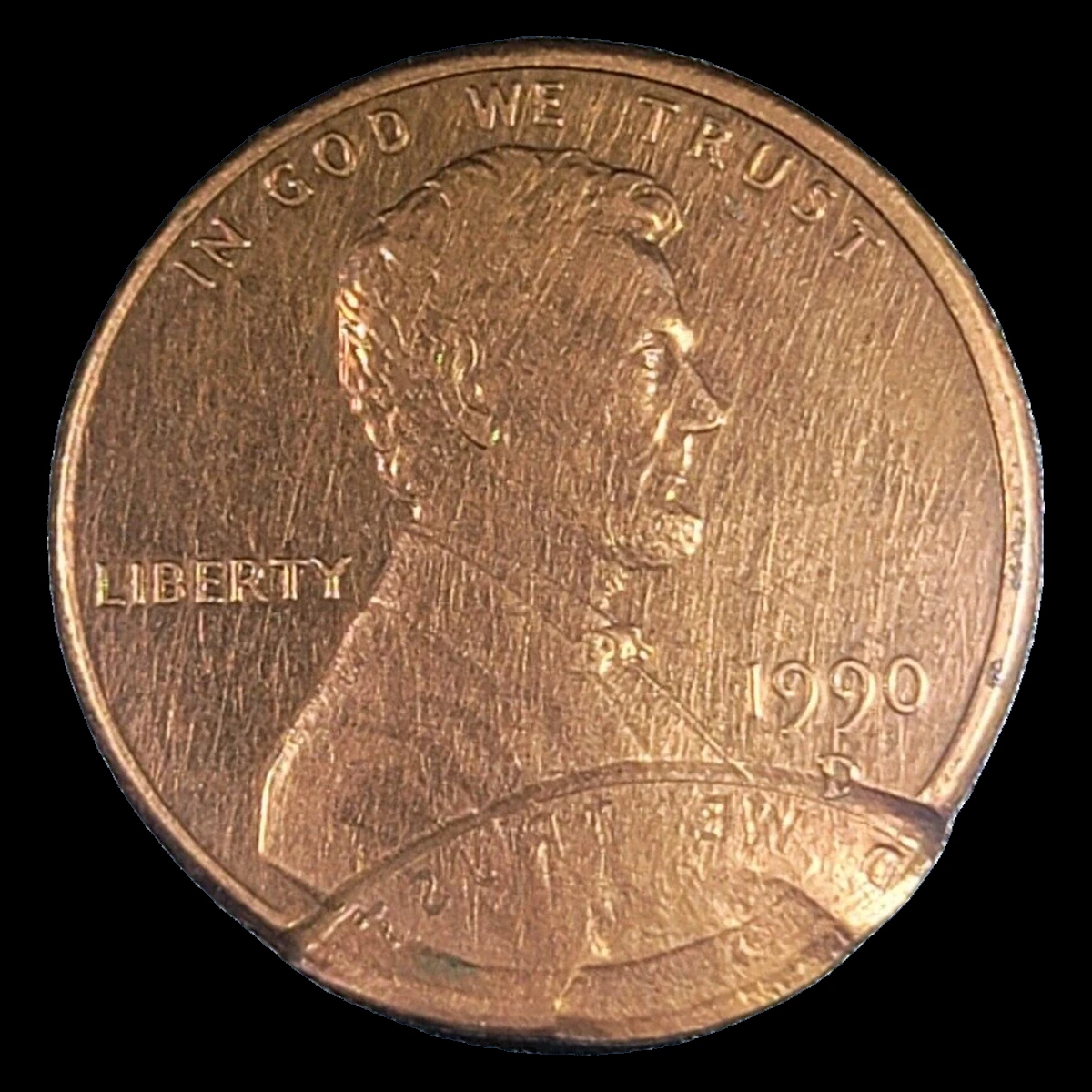
How to Identify
Trace each portrait, date, or letter group to find where a later impression crosses an earlier one. A flipover can place Lincoln and Memorial remnants on the same face.
Keep each specimen’s displacement and angle separate, especially when comparing an ordinary coin with the S Proof. A flat shelf beside one letter does not establish another full strike.
What It’s Worth
The overall estimated range is $50–$1,500, with ordinary repeated strikes around $50–$1,000 and authenticated rotated Proof impressions around $300–$1,500. Readable movements matter more than a claimed strike count.
A 1997 flipover sold for $144 in March 2026. That ordinary-strike comparison does not establish a price for the 1990-S Proof.
14. 1990 Penny Two Coins Have Matching Contact Areas: Mated Pair Error
The cataloged 1990 pair contains a double-struck cent with its second strike about 90% off center. Its partner has a front indent of about 15%, and both coins were graded PCGS MS65 Red.
How to Identify
Compare photographs at the same scale for the specific contact relationship between the off-center strike and the indent. Similar color and a shared date cannot establish a pair.
These are separate coins, not permanently bonded blanks. Do not force them together, and check that later filing has not created an artificial fit.
What It’s Worth
The estimated value is $500–$2,500 for the complete pair. The preserved relationship and condition of both members determine comparison.
A different 2001 mated pair sold for $1,320 in March 2025. No sale is supplied for the 1990 pair, and the comparison is not a price for either member alone.
15. 1990 Penny Zinc Was Struck Without Copper: Unplated Cent Error
An NGC MS65 Philadelphia example was certified as an unplated 1990 cent. Its normal zinc core received the design without the usual copper skin.
How to Identify
Examine fine details and the edge for original surface rather than chemical pits, etched areas, or residue. Gray color alone cannot establish whether the copper was absent before striking.
A slightly light weight can fit either omitted plating or later stripping. Specialist surface examination helps distinguish this error from corrosion and copper tears caused by a broadstrike.
What It’s Worth
A confirmed unplated 1990 cent has an estimated value of $50–$700. Preservation of the exposed zinc is an important part of the comparison.
A 1994 NGC MS65 unplated cent sold for $99 in October 2018, while a higher-grade 1995 example brought $660 in January 2023. Neither is the selling history of the recorded 1990 coin.
16. 1990 Penny Dime-Type Metal Carries Only the Cent Design: Wrong Planchet Error
A Philadelphia 1990 cent graded PCGS MS65 was certified on a dime blank. Its bonded outer layers around a copper center differ from a normal cent’s thin copper coat over zinc.
How to Identify
Compare metal and measurements with a dime blank’s normal 2.268 grams and 17.91-mm starting diameter. The cent strike can enlarge that outline or leave outer design incomplete.
An unused dime blank has no earlier Roosevelt or torch design and no pre-existing finished-dime reeding. Search for earlier dime details before deciding that the starting object was blank.
What It’s Worth
An authenticated 1990 cent on a dime blank has an estimated value of $350–$1,500. Readable identity, correct metal, and preservation guide comparison.
A 2007-D example graded PCGS MS66 sold for $600 in March 2023. That related-type sale does not price the recorded 1990 MS65 specimen.
17. 1990 Penny An Earlier Dime Image Lies Under Lincoln: Double Denomination Error
A finished dime can receive a later cent strike while retaining parts of its first design. Recorded 1990 cent examples use separate 1990-P and 1989-P dime hosts.
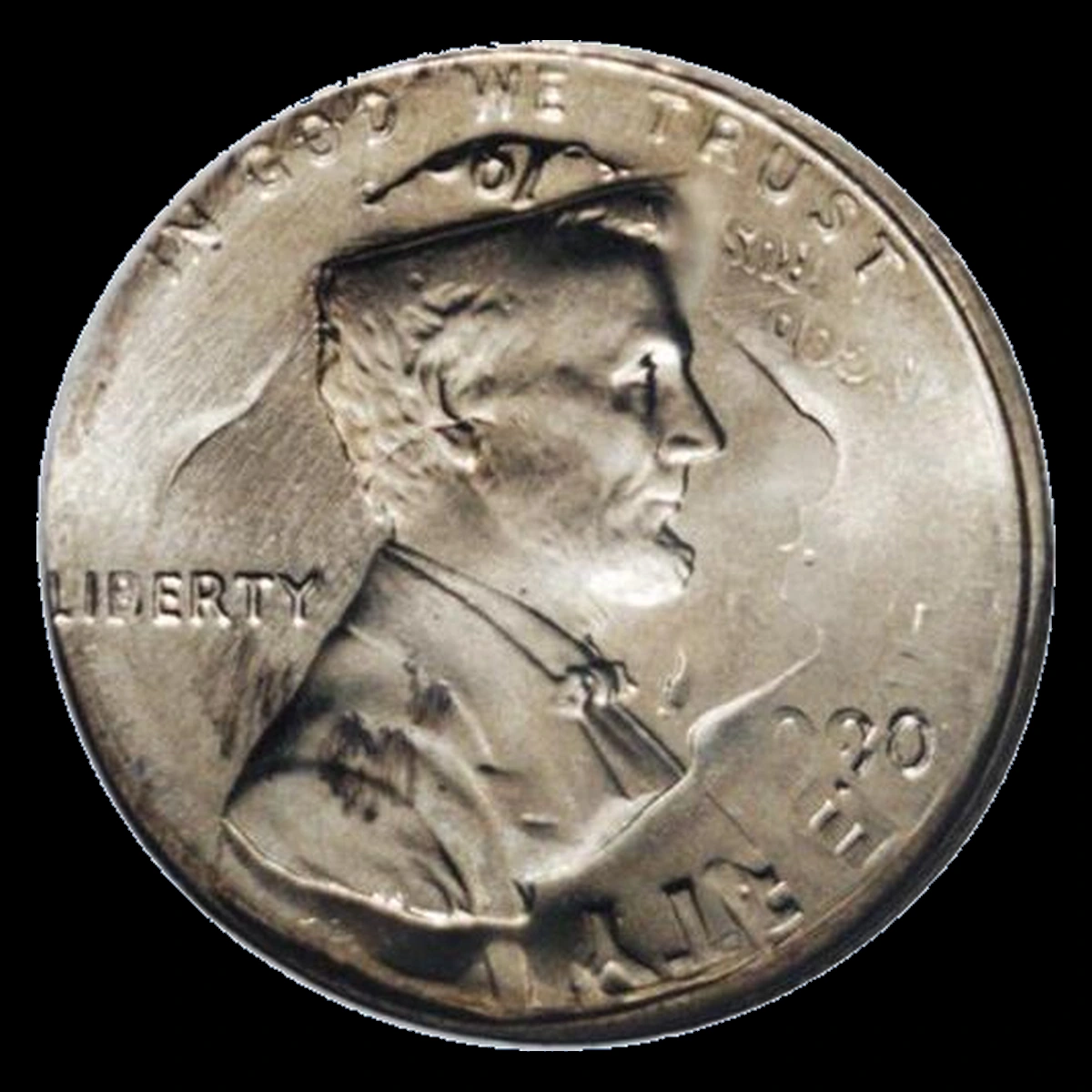
How to Identify
Find recognizable Roosevelt or torch detail before searching for the older date. Keep each date and mint letter tied to its own design rather than borrowing information from another specimen.
One 1990-P host shows both dates and P, with Roosevelt almost inverted relative to Lincoln. A separate cataloged coin has the cent year in parentheses, meaning it is attributed rather than fully visible.
What It’s Worth
Authenticated 1990 cent-over-dime errors have an estimated value of $700–$4,000. Clear surviving parts of both designs and condition determine the closest comparison.
The ANACS MS63 cent over a 1989-P dime sold for $2,160 on September 29, 2025. That sale belongs to the older-dated host, not every 1990-P dime example.
18. 1990 Penny A Heavier Copper-Alloy Blank: Older Copper Planchet Error
A reported 1990-D cent was struck on an older copper-alloy blank weighing around 3.1 grams. Its familiar copper color can conceal the difference from an ordinary 2.50-gram plated-zinc cent.
How to Identify
Use an accurate scale, then examine the 1990 date, D, and edge for alteration or added metal. The recorded coin appears in an ICG AU58 listing, a grade describing slight wear rather than proving a metal recipe by itself.
Professional nondestructive analysis should establish the copper-rich composition. Neither a sound test nor a weight reading alone explains how an older blank reached the press.
What It’s Worth
An authenticated 1990 older-copper-blank error has an estimated value of $3,000–$20,000. Condition and the strength of its identification are essential.
A 1989-D cent on an older 3.1-gram copper blank sold for $7,500 in January 2018. That adjacent-year result is a real comparison, not a sale assigned to the reported 1990-D coin.
Conclusion
For 1990, a missing S becomes meaningful only after Proof manufacture is established. Gray color, extra weight, and a wide outline likewise need supporting evidence before they identify unplated metal, an older blank, or a striking error.
Keep combinations and pairs intact in both handling and valuation. A clear record of the actual design, metal, and surviving dates is more useful than a dramatic name attached to one cropped photograph.