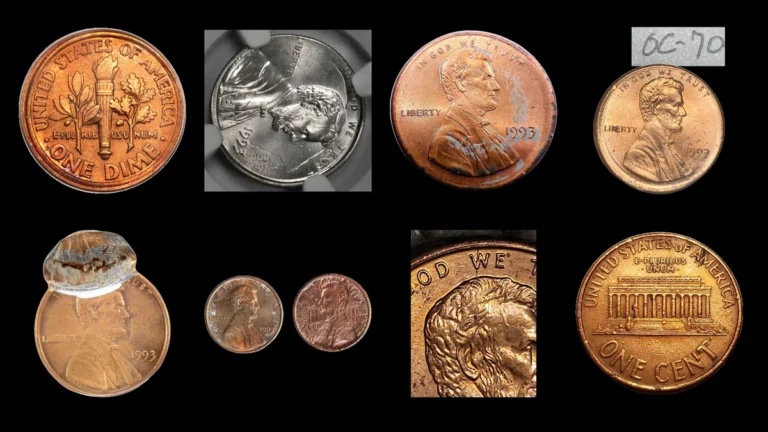
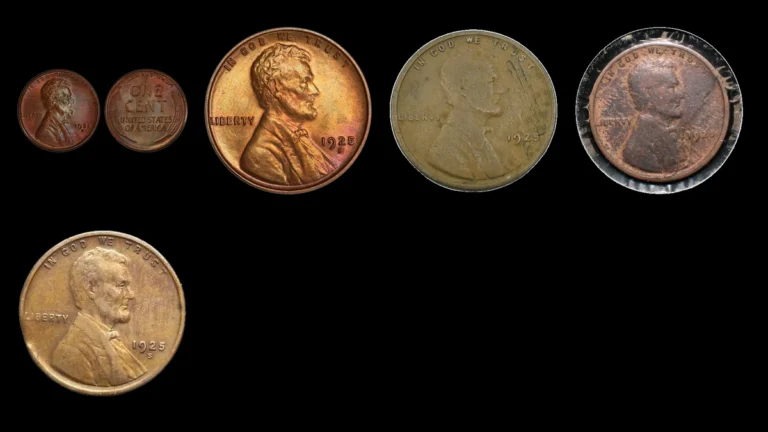
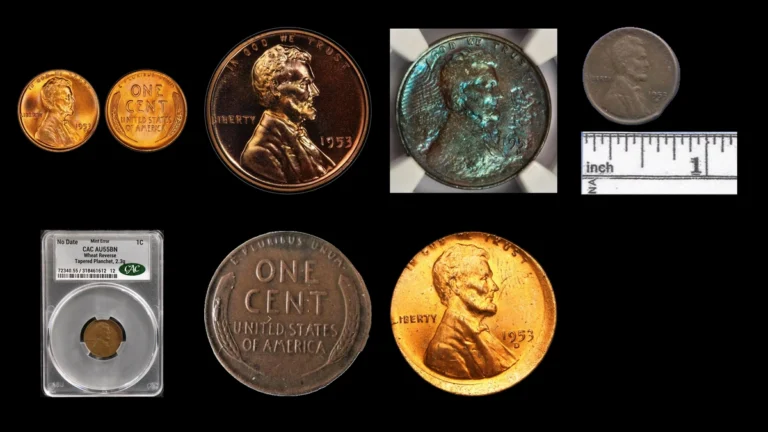
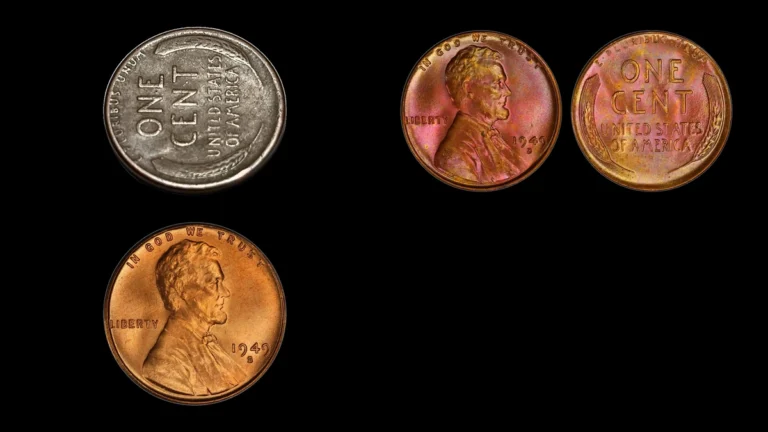
Rare 1971 Penny Errors (List & Pictures)
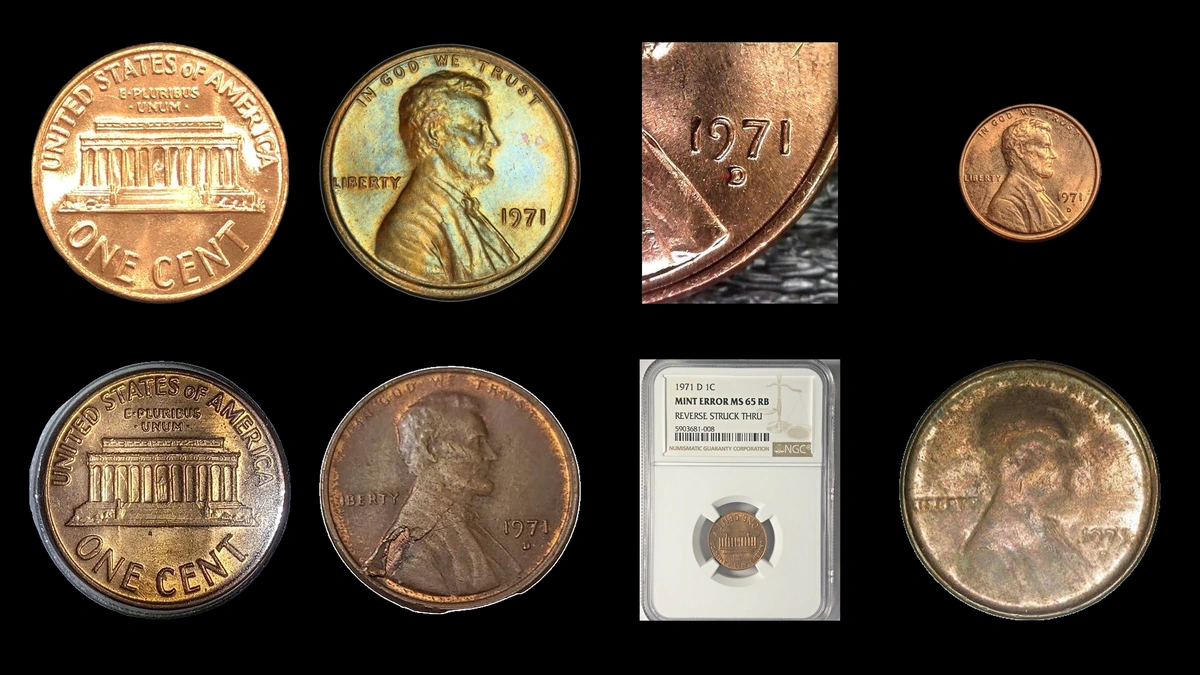
The most unusual 1971 penny errors include a San Francisco cent on an aluminum blank that brought $31,200 at auction in September 2024. Across the categories below, estimated values run from $2 for small die defects to $35,000 for exceptional wrong-metal pieces.
Start with the lettering and surfaces, then examine the outline before investigating an unusual weight.
| What catches your eye | Possible explanation | Estimated value |
|---|---|---|
| Missing, doubled, or extra small details | Polishing, doubled die, repunched mintmark, or die damage | $2–$5,000 |
| Peeling metal or an impressed pattern | Lamination, struck-through error, or transferred design | $5–$2,000 |
| Missing edge, displaced design, or raised walls | Clip, off-center strike, multiple strikes, broadstrike, or die cap | $15–$1,500 |
| Unexpected thickness, weight, or metal | Split, thick, or wrong planchet | $50–$35,000 |
A regular 1971 cent weighs 3.11 grams and measures about 19.05 millimeters across its smooth edge. Its copper alloy extends through the coin, unlike the thin copper covering of a modern zinc cent.
Use a magnifier and angled light for the first inspection; reserve a checked scale and gentle thickness measurements for coins whose shape or metal warrants them. Keep certified coins in their holders and leave loose flakes attached.
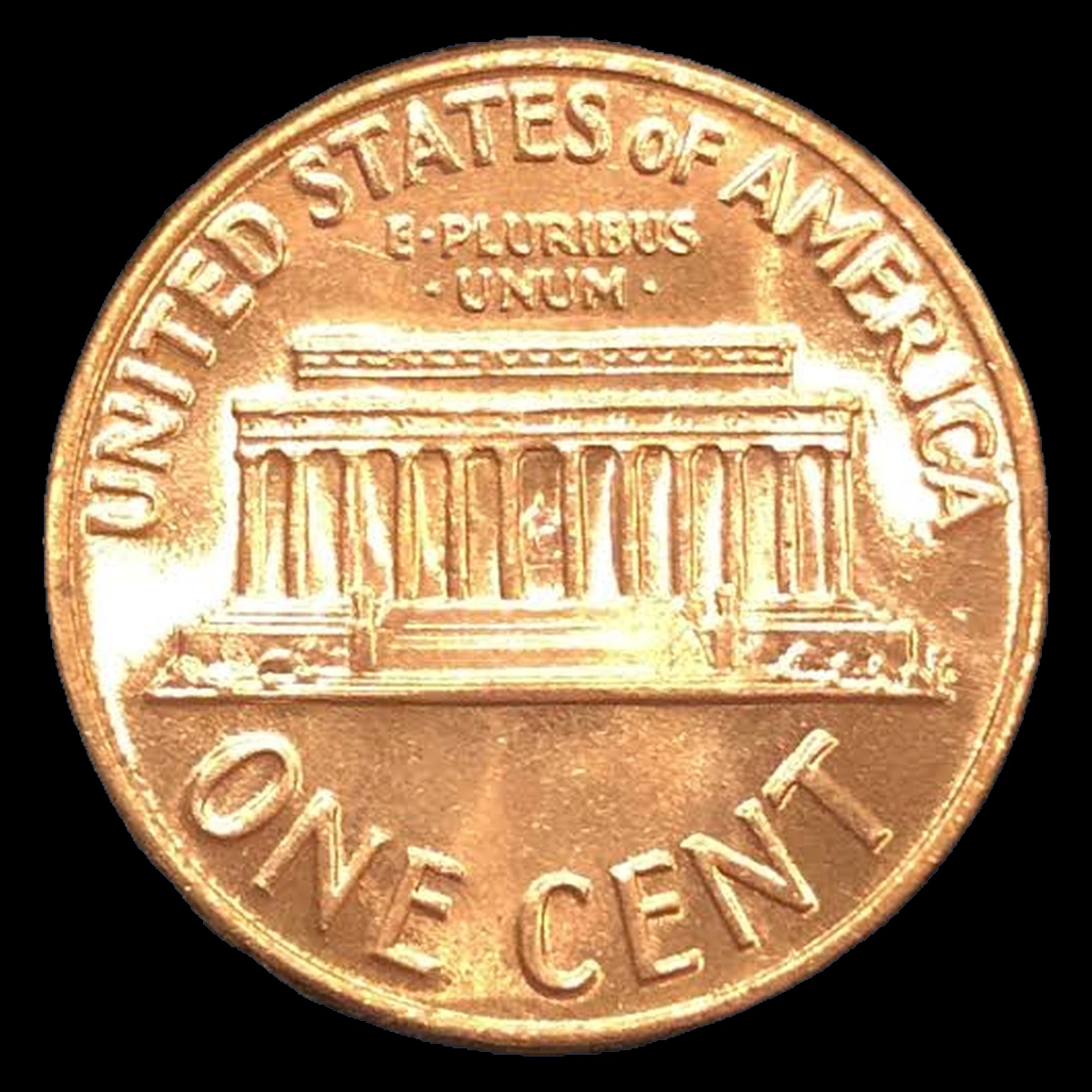
1. 1971 Penny Faint or absent FG beside the Memorial: Missing Initials Error
Look beside the right base of the Memorial for the designer’s small FG initials. Some reported 1971-D examples lack these letters, sometimes alongside the appearance collectors call a floating roof.
Polishing a die, the tool carrying the design, can remove shallow details before it strikes another coin. Missing FG alone does not establish that this happened.
How to Identify
Judge the small letters against the surrounding columns, steps, and lettering. Sharp nearby detail with a consistently absent feature is more useful than a generally worn or weak reverse.
Dirt can hide the initials, and ordinary wear can erase them. Do not scrape the area to reveal a supposed variety, and do not require a floating roof on every missing-FG example.
What It’s Worth
Reported 1971-D missing-FG cents are estimated at $2–$50. Clear die-related loss and attractive surfaces support the stronger end; an unreadable pair of initials on a worn cent does not.
No completed sale for an exact matching example accompanies this estimate.
2. 1971 Penny Extra outlines around the letters: Doubled Die Error
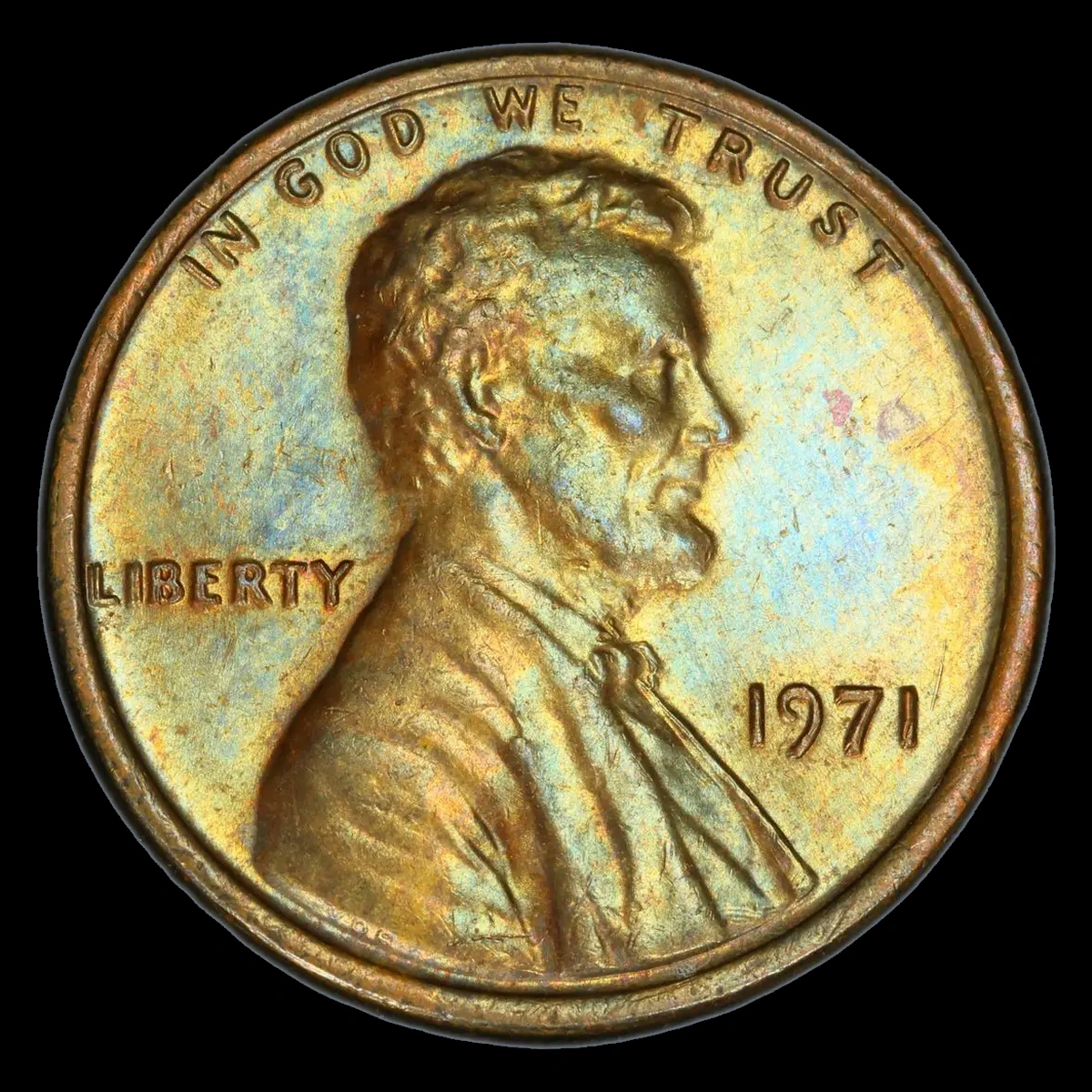
A doubled die carries an extra version of part of its design, so coins made with it repeat the same doubled features. The important evidence is the shape of those features, rather than the impression that everything looks blurry.
1971 examples include different Philadelphia and Denver varieties, strong lettering on some San Francisco Proofs, and small FG doubling on a Proof reverse. These are separate varieties requiring separate matches.
How to Identify
Examine the date and lettering for the particular separation shown by an established variety. Flat ledges from movement during striking and spreading caused by die wear can resemble doubling.
A catalog number such as FS-101 is incomplete without the date, mint, and issue: the Philadelphia and San Francisco Proof listings are not interchangeable. Supporting die scratches may help a match, but they cannot substitute for the doubled design.
A Proof was specially made for collectors; an S mintmark or shiny surface alone does not prove that status. Check the finish and attribution before comparing a coin with a Proof price.
What It’s Worth
Minor varieties are estimated at $5–$150, while strong, recognized examples range around $100–$5,000. Attribution and condition account for much of that spread.
The PCGS record for the 1971-S Proof FS-101 doubled die includes a $3,600 sale in February 2022. That coin graded PR69 Deep Cameo, combining very high preservation with strong contrast between frosted designs and mirrored fields.
3. 1971 Penny A second curve on D or S: Repunched Mintmark Error
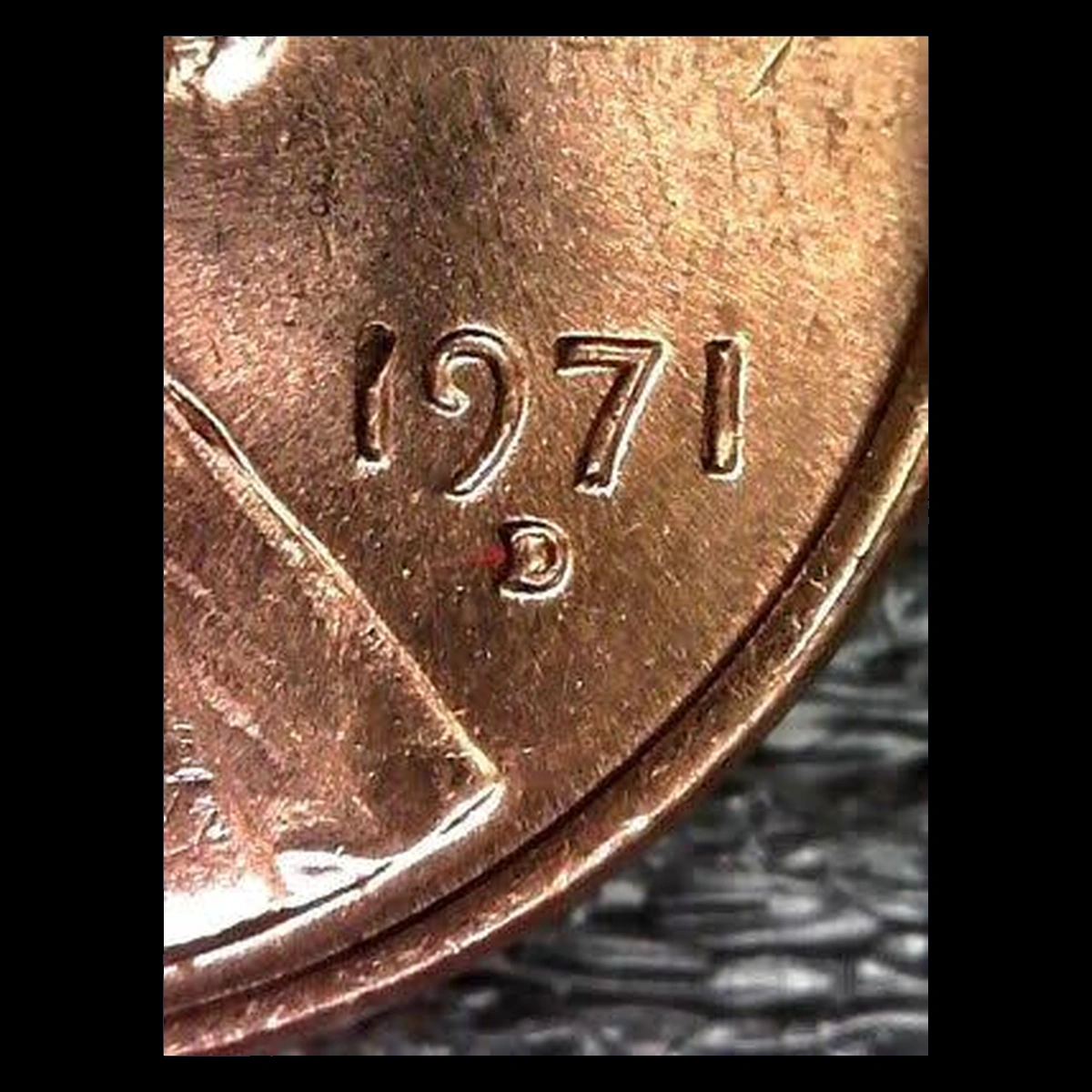
The mintmark was added to the die separately in this period. If the punch landed in slightly different positions, a remnant of one impression could remain beside the finished D or S.
Several reported 1971 repunched mintmarks belong to this family. A small extra curve must be distinguished from both an unrelated lump and ordinary strike doubling.
How to Identify
Follow the whole mintmark, looking for a second upright or curved section that fits another placement of the same letter. Compare its direction and location with the specific attributed variety.
A flat shelf, dirt beside the letter, or a die chip can create a misleading outline. Philadelphia cents without a mintmark do not belong in this category.
Keep San Francisco circulation issues and Proofs separate when matching a reference. Their shared S does not make their varieties or values identical.
What It’s Worth
Estimated values are $3–$150. A strong, recognizable repunch in good condition is more desirable than a tiny, uncertain projection.
The supplied examples establish varieties to investigate, but include no exact completed auction result for this range.
4. 1971 Penny Raised spikes, lines, or lumps: Die Cracks, Chips, and Cuds Error
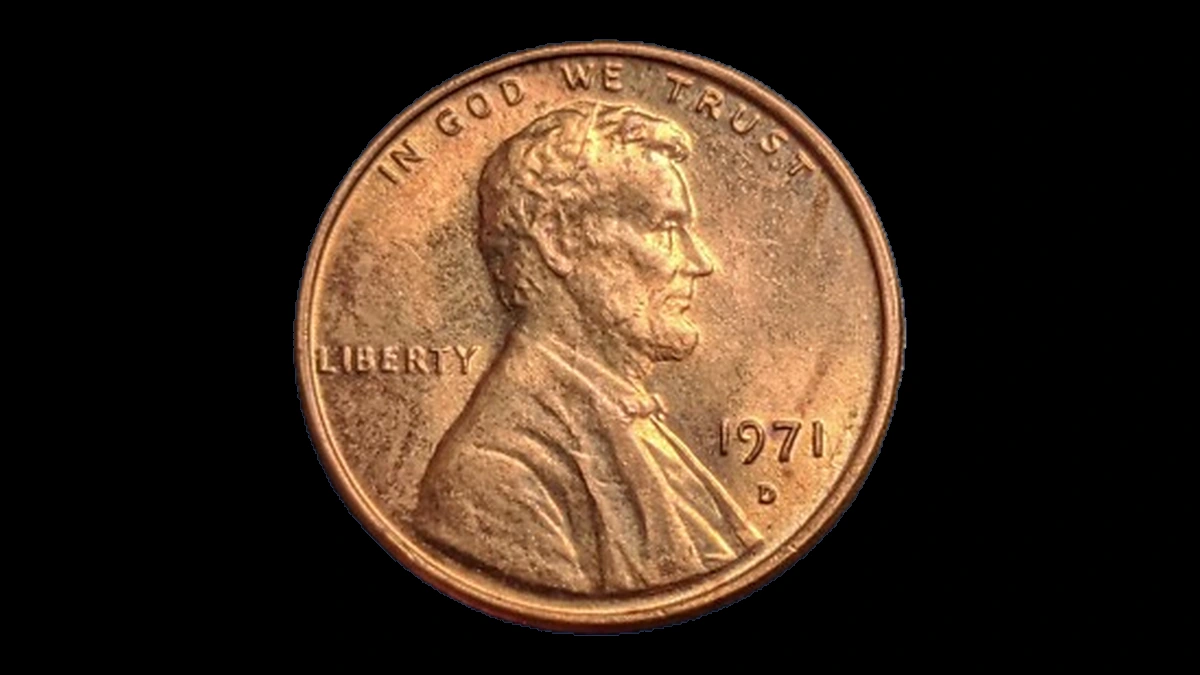
Many recorded 1971-D cents, and some S cents, have a raised line that gives Lincoln a spike above his head. Coin metal entered a crack in the die to create that line.
A small piece missing from the die can leave a lump, including the BIE chip between B and E in LIBERTY. A larger missing piece reaching the die’s edge produces a rim-connected mound called a cud.
How to Identify
Move the light across the area to determine whether the feature rises above the surface. A scratch is cut into the coin, though displaced metal along its sides can complicate a quick glance.
Trace a suspected spike along its full path and inspect where a suspected cud meets the rim. Added solder is not a die break, and a BIE chip does not mean the actual lettering was changed to include an I.
What It’s Worth
Small cracks and chips are estimated at $2–$50; substantial cuds at $75–$1,500. The amount and placement of missing die metal matter far more than an imaginative nickname.
A different-year 1979 cud cent graded PCGS MS64 Brown sold for $1,020 in May 2021. That substantial break is a comparison for larger errors, not a price for every 1971 hairline crack.
5. 1971 Penny Faint pieces of the opposite design: Die Clash Error
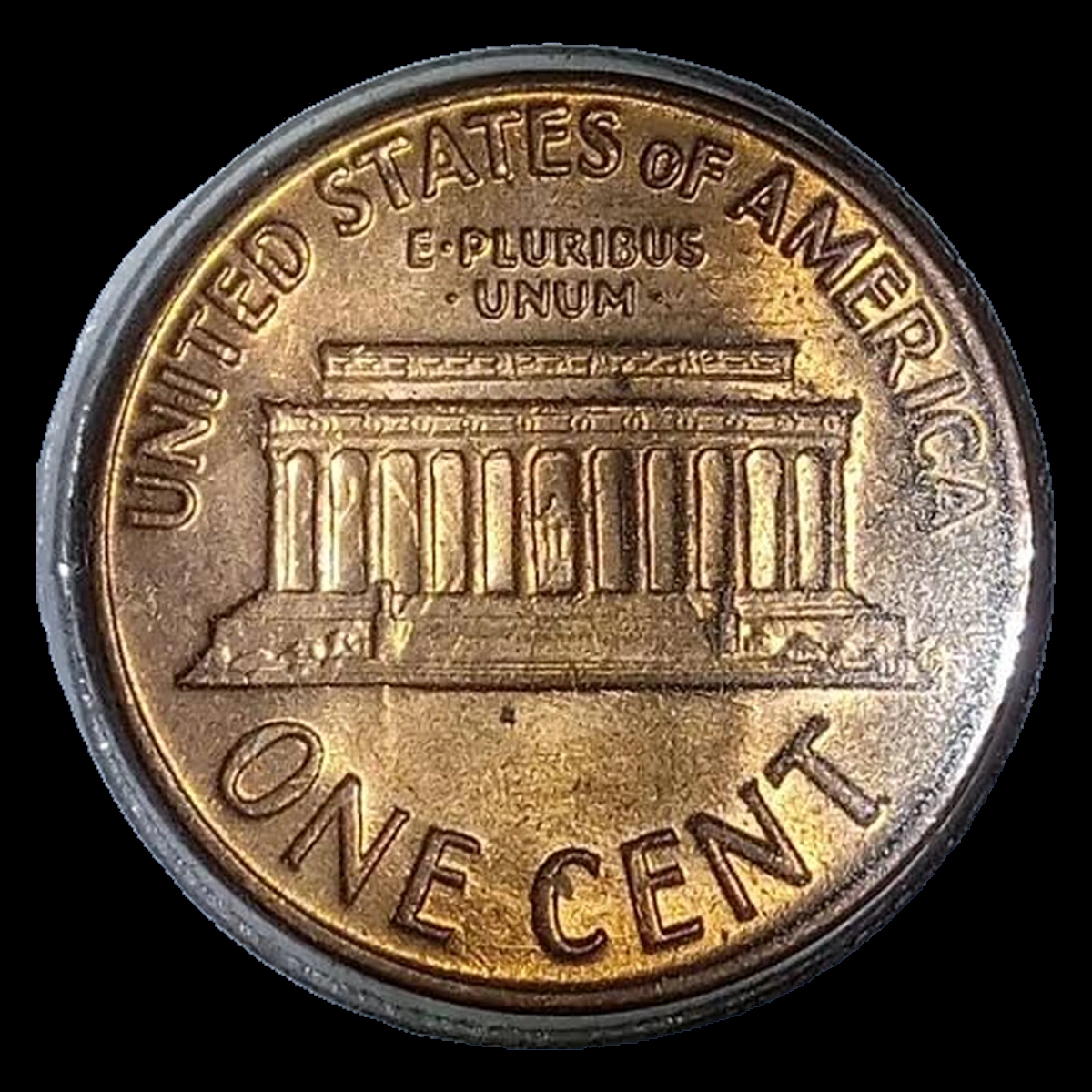
Unexpected outlines on otherwise normal surfaces may come from the two dies meeting without a blank between them. Contact can leave traces that appear on coins struck afterward.
Clashes have been reported on 1971 cents, but the supplied material does not establish one fixed diagnostic location for all of them.
How to Identify
Try to connect the faint mark to a recognizable part of the opposite design. Both its shape and its position must make sense for contact between the dies.
Random scratches, small chips, and flattened surface marks are not enough. A photograph from another year can explain a clash, but its exact mark location cannot automatically identify a 1971 coin.
What It’s Worth
The estimate is $5–$75 for a recognizable 1971 clash. Clear transferred outlines on an unworn coin are easier to identify and generally more appealing than vague marks.
No specific completed auction result was supplied for this reported category.
6. 1971 Penny A flake or shallow missing patch: Lamination Error
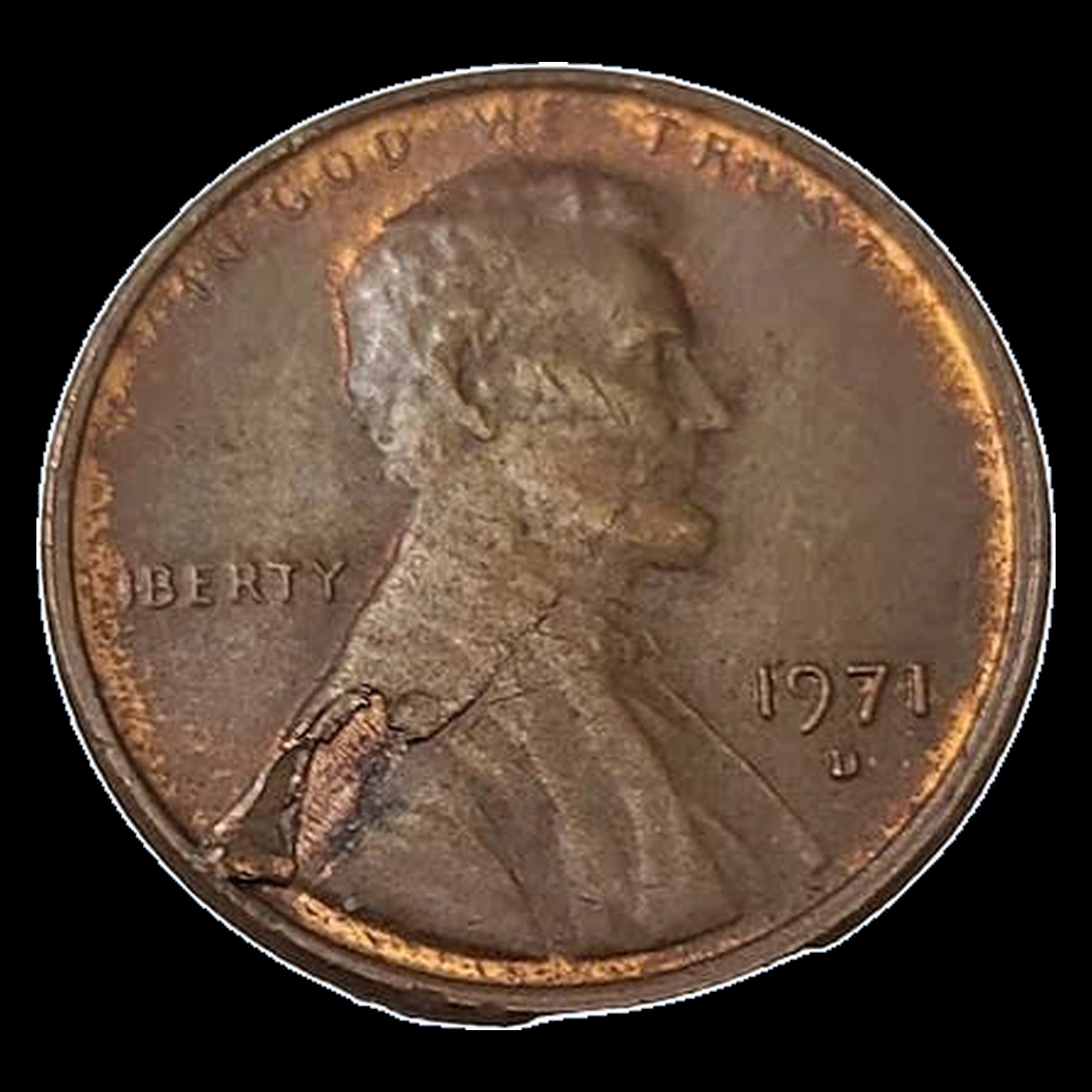
A rough patch on a recorded Denver example reflects separation within the cent’s alloy. This type of separation, called lamination, can leave a lifted flap or a shallow area where metal has detached.
The relationship between the patch and the struck design may help establish whether the separation happened before or after striking. It is not peeling copper plating from a zinc center.
How to Identify
Inspect the boundary for a thin layer splitting beneath the surface. Check whether design detail crosses the affected area or has disappeared with a detached flake.
Repeated scrape lines suggest mechanical damage, while irregular corrosion can also leave pits. Pulling on a flap destroys evidence and may damage the coin.
What It’s Worth
Estimated values run $5–$100. A clearly visible, naturally preserved separation carries more interest than a tiny rough spot of uncertain origin.
The Denver report supplies a diagnostic example, not an exact auction price.
7. 1971 Penny An impressed patch or widely blurred face: Struck Through Error
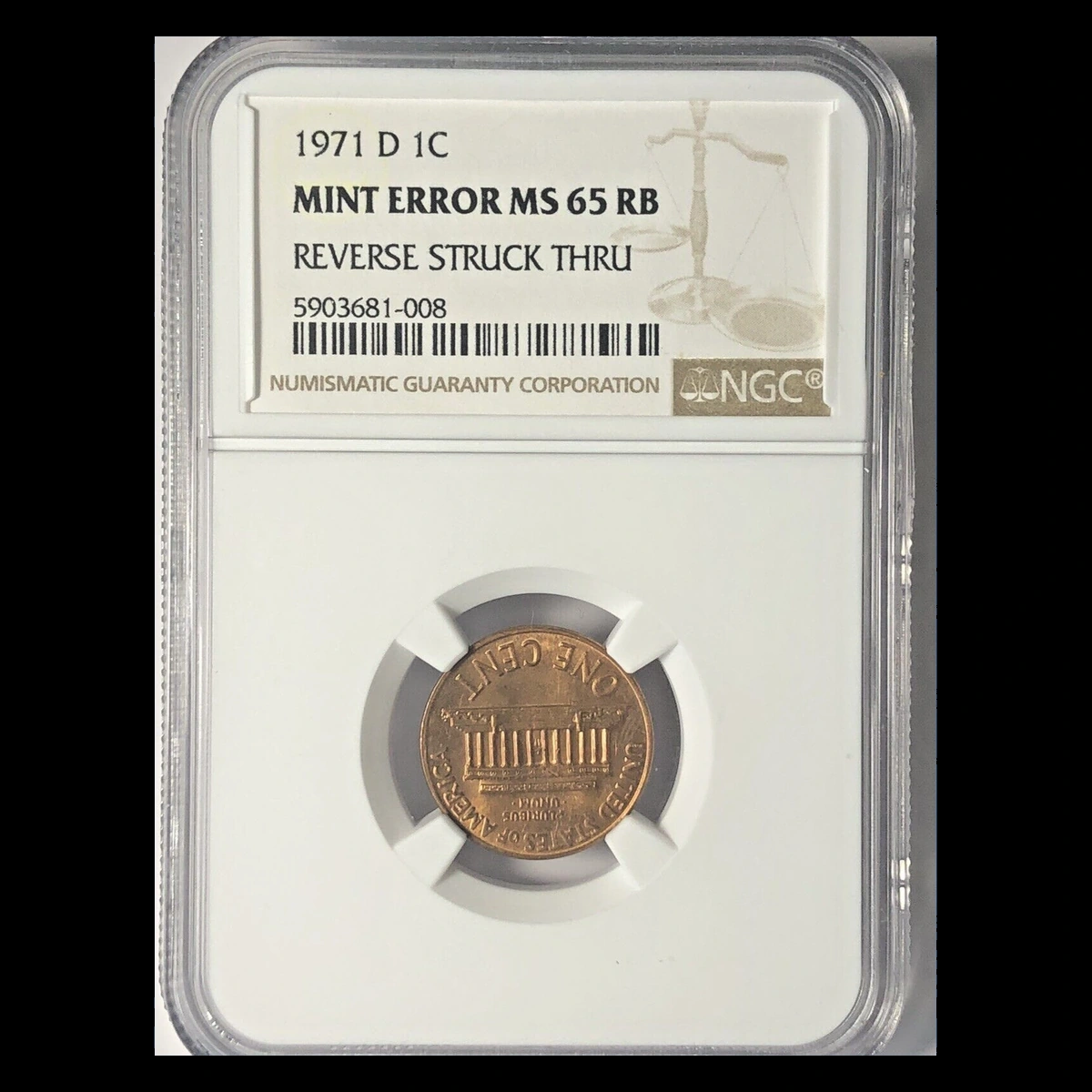
Material caught between a die and the blank can interrupt the design. A recorded 1971-D reverse shows such an impression, but the supplied evidence does not identify the obstructing substance.
Other examples were struck beneath a coin stuck to a die, called a die cap. That obstruction can soften a broad area while the newly struck coin remains relatively flat.
How to Identify
Compare the affected patch with the surrounding normal design and inspect both faces. A localized impressed shape differs from the gradual loss of detail caused by circulation.
Do not name cloth, wire, or grease unless the actual impression supports it. Broad softness consistent with a cap needs more evidence than a single blurry photograph.
What It’s Worth
These struck-through errors are estimated at $20–$350. Distinct impressions and convincing identification tend to command more than weak, ambiguous detail.
A 1995 cent struck through a late-stage cap, graded PCGS MS65 Red, sold for $180 in March 2025. It illustrates another year’s cap-related error rather than a sale of the 1971-D reverse example.
8. 1971 Penny Backward or unusually transferred details: Brockage and Counterbrockage Error
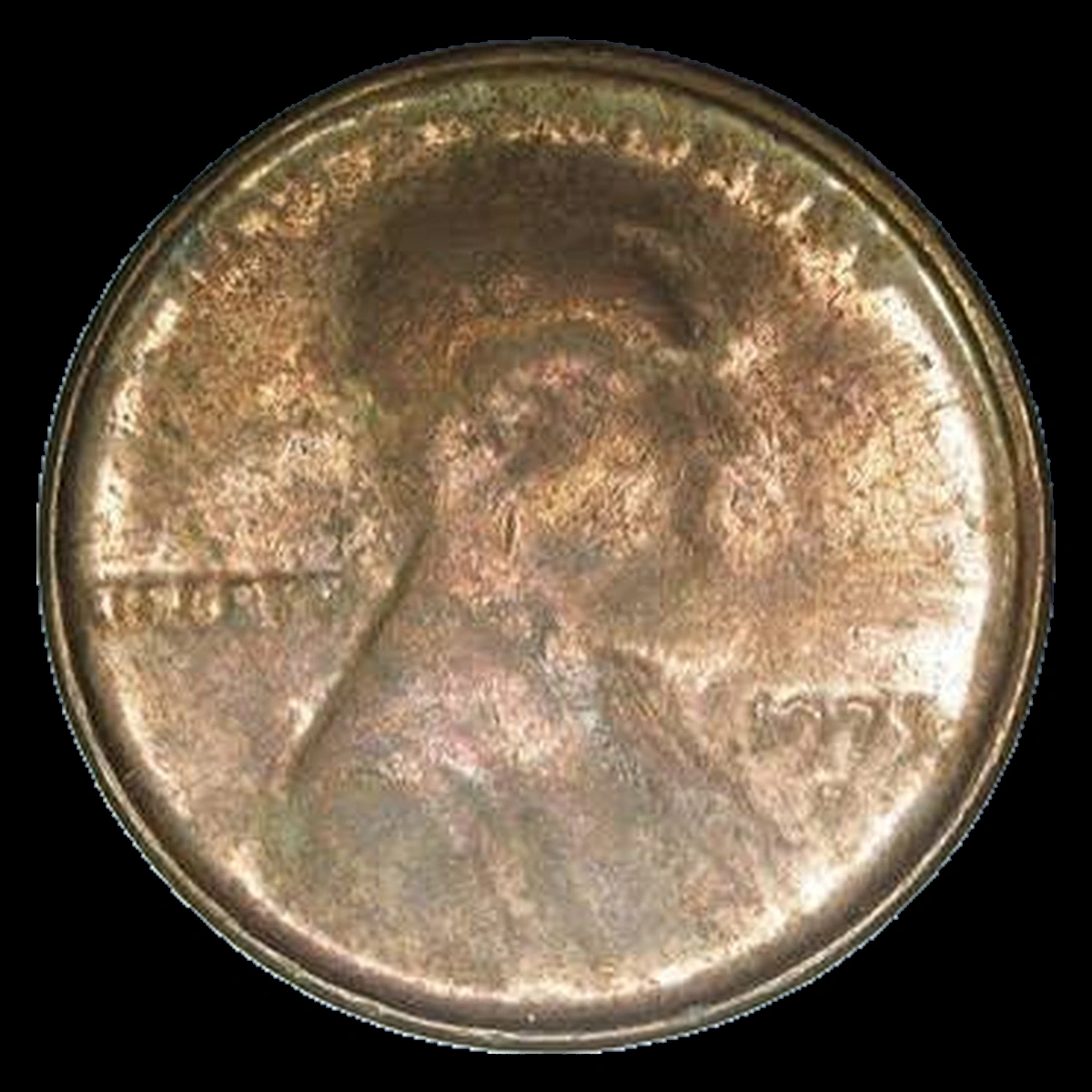
A struck coin trapped in the press can impress a backward, sunken version of its design into another blank. This mirror transfer is a brockage.
A reported 1971-D late-stage brockage has softened transferred detail. A separate Philadelphia counterbrockage involves another transfer, which can return the design to a raised, normally readable form.
How to Identify
Record two things separately: whether the letters read backward, and whether the unusual design is raised or recessed. Their combination helps distinguish the transfer stages.
A counterbrockage needs a coherent transferred pattern, not just extra raised marks. Examine the edge and both faces for evidence that ordinary coins were squeezed together after minting.
What It’s Worth
A range of $150–$2,000 covers recognizable 1971 brockages and counterbrockages. Strong transferred designs and good preservation have an advantage over heavily worn or poorly defined pieces.
A 1999 counterbrockage graded PCGS MS65 Red brought $1,680 in March 2023. That later plated-zinc cent is a comparison, not the recorded Philadelphia 1971 coin.
9. 1971 Penny Part of the edge is missing: Clipped Planchet Error
A curved or straight missing section can begin when blanks are punched from a metal strip. An overlapping punch can produce a curve, while a cut extending beyond the strip can leave a straight boundary.
The 1971 reports include double clips and combinations with broadstrikes or an additional strike. These combinations need evidence for each feature on the same coin.
How to Identify
Study each missing section for a natural blanking boundary rather than saw marks or freshly cut metal. A weak rim opposite a clip can support the identification, but is not mandatory on every example.
A reported Denver straight clip weighs 2.15 grams; a different broadstruck, curved-clip cent weighs 1.43 grams. Those measurements describe separate coins and are not target weights for all clips.
What It’s Worth
Simple clips are estimated at $15–$100, with double clips and stronger combinations around $75–$300. Count genuine missing sections before assigning a double-clip premium.
A 2021 straight-clip cent graded PCGS MS64 Red sold for $114 in September 2025. Its different metal and date limit how directly that result applies to a 1971 copper-alloy cent.
10. 1971 Penny A complete design inside an enlarged outline: Broadstrike Error
A broadstruck cent spreads beyond its intended diameter because the collar fails to contain it. The design can sit unevenly within the enlarged coin and still remain complete.
That completeness separates an uncentered broadstrike from an off-center strike that loses part of the design.
How to Identify
Follow the lettering and other outer details all the way around both faces. Expansion with the full design present supports a broadstrike.
Ordinary broadstriking redistributes existing metal rather than removing it. A markedly light example needs a separate explanation, such as a confirmed clip or split blank.
What It’s Worth
Ordinary 1971 broadstrikes are estimated at $25–$175. Strong expansion, original surfaces, and a clearly readable date make a more useful example.
A 1999 broadstrike graded PCGS MS65 Red sold for $67 in March 2023. It provides context from a later plated-zinc issue; combinations with other errors need their own assessment.
11. 1971 Penny The design runs beyond the blank: Off-Center Strike Error
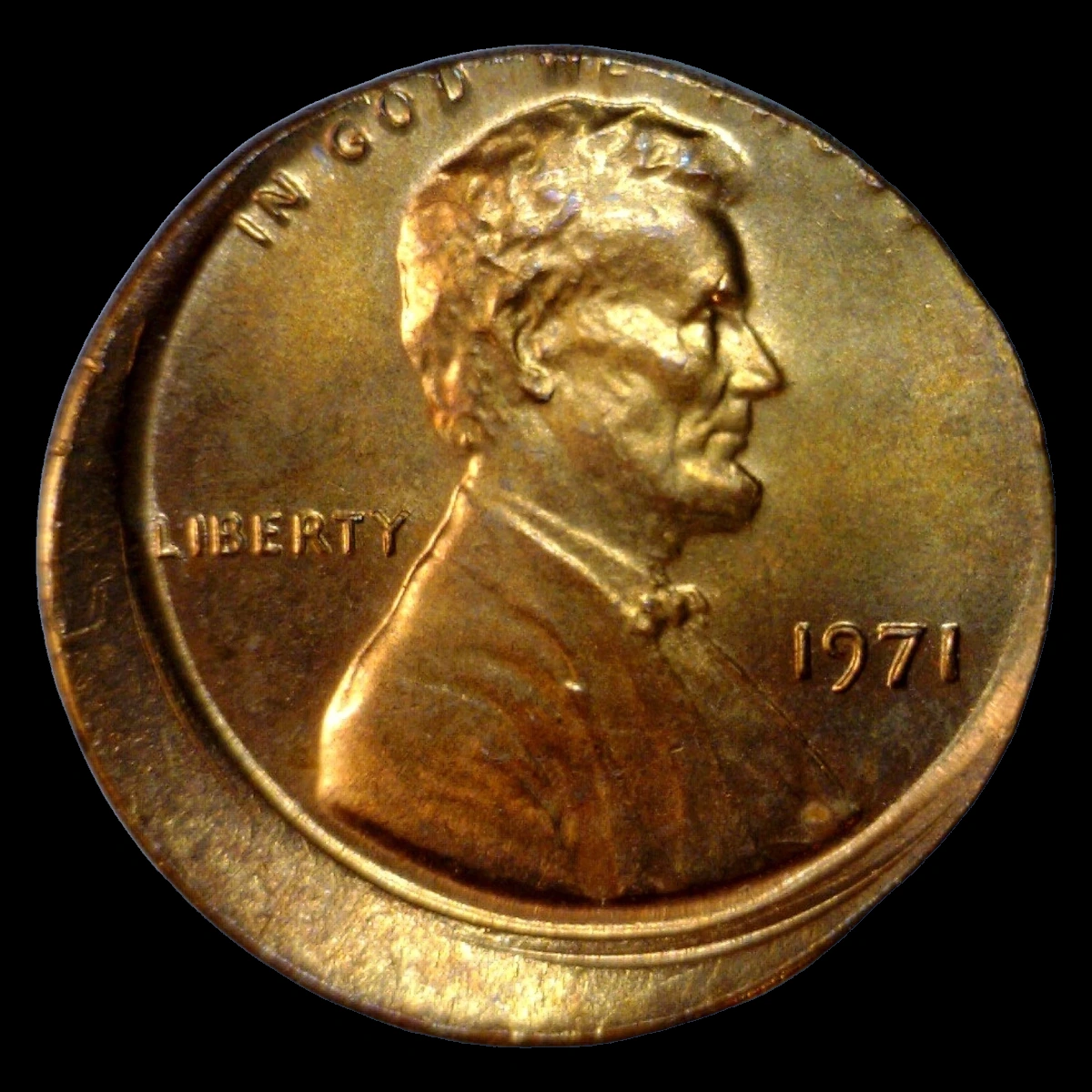
An off-center strike leaves some of the intended design outside the metal, usually beside an unstruck crescent. Reported Philadelphia 1971 examples include roughly 10% shifts, while Denver examples include approximately 50% and 65% strikes.
Separate San Francisco reports include about 45% off center and a roughly 75% uniface example. In the latter type, another disc can block one face during striking.
How to Identify
Locate the missing design and distinguish it from an expanded coin that retains every element. Note whether enough of the date and mintmark survives to support a 1971 attribution.
Inspect both faces, allowing for a documented uniface strike rather than assuming every example must show matching impressions. A ground-down face is damage, and smoothness alone does not establish that another blank blocked the die.
What It’s Worth
The estimated range is $20–$400. Amount of displacement, retained date, preservation, and unusual combinations all influence the result.
A 1982 zinc cent struck about 70% off center, graded PCGS MS64 Red, sold for $74 in June 2025. That is a different-year comparison, not a realized price for any of the separate 1971 examples above.
12. 1971 Penny Separate portraits or dates overlap: Multiple Strikes Error
A second placement under the dies can add another portrait, rim, or date to a coin already struck. Some coins shift far outward; others rotate while remaining inside the collar.
One Denver example received a roughly 85% off-center, one-sided second strike, while another received four off-center strikes. San Francisco Proofs with an unintentionally shifted extra impression are also recorded.
How to Identify
Trace enough connected features to separate one impression from the next. A small doubled letter cannot by itself demonstrate that the whole coin returned for another strike.
On a rotated example, several design elements should move together through the same turn. Proof production normally uses aligned repeated strikes, so the error requires unintended displacement.
What It’s Worth
Estimated values span $75–$1,500. Distinct impressions and unusual Proof errors can be more desirable than faint overlapping designs.
A 1987 cent with a rotated second strike inside the collar sold for $312 in June 2025, graded PCGS MS62 Red and Brown. This circulation-issue comparison does not price a 1971 Proof, and a mixed-year lot total cannot identify one coin’s individual value.
13. 1971 Penny The coin rises into a cup: Die Cap Error
A coin that stays attached to a die can be stretched around it by continuing strikes. Its raised walls make the resulting die cap a physical object quite different from a flat coin struck underneath it.
A Philadelphia 1971 cap was certified NGC MS66 Red and Brown, indicating an unworn coin with mixed copper coloration.
How to Identify
Examine the side profile and how surviving design flows into the raised wall. Naturally stretched metal should explain the shape.
Sharp folds, fresh tool marks, or a uniformly bent ordinary coin require a different explanation. Do not flatten the cap to measure it or treat a soft design on a flat cent as proof that the cent itself became a cap.
What It’s Worth
A genuine 1971 die cap is estimated at $150–$750. Wall development, recognizable design, color, and preservation affect its appeal.
A 1979-D obverse cap graded PCGS MS64 Red sold for $329 in January 2016. The supplied record does not give a sale price for the Philadelphia 1971 MS66 cap.
14. 1971 Penny An unusually thin coin with struck surfaces: Split Planchet Error
A blank can separate into thinner layers before it reaches the dies. Striking one layer can produce a light coin with weak design on both faces.
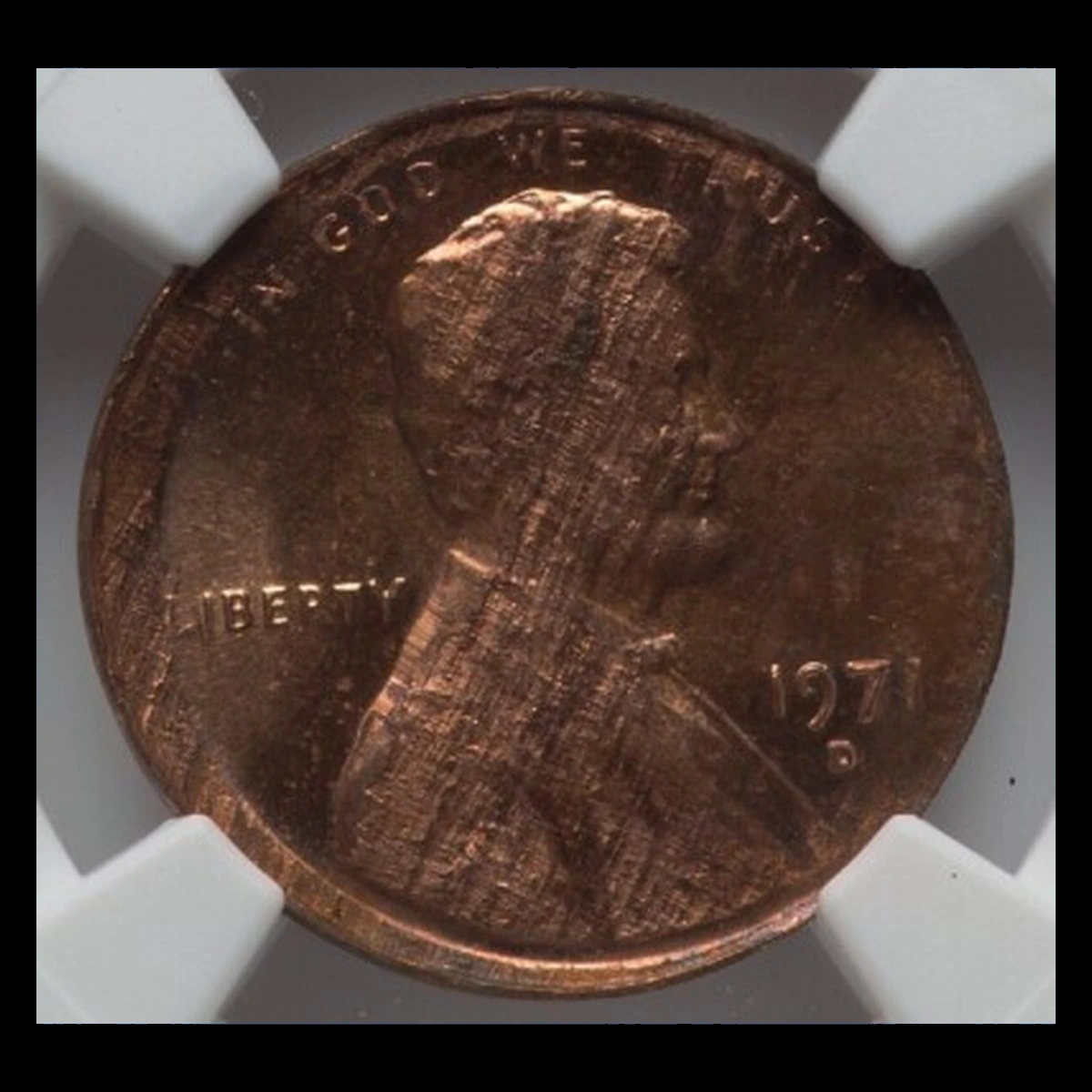
The recorded 1971-D example weighs 1.6 grams and also has an uncentered broadstrike with the full design present. Another Denver example combines a split blank with an indent made by an overlapping disc.
How to Identify
Look for struck detail on the thin piece and a surface consistent with internal separation. Grinding or filing a normal coin down produces different surface damage.
For the combination example, identify the indent as a separate hollow caused by overlap. Do not transfer that feature to the 1.6-gram coin simply because both involve split blanks.
What It’s Worth
The estimate is $50–$200. The 1.6-gram 1971-D split-before-strike broadstrike sold for $59 in June 2023.
NGC identified the split-before-strike error, but the listing supplied no numeric grade. Adding an assumed grade would make the comparison less reliable.
15. 1971 Penny More weight in a thicker blank: Thick Planchet Error
The recorded thick-planchet 1971-D cent weighs 4.08 grams, substantially more than normal. The extra metal belongs to the blank used for striking.
Its weak Memorial steps and a scratch above reverse lettering are separate observations. Neither feature explains or proves the unusually thick blank.
How to Identify
Repeat the weight measurement after checking the scale, then compare thickness and diameter. The measurements should describe one continuous piece of struck metal.
Inspect the edge for a seam, solder, or an attached backing that could account for extra weight. A heavy reading alone does not establish the mint error.
What It’s Worth
A comparable confirmed example is estimated at $150–$500. The 4.08-gram coin’s February 2005 Heritage listing ended unsold.
That listing therefore supplies no realized auction price; the stated range remains an estimate.
16. 1971 Penny The size or metal belongs elsewhere: Wrong Planchet Error
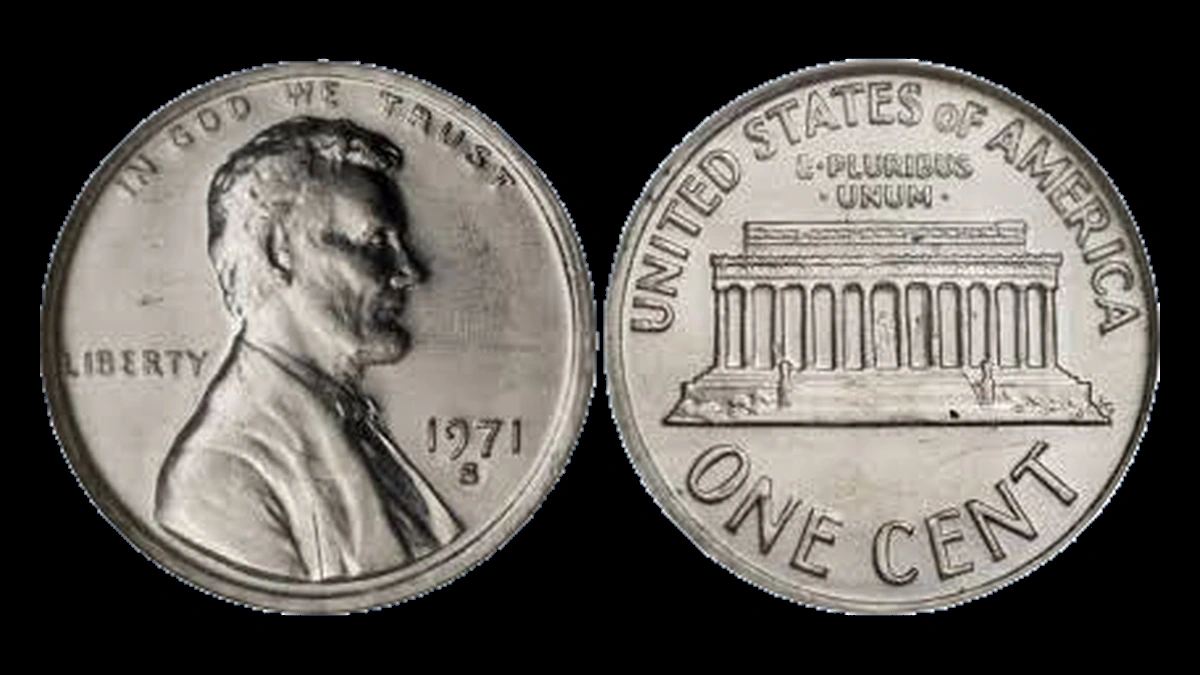
A cent design can be struck on a blank intended for another coin. The 1971 reports include dime-sized clad blanks and a much lighter San Francisco aluminum example.
A dime blank is about 17.91 millimeters across and 2.27 grams, with copper-nickel outer layers surrounding copper. The aluminum 1971-S cent weighs only 0.75 gram, and its intended denomination or country has not been established.
How to Identify
Combine size, weight, edge appearance, and professional metal identification. Gray color by itself could come from a coating; avoid acid or scratch tests that damage the evidence.
One recorded Denver dime-blank cent also has a second strike about 95% off center and a small indent from an overlapping blank. It was not described as a cent struck over a finished dime, so surviving dime designs should not be invented.
What It’s Worth
Dime-planchet examples are estimated at $250–$1,500; the exceptional aluminum type at $20,000–$35,000. The metal and error identification must be secure before using either range.
The 1971-S aluminum cent graded NGC AU58 brought $31,200 in September 2024. Its grade indicates only slight wear.
For a different comparison, a 2007-D cent on a dime blank graded PCGS MS66 sold for $600 in March 2023. That later result does not establish the price of the complicated 1971-D multiple-strike example.
Conclusion
A useful 1971 cent identification starts with a precise description: missing initials, a raised crack, a clipped boundary, or a displaced impression. Let the visible evidence lead to the error name before using a price range.
Keep measurements and auction results attached to the particular coin they describe. That distinction matters especially when ordinary copper-alloy cents share an article with rare Proof varieties, combination errors, and the exceptional aluminum cent.