Rare 1972 Penny Errors (List & Pictures)
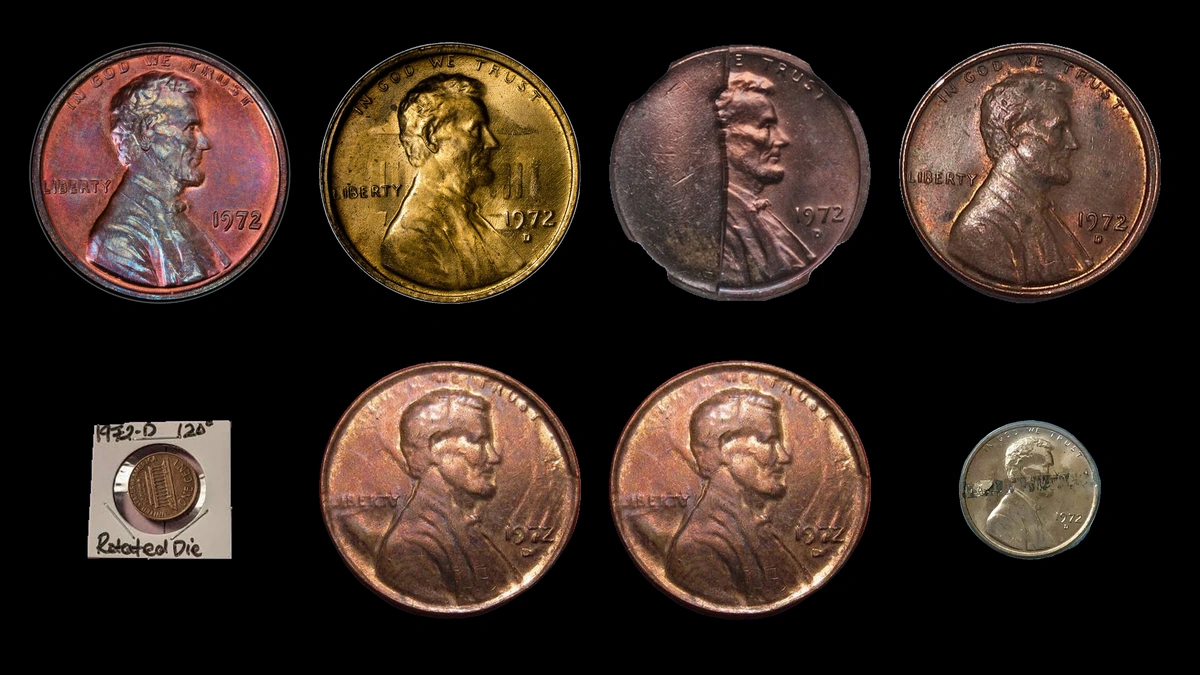
The famous doubled date makes 1972 penny errors popular, but this year also includes folded blanks and designs struck over older coins. An exceptional major doubled-die example brought $14,400 in June 2019.
Estimated ranges extend from $2–$25,000. Check the familiar lettering first, then compare the coin’s alignment, surface, outline, and metal with the more unusual examples.
| Starting clue | Useful distinction |
|---|---|
| Repeated letters | A doubled die is different from a second strike |
| Uneven rim | Compare both faces before calling it off center |
| Weak or exposed surface | Blocked design differs from a separated metal layer |
| Another date | Read the earlier coin and later strike separately |
1. 1972 Penny Date and Motto Have Strong Extra Outlines: Doubled Dies Error
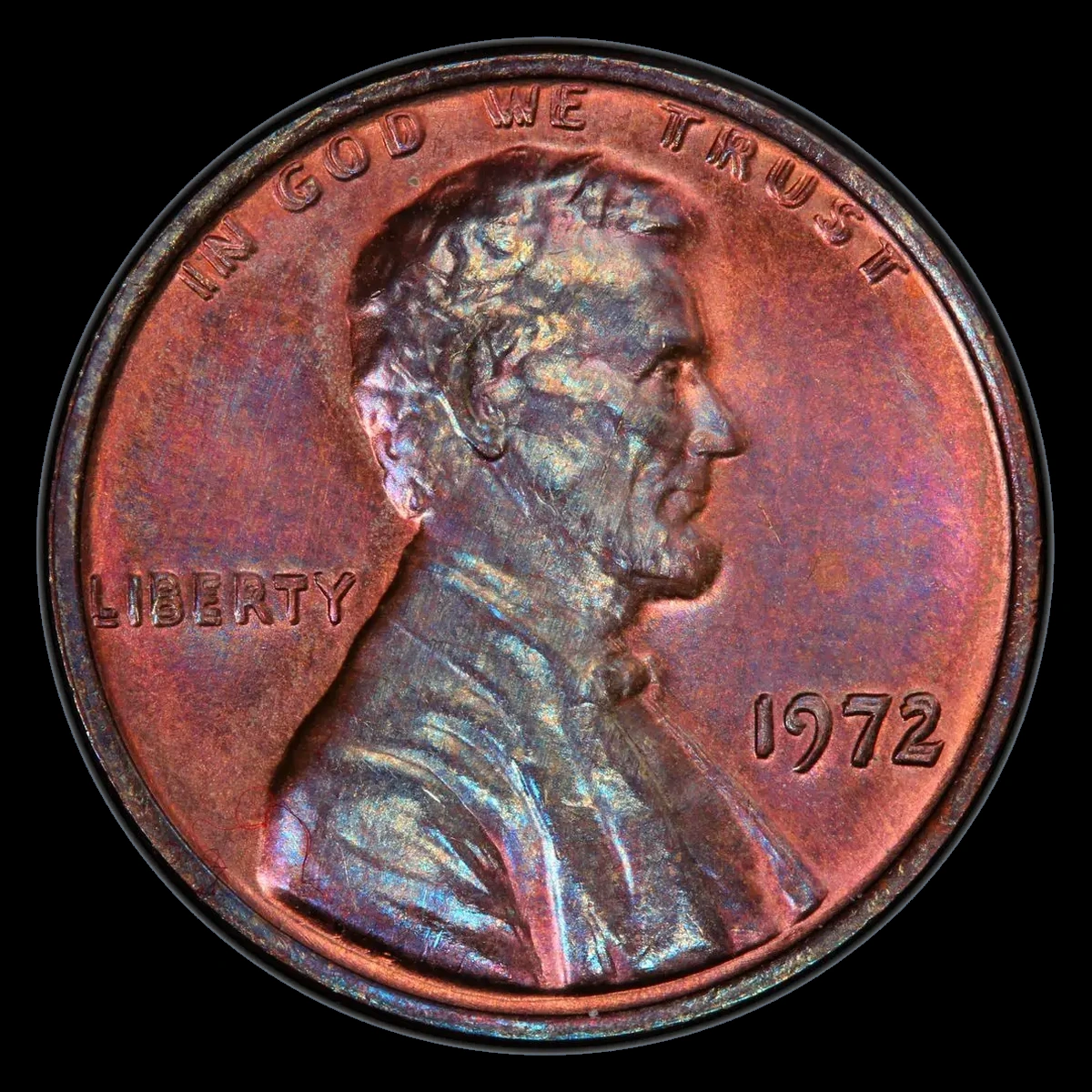
Philadelphia’s famous FS-101 repeats the date, LIBERTY, and motto. The extra design was already on the die, so one ordinary blow could transfer it to the blank.
Smaller Philadelphia, Denver, and San Francisco varieties have different patterns. Some affect only part of a digit or a small area of the Memorial.
How to Identify
For FS-101, compare all four date digits and both lettering areas with the strong Philadelphia pattern. Rounded repeated contours differ from flat shelves caused by movement during striking.
Check mint and finish before matching a smaller variety. San Francisco made both circulation coins and Proofs, so S alone does not mean Proof.
Denver reverse varieties can affect a roof or column, while one S Proof pattern affects the sloping floor beneath the statue. These details cannot borrow FS-101’s identity.
What It’s Worth
$100–$15,000 is the estimate for major FS-101 examples across condition. Smaller circulation varieties fit about $5–$500, and identified S Proof patterns about $25–$750.
PCGS records $14,400 for an MS67+ Red FS-101 in June 2019. An MS64 Red example brought $732 in July 2026, showing how much preservation changes the comparison.
2. 1972 Penny A Second D Outline Survives: Repunched Mintmark Error
Denver mint letters were added separately to the dies with a punch. A shifted repeat could leave another partial D without doubling the date around it.
How to Identify
Trace the whole D, including its upright, curve, and short ends. Reported westward, northward, and tilted patterns need their own matches.
A bump caused by damage or a worn punch can resemble an extra stroke. Supporting die marks help only after the repeated letter shape fits.
What It’s Worth
$5–$250 is the estimate for identified 1972-D repunched mintmarks. Strong, readable separation on a clean coin supports the better comparisons.
No auction result is assigned to every catalog entry. Several surviving strokes still belong to one variety on one coin.
3. 1972 Penny Opposite-Design Traces Appear: Die Clash Error
Dies that meet without a blank can transfer marks to each other, then pass those marks to later coins. Philadelphia and Denver 1972 examples include more complicated repeated transfers.
One Denver pattern has light marks near RTY in LIBERTY. A transfer back to the original die is called a counterclash.
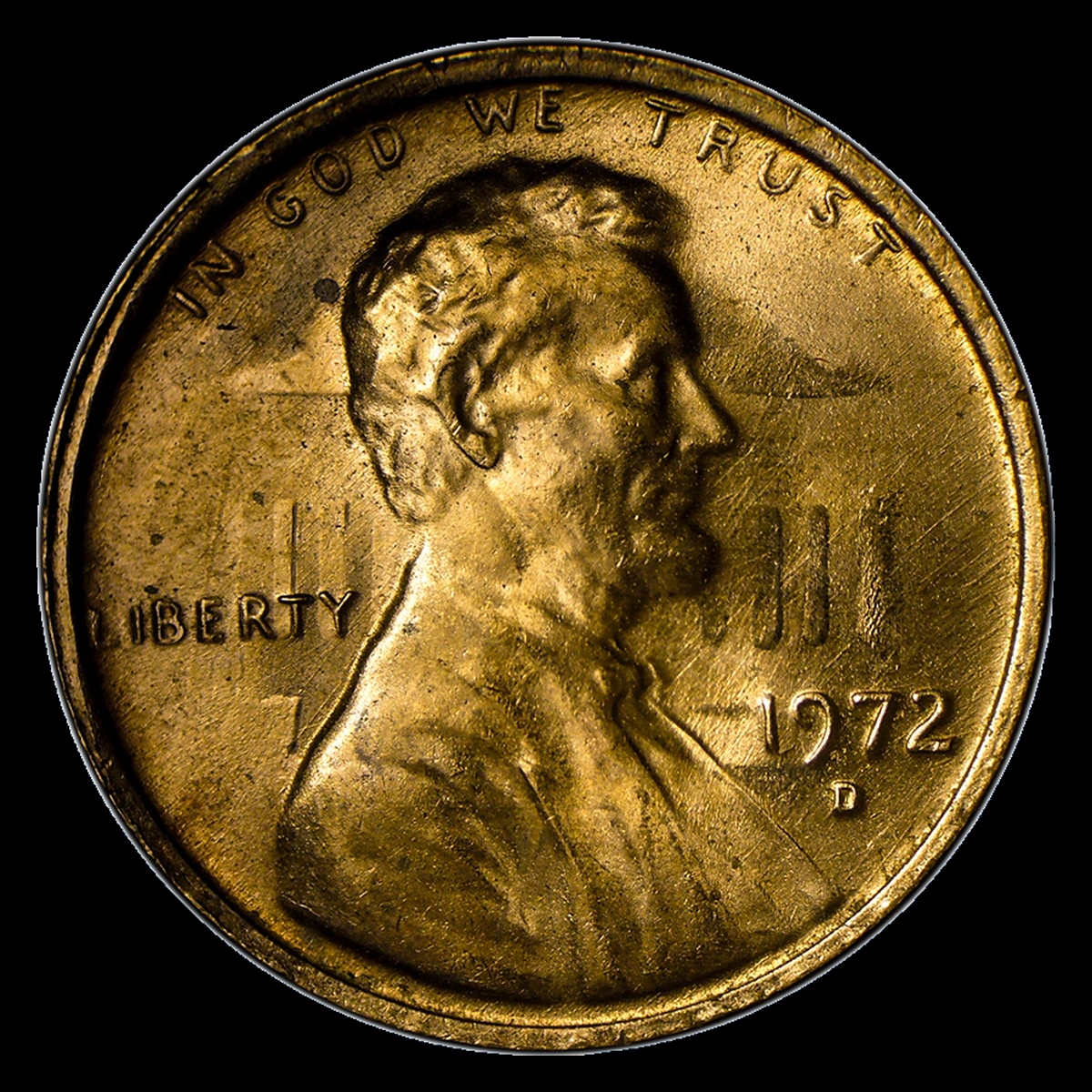
How to Identify
Ask which part of the opposite design explains the unexpected line. Follow enough of its shape to distinguish it from scratches or random die-polish lines.
The RTY position belongs to one Denver pattern. Extra lines alone do not establish how many times the dies touched.
What It’s Worth
$5–$300 is the estimate for recognizable clashes and repeated-transfer patterns. Strong design traces are usually easier to appreciate than unrelated faint lines.
The supplied catalog reports do not provide a separate sale for each pattern. Polishing and wear can reduce the evidence and collector appeal.
4. 1972 Penny Raised Breaks Distort the Picture: Cuds and Split Dies Error
A narrow die crack leaves a ridge, while a missing rim section creates a raised cud. A broken piece that stays in the die may retain some shifted design.
A severe Denver split-die example has a broad vertical band and an unusually wide Lincoln portrait. The die split; the coin need not be torn.
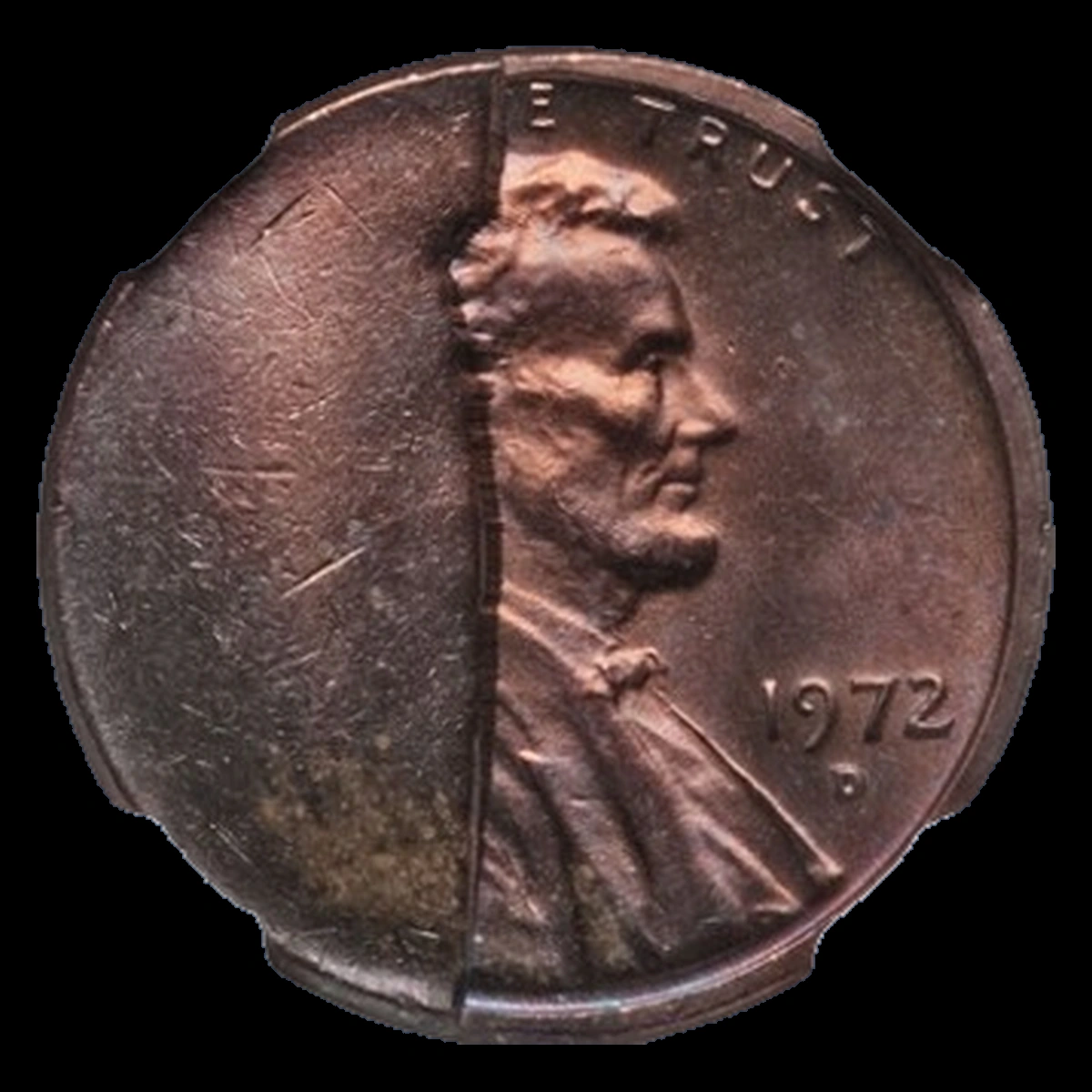
How to Identify
Check whether the feature rises from the original surface. A cud joins the rim, while an interior break can remain surrounded by normal design.
For the severe split example, compare the vertical band and widened front with the more normally formed back. Small head cracks do not require that same distortion.
What It’s Worth
$2–$30 suits small cracks, while stronger cuds and split-die effects fit about $30–$600. Size and original surfaces matter.
A Denver LC-72-D-8B cud sold for $156 in March 2021. A separate vertical split-die example brought $258.75 in September 2004.
5. 1972 Penny Only the Front Sits off to One Side: Misaligned Die Error
The recorded 1972-D has a displaced front design caused by the front die sitting out of alignment. Its back provides the comparison that separates this from an off-center blank.
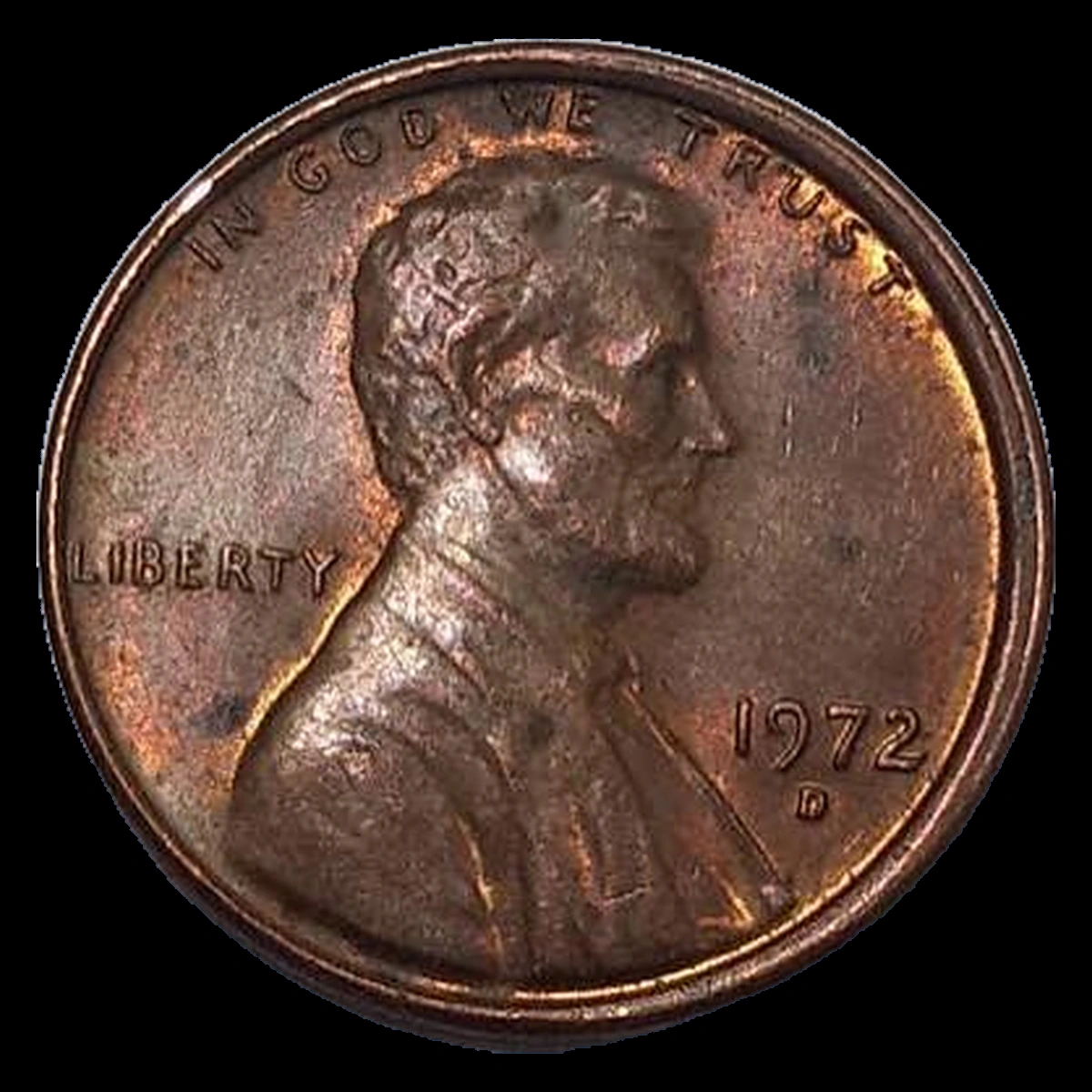
How to Identify
Photograph both faces at the same size and compare their positions inside the outline. A shift on only the front differs from paired design loss on both faces.
Inspect the rim for filing or later flattening. An uneven border alone is not enough to choose the cause.
What It’s Worth
$10–$350 is the estimated range for genuine misalignments of differing strength. Small rim differences generally have modest appeal.
The NGC MS63 Red and Brown 1972-D sold for $114 in March 2026. That result belongs to the die-position error, not an ordinary off-center strike.
6. 1972 Penny The Back Leans after a Normal Flip: Rotated Dies Error
A recorded Denver example has its back turned about 80 degrees clockwise relative to normal alignment. The designs can otherwise remain well centered.
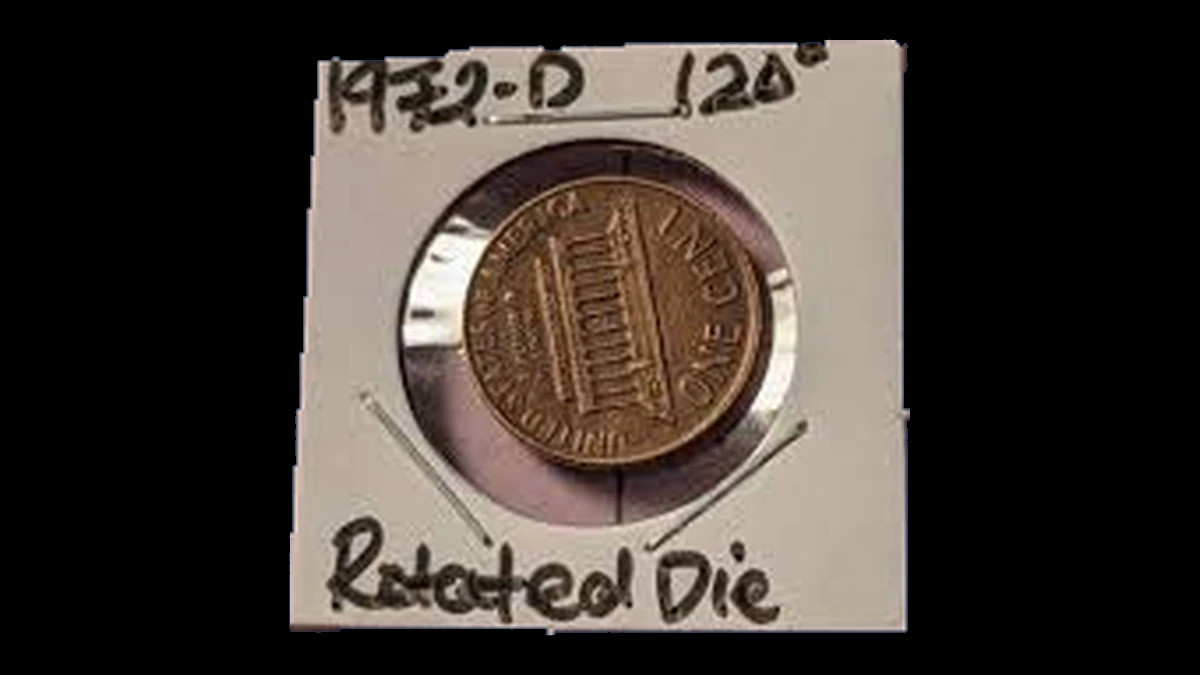
How to Identify
Start with Lincoln upright and turn the coin top to bottom without twisting sideways. A normal United States cent should finish with its Memorial upright too.
Repeat the movement with an ordinary penny to confirm your method. The recorded 80-degree angle does not apply to every rotated 1972 coin.
What It’s Worth
$15–$350 is the estimate for authenticated rotations of varying size and condition. A clearly demonstrated angle is easier to collect than an uncertain tilt in separate photos.
The ANACS MS62 Red and Brown 80-degree example sold for $67 in July 2021. More degrees do not create a fixed extra price per degree.
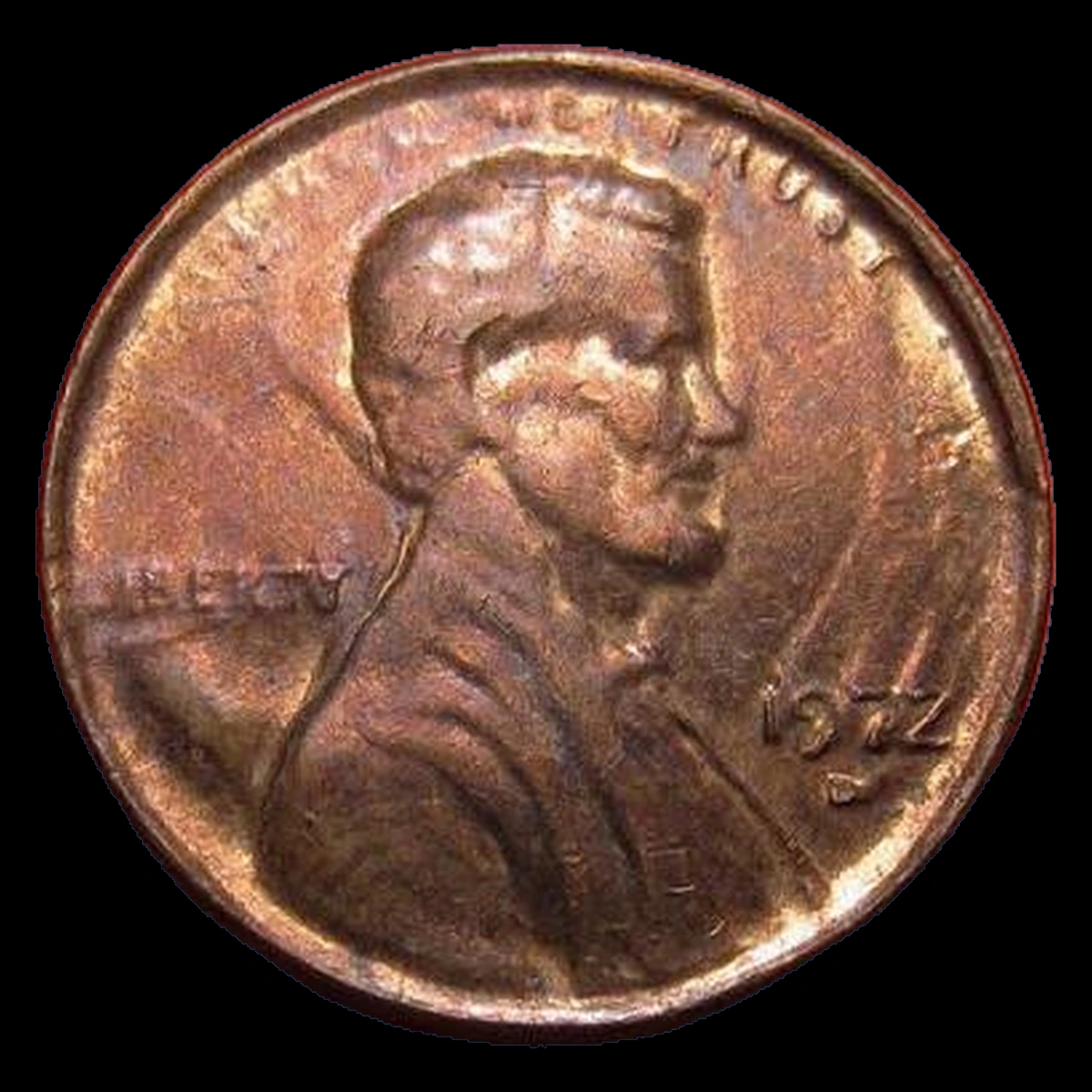
7. 1972 Penny Material Blocks a Local Area: Struck-Through Error
A piece of material between the die and blank can leave an impression or prevent detail from forming. The 1972 reports do not establish one substance or location for all examples.
How to Identify
Inspect the affected surface and its boundary with the nearby design. A later dent can crush finished detail and push metal around its edge.
A narrow or weak patch should not be labeled wire or cloth without supporting evidence. Preserve any material still attached rather than digging it out.
What It’s Worth
$5–$500 spans small obstructions through clearer original impressions. A readable texture or outline can help explain a stronger example.
A 2017-D front struck-through cent sold for $228 in March 2025. That later plated-zinc coin supplies a mechanism comparison to the copper-rich 1972 cent.
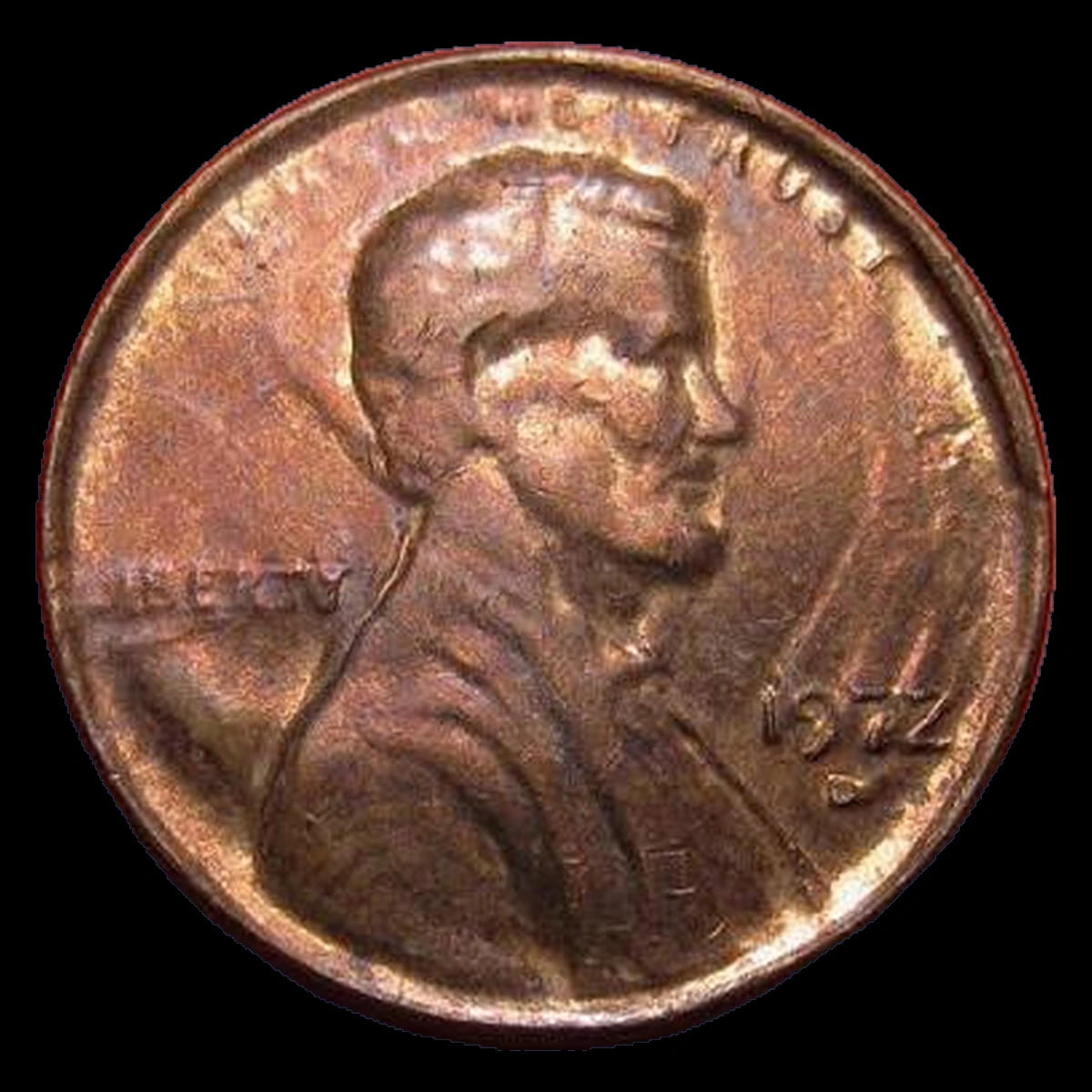
8. 1972 Penny A Raised Band Sits within a Soft Front: Cap over a Split Die Error
On these Denver receiving coins, a split die operated beneath a coin stuck over its face as a cap. The covering softened the design while the split could produce a broad vertical raised feature.
Recorded pieces retain a blurred date and D, with faint Memorial traces on the front. Their backs can look more normally struck.
How to Identify
Compare the raised band and softened front as a combined pattern. General circulation wear does not explain the same relationship.
These are coins struck beneath a cap, not the cup-shaped cap itself. Read only the date and mintmark detail that survives.
What It’s Worth
$75–$750 is the estimate for clear examples of the combined effects. It values the complete receiving coin once.
An NGC MS65 Red and Brown example sold for $149.50 in January 2010. A later-stage 1972-D capped-die comparison brought $114 in September 2024.
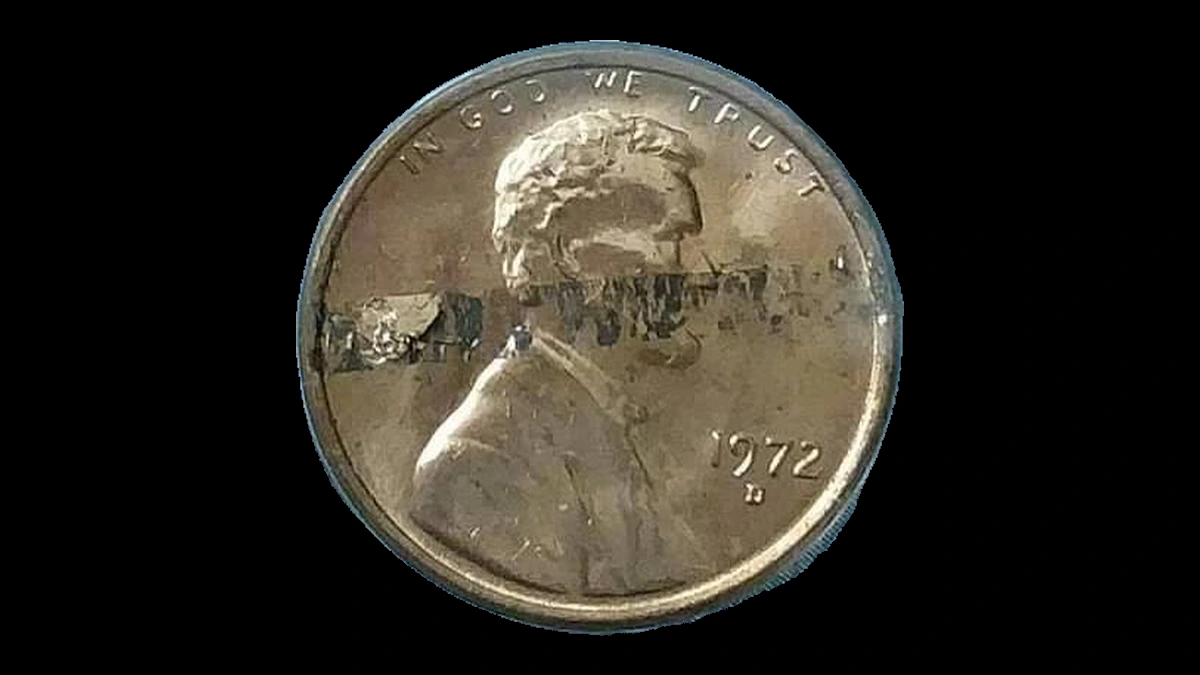
9. 1972 Penny An Inner Metal Layer Is Exposed: Split after Striking Error
A dealer interpreted one 1972-D as a coin that split after striking. Its older ANACS label instead described a strike through a capped die.
These are different explanations: one exposes the coin’s interior, while the other changes the impression on an intact blank.
How to Identify
Inspect the edge for actual layer separation and its connection to the remaining struck face. A merely weak face cannot establish that metal split apart.
Do not pull layers open or smooth the boundary. Sawing, grinding, or forced peeling can create later damage that needs a different explanation.
What It’s Worth
$50–$750 is the estimate for genuine separation after striking. The remaining design and visible split determine the closest comparison.
No sale price is supplied for this disputed-label coin, which has an ANACS Details description. Establishing its physical structure comes before treating either label as settled.
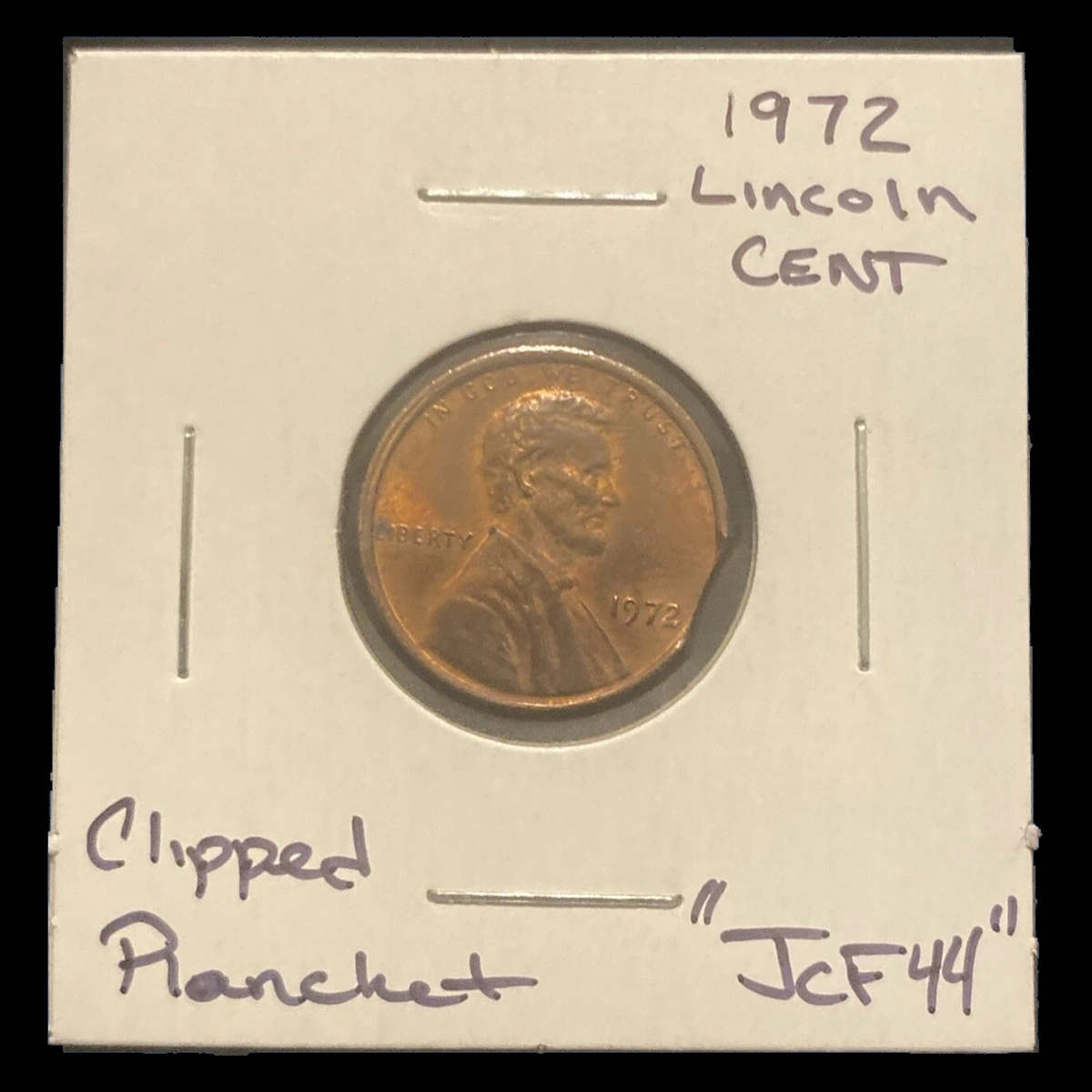
10. 1972 Penny A Curved Section Is Missing: Clipped Blank Error
A blank cutter overlapping an earlier hole can leave a curved gap before striking. The reported 1972 category does not assign one mint or clip size to every example.
How to Identify
Follow how the rim and letters meet the missing boundary on both faces. A weak rim opposite the clip can help, but may not be present.
A normal cent starts near 3.11 grams and 19.05 millimeters across. Reduced weight supports missing metal, while the edge must still be checked for later cutting or filing.
What It’s Worth
$10–$250 is the estimated range for genuine curved clips. A larger clear gap on an attractive coin usually makes a stronger example than a tiny worn notch.
A 2021 straight-clip cent sold for $114 in September 2025. Its different cut shape and zinc-centered metal make it only a general comparison.
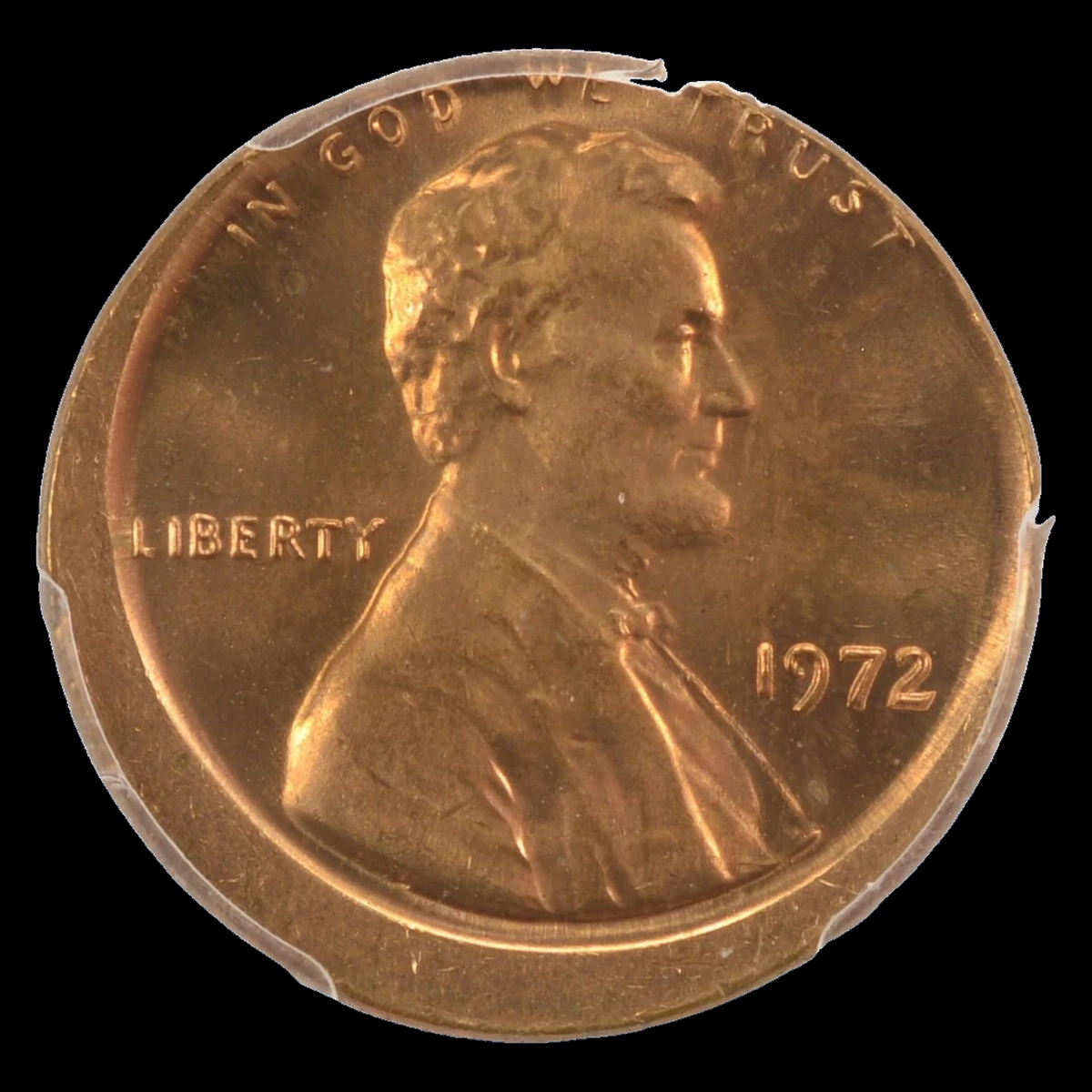
11. 1972 Penny A Plain Crescent Remains beside the Design: Off-Center Strike Error
The recorded 65% off-center Denver coin received only part of the normal design. Its blank lay partly outside the dies.
The percentage describes design loss rather than an equal amount of missing metal. Both faces should fit the same misplaced blank.
How to Identify
Locate the date before assigning the year, then compare the plain area and missing design on both sides. A front-only shift points toward a misaligned die instead.
Check the unstruck surface for grinding. A large bare area alone cannot establish an original mint error.
What It’s Worth
$15–$600 is the estimate for dated examples of differing displacement and preservation. The visible identity matters alongside the shape.
The 65% Denver example sold for $216 in May 2021, while a separate 60% example brought $44 in September 2025. Those results show why percentage alone is not a price formula.
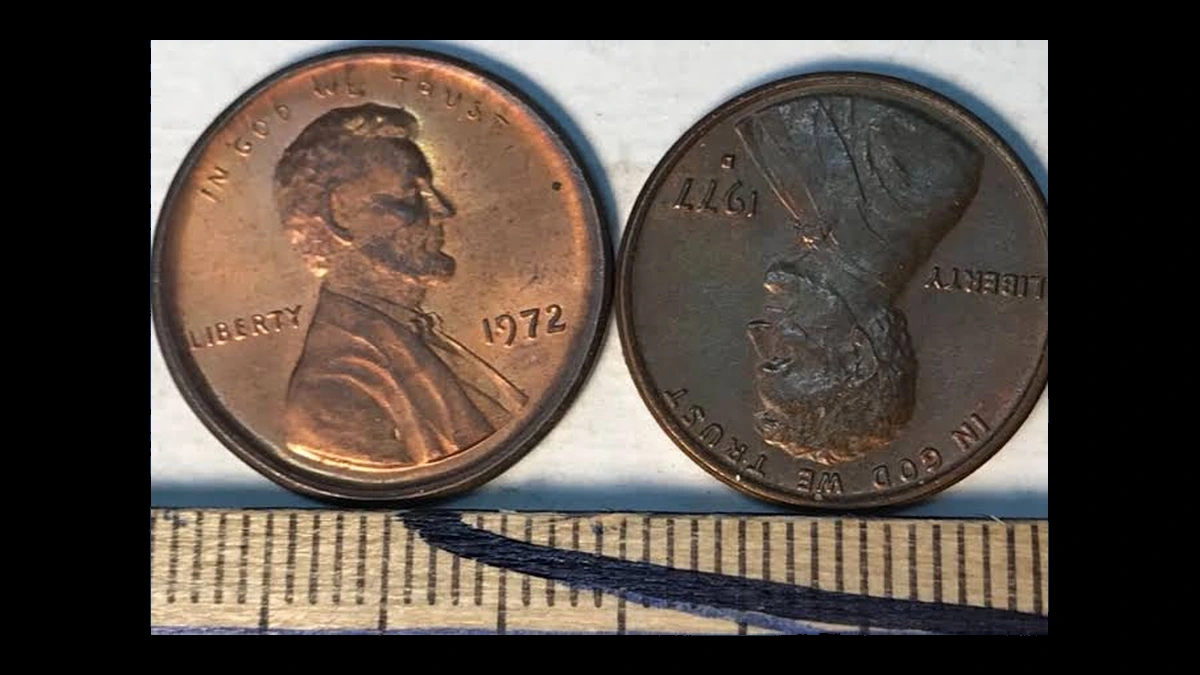
12. 1972 Penny Complete Designs Spread Wider: Broadstrike Error
A blank can expand unevenly when its collar does not provide normal restraint. Unlike an off-center strike, a broadstrike retains the intended design within the metal.
Some recorded 1972 broadstrikes also carry the WDDO-003 doubled-front pattern. That is a different die from the famous FS-101.
How to Identify
Read the full outer lettering on both faces and check for natural spread. Later flattening can widen a cent while crushing already finished detail.
If doubling is present, match WDDO-003 independently. Extra width does not identify which doubled die made the coin.
What It’s Worth
$20–$350 suits ordinary broadstrikes; a clear WDDO-003 combination can fit about $100–$750. These are whole-coin estimates.
A 1980-D broadstrike sold for $57 in March 2021. Neither that comparison nor the combined 1972 coin should inherit the major FS-101 record.
13. 1972 Penny The Cent Contains Extra Metal: Thick Blank Error
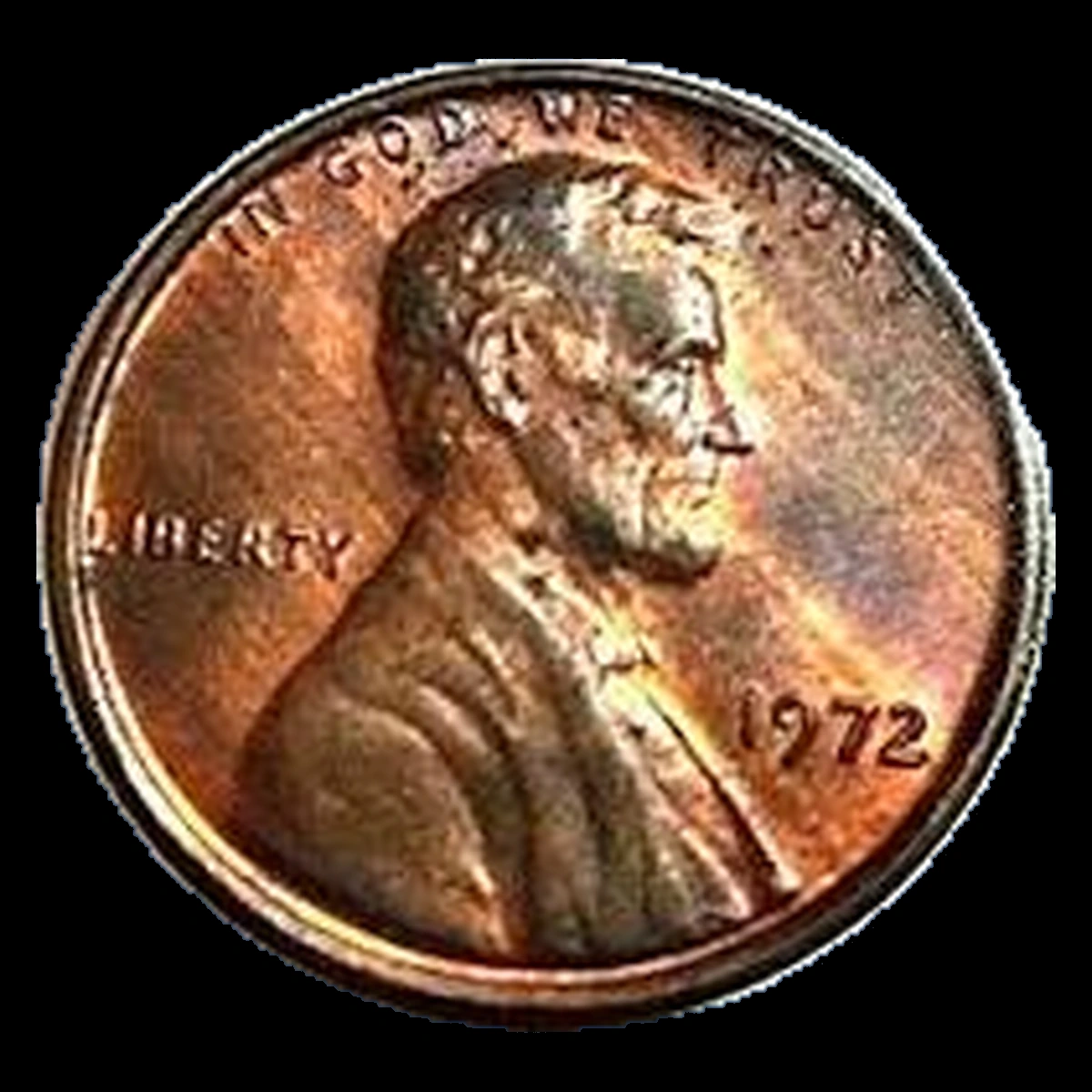
The recorded 1972-D thick-blank cent weighs 4 grams, well above the usual 3.11 grams. It is graded PCGS MS63 Red and Brown.
How to Identify
Repeat the weight reading and compare thickness and outline. Added coating, joined pieces, or other alterations can also increase weight.
The supplied description establishes no particular foreign denomination or exact route into production. Original design on genuinely thicker metal matters more than a heavy reading alone.
What It’s Worth
$100–$800 is the estimate for an authenticated thick-blank cent. Clearly measurable extra metal and preserved surfaces help support the comparison.
A 1976-D rolled-thick cent weighing 3.78 grams sold for $129 in December 2024. It does not prove how the 4-gram 1972 blank originated.
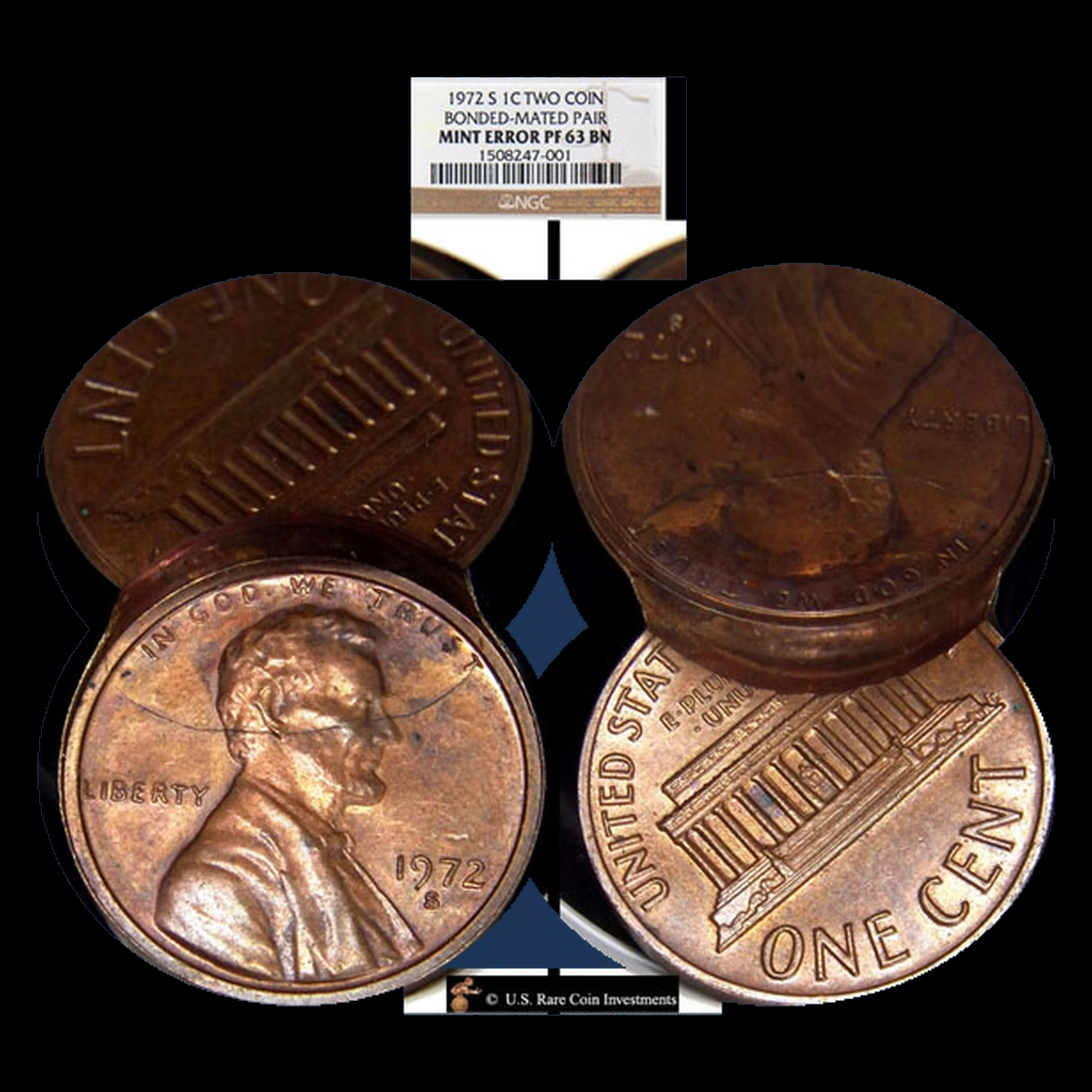
14. 1972 Penny One Face Records Contact with Another Blank: Struck Together Error
The listed 1972-D is the front member from an event involving two blanks struck together. Only that member is documented, not a complete matching or bonded pair.
How to Identify
Compare the directly struck front with the opposite blank-contact surface. The design and contact boundary should fit one original striking event.
Photograph both faces and the entire outline. Do not expect two normal coin weights when the object is only one surviving member.
What It’s Worth
$30–$800 is the estimated range for clearly identified members with differing contact patterns. The upper end needs much more dramatic evidence than slight weakness.
The NGC MS63 Red and Brown front member sold for $57 in October 2022. A separate higher-graded member brought $35 in June 2023; neither sale includes an undocumented partner.
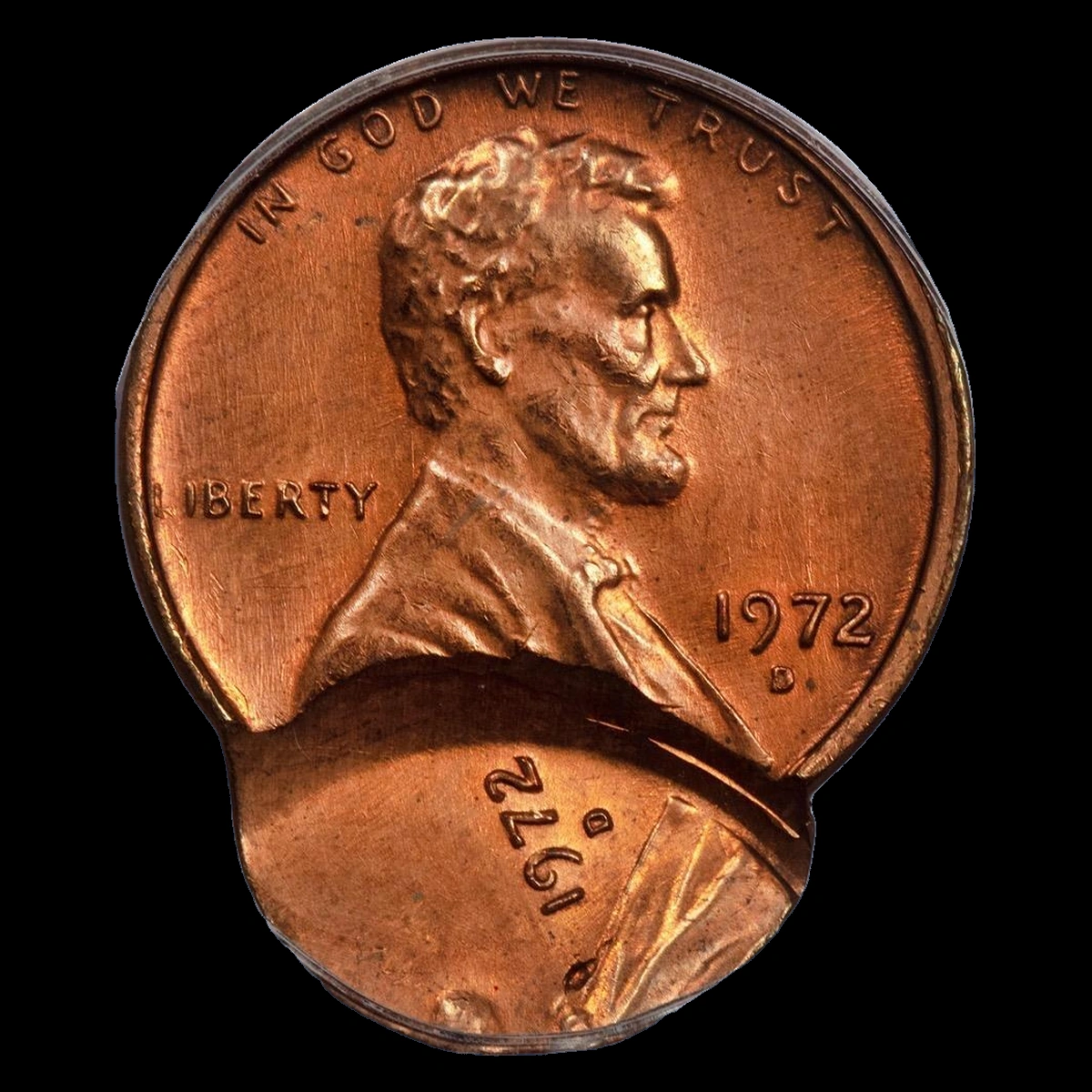
15. 1972 Penny Two Cent Pictures Overlap: Double Strike Error
One recorded Denver example received a second strike about 80% off center, with one side blocked during that blow. Another recorded second strike does not carry the blocked-side description.
How to Identify
Trace recognizable details from each position and inspect the matching area on the other face. The overlap should show two real blows, not a thin doubled shelf.
The blocked face belongs to the specified specimen. Do not add that feature to every double-struck 1972-D.
What It’s Worth
$50–$1,200 is the estimated range for readable double strikes. Clear pieces of both impressions strengthen their appeal.
The 80% example graded ANACS MS64 Red and Brown sold for $192 in January 2022. That price values the complete combination.
16. 1972 Penny The Front Carries a Sunken Mirror Image: Brockage Error
A previously struck coin pressed its design into the recorded 1972-S penny. The resulting backward, recessed picture is a front brockage.
The NGC MS64 Red and Brown example is a circulation-format coin. Its S does not justify calling it a Proof.
How to Identify
Reverse a photograph to see whether the unusual detail becomes recognizable. Side light should confirm that the image sinks into the surface.
Check the opposite face and edge for later squeezing. Pressing finished coins together can create reversed marks without the same minting history.
What It’s Worth
$100–$1,250 is the estimate for genuine front brockages of varying clarity. More readable transferred design usually makes a stronger comparison.
An undated full-front brockage cent sold for $192 in March 2025. That sale does not establish the comparison coin’s year or add a Proof premium to the 1972-S.
17. 1972 Penny The Blank Folded as It Was Struck: Foldover Error
The documented Denver foldover bends near 5 o’clock, with much of IN GOD WE TRUST outside the surviving design area. Its blank collapsed from an abnormal position during the strike.
How to Identify
Keep the fold intact and follow the struck design into the bent metal. A penny bent after minting instead carries a previously completed picture into the deformation.
The fold location and missing motto describe this specimen. They are not a checklist for every genuine foldover.
What It’s Worth
$500–$2,500 is the estimate for confirmed foldovers with differing identity and preservation. The recorded coin carries a PCGS MS60 Red and Brown grade.
A 1972-D foldover sold for $960 in September 2024, with an older same-grade appearance at $575 in February 2005. Those appearances may concern the same specimen rather than two distinct coins.
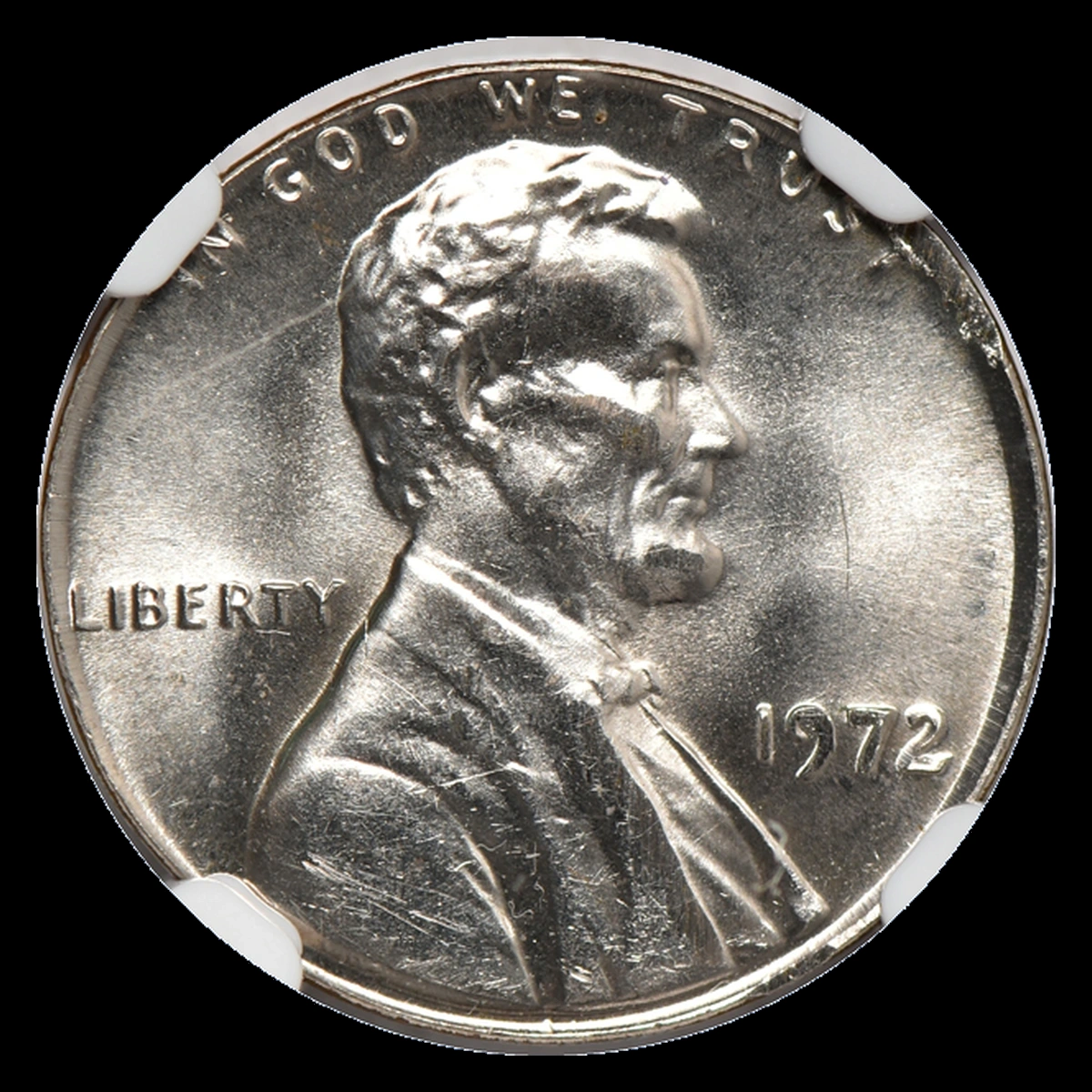
18. 1972 Penny A Smaller Gray Blank Holds the Cent Design: Clad Dime Blank Error
The recorded Philadelphia NGC MS65 example weighs 2.3 grams and was struck on an unused clad dime blank. Denver examples are also reported, but do not automatically share that measurement.
How to Identify
A clad dime blank normally starts near 2.268 grams and 17.91 millimeters across. Its outer layers surround a copper center, unlike a normal copper-rich 1972 cent.
Search for an earlier Roosevelt or torch design. If those details exist beneath the cent, the starting object was a finished dime rather than an unused blank.
What It’s Worth
$300–$1,500 is the estimate for authenticated clad dime-blank cents. A clear year and attractive surface help explain the small design.
A 1976-D example sold for $480 in December 2024. That nearby-year result is not a transaction for the 2.3-gram Philadelphia coin.
19. 1972 Penny Brass Foreign-Coin Metal Carries the D: Philippines Blank Error
The recorded 1972-D NGC MS65 was identified as struck on a Philippines five-sentimo blank. It weighs 2.5 grams and has less room for outer cent lettering than a normal blank.
How to Identify
Read the surviving date and D, then examine the smaller outline and brass metal. Other reported specimens have different measured weights, so keep 2.5 grams with this coin.
Yellow color alone can come from lighting or surface treatment. Metal testing and an original boundary help establish the foreign-blank identity.
What It’s Worth
$700–$3,000 is the estimate for identified examples. Preserved design and confirmed blank identity support the better comparisons.
The NGC MS65 specimen sold for $1,500 in April 2022. A low weight or yellow surface alone should not inherit that result.
20. 1972 Penny A 1971 Cent Remains under a 1972 Strike: Two-Year Overstrike Error
A completed 1971 penny received another cent design from 1972 dies. The recorded PCGS MS62 Brown example combines remnants from the two years on one copper-rich coin.
How to Identify
Locate each year’s date fragments and follow them into its own design position. A scratched extra digit or a thick numeral cannot establish an earlier coin.
The later impression should interrupt the older design on one piece of metal. Check for seams or alterations that could imitate two dates.
What It’s Worth
$750–$5,000 is the estimate for a verified two-year overstrike. Clear years and a convincing overlap make its history easier to follow.
No realized result is supplied for the recorded listing. The $192 1972-D shifted double strike is only a simpler comparison because it has no separate earlier-year host.
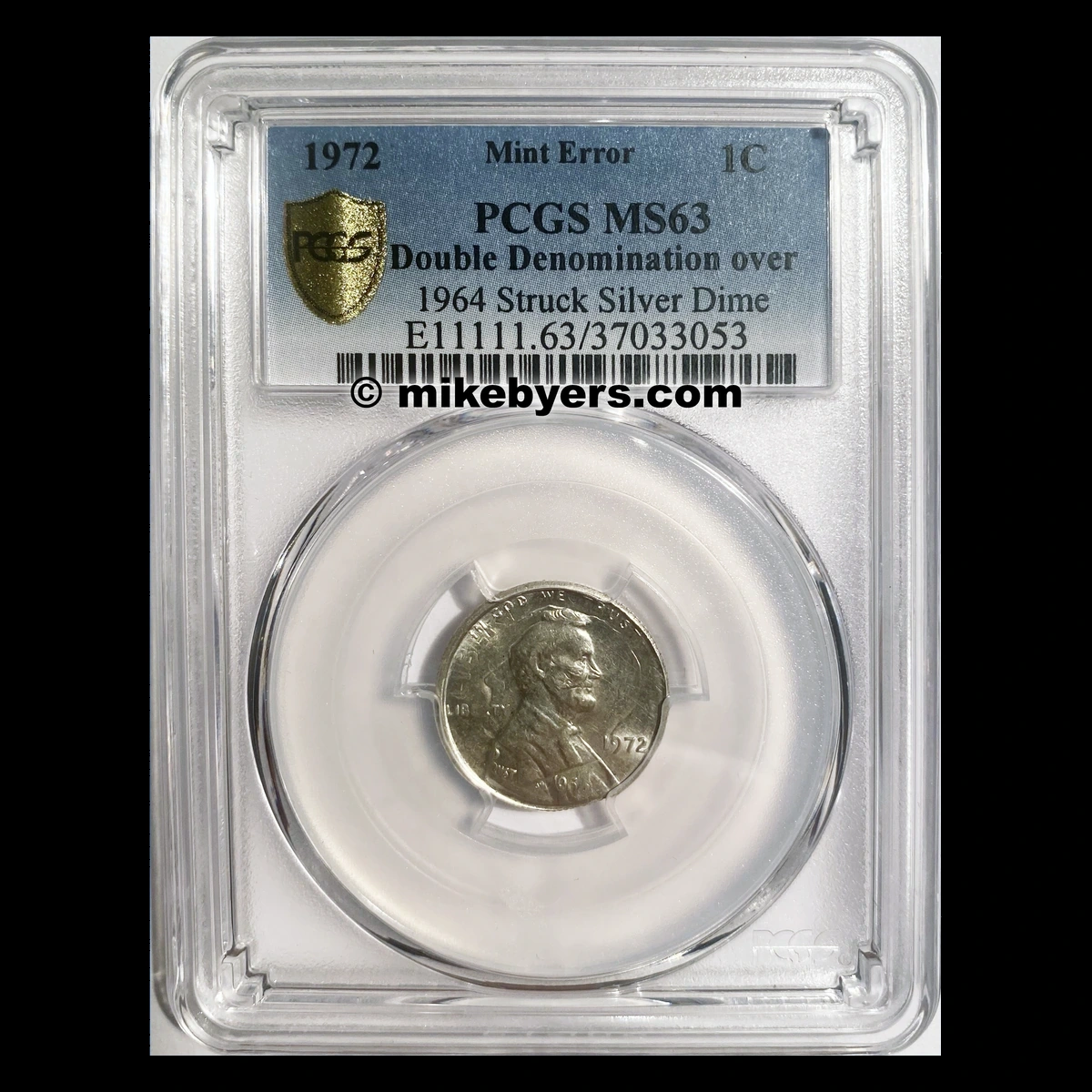
21. 1972 Penny A 1964 Silver Dime Carries the Later Cent Design: Silver-Dime Overstrike Error
The documented PCGS MS63 combines a finished 1964 Roosevelt dime with a 1972 cent strike. Both full dates remain visible on the front.
The dealer describes the piece as intentionally struck. Its cent impression has no S and is not a San Francisco Proof.
How to Identify
Read 1964 and 1972 separately, then trace the dime remnants beneath Lincoln. A silver dime begins near 2.50 grams and 17.91 millimeters across before any overstrike changes its outline.
Verified silver content distinguishes it from clad metal or an added coating. The earlier dime design separates it from an unused silver blank.
What It’s Worth
$5,000–$25,000 is an appraisal range for this unusual overstrike. The dealer’s specimen is marked sold without a published amount.
A 1980-D cent on an unused silver dime blank brought $18,000 in August 2025. That is a related silver-blank comparison, not a sale of the 1972 coin or the same minting sequence.
Conclusion
The strong Philadelphia doubled die gives 1972 a familiar starting point, but it does not explain every doubled edge or unusual outline. Match the mint, finish, and actual feature before choosing a range.
For more complex pieces, identify what came first: an ordinary blank, a foreign blank, or an already finished coin. That sequence keeps small die varieties, repeated strikes, and rare overstrikes from being priced as though they were the same thing.