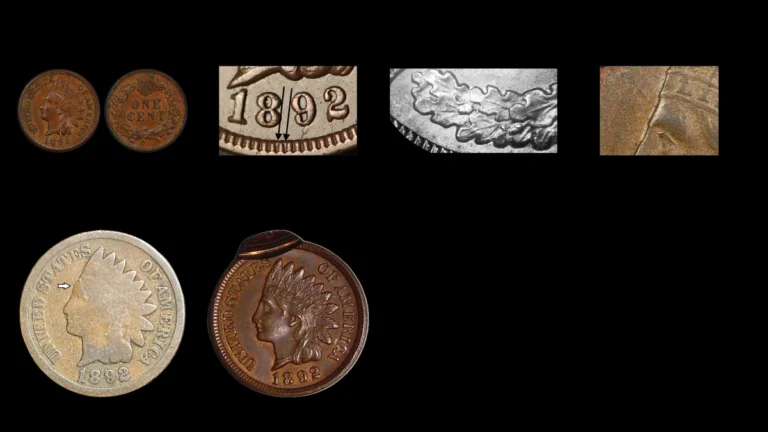
Rare 1955 Penny Errors (List & Pictures)
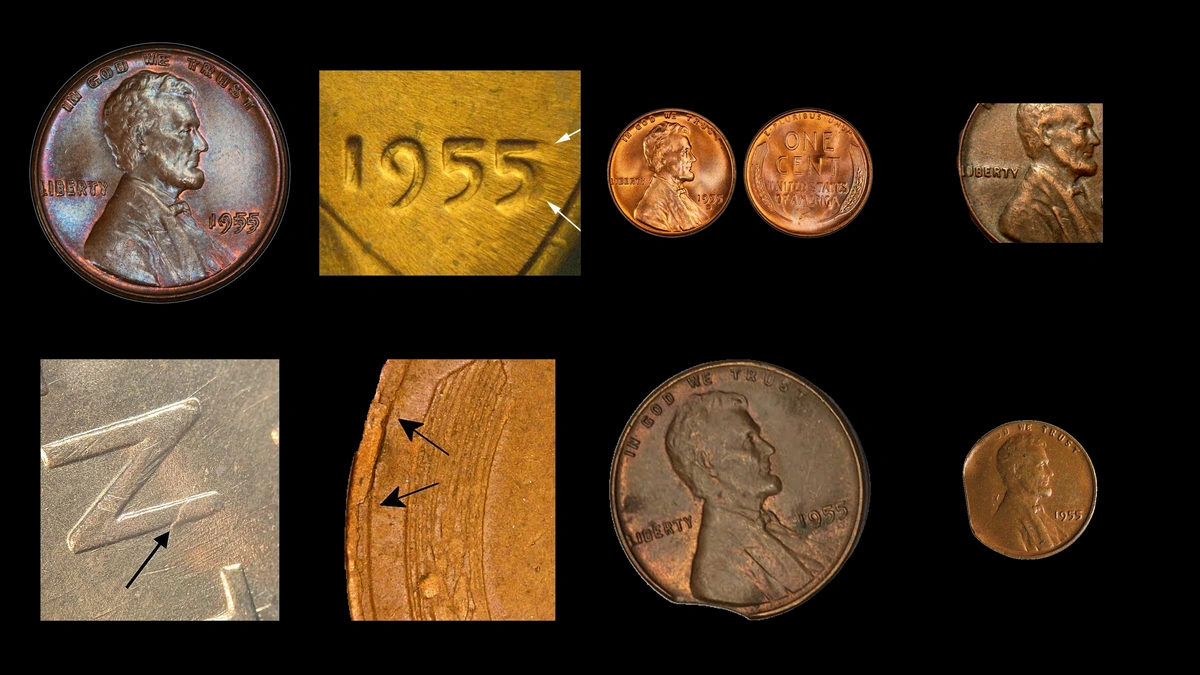
Identifying 1955 penny errors begins with separating a famous doubled design from much cheaper lookalikes. An exceptional example of the Philadelphia doubled die sold for $287,156.25 in January 2023, while the estimated range here starts at $0.10 for common wear-related doubling and reaches $300,000.
Examine the date and lettering first, then follow unusual marks toward the surfaces, rim, and blank itself.
| Visible clue | Likely group to examine | Estimated range |
|---|---|---|
| Repeated date or lettering | Doubled dies or deterioration doubling | $0.10–$300,000 |
| Extra D or S strokes | Repunched mintmark | $3–$1,500 |
| Raised lines, faint outlines, or missing letters | Die breaks, clashes, or filled die | $2–$1,500 |
| Folded rim, missing edge, or peeling layers | Fin, clip, taper, or metal separation | $10–$500 |
| Displaced or blocked design | Off-center, stacked blanks, or double strike | $40–$1,000 |
| Small silver-colored blank | Silver dime-planchet error | $750–$5,000 |
A standard 1955 cent is copper alloy, weighs about 3.11 grams, and measures 19.05 millimeters across its plain edge. Use those figures when investigating the blank, but do not expect normal weight to prove a doubled-die attribution.
A magnifier and changing light help reveal surface structure. Preserve flakes and folded metal as found, and keep certified coins in their holders.
1. 1955 Penny Clearly repeated date and letters: Doubled Die Error
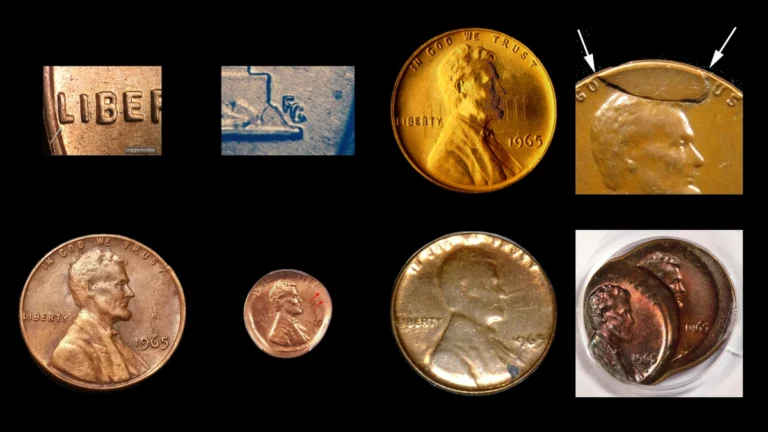
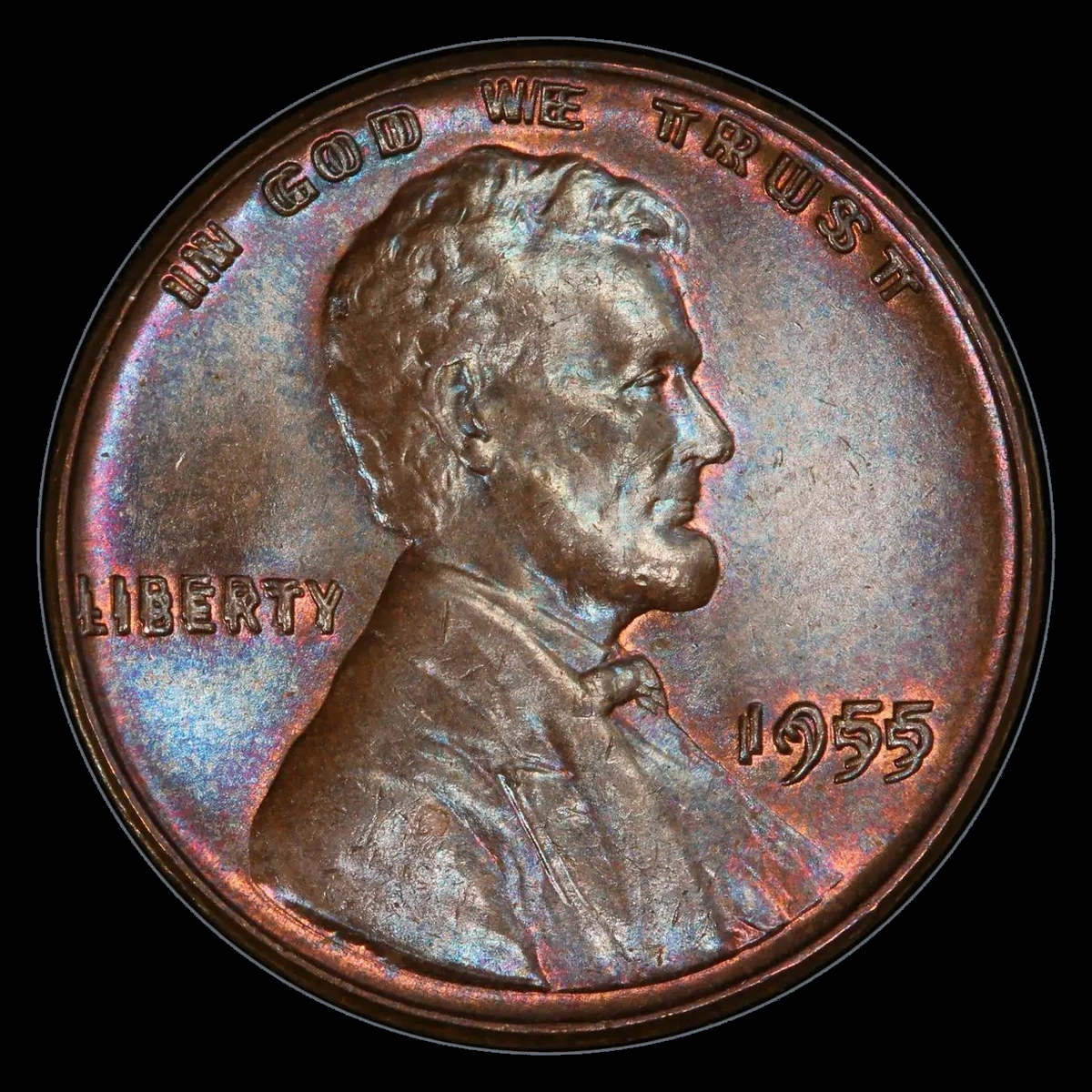
The famous Philadelphia variety has strongly separated extra outlines across the date, LIBERTY, and IN GOD WE TRUST. Its die already carried the repeated design, which was transferred to each coin during striking.
Other 1955 doubled dies are much subtler, including eyelid details, thickened lettering, and repeated wheat-side features. Proofs, specially made collector coins, also have their own front and back varieties.
How to Identify
Match the full combination of mint, finish, and diagnostic detail. Denver’s FS-101 is different from Philadelphia’s famous FS-101 despite the shared short catalog number.
For the famous variety, inspect multiple parts of the date and inscriptions together. A minor eyelid variety should instead be checked against its own small feature, rather than rejected for lacking the major variety’s broad spread.
Counterfeits can imitate conspicuous doubling. Professional authentication is essential before treating an apparent match as an expensive major variety.
What It’s Worth
Minor varieties are estimated at $5–$500, recognized Proof combinations at $100–$2,000, and the famous Philadelphia doubled die at $1,000–$300,000. The largest range spans worn coins through exceptional pieces retaining original red color.
PCGS reports the Stewart Blay example, graded MS65+ Red, sold for $287,156.25 at GreatCollections in January 2023. This exceptional result cannot be transferred to every 1955 coin with a doubled-looking mark.
2. 1955 Penny Swollen edges around a digit: Poor Man’s Doubling Error
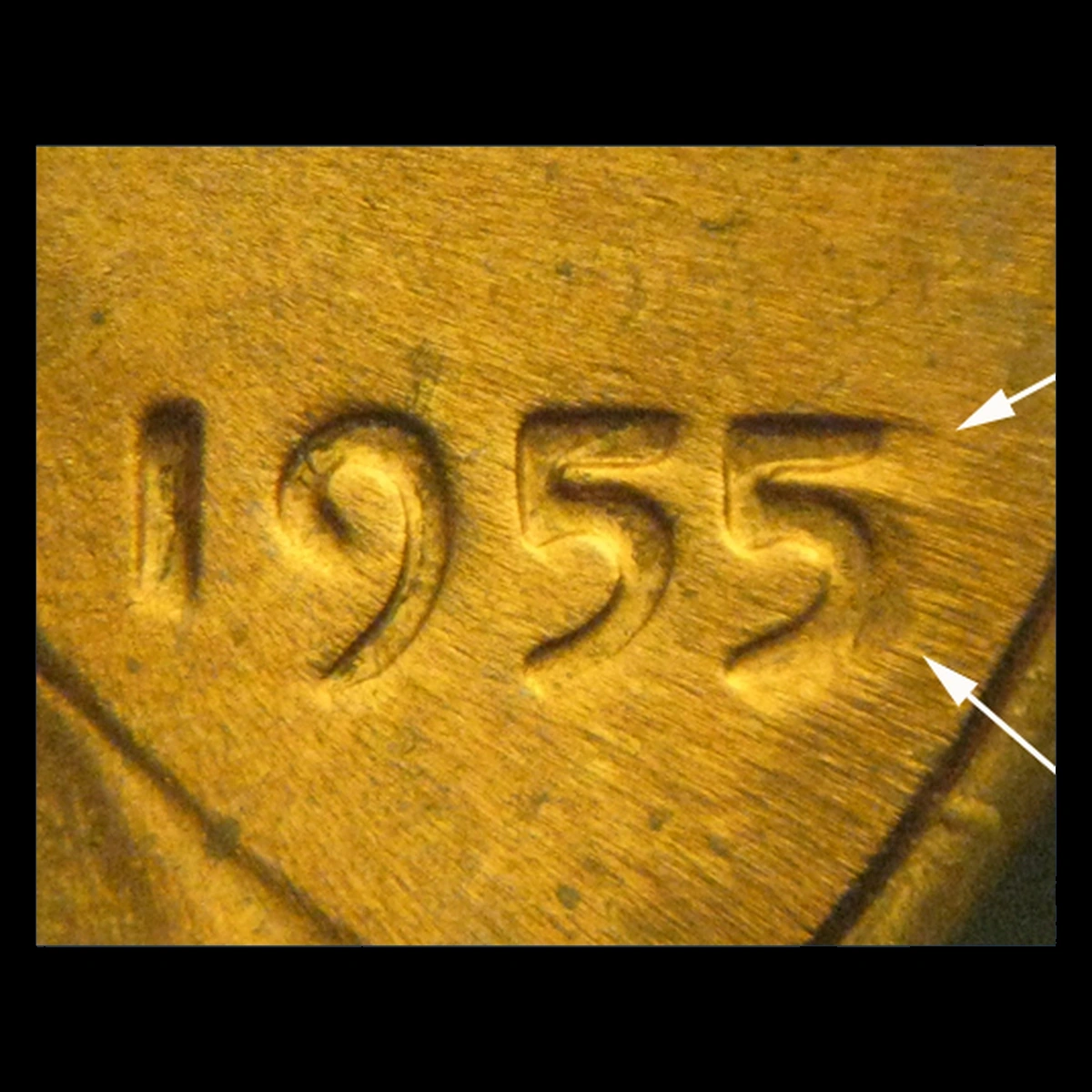
A fuzzy extra edge on a 5 often leads to an overly optimistic identification. The nickname Poor Man’s doubled die commonly describes deterioration of the striking tool rather than a genuinely doubled design created when that tool was made.
As the die wears, its outlines can become stretched or poorly defined. This common lookalike deserves attention precisely because its value differs so much from the famous variety.
How to Identify
Move beyond the last digit and examine the entire date and inscriptions. The famous doubled die presents clear, coordinated separation across those features.
Compare swollen or flowing outlines with the unaffected parts of the design under several lighting angles. Reflections can create another false edge, while normal dimensions do nothing to establish the valuable variety.
What It’s Worth
The estimate is about $0.10–$5 for common Poor Man’s doubling, depending largely on ordinary condition and collector interest. Stains, wear, and damage can keep a coin near the lower end.
An unusually high ordinary grade would need a separate condition assessment. The nickname itself supplies no major doubled-die premium.
3. 1955 Penny More than one D or S outline: Repunched Mintmark Error
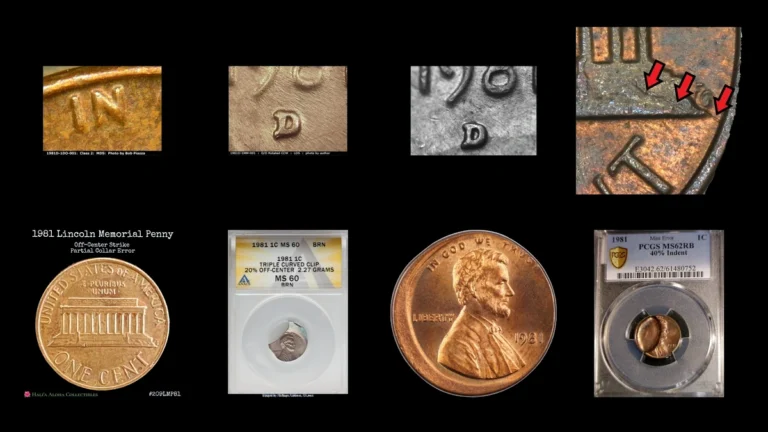
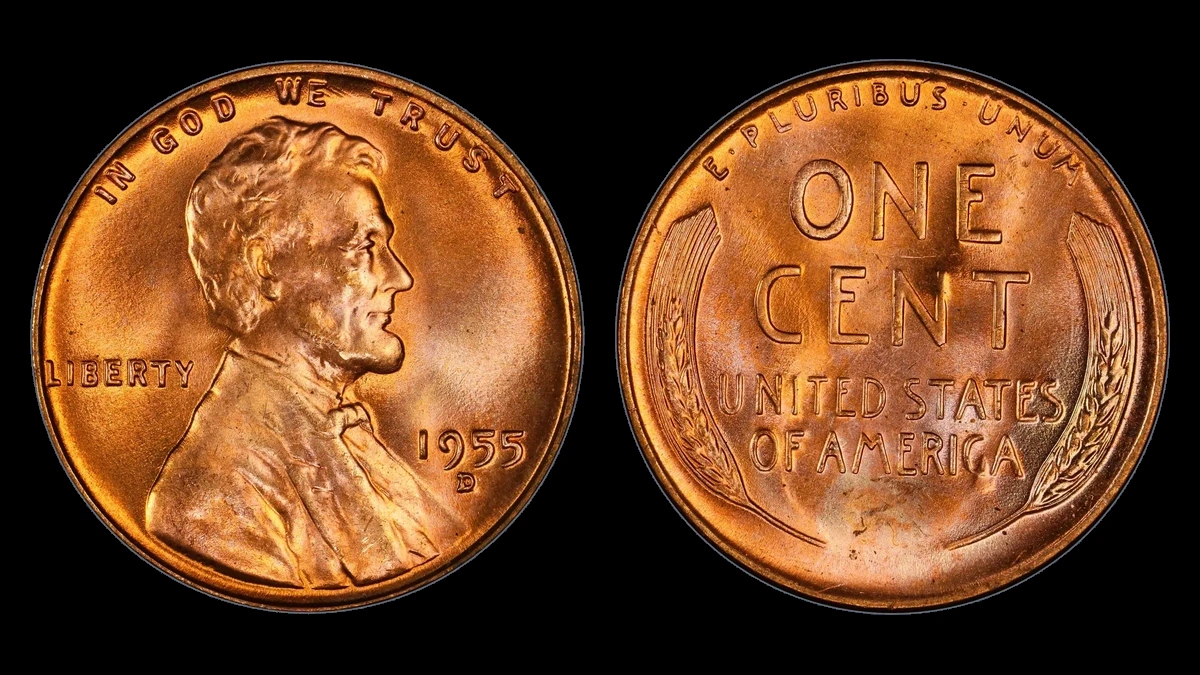
Mintmarks were punched into working dies by hand in 1955. A repeated punch at another position or angle could preserve extra curves, uprights, or corners of the letter.
Both Denver and San Francisco have recorded varieties, including triple impressions. Some share other die features, such as doubled portrait details or later cracks.
How to Identify
Trace recognizable parts of another D or S and match their exact spacing. A Philadelphia coin without a mintmark does not belong in this group.
Use accompanying scratches or breaks only after matching the mintmark itself. These secondary marks can change as the die wears, and catalog numbers from different naming systems are not automatically equivalent.
A lump beside a letter may be a chip rather than another punch. Flat strike doubling also needs to be separated from the recorded letter structure.
What It’s Worth
Minor repunched mintmarks are estimated at $3–$150; strong, widely separated or triple-punched examples in desirable condition at $150–$1,500. These are comparison-based ranges across different varieties.
The supplied catalog entries do not each have an individual realized sale. Preservation and a convincing photographic match matter more than the number of variety names attached to a coin.
4. 1955 Penny Raised bars, cracks, or mounds: Die Breaks Error
A break in the die leaves space for metal to rise during striking. Small cavities produce chips, narrow fractures produce raised lines, and a larger missing section connected to the edge produces a cud.
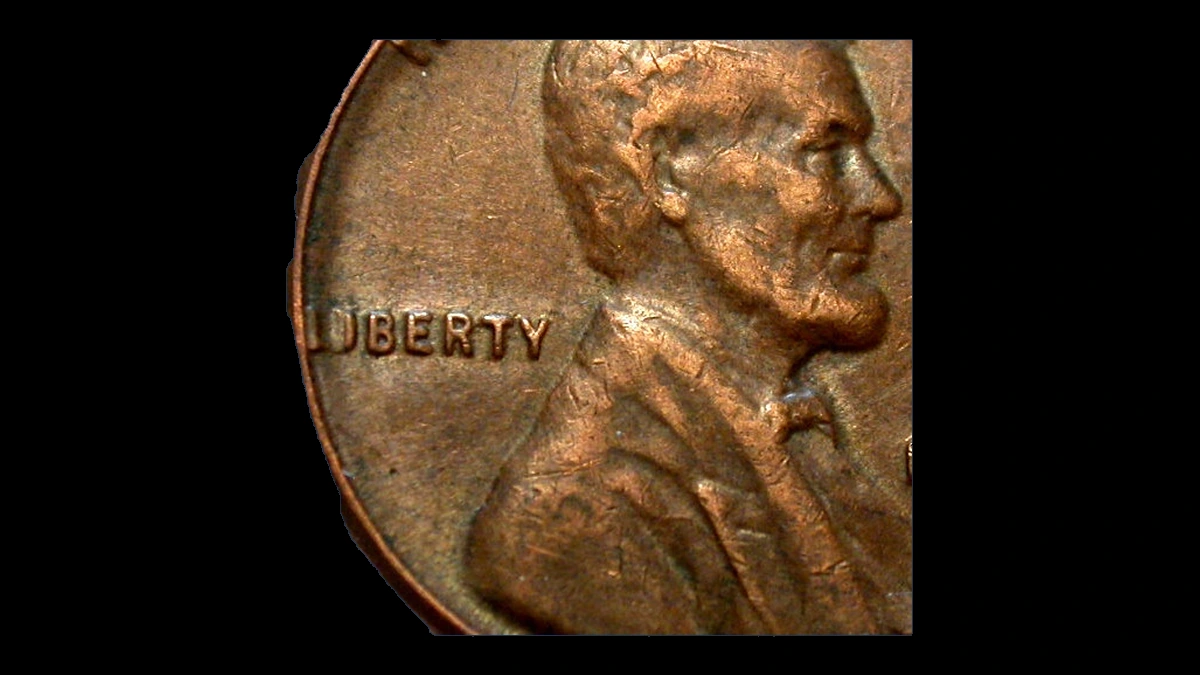
The 1955 group includes BIE chips between B and E in LIBERTY, lines connecting the head to the rim, interior breaks, and retained broken sections. A retained section can still carry design at a different height.
How to Identify
Use low light to separate raised metal from an incuse scratch. Follow the entire break and establish whether it reaches the rim or remains inside the design.
A step in surface height with design continuing across it can be evidence of a retained break. Check the particular pattern rather than identifying an error from a nickname alone.
San Francisco’s Capped Head name concerns die damage near the portrait. It does not describe a coin that formed a cup around a die.
What It’s Worth
Small BIE chips and thin cracks are estimated at $2–$50; substantial retained breaks and cuds at $50–$1,500. Size, clarity, and preservation influence where an example fits.
A 1979 cud cent graded PCGS MS64 Brown sold for $1,020 in May 2021. That comparison concerns a substantial break from another year, not every small 1955 raised line.
5. 1955 Penny Faint outlines from the opposite face: Die Clash Error
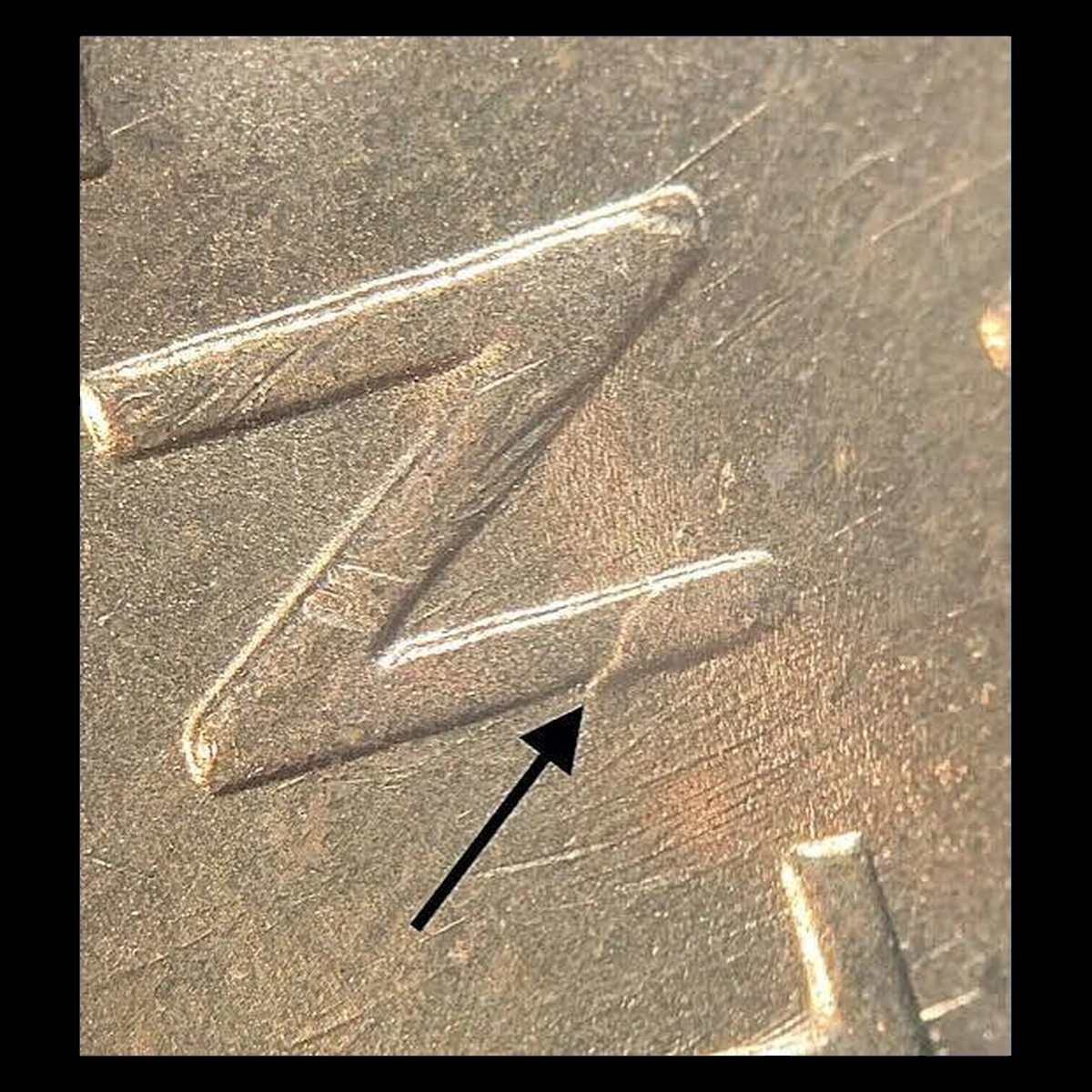
When the dies meet without a blank between them, contact can leave traces that transfer to later coins. The resulting marks may resemble pieces of the opposite design around the portrait or among the reverse lettering.
Philadelphia, Denver, and San Francisco reports have different clash patterns. Some of the same dies also carried doubled designs or repunched mintmarks.
How to Identify
Compare the suspicious outline with the opposite face’s design and test both its shape and relative position. A line near the throat or reverse lettering must fit the actual recorded clash for that die.
A scratch or unrelated crack does not become a clash because it occurs nearby. Keep mint-specific references separate, especially when another variety appears on the same coin.
What It’s Worth
Recognizable minor clashes are estimated at $5–$100. Readable transferred shapes make a stronger case than vague lines requiring extreme magnification.
A valuable doubled die on the same coin may dominate its overall value. Do not add the maximum estimates for each named feature as if they were prices of separate coins.
6. 1955 Penny A word fades beside sharper detail: Filled Die Error
Material packed into a die’s recessed lettering can prevent that portion of the design from forming. This is often described as a grease-filled die or a struck-through-grease error.
A 1955-D cent with missing LIBERTY has been reported from photographs. The absent word does not identify the exact substance or settle the cause by itself.
How to Identify
Compare the affected word with the adjacent portrait and other lettering. Localized loss on an originally struck surface is more persuasive than broadly worn detail.
Look for polishing lines, scratches, or a depressed patch where someone removed the letters. Weak striking pressure can also soften detail, so keep the photographed report distinct from a confirmed attribution.
What It’s Worth
A genuine filled-die example is estimated at $5–$100. Minor weakness usually has little premium, while a clearly interrupted word beside sharp detail is easier to demonstrate.
A 2021-D grease-struck cent graded PCGS MS64 Red sold for $84 in September 2025. That later zinc-centered coin provides context for the effect, not a sale or certification of the reported 1955-D cent.
7. 1955 Penny A thin sheet folds over the rim: Folded Fin Error
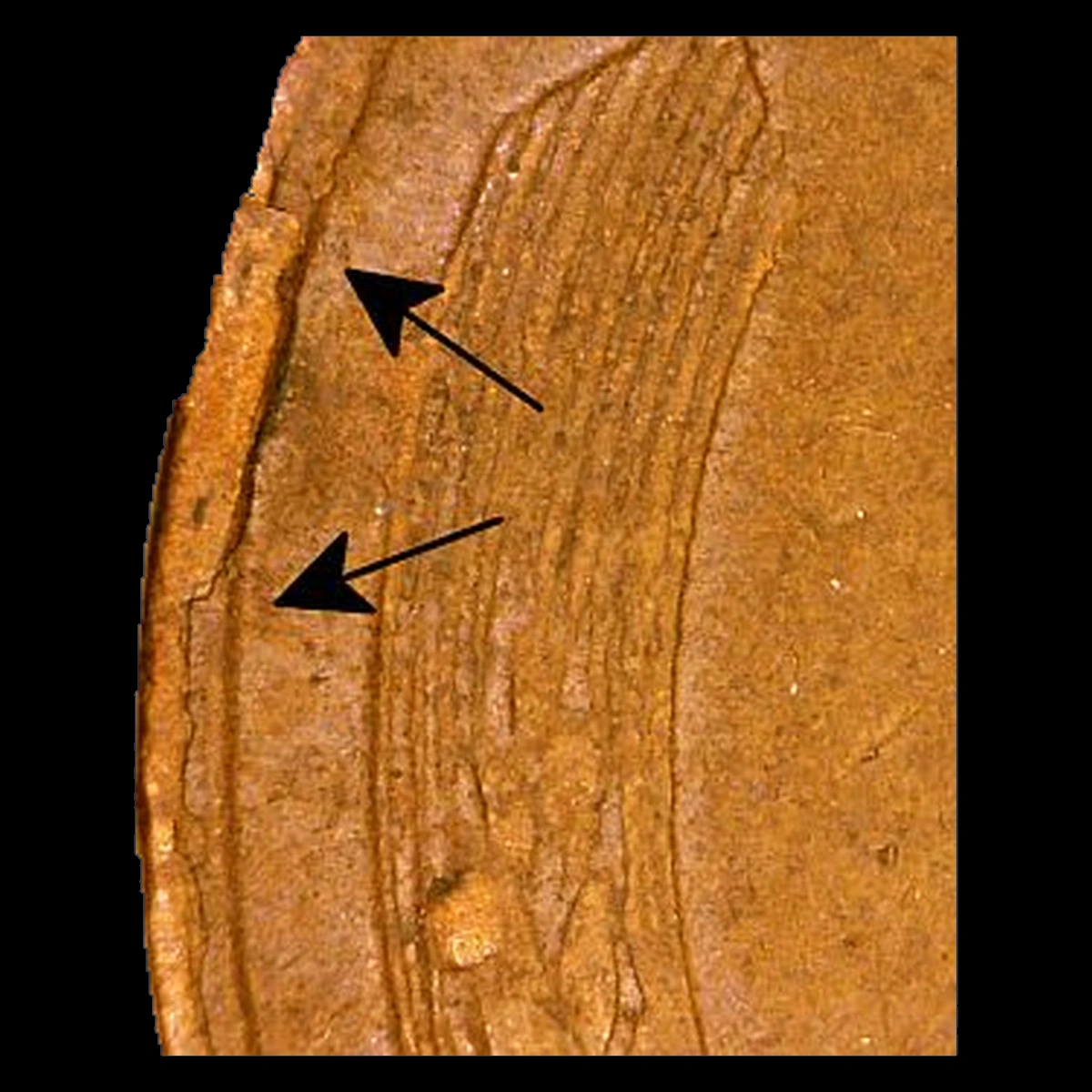
The reported Denver example has a thin rim extension bent over the reverse. Metal squeezed into a narrow gap near the edge during striking to form the fin.
Viewed from above, the folded sheet can resemble a solid cud. This example was formerly classified that way, but its revised identification rests on the folded structure.
How to Identify
Inspect from the side to find a thin layer bending across the surface. Trace the sheet back to its original connection with the rim.
A solid raised die-break mound has a different structure. Crushed edges or tool marks may instead indicate later damage, and unfolding the flap would destroy useful evidence.
What It’s Worth
A genuine 1955-D folded rim fin is estimated at $25–$250. The size and clarity of the fin, along with the rest of the coin’s condition, shape its appeal.
No verified sale is supplied for the reclassified example. Its former cud label should not determine the price.
8. 1955 Penny A rough, curved, or straight edge gap: Clipped Planchet Error
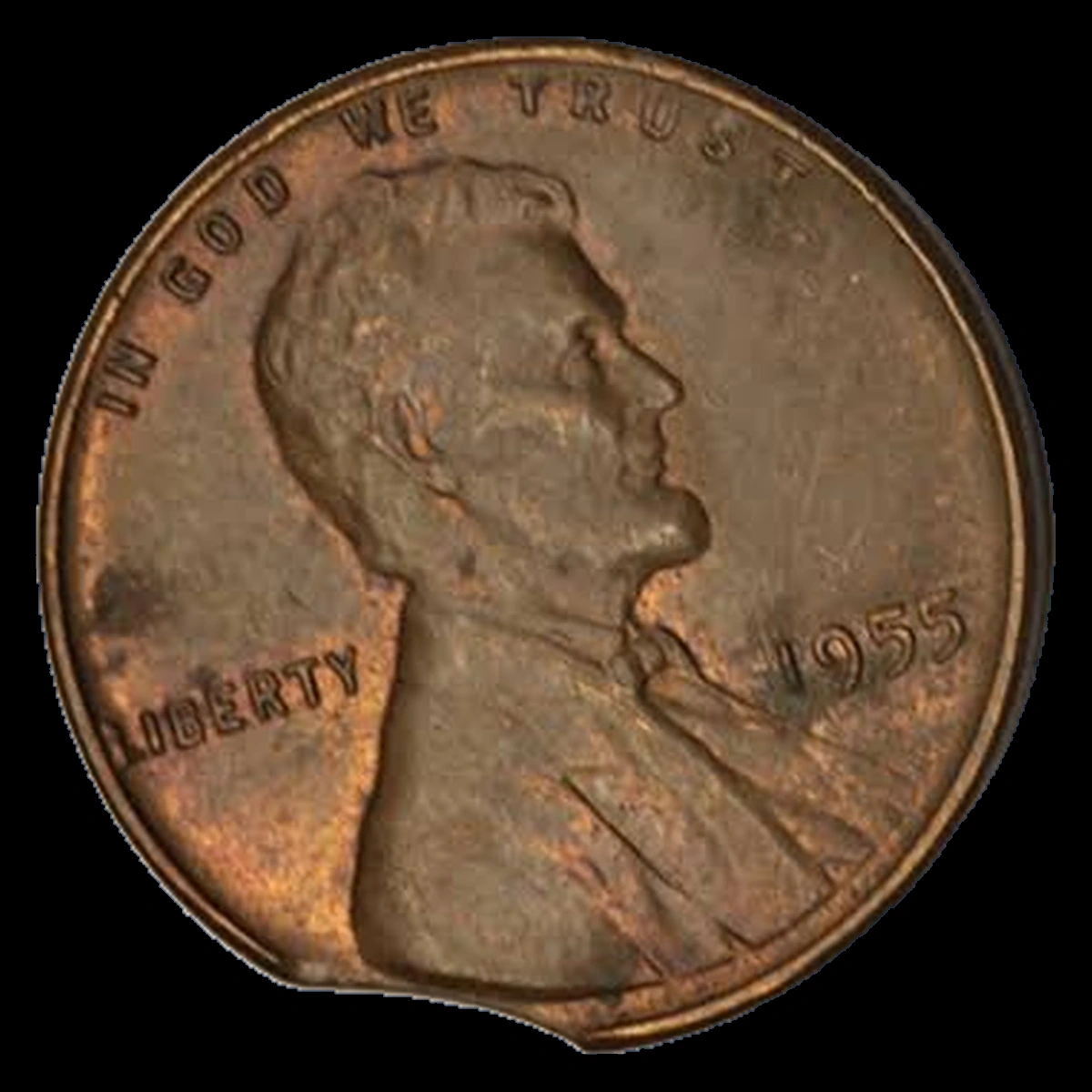
An incomplete blank can receive a normal cent design around its missing section. The reported Philadelphia ragged clip has a gap near four o’clock, while separate Philadelphia and Denver examples have curved clips.
Another straight-clip cent also spread beyond its usual outline during striking. That broadstrike is a second feature, caused by the edge not being contained normally.
How to Identify
Inspect how the struck rim and design meet the gap before judging the amount missing. Saw marks, filing, or freshly pushed burrs suggest later removal.
A weak rim opposite a curved clip can support the identification, but a ragged clip requires its own boundary assessment. The different shapes should not all be forced to resemble the same smooth arc.
For a broadstrike combination, distinguish expansion of the surviving metal from the section absent before striking. Both must be established on the individual coin.
What It’s Worth
Ordinary genuine clips are estimated at $15–$150, with clear broadstrike combinations around $75–$300. These ranges reflect different missing sections and levels of preservation.
The 1955 ragged-clip cent graded NGC MS66 Red sold for $124 in March 2026. That same-year result belongs to a particularly well-preserved ragged example, not to every curved or straight clip.
9. 1955 Penny Thickness decreases toward an edge: Thin or Tapered Planchet Error
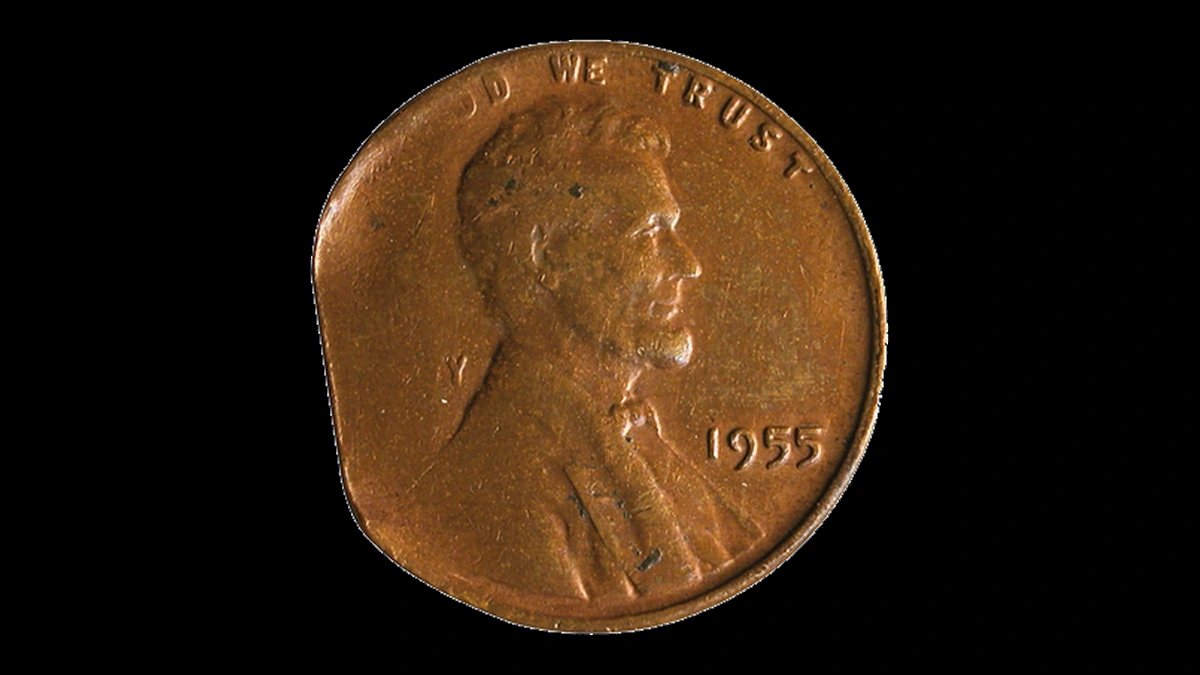
Unevenly rolled metal can produce a blank that becomes thinner across its width. A weakly filled design may accompany the thinner area because less metal is available during striking.
The recorded Philadelphia coin weighs 2.12 grams and has a taper plus a straight clip. A separate Denver example weighs 1.84 grams and combines thin metal, tapering, and a straight clip.
How to Identify
Compare thickness at several locations without squeezing the design. Look for a gradual change rather than a single ground-down patch.
Inspect the clipped boundary independently and check the surfaces for filing or chemical damage. Both tapering and missing metal contribute to these examples’ low weights.
Neither measurement is a universal target for a tapered cent. Low weight alone also does not establish that a foreign or different-denomination blank was used.
What It’s Worth
Confirmed combinations of this kind are estimated at $50–$400. A visible taper and original clipped boundary communicate the error more clearly than a scale reading alone.
No completed sale of either the 2.12-gram or 1.84-gram example accompanies the supplied estimate.
10. 1955 Penny Layers separate or a flap lifts: Defective Metal and Lamination Error
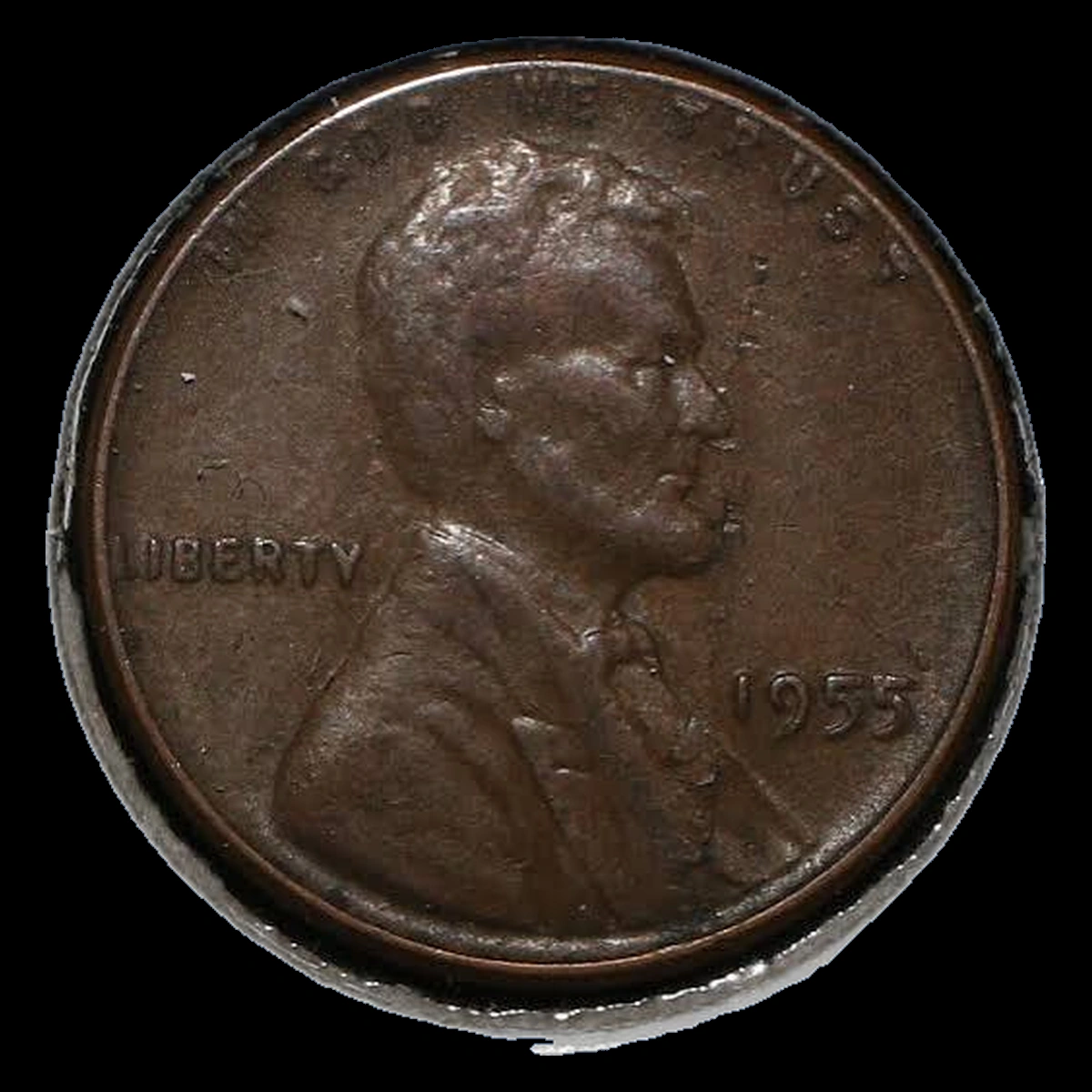
A clamshell lamination opens within the metal while two layers remain joined along part of the edge. The shell-like form is an internal separation, rather than a coin folded in half.
Other reports include a broadly described Philadelphia blank defect and a San Francisco surface flap. The San Francisco feature has competing explanations: separating coin metal or retained material struck into the surface.
How to Identify
Follow the separation visually without opening it farther or inserting a tool. Breaking the remaining connection would alter the evidence.
Determine whether a flap continues into the original alloy or appears to be a separate object. The San Francisco report should remain unresolved until that distinction is supported.
An intact clamshell may retain most of its normal weight. A dramatic opening does not necessarily mean that much metal is missing.
What It’s Worth
Genuine metal defects are estimated at $10–$500, depending on extent, clarity, and preservation. An intact hinged separation can be much more distinctive than a small rough patch.
A 1971-D cent struck after its blank split sold for $59 in June 2023. That different-year, different-stage error offers general context for metal separation, not a price for a hinged 1955 clamshell.
11. 1955 Penny Much of the blank remains unstruck: Off-Center Strike Error
The reported Denver 1955 examples include approximately 65% and 75% off-center strikes in different directions. Each blank was only partly beneath the dies when struck.
These are separate coins. Their large unstruck areas are visually striking, but the small surviving designs must still support the date and mint.
How to Identify
Locate 1955 and the D before estimating the displacement. Examine both faces for a consistent shift and original metal flow along the transition from struck to blank metal.
An enlarged outline with a complete design describes a different striking problem. A shift on just one face also requires a different explanation from the off-center examples here.
What It’s Worth
Readable-date 1955-D examples are estimated at $40–$600. Clean surfaces and a dramatic but securely identified design support the stronger end.
A 1968-D cent struck 60% off center, graded NGC MS62 Red and Brown, brought $47 in July 2021. This later-year comparison shows why percentage alone cannot establish a large premium.
12. 1955 Penny One face was blocked by another blank: Two Planchets Struck Together Error
Two blanks entering the press as a stack can prevent each from receiving a normal design on its inner face. The recorded 1955 coin is the obverse member: its front received the die’s design while another blank blocked its back.
A label referring to one half of the event means one member of the pair. It does not mean the coin separated into a half-thickness layer.
How to Identify
Examine the blocked reverse for original compressed metal rather than abrasive lines. Follow its relationship to the struck front around the edge.
The stack can spread differently from one ordinary blank, but a major loss toward half weight needs another explanation. Do not infer splitting from the word half or assume the partner coin survives with the pictured piece.
What It’s Worth
A genuine individual member is estimated at $100–$750. The reported example graded NGC MS64 Red and Brown.
No verified individual sale is assigned in the supplied record. This estimate is for one coin and is not the combined price of a matched pair.
13. 1955 Penny An extra displaced impression has no matching back: Double Strike Error
The recorded Philadelphia coin received an initial normal strike and a second strike about 70% off center. Another blank blocked the reverse during that second event.
The extra strike is described as uniface, meaning one-sided. The term applies to that impression, rather than saying the whole coin has always had only one struck face.
How to Identify
Trace the first design, then connect the portrait or lettering remnants belonging to the displaced second impression. This movement of the coin differs from receiving doubled details already present on a die.
Inspect the corresponding back area for a naturally blocked strike. Grinding, joining, or pressure from two finished coins squeezed together can create misleading shapes.
What It’s Worth
This double-strike combination is estimated at $150–$1,000. The recorded 1955 Philadelphia example graded NGC MS64 Brown.
A 1979-D double-struck cent with its second impression 70% off center sold for $660 in June 2025. That comparison demonstrates similar displacement, but does not supply a sale price for the 1955 coin’s blocked-back combination.
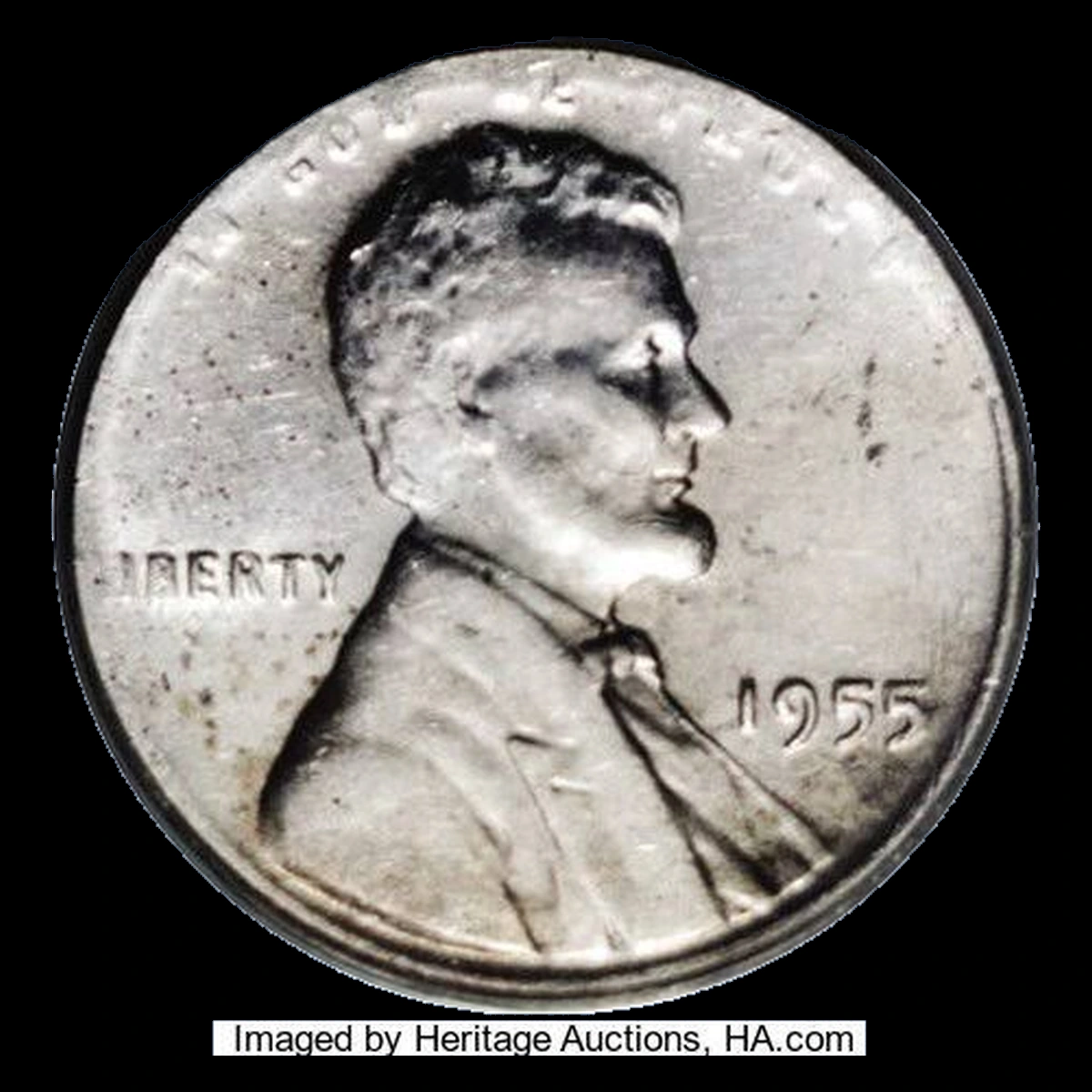
14. 1955 Penny A pale, smaller blank crowds the design: Silver Dime Planchet Error
A blank intended for a silver dime can receive the cent design by mistake. The smaller surface may crowd lettering or leave soft borders in positions that vary from coin to coin.
Philadelphia examples are recorded alongside a separate San Francisco cent on a Type One dime blank. Type One means the blank had not yet undergone the rim-preparation step, not that a finished dime was overstruck.
How to Identify
A period silver dime blank starts near 2.50 grams and 17.91 millimeters across. Striking may expand its outline, so size and weight should be considered with professionally identified composition.
Look for added plating or altered surfaces before trusting the pale color. The blank need not have the reeded edge of a finished dime.
A Type One attribution requires separate evidence of blank preparation. Do not scratch the metal or assign that label to every small silver cent.
What It’s Worth
Authenticated 1955 silver dime-planchet cents are estimated at $750–$5,000. Condition and the particular blank preparation affect the comparison.
The Philadelphia example graded PCGS AU58 sold for $2,340 at Heritage in July 2022. AU58 indicates slight wear, and this result is not a sale of the San Francisco Type One example.
Conclusion
A 1955 cent’s reputation should not decide its identification before you inspect it. Strong doubled lettering, a swollen digit, a repunched mintmark, and a second displaced strike each tell a different manufacturing story.
Keep the mint, finish, measurements, and visible features attached to the same coin. An accurate match makes the price evidence useful, whether the result is a modest die chip or an authenticated major doubled die.