Rare 1968 Penny Errors (List & Pictures)
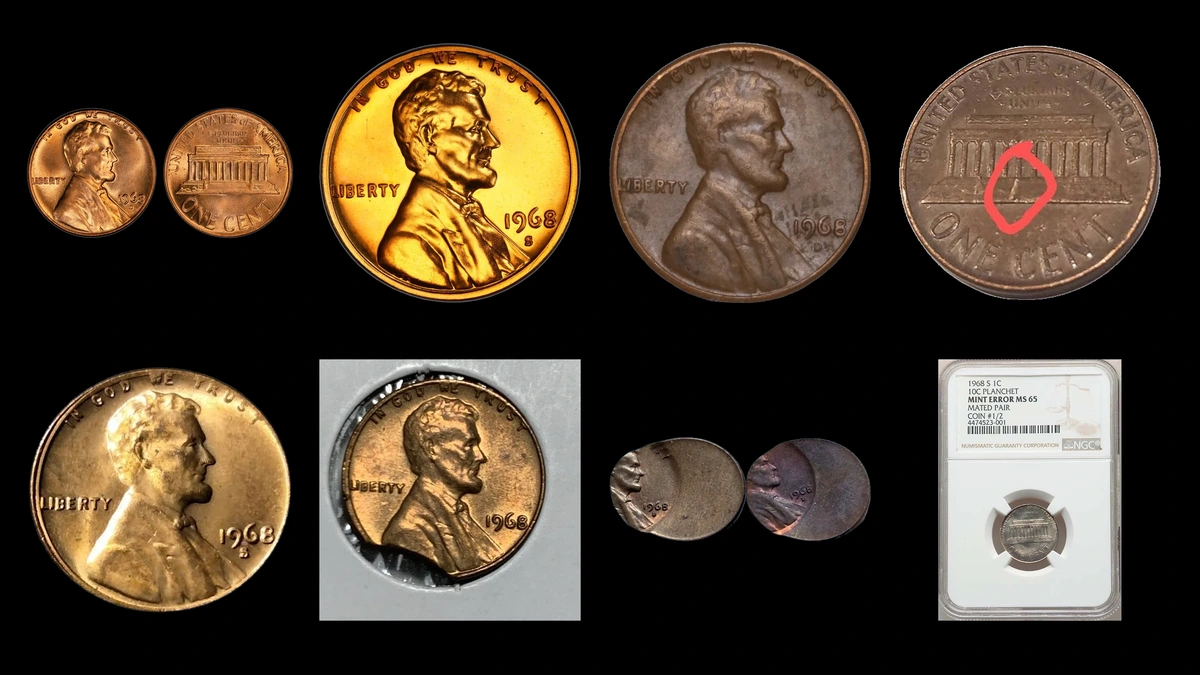
A floating Memorial roof is a small curiosity, while a foreign blank bonded over Lincoln is a major accident. Those very different 1968 penny errors fit estimated ranges from $2–$20,000.
The bonded Costa Rican blank example sold for $15,000 in May 2022. Start with the visible feature, and remember that a 1968-S can be an ordinary circulation coin or a specially made collector Proof.
1. 1968 Penny The Roof Loses Its Fine Supports: Floating Roof Error
On reported 1968-D examples, weak or missing connections above the end columns make the Memorial roof appear detached. Heavy die polishing can remove those shallow details before later pennies are struck.
How to Identify
Compare the short roof connections with an ordinary 1968-D under changing light. Dirt can hide a surviving line, while wear usually softens nearby detail too.
Sharp neighboring columns beside absent connections make a stronger case than a generally worn building. Do not clean the coin to expose the area.
What It’s Worth
$2–$25 is the estimate for a clear polishing-related floating roof. An attractive unworn example supports the higher end.
No particular 1968-D auction sale is supplied. This minor design difference should not be priced like a rare wrong-metal error.
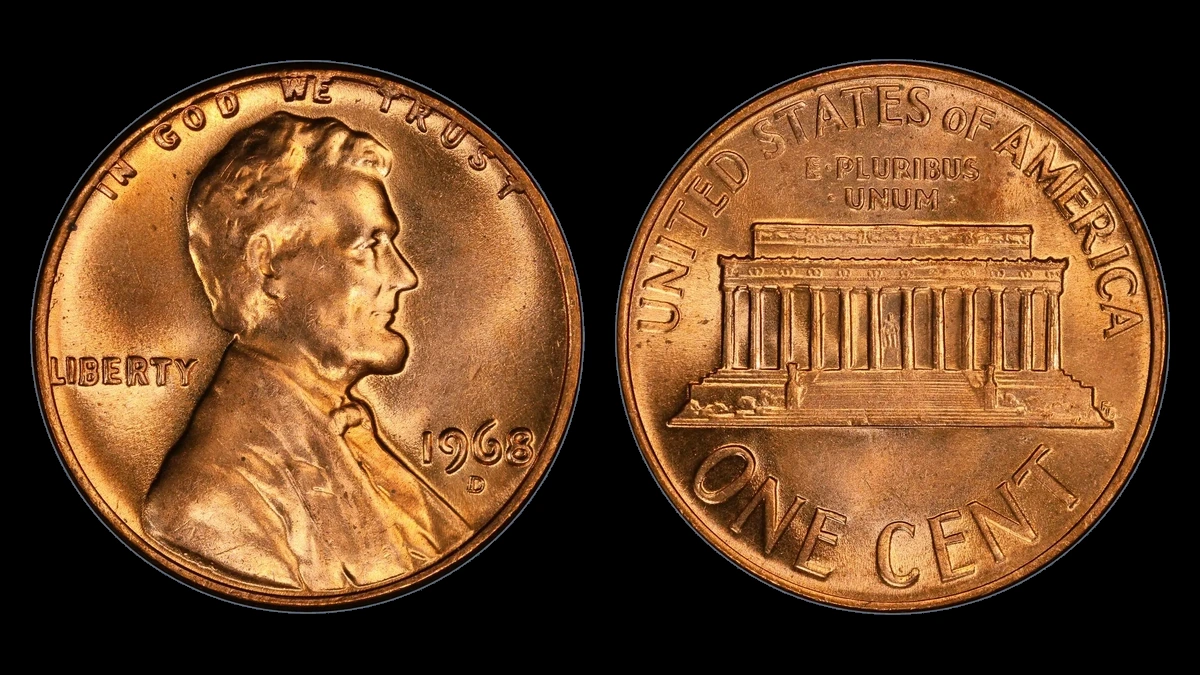
2. 1968 Penny A Second D or S Stroke Shows: Repunched Mintmark Error
Mint letters were punched separately into dies in 1968. A repeated placement could leave part of an earlier letter visible around the main one.
Denver and San Francisco varieties have different overlaps. A clear Denver pattern includes extra D detail along the left side and inside its opening.
How to Identify
Follow a recognizable curve or upright from the extra letter. A flat shelf, thickened letter, or isolated chip needs a different explanation.
Keep each direction and shape with its matching mintmark photograph. Several strokes around one letter still describe a single variety.
What It’s Worth
$5–$150 is the estimated range for identified repunches. A strong second letter on a clean coin is generally more appealing than a tiny overlap.
The estimate compares minor Memorial-cent varieties. It does not claim that every listed D or S has realized the same selling price.
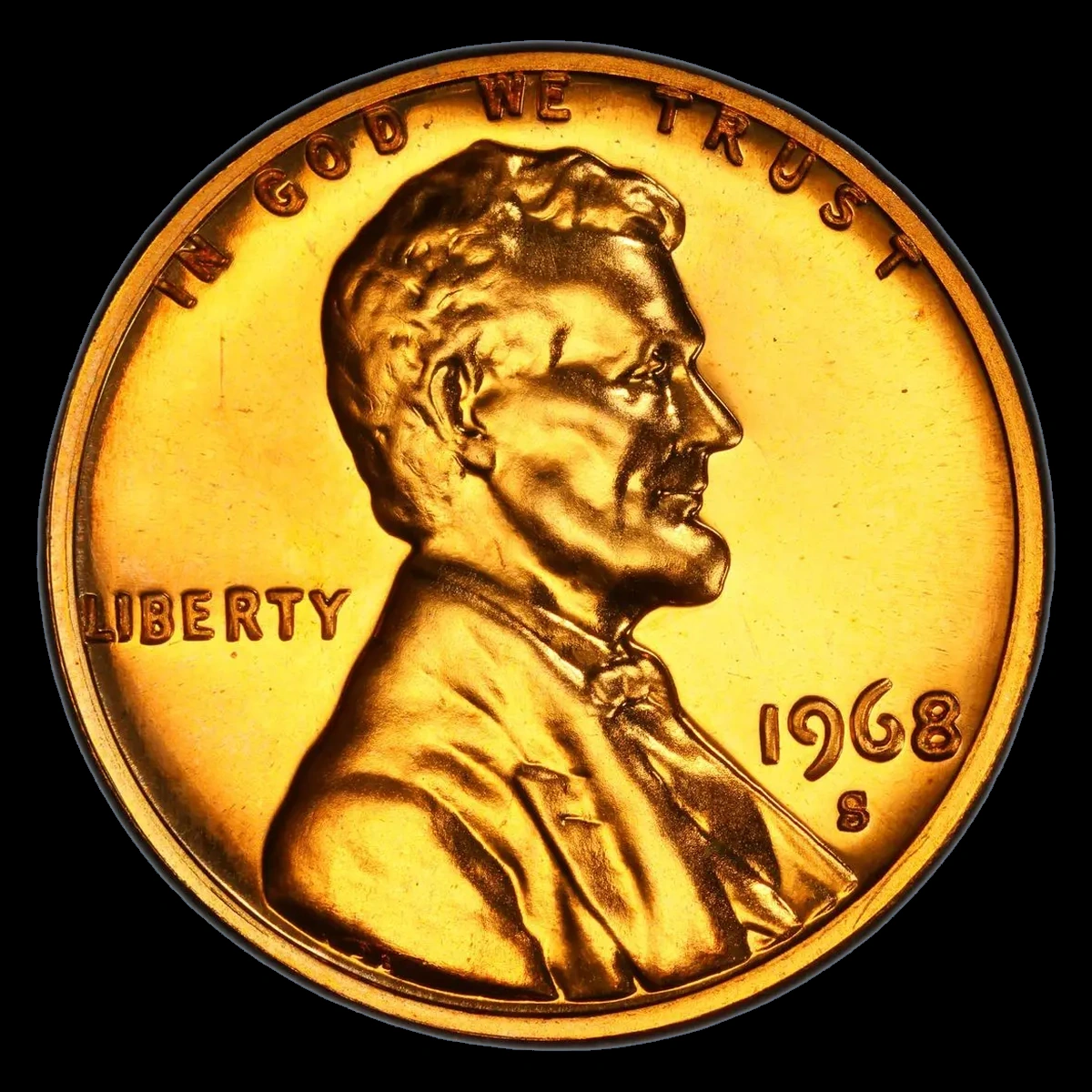
3. 1968 Penny Design Contours Repeat on the Correct Face: Doubled Dies Error
Denver FS-801 has strong separation in upper back lettering. The separate S Proof FS-101 repeats front letters and date details.
Other patterns are smaller, including eyelid or Memorial-roof details. Some light doubling came from shared earlier tooling and does not make every affected coin rare.
How to Identify
Identify the mint and finish first, then compare the exact face and feature. An ordinary S penny cannot use a Proof photograph as its full identification.
Rounded separated outlines differ from flat ledges caused by movement during striking. A tiny roof variety also should not borrow the appearance of the major lettering patterns.
What It’s Worth
$5–$300 suits minor circulation varieties, while clearer S Proof types fit about $50–$600. A Proof combining front and back doubling supports an exceptional upper comparison of $1,500.
That combined Proof sold for $1,500 in March 2024. A separate Denver FS-801 brought $285 in May 2023.
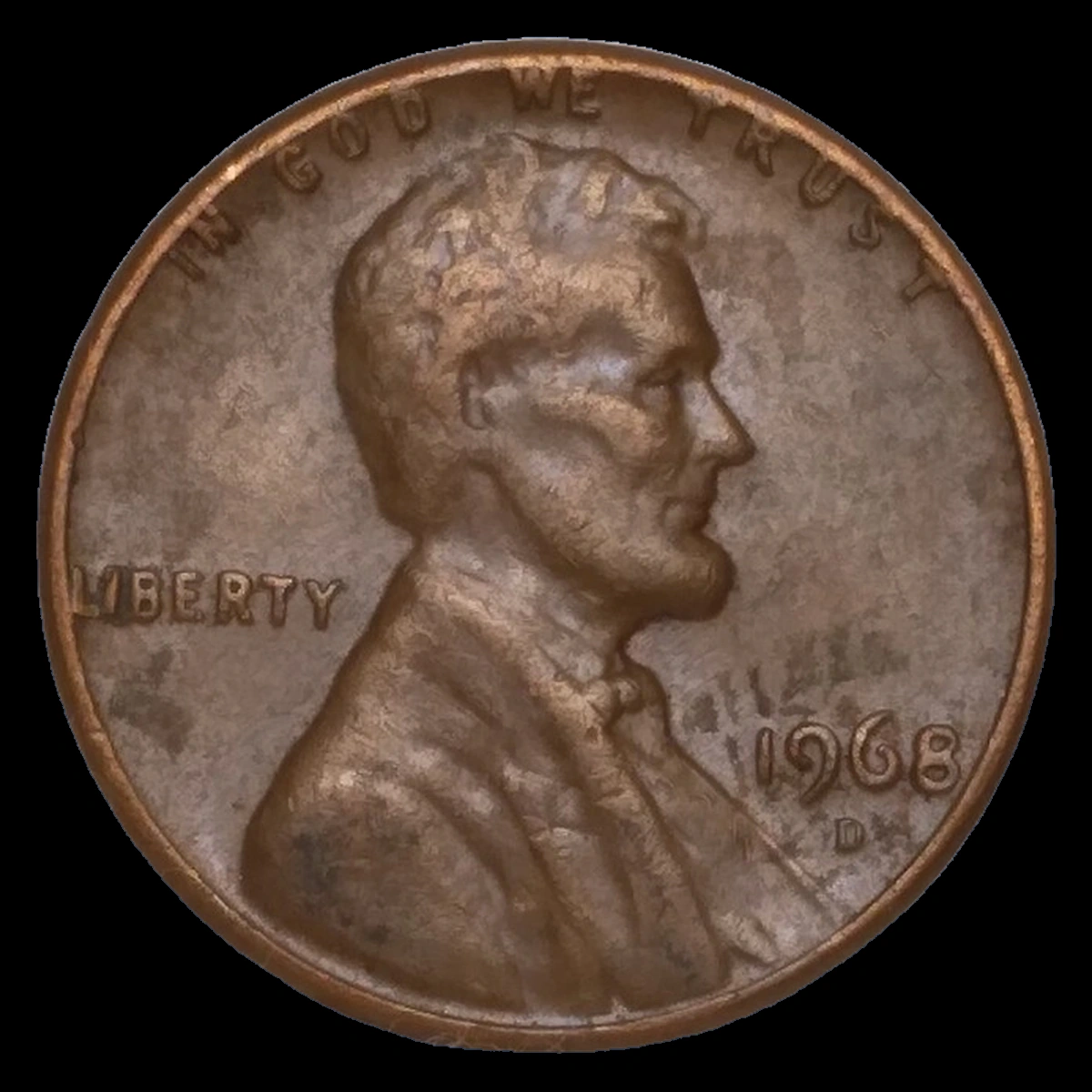
4. 1968 Penny Opposite-Side Traces Appear near the Design: Die Clash Error
When dies hit each other without a blank, they can transfer small pieces of their designs. Later pennies receive those traces along with the normal picture.
On one San Francisco example, angled Memorial columns reach the front, ME appears near the date, and Lincoln’s profile leaves traces on the back. Denver clashes are also reported.
How to Identify
Compare the unexpected shapes with recognizable parts of the opposite face. One short scratch should not be stretched into an imagined building.
The slight angle of a transferred clash image does not establish a rotated-die coin. Use the correct specimen’s pattern rather than applying the San Francisco locations to Denver.
What It’s Worth
$10–$200 is the estimate for recognizable clashes. Clear transfer on both faces can be more compelling than faint isolated marks.
This range is comparison-based, without a supplied 1968 sale for each pattern. Later scratches or squeezed-coin impressions do not qualify merely because they resemble another design.
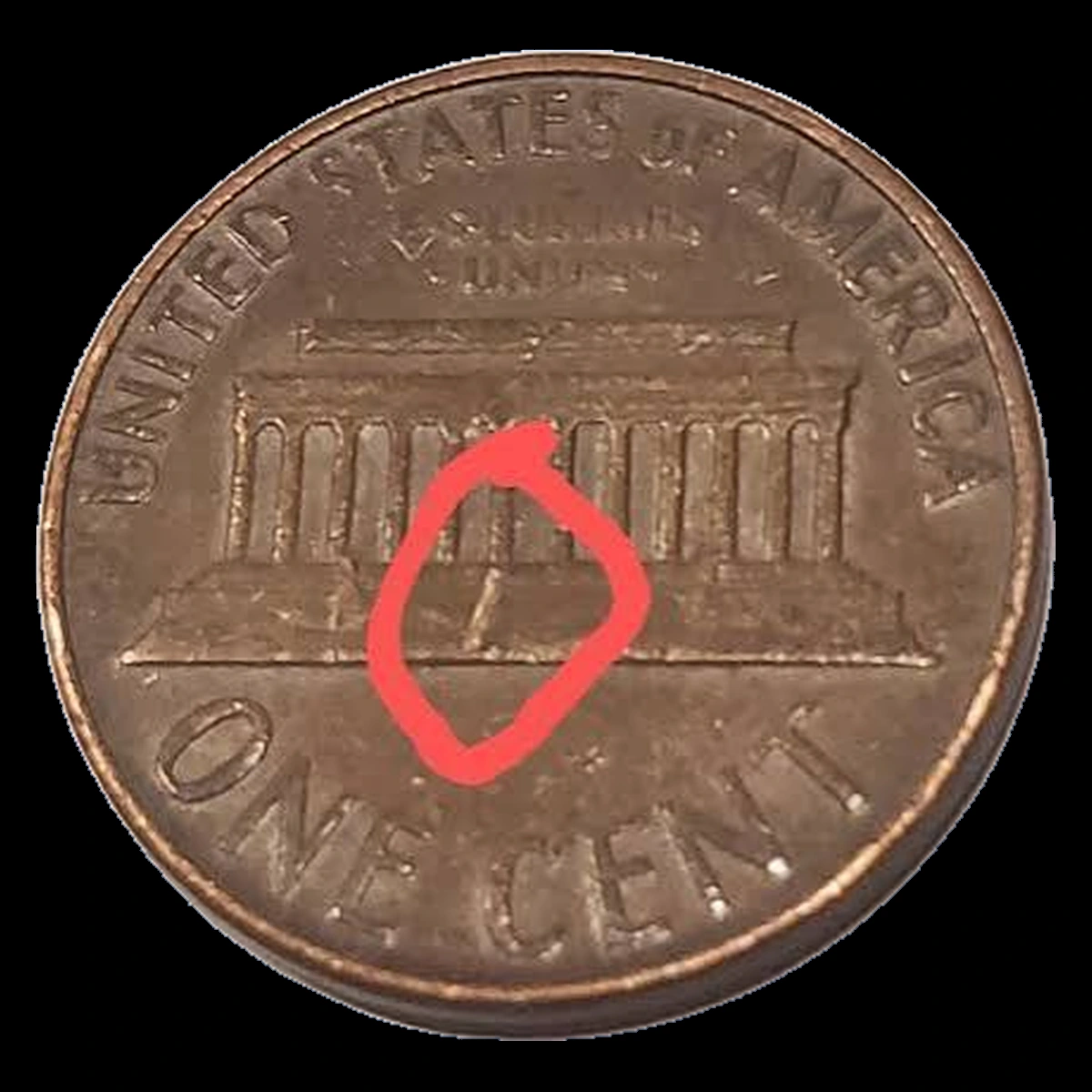
5. 1968 Penny A Ridge or Lump Rises from the Coin: Die Breaks Error
Cracks in a die leave raised lines, while missing pieces leave chips or larger breaks. A cud is a raised break connected to the rim.
Denver and San Francisco records include head cracks, small chips, and rim breaks. Some broken die sections remain in place and preserve design inside an enclosed damaged area.
How to Identify
Use low side light to trace the raised metal. A scratch cuts into the coin, although displaced metal beside it can create misleading ridges.
Check the actual break’s boundary: rim-connected for a cud, possibly enclosed for an internal break. Do not require every coin to share the same head or letter chip.
What It’s Worth
$2–$40 is the estimate for small cracks and chips, with larger cuds or clear enclosed breaks around $30–$600. Multiple related marks still contribute to one coin’s value.
A 2021-D retained cud sold for $186 in September 2025. Its different break, Shield design, and zinc-centered metal make it a related comparison.
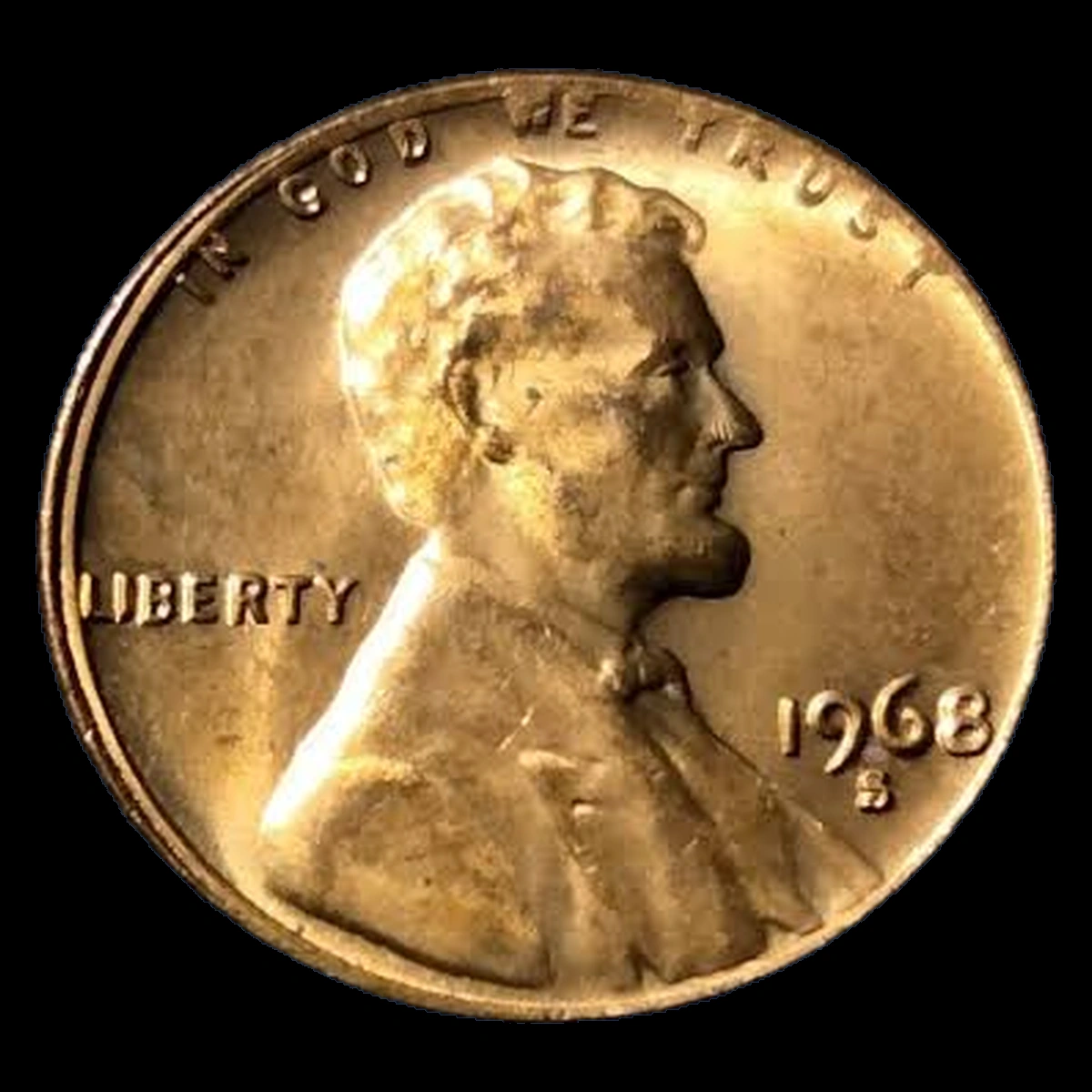
6. 1968 Penny The Front Border Shifts while the Back Stays Centered: Misaligned Die Error
The reported 1968-D has a front die out of position relative to the back die. Its narrow border on one side and wider border opposite do not require the whole blank to be off center.
How to Identify
Photograph both faces straight on so camera tilt does not exaggerate the rim. Compare the shifted front with the substantially centered Memorial.
Plain space and missing design on both sides suggest an off-center strike instead. Filing or squeezing the edge after minting needs another explanation.
What It’s Worth
$10–$350 is the estimate for the reported misalignment type. Slight rim imbalance generally has less appeal than a clear displacement.
A 1972 copper-rich cent with a misaligned front die sold for $114 in March 2026. It supports the error-family comparison rather than a claimed sale of the 1968-D.
7. 1968 Penny The Front Looks Soft beneath a Metal Cover: Capped-Die Strike Error
A coin stuck over a die can soften the picture reaching the next blank. The reported 1968-D was struck through a late, thinned cap.
A separate 1968-S has counterbrockage: a sunken image on the covering coin passed a raised, normally facing Lincoln to the receiving cent.
How to Identify
Compare the affected front with the sharper back. General wear should leave other handling evidence rather than only a convincing covered-strike pattern.
Counterbrockage is raised and normally facing, unlike a direct brockage’s sunken mirror image. These receiving pennies are not the caps that stayed on the dies.
What It’s Worth
$40–$750 is the estimate for covered-die strikes of differing clarity. A soft portrait alone does not support the upper end.
The San Francisco NGC MS63 counterbrockage sold for $46 in September 2004. That result does not belong to the separate Denver late-cap example.
8. 1968 Penny A Large Curved Gap Removes Metal: Clip Error
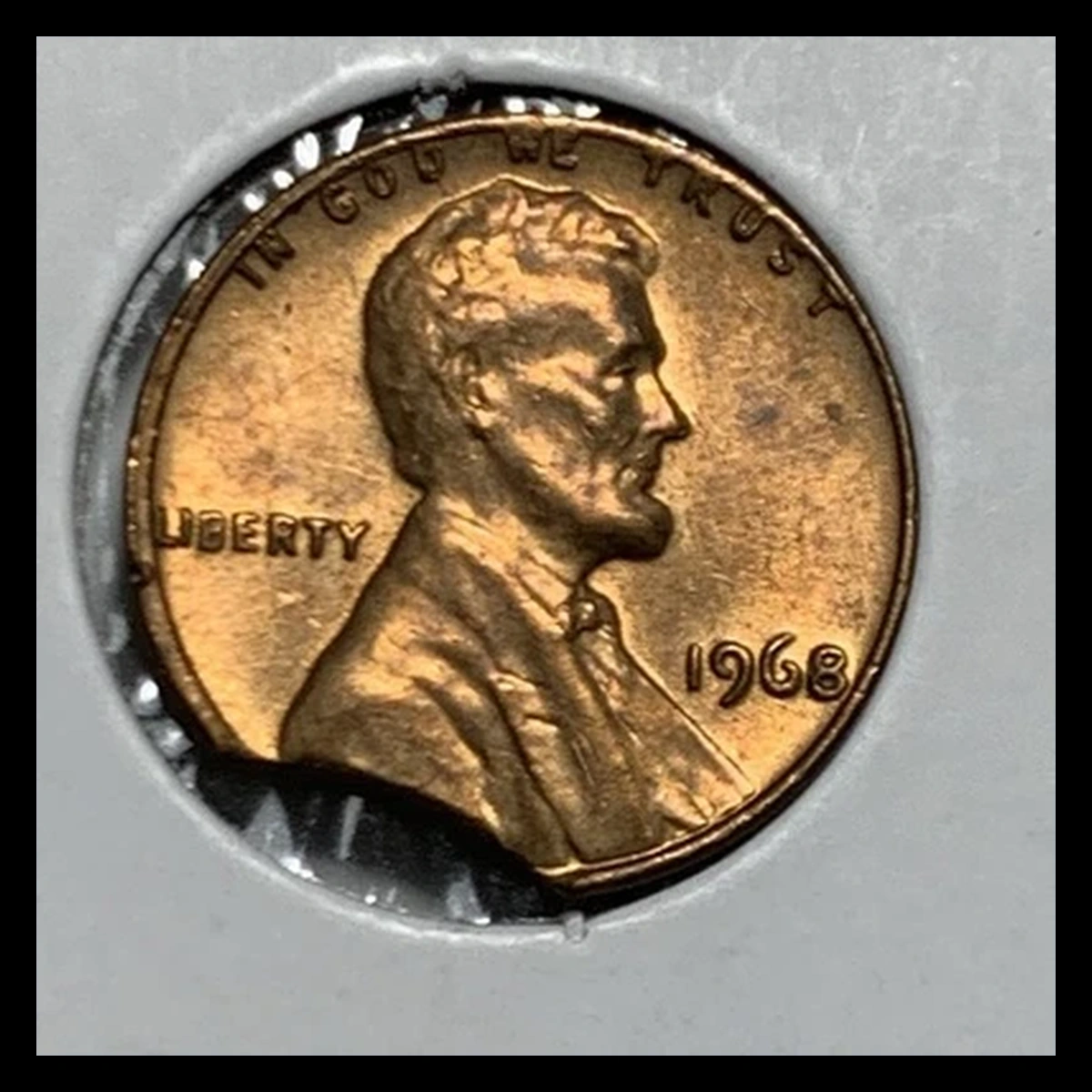
The Philadelphia example is described as a 60% curved clip and weighs only 1.3 grams. The missing section existed in the blank before striking.
How to Identify
Inspect how the rim and surviving design meet the curved boundary. Saw grooves, filing, or fresh worked edges can reveal metal removed later.
A complete 1968 copper-rich cent starts near 3.11 grams and 19.05 millimeters across. Here the low weight fits missing metal and should not be used alone to claim a foreign blank.
What It’s Worth
$75–$500 is the estimate for a large original clip of this kind; smaller curved clips fit about $10–$150. Remaining identity and surfaces still matter.
A 2021 straight clip sold for $114 in September 2025. Its smaller, differently shaped gap provides only broad context for the unusually large 1968 clip.
9. 1968 Penny An Unstruck Crescent Borders the Design: Off-Center Strike Error
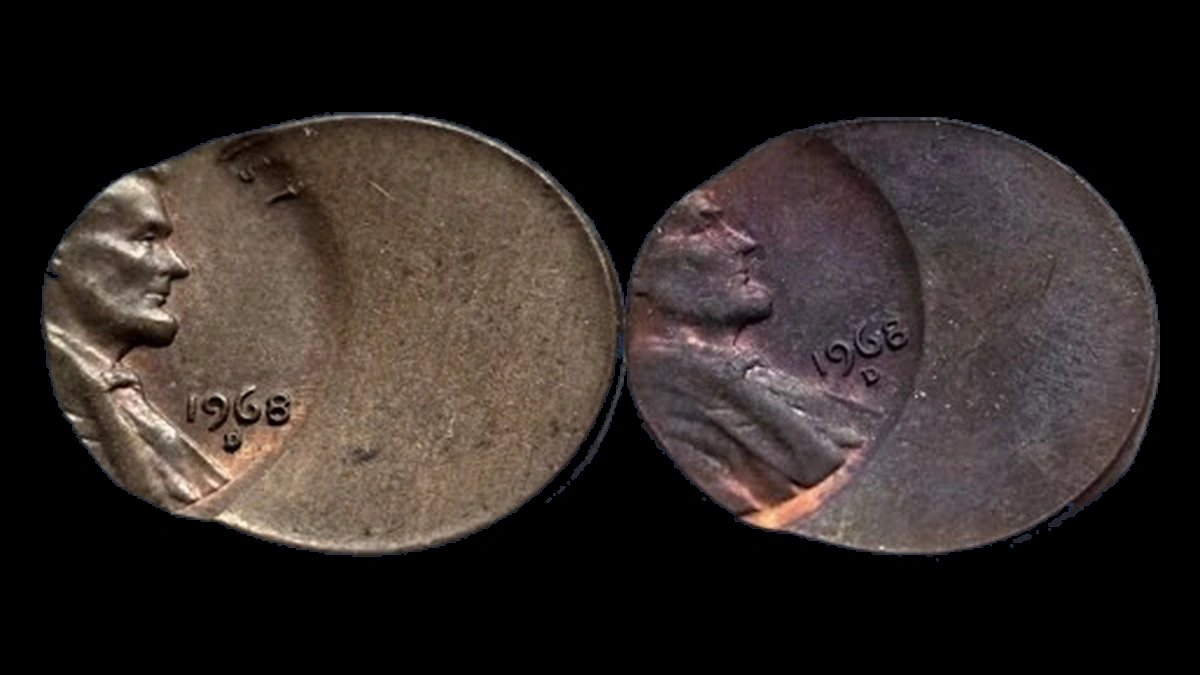
The recorded Denver example is 65% off center. A separate S circulation coin combines a 25% displacement with the FS-102 doubled die and later damage.
How to Identify
Compare the plain crescent and missing design on both faces. The surface should be originally unstruck rather than ground smooth afterward.
On the S combination, check its surviving doubled detail separately. FS-102 and S do not turn it into the S Proof FS-101.
What It’s Worth
$40–$500 is the estimate for ordinary off-center pieces, while the S doubled-die combination fits roughly $200–$1,500. Its damage affects the whole coin’s appeal.
A 1972-D cent 60% off center sold for $44 in September 2025. A dramatic displacement is not a guarantee of a high price.
10. 1968 Penny A Proof Has Shifted Impressions and a Tall Rim: Double-Strike Broadstrike Error
The recorded 1968-S Proof received two misplaced strikes while its metal spread without normal collar restraint. A high curved rim surrounds much of the front.
How to Identify
Trace the repeated design positions beside the expanded rim. Their displacement separates the error from the neatly aligned repeated blows normally used to make Proof coins.
Check side views for original stretched metal rather than later squeezing. Do not press the raised rim flat to improve a photograph.
What It’s Worth
$3,000–$6,000 is the estimate for this distinctive combined error. It is one Proof coin with related striking effects.
The ANACS PR65 Red example sold for $4,312.50 in January 2008. Rim damage and the clarity of its second strike affect comparisons with another specimen.
11. 1968 Penny A Foreign Blank Receives Only Cent Designs: Philippine Five-Sentimos Blank Error
The recorded 1968-S NGC MS64 was identified as a cent struck on a Philippine five-sentimos blank. The blank had not yet received foreign lettering or pictures.
How to Identify
Compare the original metal and dimensions with the identified foreign blank. No Philippine design is expected on a previously unused disc.
A changed surface color can come from staining or coating an ordinary penny. The supplied record does not establish a specimen weight to copy onto a candidate.
What It’s Worth
$700–$3,000 is the estimate for the verified foreign-blank type. Readable cent identity and surface preservation help its appeal.
A 1972-D example on a Philippine five-sentimos blank sold for $1,500 in April 2022. That higher-graded, later coin is the comparison rather than a sale of the 1968-S.
12. 1968 Penny A Small Layered Blank Carries Lincoln: Clad Dime Blank Error
Both ordinary and Proof 1968-S cents are recorded on clad dime blanks. Their silver-colored outer layers surround a copper core, rather than making them silver coins.
How to Identify
A clad dime blank normally weighs about 2.268 grams; one recorded Proof is listed at 2.3 grams. Check the smaller outline, crowded cent lettering, and layered metal together.
An unused blank has no earlier Roosevelt or torch design and need not retain finished dime-edge grooves. Identify the Proof finish independently of its S.
What It’s Worth
$400–$1,200 is the estimate for circulation examples, compared with $1,200–$3,500 for Proofs. Their production formats make different comparisons.
A PCGS MS64 circulation 1968-S sold for $576 in July 2021. A separate NGC PR67 Proof brought $2,280 that month.
13. 1968 Penny Two Dime-Blank Cents Preserve Matching Contact: Mated Pair Error
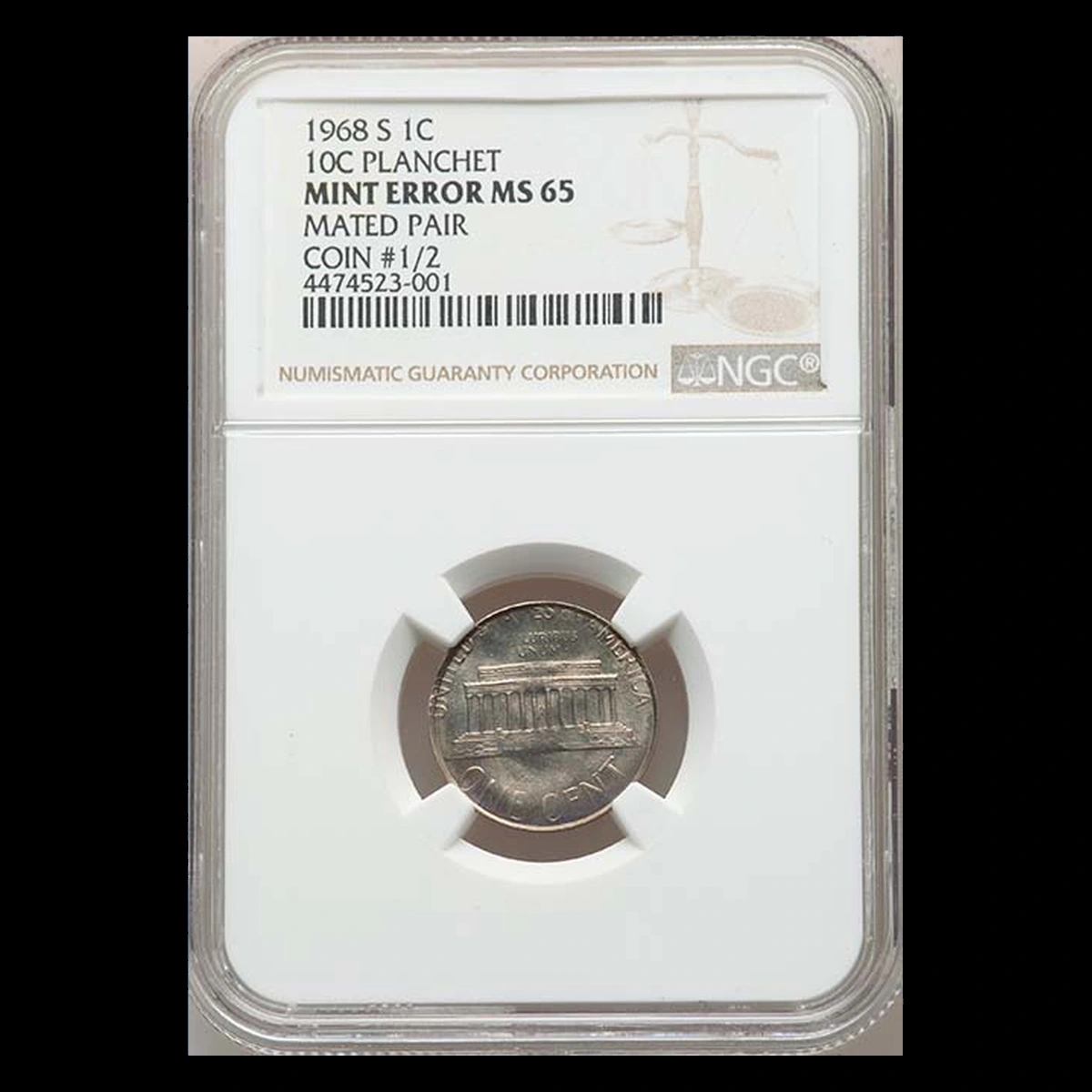
One dime blank received normal cent designs, then another was caught between that coin and the reverse die. The first coin’s raised design pressed a recessed mirror image into its partner.
The pair is graded NGC MS65 in separate holders. The second piece’s year and mint are assigned through its match, not a fully readable date and S on that piece.
How to Identify
Compare the first coin’s contact design with the matching sunken image on the second. The shapes should explain their shared striking event.
Measurements alone cannot establish a pair. Keep the holders together and do not replace a matching partner with an unrelated brockage coin.
What It’s Worth
$2,500–$5,000 is the estimate for the complete related pair. Both coins’ preservation and their matching surfaces contribute to the total.
The pair sold for $3,600 in July 2021. That is neither a per-holder price nor a figure to divide in half automatically for a lone member.
14. 1968 Penny An Older Dime Picture Survives under a Proof: 1965 Dime Overstrike Error
A finished 1965 Roosevelt dime received the 1968-S Proof cent designs. The two portraits point in nearly opposite directions, and dime-reverse details remain beneath the Memorial.
How to Identify
Rotate the photograph about half a turn to trace Roosevelt, then return to the cent’s upright view. Read the cent date and S separately from the earlier dime.
A normal 1965 dime is clad, not silver. Its existing designs distinguish this piece from a cent struck on an unused dime blank.
What It’s Worth
$2,500–$7,000 is the estimate for comparable Proof dime overstrikes. Earlier-design visibility and surface marks affect appeal.
The PCGS PR62 example realized $3,840 in June 2023. That result belongs to the finished 1965 dime host, not a fresh wrong blank.
15. 1968 Penny Costa Rican Lettering Remains underneath: Ten-Centimos Overstrike Error
The NGC MS68 example began as a finished 1967 Costa Rican ten-centimos coin. It entered the 1968-S cent press and received American designs over its own.
How to Identify
Find foreign letters or numbers and check that their positions fit the ten-centimos design. The later date and S should belong to the cent impression.
This is one overstruck foreign coin, not a smaller five-centimos object attached to a separate penny. Do not remove surface metal to expose the older design.
What It’s Worth
$3,000–$6,500 is the estimate for comparable identified overstrikes. Clear remnants of both countries’ designs help explain their interest.
The exceptionally preserved NGC MS68 is reported at $4,560 in March 2023. Its result does not price a five-centimos blank or an attached second disc.
16. 1968 Penny Testing Identifies an Older Silver Blank: Silver Dime-Blank Strike Error
The recorded 1968-D was identified as struck on a silver dime blank. It received a genuine designation with wear and damage noted, rather than an unworn numerical grade.
How to Identify
An older silver dime blank starts around 2.50 grams, compared with about 2.268 grams for clad dime metal. These are standards, not a supplied measurement of the damaged specimen.
Metal testing is needed to distinguish silver alloy from a coating or clad layers. A pale surface and a low weight do not settle the identity alone.
What It’s Worth
$1,000–$12,000 is the estimated span for identified 1968-D silver dime-blank cents. The worn, damaged recorded piece requires a different condition comparison from a superb unworn example.
A higher-grade 1980-D silver dime-blank cent sold for $18,000 in August 2025. That is another-year context, not a 1968 realized price.
17. 1968 Penny A Second Foreign Object Is Bonded over Lincoln: Struck-In Blank or Coin Error
One 1968-S cent has a Costa Rican five-centimos steel blank bonded across part of Lincoln. The smaller outline meets the penny’s edge near the lower left.
A separate example contains a finished 1967 Costa Rican five-centimos coin and weighs 4 grams in total. Its older design and recorded weight do not belong to the unused-blank example.
How to Identify
Keep the pieces attached and inspect how the struck design crosses their contact area. Glue, solder, or a forced later attachment would explain a different object.
The bonded blank is about 14.92 millimeters across, overlapping the larger cent. Weak areas on Lincoln and the right border belong to that specimen’s striking pattern.
What It’s Worth
$8,000–$20,000 is the estimate for comparable authenticated joined errors. The complete object and its intact original connection are valued together.
The PCGS MS63 Red bonded-blank cent sold for $15,000 in May 2022. That sale is not the result for the separate 4-gram finished-coin example.
Conclusion
For 1968, check both the mintmark and finish before using a price. Ordinary S cents and Proofs can share an error name while differing greatly in value.
The starting metal also matters: an unused blank, a finished foreign coin, and an extra piece bonded to a cent preserve different events. Keep both faces and any matching partner intact so those differences remain visible.