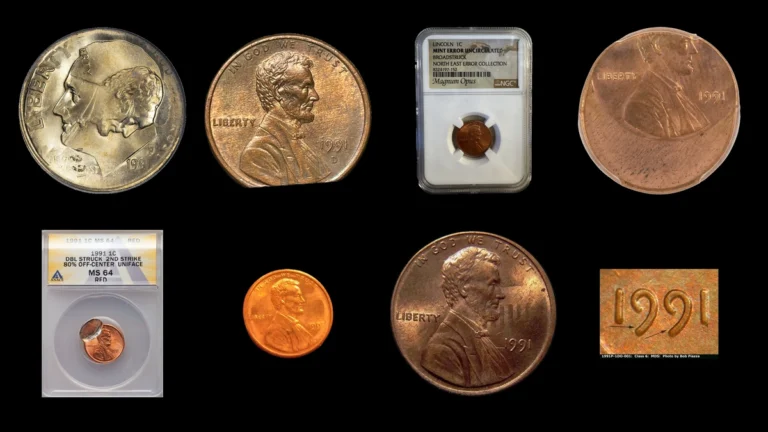
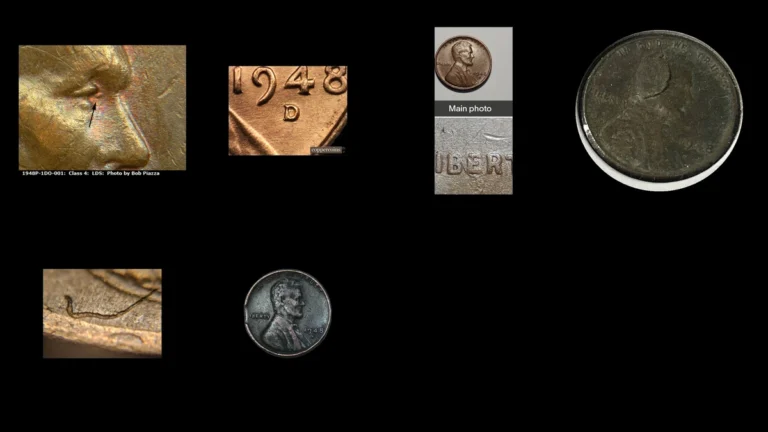
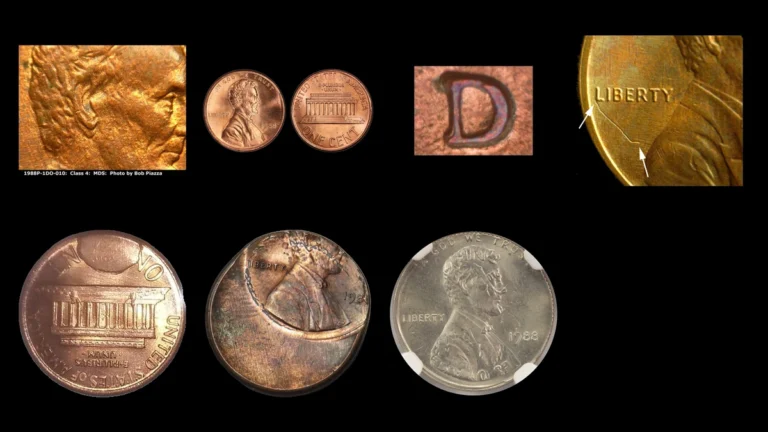
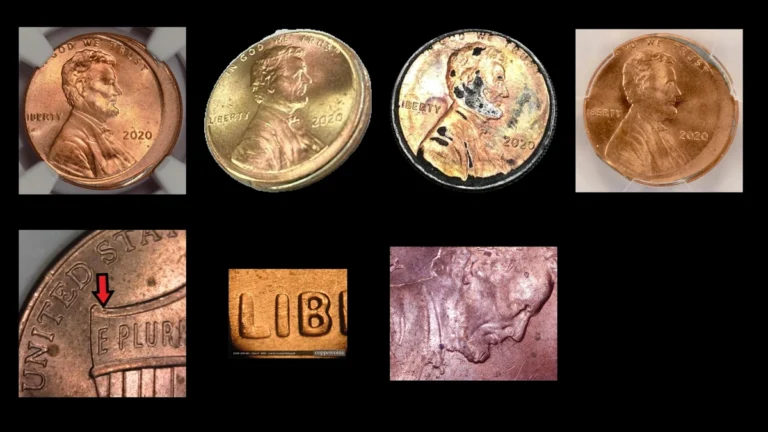
Rare 1939 Penny Errors (List & Pictures)
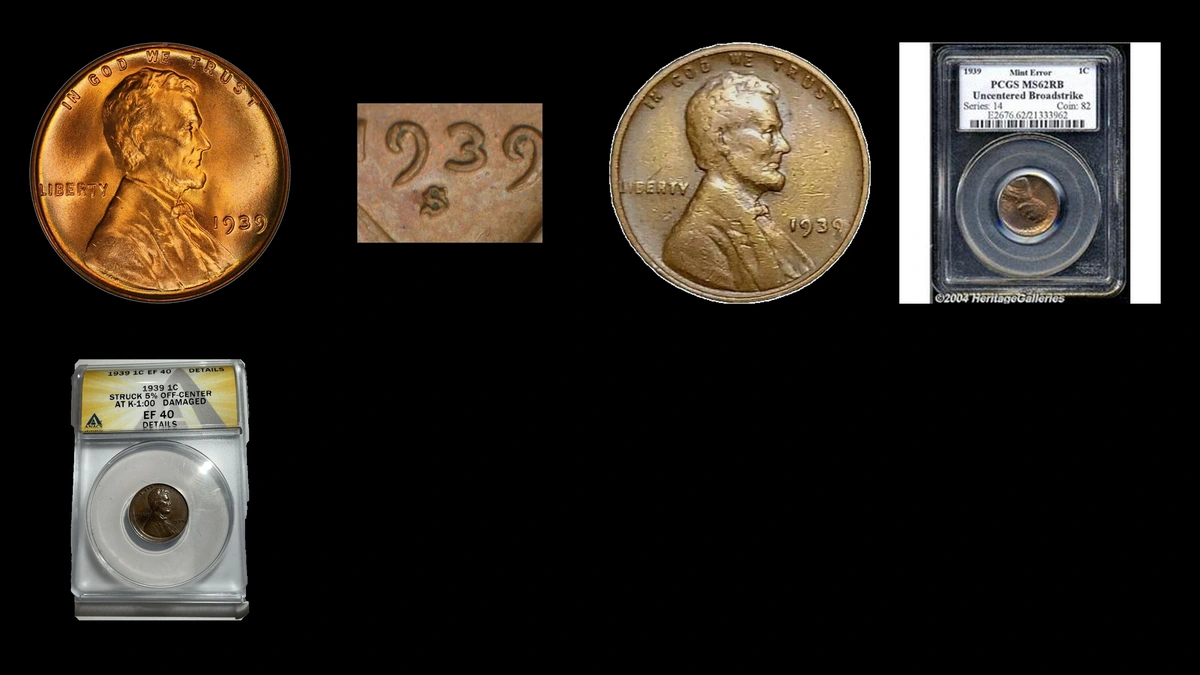
A Philadelphia doubled-front cent brought $715 at GreatCollections in June 2014. Estimated values for 1939 Wheat penny errors run from $2–$1,500, with much smaller amounts attached to many genuine minor features.
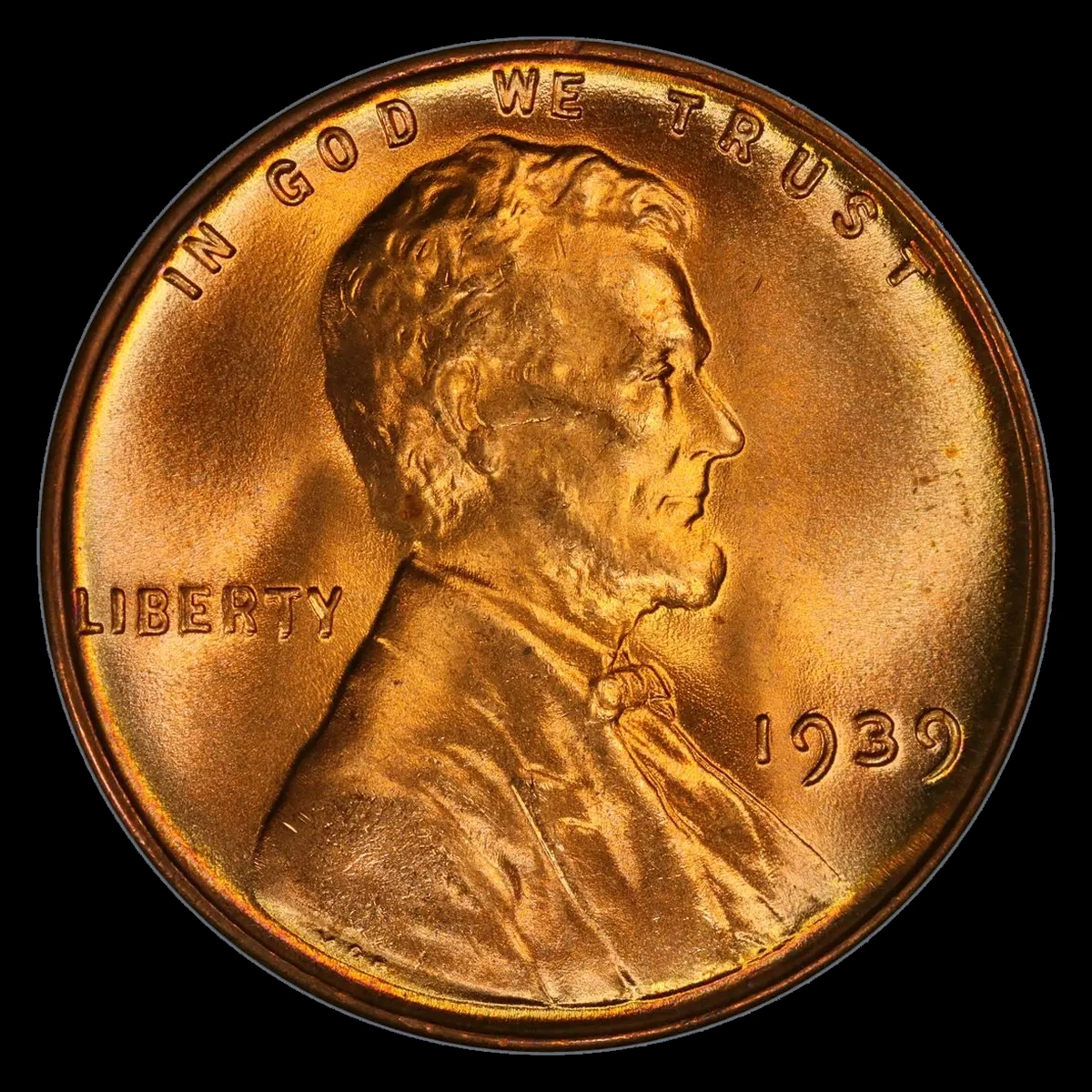
Inspect Lincoln’s eye and the lettering first, then compare the complete outline on both faces. Normal cents are copper alloy throughout, weigh 3.11 grams, measure 19.05 mm, and have a smooth edge.
| Where to look | Error or variety | Estimated value |
|---|---|---|
| Eyelid, date, and inscriptions | Doubled die | $10–$1,500 |
| D or S below the date | Repunched mintmark | $5–$150 |
| Gap between B and E | BIE chip | $2–$50 |
| Interrupted surface detail | Fragment strike-through | $25–$250 |
| Missing edge section | Clipped planchet | $25–$300 |
| Wide border with complete design | Uncentered broadstrike | $30–$200 |
| Plain crescent with lost design | Off-center strike | $40–$500 |
1. 1939 Penny An Extra Eyelid or Repeated Letters: Doubled Die Error
The stronger Philadelphia front variety repeats detail in ERTY, the first two date digits, and several portrait areas. Smaller varieties may show only a fine eyelid line, while reverse varieties affect Wheat-side lettering and other details.
A doubled die carried the extra design before making the coin. The penny did not need two strikes to receive it.
How to Identify
Choose the mint and compare several features, not just the eye. Philadelphia FS-101 needs its broader pattern; San Francisco WDDO-001 has supporting marks near the bow tie and beside T in CENT.
San Francisco WDDO-002 accompanies a northeast S-over-S mintmark, a separate feature that also needs checking. A reverse variety requires a Wheat-side comparison, and flat shaved-looking ledges can indicate mechanical doubling instead.
What It’s Worth
Confirmed 1939 doubled dies have an estimated value of $10–$1,500. Minor patterns fit about $10–$100, while stronger attractive varieties can fit roughly $100–$1,500.
PCGS CoinFacts records a Philadelphia MS65 doubled-front sale of $715 in June 2014. That result is not a standard price for every faint eyelid variety.
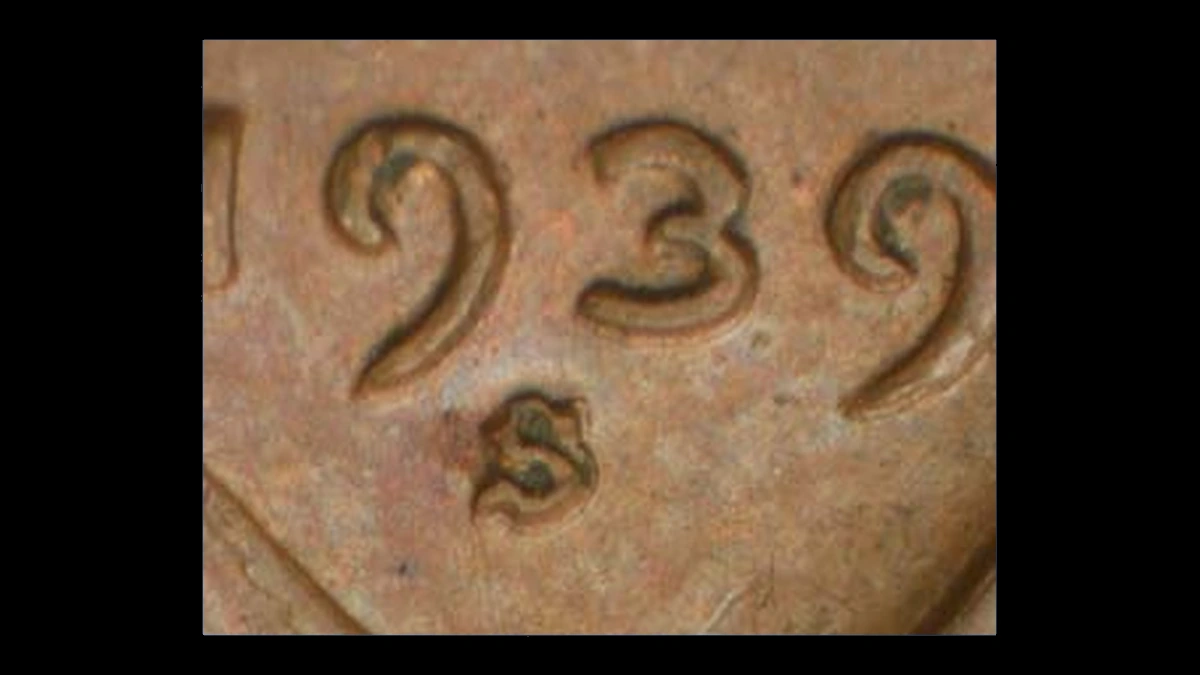
2. 1939 Penny Another D or S Stroke Appears: Repunched Mintmark Error
A second placement of the letter punch could leave an earlier mintmark partly visible in the die. Recorded Denver patterns include north, west, and south remnants, with shifted or tilted S patterns for San Francisco.
How to Identify
Trace the extra curve or upright around the mint letter and compare its exact direction with the appropriate variety. A flat shelf, attached metal seam, or damaged letter needs another explanation.
The northeast S-over-S can occur with an extra eyelid, but finding the eye line does not prove the mintmark attribution. Examine the two features independently on the same coin.
What It’s Worth
Identified 1939 D/D and S/S varieties have an estimated value of $5–$150. Clear earlier strokes and preserved copper surfaces support stronger comparisons.
No individual auction establishes this range. A combined eyelid and repunched-S specimen receives one whole-coin value rather than the price of two separate coins.
3. 1939 Penny LIBERTY Appears to Gain an I: BIE Chip Error
A raised bar can fill the space between B and E, creating the BIE nickname. A small chip missing from the die allowed metal to form the added shape during striking.
How to Identify
Illuminate the B–E gap from the side and inspect the base of the raised feature. Dirt or metal pushed up beside a scrape can imitate a short bar.
The mark must occupy that specific letter space to be BIE. Leave attached material alone rather than scraping it to test whether it is part of the coin.
What It’s Worth
A genuine 1939 BIE chip has an estimated value of $2–$50. A neat bar and clear surrounding letters are more appealing than a blurred bump on worn surfaces.
This is an estimate for small Wheat-cent chips without a confirmed sale of the reported 1939 feature. It is not a guaranteed amount added to the ordinary coin’s value.
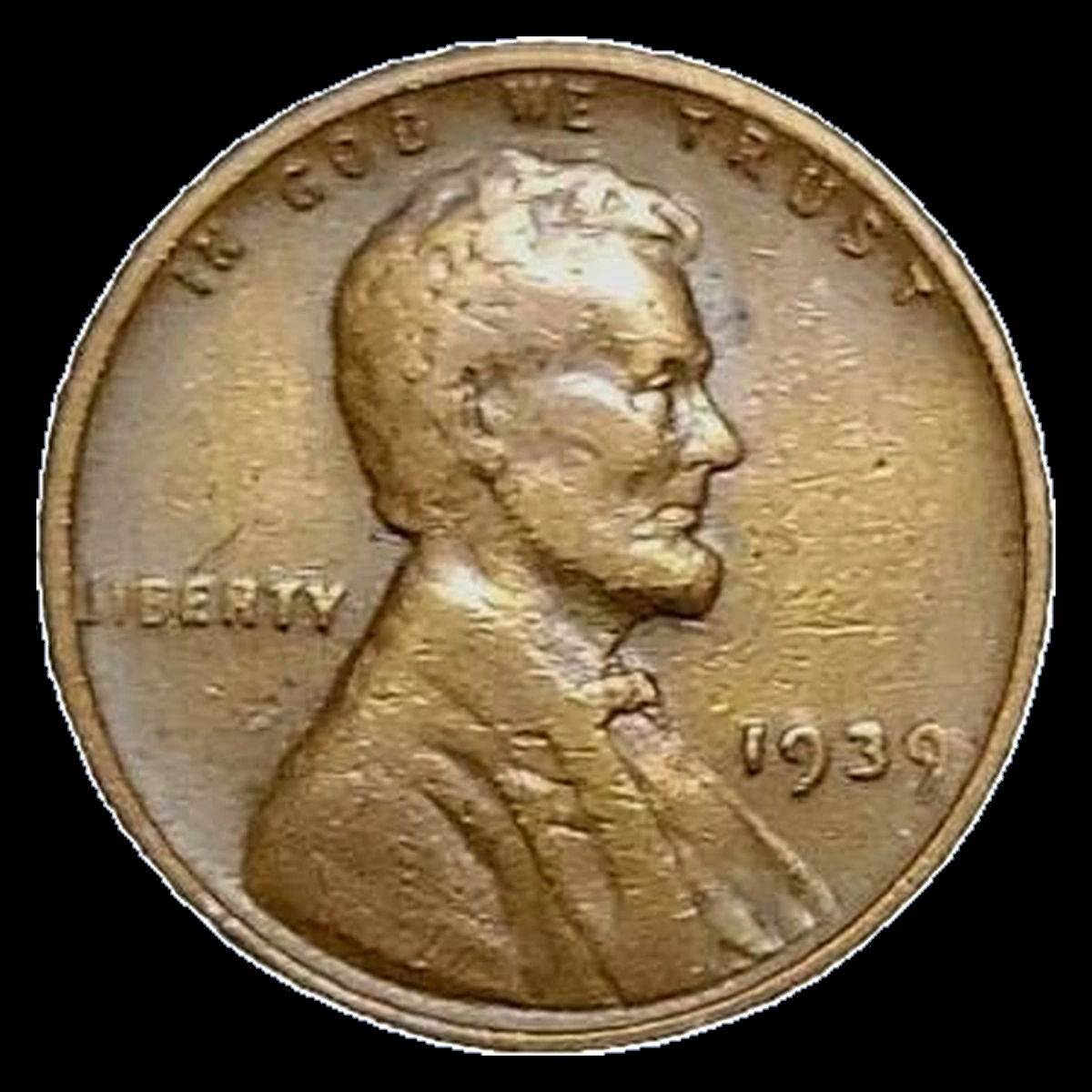
4. 1939 Penny A Fragment Interrupts the Surface: Struck-Through Error
An irregular depression can form where a fragment blocks the die from reaching a blank. A Philadelphia 1939 cent was cataloged with this error and graded ANACS MS65 Red.
How to Identify
Follow the transition between original struck design and the affected area under changing light. Fresh gouges or pushed-aside metal can indicate damage after production.
The word “fragment” establishes neither its material nor whether it remains attached. Do not name wire or wood without visible evidence, and leave any surviving material in place.
What It’s Worth
A genuine comparable 1939 fragment strike-through has an estimated value of $25–$250. Size, visibility, and preservation guide the comparison.
The ANACS MS65 Red coin sold for $36 in April 2003. That historical result shows that a high numerical grade does not automatically make a small error expensive.
5. 1939 Penny The Blank Was Incomplete: Clipped Planchet Error
A clipped planchet lacks metal before the design is impressed. Two recorded Philadelphia 1939 examples were graded ANACS MS64 Brown and MS65 Brown, but those grades do not describe identical clip shapes.
How to Identify
Check how the rim and nearby lettering formed around the gap. Opposite-rim weakness may support the explanation, although it can be faint or absent.
Reduced weight fits missing metal but also fits later cutting. Inspect the boundary for fresh saw marks or filing and compare each specimen’s actual outline separately.
What It’s Worth
Genuine 1939 clipped cents have an estimated value of $25–$300. Clip shape and visibility matter alongside surface preservation.
The MS64 Brown example sold for $180 in January 2023, while the separate MS65 Brown coin brought $114 that month. The higher grade did not bring more, illustrating the importance of the individual error.
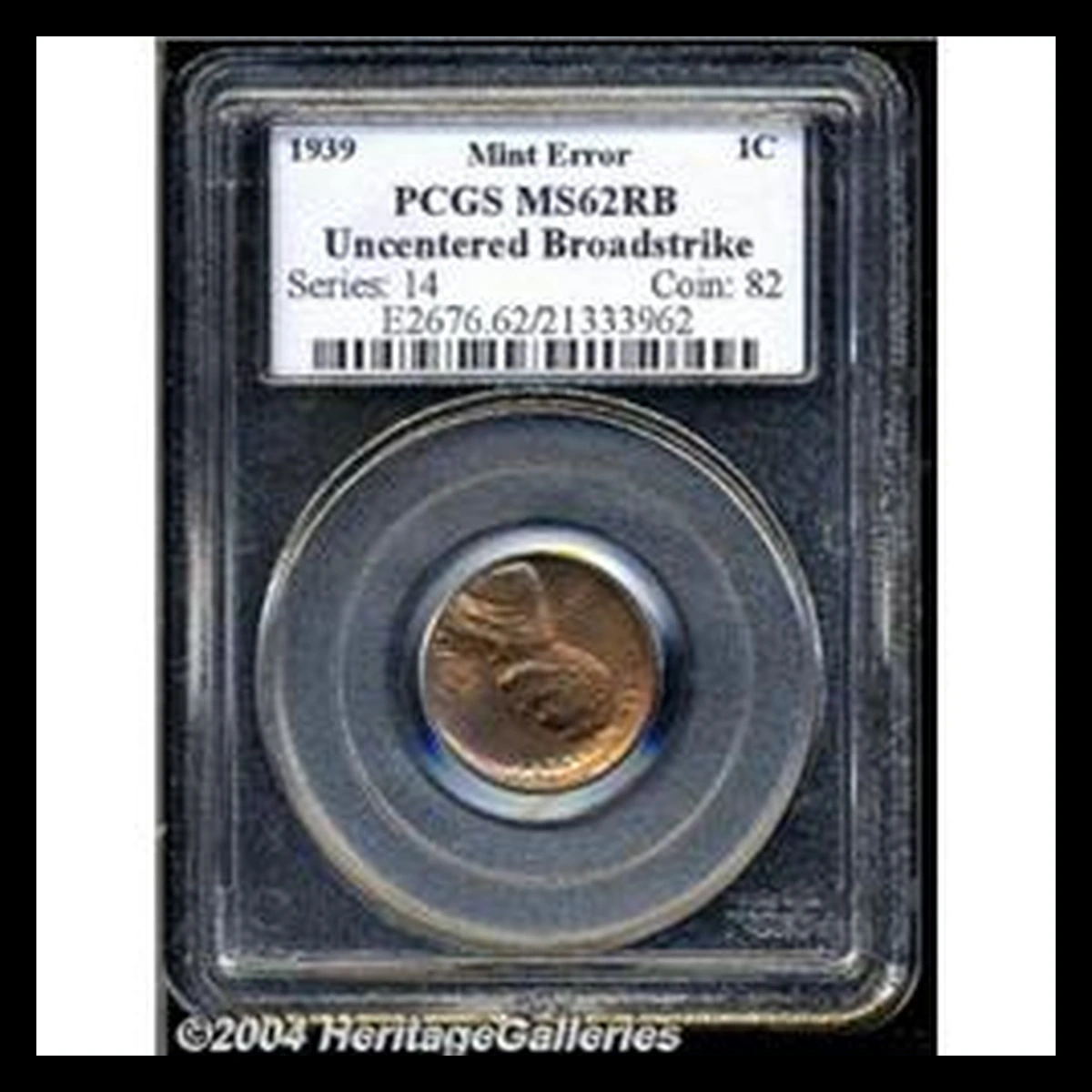
6. 1939 Penny The Design Sits Low but Remains Complete: Uncentered Broadstrike Error
A documented Philadelphia broadstrike has a wider band of metal near twelve o’clock. It spread unevenly because the collar did not contain it normally, while keeping the complete design.
How to Identify
Inspect the lower lettering as well as the wide upper border. Design lost beyond the metal would suggest an off-center strike instead.
Measure several widths and check for hammering along the edge or crushed detail. Another broadstrike need not spread in the same direction as the documented example.
What It’s Worth
A genuine comparable 1939 broadstrike has an estimated value of $30–$200. Natural expansion and preserved original detail improve its appeal.
The PCGS MS62 Red and Brown example sold for $46 in June 2004. It had fingerprints on both faces, a condition limitation rather than an added source of value.
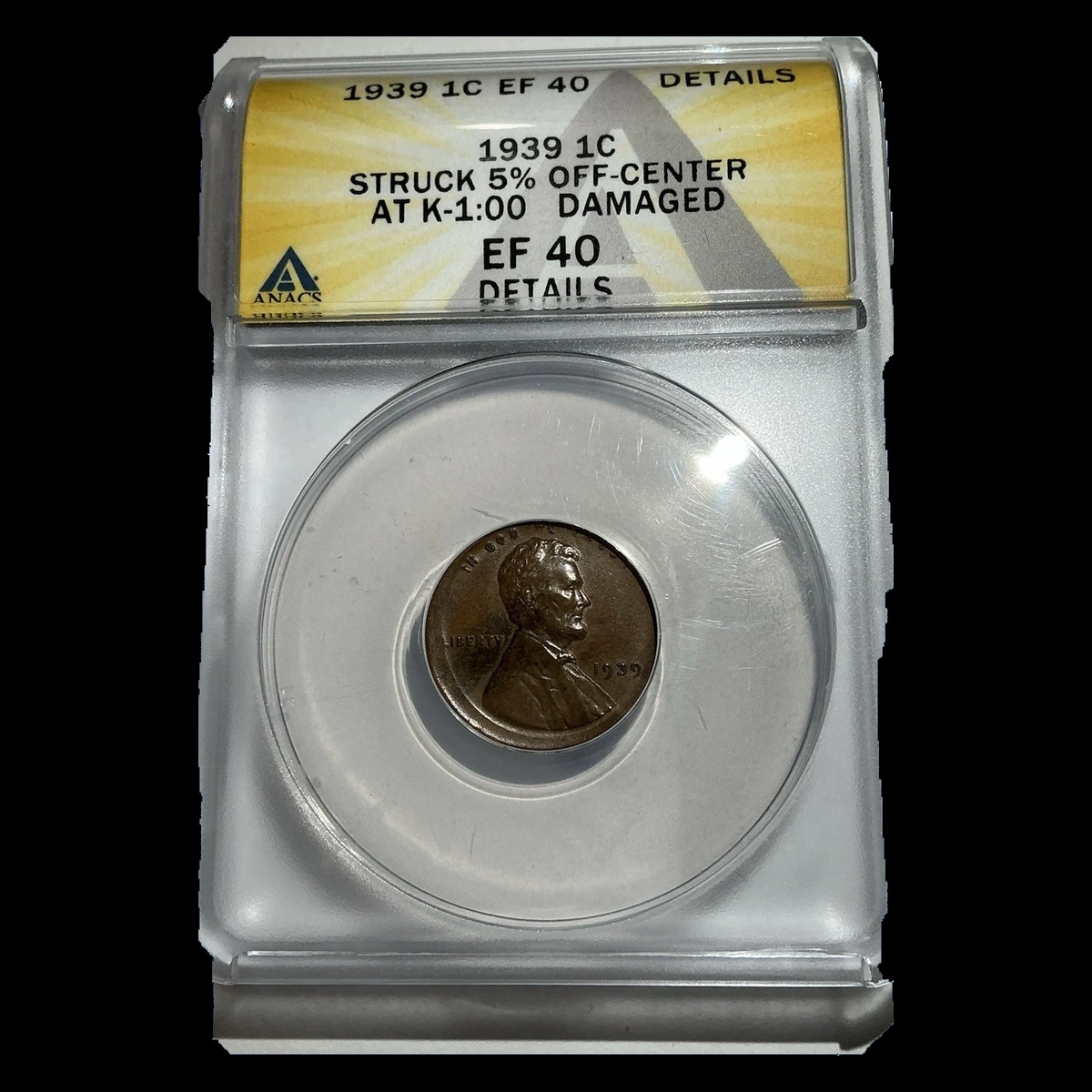
7. 1939 Penny The Design Ends beside Unused Metal: Off-Center Strike Error
A recorded Philadelphia 1939 cent was struck 25% off center. Its partial designs and original plain area show where the blank missed the intended striking position.
How to Identify
Compare both faces for compatible displacement and keep the readable date connected to the full outline. A portrait that merely appears low is insufficient.
Examine the transition into unstruck metal for polishing or grinding that could have erased a finished design. Cutting or hammering the edge also has a different origin.
What It’s Worth
An identified 1939 off-center cent has an estimated value of $40–$500. Useful date visibility and clear original surfaces matter alongside the shift.
The PCGS AU55 25% example sold for $105 on March 20, 2023. Its light wear and specific appearance do not set the price of every coin with the same percentage.
Conclusion
An extra eyelid is a useful lead, but it needs the correct mint and supporting pattern before becoming a variety attribution. Larger outline errors also depend on whether the intended design remains complete or runs beyond the metal.
The recorded clip sales show why grade alone cannot settle value. Keep each specimen’s shape, surface, and auction context together, and preserve retained material rather than altering a coin to make its feature easier to see.