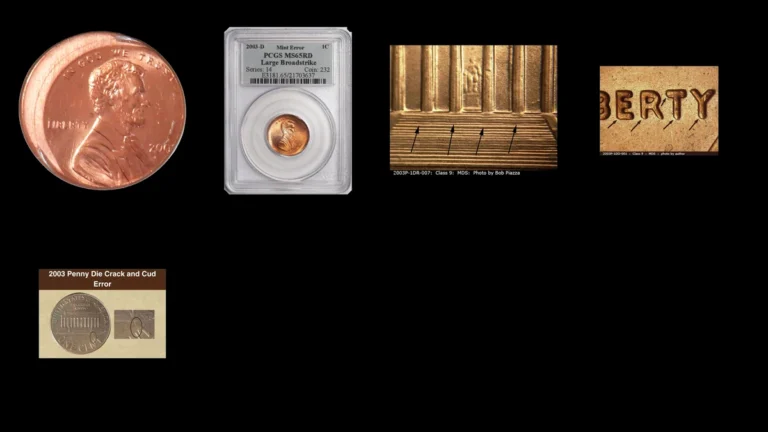
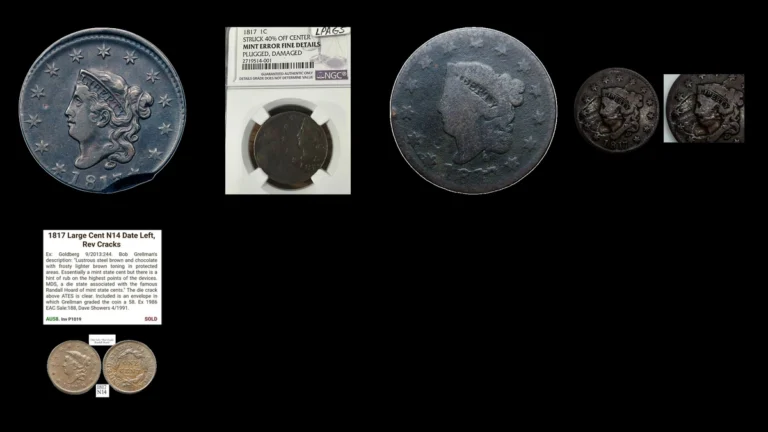
Rare 1978 Penny Errors (List & Pictures)
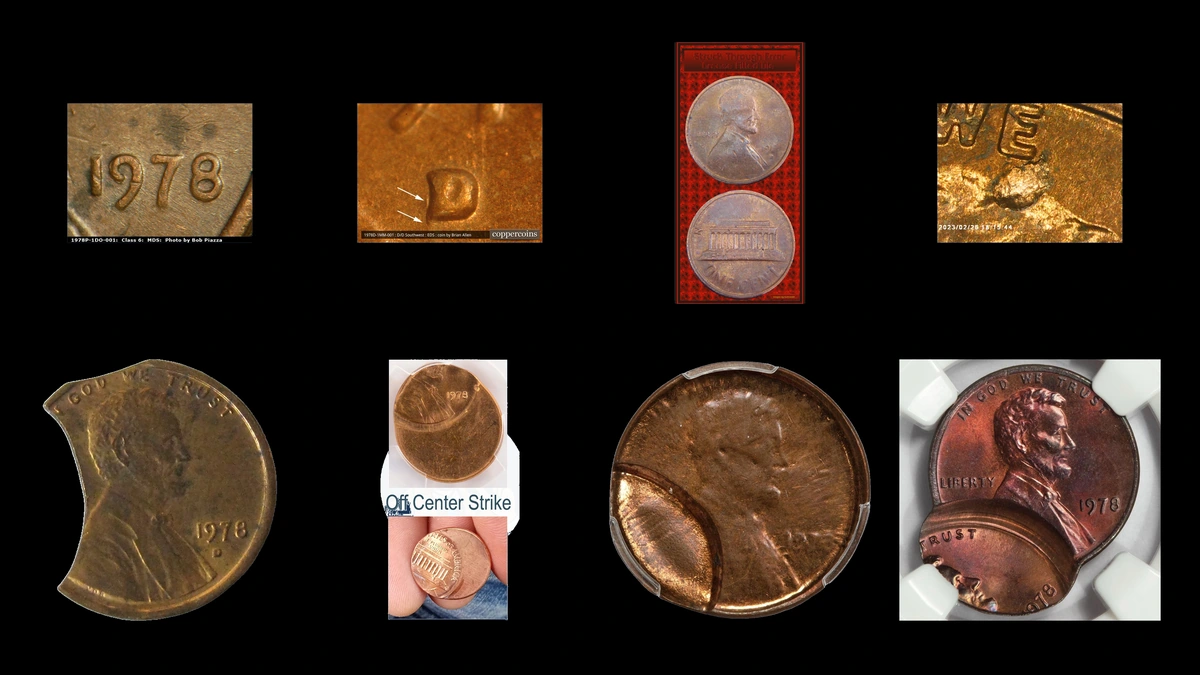
A missing section and a misplaced design are separate clues, even when they share one coin. A 1978 cent combining both sold for $432 in May 2021.
These 1978 penny errors range from small lettering differences to caps and wrong blanks, with estimates of $2–$3,000. Check the visible feature first, using a normal 3.11-gram copper-alloy cent as the starting point for weight.
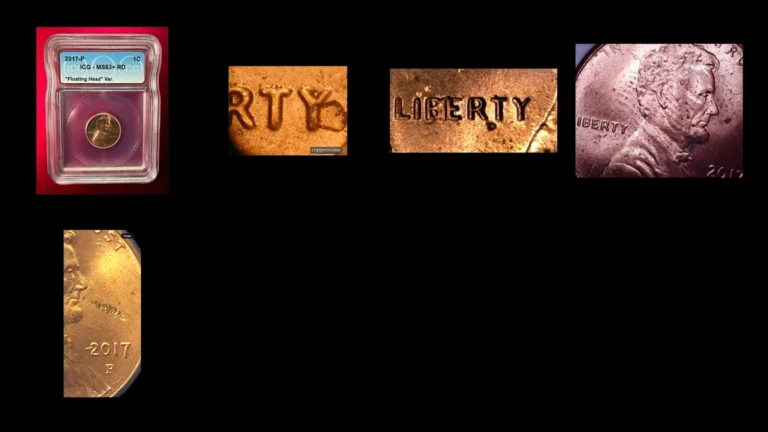
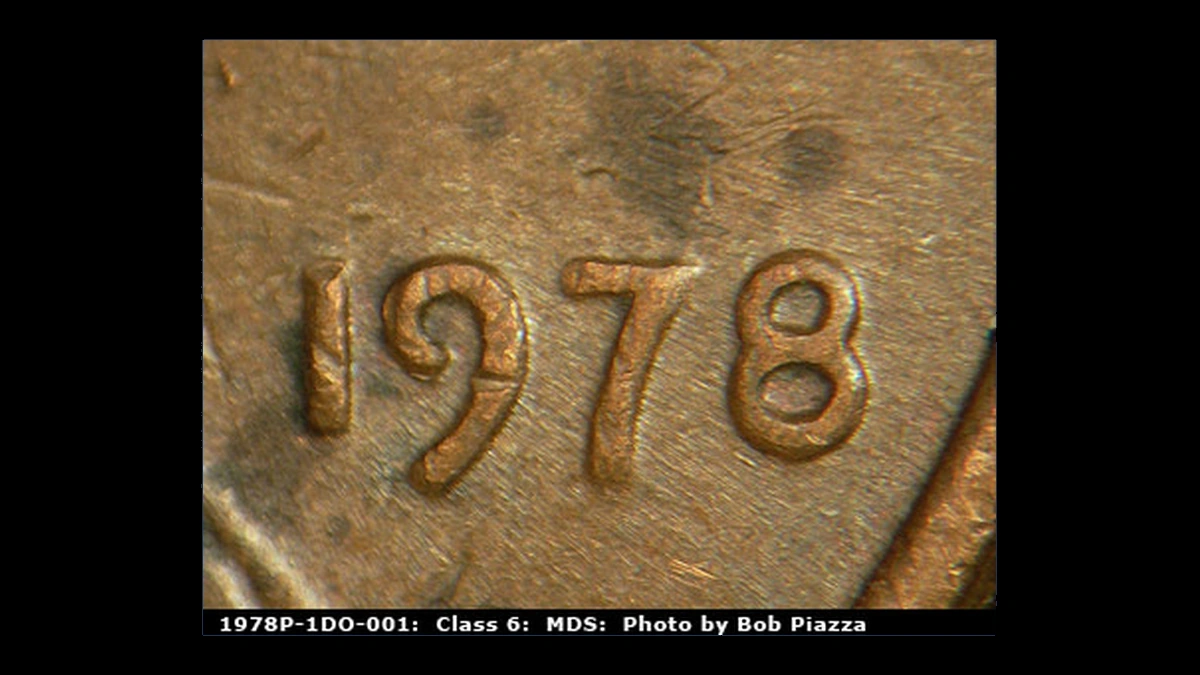
1. 1978 Penny A Small Fork Appears in TRUST: Doubled Front Error
The listed Philadelphia pattern includes a fork on R’s lower leg in TRUST. Denver has a separate pattern with thicker WE TRUST and a split lower-right leg on R.
The repeated detail belonged to the die before striking. It is more specific than generally bold lettering.
How to Identify
Compare the actual R shape with the appropriate mint’s photograph. Denver’s supporting mark lies between the lower U and S, while the no-mintmark variety has a different mark near LIBERTY’s R.
Supporting lines cannot replace the main design match. Flat shelves caused by strike movement are different from the listed fork and thickened contours.
What It’s Worth
$5–$150 is the estimate for identified minor doubled-front varieties. Clear letter shapes on an undamaged surface make useful comparisons.
No major auction record is assigned to these small patterns. Wear or swelling that hides the fork reduces the strength of the identification.
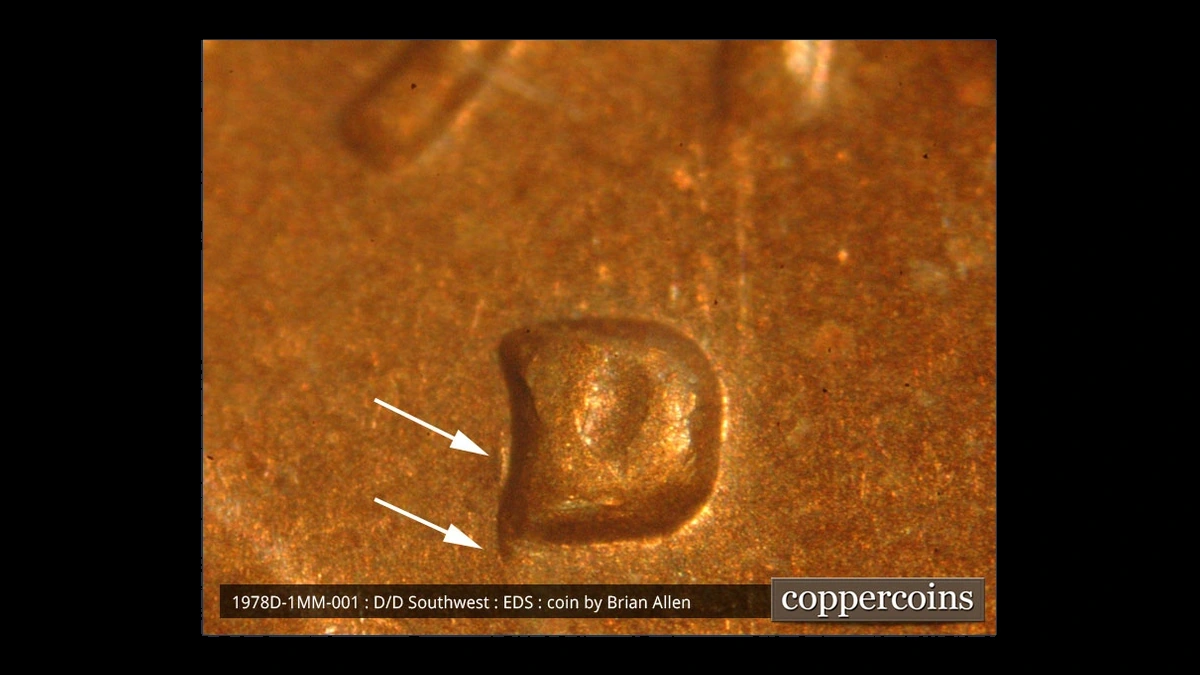
2. 1978 Penny Another Mint-Letter Stroke Survives: Repunched D or Reported S Error
One Denver variety has a second D extending below-left of the main letter. Another has a tilted duplicate from a different placement of the punch.
A separate report concerns a repunched S on a Proof. It needs its own specimen match rather than evidence borrowed from a Denver cent.
How to Identify
Read the mint letter first, then trace the extra outline. A shifted D and a tilted D should not be identified with the same required strokes.
For an S candidate, confirm both the original Proof finish and the repeated letter shape. Brightness alone establishes neither.
What It’s Worth
$3–$150 is the estimate for identified Denver repunches. A separately authenticated Proof S pattern can be compared around $25–$250.
The Proof figure is conditional, not a supplied sale or confirmed specialist number for the year-guide report. A random bump beside either letter does not qualify.
3. 1978 Penny Design Fragments Seem to Return to the Same Face: Reported Counterclash Error
A counterclash begins with one die transferring detail to the other. A later contact can return that detail to the original die at a different position.
The reported 1978-D category has no particular location established in the supplied guide. A matching documented pattern is needed before naming an extra mark.
How to Identify
Photograph both faces and find a recognizable fragment of Lincoln’s design away from its usual position. The proposed return path should explain the shape.
Scratches, die-polish lines, and flat strike doubling can create other extra-looking marks. An unexplained ridge alone cannot establish repeated transfers.
What It’s Worth
$25–$300 is a conditional estimate for a confirmed counterclash. Clear design evidence makes the proposed sequence easier for another collector to follow.
The range draws on related Memorial-cent clashes. It is neither a recovered 1978 sale nor proof that an unmatched candidate has this origin.
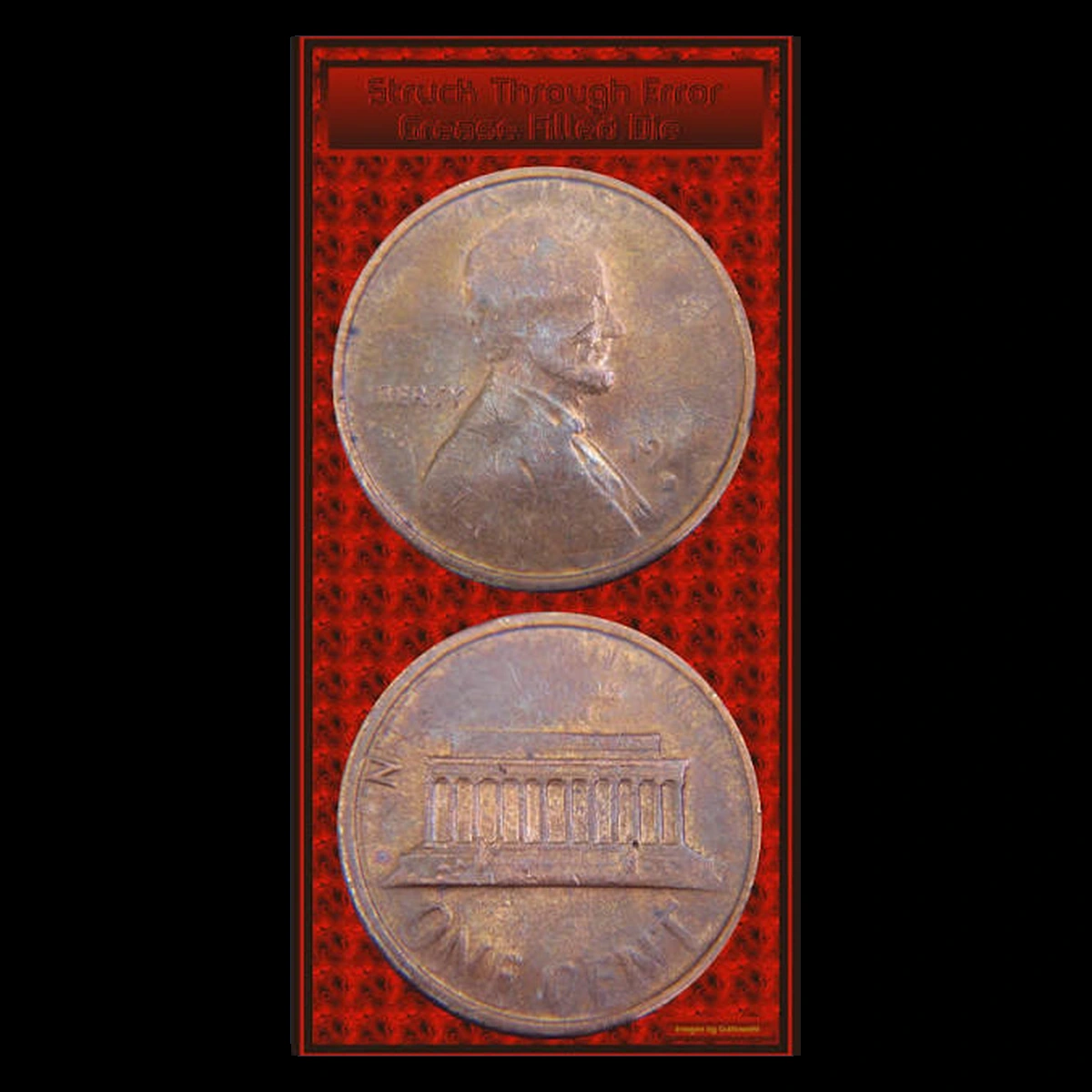
4. 1978 Penny A Letter Fails to Form: Filled-Die Detail Error
The year report mentions weak areas in LIBERTY, the back motto, and Denver’s D. Material inside a die can block these recesses and prevent normal detail from forming.
Those locations describe separate reports. They do not show that one obstruction removed all the details on the same penny.
How to Identify
Compare weak letters with nearby sharp detail and Lincoln’s high points. Wear, scraping, or corrosion can also remove design after minting.
Ordinary Philadelphia cents already lack a mintmark. An empty space below the date cannot prove a blocked Denver D without other reliable identifying evidence.
What It’s Worth
$2–$100 is the estimate for an authenticated blocked-design error. A clear local failure surrounded by strong detail is easier to demonstrate than general weakness.
A 2021-D grease struck-through cent sold for $84 in September 2025. The comparison concerns its blocked impression, not matching metal or a premium for every no-mintmark penny.
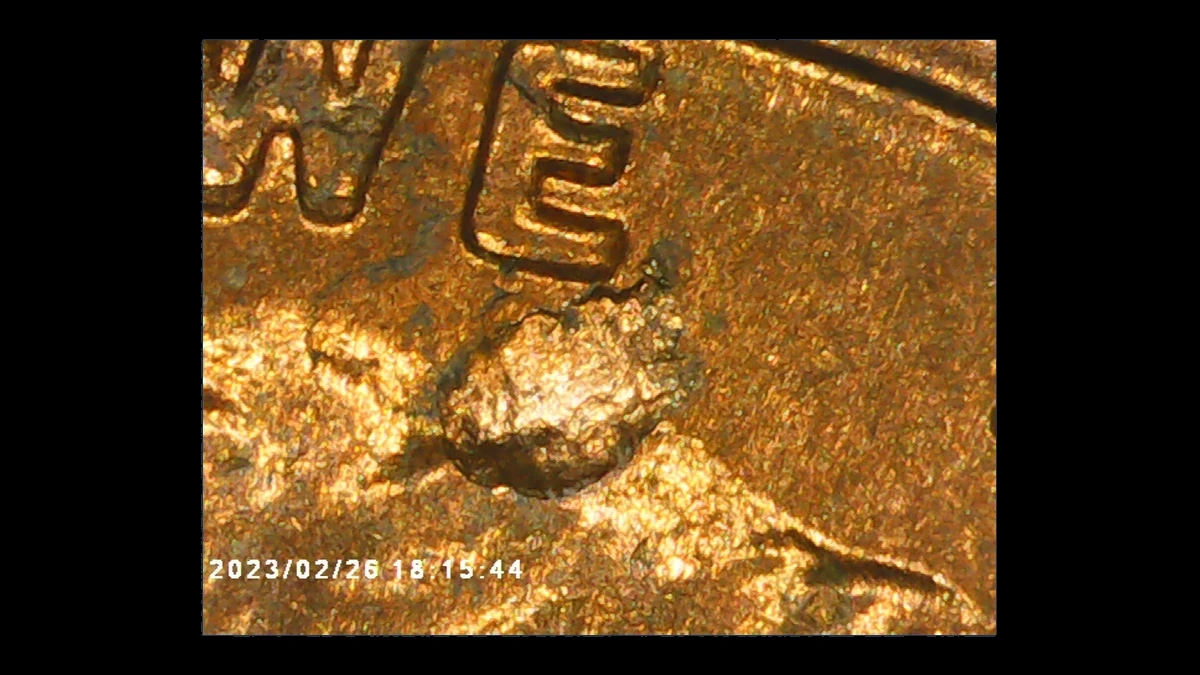
5. 1978 Penny A Thin Patch of Metal Flakes Away: Lamination Error
A recorded PCGS MS67+ Red cent has a shallow mint-made blank flake near the center of its back. The copper-alloy metal separated locally.
This is not copper plating peeling from zinc, as on later cents. The same listing mentions front doubling without identifying a named variety.
How to Identify
Examine the shallow boundary and the nearby struck surface without scraping it. Cutting marks or a gouge can explain a different kind of missing patch.
The separately reported front doubling does not identify the flake. Leave any remaining loose metal attached.
What It’s Worth
$5–$150 is a small-flake error comparison range. Size, clarity, and surrounding preservation influence collector interest.
The MS67+ Red coin may also have a substantial ordinary grade premium. Its complete value should not be attributed solely to the small separation.
6. 1978 Penny Raised Metal Fills Letters or the Rim: BIE and Cuds Error
A BIE chip bridges the B–E gap in LIBERTY, while a larger rim-connected die break makes a cud. Cataloged 1978 examples have different sizes and outlines.
One Denver cud also has cap-related distortion. Another entry notes rotation without providing an angle.
How to Identify
Trace the raised patch to its boundary and choose the correct mint’s comparison. BIE requires the B–E position; a cud requires contact with the rim.
Check other claimed effects separately. A raised lump does not establish a large rotation or prove that every cud coin was struck beneath a cap.
What It’s Worth
$2–$30 is the estimate for small BIE chips, with larger identified cuds around $30–$750. Several related effects on one coin contribute to one total.
A 2021-D retained cud brought $186 in September 2025. That different-metal break is a related comparison, not a sale of a cataloged 1978 cud.
7. 1978 Penny The Design Remains Complete inside Extra Width: Broadstrike Error
Without normal collar restraint, a blank can spread beyond its intended edge. The 1978 guide reports broadstriking without naming a certified specimen or fixed expansion measurement.
How to Identify
Read all outer letters on both faces before comparing width. A complete design inside naturally expanded metal supports a broadstrike.
Later hammering can widen a coin while crushing Lincoln and the Memorial. An ordinary cent starts near 19.05 millimeters across, but extra width alone does not establish when it formed.
What It’s Worth
$10–$350 is the estimate for genuine 1978 broadstrikes. Clear spreading with well-preserved detail makes a stronger example than slight enlargement on a worn coin.
A copper-alloy 1980-D broadstrike sold for $57 in March 2021. This is a nearby-year comparison for the same basic mechanism.
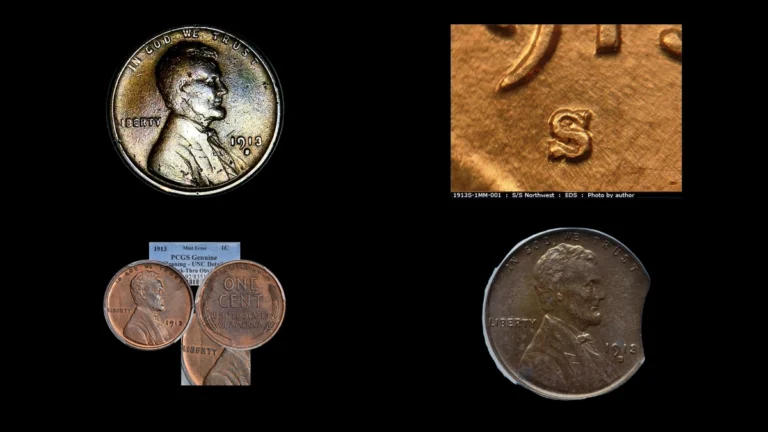
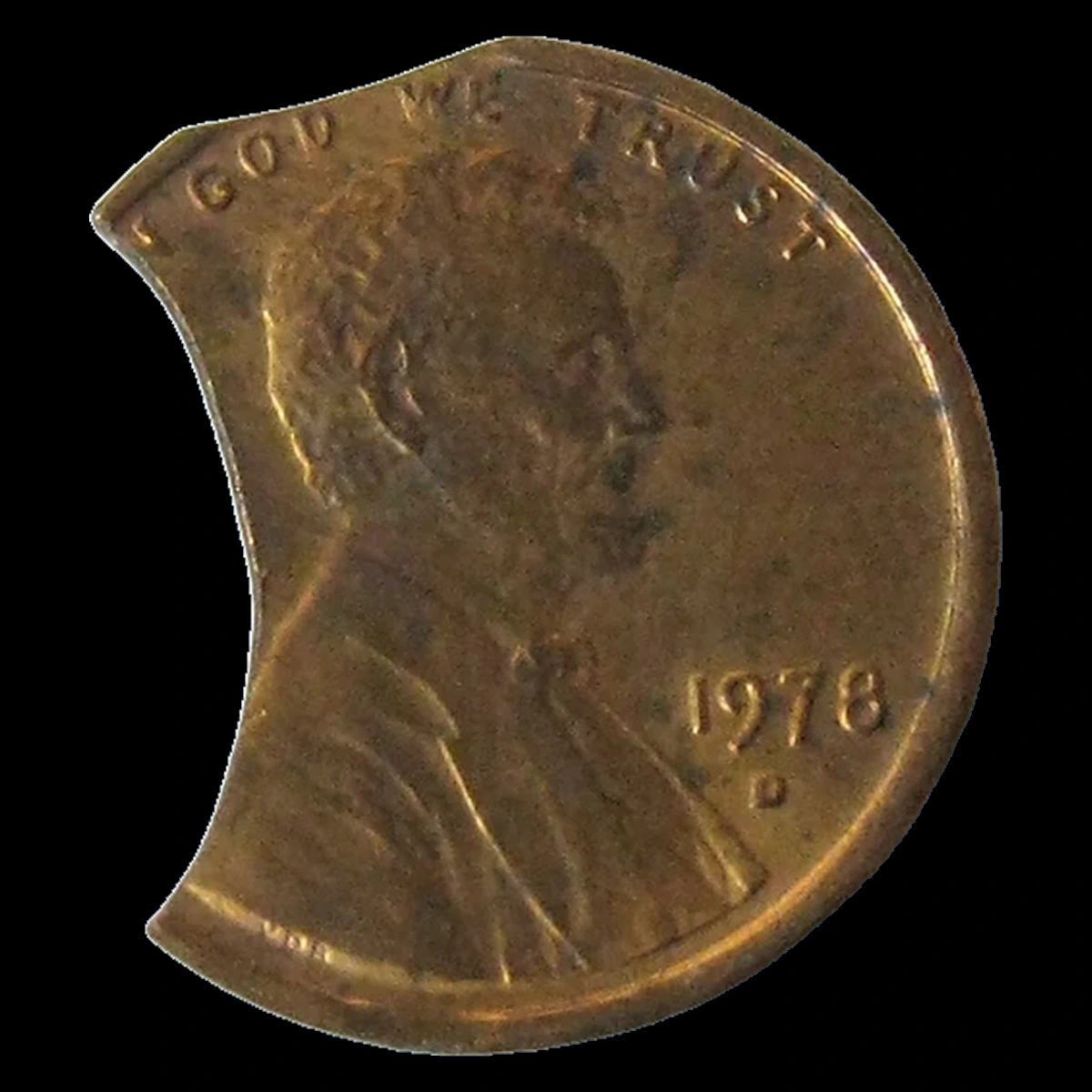
8. 1978 Penny Metal Is Missing beside a Displaced Picture: Clip and Off-Center Combination Error
The documented no-mintmark coin has a 15% straight clip and a strike about 10% off center. The clip removed blank metal; the shift left some remaining metal unstruck.
A separate Denver clip appears in a mixed lot without a firmly described gap shape. Other coins in that lot cannot supply its missing details.
How to Identify
Trace the physical outline first, then trace the border of the struck design. These two boundaries reveal the different events.
Inspect how the rim meets the missing section and look for filing or sharp burrs. Reduced weight alone does not prove an original clip.
What It’s Worth
$15–$650 is the estimate across ordinary clips and clearer combinations. The whole coin is valued once.
The PCGS MS64 Brown combination sold for $432 on May 22, 2021. The separate mixed four-coin lot does not establish an individual price for its Denver clip.
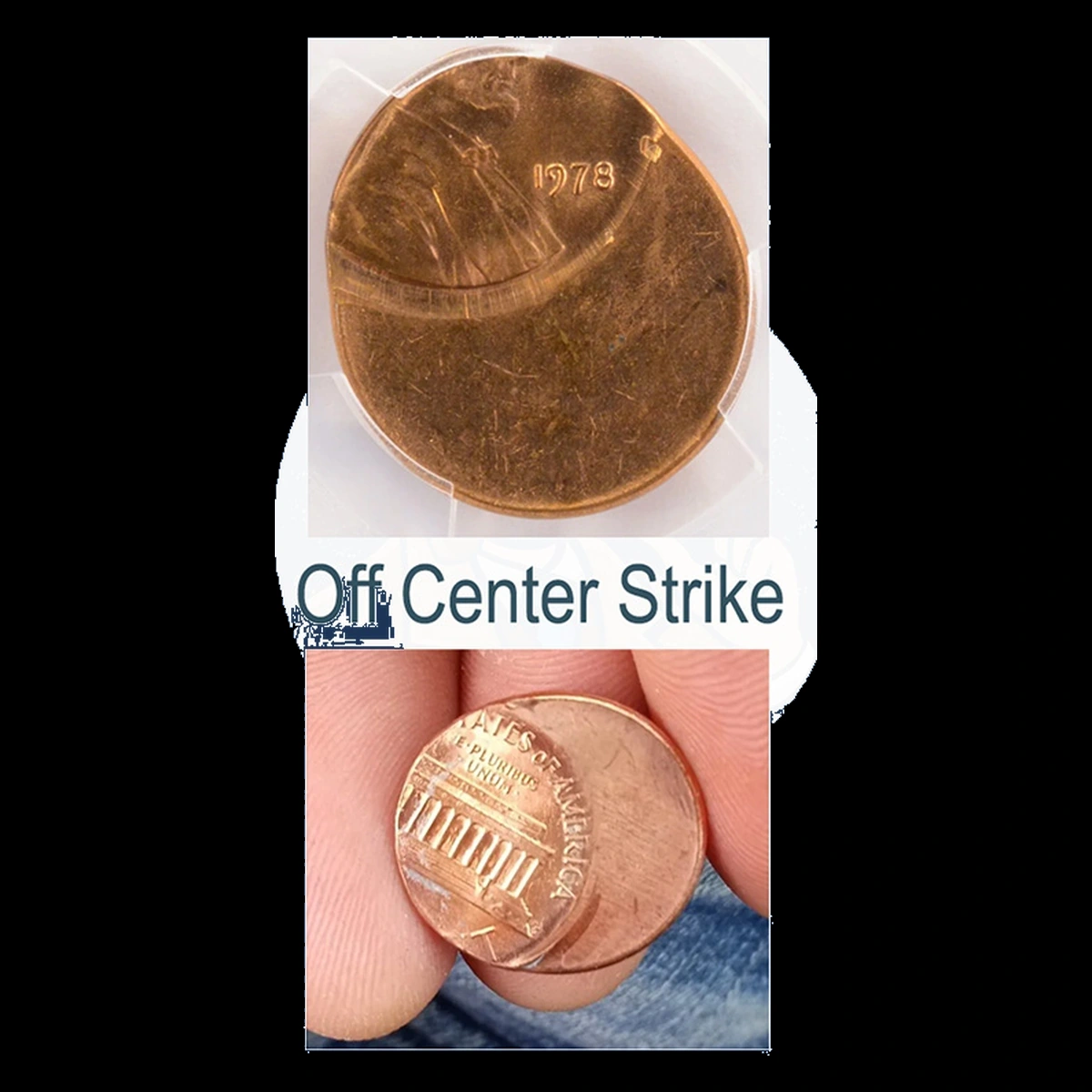
9. 1978 Penny A Plain Crescent Replaces Part of the Picture: Off-Center Strike Error
One recorded Philadelphia coin is about 60% off center toward the lower left. A separate Denver example is 50% off center toward the upper right and has later scratches.
Another Denver report describes a 70% shift. These directions, percentages, and conditions belong to individual specimens.
How to Identify
Find the remaining date and any D before matching the amount of displacement. Compare the plain area and incomplete design on both faces.
A shifted die may affect one face alone. Grinding or cutting can also imitate a bare area after the coin was struck.
What It’s Worth
$20–$600 is the estimate for identified dated examples. Preserved identity and natural surfaces matter alongside the displacement.
A 1984-D cent 55% off center sold for $41 in September 2024. The scratched 1978-D shared a lot with a 1979 coin, so that lot total cannot be assigned to it alone.
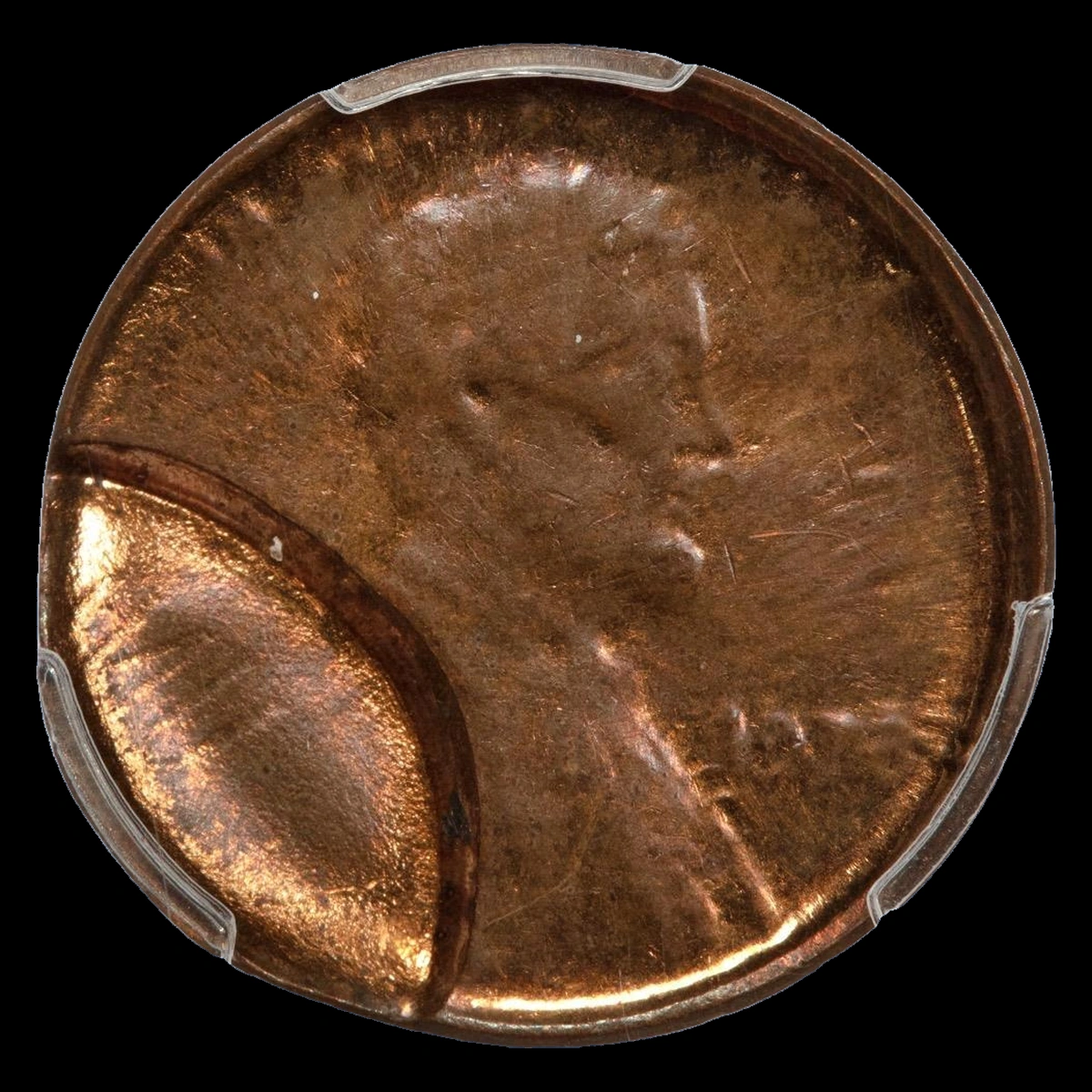
10. 1978 Penny A Covering Coin Distorts the New Penny: Capped-Die Strike Error
A reported 1978 receiving coin has a softened front and a clearer back from being struck beneath a die cap. A separate example combines a covered strike with about 15% brockage.
The cap was the coin stuck to the die. The receiving penny beneath it could remain relatively flat.
How to Identify
Follow a connected distortion pattern across the portrait rather than treating ordinary wear as a cap effect. Compare the opposite face’s detail.
For the combined example, find a backward image recessed into the surface. A soft Lincoln portrait alone does not establish brockage.
What It’s Worth
$50–$500 is the estimate for cap-struck receivers; a clear partial-brockage combination can fit $100–$1,000. Both effects must be present on the same coin for the latter comparison.
A 1995 late-stage cap strike sold for $180 in March 2025. That is a receiving-coin sale, not a price for a tall die cap.
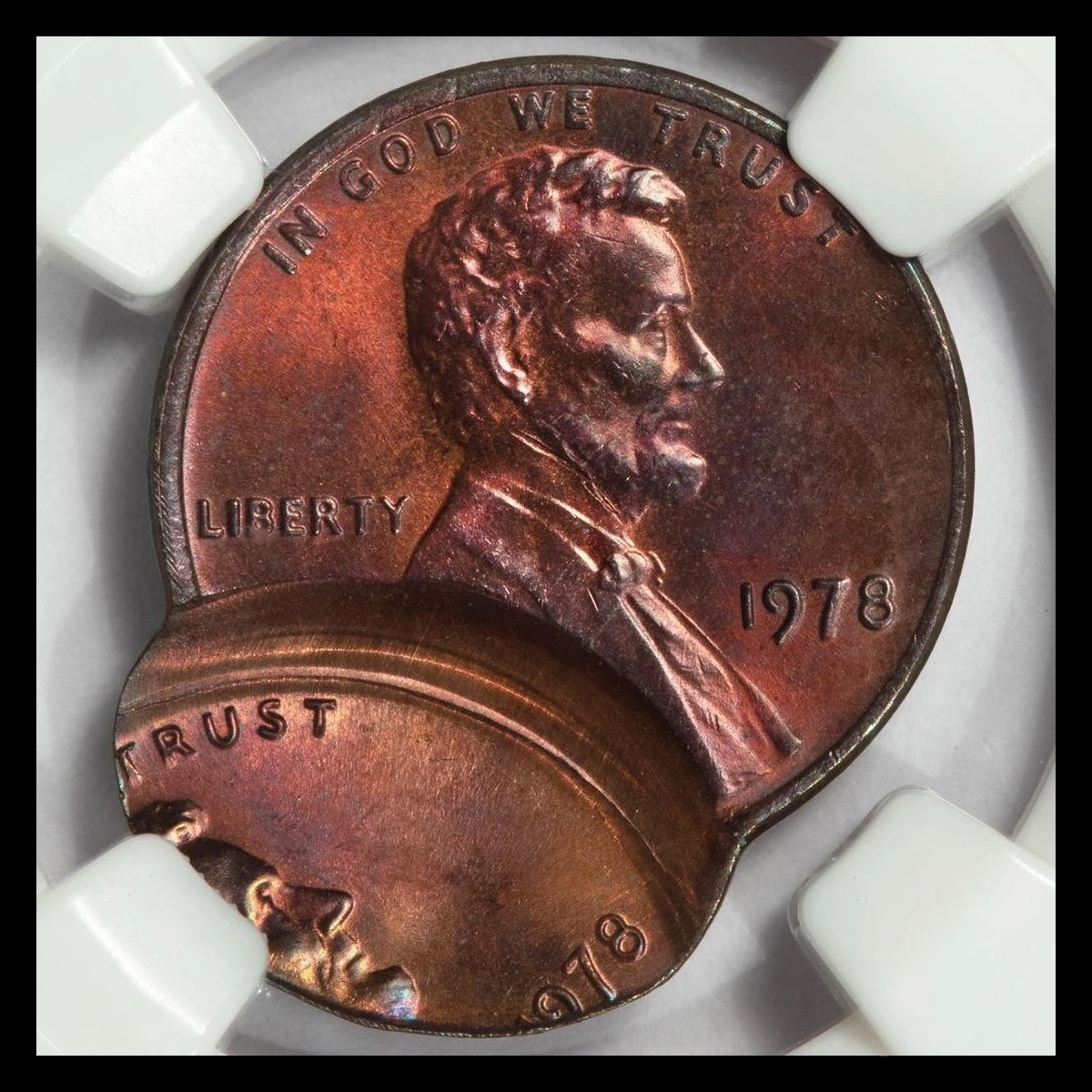
11. 1978 Penny A Small Second Picture Sits near the Edge: Double Strike Error
The no-mintmark ANACS MS60 Red and Brown example has a second strike about 90% off center. A different Denver coin has a 75% off-center second strike with one face blocked.
How to Identify
Trace a recognizable design fragment from each blow and inspect the other face. Two connected positions are stronger evidence than thin doubled ledges beside letters.
The Denver record does not name the blocked face. Its 75% figure cannot answer that question without the coin or matching photographs.
What It’s Worth
$50–$1,000 is the estimate for confirmed double strikes of these kinds. A larger percentage is not automatically worth more if little design remains.
A copper-alloy 1979 cent with an off-center second strike brought $204 in September 2023. The separate 1978 specimens need their own condition comparisons.
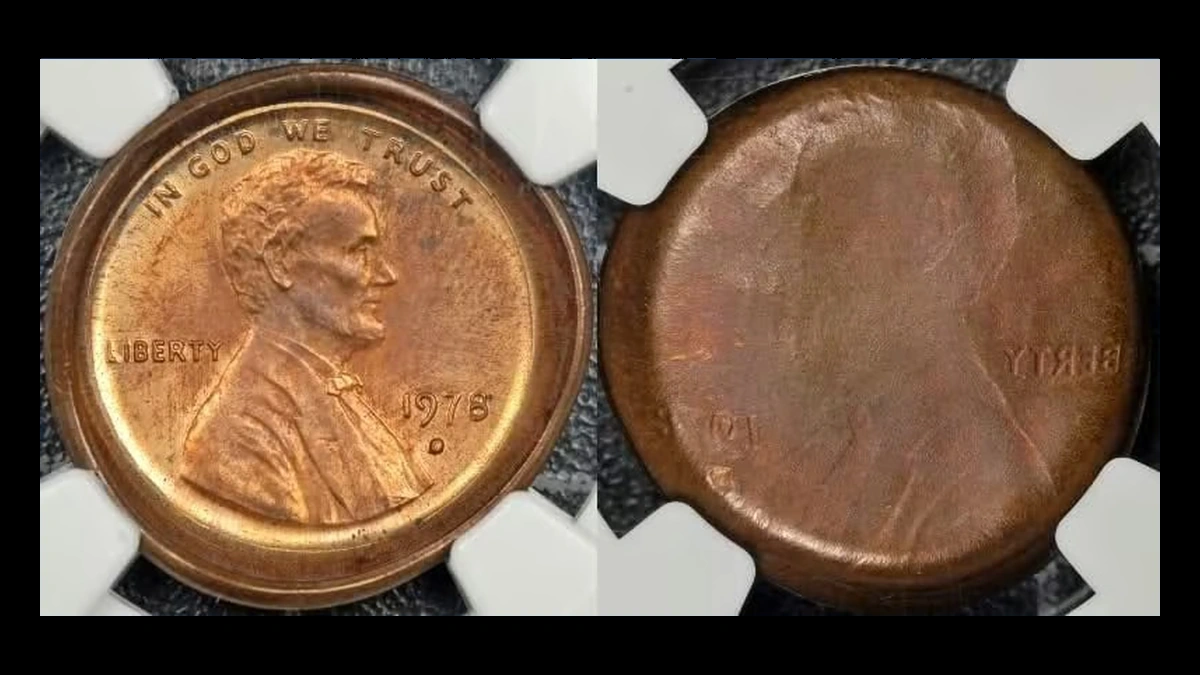
12. 1978 Penny The Cent Rises into a Deep Cup: Die Cap Error
The reported 1978-D NGC MS65 Red and Brown stayed attached to a die while later blows stretched its walls. Unlike a receiving coin, this object became the cap itself.
The collector report describes stretched mirror detail on the back, including a repeated part of Lincoln’s nose.
How to Identify
Support the coin and follow its original design into the rising metal. Sharp forced folds, plier marks, or repairs can reveal later changes.
The repeated nose belongs within the reported distorted mirror image. It should not automatically be counted as another full strike.
What It’s Worth
$150–$1,500 is the estimate for a confirmed deep 1978-D cap. Intact walls and readable remaining design help its appeal.
A 1979-D deep front cap graded PCGS MS64 Red sold for $329 in January 2016. The 1978 collector report supplies no verified realized price.
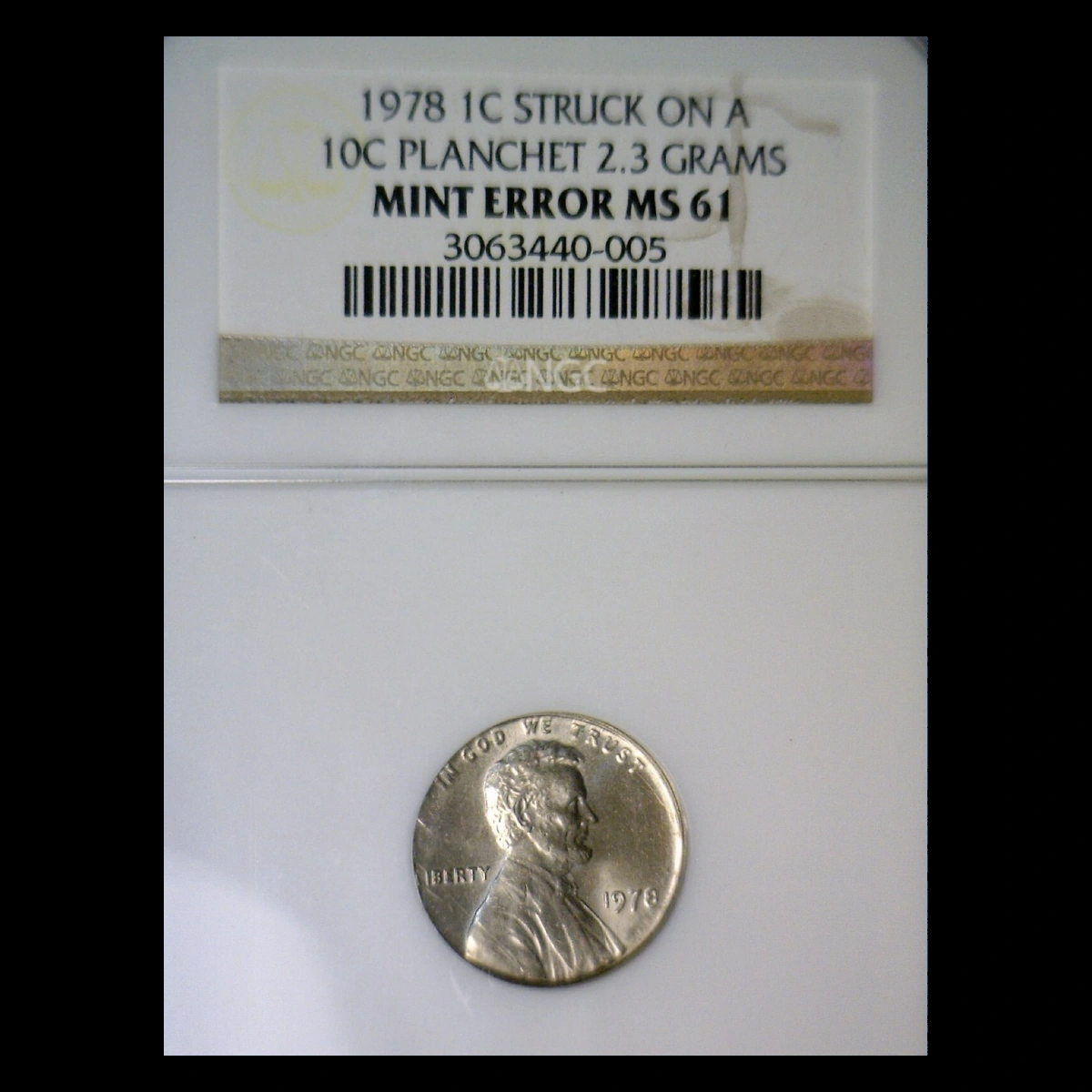
13. 1978 Penny Cent Details Crowd a Layered Dime Blank: Wrong Blank Error
The records include a PCGS MS64 cent on a clad dime blank and a separate Type One example. Type One means the blank’s edge had not received the usual preparatory rim.
Another specimen has a reverse struck-through mark and a recorded weight of 2.33 grams. Those added details belong to that coin.
How to Identify
A standard clad dime blank starts near 2.268 grams and 17.91 millimeters across. Look for pale outer layers around a copper center and limited room for the cent design.
An unused blank has no older Roosevelt or torch underneath. Do not guess the trapped material on the separately recorded struck-through specimen.
What It’s Worth
$250–$2,000 is the estimate for authenticated dime-blank cents and stronger combinations. Type One preparation alone does not guarantee a higher premium.
A 1976-D dime-blank cent sold for $480 in December 2024. That is another-year context, not a sale of the 2.33-gram piece.
14. 1978 Penny A Larger Five-Cent Blank Is Reported: Nickel-Blank Cent Error
The year guide reports a 1978 cent on a nickel blank without supplying a confirmed original auction specimen. Such a coin would carry cent designs on the larger five-cent blank.
How to Identify
A standard nickel blank starts near 5.00 grams and 21.21 millimeters, with a 75% copper and 25% nickel alloy. These are reference specifications, not measurements from a confirmed 1978 specimen.
Check that Lincoln and the Memorial are on the larger blank. Jefferson on copper cent metal would be the opposite error and cannot prove this report.
What It’s Worth
$800–$3,000 is a conditional estimate for a professionally authenticated cent-on-nickel-blank error. It is not a realized 1978 auction price.
The $480 sale of a 1976-D dime-blank cent offers context for a smaller wrong blank. A larger nickel blank still requires its own verified identity and comparison.
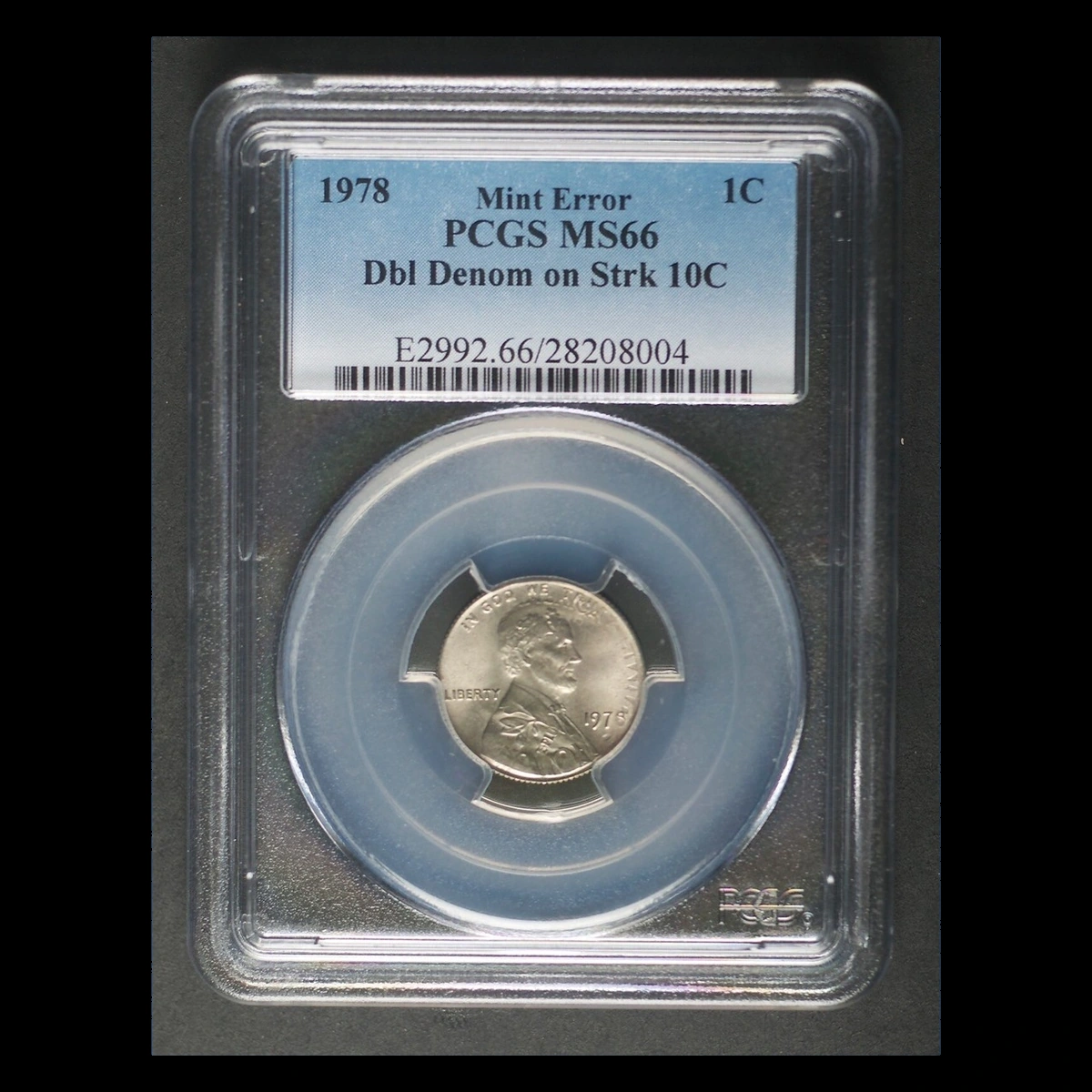
15. 1978 Penny Roosevelt Remains beneath Lincoln: Double Denomination Error
On the recorded NGC MS64 overstrike, Roosevelt points toward the lower right relative to Lincoln. Part of the older torch lies beneath the Memorial’s right side.
The starting object was already a finished dime. Parts of both dates survive, rather than two guaranteed complete years.
How to Identify
Begin with the torch, then connect the earlier dime features across both faces. Keep each date fragment with its own design.
A mixed lot also contained an overstrike, but another coin’s listed weight cannot be transferred to it. The actual layered metal and overlapping design should support one intact coin.
What It’s Worth
$600–$3,000 is the estimate for identified 1978 cent-over-dime examples. Clear earlier detail and good preservation help support the stronger end.
A 1990 cent over a 1989-P dime sold for $2,160 in September 2025. That recent comparison has different dates, and no mixed-lot total establishes an individual 1978 price here.
Conclusion
A 1978 penny’s visible boundaries are useful clues: where design stops, where metal is missing, and where one impression crosses another. Follow those boundaries before applying an error label.
Keep reported categories separate from confirmed specimen details, especially for the Proof S repunch, counterclash, and nickel-blank report. For fragile flakes and caps, preserving the original shape helps retain the evidence that makes the coin understandable.