Rare 1962 Penny Errors (List & Pictures)
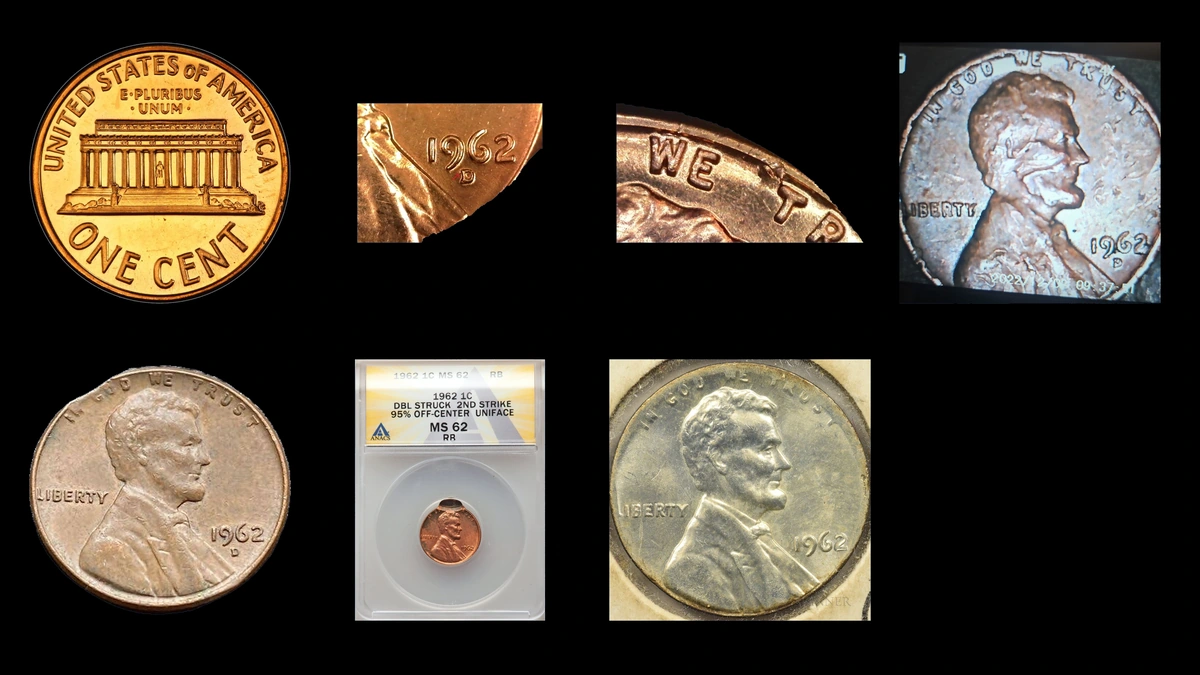
A Proof reverse variety leads the supplied sales for 1962 penny errors, with $2,200 paid for an FS-801 in November 2022. Estimated values across the categories below run from $2 for small chips to $2,500 for well-preserved Proof doubling.
Examine the lettering first, then distinguish raised defects, depressed areas, missing metal, and unusual composition.
| Where to look | What the feature may indicate | Estimated range |
|---|---|---|
| Letters and mintmark | Doubled die or repunched D | $5–$2,500 |
| Raised or depressed face areas | Die break, BIE chip, or indent | $2–$500 |
| Uneven, separated, or incomplete metal | Defective blank, clamshell, split, or clip | $15–$450 |
| Displaced or additional designs | Off-center strike or double strike | $20–$1,000 |
| Smaller silver-colored coin | Silver dime-planchet error | $500–$2,000 |
A normal copper-alloy 1962 cent weighs 3.11 grams and measures 19.05 millimeters across its plain edge. Weight, thickness, and diameter checks help explain abnormal blanks, while a magnifier and angled light are better tools for small design matches.
Leave partly separated layers untouched and keep certified coins in their holders. A change in appearance should be documented before any attempt to clean or manipulate it.
1. 1962 Penny Repeated letters on the Proof reverse: Doubled Die Error
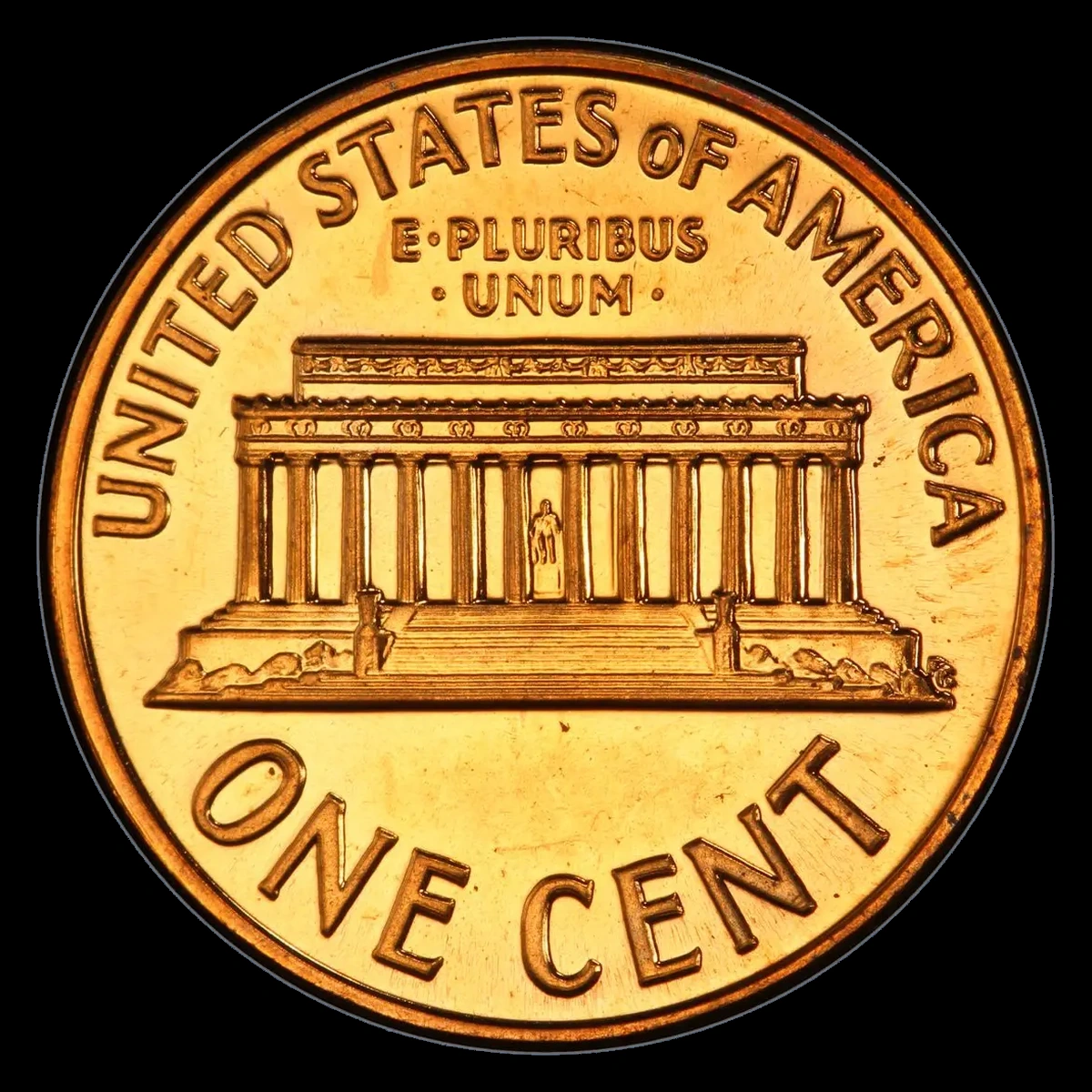
The recognized FS-801 carries doubled design on the Memorial side of a 1962 Proof. The repeated outlines were present on the die before it struck the coin.
Proofs are specially produced collector coins. Their normal repeated aligned strikes do not themselves create a doubled-die variety, and minor obverse-doubling reports belong to separate varieties.
How to Identify
Establish Proof manufacture before comparing FS-801 photographs. A polished circulation cent does not become a Proof because its surface shines or it lacks a mintmark.
Inspect ONE CENT and E PLURIBUS UNUM for the corresponding extra outlines of the recognized variety. Blurred edges, flat shelves, or reflections do not supply the same pattern.
A proposed front-side variety needs its own date or motto comparison. Keep its mint and issue separate from the Proof reverse attribution.
What It’s Worth
Correctly attributed FS-801 Proofs are estimated at $60–$2,500, while minor confirmed obverse varieties have a separate estimate of $5–$100. Preservation accounts for much of the Proof range.
PCGS records a PR67 Red FS-801 at $2,200 at David Lawrence on November 27, 2022. That price concerns a high-grade collector issue, not every 1962 cent with thick lettering.
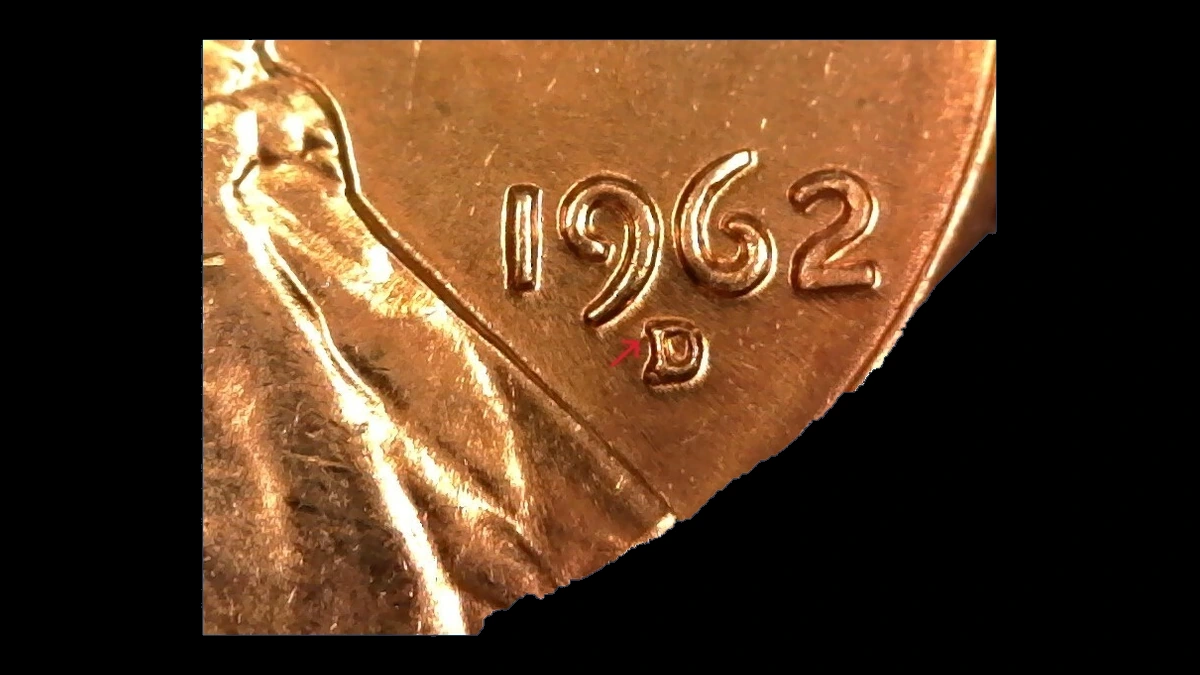
2. 1962 Penny Another D stroke appears below the date: Repunched Mintmark Error
The D was punched into the die separately. If the punch was repeated at a slightly different position, remnants of the earlier D could remain on coins struck from that die.
The reported 1962-D group includes different varieties. Their extra strokes do not all point in one direction.
How to Identify
Trace the whole mintmark and look for part of another D curve or upright. Compare its direction and shape with the particular variety being claimed.
A flat ledge from strike movement or a lump with an added-metal seam needs another explanation. Philadelphia cents have no mintmark to repunch.
What It’s Worth
Correctly identified D/D varieties are estimated at $5–$150. Clear additional strokes on well-preserved coins make stronger comparisons than faint worn traces.
The range comes from comparable minor Lincoln mintmark varieties, without a supplied realized sale for every 1962-D entry. Bright color does not compensate for an unconfirmed letter match.
3. 1962 Penny A bar or mound rises from the design: Die Breaks and BIE Chips Error
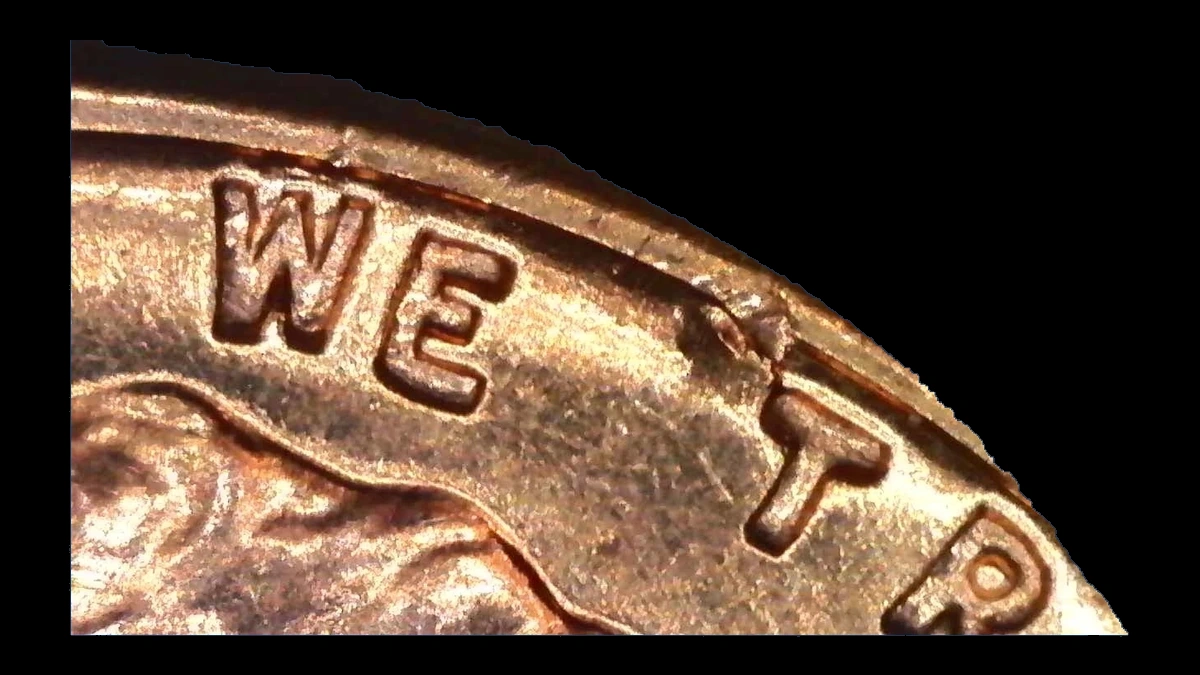
Missing metal in a die can leave extra raised metal on the coin. Small breaks include the BIE bar between B and E in LIBERTY, while a larger rim-connected break produces a cud.
A major 1962-D break was certified ANACS MS63 Red and Brown. The brief title does not establish where that particular break lies.
How to Identify
Tilt the coin to inspect the feature’s height and connection to the surface. Check for solder, dirt, or a ridge pushed up by an impact.
A claimed BIE must occupy the space between the correct letters. A claimed cud must actually meet the rim; a large interior bump does not qualify on size alone.
Use the major-break specimen’s actual photographs to establish its position. A familiar break location from another date cannot be imported from a generic picture.
What It’s Worth
Small BIE chips are estimated at $2–$40; comparable major breaks at $40–$500. These are separate scales of die damage.
The certified 1962-D major break sold for $79 in August 2021. That result does not automatically price every small raised bar or prove that an unspecified major break is a rim cud.
4. 1962 Penny A curved depression interrupts Lincoln’s side: Indent Error
An overlapping blank can block part of a coin during the strike and leave a depressed area called an indent. Unlike a clip, it need not remove the coin’s metal.
The documented 1962-D example has an obverse indent and an NGC MS63 Red and Brown grade. Its exact clock position is not supplied in the brief record.
How to Identify
Follow the curve between the depressed patch and the surrounding struck design. The relationship should support formation beside an obstruction during striking.
A later dent can smash completed details and push up sharp borders. Do not assign a generic indent photograph’s position to the recorded Denver coin.
Near-normal weight is possible because indentation compresses or moves metal rather than cutting it out. Weight by itself cannot determine when the depression formed.
What It’s Worth
A genuine 1962-D obverse indent of this type is estimated at $40–$500. A clear boundary and readable date help explain the error.
A 1964 cent with a broadstrike and 7% obverse indent sold for $54 in March 2025. That combination’s price is not a completed sale of the 1962-D example.
5. 1962 Penny The blank has an original uneven area: Defective Planchet Error
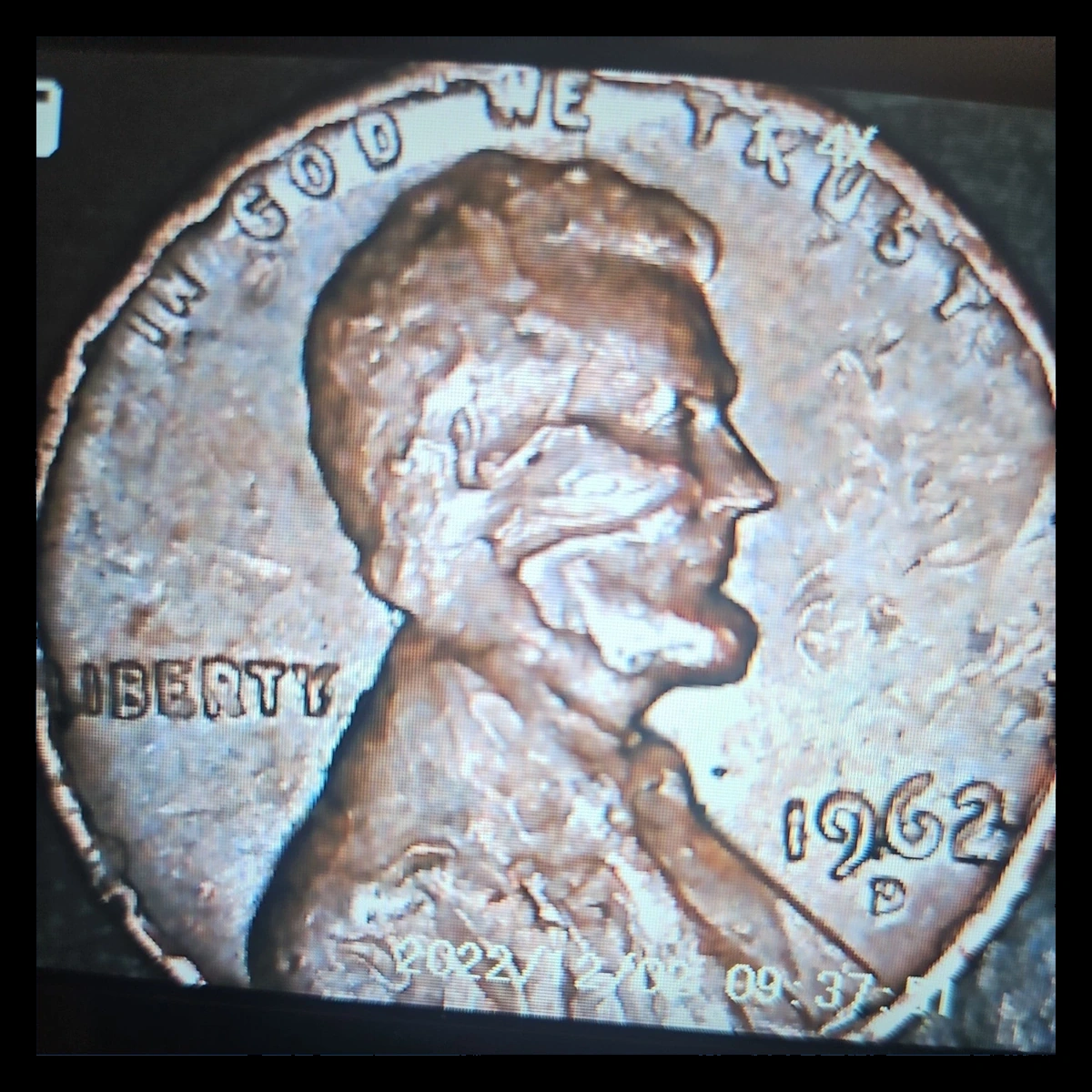
Defective planchet is a broad description for a fault in the blank metal. It does not identify a particular hole, crack, or separation without additional evidence.
A recorded Philadelphia example weighs 2.7 grams and graded NGC MS65 Red. Another specimen graded MS64 Red is a separate coin.
How to Identify
Describe the visible feature before assigning a narrower name. Record whether the metal is uneven, absent, or peeling and how the struck design relates to it.
Grinding and corrosion can reduce weight without creating an original blank defect. Inspect the edge and surfaces for later removal, then compare the actual certification photographs.
What It’s Worth
Authenticated visible blank defects are estimated at $20–$300. Extent of the problem and preservation of the remaining design matter more than the broad label.
A 1962-D clamshell split sold for $65 in June 2024, providing a related metal-failure comparison. It is a different defect and not the sale price of the 2.7-gram Philadelphia example.
6. 1962 Penny Two layers open while remaining joined: Clamshell Split Error
An internal separation can open part of the cent like a shell while leaving a connection along the rest of its edge. Both layers remain portions of one original blank.
The recorded 1962-D example has a 15% clamshell split and a PCGS AU55 grade, indicating light circulation wear. This is an alloy separation, not modern copper plating peeling from a zinc core.
How to Identify
View the edge at eye level to see the opening and surviving connection. A top-down image may hide the structure almost entirely.
Inspect without pulling the layers apart, looking for saw marks or an artificial seam from joined coins. With both original layers still present, a large loss of weight is not required.
What It’s Worth
Comparable genuine clamshell splits are estimated at $15–$350. The PCGS AU55 example with a 15% split sold for $65 in June 2024.
A wider opening is not automatically more valuable. Breaking the hinge to enlarge it would alter the evidence and damage the coin.
7. 1962 Penny A thin separated layer carries both designs: Split Before Strike Error
A blank that separates before striking can leave one thin layer to receive the cent designs. Insufficient thickness may soften the detail on both faces.
The recorded Philadelphia 1962 example graded PCGS MS61 Brown with a split-before-strike attribution. No specimen weight is supplied for that coin.
How to Identify
Look for original struck design on both sides, including the surface exposed by splitting. A raw inner face without new design may indicate separation after the coin was already struck.
Check for repeated abrasive lines or cut-through letters from sanding. Thinness, reduced weight, and the relationship of design to the exposed layer need to agree.
Do not borrow a measurement from a different year’s example. The absence of a recorded weight leaves that fact to be established on the actual coin.
What It’s Worth
Authenticated examples are estimated at $40–$450. Clear design and a convincing thin-layer structure help demonstrate the sequence.
A 1964 split-before-strike cent graded PCGS MS60 Brown sold for $53 in May 2021. That nearby-year sale provides context toward the lower end without pricing the 1962 specimen.
8. 1962 Penny A rough section is missing from the outline: Ragged Clip Error
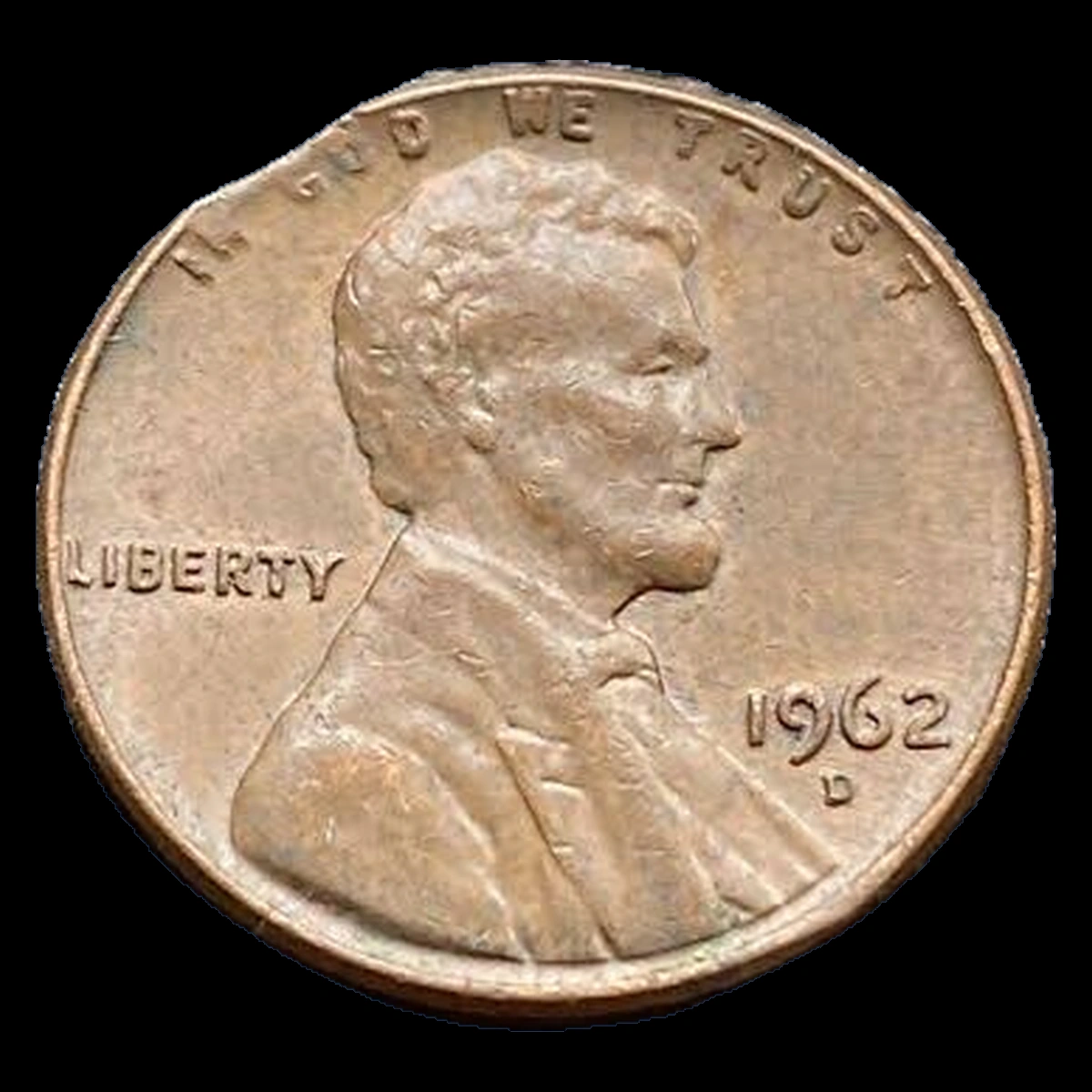
A blank cut from an irregular part of the metal strip can already be incomplete when it is struck. Its uneven missing boundary is described as a ragged clip.
One recorded 1962 example weighs 2.0 grams and graded NGC MS65 Red and Brown. A different MS63 Red and Brown coin combines a ragged clip with an off-center strike.
How to Identify
Examine the missing metal before judging where Lincoln sits. A clip concerns the blank’s boundary, while off-center striking concerns the position of the design.
The struck design and rim should form around the original rough gap. Tearing, cutting, or filing afterward leaves a different relationship to already-completed details.
Keep the 2.0-gram reading with its MS65 example. It is not the established weight of the separate off-center combination.
What It’s Worth
Authenticated ragged clips are estimated at $15–$400. Size of the missing section and clear original edge formation influence value.
The 1962 ragged-clip and off-center combination sold for $138 in July 2021. That is one price for both features on a different coin, not separate payments or a sale of the 2.0-gram specimen.
9. 1962 Penny Displaced design sits next to unstruck metal: Off-Center Strike Error
When a blank misses its normal position, part of the design lands beyond the metal. The untouched area remains as part of the coin rather than becoming a missing section.
The recorded Denver 1962 example is 75% off center and graded PCGS MS62 Brown. The Philadelphia clip combination is a separate example.
How to Identify
Confirm the surviving date and compare both faces’ displaced designs. Original blank texture should explain the unused area better than polishing that erased an ordinary strike.
If metal is physically absent, inspect for an additional clip. An uneven border with the complete design still present needs a different explanation from an off-center strike.
What It’s Worth
Genuine dated 1962 off-center cents are estimated at $20–$600. Date visibility, surfaces, and clear displacement matter alongside the percentage.
The Philadelphia ragged-clip combination’s $138 sale in July 2021 offers same-year context. It does not establish the value of the Denver 75% coin, and it is the same transaction discussed under clips.
10. 1962 Penny A small second impression reaches the edge: Double Strike Error
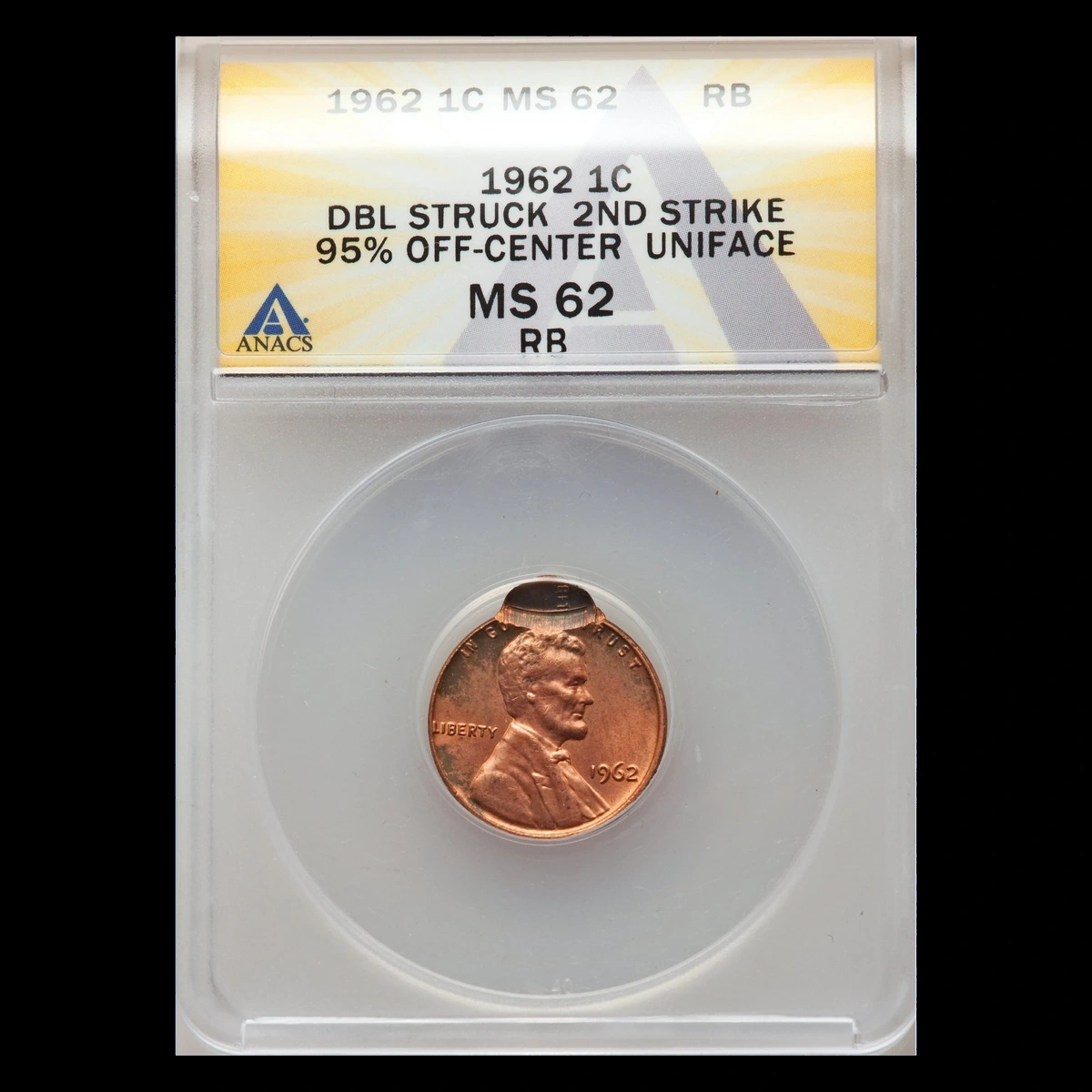
On the recorded 1962 example, a second strike landed about 95% off center. The main design came from the first strike, while the later blow touched only a small part of the coin.
ANACS graded the example MS62 Red and Brown. Its second impression can be only a fragment, rather than another full Lincoln portrait.
How to Identify
Find that fragment and compare it with the corresponding part of a normal cent design. Its position should fit a shifted second strike.
Use the first impression to establish date and orientation, then examine the edge for later pressing. Random dents or flat shelves on individual letters do not prove that the entire coin received another strike.
What It’s Worth
Genuine double strikes are estimated at $75–$1,000. Readability and visual separation of the impressions matter more than simply counting two blows.
The ANACS MS62 Red and Brown example sold for $99 on January 3, 2022. A second strike barely touching the edge can be less conspicuous than one leaving two strongly separated designs.
11. 1962 Penny A smaller silver blank carries Lincoln: Dime Planchet Error
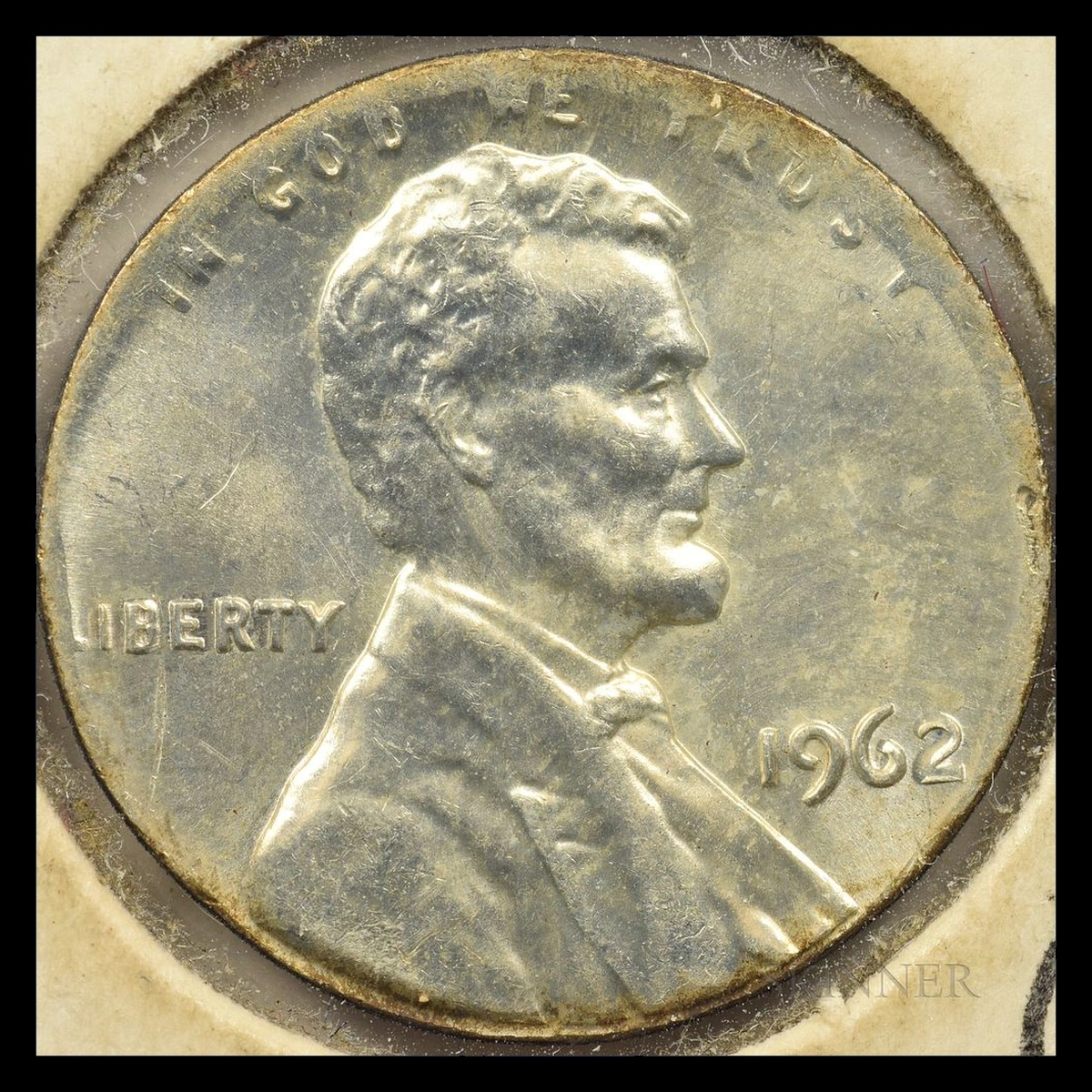
A 90% silver dime blank can receive the cent design if it reaches the wrong press. Both Philadelphia and Denver 1962 examples are recorded.
The documented Philadelphia piece sat toward four o’clock, leaving rim gaps near ten o’clock on the obverse and eight on the reverse. It retains a clear date, with a stretched upper motto and weakness at parts of Lincoln’s shoulder and reverse lettering.
How to Identify
A silver dime blank begins near 2.50 grams and 17.91 millimeters across. Compare these with the larger copper-alloy cent, allowing for spreading during striking.
Have the alloy identified without scratching the coin, and inspect the edge for coating or filing. Silver color alone cannot distinguish a wrong blank from a plated cent.
The Philadelphia specimen’s rim gaps are not requirements for every Denver example. An unused dime blank also carries no previous Roosevelt design beneath Lincoln.
What It’s Worth
Comparable authenticated silver-planchet cents are estimated at $500–$2,000. Readable dates, remaining design, and preservation affect the result.
The Philadelphia example graded PCGS MS63 sold for $1,110 on May 6, 2022. That sale belongs to the described silver blank, not to any silvery-looking 1962 penny.
Conclusion
For a 1962 cent, first decide whether the unusual feature repeats design, adds raised metal, interrupts a strike, or changes the blank itself. That choice determines whether lettering photographs, edge views, or measurements will provide the strongest evidence.
Keep Proof varieties separate from circulation coins and preserve split layers as found. When two errors share one coin, compare its complete combination rather than adding unrelated prices.