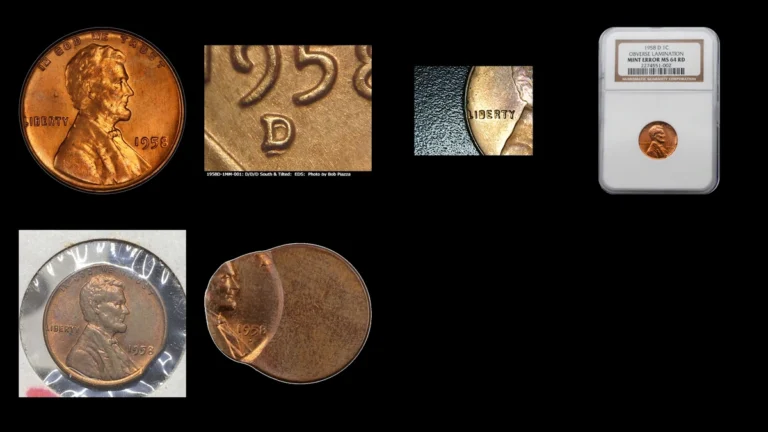
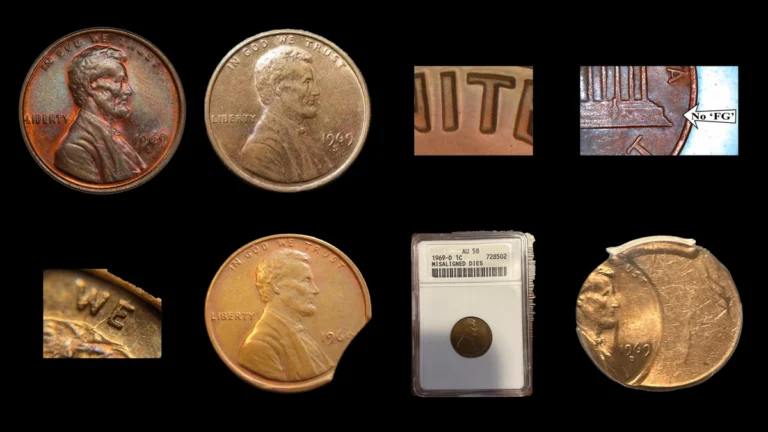
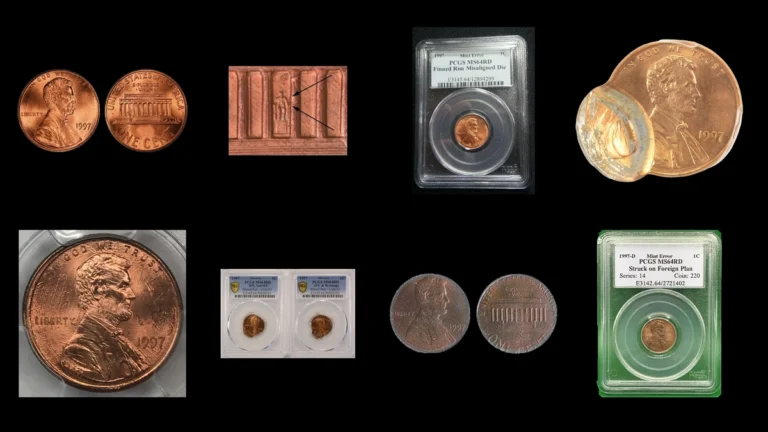
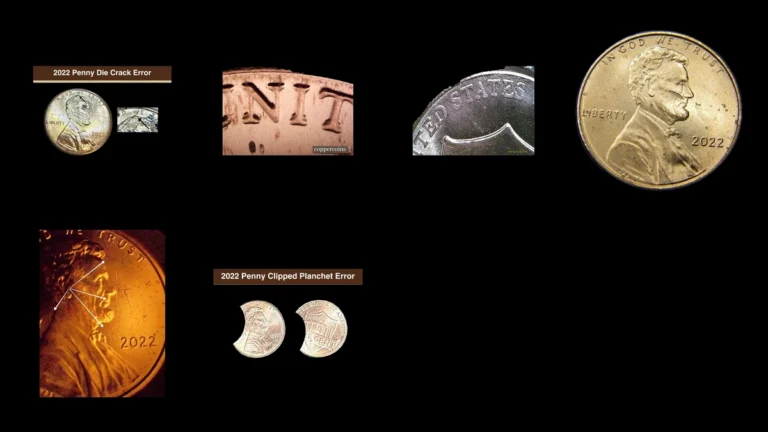
Rare 1949 Penny Errors (List & Pictures)
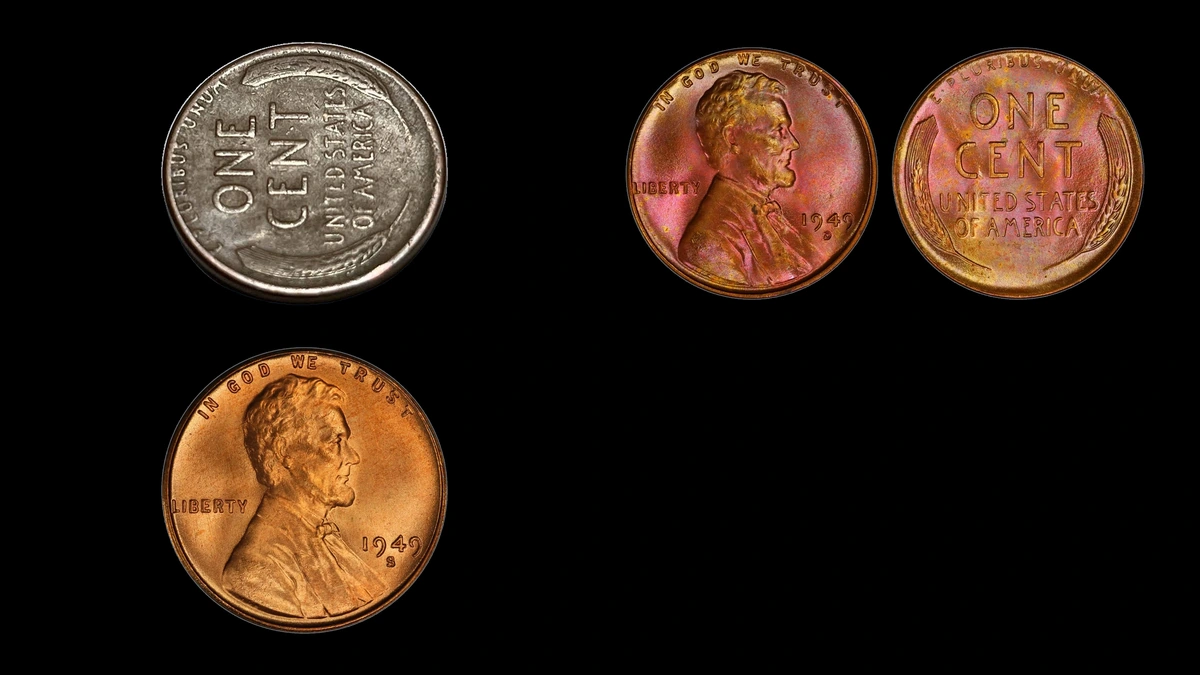
The highest recorded price here belongs to a small date detail on an exceptionally preserved coin. A San Francisco FS-101 doubled die among these 1949 penny errors brought $3,487.50 at GreatCollections.
Estimated values range from $3–$4,000. Begin with the outline and placement of the designs, then inspect raised marks, transferred traces, and the precise shapes of the date and mintmark.
| Visible clue | Category | Estimated value |
|---|---|---|
| Curved missing section | Clipped blank | $25–$300 |
| Blank metal beside displaced design | Off-center strike | $40–$1,000 |
| Second portrait or date position | Reported double strike | $100–$1,500 |
| Raised bar between B and E | BIE chip | $3–$50 |
| Faint opposite-design traces | Die clash | $10–$200 |
| Larger-looking mint letter | Reported enlarged mintmark | $5–$75 if confirmed |
| Additional D or S strokes | Repunched mintmark | $5–$2,000 |
| Overlapping 4, eyelid, or letters | Doubled die | $5–$4,000 |
The normal copper-alloy cent weighs 3.11 g and is about 19.05 mm across, with a plain edge. A scale and calipers record overall changes, while a 10× magnifier and sharp photographs reveal small variety details.
1. 1949 Penny A Curved Bite Interrupts the Lower Edge: 1949-S Clip Error
With the date upright, the recorded San Francisco coin’s gap lies near six-thirty. The blank was incomplete before striking, so the design formed beside missing metal.
NGC graded the example MS64 Brown. That identifies an unworn coin with some marks and brown copper surfaces.
How to Identify
Inspect the curve and adjacent letters for natural fading or stretching toward the boundary. Filing lines or a saw cut through completed detail indicate a different origin.
Look across the coin for opposite-rim weakness, though it need not be obvious. Record the actual weight instead of assigning an unstated measurement to the documented example.
What It’s Worth
Comparable genuine clips have an estimated $25–$300 range. Date visibility, gap size, and preservation affect appeal.
The NGC MS64 Brown example brought $124 in March 2026. It provides a same-year transaction without making every curved notch equally valuable.
2. 1949 Penny The Designs Reach Only Part of the Blank: 1949 Off-Center Strike Error
Most of the metal remains blank on a Philadelphia cent struck ninety percent off center. A separate fifty-percent example is displaced toward twelve o’clock.
On the latter, the upper motto and much of UNITED STATES OF AMERICA fall beyond the available metal. That direction belongs to the fifty-percent piece rather than every extreme offset.
How to Identify
Read the surviving date first, using matching holder photographs when little design remains. Follow the boundary between struck detail and original blank metal on both faces.
Inspect for abrasion that might have erased a normal design. A complete blank normally retains its metal even when repeated pressure changes its outline.
What It’s Worth
Identified examples have an estimated $40–$1,000 range. A readable date and pleasing remaining impression help make useful comparisons.
The ninety-percent Philadelphia coin in NGC MS66 Red and Brown brought $630 in July 2021. The separate fifty-percent coin is MS63 Brown and should not inherit that transaction or preservation.
3. 1949 Penny Another Portrait or Date Crosses the First: Reported 1949 Double Strike Error
A coin moving between blows can receive another design at a different position or angle. A year guide reports this category without naming a specific mint or complete specimen.
Blocking material can make a second impression more apparent on one face than the other. Two complete repeated designs are not required in every combination.
How to Identify
Trace two positions of a substantial feature rather than an extra sliver beside one letter. Check both faces to see how the later impression relates to the first.
Later pressing between coins often creates reversed recessed marks with a different history. A doubled die instead repeats a fixed design already present in the tool.
What It’s Worth
A professionally identified Wheat-cent double strike has an estimated $100–$1,500 range. Separation, readable year, wear, and damage all affect comparison.
No sale result is supplied for a named 1949 specimen. The broad report does not justify inventing a mint, offset percentage, or transaction.
4. 1949 Penny LIBERTY Seems to Gain an I: 1949 BIE Chip Error
The defining feature is a raised bar in the gap between B and E. Coin metal filled a small broken area in the die during striking.
A San Francisco repunched-mintmark die developed this chip after some use. Other reported BIE examples need not come from that same tool or share its exact bar shape.
How to Identify
Light the gap from the side and examine how the bar meets original copper. Dirt can sit against the letters, while a scratch or its pushed edge has a different surface relationship.
Do not scrape the feature to test it. An S mintmark establishes the mint, but it cannot establish the particular later-stage BIE die by itself.
What It’s Worth
Identified BIE chips have an estimated $3–$50 range. A strong bar on an attractive unworn cent offers a clearer display than a faint worn bump.
The range is based on comparable Wheat-cent chips rather than a sale for the specific San Francisco die. An accompanying repunch can add interest, but the combined coin still needs one overall assessment.
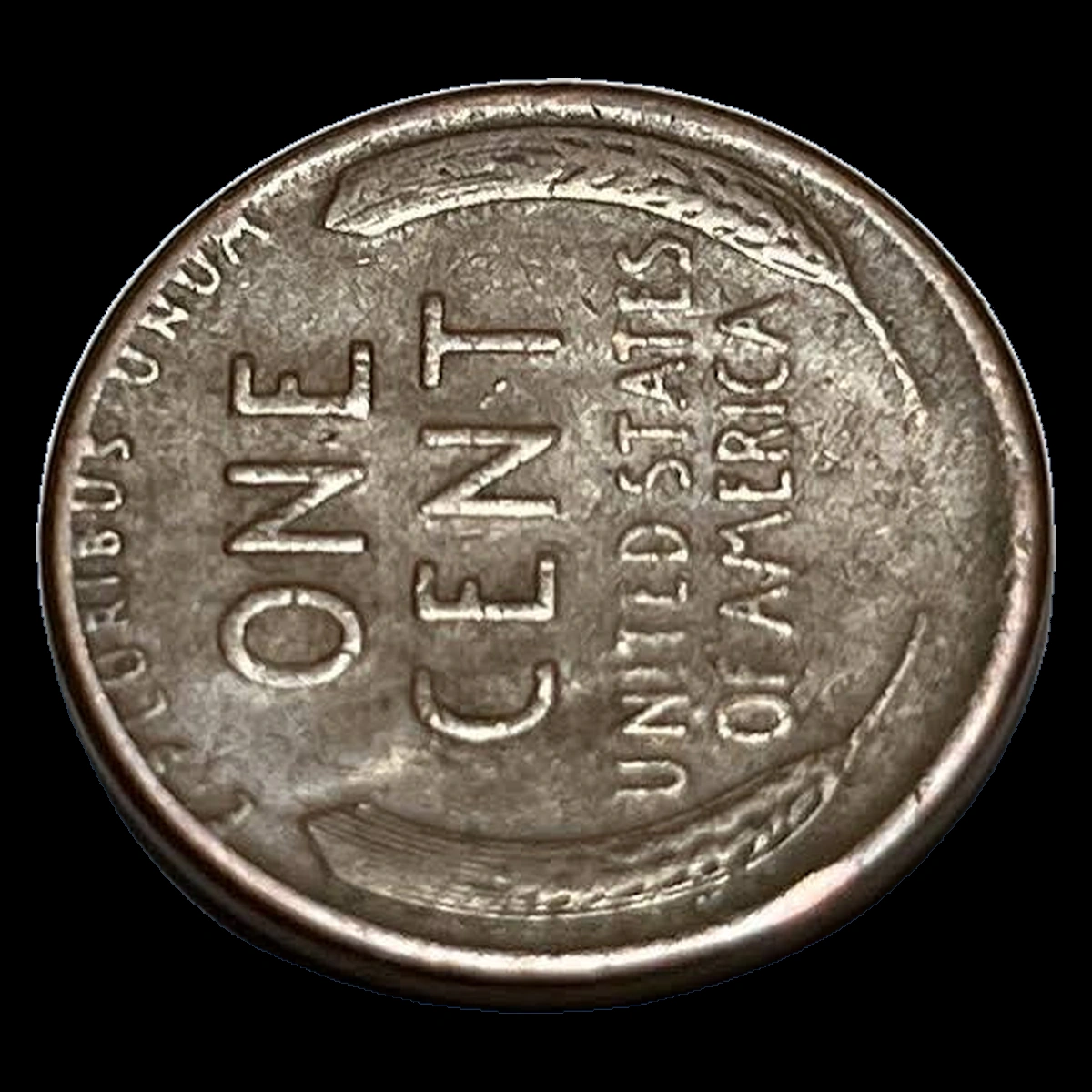
5. 1949 Penny Faint Lines Echo the Other Face: 1949-S Die Clash Error
When dies meet without a blank, contact can transfer parts of one design to the other tool. Later coins may carry those faint unexpected traces in open areas.
Several San Francisco repunched-mintmark dies show clash marks at particular stages of use. The transferred pattern changes with the individual die and its condition.
How to Identify
Relate the suspect line to the opposite design rather than accepting an arbitrary scratch. Side lighting can help trace the entire feature without cleaning it.
Compare the correct stage in Wexler’s 1949-S photographs. A throat line from one example should not be expected on every listed die, and the repunched S alone does not identify a clash.
What It’s Worth
Recognizable clashes have an estimated $10–$200 range. A clear transferred shape is more useful to collectors than a line requiring guesswork.
This is a Wheat-cent type estimate, not an assigned result for every catalog entry. The underlying coin and any repunched mintmark influence its complete value.
6. 1949 Penny The Mint Letter Looks Too Large: Reported 1949 Enlarged Mintmark Error
A year guide reports enlarged mintmarks without fixing the claim to D or S. The observation is a larger-looking letter, not proof of a punch made for another denomination.
Normal punch differences, die wear, and later squeezing can all affect apparent size. The surrounding metal helps distinguish those possibilities.
How to Identify
Use equal-scale photographs of the same year and mint, keeping D and S comparisons separate. Different zoom settings can make ordinary letters appear unequal.
A calibrated image or measuring microscope can compare letter height and width. Inspect for flattened edges, displaced copper, and scratches before attributing the enlargement to a mint-made feature.
What It’s Worth
A confirmed unusual mint-made tool feature has an estimated $5–$75 range. An unexplained large letter alone does not establish that premium.
The estimate follows modest Wheat-cent varieties rather than rare wrong-denomination-punch prices. Ordinary punch differences or later damage should retain their actual explanation.
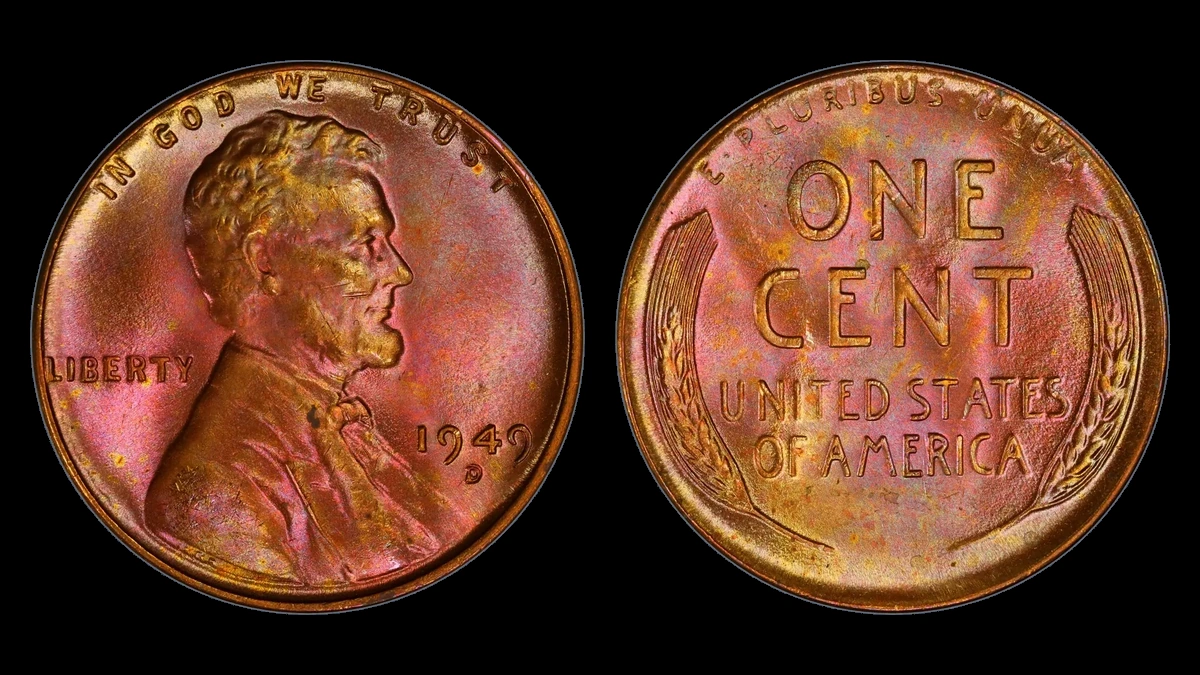
7. 1949 Penny D or S Has Recognizable Extra Strokes: 1949 Repunched Mintmark Error
Denver FS-501 is described with three punch impressions. Its features include an extra D toward the upper right and additional detail at the lower end.
Hand punching at changed positions or angles left those remnants in the die. Other Denver and San Francisco patterns have their own split tips and curves.
How to Identify
Keep the date upright while tracing the lower tips and extra curved strokes. Match their complete arrangement to the appropriate mint and variety.
For FS-501, relate the upper-right D trace to the lower extra detail. A lone bump, flat strike shelf, or damaged letter is weaker evidence than several coherent parts of another D.
What It’s Worth
Modest identified repunches have an estimated $5–$250 range, with especially desirable certified examples extending toward $2,000. Strength, color, and preservation influence the comparison.
PCGS lists $949 in June 2010 for a Denver FS-501 graded MS64. The sale is not a price for every extra D stroke or a separate San Francisco pattern.
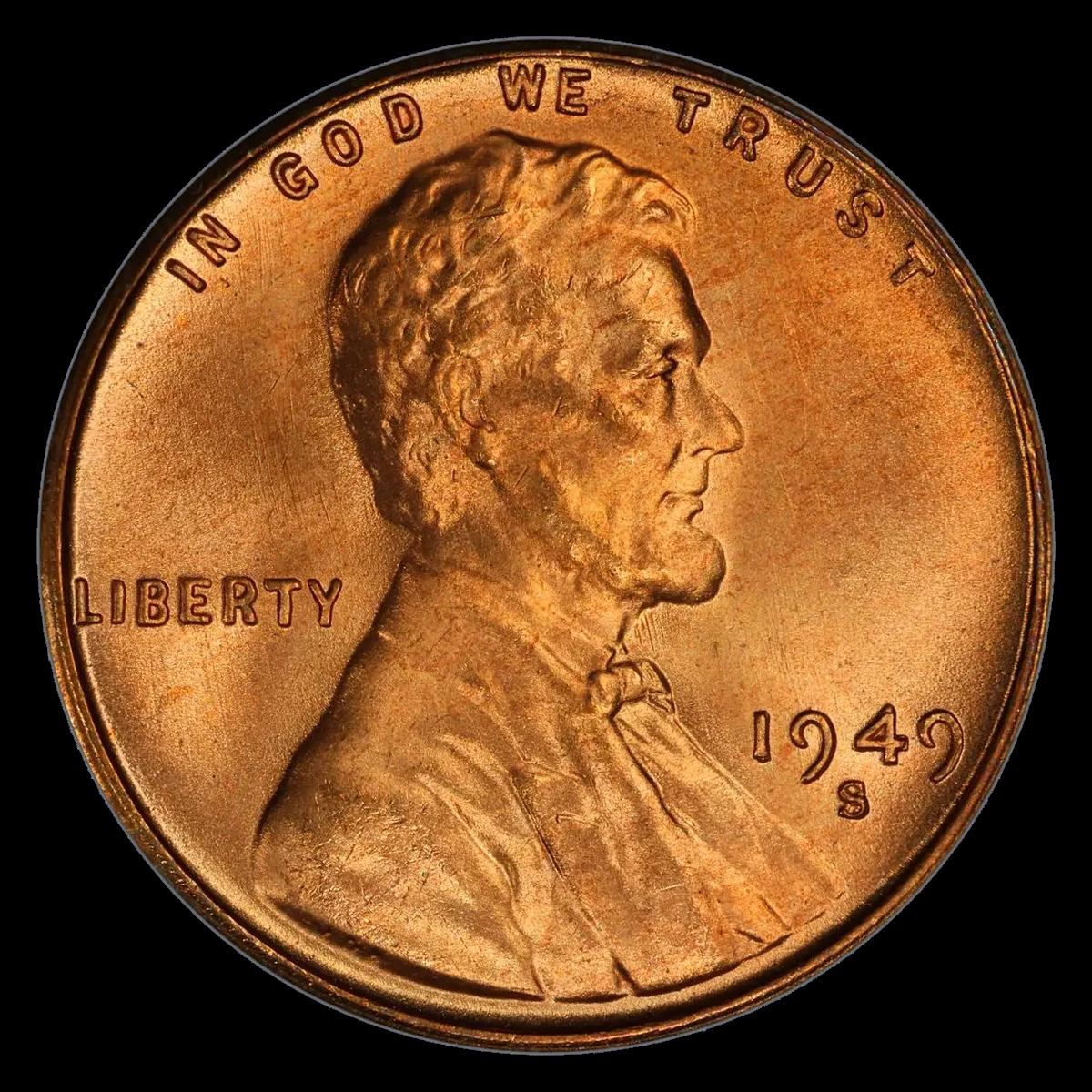
8. 1949 Penny The 4, Eyelid, or Reverse Letters Repeat: 1949 Doubled Dies Error
San Francisco date varieties can combine a flatter-topped 4 with traces of a pointed form beneath it. FS-101 includes doubling around 194, while other S dies affect LIBERTY or TRUST.
Separate Philadelphia and Denver front varieties involve eyelids or strokes around 4, and a Denver reverse variety affects PLURIBUS. All are ordinary issues because no collector Proof cents were issued in 1949.
How to Identify
For San Francisco, compare both the overlapping digit shapes and the S position using the mint-specific reference photographs. The date alone may not separate closely related tools.
For eye varieties, trace the actual additional eyelid; for the Denver reverse, inspect PLURIBUS above ONE CENT. Fixed repeated contours matter more than blur or a reflection.
What It’s Worth
FS-101 has an estimated $25–$4,000 range across preservation levels. Minor eyelid, letter, and reverse varieties use a separate $5–$150 estimate.
A PCGS MS67+ Red FS-101 brought $3,487.50 at GreatCollections, while an MS65 Red example brought $188 in August 2017. The contrast shows why a top-grade result should not set expectations for every doubled date.
Conclusion
For 1949 cents, an unusual shape or extra line becomes useful only when it matches a specific cause. The estimated $3–$4,000 range includes both inexpensive chips and exceptionally preserved doubled dies.
Compare equal-scale mintmark photographs, retain each off-center specimen’s own direction, and match the full variety pattern before borrowing a sale price. Original surfaces and clear views of both faces give those small differences the context they need.