Rare 1942 Penny Errors (List & Pictures)
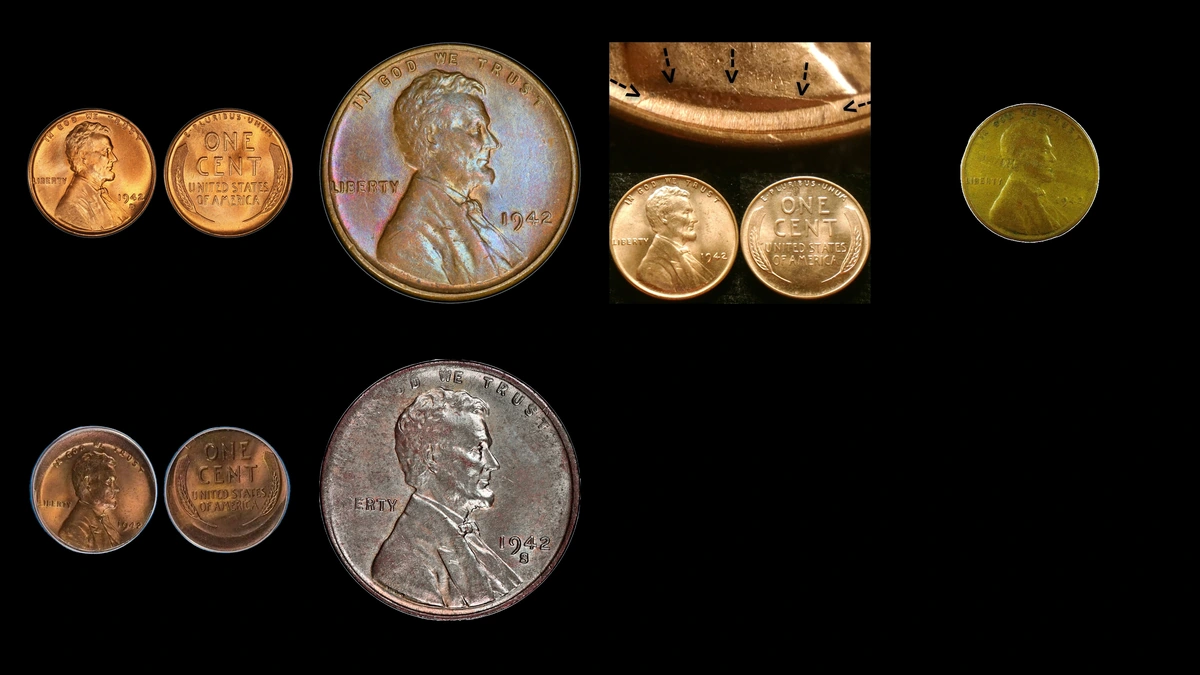
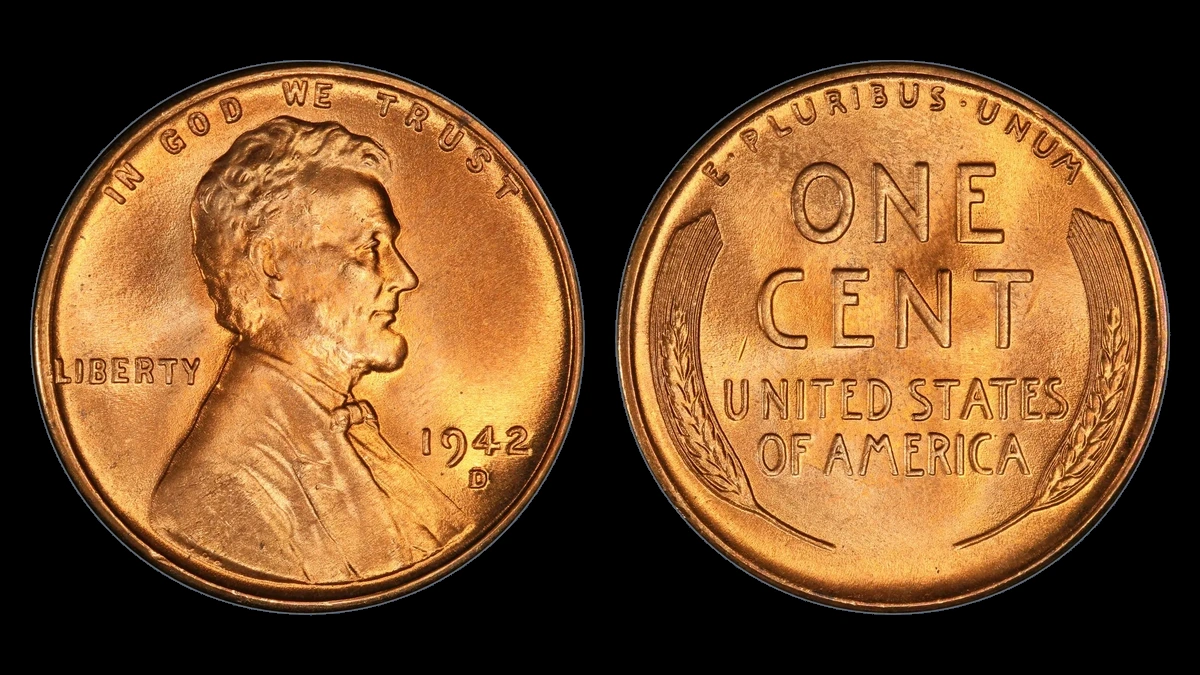
Copper is normal for a 1942 penny; the wartime steel cents came a year later. Among 1942 penny errors, a silver dime-blank cent stands out with a documented sale of $6,168.75 in June 2014.
The groups here span estimated values of $3–$10,000. Small mintmark strokes and surface defects offer more everyday starting points, while a backward image or unusual blank calls for a view of the entire coin.
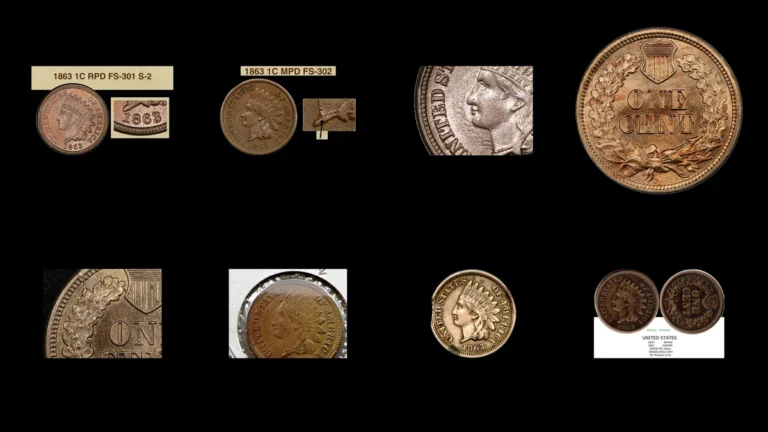
1. 1942 Penny D or S Has Pieces of an Earlier Letter: Repunched Mintmark Error
The mint letter was punched by hand into the die. If another blow landed in a different position, parts of the earlier letter could survive and repeat on the coins.
How to Identify
The Denver reference images show earlier D detail above the main letter for FS-502 and toward the upper left for FS-504. Those are separate patterns.
A San Francisco variety retains three punch positions, with earlier details toward the left and lower left. It also has a doubled front design, which must be identified separately.
Three punch positions do not mean the penny was struck three times. Trace the earlier letter curves rather than counting every nearby lump as another S.
What It’s Worth
$5–$250 is a working estimate for modest matched varieties, with stronger named examples and well-preserved combined varieties reaching about $2,500. Clear strokes and condition both matter.
A 1929-S FS-501 graded MS65 Red sold for $3,565 in June 2010. It illustrates the effect of a notable variety in a strong grade, but does not set the value of an ordinary 1942 candidate.
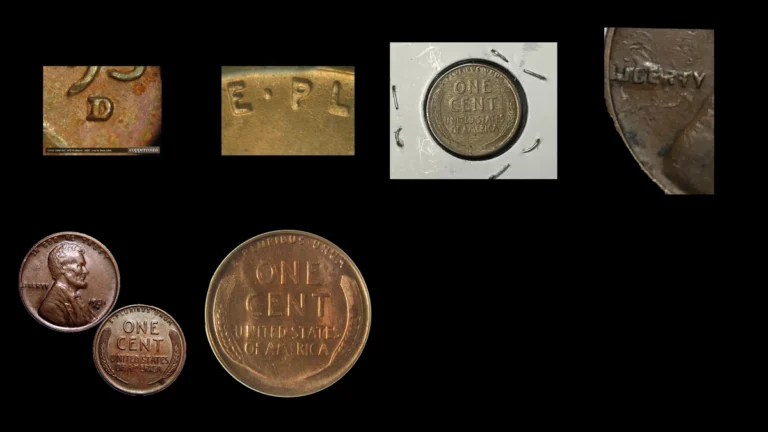
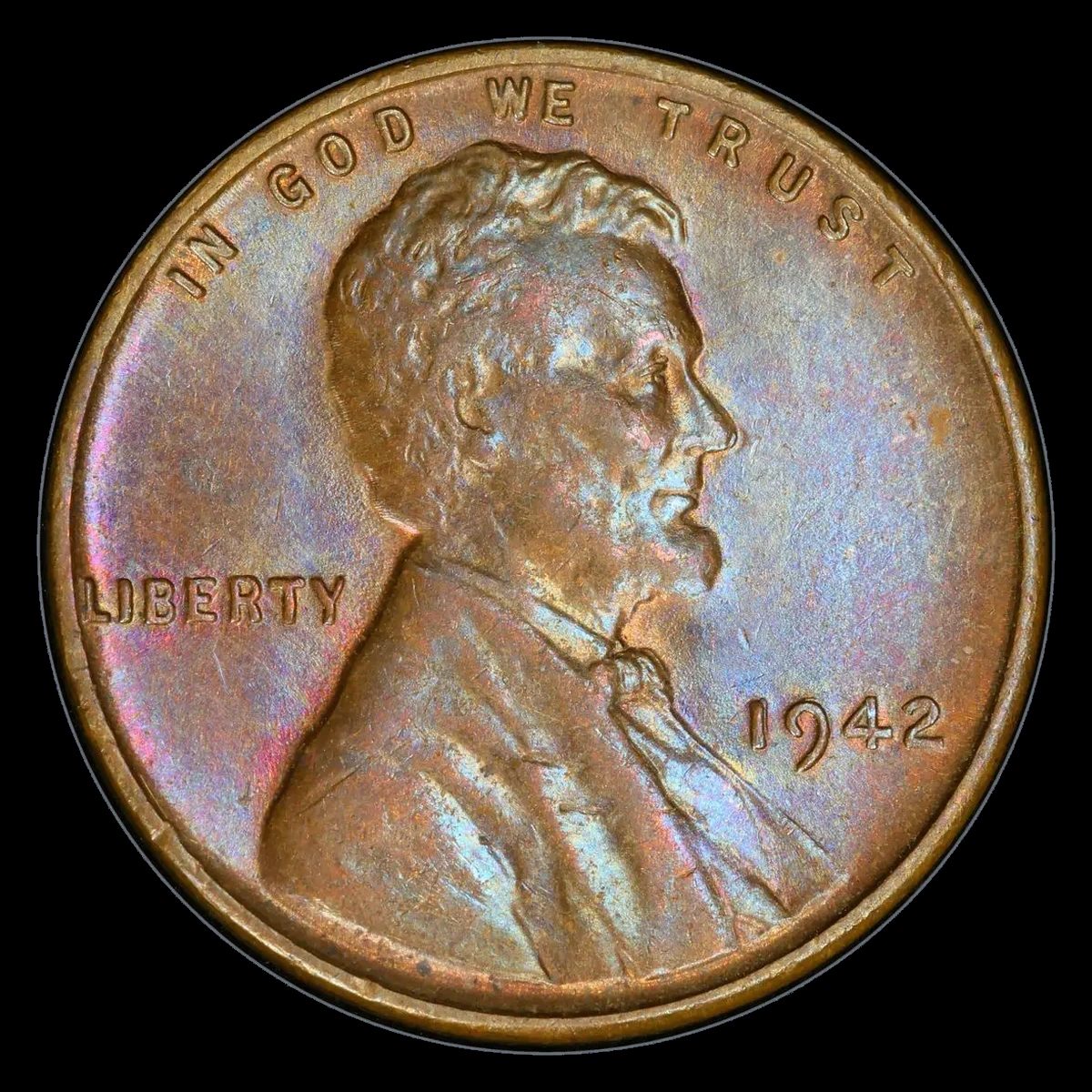
2. 1942 Penny The Date, Face, or Back Details Repeat: Doubled Die Error
A die can carry a repeated part of the design before it strikes any coins. For Philadelphia FS-101, extra detail appears around 19 in the date and parts of Lincoln’s face.
How to Identify
Match the strongest area of the specific variety, then check another part of the pattern. On Philadelphia FS-101, the supplied description places the extra detail toward the lower left.
Other front and back varieties have different clues. A separate Proof back shows inward doubling at the lower-right wheat grains and stem, rather than the circulation coin’s doubled face.
Proofs were specially made for collectors and need their own identification. A flat shelf caused during striking or a changing reflection is not the same as a matched doubled-die outline.
What It’s Worth
$5–$200 covers an estimated range of modest matched varieties; stronger named fronts and attractive Proofs can fall around $100–$3,000. Those prices include the condition and value of the underlying coin.
A 1941 FS-101 graded MS66 Red by NGC sold for $2,070 in January 2012. That different-year, high-grade example offers context rather than a sale assigned to a 1942 doubled die.
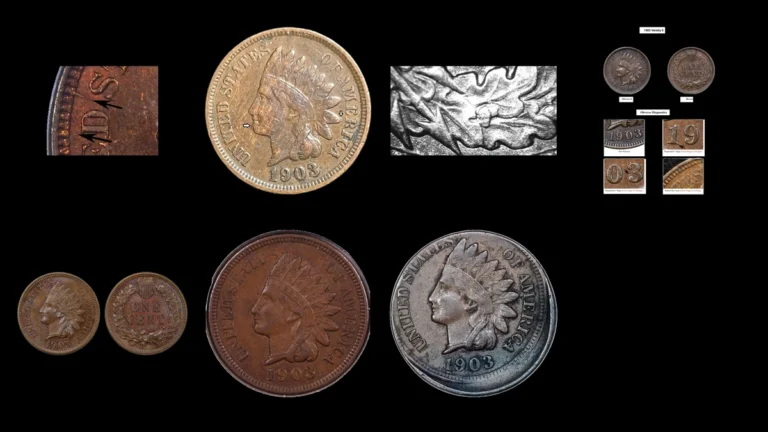
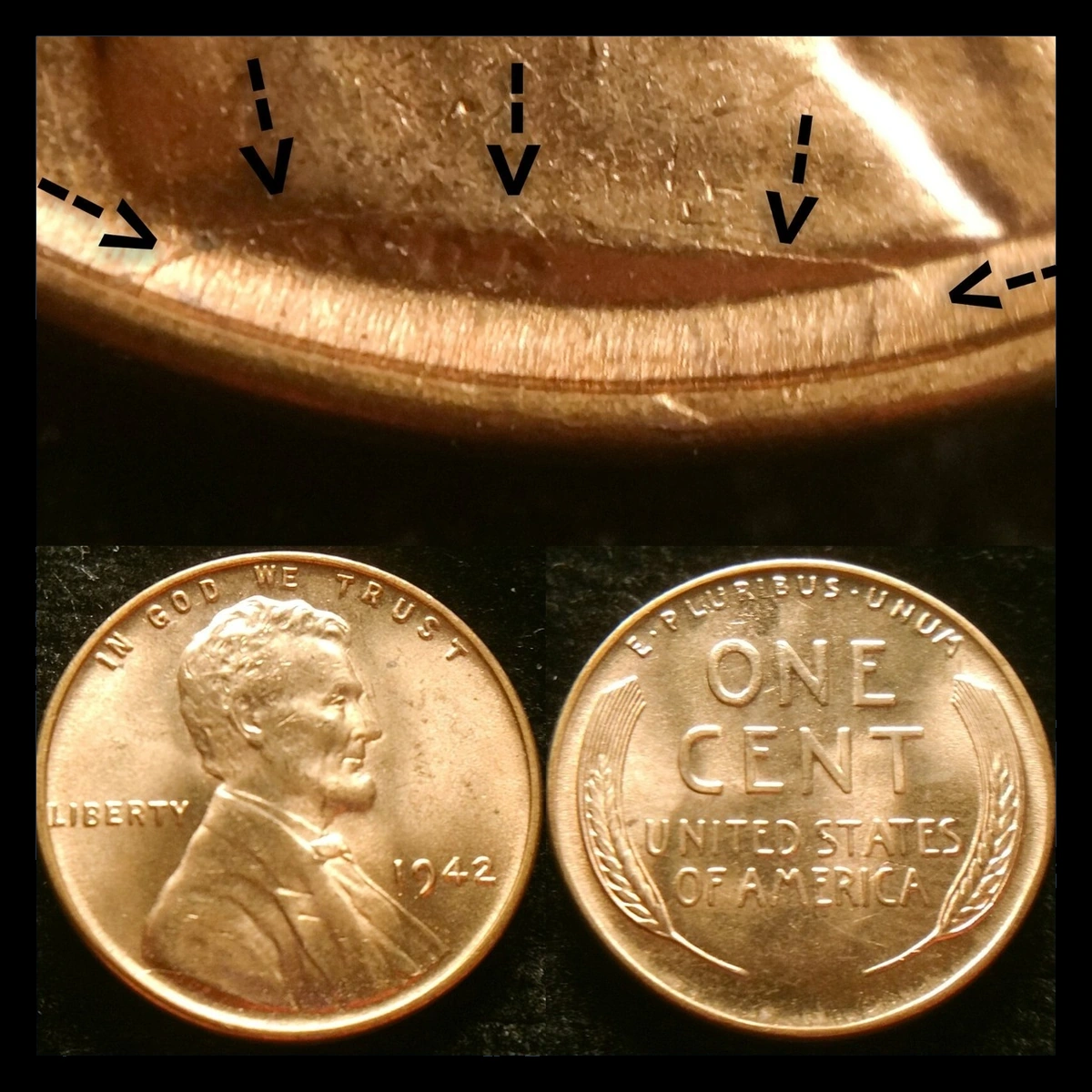
3. 1942 Penny A Raised Bar, Line, or Rim Patch Appears: Die Damage Error
Copper can fill a crack or missing area in the die and form raised extra metal. A small bar between B and E in LIBERTY creates the familiar BIE appearance.
How to Identify
A recorded San Francisco front cud reaches the rim around seven to eight o’clock and occurs with a repunched S. That large rim-connected patch differs from a small interior chip.
A separate San Francisco back break retained the damaged die section, so some design could still form inside it. Do not combine the front cud and retained back break as one specimen.
Use side lighting to distinguish raised original metal from a scratch or a lump added later. The position and surviving detail determine which kind of break you are seeing.
What It’s Worth
$3–$50 suits small cracks and BIE chips, with clearer large rim breaks around $40–$500. A tiny bar should not be priced like a substantial missing die section.
A 1946-S major break sold for $288 in March 2021. It is a later-date comparison for a significant break, not a price shared by the separate 1942-S examples.
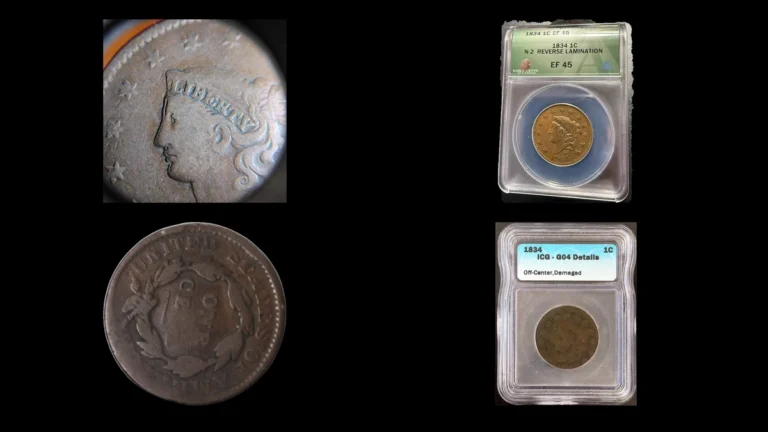
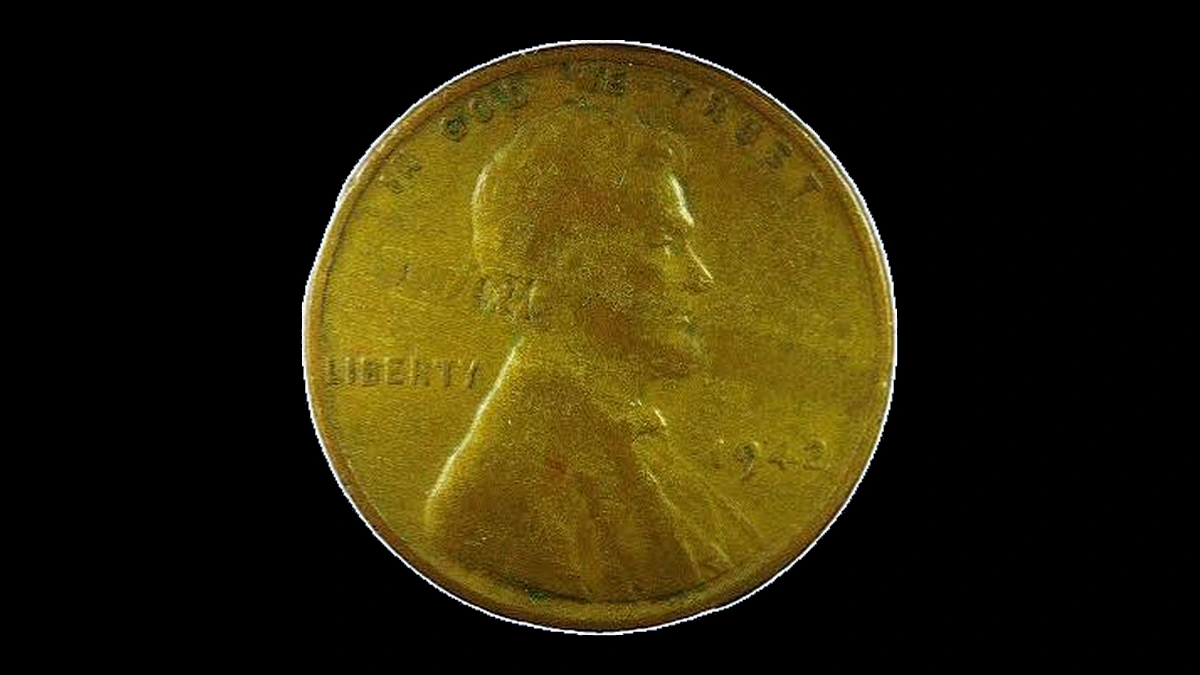
4. 1942 Penny A Layer Separates from the Copper: Lamination Error
A weak layer inside the alloy may lift as a flap or fall away. A 1942 penny is copper-rich metal throughout, so this is not modern copper plating peeling from a zinc center.
How to Identify
Photograph an attached layer in low light without lifting it. Follow the seam into the original surface instead of creating a new opening to see underneath.
Where metal is missing, look for a natural layer boundary. A fresh gouge can cut across finished detail and push copper beside the cut.
Normal measurements are about 3.11 grams and 19.05 millimeters across. Lost metal may lower the weight, but a small attached flap can leave it close to normal.
What It’s Worth
$5–$300 is a working estimate for genuine laminations, with size and preservation guiding the comparison. A 1941-S retained back lamination graded MS66 Red by PCGS sold for $69 in April 2020.
A worn 1942 ANACS XF45 coin appeared in an auction group. The group’s total cannot be assigned to that penny as an individual sale.
5. 1942 Penny A Depression Interrupts the Design: Struck Through Debris Error
An object caught between the die and blank can leave an impression or stop detail from forming. This is a struck-through error, rather than a dent made after the coin was finished.
How to Identify
Follow a letter or portrait edge toward the affected area. Look for evidence that the design was blocked during striking, rather than scraped away afterward.
A layer separating from the coin itself points toward lamination instead. The proposed 1942 category does not identify grease, cloth, or a metal fragment from the shape alone.
Keep any remaining material in place and photograph the whole face with the depression. An isolated close-up can hide pressure damage elsewhere on the coin.
What It’s Worth
$10–$500 is an estimate for an authenticated modest debris impression. It applies to a genuine obstruction during striking, not simply a rough or damaged patch.
A 1920 cent struck through a loose metal layer, graded VG10 by PCGS, sold for $134 in March 2025. Its identified fragment does not establish what affected a proposed 1942 specimen.
6. 1942 Penny The Design Misses Part of the Blank: Off-Center Strike Error
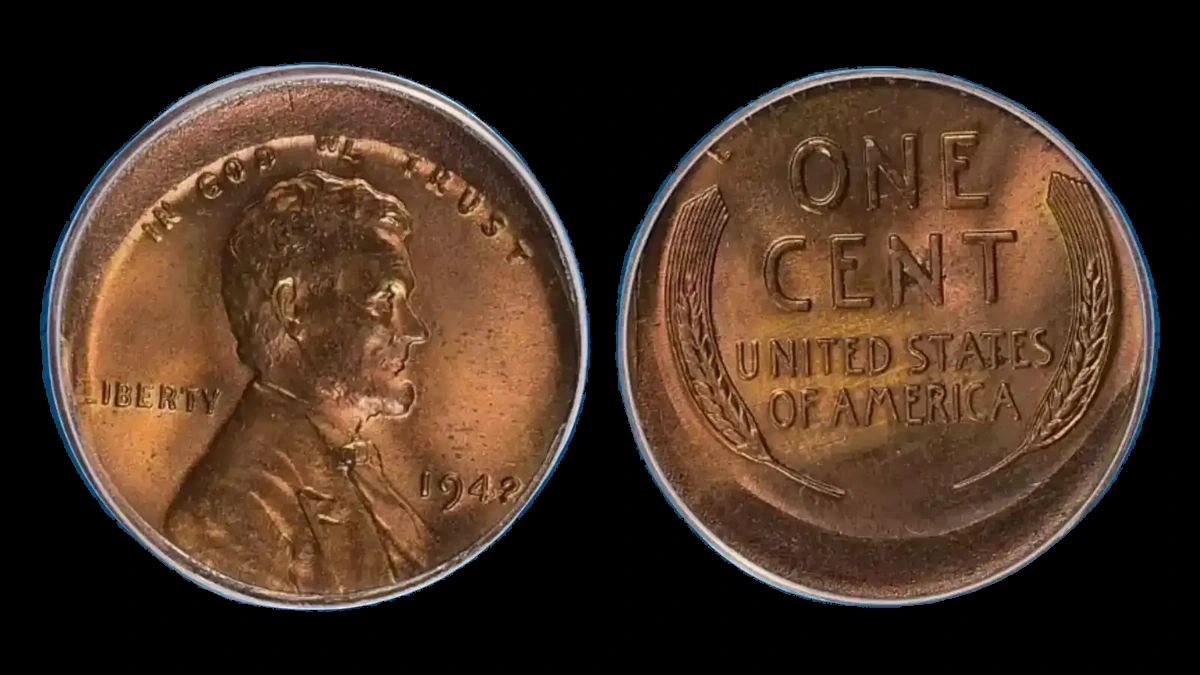
The known Philadelphia example is about 40% off center toward twelve o’clock. Unused copper remains beside a design that ran beyond the available metal.
How to Identify
Read the surviving date and inspect the plain crescent for grinding or erased design. An off-center strike leaves original blank metal; it does not need a piece cut from the coin.
Turn over the documented example before pricing it. Its back also carries a reversed, recessed image, so it is a combined error rather than an ordinary displaced strike.
For another candidate, both faces must make sense for the same misplaced blank. A shift confined to one die can produce a different alignment error.
What It’s Worth
$40–$800 is a working estimate for a dated off-center cent without the added mirror image. A 1950-D cent struck 35% off center sold for $192 in October 2021.
The known 1942 coin brought $2,585 in November 2013, but that amount includes its brockage. It should not be presented as the value of displacement alone.
7. 1942 Penny A Backward Portrait Sinks into the Back: Mirror Brockage Error
A previously struck coin caught in the press can impress its design into the next blank. The resulting brockage is backward and recessed instead of a normal raised image.
How to Identify
The documented 1942 coin has the mirror copy on its back and the 40% off-center front described above. PCGS graded it MS62 Brown, and the auction description notes rim bumps.
Trace a recognizable reversed feature and check that it sits below the surrounding surface. Then inspect the edge and both faces for squeezing, because later pressure from another coin can imitate a mirror mark.
The record describes one receiving coin. The earlier coin that made the brockage is not attached to it.
What It’s Worth
$800–$4,000 is an estimate for comparable dated combinations, depending on image clarity and condition. The supplied specimen sold for $2,585 in November 2013.
That is one price for the off-center strike, brockage, and condition together. Adding a separate maximum off-center estimate would count part of the same coin twice.
8. 1942 Penny The Blank Has the Wrong Metal or Weight: Wrong Blank Error
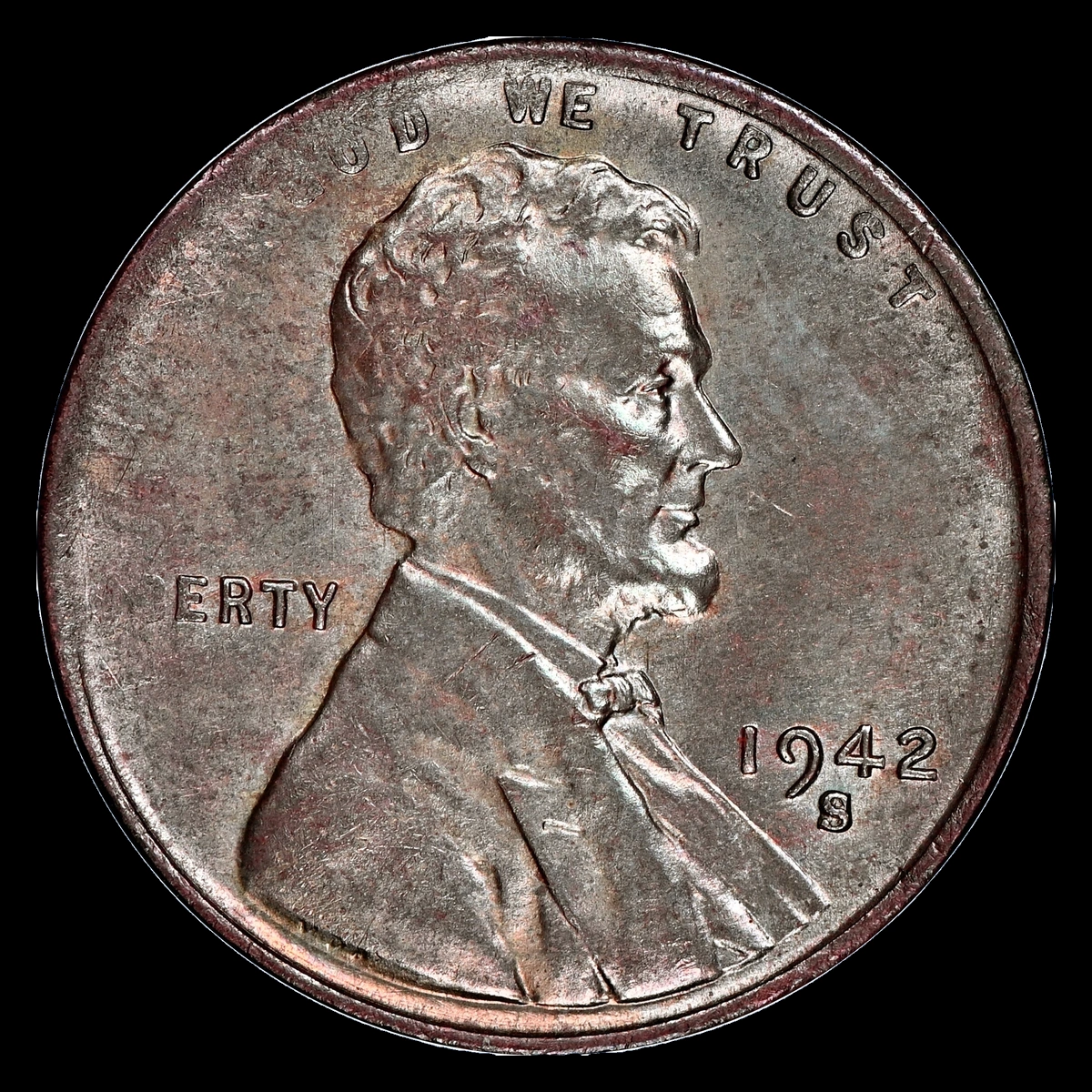
Several different blanks appear in the supplied records. They include a Philadelphia cent on a silver dime blank, another on an Ecuador 20-centavos blank, and a light bronze San Francisco piece.
How to Identify
The silver dime-blank cent and the light bronze coin both weigh 2.5 grams. Weight alone therefore cannot tell you which metal or blank is involved.
The San Francisco piece is reported as 95% copper, 4% zinc, and 1% tin, with a width of 19 millimeters. Those measurements do not identify the separate Ecuadorian-blank example.
On the silver specimen, IN GOD WE TRUST survives completely while part of the back motto misses the small blank. Its shoulder and the O in ONE are weak, but those details should not be transferred to every wrong-blank cent.
What It’s Worth
$2,000–$10,000 is an estimate for comparable silver-blank cents, with the identified Ecuadorian type around $1,500–$10,000. The PCGS MS63 silver-blank coin sold for $6,168.75 in June 2014.
The light bronze San Francisco example has a separate estimated range of $1,000–$6,000. Its May 2026 auction listing records no sale, so it supplies no realized price.
Conclusion
A useful identification combines the visible feature with the correct specimen record. Two 2.5-gram coins can have different metals, and one off-center coin can also carry a brockage.
Keep original surfaces and loose layers intact, then compare the date, mint, and condition before applying a price. The small mintmark varieties offer close-up clues, while unusual blanks and mirror impressions need broader evidence than color or one photograph.