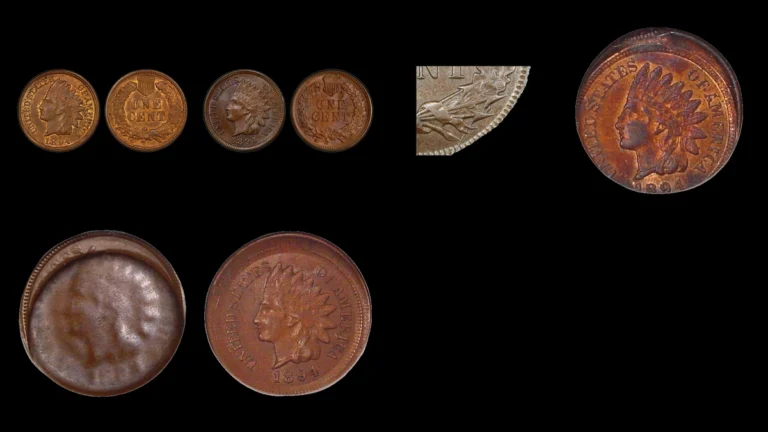
Rare 1888 Penny Errors (List & Pictures)
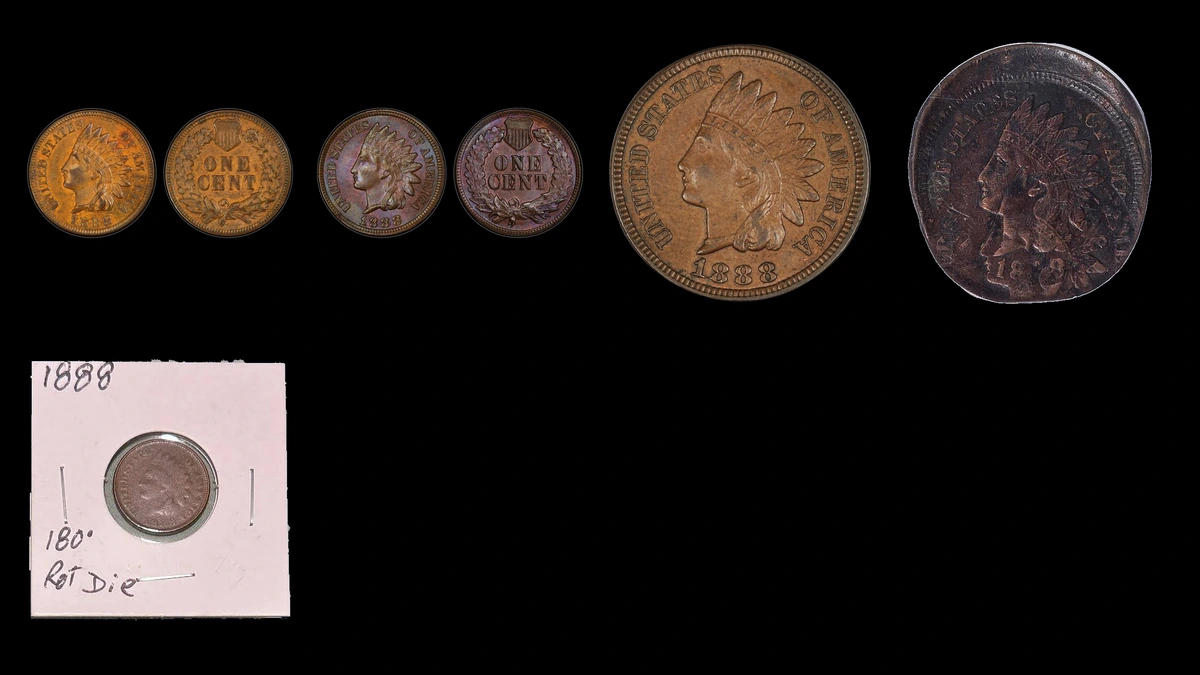
Several kinds of extra marks can surround the date on an Indian Head cent, but only a specific pair of remnants identifies the valuable 1888/7 variety. One sold for $74,750 in August 2007.
The estimated span for 1888 penny errors is $5–$80,000, including both modest defects and rare whole coins. Work outward from the date to the portrait, rim, and relationship between the two faces using the guide below.
| Visible feature | What to investigate | Estimated value |
|---|---|---|
| Remnants around the last 8 | 1888/7 overdate | $1,000–$80,000 |
| Extra digit strokes elsewhere | Repunched or misplaced date | $15–$3,000 |
| Raised lines or lumps | Die cracks, chips, and rim breaks | $5–$3,000 |
| Missing feather detail | Struck-through material | $50–$4,000 |
| Altered outline or alignment | Clip, shift, off-center strike, rotation, or cap | $5–$5,000 |
| Unusual pale metal | Copper-nickel strike | $5,000–$30,000 |
1. 1888 Penny Two Traces Beside the Last 8: 1888/7 Overdate Error
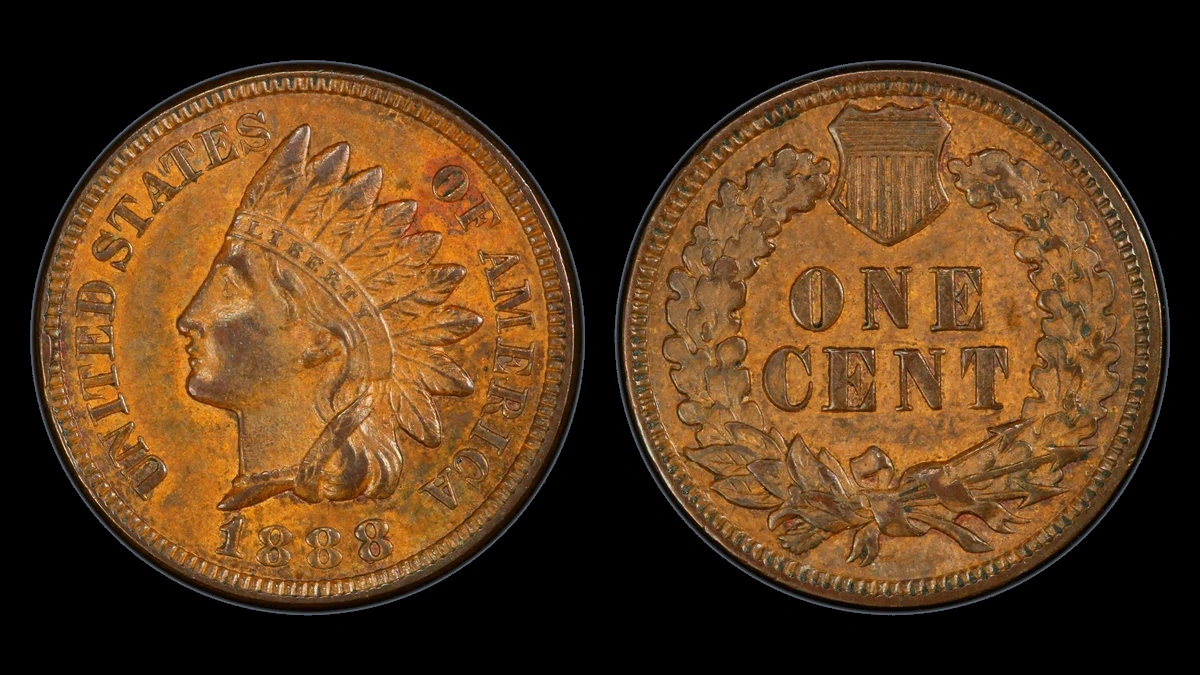
The last numeral provides the decisive evidence for the 1888/7, also called Snow-1 or FS-301. Parts of a previously punched 7 survived when an 8 was entered over it in the steel die that struck the coins.
How to Identify
Examine the upper-left side of the final 8, then the area beneath that same numeral. Both surviving traces must agree with the recognized overdate; a single blob below the date is not enough.
Many examples also have a rim break above the E in UNITED. Use that as supporting evidence after matching the date, since a damaged die can produce unrelated lumps on other pennies.
What It’s Worth
$1,000–$80,000 is the estimated range for an authenticated example. The PCGS record for the variety includes a $74,750 Heritage sale in August 2007 for an MS63 Brown coin, an unworn example with brown surfaces.
A PCGS MS64 Red and Brown coin brought $66,000 at Heritage on February 27, 2025. Those results concern exceptionally preserved coins, so they should not be assigned to a heavily worn discovery.
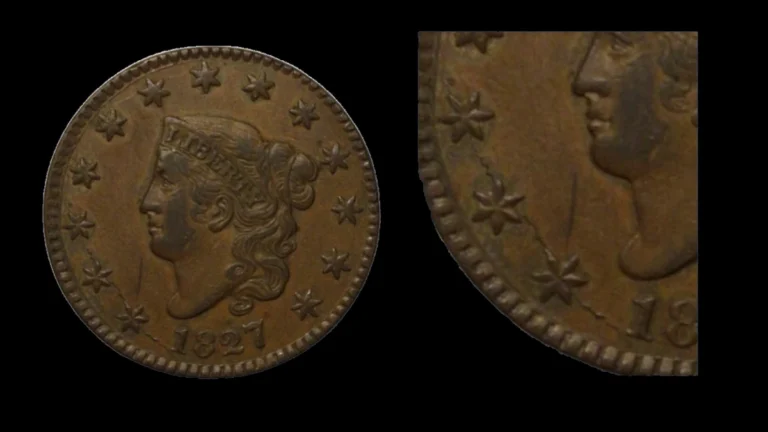
2. 1888 Penny Repeated Strokes Within the Date: Repunched Date Error
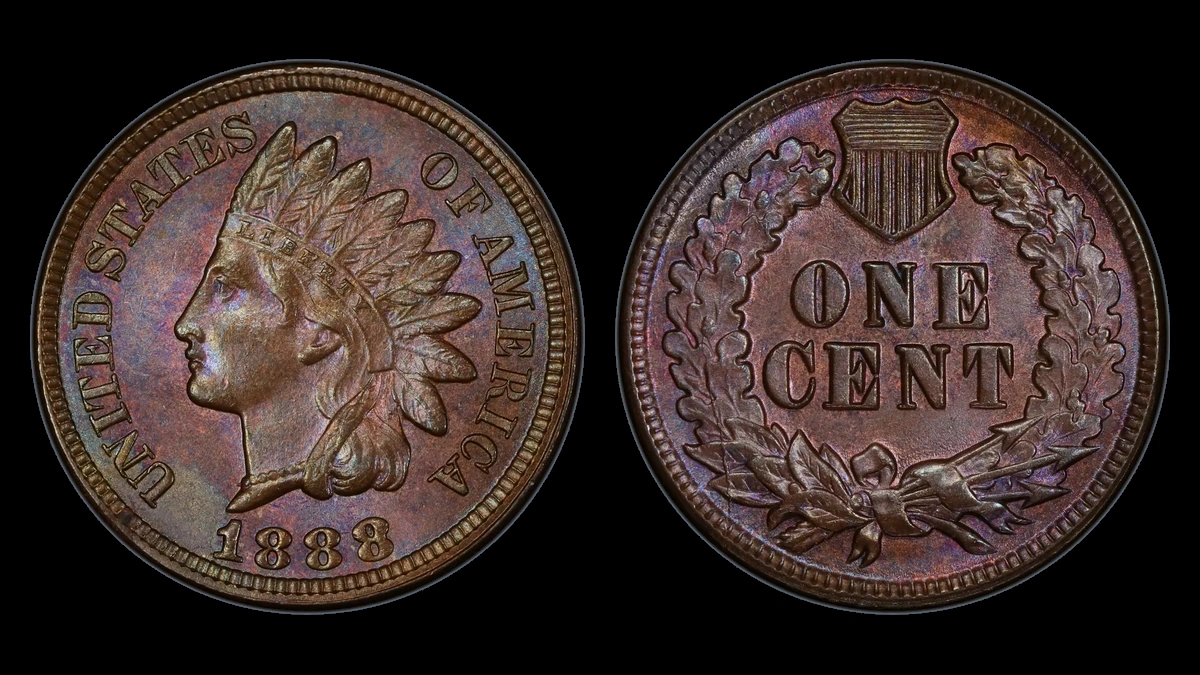
Look inside the loops of the 8s as well as beside the base of the 1. A date punch could leave overlapping impressions when it was used more than once on a die, producing extra portions of the same numerals.
How to Identify
Trace each extra curve under magnification and compare the complete pattern with one documented 1888 variety. Do not assemble an identification from matching parts of several different coins.
Proofs, specially made collector coins, include examples with strokes below the 1 and within the first 8. Their date photographs are not automatic matches for circulation strikes, and ordinary repunching does not establish the 1888/7 overdate.
What It’s Worth
$15–$500 is the estimated circulation-strike range, while a Proof may be worth $500–$3,000 as a complete coin. The Proof estimate includes the value of its finish and preservation.
A 1904 FS-301 repunched date graded MS64 Brown sold for $168 in January 2019. That different-year transaction offers context, but the supplied evidence does not give a corresponding completed sale for an 1888 example.
3. 1888 Penny Number Fragments Near the Portrait: Misplaced Date Error
A small part of a numeral can be hidden among otherwise ordinary portrait details. Misplaced dates began as date-punch impressions in an unintended area of a die, separate from the correctly positioned date.
How to Identify
Inspect the first necklace pearl for the top of a stray 1, then consider the neck, hair, and lower border when checking other listed varieties. These locations describe separate examples rather than one coin carrying every feature.
One Proof variety has an extra 1 among the border teeth below the gap between the normal 1 and first 8. A convincing match needs a recognizable digit shape in the correct position, not merely an unexplained raised speck.
What It’s Worth
$25–$700 is the estimated range for circulation examples; Proofs have a separate whole-coin estimate of $500–$3,000. Visibility and the underlying coin’s condition both matter.
The supplied comparison is a recorded $1,187 eBay price in December 2021 for a 1908 FS-301 graded MS65 Red and Brown. It concerns a different date and is not an 1888 sale record.
4. 1888 Penny Raised Ridges and Rim Patches: Die Cracks, Chips, and Breaks Error
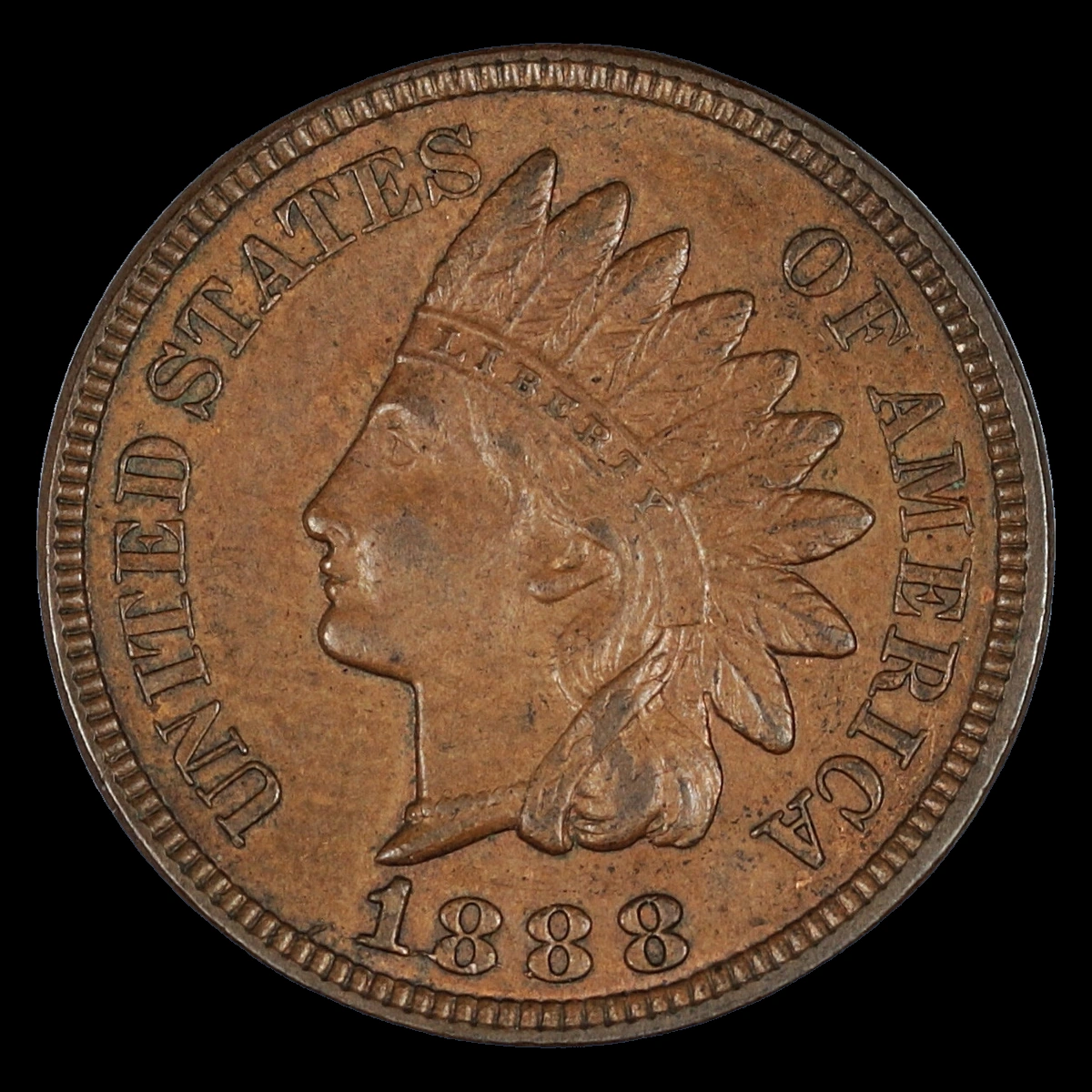
On the reverse, a narrow raised line may reveal a cracked die; around the date, a small lump may instead mark a chip. Both form because coin metal fills an opening in the die during the strike.
A larger missing die piece at the edge can leave a broad raised patch called a cud. When the broken piece stays in place temporarily, the resulting retained break can preserve some design inside the affected area.
How to Identify
Recorded examples include a front rim break around 12–1 o’clock and a separate retained reverse break around 3:45–4:45. Smaller features include a bump beside the final 8 or on a reverse leaf, with some chips occurring on Proof coins.
Move the light across a thin mark to establish whether it rises above the surface or cuts into it. A scratch forms a channel, while a die crack produces a ridge; the location and extent should then match the particular example being identified.
What It’s Worth
$5–$500 covers estimated values for circulation coins with these defects. A conspicuous rim break can attract more interest than a faint crack on a worn penny.
A Proof with a small chip has a separate estimated whole-coin value of $500–$3,000. That figure should not be presented as the chip’s added premium, and no exact auction result is supplied here.
5. 1888 Penny An Incomplete Feather Tip: Struck-Through Material Error
The third feather down from the top is the area of interest on a recorded PCGS MS65 Red 1888 cent. Its incomplete tip was described as a struck-through feature, with grease suggested as a possible obstruction during striking.
How to Identify
Compare the affected tip with the neighboring feathers and other exposed parts of the portrait. A local omission surrounded by sharp detail needs a different explanation from wear that has smoothed several high points.
Check for cuts or pushed-up metal that would suggest a later scrape. The missing detail is recorded, but the material responsible was not conclusively identified.
What It’s Worth
$50–$300 is the estimate for an ordinary coin with a clear small struck-through area. The high-grade MS65 Red example instead has an estimated whole-coin range of $1,500–$4,000.
No completed price is supplied for that particular lot. Its unworn condition and remaining copper-red color account for much of the larger estimate, rather than the feather omission alone.
6. 1888 Penny A Missing Piece of the Edge: Clipped Planchet Error
An 1888 clipped cent is recorded in an auction listing, although the supplied information does not establish the size of its clip. The missing metal would have originated in the blank, or planchet, before the designs were struck.
How to Identify
Study how the design and rim approach the gap, looking for natural weakness rather than a sharp cut through completed details. A clip may also leave a weak area on the opposite rim, but that clue should support the edge evidence rather than replace it.
For loose coins, the normal bronze-cent reference is about 3.11 g and 19 mm across, with wear affecting weight. Record weight and dimensions once when investigating missing metal, altered shape, or unusual composition; leave encapsulated coins in their holders.
What It’s Worth
$25–$300 is the estimated range for a genuine 1888 clip. The extent of the missing section and the condition of the remaining coin influence where it belongs.
A 1939 clipped Lincoln cent graded MS64 Brown sold for $180 in January 2023. It is a limited comparison from a different series, not a sale establishing the value of the recorded 1888 coin.
7. 1888 Penny One Border Wider Than the Other: Rim Shift Error
An uneven rim invites a comparison of the two faces before any specific error is named. The supplied 1888 report uses “rim shift,” a description that does not settle whether a die or the blank was out of position.
How to Identify
Take straight-on photographs showing each complete rim. A displaced design on only one face suggests a misaligned die, while similar displacement on both faces requires considering the position of the blank.
Inspect the narrow side for flattening, scrapes, or metal pushed up by an edge impact. A tilted strike and later damage can also affect the border, so an uneven width alone does not prove an off-center strike.
What It’s Worth
$5–$100 is an estimated whole-coin range for an ordinary 1888 cent with a genuine minor alignment error. A barely noticeable shift may contribute little beyond the penny’s ordinary value.
The estimate reflects the limited description, with no exact completed sale supplied. Damage to the rim does not earn a mint-error premium.
8. 1888 Penny Design Lost Beyond an Unstruck Crescent: Off-Center Strike Error
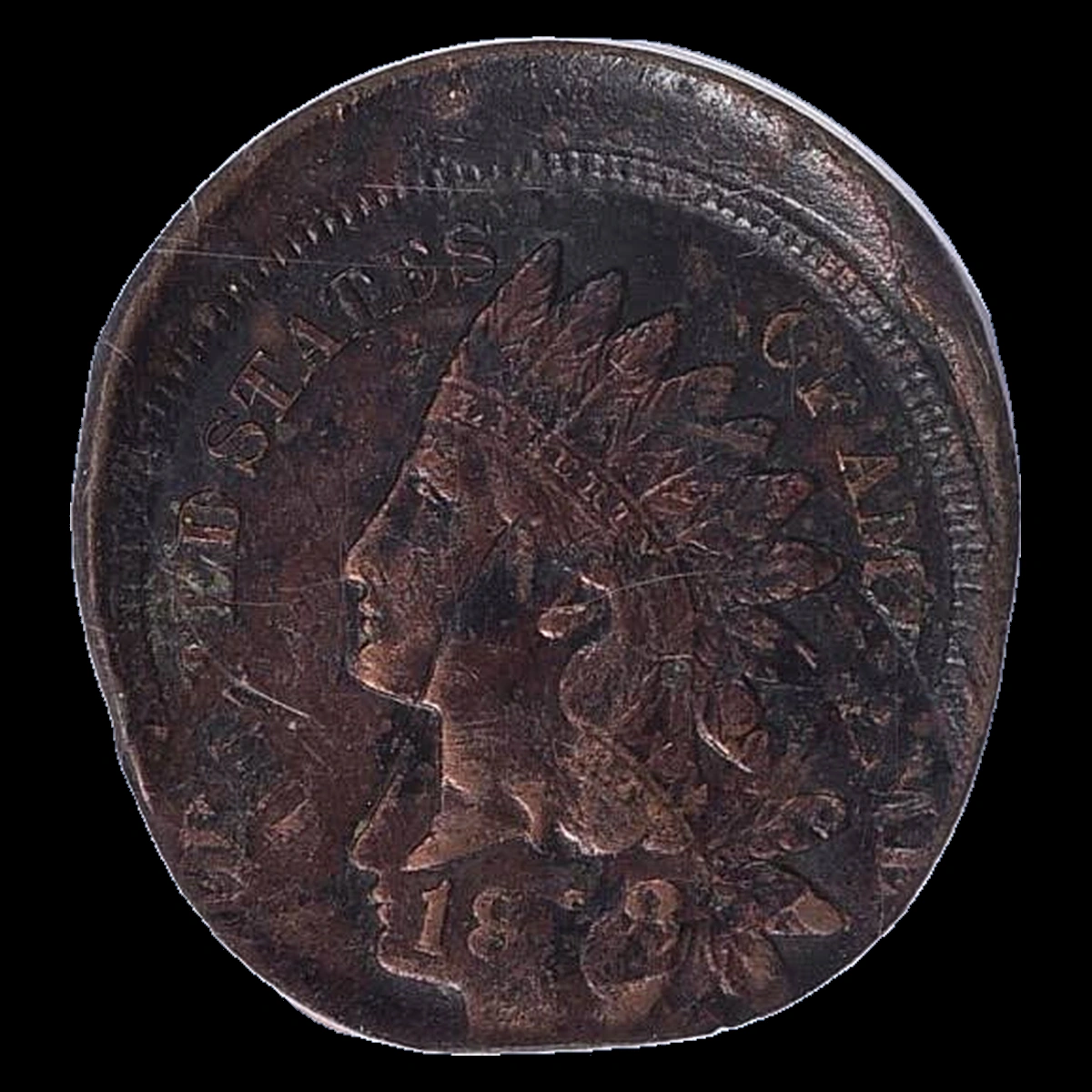
Check whether part of the portrait or wreath is absent at one edge while untouched metal remains at the other. That combination can show that the planchet was displaced when both dies struck it.
How to Identify
Establish that the surviving date reads 1888, then compare the displacement on both sides. A one-face shift with a complete design is different from the shared off-center strike pattern.
The boundary between struck and unstruck metal should be natural, without filing used to remove the missing letters. No precise percentage or grade is established for the supplied 1888 report.
What It’s Worth
$150–$1,500 is the estimate for an authenticated 1888 off-center cent. A readable date, clear displacement, and attractive surfaces can improve its appeal.
For a nearby-year comparison, an 1896 cent struck 10% off-center and graded NGC AU50 sold for $159 in June 2023. Its light wear and relatively small displacement describe that coin only.
9. 1888 Penny The Reverse Turns Sideways: Rotated Dies Error
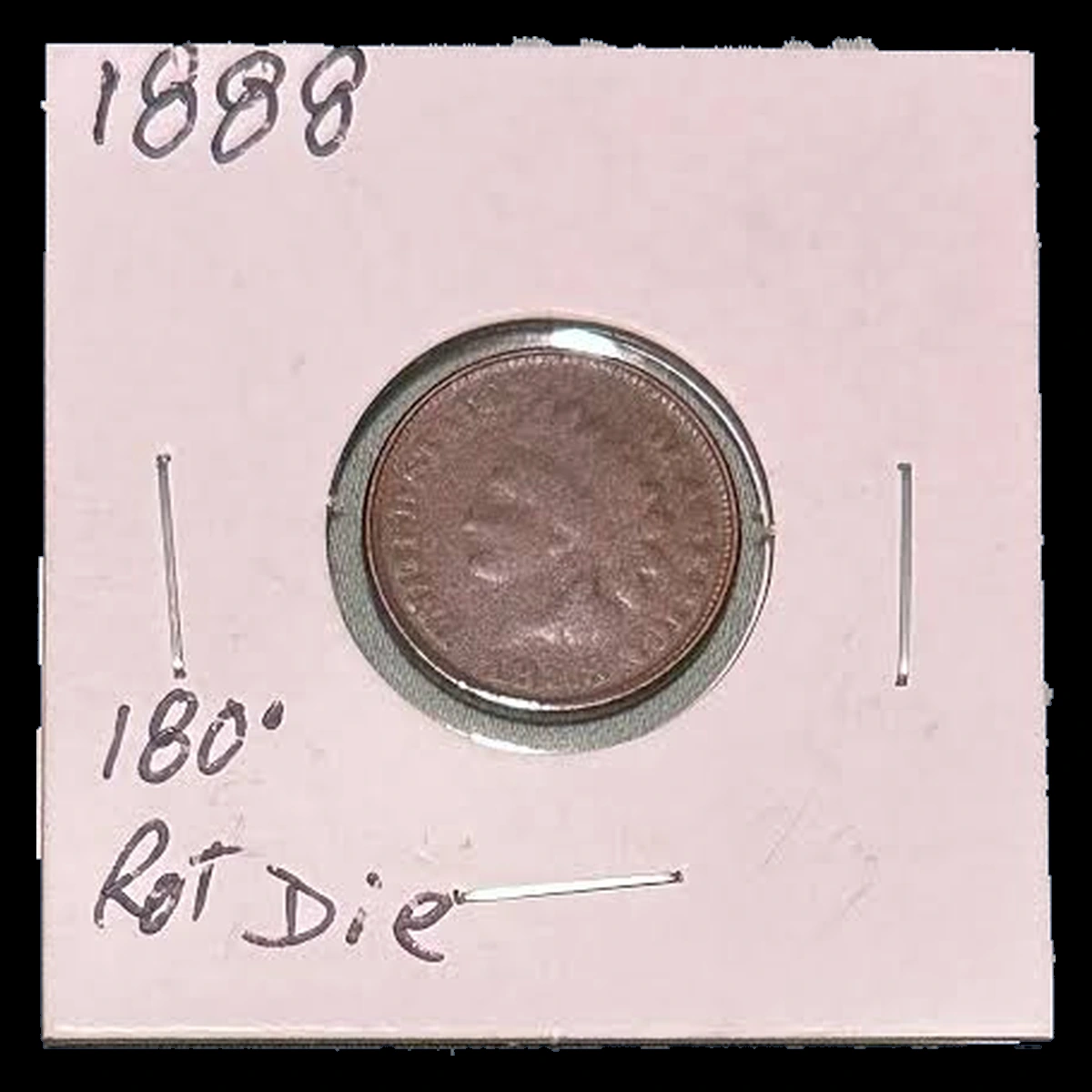
A recorded 1888 NGC F12 Brown cent has a reported 110-degree clockwise rotation. This describes the angle between its designs, caused by a die turning out of its normal position in the press.
How to Identify
Hold the date upright and flip the coin from top to bottom without adding a sideways turn. A normally aligned U.S. cent will show an upright reverse after that movement.
Repeat the test with the coin held in a fixed orientation before measuring the deviation. Separately rotated photographs cannot demonstrate it, and an edge seam may reveal an altered assembly of coin halves.
What It’s Worth
$50–$300 is the estimated range for a clearly demonstrated rotation near the reported 110 degrees. Much smaller deviations generally attract less interest.
The F12 Brown record establishes a visibly worn example, but no sale price is supplied for it. Surface damage can reduce value even when the rotation is dramatic.
10. 1888 Penny Metal Forms a Raised Cup: Die Cap Error
A side view is particularly useful when evaluating a possible die cap. A coin stuck to a die can spread around it during repeated strikes, developing walls rather than remaining flat.
How to Identify
Examine both surfaces and the walls for surviving design and metal flow consistent with repeated blows. Simply bending a penny into a bowl can leave sharp folds, tool scratches, or hammer marks without that strike history.
The supplied 1888 listing names the category but does not document a particular wall height or grade. Those details, including a readable date, must come from the specimen itself.
What It’s Worth
$500–$5,000 is the estimated range for a genuine 1888 die cap. Depth and the quality of the surviving designs would be important to its individual assessment.
A 1979-D front-side cap graded PCGS MS64 Red sold for $329 in January 2016. That later Lincoln cent demonstrates the error class, but its result does not establish an Indian Head cent’s price.
11. 1888 Penny Pale Metal Instead of Bronze: Copper-Nickel Strike Error
The recorded pale 1888 cent presents a classification question as well as a metal difference. PCGS graded it MS64 and labeled it a nickel die trial, while an alternative explanation proposes an accidental strike on a Colombian five-centavo planchet.
Its composition is described as copper-nickel rather than pure nickel. A misplaced 1 near the first necklace pearl also helps distinguish this particular specimen.
How to Identify
Exposed copper beneath a pale coating would point toward plating, so inspect worn areas and the edge carefully. Color alone cannot establish the alloy, and ordinary bronze-cent measurements are not published specifications for the rare piece.
Professional nondestructive metal testing and a complete specimen comparison are needed to investigate such a claim. Even a correct alloy identification would not by itself resolve whether the coin was a test strike or an accident.
What It’s Worth
$5,000–$30,000 is an estimated range for the recorded copper-nickel piece, subject to identity and classification. No completed sale for it is assigned here.
A 1959 cent struck on a Venezuelan five-centimo planchet brought $3,904 in June 2026. The different date, metal-blank attribution, and collector market make that a broad comparison rather than a direct price guide.
Conclusion
Begin with a clear description of what your 1888 cent actually shows: extra digit strokes, missing design, raised metal, an altered outline, or a change in alignment. That keeps a common date chip from being mistaken for the important overdate.
The broad $5–$80,000 estimate also includes valuable Proofs and unusual whole coins. Match the variety and condition before applying any example price, especially when the comparison comes from another year.