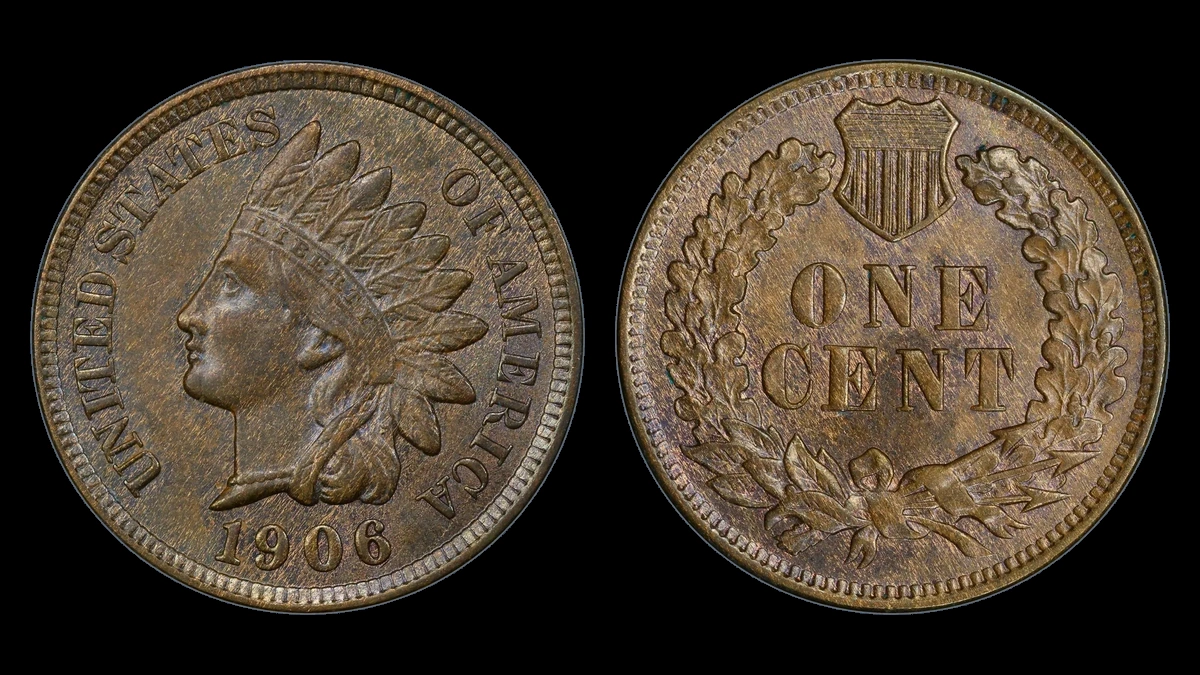
Rare 1906 Penny Errors (List & Pictures)
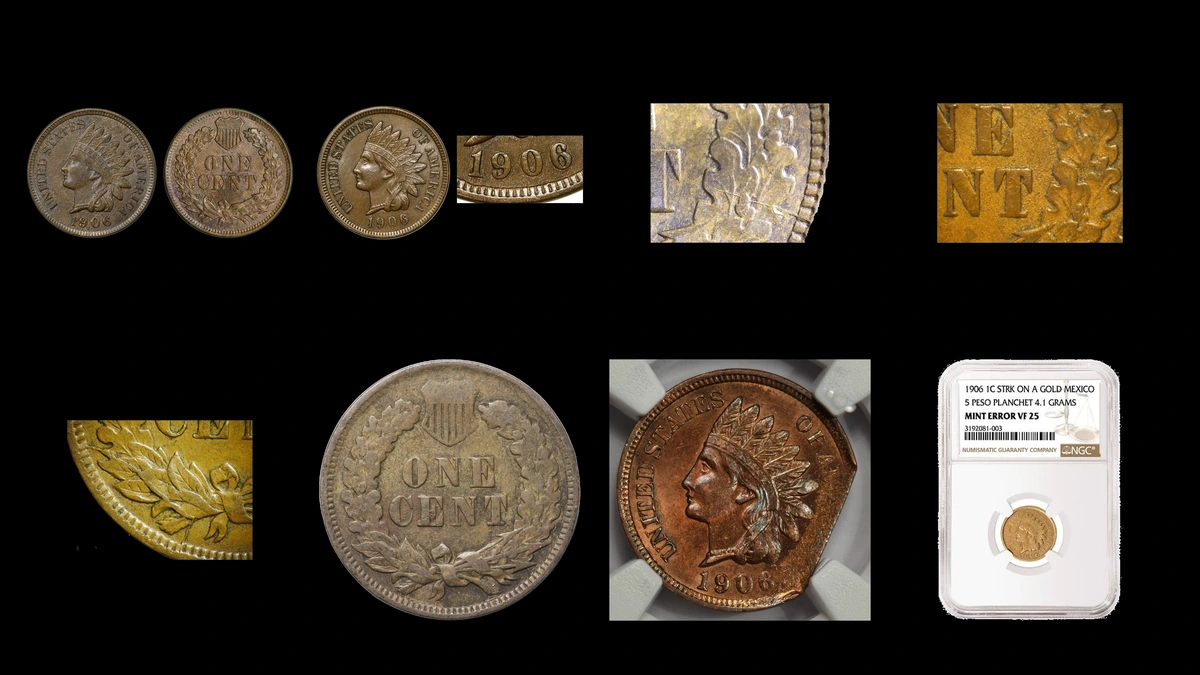
One remarkable 1906 cent has a gold body and lettering on its edge. Bidding had passed $50,000 by August 2022, but that report came before the auction ended.
More familiar 1906 penny errors involve date strokes and small die defects; a red FS-303 repunched date has a recorded $2,820 sale. Estimated whole-coin values below span $5–$100,000, with the exceptional gold-blank piece at the top.
1. 1906 Penny An Earlier Stroke Follows a Date Digit: Repunched Date Error
The date was punched into the die separately. More than one position of that punch could survive as small extra strokes beside the final numbers.
How to Identify
Poliquin 2 has earlier detail below the 1 and 9 and inside the 0. Check those positions together rather than taking a direction from another variety.
The separately made collector version called Proof 1 shows an earlier 0 below the main zero. Its finish and date pattern need a Proof comparison.
Snow-20, also called FS-303, is listed as a repunched date. An extra curve should not be promoted to a hidden 5 or a confirmed 6-over-5 date.
What It’s Worth
$15–$3,000 is an estimated range for ordinary-strike varieties, with complete Proof 1 coins considered separately around $200–$2,000. The Greysheet auction listing reports $2,820 for a PCGS MS66 Red FS-303 in February 2017.
That result belongs to a well-preserved red coin of a named variety. A worn date with a small extra stroke is a different comparison.
2. 1906 Penny Number Tops Hide in the Lower Border: Misplaced Date Error
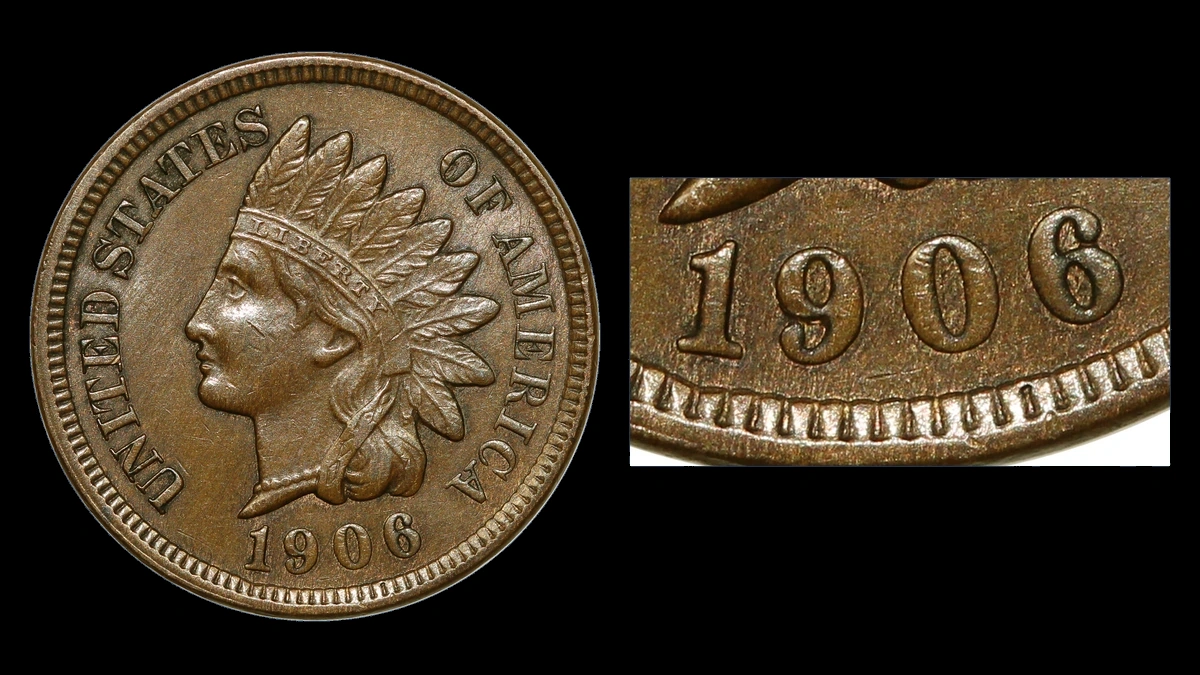
A date punch placed too low could leave parts of numbers among the border teeth. These tiny remnants sit away from the normal date position.
How to Identify
Poliquin 7 has a trace below and right of the normal 0. Other recorded forms show tops of 90, 06, or 906 in different positions.
Keep the main date and lower border together in the photograph so the spacing remains visible. A curved lump alone is less useful than a recognizable numeral fragment in the correct place.
Some varieties also have date repunching or cracks. Match the complete recorded combination instead of borrowing marks from several specimens.
What It’s Worth
$20–$1,500 is an estimate across identified varieties and conditions. Clear digit tops on well-preserved copper make stronger comparisons than traces almost hidden by wear.
A year guide reports $325 for an AU55 combined misplaced-and-repunched date. It supplies no dated primary auction lot, so that reported amount is limited context rather than a verified sale assigned to every such coin.
3. 1906 Penny Parts of the Wreath Repeat: Doubled Design Error
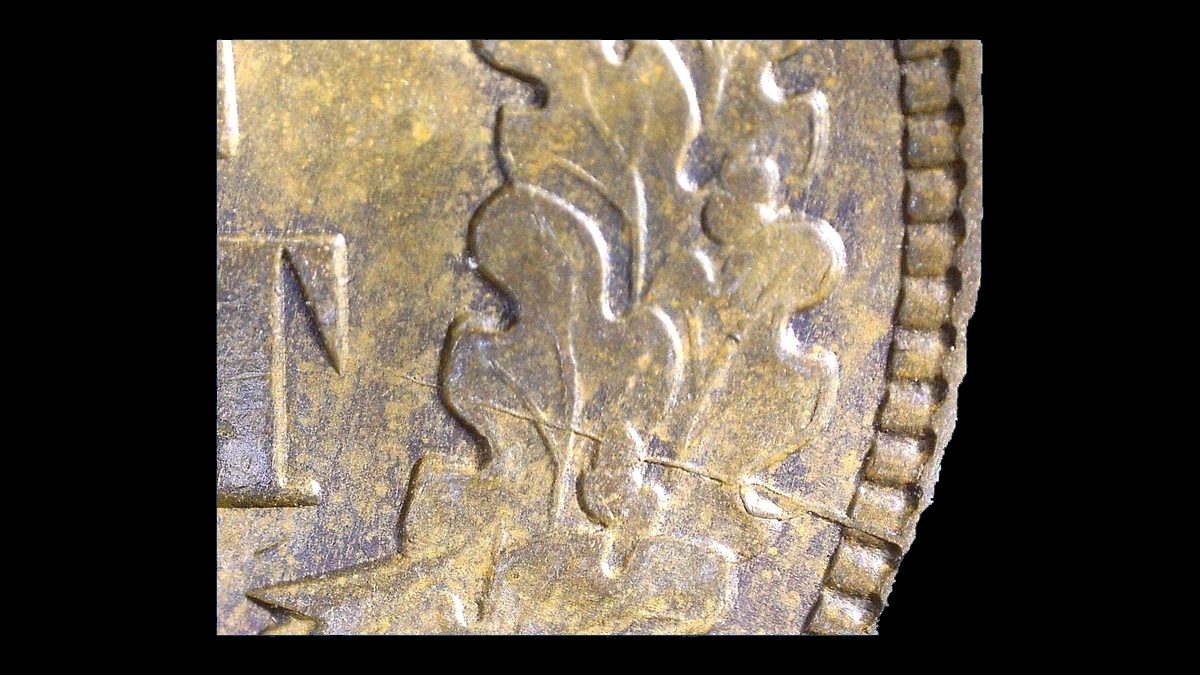
The back of Poliquin 17 has doubled wreath detail. Its front also shows misplaced tops of 0 and 6 below and left of the main digits.
How to Identify
The Poliquin 17 reference needs a match on both faces. Poliquin 95 and 100 share the front pattern without automatically sharing the doubled back.
Poliquin 19 is another form, with back doubling around three to three-thirty and misplaced 90 digits. A general front-doubling report near LIBERTY and the date needs its own evidence.
Look for related repeated outlines in the selected pattern. A flat shelf from movement during striking cannot be identified from these catalog names alone.
What It’s Worth
$20–$1,000 is a working estimate for modest matched back varieties or a confirmed example of the reported front pattern. Visibility, condition, and correct pairing matter.
No separate sale is supplied for every catalog number. When doubled wreath detail and misplaced digits occur on one coin, the estimate concerns that complete specimen.
4. 1906 Penny Opposite-Design Traces Appear: Die Clash Error
Dies can collide with no blank between them, picking up marks that later transfer to coins. Poliquin 87 and 97 have recorded clashed stages.
How to Identify
Both pairings also have repunched dates, whose extra strokes have a separate cause. Poliquin 97 additionally shows raised tool-filing lines above the back shield.
Use those details to choose the correct pairing, then match the actual clash outline to the opposite design. Filing lines and later scratches are not themselves evidence of a transferred picture.
Check the marks in whole-face photographs before tracing faint lines in a close-up. Their arrangement should make sense for the two opposing dies.
What It’s Worth
$15–$300 is an estimate for recognizable clashes across circulated and better-preserved examples. Strong transferred shapes are easier to demonstrate than faint unexplained lines.
The date and other tool marks contribute to one coin’s identity. Adding a separate maximum estimate for each mark would misrepresent the whole-coin ranges.
5. 1906 Penny Raised Dots Make the Surface Look Rough: Rusted Die Error
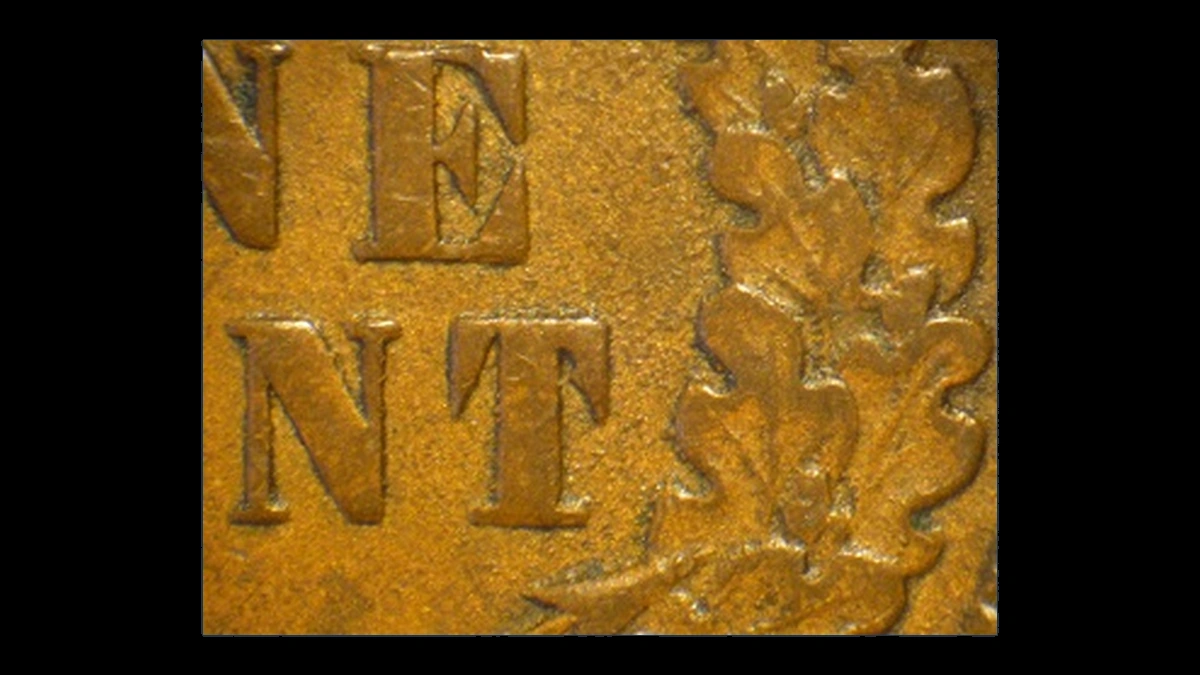
Rust pits in a steel die can produce raised texture when copper flows into them. This differs from corrosion eating holes into a finished penny.
How to Identify
Poliquin 26 records this tool-rust texture along with a retained back break between nine and ten o’clock. Compare the positions of the rough areas and the separate break with the same specimen.
Move the light across the surface to distinguish raised points from pits and crust. General roughness on a corroded coin is not enough to identify a rusted die.
What It’s Worth
$10–$150 is an estimate for circulated examples with a clear matching texture. Minor roughness may add little unless it helps establish the cataloged pairing.
The retained break can also affect the appeal of a Poliquin 26 coin. Assess both features together; no specific auction sale is supplied for that combination.
6. 1906 Penny Feather Tips or the Rim Gain Raised Metal: Chips and Breaks Error
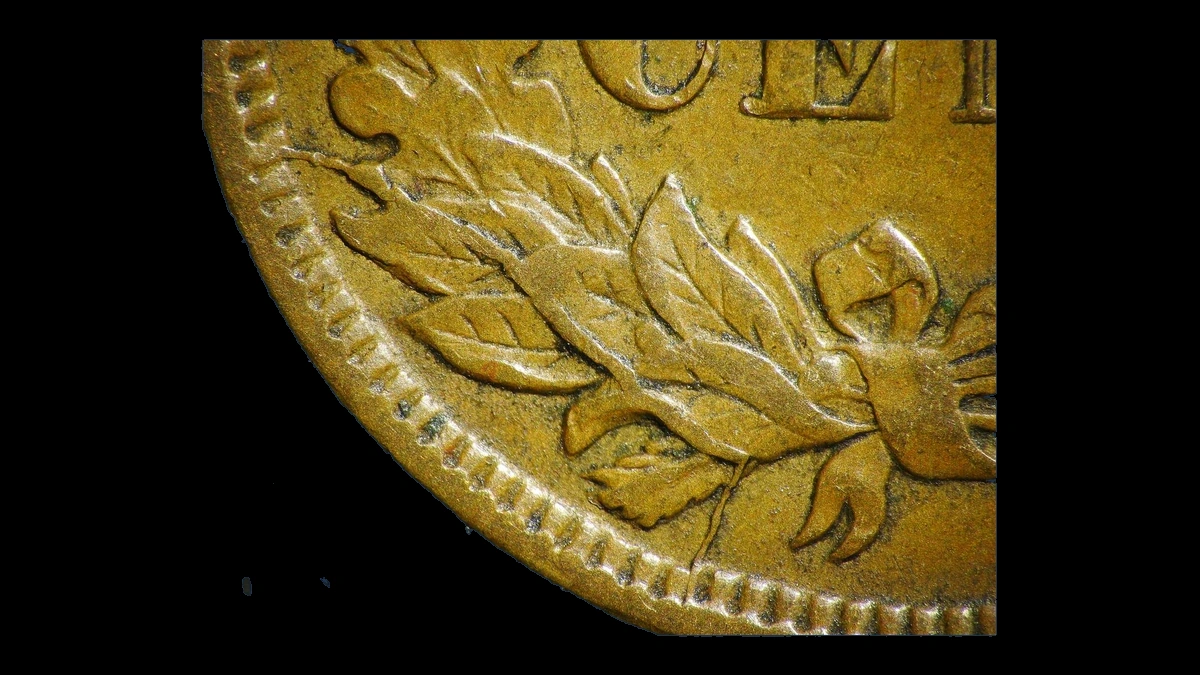
One recorded example has a large chip at the ninth feather tip and smaller chips at the sixth and eighth tips. Missing pieces in the die let copper form these extra raised shapes.
How to Identify
Compare the feather-chip arrangement as a group rather than using one isolated lump. A larger back break on Poliquin 1 instead sits between three and four o’clock.
That break retained part of the damaged die, so some design could remain inside its boundary. Poliquin 96 has another pattern of neighboring partial and retained breaks.
Inspect the actual boundary for added metal, edge impact, or a scratched groove. Original die cracks form raised lines rather than cuts through completed design.
What It’s Worth
$5–$100 suits small cracks and feather chips, while clearer retained breaks and substantial rim cuds can fall around $40–$750. The particular stage and the coin’s preservation guide the comparison.
A faint earlier crack can look very different from a developed later break. These are estimates for complete coins, not cumulative prices for each damaged area of a die.
7. 1906 Penny A Back Patch Did Not Form Normally: Struck Through Material Error
The dealer-listed NGC AU58 example has a back struck-through error. Material between the die and blank prevented part of the normal surface from forming.
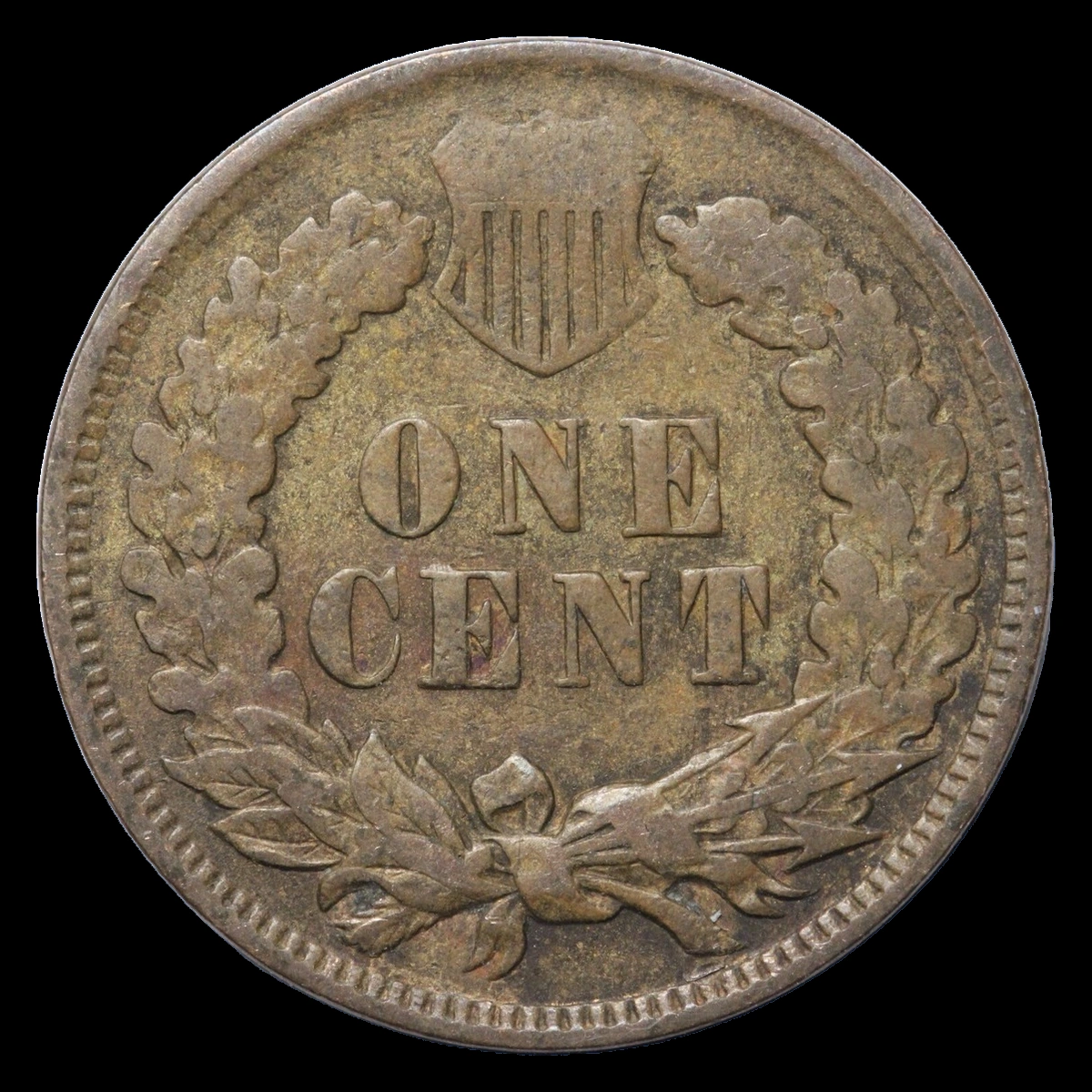
How to Identify
Follow a letter or wreath detail into the affected area and inspect its boundary. A later scrape removes or flattens design that had already formed.
The listing does not identify the obstructing material or fix its shape here. Do not call it cloth, wood, grease, or retained metal without evidence from the actual coin.
A wide view of the back helps show the size and nearby rim. Preserve any material still lodged in the surface rather than removing a potential clue.
What It’s Worth
$30–$500 is an estimate for a confirmed 1906 back struck-through error. The AU58 grade indicates light wear, so comparisons should account for that condition.
No final transaction amount is supplied for the listed coin. A larger clear original impression may support a stronger comparison than an indistinct patch.
8. 1906 Penny A Small Curved Arc Is Missing: Clipped Blank Error
The documented example is described as a 5% curved clip. NGC also noted damage with its VF Details description, so an original blank error and later problems exist on the same coin.
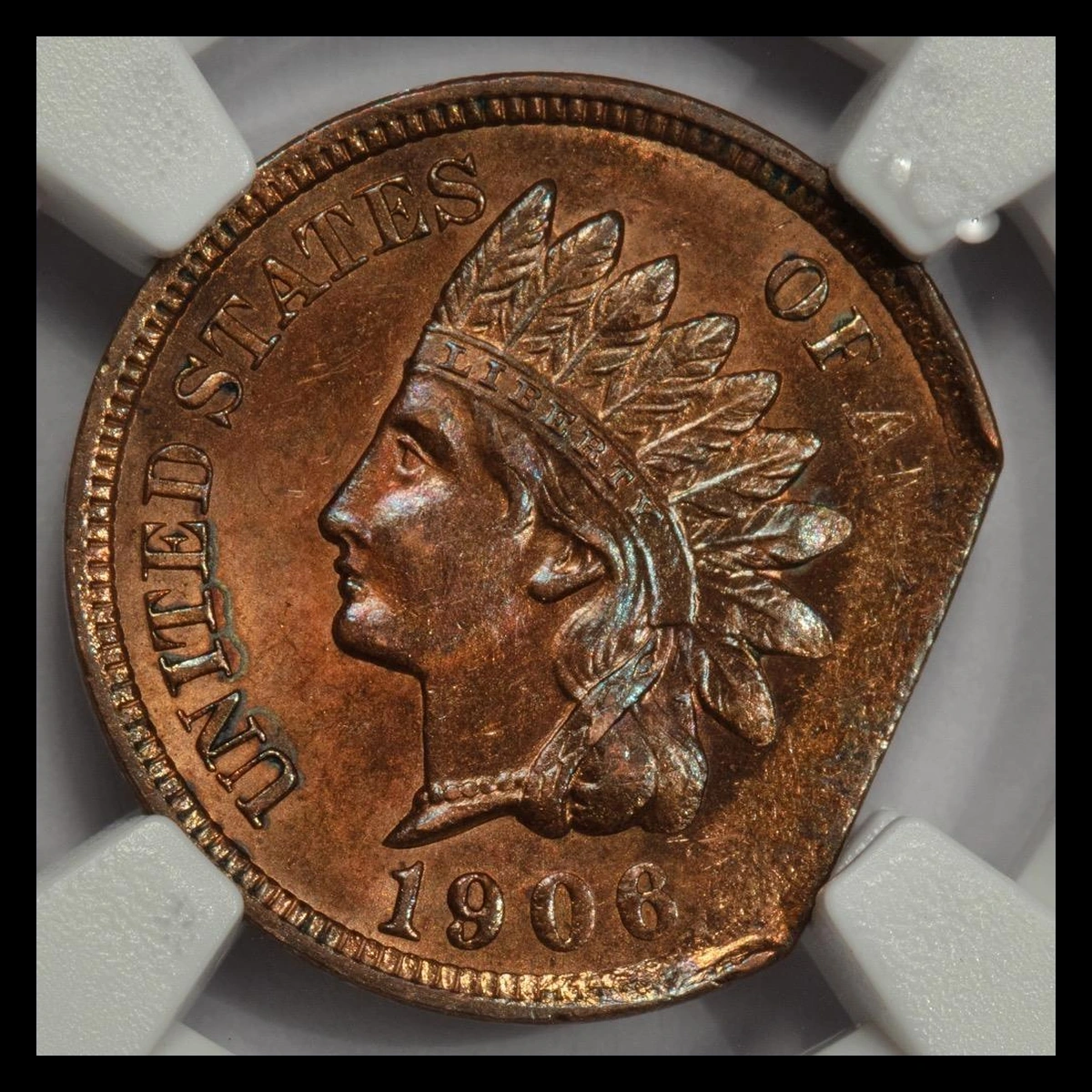
How to Identify
Photograph the curved gap separately from the later damage. Inspect how the struck rim meets both ends and look for filing or sharp cuts through finished detail.
A normal bronze cent weighs about 3.11 grams and measures 19.05 millimeters across. Missing metal should affect weight, but that does not distinguish an original incomplete blank from a later cut.
The listing does not establish the gap’s clock position. Use the actual coin rather than assigning a position from another five-percent clip.
What It’s Worth
$20–$100 is an estimate for the damaged circulated example, while clearer, better-preserved 1906 clips can compare around $50–$350. The Details problem remains part of the whole-coin assessment.
A five-percent description is not a fixed price. The natural boundary, visible date, and additional damage still need to match the comparison.
9. 1906 Penny Gold and Edge Lettering Replace Bronze: Mexican Gold Blank Error
NGC identified a 1906 Indian Head cent struck on a Mexican five-peso gold blank. It weighs 4.1 grams, is reported as 90% gold, and has a VF25 grade.
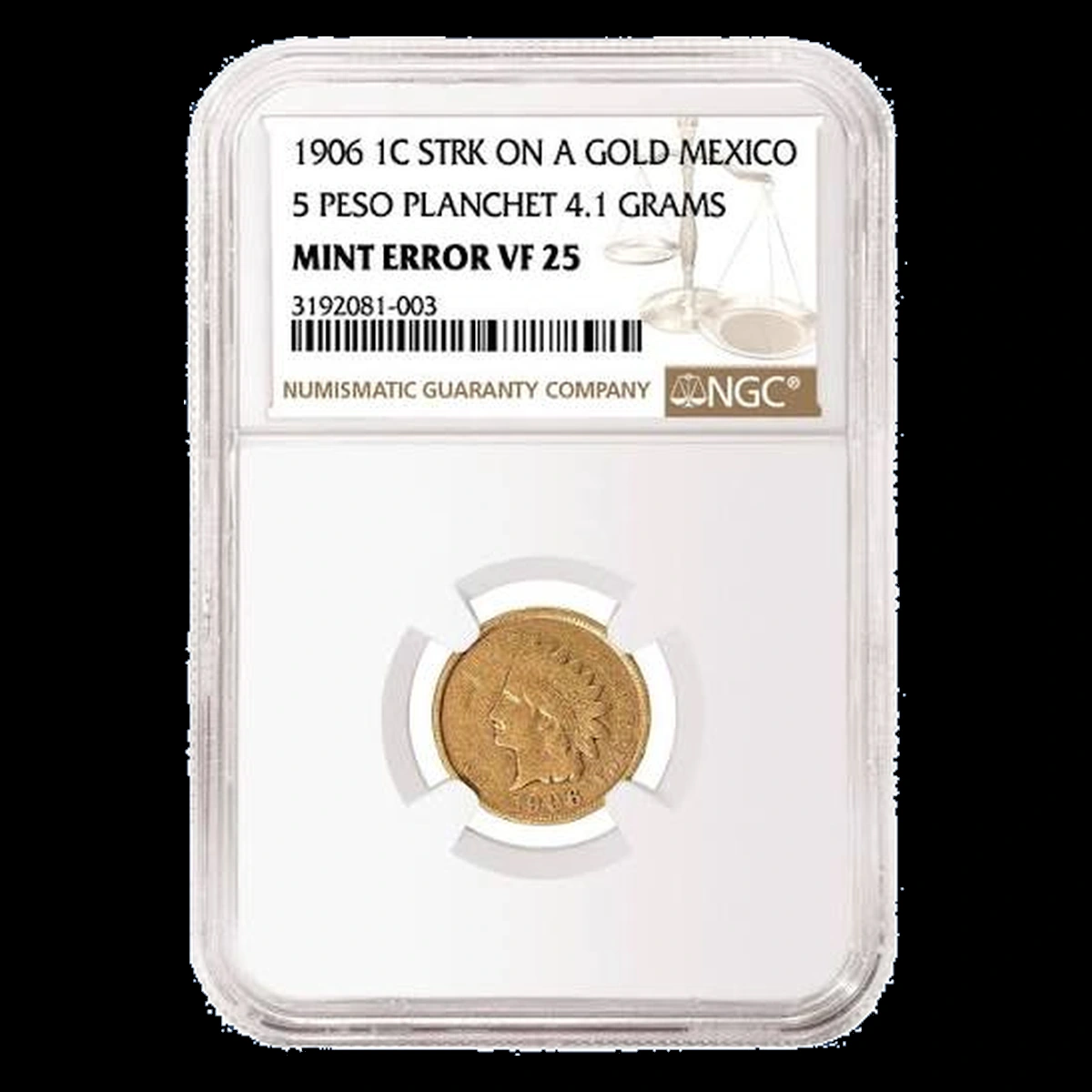
How to Identify
The edge retains INDEPENDENCIA Y LIBERTAD. That lettering provides a distinctive clue beyond the metal’s color.
The blank is close to the cent’s diameter, so size alone is not enough. The recorded weight is well above a normal bronze cent, and professional non-destructive metal testing supports the unusual composition.
The auction description found no visible earlier coin design on the faces. Do not expect a Mexican portrait beneath the Indian Head image simply because the blank has a lettered edge.
What It’s Worth
$50,000–$100,000 is a specialist estimate for this exceptional identified gold-blank error. NGC reported bidding above $50,000 in August 2022, before the September auction ended.
That report gives a bid level rather than the final sale price. The range concerns the rare complete error coin, not the gold value of an ordinary Mexican five-peso piece.
Conclusion
Matching both faces matters on 1906 cents because the same front date pattern can be paired with different backs. A misplaced numeral alone does not establish a doubled wreath or a particular clash stage.
Keep the Proof, damaged clip, and unusual gold blank in their own comparisons. Small varieties depend on matching shapes, while the gold piece adds metal, weight, and edge-lettering evidence.