Rare 1926 Penny Errors (List & Pictures)
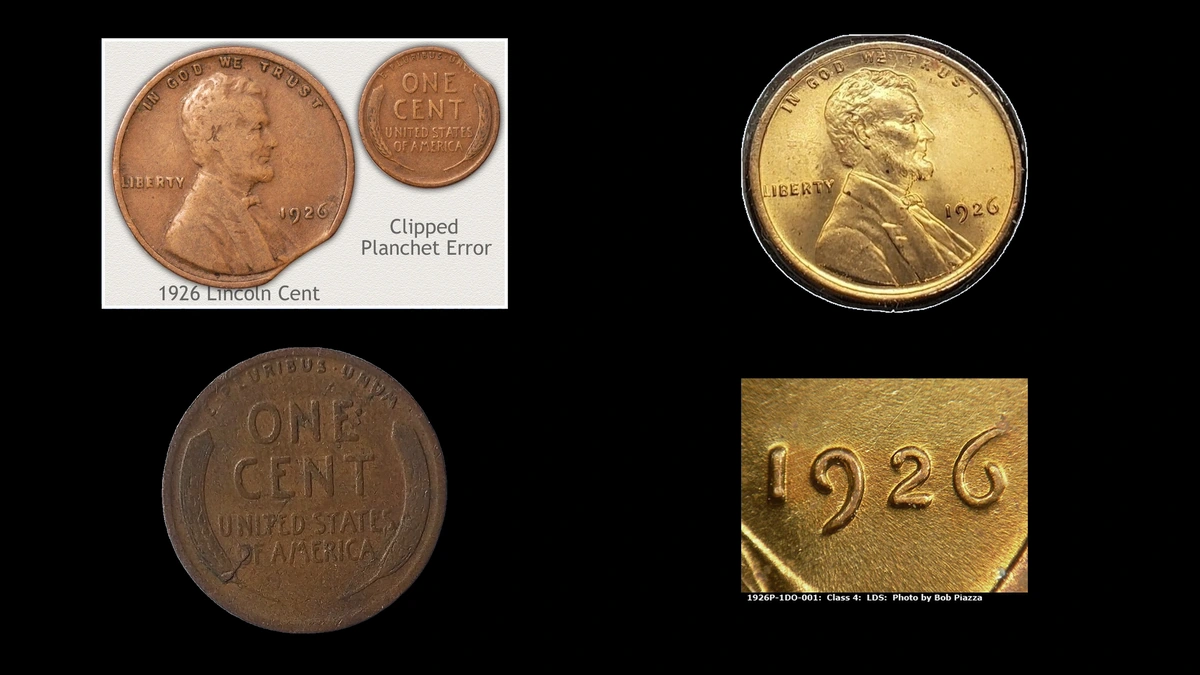
A large blank area is easier to understand when the year and mint remain intact. A Denver specimen among these 1926 penny errors retained both and brought $1,320 on September 10, 2019.
Estimated values span $3–$2,000. Compare missing metal with unused metal first, then examine the rim, raised die breaks, and the small extra lines around Lincoln’s eye.
| Visible clue | Category | Estimated range |
|---|---|---|
| Missing curved section | Clipped blank | $15–$350 |
| Incomplete design beside blank metal | Off-center strike | $50–$2,000 |
| Second raised border on reverse | Reported double rim | $20–$400 if mint-made |
| Letter bar, raised line, or rim patch | Die chips and breaks | $3–$750 |
| One or two extra eyelid lines | Doubled die | $10–$600 |
A normal copper-alloy cent weighs 3.11 g and measures 19.05 mm across a plain edge. Use safely obtained scale and caliper readings with full-face photographs, edge views, and a 10× magnifier; normal dimensions do not establish a particular variety.
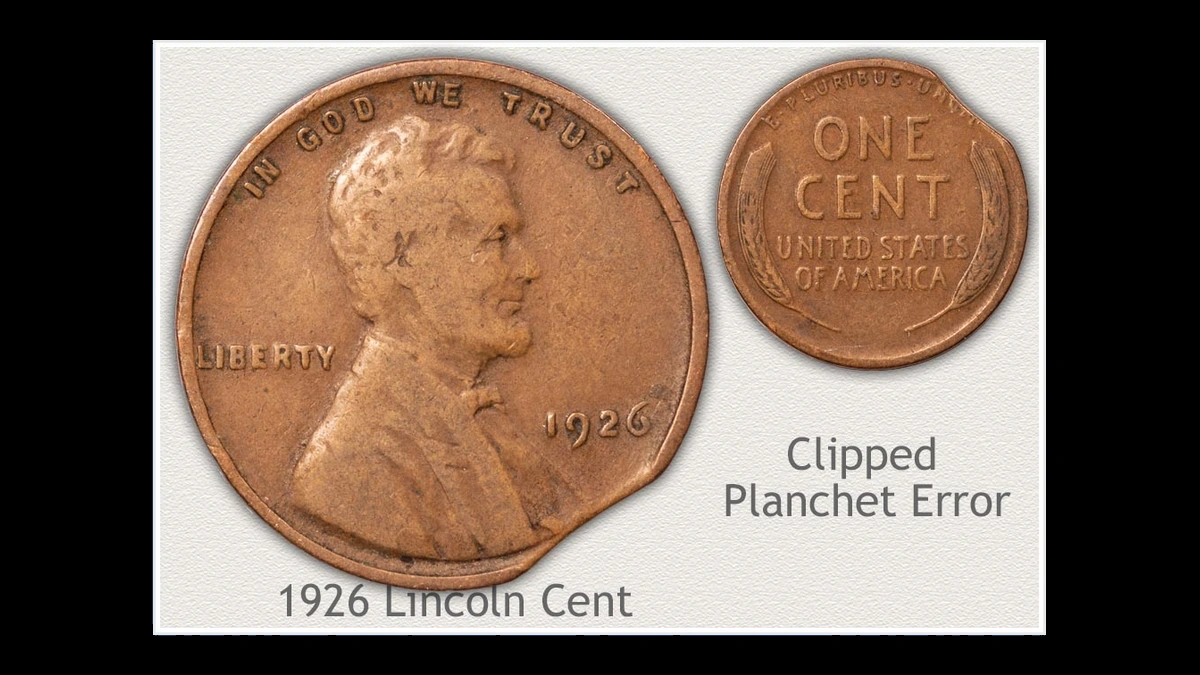
1. 1926 Penny A Curved Piece Is Absent from the Outline: 1926 Clip Error
A cutting punch overlapping an earlier hole in the metal sheet can produce an incomplete blank. The cent design then forms only on the metal that remains.
The broad 1926 report assigns no fixed mint or location. Those details must come from the individual coin.
How to Identify
Inspect both ends of the curved gap, where the original rim and lettering approach missing metal. Filing or a sharp cut through finished detail suggests later removal.
Opposite-rim weakness and fading design near the gap can support the identification. Measure an intact span rather than across the absent piece.
What It’s Worth
Genuine curved clips have an estimated $15–$350 range. Size, natural boundary, condition, and readable date all matter.
A 1925 curved clip weighing 2.92 g and graded ANACS VF20 brought $56 in March 2023. That nearby-year comparison does not establish the weight or position of a reported 1926 clip.
2. 1926 Penny Bare Metal Remains beside a Partial Design: 1926 Off-Center Strike Error
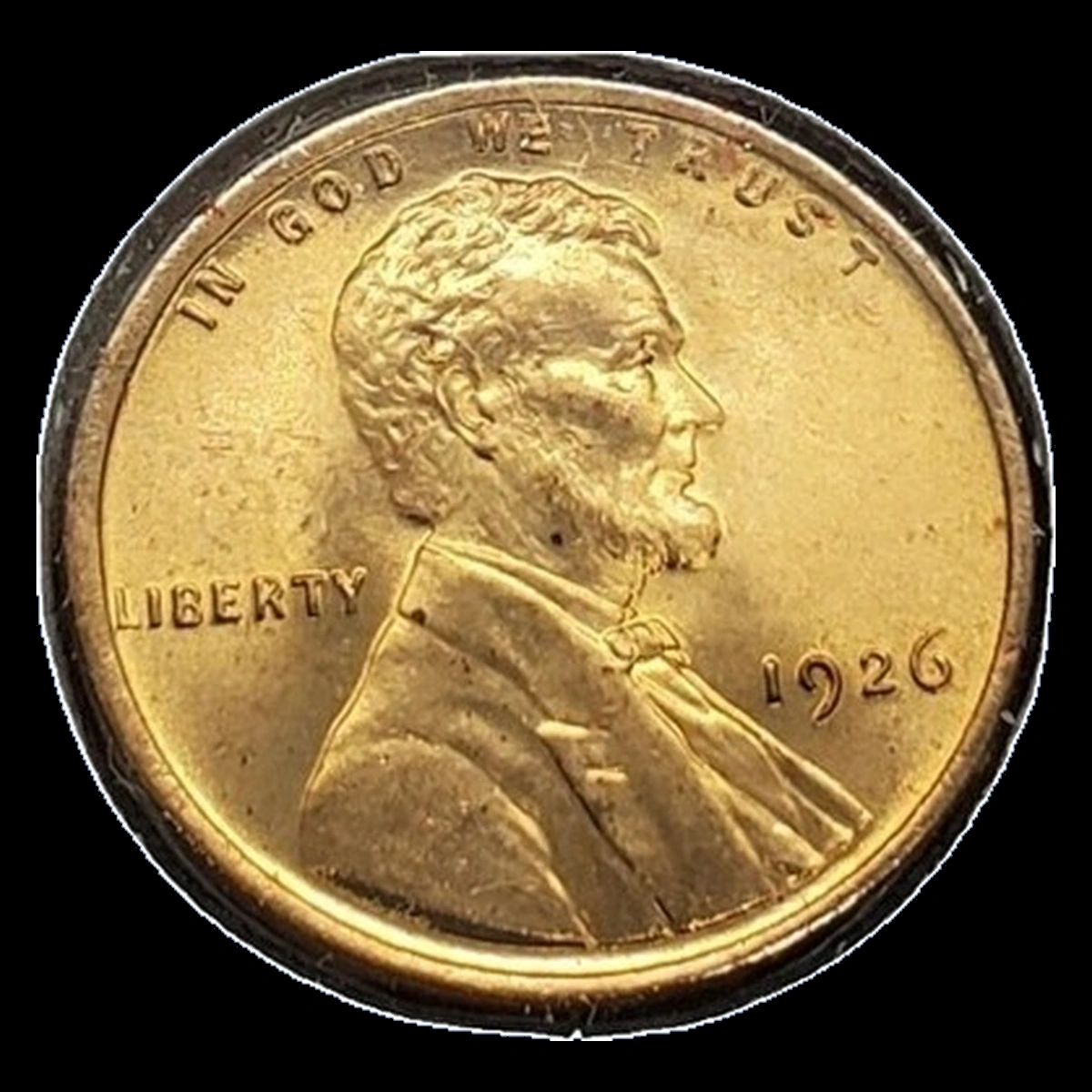
The recorded Denver coin is forty-five percent off center toward seven-thirty yet retains the complete date and D. LIBERTY and almost all of IN GOD miss the available metal.
The reverse loses E PLURIBUS UNUM and portions of ONE, CENT, and UNITED on the left. A separate Denver example is twenty percent off center toward nine-thirty.
How to Identify
Read the surviving date and compare design loss on both faces with the same misplaced blank. Unlike a clip, the unused part of an off-center disc is still present.
Inspect the blank surface and edge for grinding or cuts. The twenty-percent coin needs its own direction and missing-letter comparison rather than the stronger example’s description.
What It’s Worth
Genuine dated examples have an estimated $50–$2,000 range. Complete identity and original surfaces support stronger comparisons.
The forty-five-percent PCGS MS64 Brown coin brought $1,320 on September 10, 2019. Its sale is not an exact price for the separate twenty-percent example.
3. 1926 Penny Two Ridges Border the Reverse: Reported 1926 Double Rim Error
An auction catalog describes a Philadelphia coin with a second raised border on the back. That wording records the visible feature without establishing its cause.
A second strike, shifted die, or later edge damage requires additional evidence. The ridge alone cannot select among those explanations.
How to Identify
Combine a straight-on reverse photograph with an edge view, then trace the full extent of both apparent borders. A reflection beside one rim should change with the lighting.
Inspect for pressing marks or disturbance on the opposite face and search nearby letters for a second shifted position. Without separate design evidence, retain the descriptive double-rim wording rather than calling it double struck.
What It’s Worth
A genuine mint-made extra rim has a conditional estimated $20–$400 range. Its actual cause and preservation determine the comparison.
No realized price is supplied for the older catalog entry. Rolled or squeezed edge metal needs a damage assessment instead of a premium based on an unproved second strike.
4. 1926 Penny A Bar, Line, or Rim Section Rises: 1926 Die Breaks Error
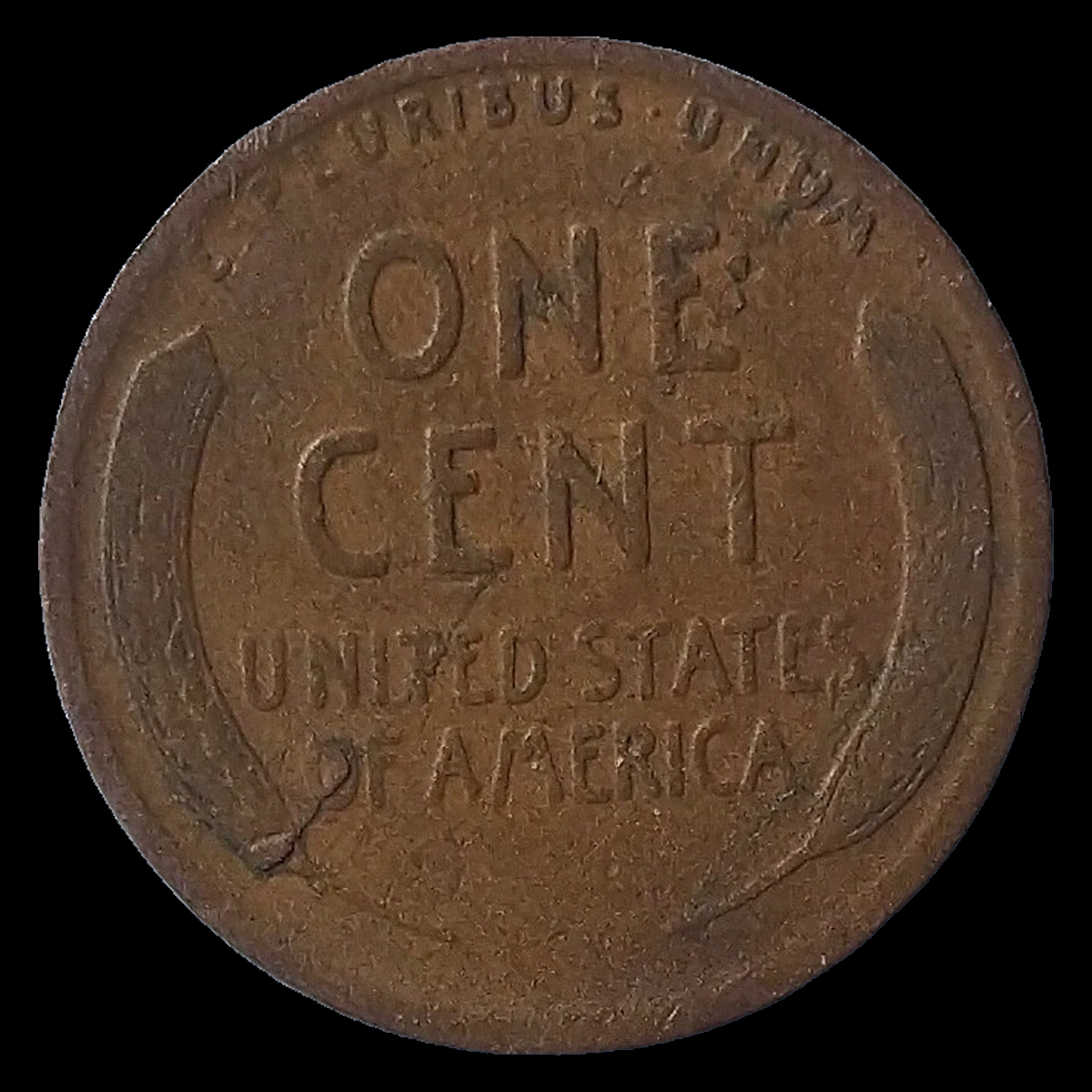
A BIE chip fills the gap between B and E, while a narrow die crack leaves a thin raised line. Larger failures can replace rim-adjacent design or leave a shifted area with detail still present if a fragment remained in the die.
Denver has several cataloged patterns, including a reverse break, a rim-only form, and separate retained-break entries. Similar locations do not make their shapes interchangeable.
How to Identify
Choose the correct face and full catalog entry before following the boundary. A rim-only defect, a design-replacing patch, and a retained section show different relationships to lettering.
Check the edge for squeezing or added metal. For BIE, return to the exact B-to-E gap rather than accepting any raised letter-space lump.
What It’s Worth
Small BIE chips and fine cracks have an estimated $3–$50 range. More substantial identified rim breaks are approximately $40–$750.
A worn 1934 major-break cent in ANACS F12 brought $41 in August 2021. That comparison illustrates why a named die failure alone does not guarantee a high price.
5. 1926 Penny Extra Lines Sit beneath the Eyelid: 1926 Doubled Dies Error
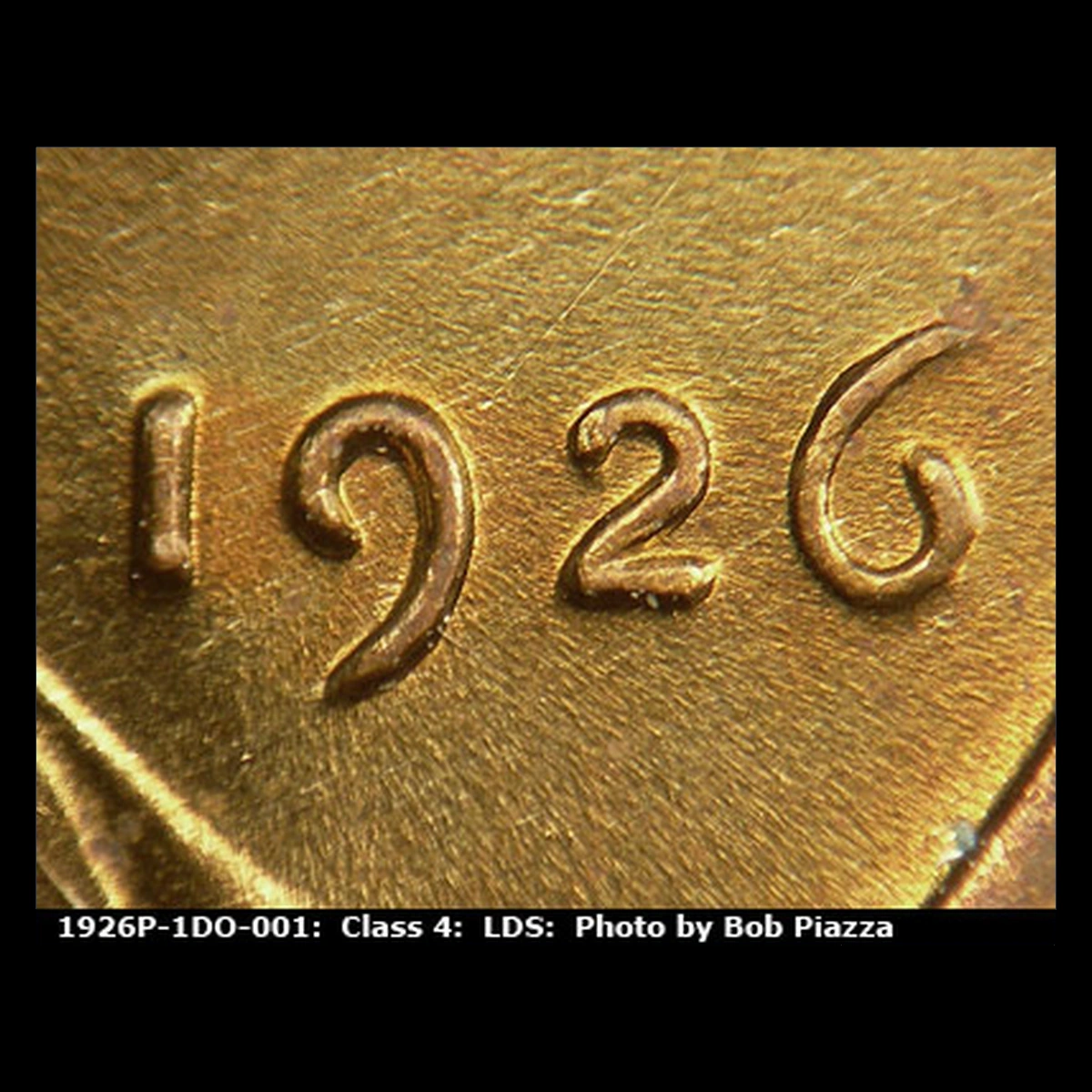
Several Philadelphia dies show an additional eyelid below the normal one. One pattern has a strong lower-right line, while another has two extra lines in that direction.
Other numbered forms have one lower line with different supporting details. The repeated design existed in the die before any individual coin was struck.
How to Identify
Confirm Philadelphia before choosing these comparisons and count the physical extra lines under changing light. Wear may soften a smaller line, while shadows can imitate one.
Match the whole eye and surrounding markers with the appropriate variety photographs. A shared lower-right direction cannot by itself choose among different dies.
What It’s Worth
Correctly matched doubled-eyelid varieties have an estimated $10–$600 range. Sharply preserved extra detail is easier to compare than a faint worn trace.
A separate 1936 doubled-front variety in ANACS MS63 Brown brought $70 in June 2024. That later-year result is modest Wheat-cent context rather than a transaction for each 1926 eye pattern.
Conclusion
The estimated $3–$2,000 range spans small die features and a dramatic off-center coin with its identity intact. Decide first whether metal is missing, design is missing, or another raised shape has appeared.
A double rim remains a description until its cause is supported, while an extra eyelid needs a specific pattern match. Keep each coin’s mint, direction, and condition together instead of borrowing the most impressive details from another specimen.