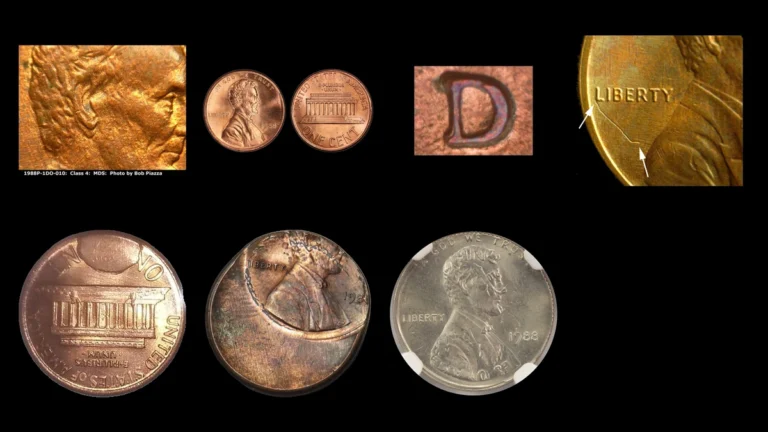
Rare 1897 Penny Errors (List & Pictures)
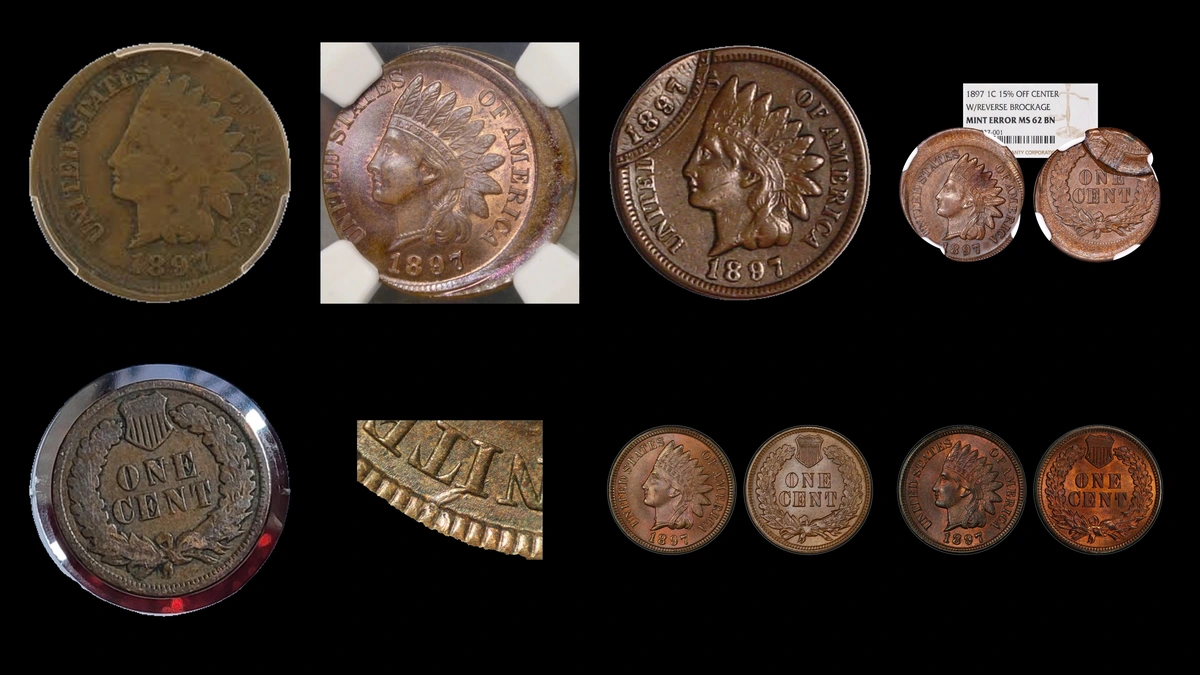
The smallest clue can lead to the largest comparison among 1897 penny errors: Heritage cited an $8,862.50 sale for an unworn example with a misplaced 1 in Liberty’s neck. Estimated values for the broader group range from $5 to $9,000.
Check the outline and complete designs first, then work inward toward the letters, neck, and date.
An ordinary 1897 Indian Head cent weighs 3.11 grams and measures about 19 mm, with a plain edge. For unusually shaped coins, record several diameter measurements and photograph both faces before narrowing down the cause.
| Visible feature | Category | Estimated value |
|---|---|---|
| Expanded border, complete design | Broadstrike | $40–$750 |
| Bare crescent, incomplete design | Off-center strike | $100–$1,500 |
| Two strike positions | Double strike | $300–$3,000 |
| Sunken mirror image | Brockage with off-center strike | $700–$4,000 |
| Back points in another direction | Rotated dies | $40–$600 |
| Raised lines or border lump | Cracks and cuds | $5–$750 |
| Heavy raised line into a letter | Die gouge or file mark | $10–$300 |
| Repeated LIBERTY outlines | Reported doubled die obverse | $15–$1,500, conditional |
| Digit in neck or border teeth | Misplaced date | $25–$9,000 |
| Extra strokes within the date | Repunched date | $10–$1,000 |
1. 1897 Penny The Coin Spreads Beyond Its Usual Border: Broadstrike Error
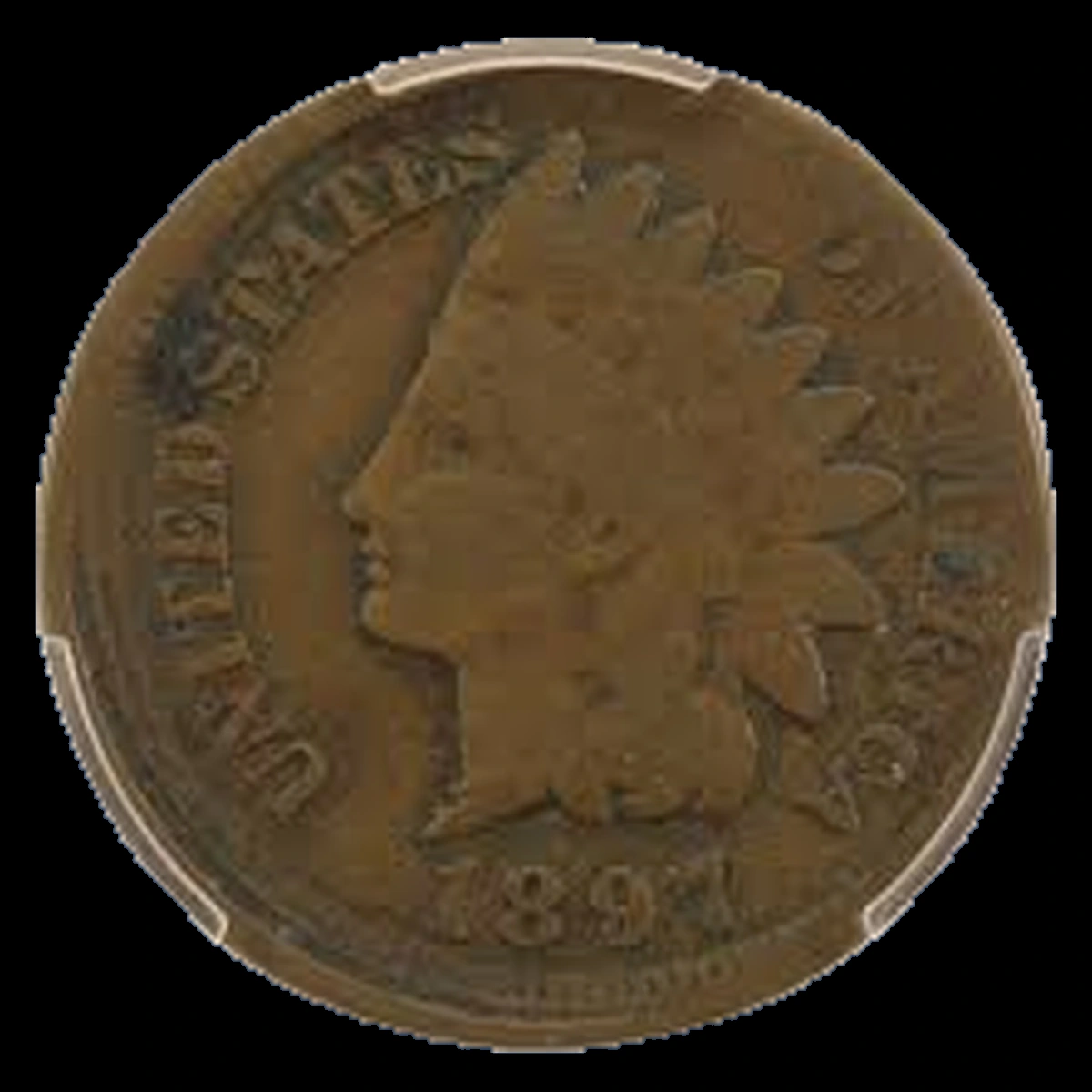
A broadstrike retains the intended design despite an expanded outline. The collar, the ring that normally limits outward metal movement, failed to contain the blank during striking.
How to Identify
Follow the outer letters all the way around: the full design should fit on the coin, even if the border width varies. Missing design at one edge with unused metal opposite points toward an off-center strike instead.
Width alone is insufficient because hammering can also spread metal. Look for intact strike detail rather than crushed high points and impact damage.
What It’s Worth
The estimated range is $40–$750. A dealer offered a worn SEGS F12 example for $120, but that amount was an asking price, not a completed transaction.
A 1905 broadstrike graded AU58 Brown, with very slight wear, sold for $258.50 in May 2016. Its condition and different date must remain attached to that comparison.
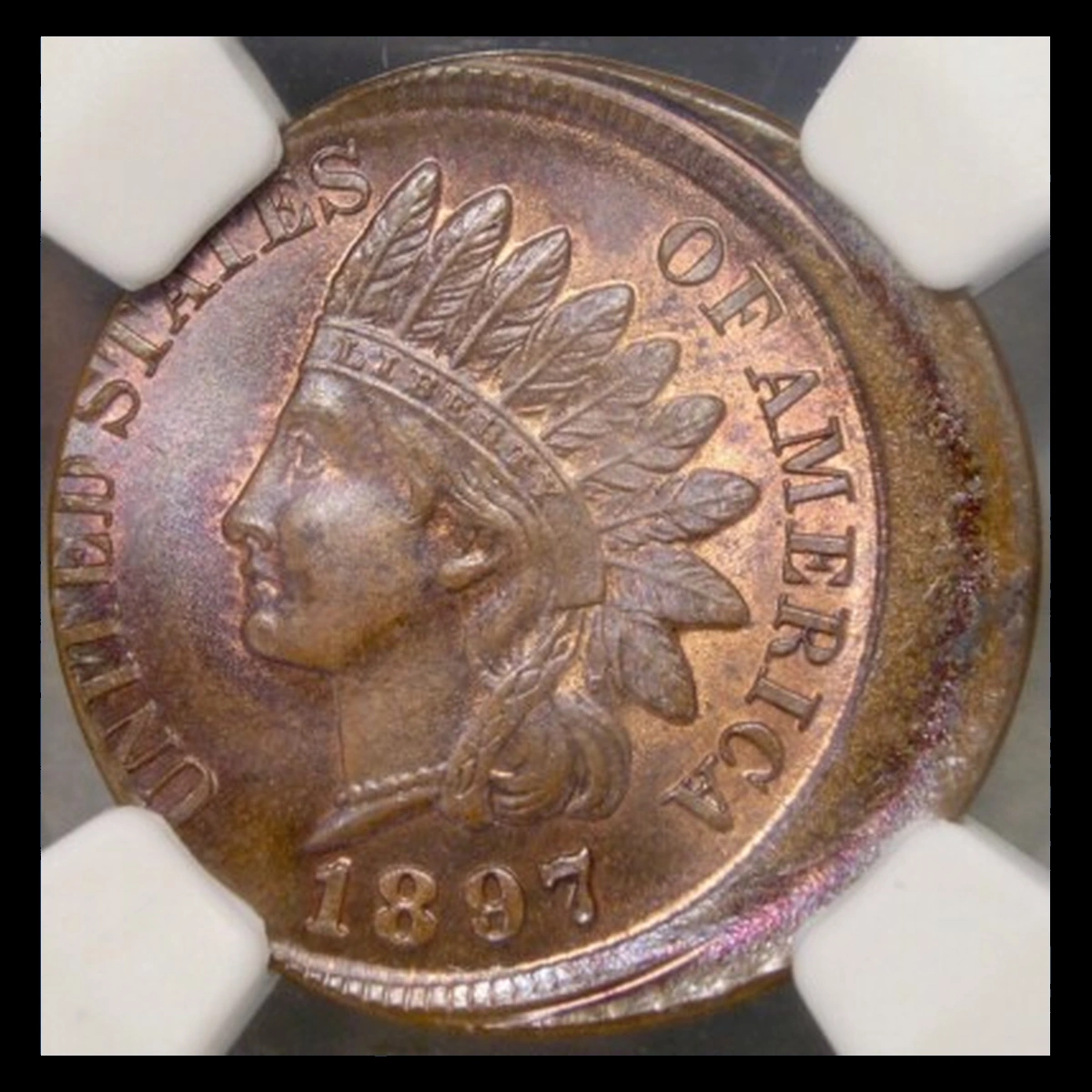
2. 1897 Penny A Blank Crescent Sits Beside Missing Design: Off-Center Strike Error
When the blank enters the press out of position, part of both designs can miss it. The unused crescent represents metal that never received those details, rather than metal removed afterward.
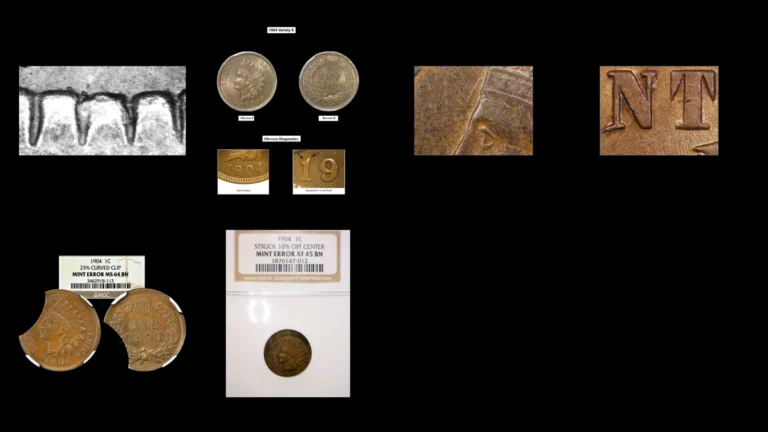
A pictured 1897 cent is described as about 10% off center. A separate GreatCollections listing describes a 10% example graded NGC AU55 Brown; these references do not establish that the same coin is shown.
How to Identify
Compare where the design ends on both faces and confirm that the original blank remains present. A clipped blank lacks metal, while a misaligned die may shift only one face.
Inspect the bare area for grinding and read the remaining date. Both the 1897 identification and the displacement need to survive on the actual coin being valued.
What It’s Worth
Genuine identifiable examples have an estimated range of $100–$1,500. A 10% off-center 1897 cent graded PCGS AU58 sold for $280.60 in March 2026.
That lightly worn specimen provides a same-year comparison; no realized price is supplied for the separate GreatCollections AU55 listing. The percentage does not replace a condition comparison.
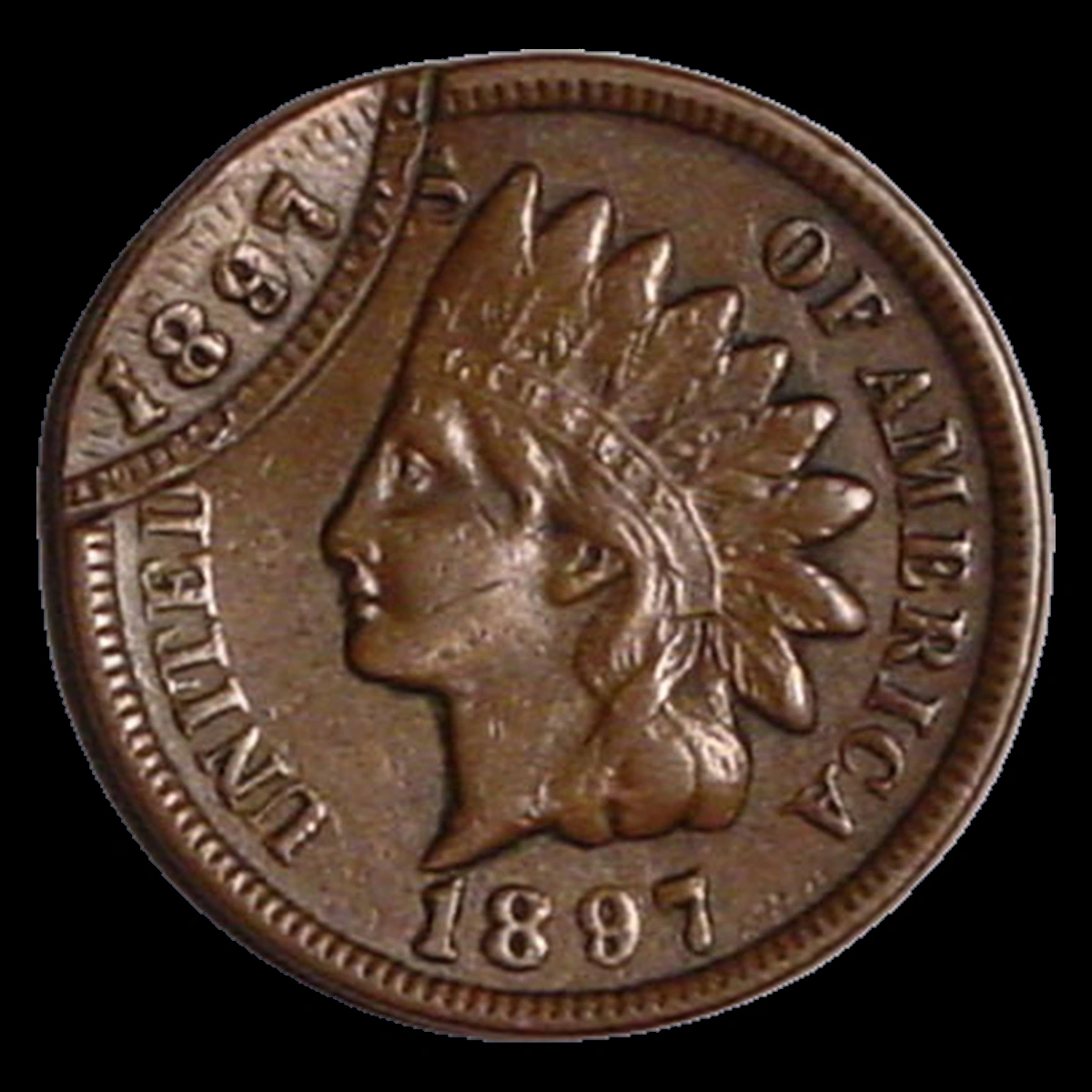
3. 1897 Penny Two Dates Occupy Different Positions: Double Strike Error
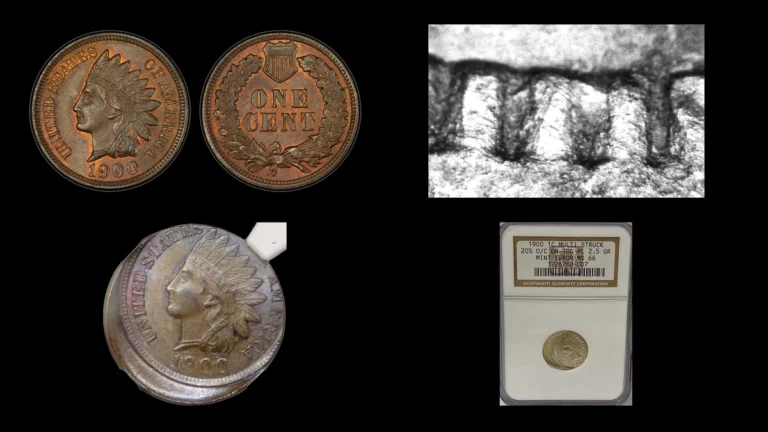
Two readable dates help organize the overlapping design on the pictured error. Its second strike landed about 80% off center near 10 o’clock after the penny remained available for another blow.
How to Identify
Assign portrait and border fragments to each date position. A real second strike should explain those features together, beyond a little extra ridge on one number.
Other double strikes involve a small turn within the collar and have tighter overlap. Check the edge and intersection of the designs for later pressing or joined pieces before accepting either pattern.
What It’s Worth
Estimated values run $300–$3,000, depending on preservation and the clarity of both impressions. No supplied sale belongs to the pictured 80% off-center second strike.
A different 1897 double strike with rotation inside the collar sold for $352.50 in August 2013. It was graded NGC VG8 Brown, a well-worn coin with a different overlap.
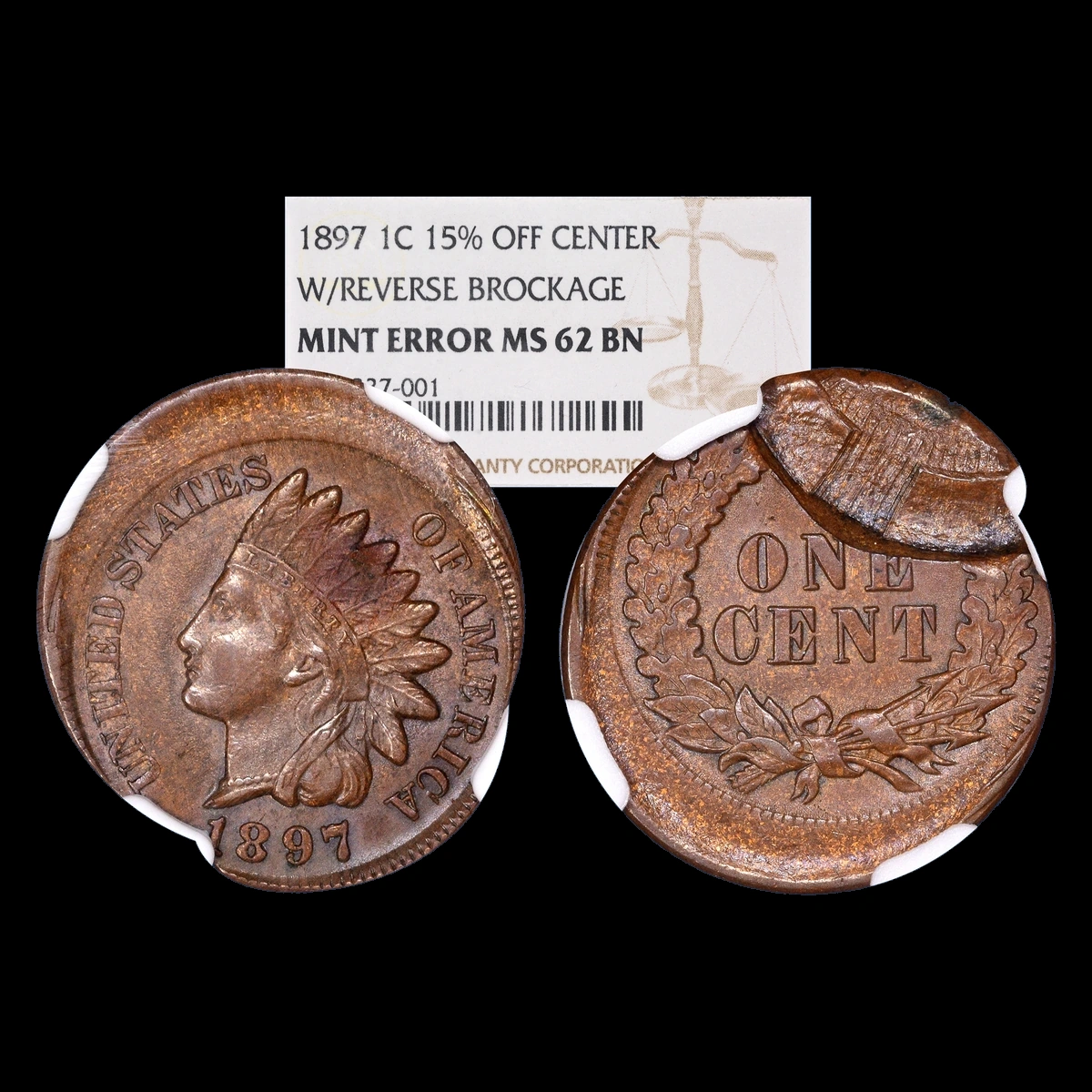
4. 1897 Penny The Back Carries a Sunken Mirror Image: Brockage with an Off-Center Strike Error
A coin already struck can become an unintended stamping surface if it remains in the press. Its raised design presses a backward, sunken impression into the next blank, producing a brockage.
The recorded 1897 collection coin combines a reverse brockage with a 15% off-center strike. NGC graded it MS62 Brown, an unworn grade allowing noticeable marks.
How to Identify
Check that the unusual reverse image is both recessed and reversed. A normal-direction raised duplicate or an unrecognizable dent does not meet those requirements.
Then examine the unused metal on both sides to establish the off-center component. The described piece received the mirror image; it is not the older coin that transferred it.
What It’s Worth
The combined error has an estimated whole-coin range of $700–$4,000. The quality of the mirror impression and overall surfaces help determine where a particular piece belongs.
A 2001 partial obverse brockage sold for $79 in March 2025, but that copper-plated zinc Lincoln cent differs in age, metal, and affected face. Do not add a separate off-center estimate to the 1897 coin’s combined value.
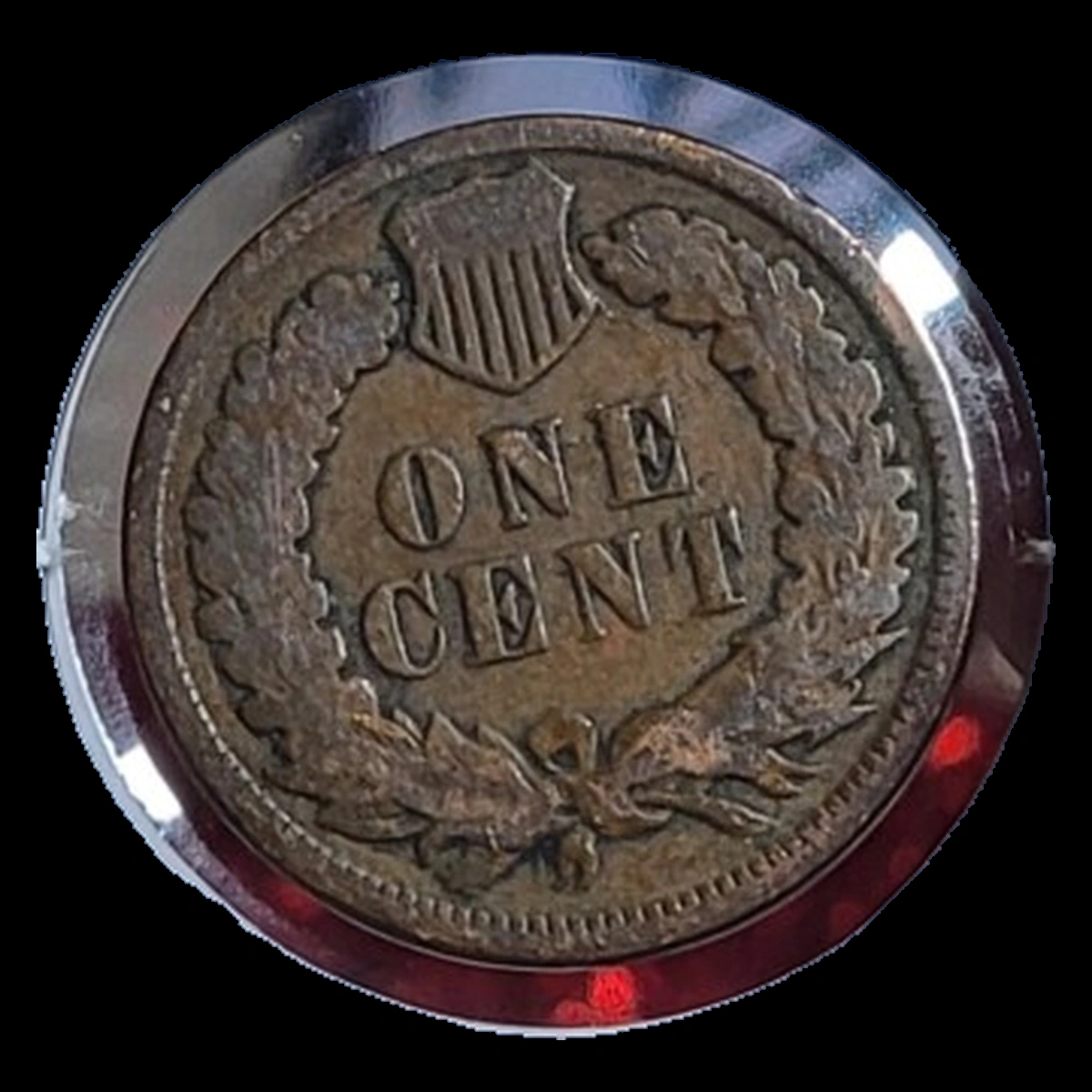
5. 1897 Penny The Back Is Turned Relative to the Front: Rotated Dies Error
Single, clear designs can still have the wrong relationship to one another. Recorded 1897 reverse rotations include 106, 134, and 162 degrees counterclockwise, reflecting different examples or stages of a turned stamping tool.
How to Identify
With the portrait upright, flip the secured coin top to bottom around a horizontal axis. An ordinary cent’s reverse should then be upright.
Record an uninterrupted flip and measure the reverse’s deviation, including its direction. Independently rotated photographs cannot prove this error, and overlapping letters would require an additional explanation.
What It’s Worth
Substantial confirmed rotations have an estimated range of $40–$600. The three cataloged angles are not separate price tiers, and no individual auction result is assigned to each angle here.
6. 1897 Penny Raised Cracks or a Solid Rim Patch: Die Cracks and Cuds Error
Thin raised lines record cracks in a die, while a larger missing piece at its edge can produce a solid rim-connected patch called a cud. These are changes in the steel tool copied onto the coin.
One reported reverse has cracks near 3:15, 6 o’clock, and 8:45. Separate examples have smaller rim breaks or a large cud extending from about 1:45 to 3:45.
How to Identify
Trace a suspected crack under side lighting to verify that it rises above the surface. A cut through the wreath is a different feature even at a similar clock position.
For a cud, look for raised metal joining the rim and replacing design. An impact-folded border or an internal lump without a rim connection needs another identification.
What It’s Worth
Small cracks have an estimated range of $5–$75, while stronger rim breaks and full cuds may bring $50–$750. These are whole-coin estimates, so several cracks do not create several prices to add together.
A 1946-S Lincoln cent with a cud sold for $288 in March 2021. It illustrates another bronze-cent cud market, not the price of the 1897 upper-right reverse break.
7. 1897 Penny A Thick Line Connects the Border and a Letter: Die Gouge or File Mark Error
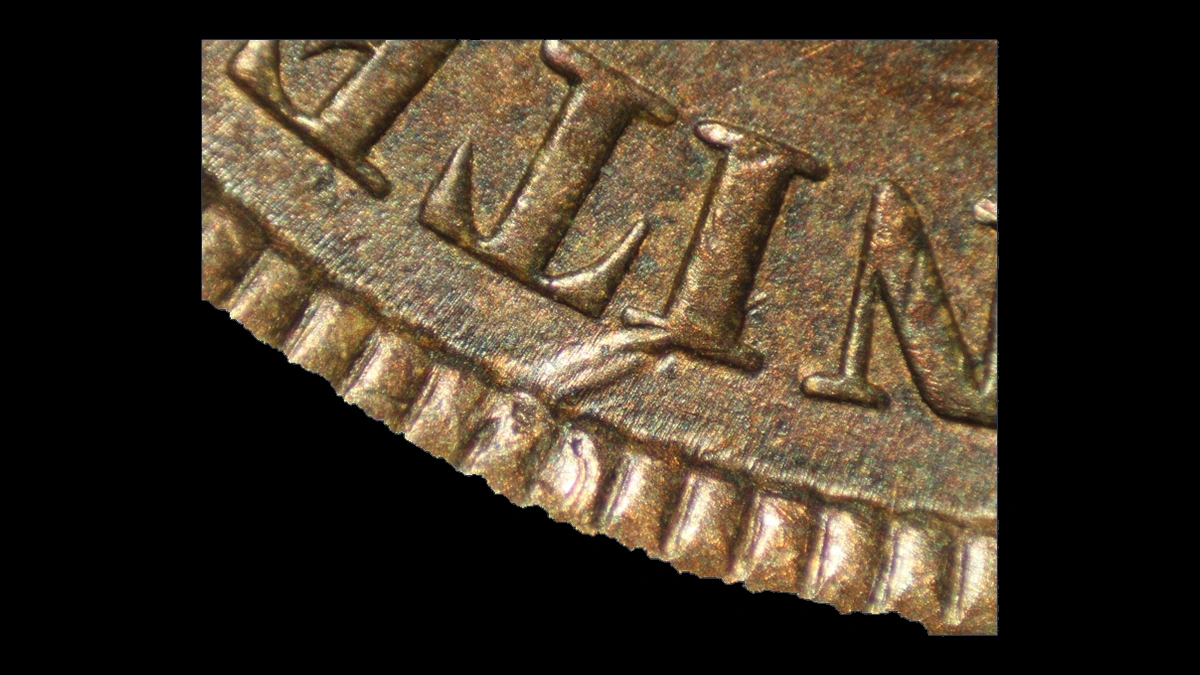
A groove accidentally cut into a die can leave a raised line on every coin it strikes. Two recorded 1897 paths run from about 8:15 into the I in UNITED and from about 11 o’clock into the T in STATES.
How to Identify
Match the complete route from the border to the correct letter. The two paths belong to separate examples and should not be combined into a required pair.
Change the light angle to distinguish a solid raised line from a scratch with raised sides. Do not scrape the feature to test it.
What It’s Worth
Matched tool marks carry an estimated whole-coin range of $10–$300. Prominence, wear, and original surfaces matter, with no individual sale supplied for either path.
The high record for a misplaced numeral in the neck does not apply to these unrelated tool lines.
8. 1897 Penny LIBERTY Appears to Have Repeated Edges: Reported Doubled Die Obverse Error
The obverse is the coin’s front, and a doubled die can place repeated details in that face’s design before any coin is struck. An 1897 report includes this category and points to LIBERTY, but does not establish a certified variety for every doubled-looking letter.
How to Identify
Compare repeated raised outlines around the corners of LIBERTY with a properly identified example. A low, flat shelf beside a narrowed letter can result from movement during striking instead.
Extra strokes confined to the date should first be checked as repunching. The date was applied separately, so a repeated numeral alone cannot establish doubling of the broader front design.
What It’s Worth
The conditional estimate is $15–$1,500 for a genuine, matched example. This is not a claimed sale range established by certified 1897 auction records.
A recognized 1887 doubled-front Indian cent sold for $1,380 in June 2025. That different date’s confirmed pattern must not be replaced with an unidentified shelf on an 1897 coin.
9. 1897 Penny A Number Appears in the Neck or Border: Misplaced Date Error
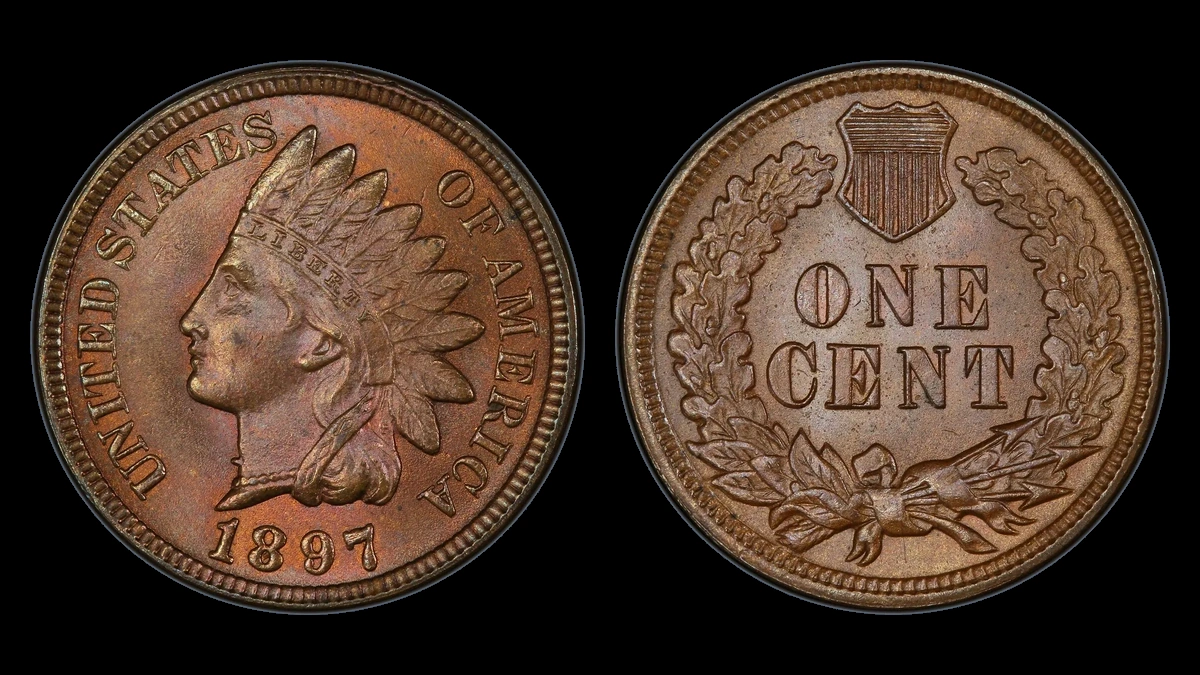
A small part of a 1 within Liberty’s neck is the best-known clue discussed here. Other 1897 misplaced-date varieties show a 1 or parts of 9 and 7 among the border teeth.
These fragments originate from a date punch applied outside its intended position on the die. A surviving corner can be enough to match a variety even when no full numeral remains.
How to Identify
Compare the neck’s raised corner with the documented neck variety and check the surrounding surface for tooling. A recessed cut or random groove is not the same feature.
For border fragments, use the matching border variety instead. Their positions relative to the real date are essential, and should not be inferred by connecting unrelated bumps.
What It’s Worth
Many worn through ordinary unworn examples fall within an estimated $25–$1,500, while exceptional recognized varieties may reach $1,500–$9,000. Neck and border varieties do not automatically share the same market.
Heritage cited an earlier $8,862.50 result for an MS64 Red and Brown neck example. PCGS records $4,080 in April 2021 for an MS64 Red coin; both are unworn comparisons with different amounts of original red color.
10. 1897 Penny The Date Contains Extra Numeral Strokes: Repunched Date Error
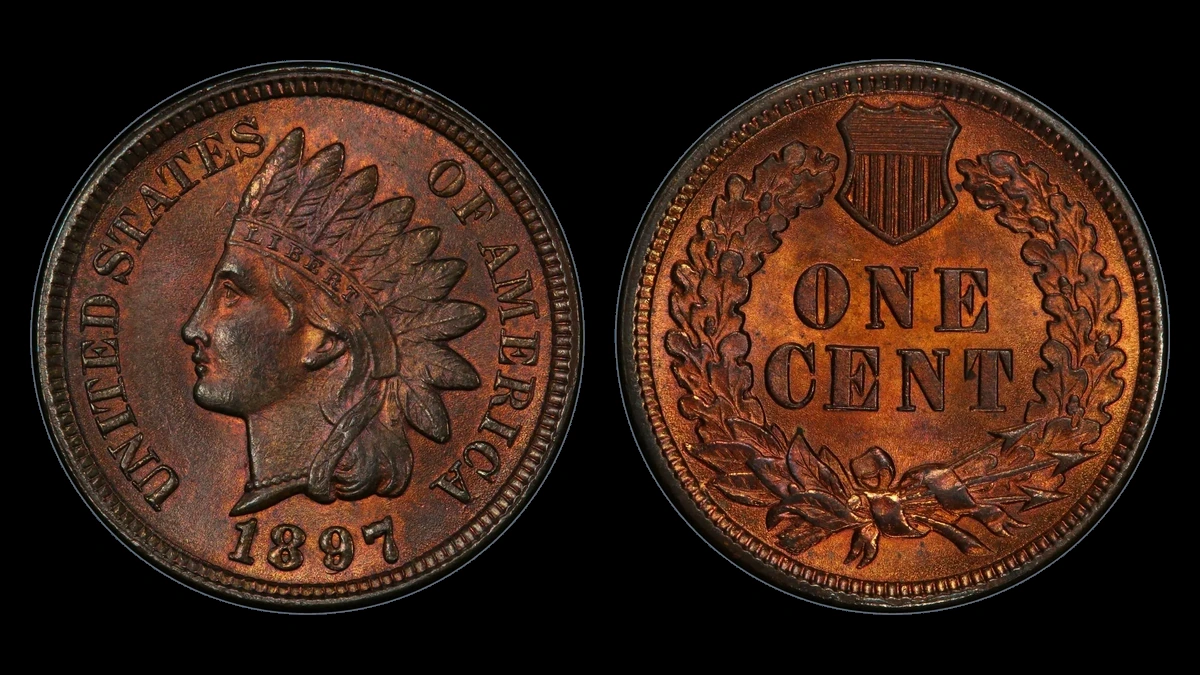
Inspect the date last for remnants within loops or next to digit bases. Repeated applications of the date punch in slightly different positions could leave earlier strokes in the finished die.
Reported 1897 patterns affect different parts of 1, 8, 9, and 7. There is no single direction that identifies every variety.
How to Identify
Select a documented pattern and match each visible remnant to the correct numeral and position. Check the other affected digits on that same variety before relying on an isolated ridge.
The portrait can remain entirely single because only the date punch was repeated. Flat shelves and surface damage should not be reconstructed into unsupported extra numerals.
What It’s Worth
The estimated range is $10–$1,000, spanning minor remnants through stronger well-preserved varieties. A 1905 repunched-date cent graded XF40, showing wear but substantial detail, sold for $396 in July 2013.
That other-year result is a comparison for the general variety class. The particular 1897 punch pattern and condition still need to match the coin under consideration.
Conclusion
An 1897 cent becomes easier to assess when its clues are kept distinct: a wide outline, a shifted design, a reversed impression, and a misplaced numeral each answer different questions. Use photographs of the correct subtype before settling on an identification.
The neck variety’s strong sale records belong to well-preserved attributed coins. Ordinary cracks, worn examples, conditional doubled-die reports, and dealer asking prices need their own comparisons within the broader estimates.