Rare 1918 Penny Errors (List & Pictures)
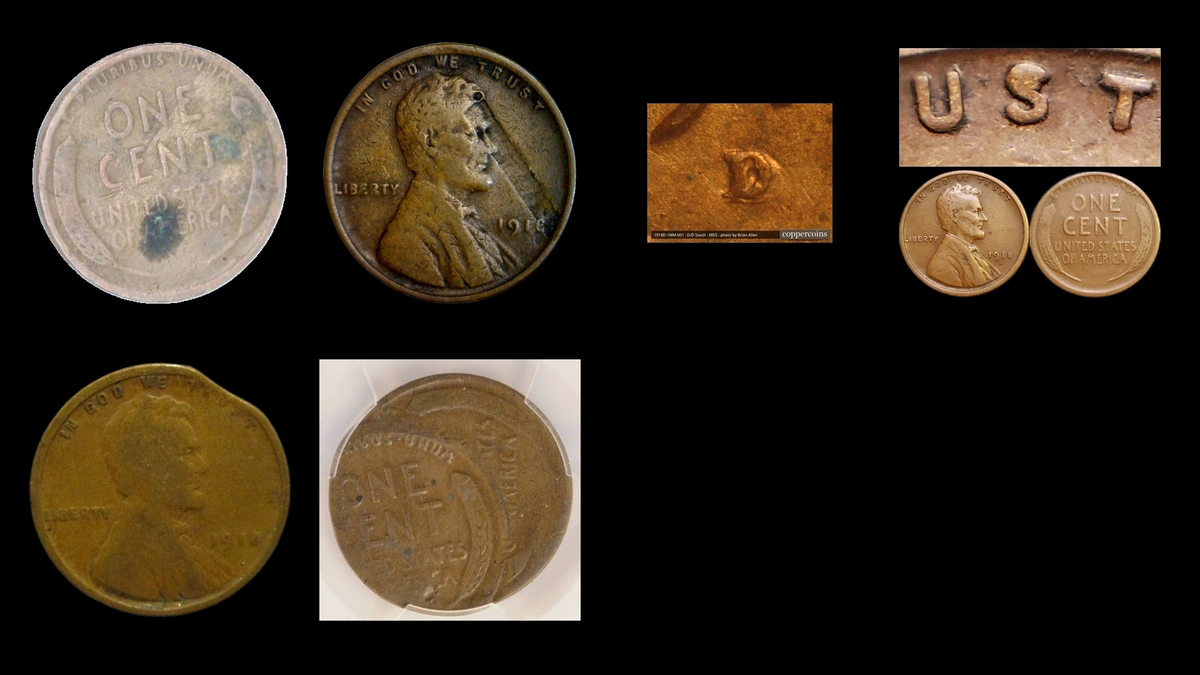
Nine strikes left repeated design fragments on a worn 1918 cent that sold for $2,070 in January 2009. More modest 1918 penny errors include alloy streaks, missing blank metal, and small extra mintmark curves.
Estimated whole-coin values run $3–$3,500. Follow the surface first, then the D and rim, and finally any displaced design; a repeated digit alone does not demonstrate another press blow.
| Visible clue | Possible error | Estimated value |
|---|---|---|
| Long color bands | Uneven alloy mixing | $3–$100 |
| A lifting layer | Lamination | $10–$300 |
| Another D outline | Repunched mintmark | $10–$500 |
| Raised line or rim section | Die crack or break | $3–$750 |
| A gap in the disc | Clipped blank | $15–$350 |
| One displaced image | Off-center strike | $50–$1,500 |
| Several overlapping designs | Multiple or flipover strikes | $250–$3,500 |
A standard 1918 cent weighs about 3.11 grams and measures roughly 19 millimeters across, with a plain edge. It is solid copper-rich alloy, so surface layers should not be explained as modern copper plating over zinc.
1. 1918 Penny Bands of Color Cross the Design: Woodgrain-Like Alloy Error
Uneven mixing and rolling of the alloy can leave long streaks that tone differently. The design can remain continuous across those color bands without a crack or loose layer.
How to Identify
Follow several bands across the portrait and open fields under moving light. Look for intact metal rather than parallel cleaning grooves cutting through finished detail.
Stains, coatings, and artificial color can imitate the appearance. Color alone cannot establish the metal’s mixing history or identify a rare wrong-metal strike.
What It’s Worth
Ordinary 1918 cents with attractive original streaking are estimated at $3–$100. Mint, condition, and visual appeal can explain much of that amount.
No sale is assigned to a particular striped 1918 specimen. Cleaning destroys part of the surface evidence and does not improve the comparison.
2. 1918 Penny A Thin Layer Pulls Away: Lamination Error
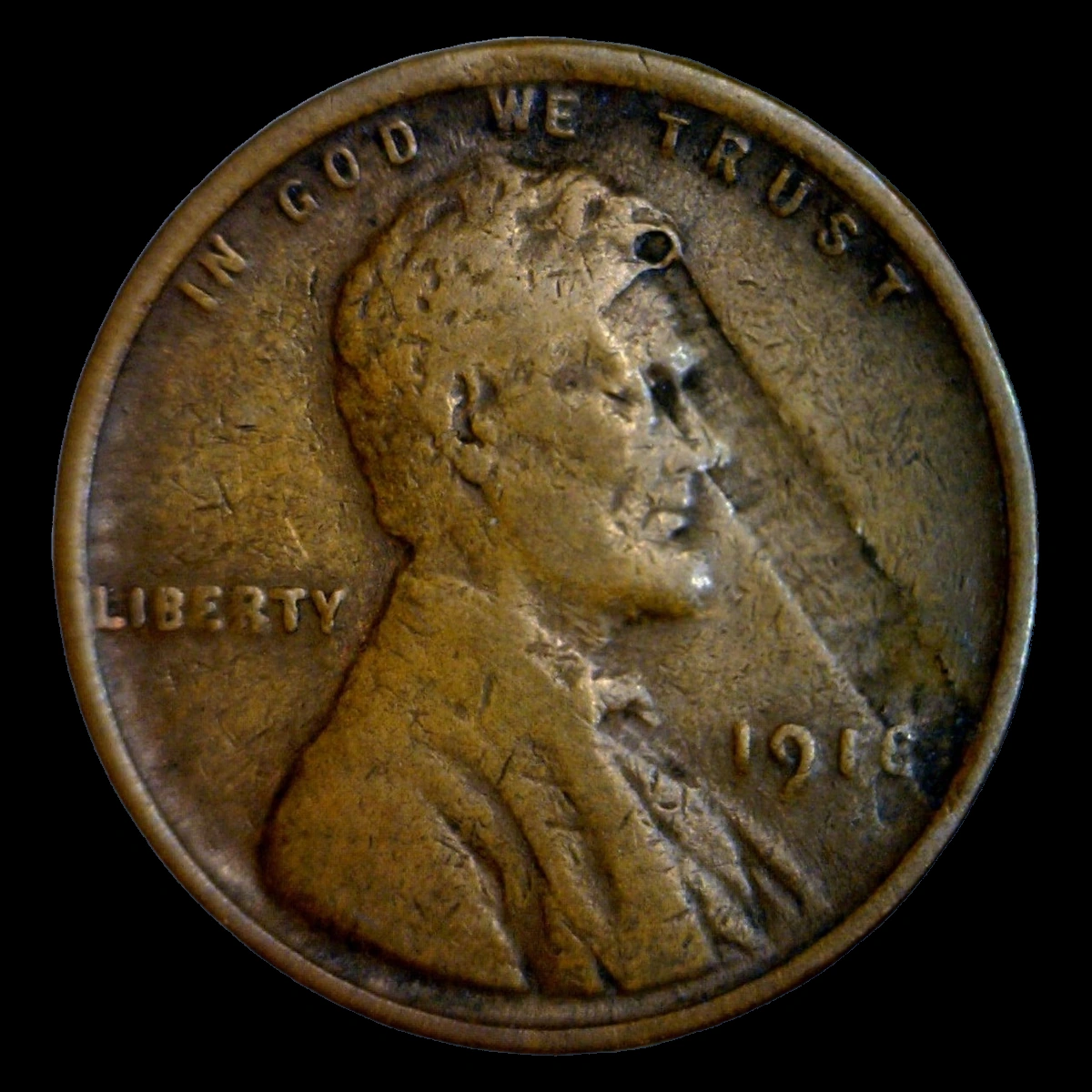
A weakness inside the bronze can release a surface sheet. The reported front example has a separation extending across the coin while avoiding Lincoln’s portrait and the date.
How to Identify
Use a side view to follow the layer’s boundary into sound metal without lifting or pressing a flap. A dark streak by itself lacks that physical separation.
The supplied path describes one specimen, not all 1918 laminations. A thin surface loss also does not establish that the full disc split into two complete pieces.
What It’s Worth
Genuine laminations on otherwise ordinary 1918 cents are estimated at $10–$300. Extent, remaining design, and the original boundary guide the assessment.
A Philadelphia 1916 cent with retained metal near the neck and collar sold for $149.50 in May 2005. Its exceptional unworn condition contributes to that different-year whole-coin result.
3. 1918 Penny Another D Shows above or below the Mintmark: Repunched Mintmark Error
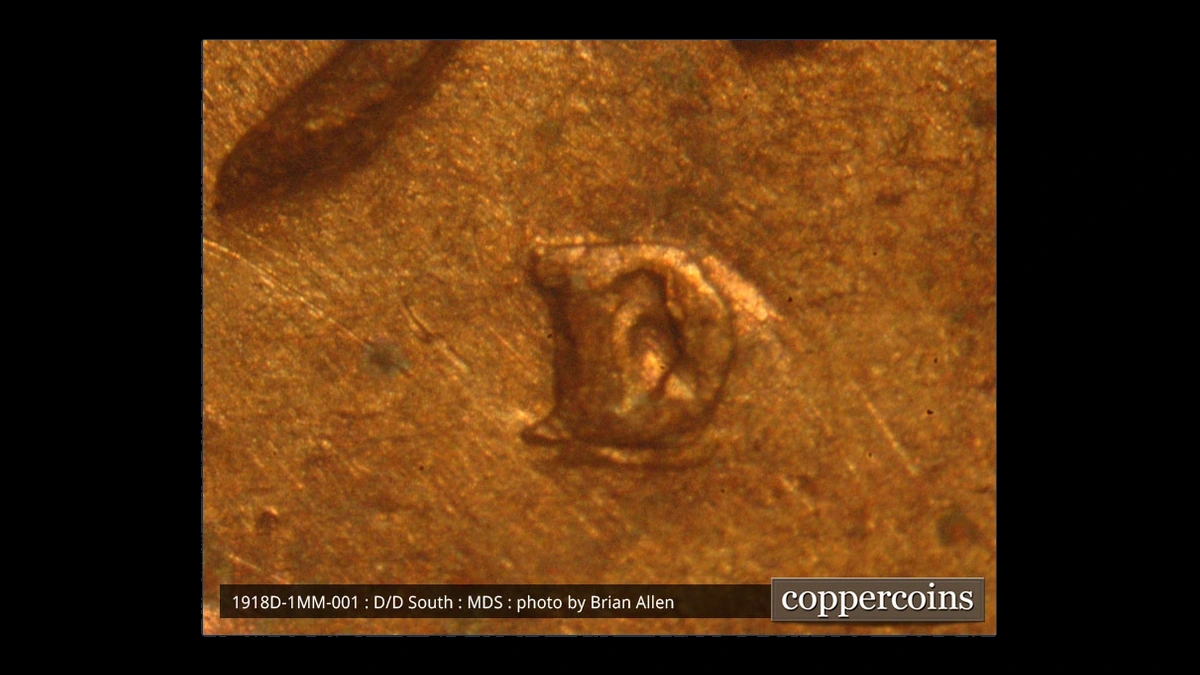
The D was punched separately into the die by hand. A shifted repeat punch could leave an earlier letter outline below, above, or tilted against the final D.
How to Identify
Keep the date upright and trace the extra curve as part of a D. The downward-shifted variety is one specific pattern; upward and tilted forms need their own references.
Some coins from the downward-shifted die also have chips beside LIBERTY. Those chips developed during the tool’s life, so their absence alone does not disprove the mintmark match.
What It’s Worth
Clearly attributed 1918-D repunches are estimated at $10–$500. The particular pattern, visible separation, and coin’s condition matter.
A 1946-S overmintmark with D beneath S sold for $350 in January 2023. That later unworn punch-error comparison is a different variety, not a 1918-D realization.
4. 1918 Penny A Raised Line or Shifted Rim Patch: Die Cracks and Breaks Error
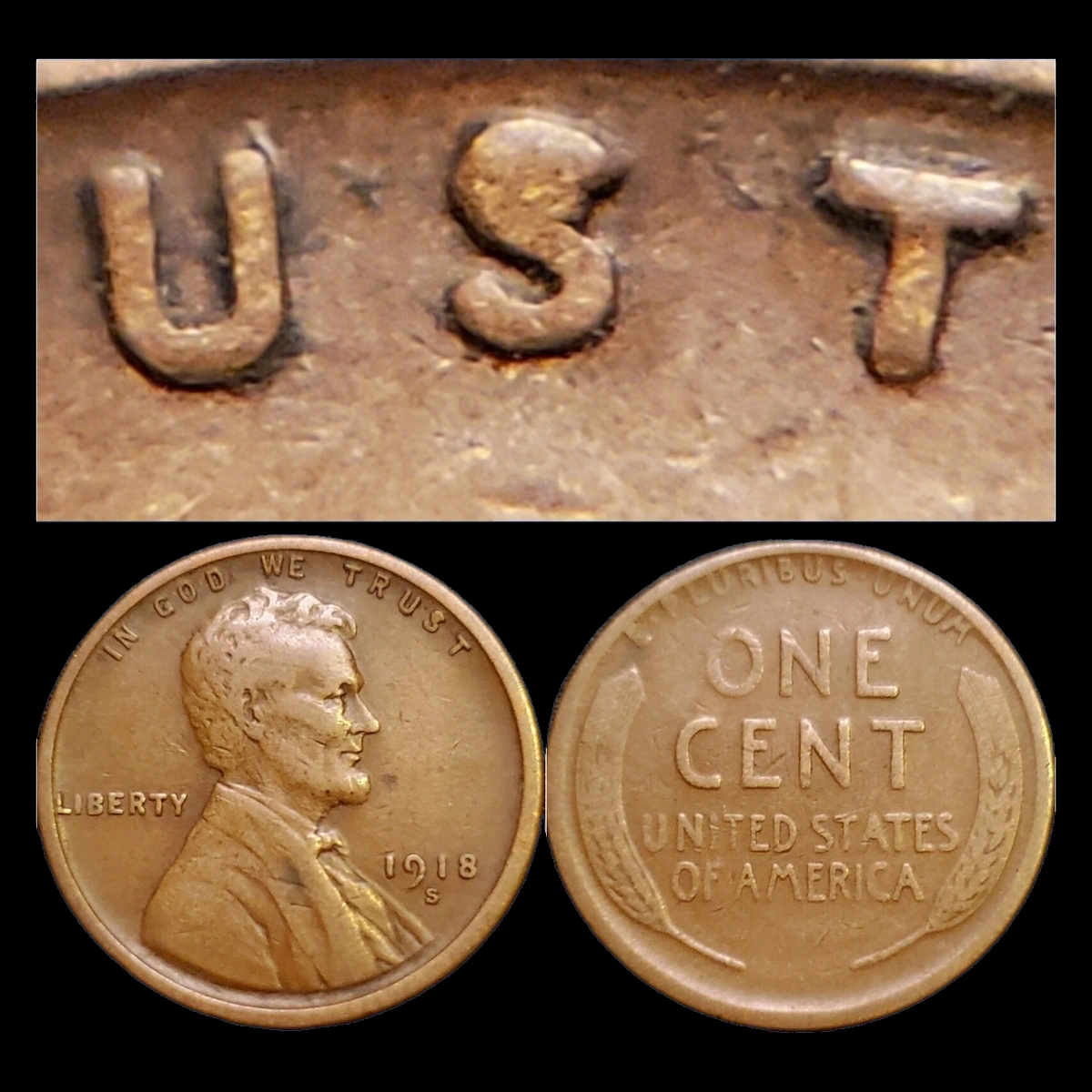
A narrow die opening leaves a raised ridge on the coin. A piece lost from the die’s edge can leave a cud, while a broken piece remaining in place can still stamp design inside a retained section.
How to Identify
Use low light to separate a raised crack from a scratched groove. Check a rim patch for folding, added metal, or other damage before naming a die break.
The reports include a long front crack, a general cud category, and two distinct San Francisco retained reverse breaks. Match each to its own path and check for surviving detail within the retained sections.
What It’s Worth
Estimated whole-coin values span $3–$750: modest cracks about $3–$75 and larger identified rim breaks about $40–$750. A thin line and a broad displaced section are different comparisons.
A worn 1934 major-break cent sold for $41 in August 2021. That result shows why visible tool damage need not command a large price by itself.
5. 1918 Penny A Curved, Straight, or Ragged Gap: Clipped Blank Error
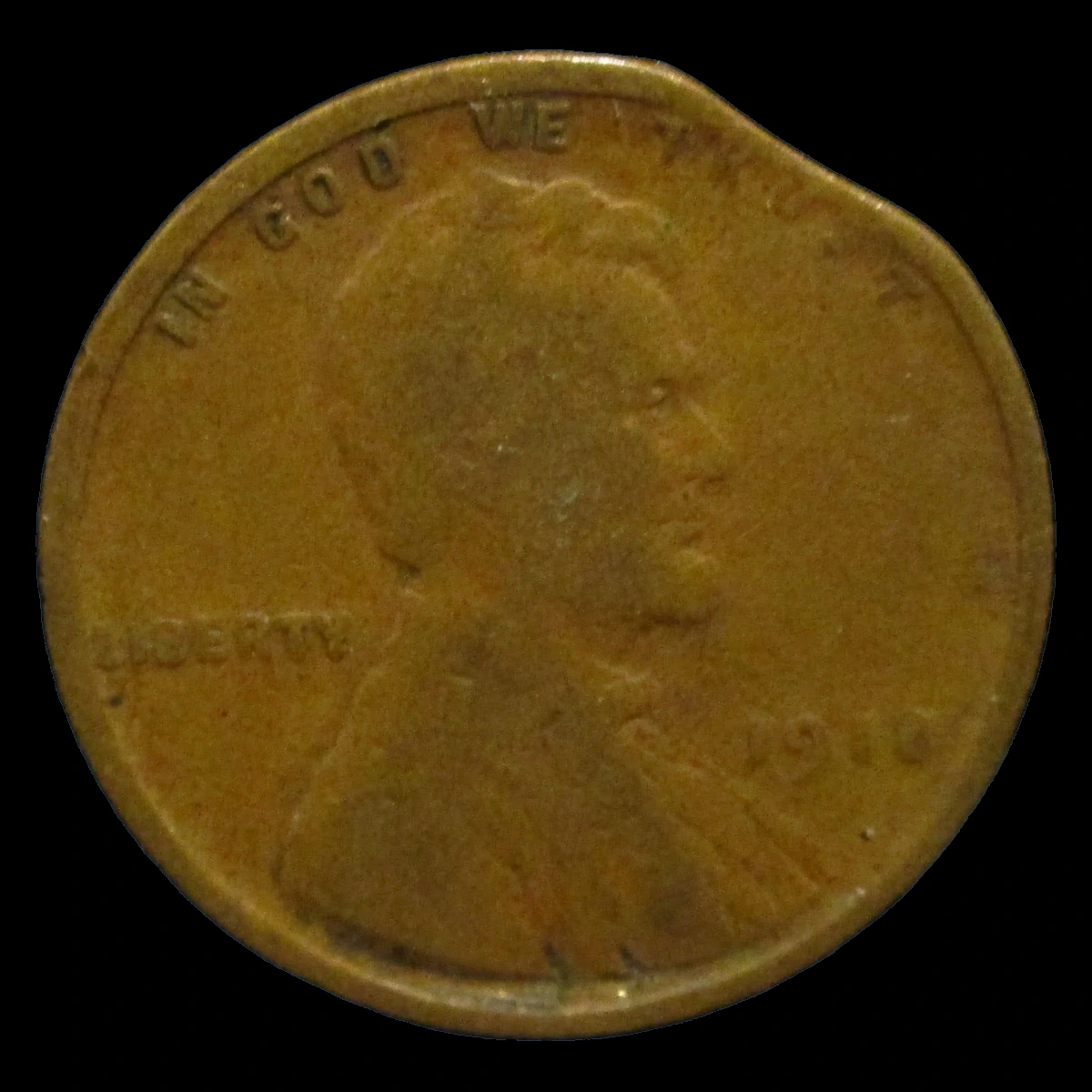
An incomplete blank retains its missing section after the coin is struck. A punch overlapping an earlier hole can create a curve, while a strip edge can leave a straight or irregular boundary.
How to Identify
Confirm the year from the coin or reliable certification before treating it as a 1918 example. A seller’s title alone does not establish the date of an otherwise undated clip.
Inspect the gap’s ends, nearby struck rim, and possible opposite-rim weakness. Ragged edges also need examination for later tearing, while fresh cuts through completed letters suggest post-mint removal.
What It’s Worth
Identifiable genuine 1918 clips are estimated at $15–$350. Missing area, preservation, and a readable year contribute to the comparison.
A worn 1925 curved clip weighing 2.92 grams sold for $56 in March 2023. The reported 10% clip without a visible date is not used as a verified 1918 sale here.
6. 1918 Penny A Blank Crescent Borders the Design: Off-Center Strike Error
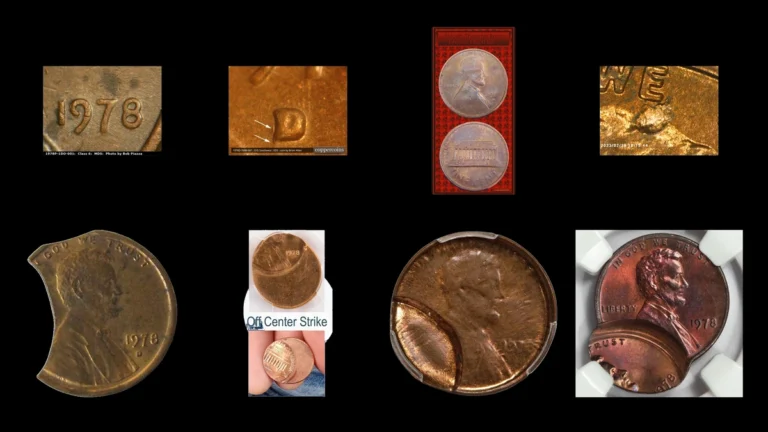
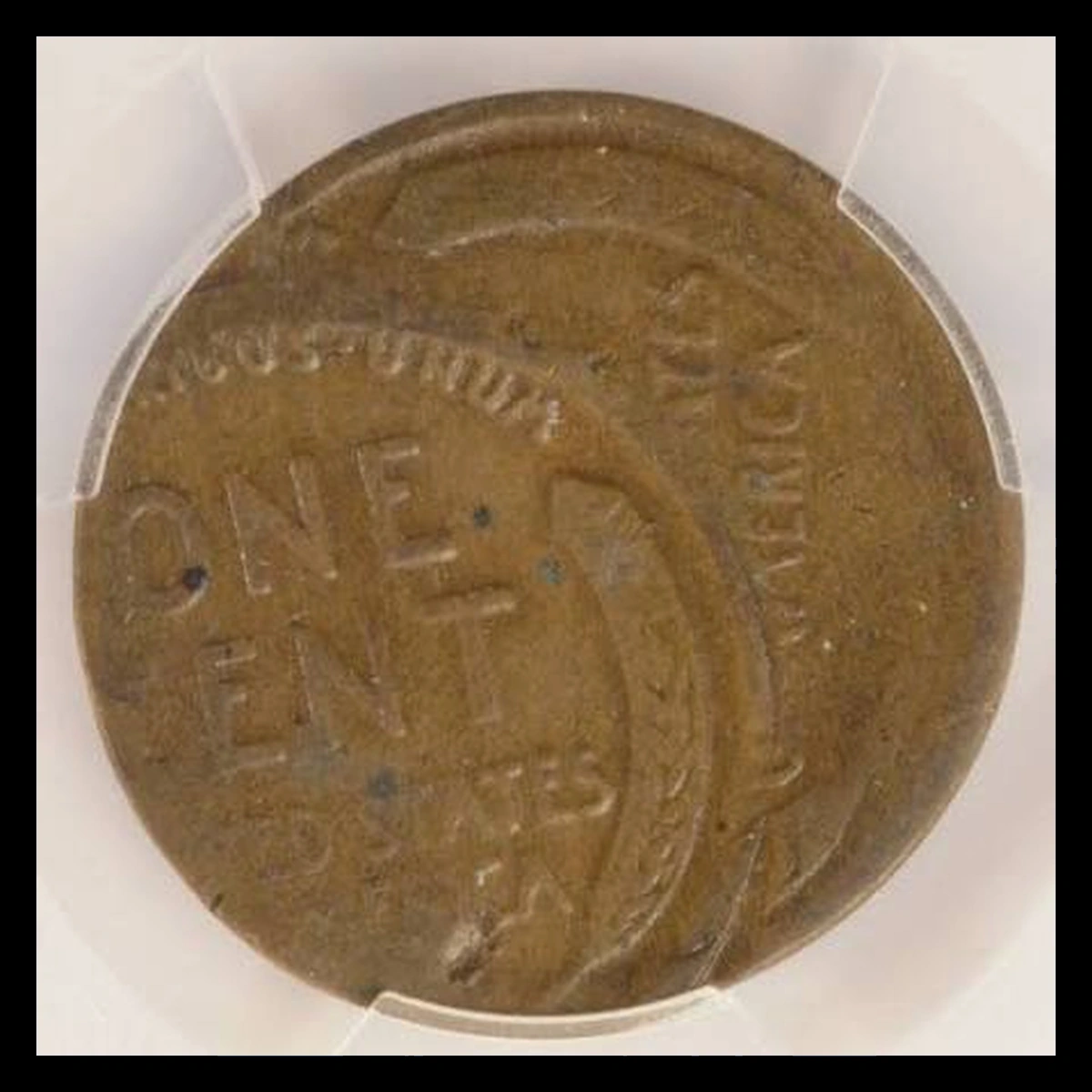
A misplaced disc receives an incomplete image with unused metal beside it. The documented 1918-D shifts 45% toward one o’clock, losing the motto and lower wheat stems.
How to Identify
Read the date and mintmark, then compare both face boundaries with the unused area. A faint or unstruck mintmark region cannot automatically establish Philadelphia.
Separate Philadelphia reports describe two 30% examples with different wear, including a lightly worn shift toward twelve o’clock. A San Francisco report concerns a different 35% coin, so neither inherits the Denver pattern.
What It’s Worth
Genuine dated off-center cents are estimated at $50–$1,500. Mint, readable design, displacement, and condition determine the useful comparison.
The Denver PCGS AU55 45% example sold for $336 on September 10, 2019. That lightly worn coin’s price does not transfer directly to the Philadelphia or San Francisco reports.
7. 1918 Penny Many Design Fragments Remain: Multiple and Flipover Strikes Error
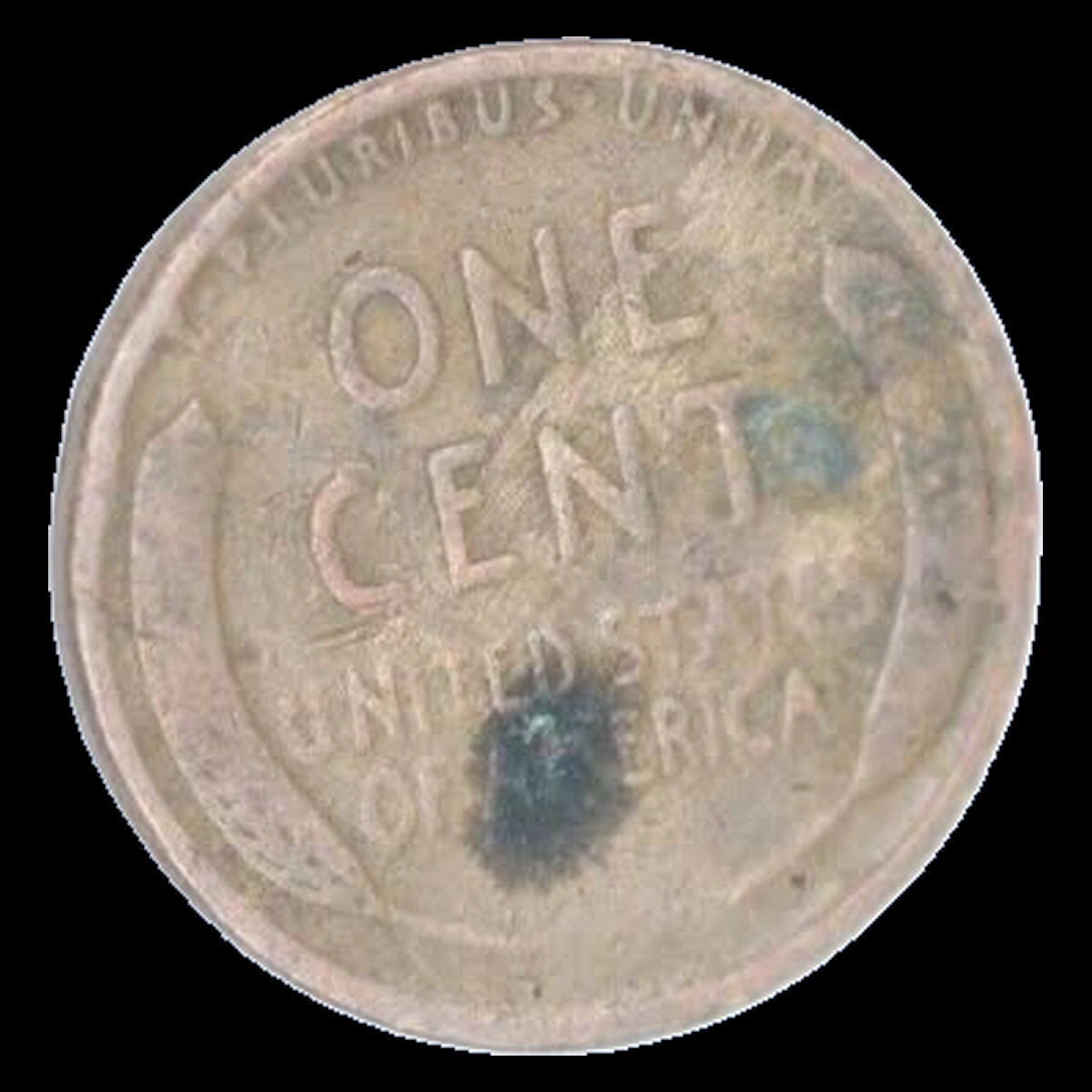
One Philadelphia cent received a recorded nine blows, with slight clockwise turning and movement toward one o’clock after an apparently normal first strike. Repeated portrait bases and PLURIBUS impressions help reveal its sequence.
How to Identify
Map recognizable impressions on photographs of both faces and follow where later blows crossed earlier designs. The nine-strike coin does not need to preserve nine complete dates.
A separate Philadelphia coin has only two strikes, with the second 85% off center. The Denver flipover report instead requires opposite-face design remnants together after the coin turned over between blows.
What It’s Worth
The estimated range is $250–$3,500 across these genuine multiple-strike forms. Readable surviving images and preservation matter more than a count of isolated lines.
The ANACS Fine 15 nine-strike cent sold for $2,070 in January 2009. A nine-strike F15 auction listing brought $1,680 in September 2025.
The separate NGC MS63 Brown coin with an 85% second strike sold for $288 in August 2020. Its unworn condition does not make it equivalent to the more complex nine-strike piece.
Conclusion
A 1918 cent’s surface, mintmark, and outline provide different kinds of evidence. A color streak does not prove a split layer, and an extra D outline does not mean the coin received another blow.
Use the $3–$3,500 estimates only after matching the actual feature and mint. For repeated strikes, explain the visible sequence on both faces and keep each documented coin’s grade and transaction attached to that specimen.