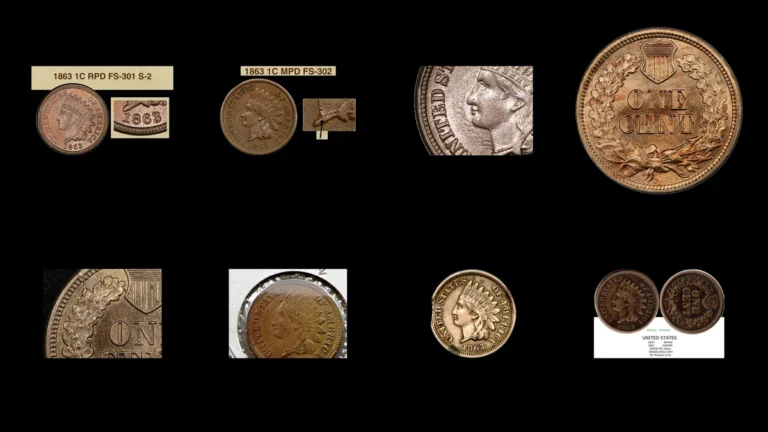
Rare 1846 Penny Errors (List & Pictures)
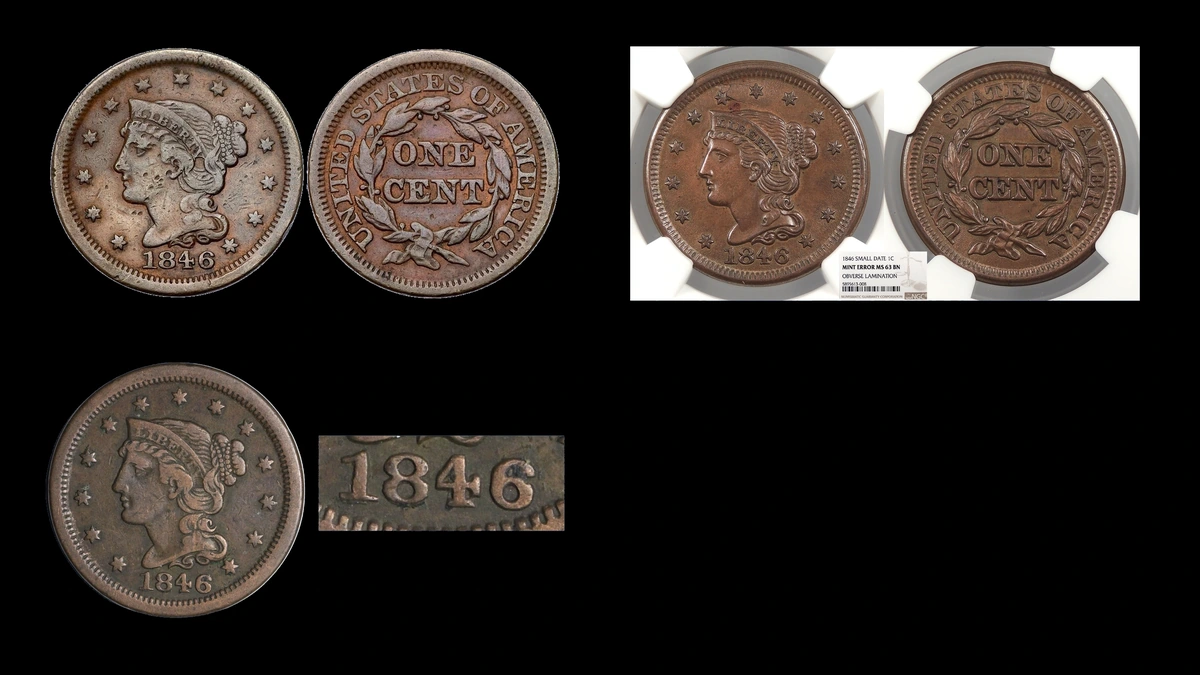
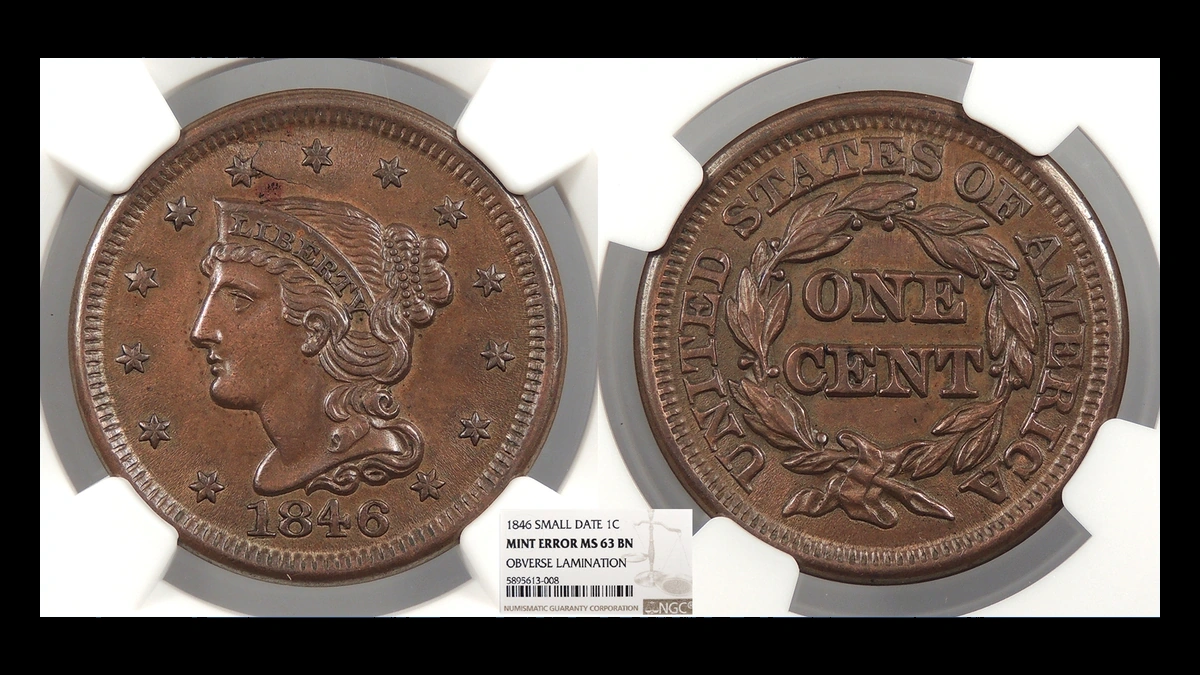
A Medium Date cent with front lamination and reverse cracks sold for $9,600 in August 2020. Among 1846 penny errors, that high result reflects an unusually well-preserved collectible, not separate prices for its two flaws.
Estimated whole-coin values span $20–$12,000. Examine strike placement, face alignment, raised lines, and separating copper before studying the date.
Normal large cents weigh 10.89 grams and measure 27.5 mm, with a plain edge. Small, Medium, and Tall Date are normal styles, not errors by themselves.
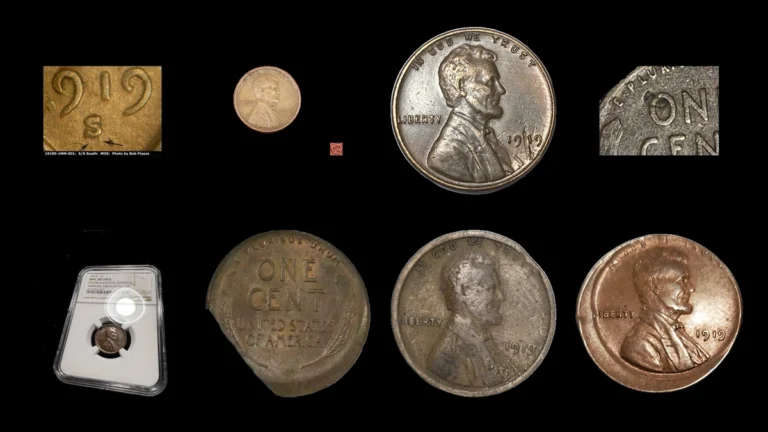
1. 1846 Penny The Design Runs beyond the Blank: Off-Center Strike Error
The full outline helps explain a recorded N-10 cent whose rim breaks appear unusually weak. Its strike was off center, so some expected details were not reproduced fully.
An off-center coin retains unused metal opposite the side where design misses the blank. Weakness at a particular rim feature must be interpreted within that larger displacement.
How to Identify
Compare both faces and locate the transition between struck and untouched metal. Their boundaries should fit the same misplaced blank.
Check for cutting or grinding that removed completed detail afterward. For the N-10 example, read the weak breaks together with the displaced design instead of rejecting the attribution from a faint break alone.
What It’s Worth
The estimated range is $300–$4,000 for genuine identifiable examples. The recorded N-10 coin has altered color, a condition issue that must remain part of its comparison.
An 1854 large cent struck about 50% off center sold for $1,527.50 in September 2016 at ANACS VF20, a worn grade. That later coin’s percentage is not a measurement of the 1846 specimen.
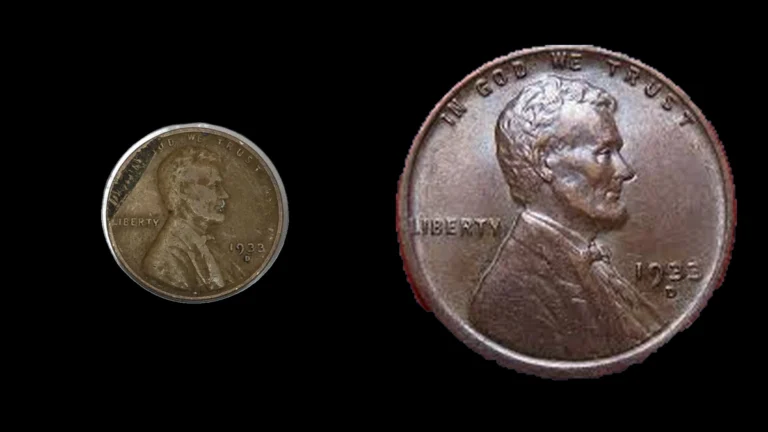
2. 1846 Penny The Back Turns Almost a Quarter Circle: Rotated Dies Error
A Tall Date N-13 example has a recorded 85-degree clockwise reverse rotation. Both designs can be centered even though the dies, the steel stamping tools, were turned away from their normal relationship.
How to Identify
Level the date in a clear holder that prevents the coin moving, then flip it top to bottom around a horizontal axis. Measure the reverse against upright and repeat the motion.
The same clockwise turn should return each time. A Tall Date alone does not establish 85 degrees, and two photographs independently turned upright cannot demonstrate the relationship.
What It’s Worth
A demonstrated rotation has an estimated whole-coin range of $40–$800. The recorded N-13 example has front-surface pitting, so the angle is not its only important feature.
A smaller 1858 Flying Eagle cent with rotated dies sold for $154 in June 2026 at Fine 12. That worn different-series comparison offers context rather than an exact price for the 1846 large cent.
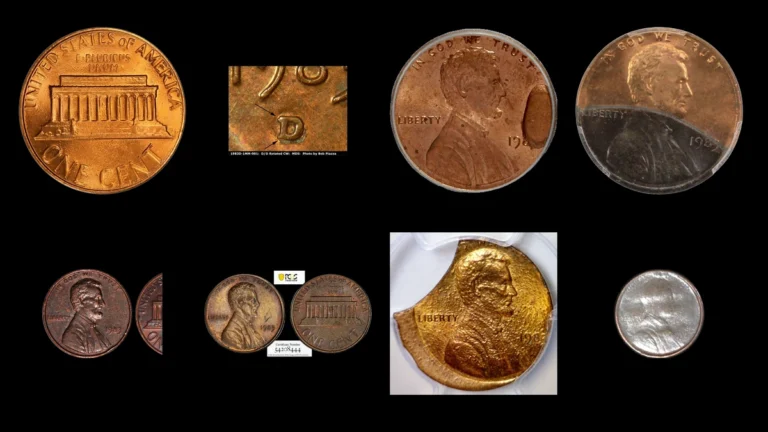
3. 1846 Penny Raised Lines or Lumps Cross the Reverse and Rim: Die Cracks and Breaks Error
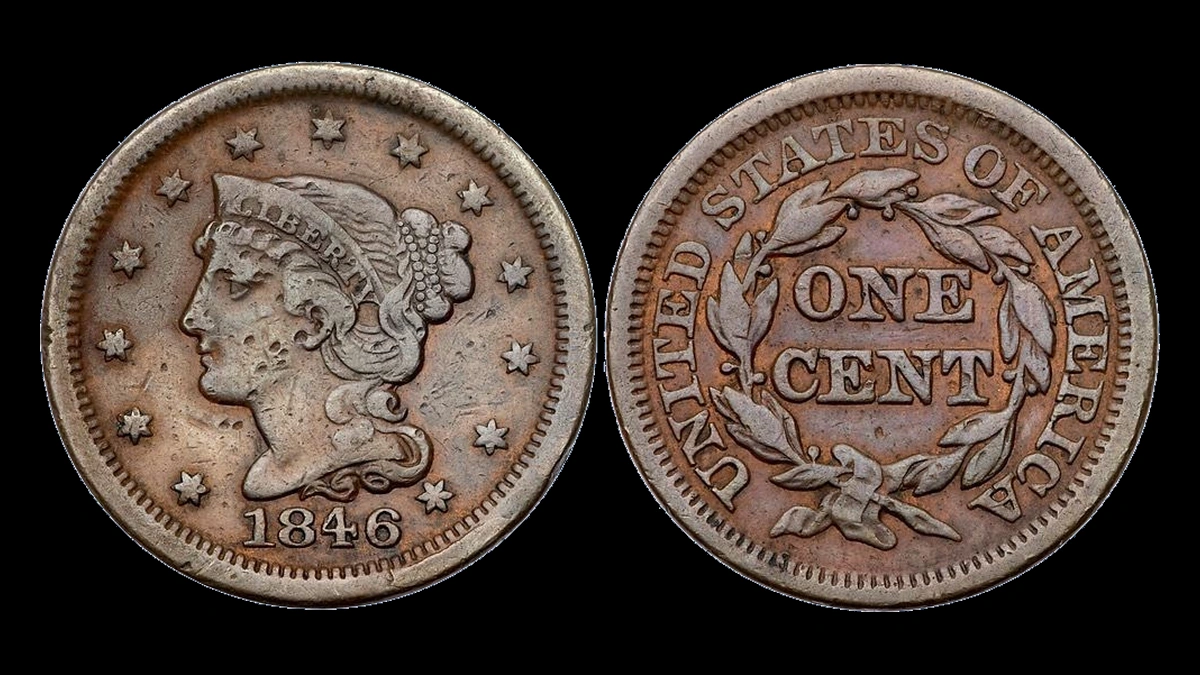
The documented Medium Date coin has one reverse crack rising from the lower border into the ribbon and another through the E in STATES. Metal entering openings in the die produced these raised lines.
Other 1846 cents have larger rim-connected breaks below the date, beside stars, or near reverse letters. Such a break is called a cud, and the different locations belong to separate patterns.
How to Identify
Move a light across a suspected line to determine whether its center rises above the surface. Scratches can have raised sides while still cutting downward through the middle.
For a larger patch, inspect its connection to the rim and check for solder or folded metal. Use the relevant coin’s photograph rather than combining several reported breaks into one expected design.
What It’s Worth
Ordinary circulated examples have an estimated range of $20–$1,500; exceptional Medium Date coins can reach roughly $6,000–$12,000 as complete collectibles. The distinction is largely one of variety and preservation.
The PCGS MS64 Red and Brown Medium Date example sold for $9,600 in August 2020. Its reverse cracks and front lamination share that one whole-coin result.
4. 1846 Penny A Thin Copper Flaw Crosses the Portrait: Lamination Error
On the same Medium Date example, a fine irregular flaw runs from the sixth star across the portrait toward the date’s 1. Weakness within the copper caused a surface layer to separate.
This lamination differs from the raised reverse cracks copied from the die. It also does not establish that the entire cent split into two discs.
How to Identify
Count stars from the lower left to locate the sixth, then follow the continuous irregular route toward the 1. Look for a layer boundary within the copper, rather than a simple solid ridge.
Leave the surface intact without probing or lifting it. Comparing this flaw with the reverse cracks on the documented coin makes their different relationships to the metal easier to see.
What It’s Worth
Ordinary examples are estimated at $25–$1,500, while a similarly preserved Medium Date coin can have a whole-coin value around $6,000–$12,000. The small lamination does not independently account for that upper range.
The PCGS MS64 Red and Brown auction record shows $9,600 in August 2020. This is the same coin and transaction cited for its reverse cracks, not another error sale.
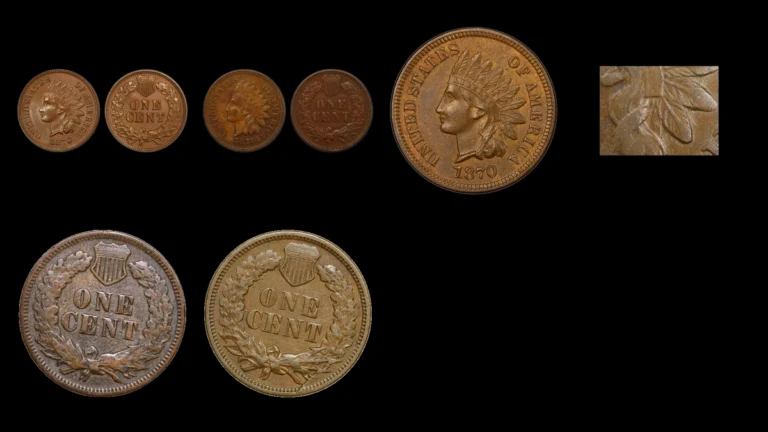
5. 1846 Penny Earlier Strokes Remain beneath 1 and 8: Repunched Date Error
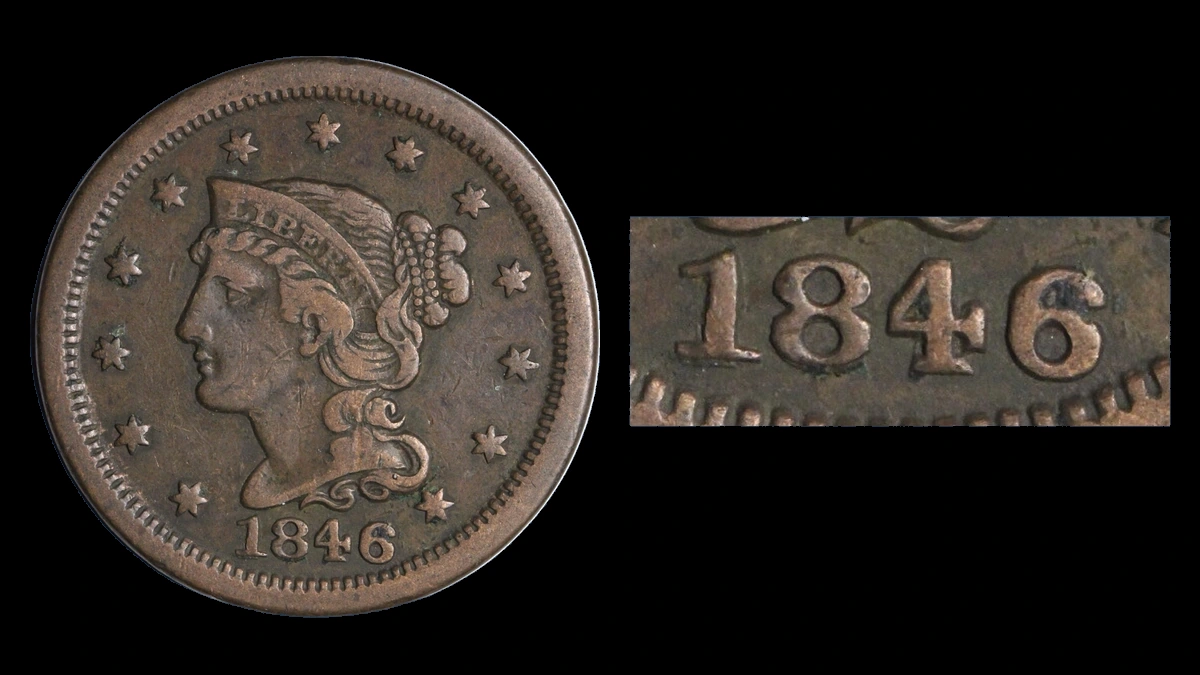
A recorded repunched date retains extra numeral strokes below the 1 and 8. An earlier application of the date punch was not completely covered when it was applied again in a different position.
The coin copied both surviving impressions from the finished die. This is repetition of the same date, not evidence that a different year was changed to 1846.
How to Identify
Choose an ordinary comparison with the same Small, Medium, or Tall Date style. Comparing different numeral sizes can produce misleading differences unrelated to repunching.
Follow the extra lower strokes far enough to recognize parts of the digits. An isolated ridge, a cut, or pushed-aside metal does not establish the pattern.
What It’s Worth
The estimated whole-coin range is $40–$2,500 across different varieties and preservation levels. Clear earlier strokes provide stronger evidence than a worn, thick-looking numeral.
An 1864 L bronze repunched-date cent graded unworn MS65 Brown sold for $1,560 in July 2024. That later small cent is a broad punched-date comparison, not an 1846 sale or a guaranteed premium.
Conclusion
The normal date style provides a starting point for an 1846 comparison, while an extra numeral stroke, a raised ridge, or a separating copper layer supplies a different kind of evidence. Study each feature in relation to the complete design.
The strongest quoted result belongs to one exceptional Medium Date coin with more than one flaw. Preserve that whole-coin context, and weigh pitting, altered color, wear, and surviving detail alongside the error itself.