Rare 1874 Penny Errors (List & Pictures)
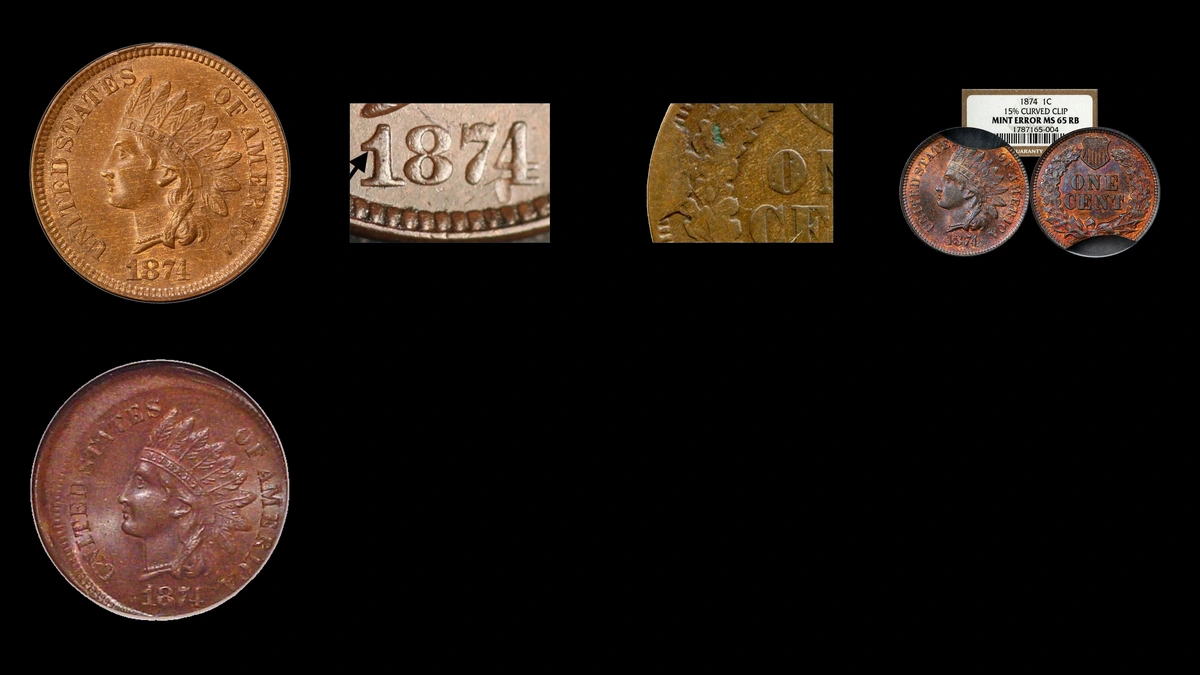
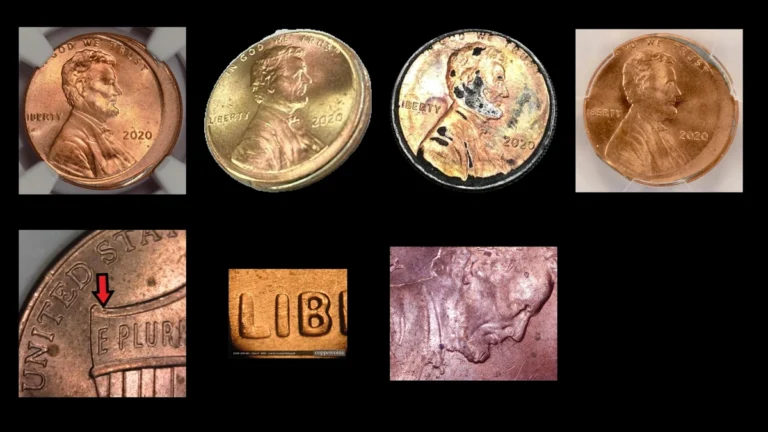
The eye and tiny designer’s L can help identify an 1874 doubled die even when LIBERTY is difficult to read. An unworn example brought about $1,821 in July 2014.
Estimated values for 1874 penny errors span $10–$4,000; the highest supplied completed comparison is $1,920 for a different-year 1878 misplaced date. Use the design locations below to separate doubling, transferred marks, date-punch remnants, and changes to the blank or strike.
| Inspect | Possible feature | Estimated range |
|---|---|---|
| Eye, L, LIBERTY, and feathers | Snow-1 doubled die | $75–$3,500 |
| Eye, CENT, or neck | Ordinary or off-center clash | $25–$2,000 |
| Normal date or a stray fragment | Repunched or reported misplaced date | $30–$1,500 |
| Raised line, lump, or rim patch | Crack, chip, or cud | $10–$1,250 |
| Missing edge or unused crescent | Clip or off-center strike | $50–$4,000 |
1. 1874 Penny Several Portrait Details Have Extra Edges: Doubled Die Obverse Error
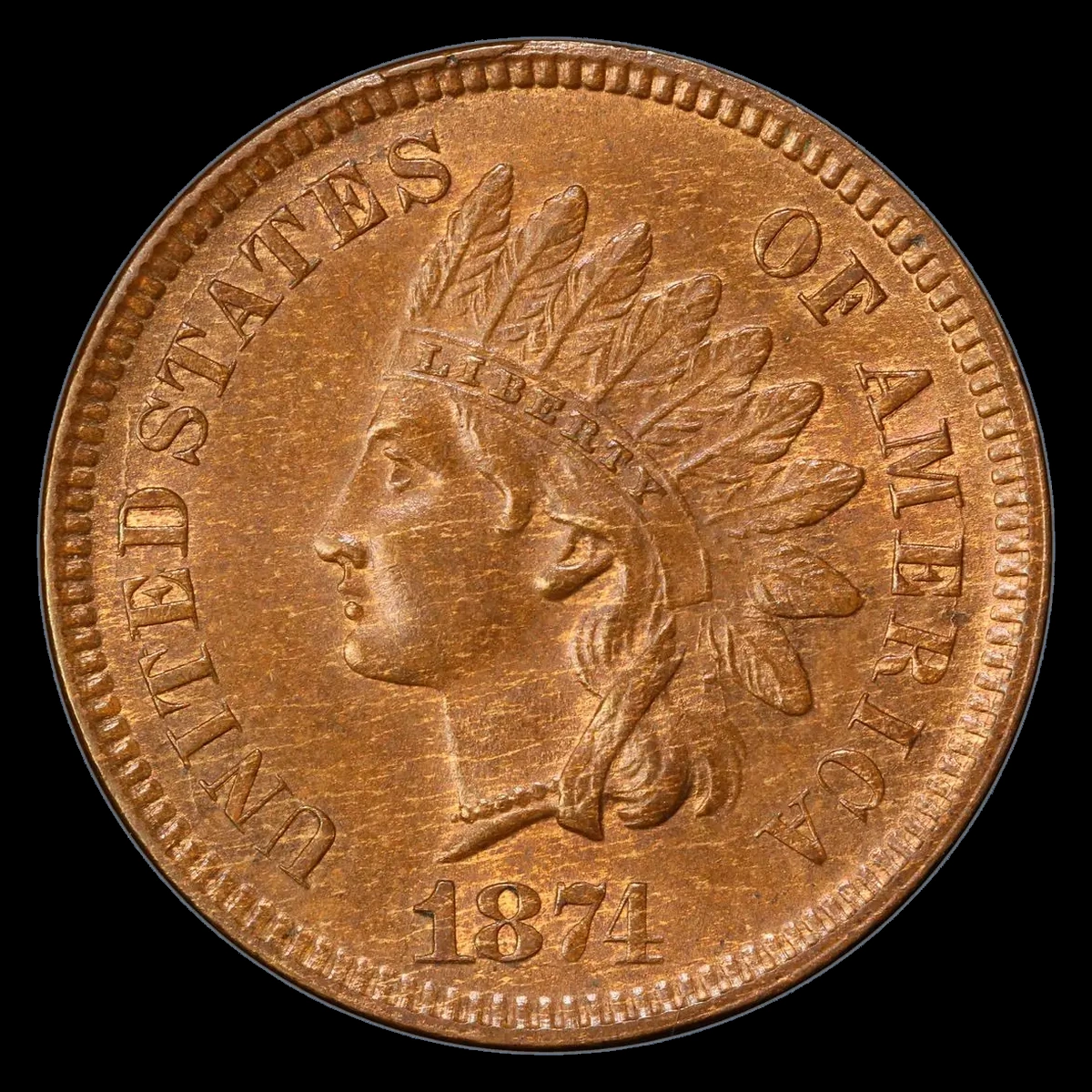
Snow-1, also called FS-101, connects repeated detail in LIBERTY with the eye, small designer’s L, hair, and feathers. The slight clockwise offset originated in the die’s design and could be copied by an ordinary single strike.
How to Identify
Begin with whichever diagnostic remains clearest, then follow the same separation into other readable areas. A worn headband need not be the only place to search if the eye and L near the lower neck remain visible.
Cracks across surrounding letters and the reverse wreath can help match the die pairing. They are companion marks rather than the cause of doubling, and a crack through UNITED alone cannot prove FS-101.
What It’s Worth
$75–$3,500 is the estimated range for identified 1874 doubled dies. Sharp original detail makes the subtle repeated shapes easier to establish.
PCGS records about $1,821 for an MS65 Snow-1 at Heritage in July 2014. That is a whole-coin result for an unworn example, with no second full price to add for accompanying cracks.
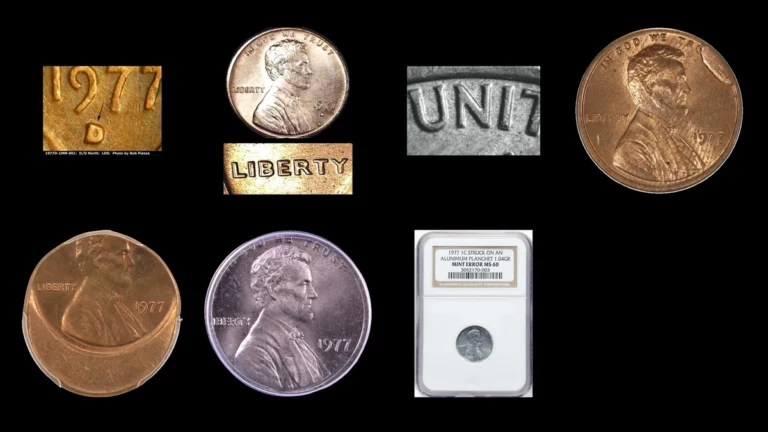
2. 1874 Penny Curves Cross the Eye Area or Neck: Die Clash Error
A curve in front of Liberty’s eye can correspond to the C of CENT, while the reverse can show a nose outline inside that C. These traces result from dies touching without a blank between them and transferring parts of the opposing design.
How to Identify
Compare the eye-area and CENT photographs together to test the transferred shapes. A separate off-center clash example has displaced border-like marks on the neck and needs its own comparison.
The proposed explanation involving a die-hardness test is the catalog author’s interpretation, not a demonstrated history for every clash. Check the actual raised outlines rather than using that proposed event to identify a random neck mark.
What It’s Worth
$25–$400 is the estimate for ordinary 1874 clashes, while a clear displaced-neck pattern on a stronger coin may fit roughly $150–$2,000. Recognizable shapes and preservation affect both ranges.
The illustrated neck example is PCGS MS65 Red-Brown, but no completed sale is assigned to it. Its high unworn grade and remaining copper color are part of the whole-coin comparison.
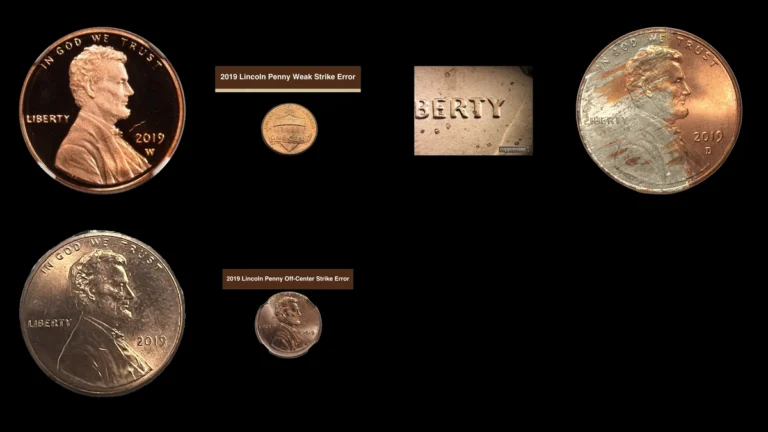
3. 1874 Penny Earlier Date Strokes Point in Different Directions: Repunched Date Error
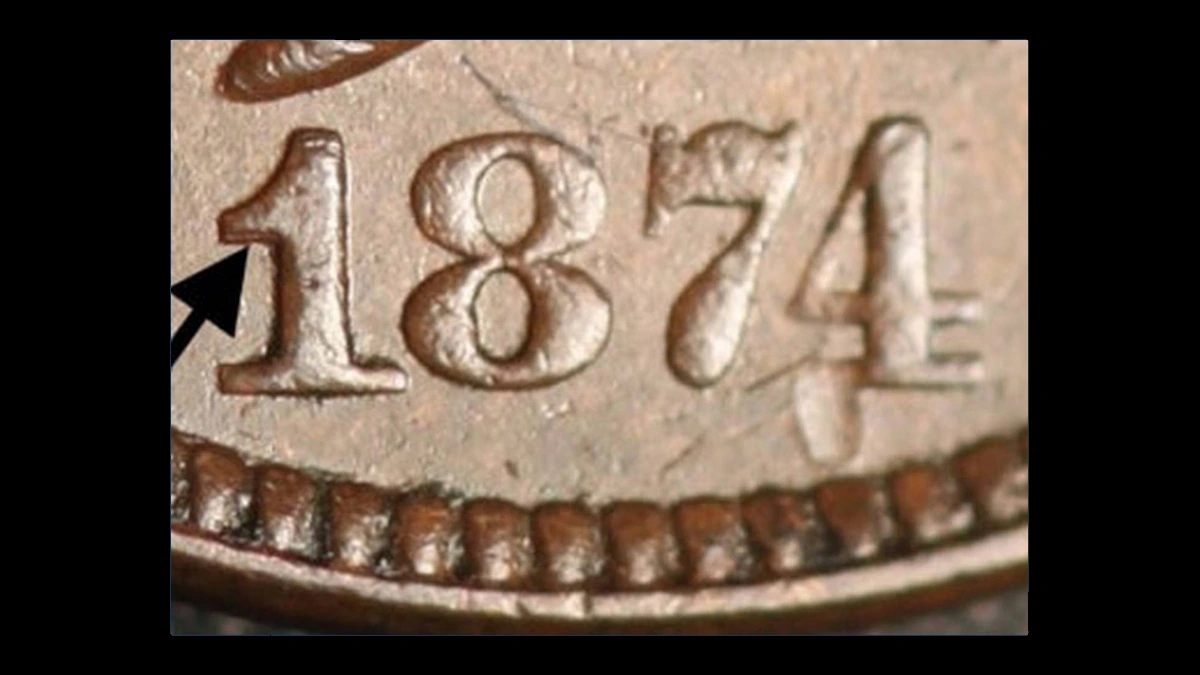
One pattern has an earlier 1 below the main numeral and remnants of 7 and 4 above their normal positions. The differing offsets record movement between date-punch impressions in the die.
How to Identify
Match the lower 1 and upper 74 together when checking that variety. Another recorded pattern instead has a trace above the left base of 1 and remnants in the 8’s loops.
Keep the complete date in a sharp photograph so the separate patterns are not mixed. Some examples also have eye-area and CENT clash marks, but those transferred shapes have a different cause from repunching.
What It’s Worth
$30–$1,500 is the estimated range for identified 1874 repunched dates. The exact pattern, visibility of its remnants, and overall condition determine the useful comparison.
An 1882 repunched-date cent graded AU55 sold for $84 at Heritage in July 2025. That lightly worn different-year coin gives broad context, not a completed sale for an 1874 pattern.
4. 1874 Penny A Possible Numeral Lies Away From the Date: Reported Misplaced Date Error
The catalog entry MPD-001 or Snow-5 names a reported 1874 misplaced date. Its supplied listing does not provide a specific photographed numeral location that can serve as a diagnostic.
How to Identify
Photograph the full front and the suspected fragment with the normal date still in view. A misplaced-date claim needs a recognizable numeral stem, base, or curve outside the intended date position, not an isolated dot or rough border tooth.
The Snow-5 listing supplies a name without the required location evidence. The actual mark therefore needs a specialist match before this catalog label is assigned.
What It’s Worth
$50–$1,500 is the estimated range for an 1874 coin with a verified misplaced-date feature. An unsupported attribution does not qualify merely because the category has a price range.
An 1878 Snow-2 graded MS65 Red sold for $1,920 in October 2019. Its lower-border 78 fragments and high preservation belong to that different year and cannot fill the diagnostic gap in the 1874 listing.
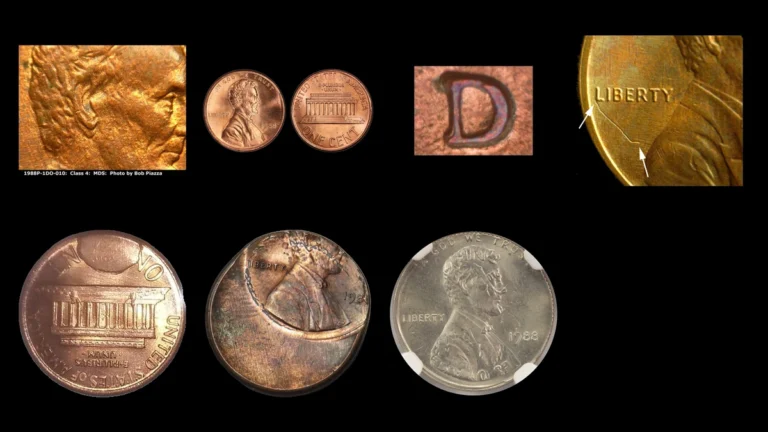
5. 1874 Penny A Ridge, Interior Lump, or Rim Patch Appears: Die Cracks, Chips, and Cuds Error
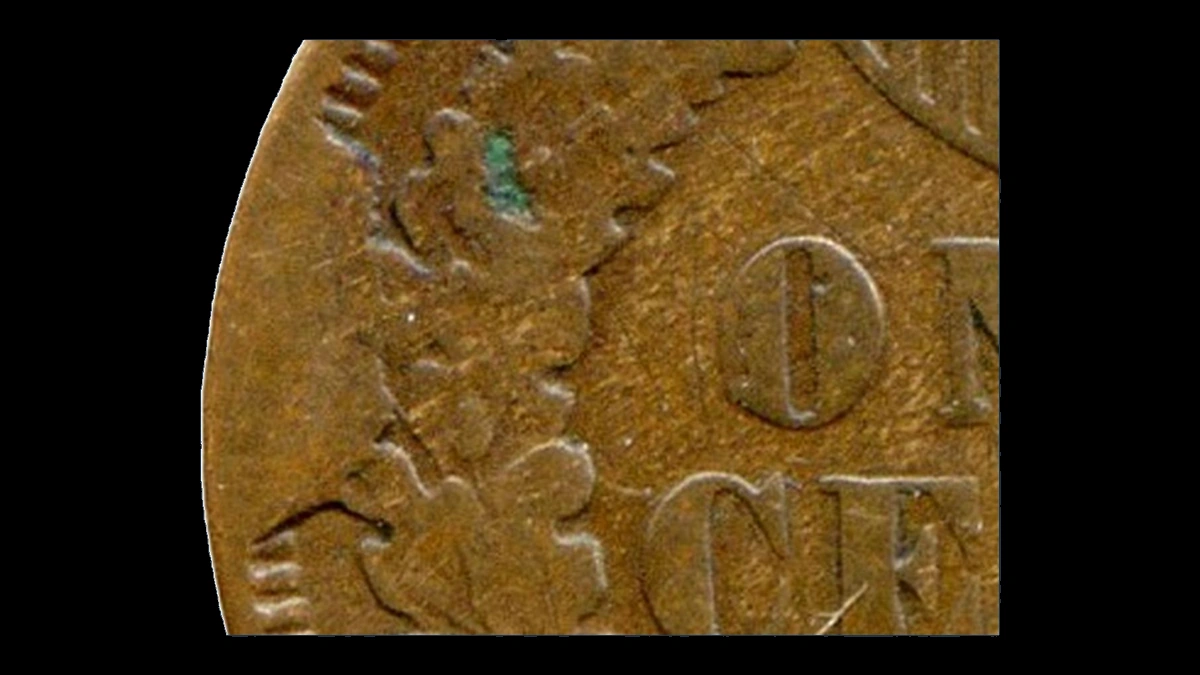
Die damage produces different forms of raised metal according to the size and location of the opening. A crack makes a ridge, an interior chip leaves a small lump, and a missing edge piece can create a rim-connected cud.
How to Identify
Recorded locations include a front break around 8–8:30 and separate reverse breaks around 8:30–10 or 3:30–4:30. Smaller portrait chips include one behind the first hair curl, while a date-base crack runs toward 9:30.
Compare each mark with the correct face and specimen. A scratch has an incuse channel, and rim damage or added metal may show a fold, dent, or seam instead of the original raised pattern.
What It’s Worth
$10–$150 is the estimate for modest cracks or chips on worn examples, with clear rim breaks around $75–$1,250. Size and preservation help distinguish those comparisons.
No completed sale is supplied for each listed break. Cracks accompanying the doubled-front variety remain part of that coin’s value rather than a separate full variety premium.
6. 1874 Penny A Curved Segment of the Edge Is Absent: Clipped Planchet Error
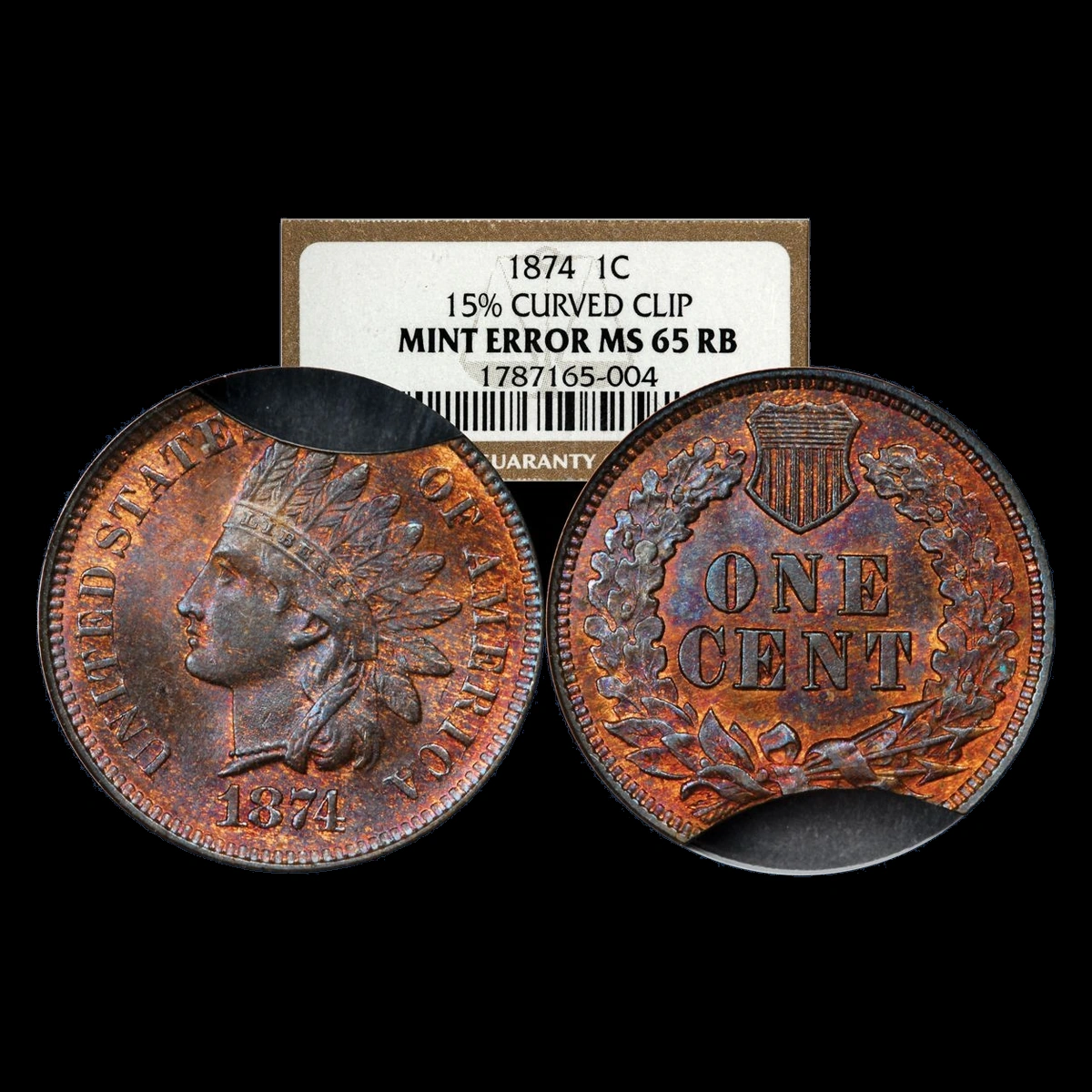
The Charmy Harker Collection includes an 1874 cent described as having a 15% curved clip. Its NGC MS65 Red-Brown grade identifies an unworn coin with some original copper color, distinct from a dealer’s worn example.
How to Identify
A curved clip can originate when the blank-cutting punch overlaps an earlier hole in the strip. Examine how the rim formed at both ends of the gap, looking for natural transitions instead of saw grooves or filing through finished design.
The collection display provides the 15% description, but not an exact required weight. For safely accessible loose coins, use 3.11 g and 19.05 mm as normal bronze-cent references, measure intact spans, and keep certified specimens sealed.
What It’s Worth
$50–$300 is the estimate for worn curved clips, while stronger examples with large original clips may fit approximately $300–$3,000. The complete coin’s preservation matters alongside the missing segment.
No completed sale is supplied for the MS65 Red-Brown collection piece. Its grade should not be transferred to the separate worn specimen or to every coin with a similarly sized gap.
7. 1874 Penny A Narrow Crescent Remains Unstruck: Off-Center Strike Error
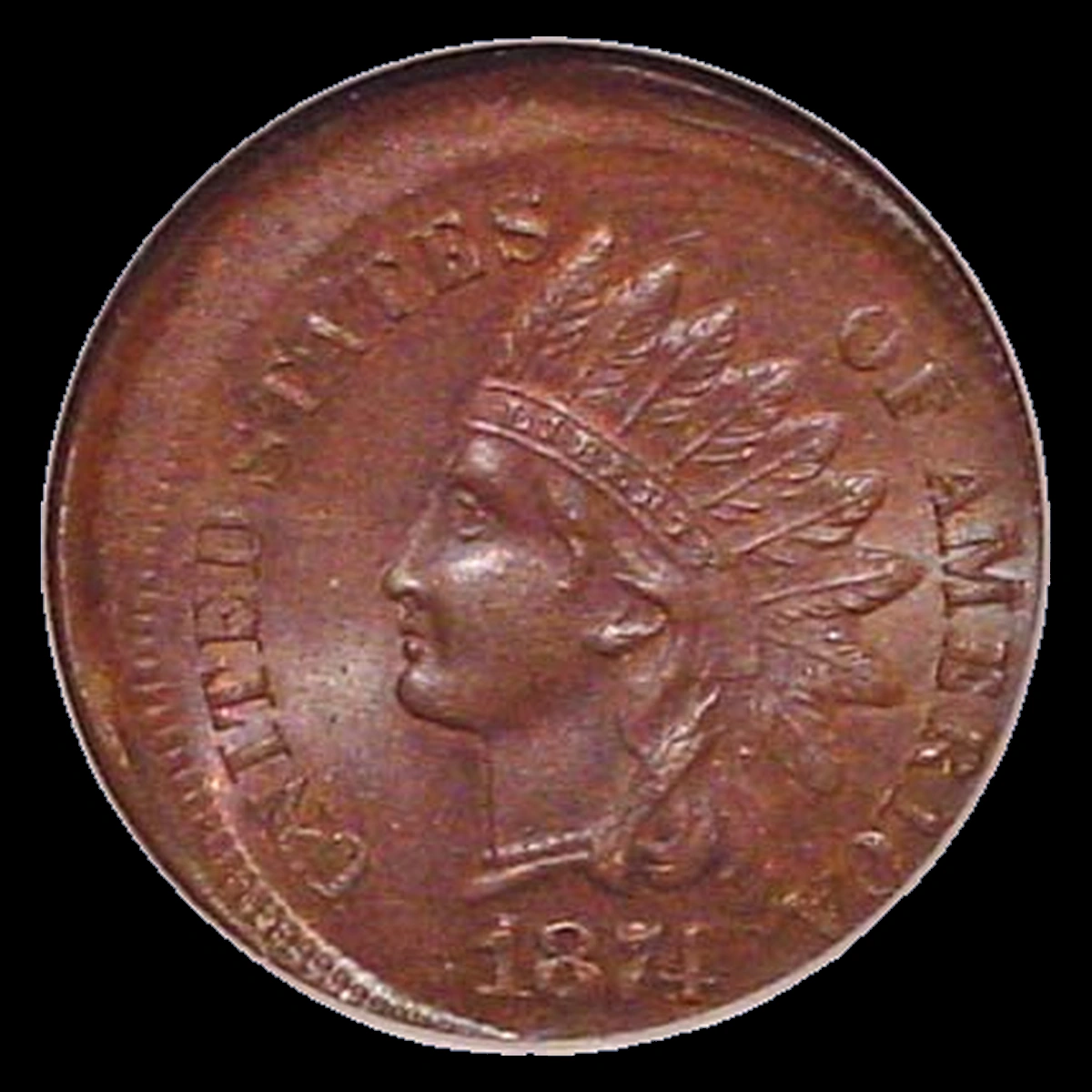
The illustrated NGC MS65 Brown 1874 cent was struck 10% off-center toward 5 o’clock. The blank’s displaced position caused some design to miss the metal while another area remained unstruck.
How to Identify
Compare full views of both faces with the date upright, tracing the boundary beside the unused metal. Both sides should fit the same displacement rather than only the front die being out of alignment.
This specimen has one displaced strike, not a second impression over an earlier design. A broadstrike with complete outer lettering needs a different comparison, as does a clip where metal is absent altogether.
What It’s Worth
$150–$750 is the estimate for many circulated examples, while unworn coins with strong surfaces can fit around $750–$4,000. Readable dates and preservation remain important even with conspicuous displacement.
The MS65 Brown collection illustration is not a completed sale record. Its 10% displacement alone does not set the price or guarantee that a larger worn error is worth more.
Conclusion
Several 1874 features can share one coin, but their causes remain distinct: date-punch remnants, die doubling, clash traces, and later die cracks require separate observations. Confirm each visible pattern without adding the highest estimate for every label.
The $10–$4,000 range also includes very different conditions. In particular, keep the unillustrated misplaced-date report conditional and avoid treating high-grade collection photographs as evidence of completed sales.