Rare 1819 Penny Errors (List & Pictures)
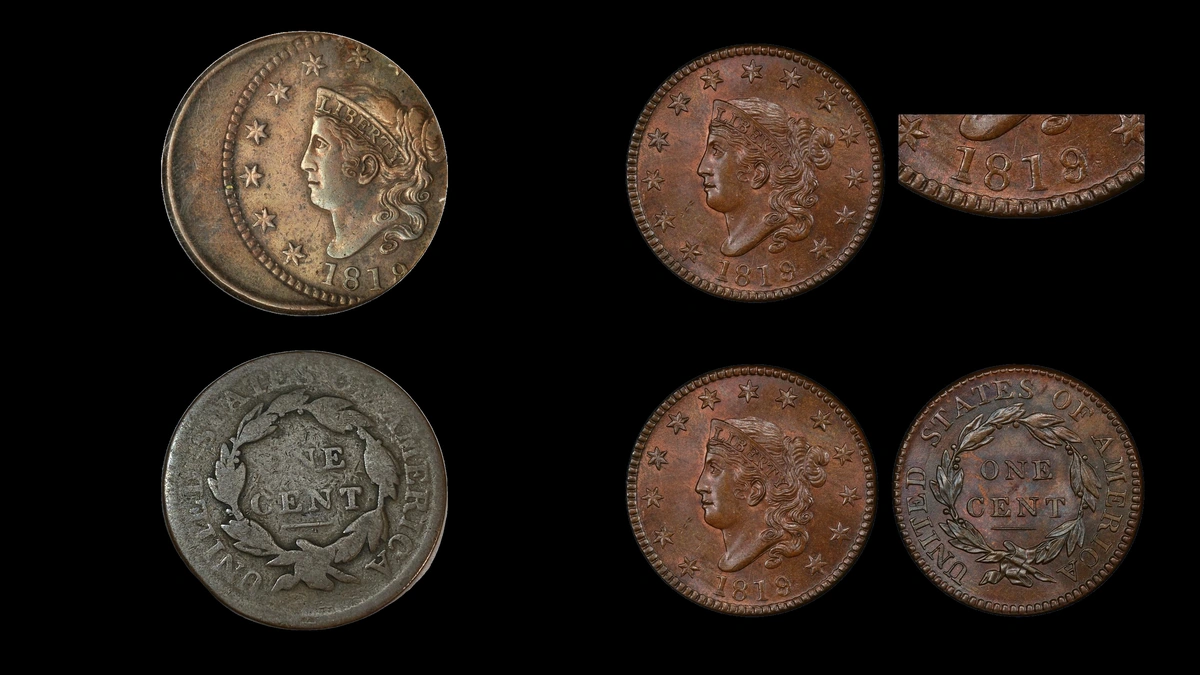
An 1819 cent combining an off-center strike with reverse brockage sold for $5,175 in November 2010. The highest supplied comparison is a different overdate: an 1823/2 brought $15,600 in April 2025.
Estimated whole-coin values for these 1819 penny errors span $25–$10,000. Inspect design placement and alignment first, then the copper surface and final date digit.
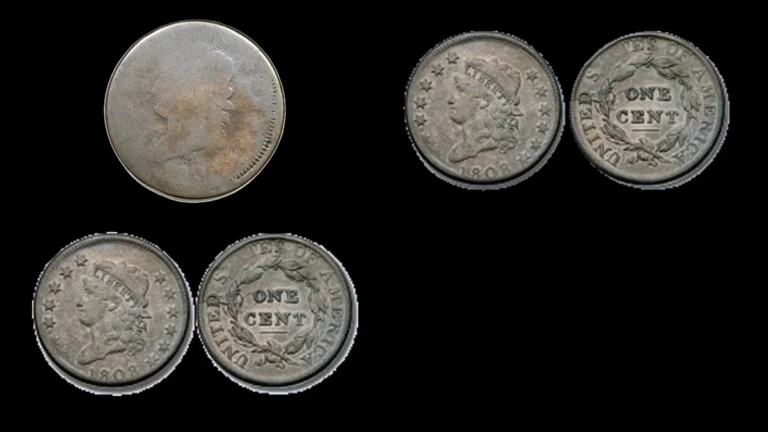
Normal copper Coronet cents weigh 10.89 grams and measure about 28 mm, with a plain edge. Several features can share one coin without sharing a cause.
1. 1819 Penny A Shifted Front Meets a Reversed Back: Off-Center Strike with Brockage Error
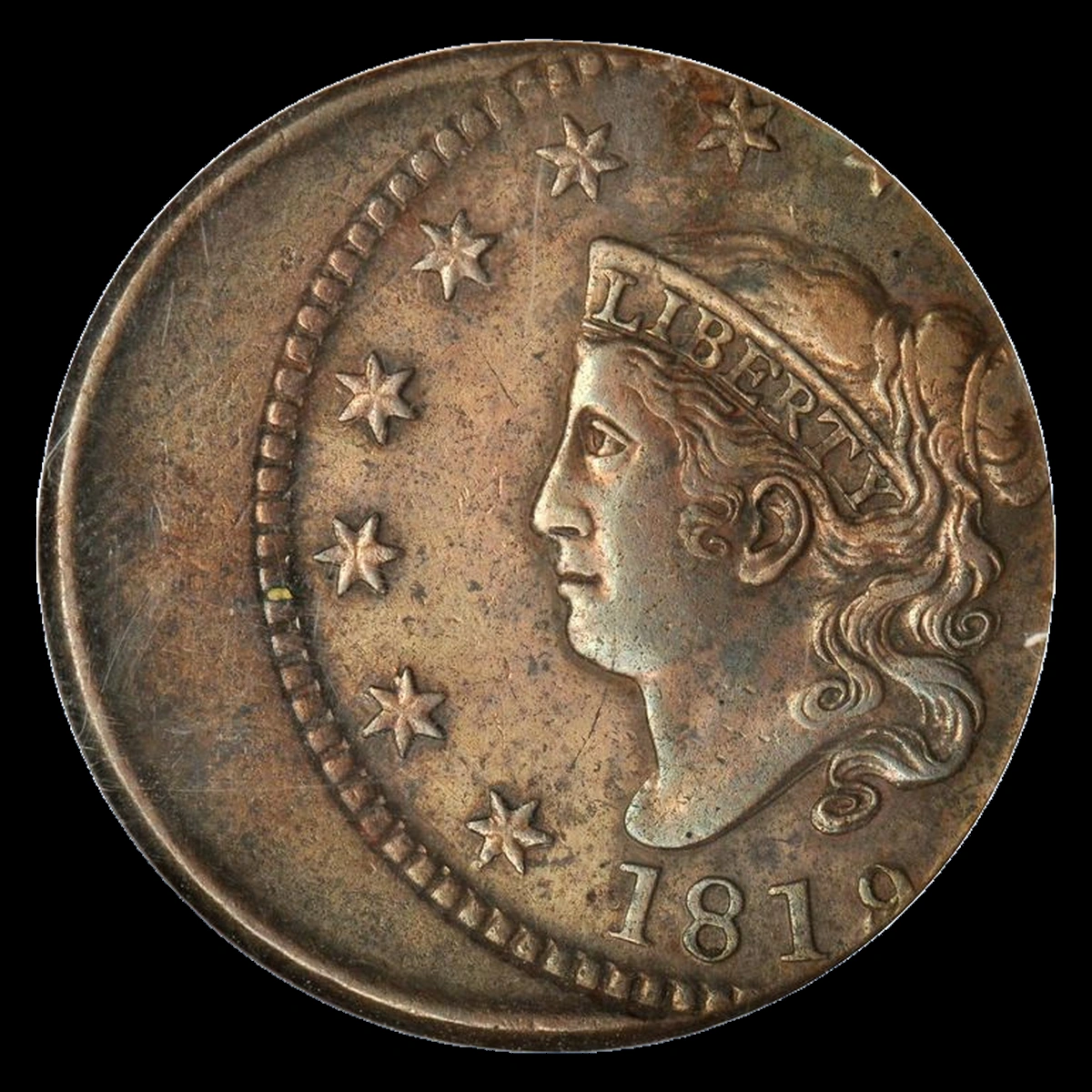
The recorded NGC XF40 Brown cent has a front struck about 20% off center toward 3 o’clock. Its back carries a partial sunken mirror image.
That reverse effect is a brockage, formed when a previously struck coin presses its raised design into another blank. The holder displayed the reverse upward to show the unusual transfer.
How to Identify
Confirm that the reverse fragment is both recessed and backward, then compare the front’s displaced design with its unused metal. An ordinary raised duplicate would need another explanation.
The 20% figure measures off-center displacement, not the percentage of reverse covered by the mirror image. Check the edge for later squeezing or grinding and judge both effects on the same coin.
What It’s Worth
Comparable authenticated pieces have an estimated range of $1,500–$10,000. This is one complete-coin value for the combined error.
The recorded example sold for $5,175 in November 2010. Its partial reverse impression should not be described as a full mirrored face, nor priced separately from its displaced strike.
2. 1819 Penny Repeated Design Extends beyond the Overdate: Double Strike Error
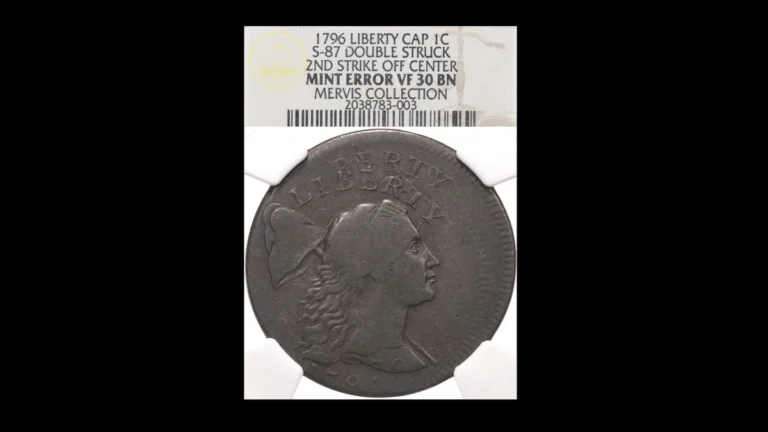
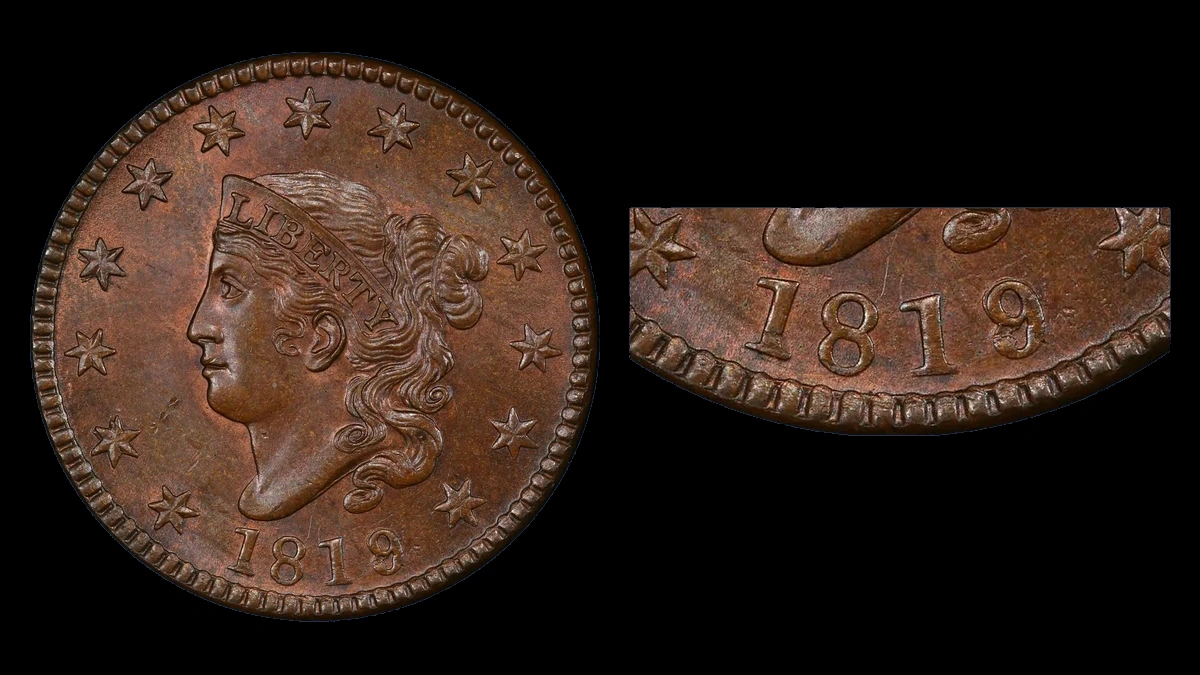
A documented 1819/8 Large Date cent received two blows from the press. Its overdate was already in the die, while the repeated strike happened later to the individual piece of copper.
Heritage offered this coin as NGC MS63 Brown, an unworn grade allowing some marks. The small older 8 and the larger repeated design therefore need independent examinations.
How to Identify
Look outside the last digit for repeated portrait, border, or lettering details that agree with the identified example. A crowded date alone cannot establish a second blow.
Inspect the edge for crushing or a join and follow recognizable overlapping impressions. A flat shelf beside one detail does not supply the same striking sequence.
What It’s Worth
The estimated range is $500–$8,000 for identifiable 1819 double strikes. Visible separation and surface quality affect the useful comparison.
The NGC MS63 Brown double-struck overdate sold for $2,115 in January 2014. Its variety, condition, and striking error are all included in that price, with no separate overdate amount to add.
3. 1819 Penny The Back Tilts after a Controlled Flip: Rotated Dies Error
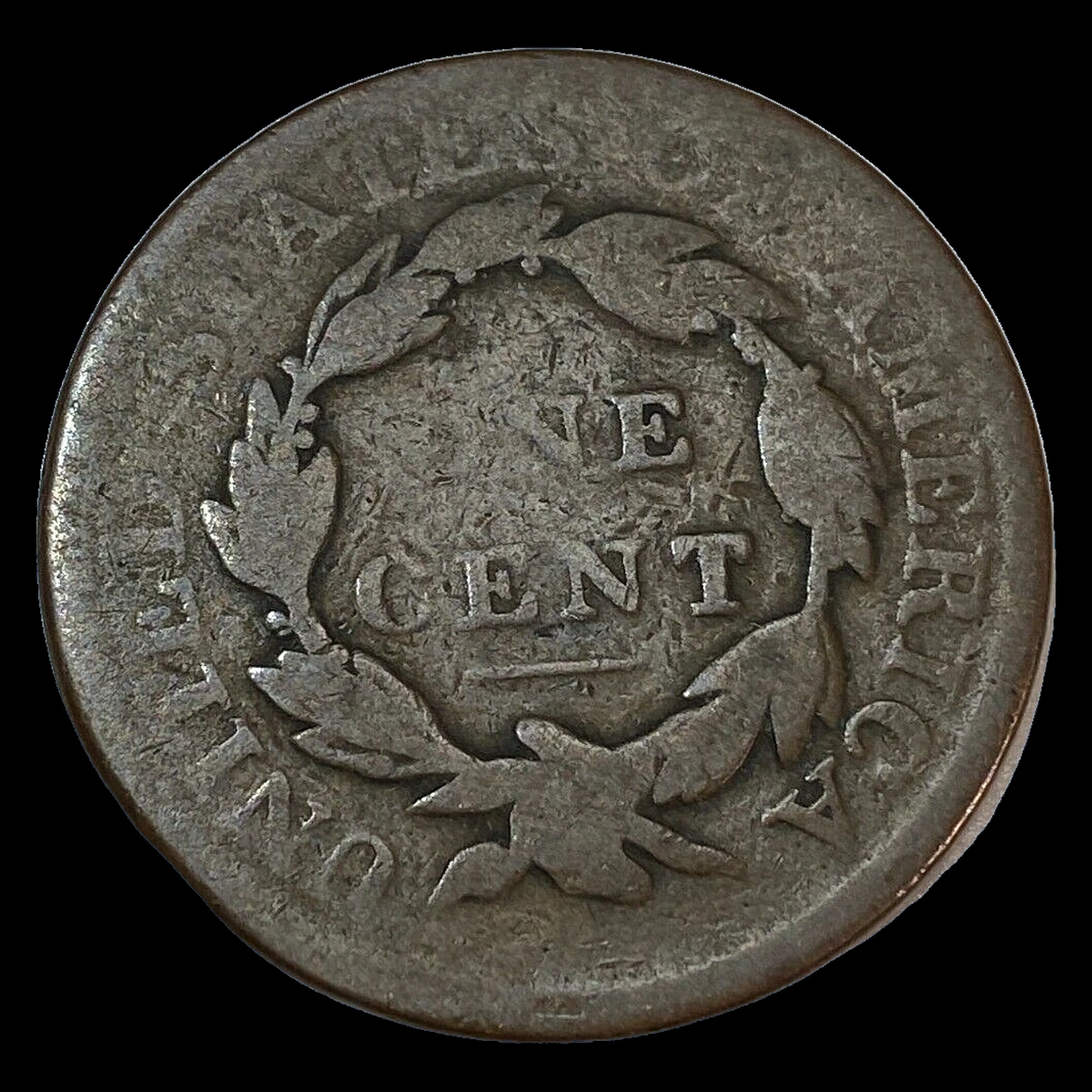
An 1819/8 N-1 example graded NGC AU55 Brown is reported with a rotated reverse. The dies were turned relative to one another, even though both designs could remain complete.
No specific angle is supplied for that specimen. The older digit in its date does not measure the rotation.
How to Identify
Level the front design rather than relying on the holder’s position, then flip top to bottom without twisting. Repeat the motion and record the reverse’s actual departure from upright.
A sealed coin can stay in its holder for this check. Do not substitute a familiar quarter-turn or half-turn for an unmeasured angle.
What It’s Worth
The estimated whole-coin range is $150–$5,000 for authenticated rotated 1819/8 cents across varied circulated conditions. The overdate’s collector value and preservation are already included.
A strongly preserved rotated 1831 cent brought $920 in 2010 with a documented 15-degree tilt. Neither that angle nor its condition should be transferred to the reported 1819/8 AU55 coin.
4. 1819 Penny A Thin Layer Remains Attached near Star Five: Retained Lamination Error
The Large Date N-2 example has an attached copper layer extending toward the fifth star. Internal separation occurred, but the loosened metal did not completely detach.
The auction described AU50 detail with cleaning, without grading-service certification. That cleaning is a condition problem separate from the metal defect.
How to Identify
Follow the flap’s boundary toward star five under magnification without lifting or pressing it. An actual thin layer is stronger evidence than discoloration or cleaning lines.
Use intact areas if measuring a loose coin safely. Its weight may remain near normal because the separated copper is still attached.
What It’s Worth
The estimated range is $30–$2,000 for authentic lamination in varying condition. A cleaned example needs comparisons with similarly impaired surfaces, not merely similar sharpness.
An 1842 large cent with an unworn-detail rim-layer flaw sold for $750 in September 2021. It provides another-year context but does not establish a price or certified AU50 grade for the 1819 piece.
5. 1819 Penny A Raised Line Runs from 9 toward a Star: Die Crack and Reported Cuds Error
The N-10 crack rises from the upper-right side of the final 9 toward star eleven. Copper filled a narrow opening in the die to form the raised line.
A larger missing die piece at the edge can produce a rim-connected patch called a cud. The specific N-10 crack does not independently establish such a break elsewhere.
How to Identify
Count the stars and trace the correct date-to-star path under changing light. A scratch cuts downward even when displaced copper raises its sides.
A claimed cud requires a separate matching example and a natural connection to the rim. Check for folding or added metal rather than relying on the known crack alone.
What It’s Worth
Circulated crack examples are estimated at $25–$500, while a substantial authenticated rim cud may fit $100–$1,500. Condition remains part of each whole-coin range.
An 1827 cent with a retained below-date break sold for $264 including fees in May 2025. That different year’s retained die section cannot supply the location or sale price of a claimed 1819 cud.
6. 1819 Penny An Earlier 8 Shows around the Final 9: 1819/8 Overdate Error
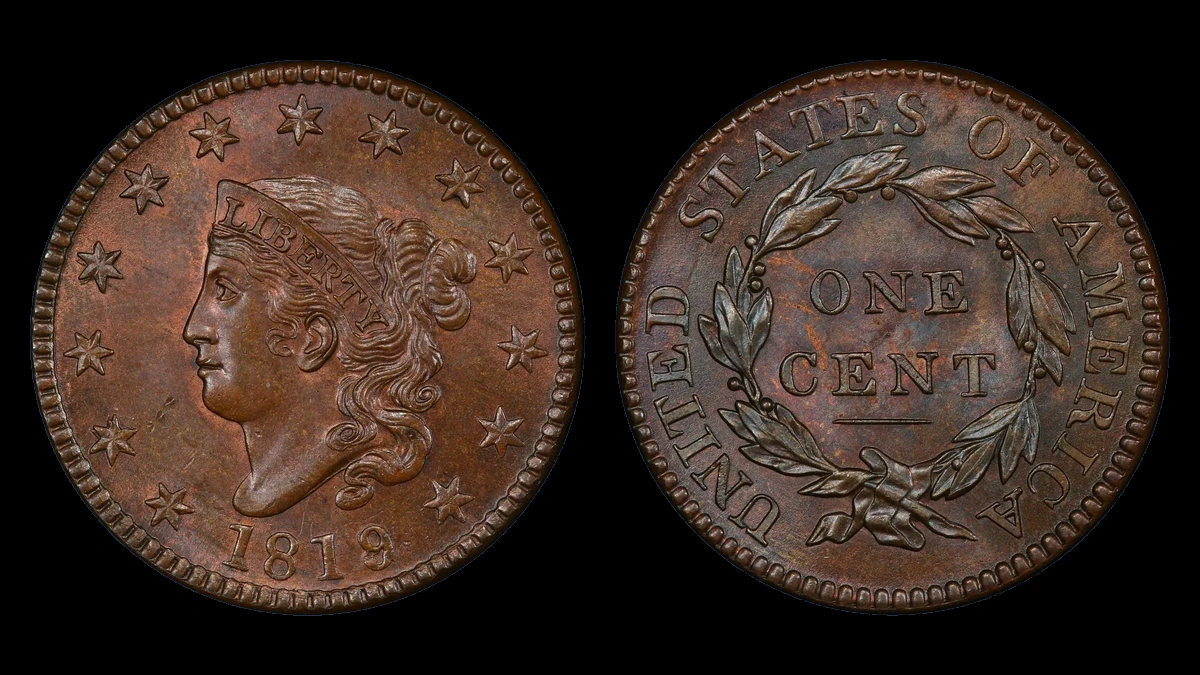
The older numeral survives because the die’s date was changed without removing every part of the 8. Strong examples are written 1819/8, while much weaker remnants may be described as 1819/(8).
Large Date and Small Date are normal design descriptions. Neither label establishes an overdate without the earlier digit’s visible curves.
How to Identify
Look above and to the upper left of 9, comparing strong and weak reference photographs as appropriate. A faint version need not preserve every stroke visible on a bold example.
Follow the suspected curves to distinguish numeral remnants from random scratches. The old 8 can appear on a coin struck once, so it is not proof of a double strike.
What It’s Worth
Genuine examples have an estimated range of $100–$8,000, from worn coins to attractive nearly unworn pieces. Strength of the older digit, preservation, and surface originality all matter.
An 1823/2 graded AU55 brought $15,600 in April 2025. Its different scarcity and collector demand prevent transferring that higher result to an 1819/8 merely because both are overdates.
Conclusion
The older 8, a tilted reverse, and repeated struck designs each answer a separate question about an 1819 cent. Establish each feature from its own evidence, even when several occur together.
Preserve attached copper layers and retain cleaning or other condition qualifications when comparing prices. The off-center brockage and double-struck overdate are complete coins with combined features, not separate maximum values to add together.