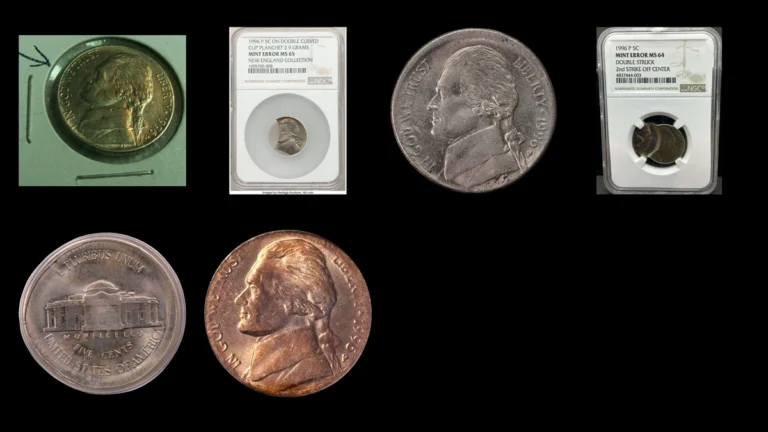
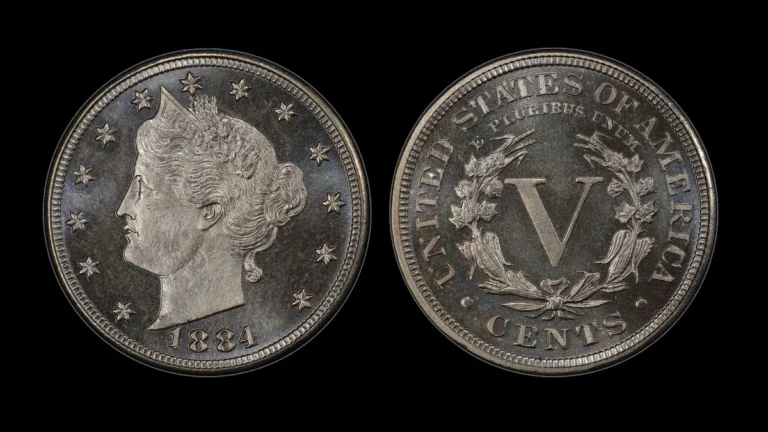
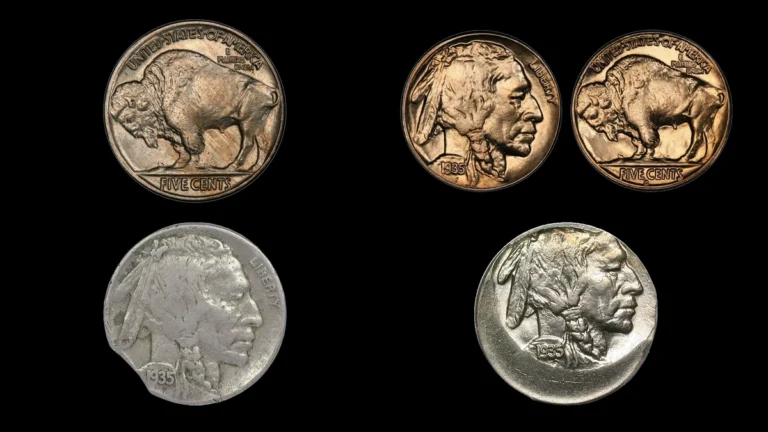
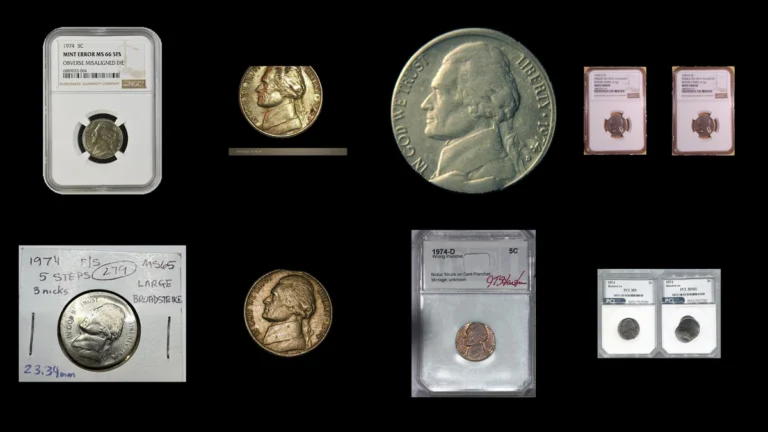
Rare 2024 Nickel Errors (List & Pictures)
Before calling a nickel “double stamped,” check whether the extra image is raised, sunken, or only a faint line. Those clues separate several very different 2024 nickel errors.
The ten groups here have estimated values of $3–$1,500. An undated Jefferson nickel with a partial brockage sold for $336 in June 2024, but the sale date does not make that coin a dated 2024 example.
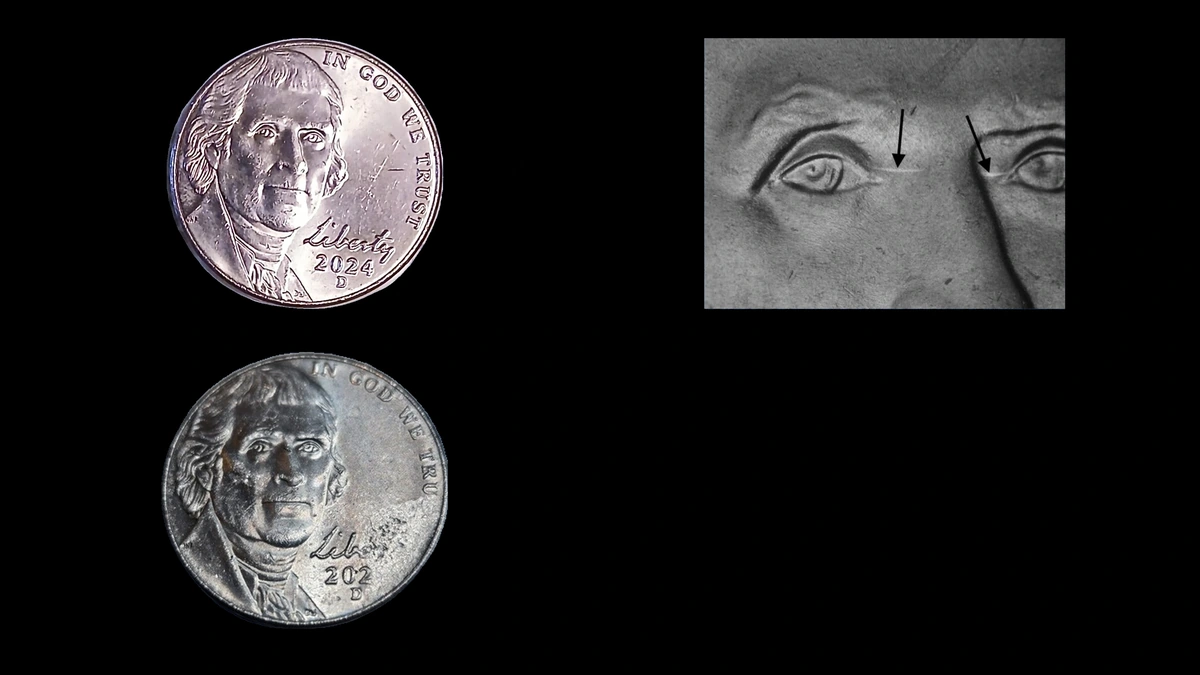
1. 2024 Nickel Doubled Eyes, Letters, and Building Details Error
Listed 2024-P patterns include extra eye outlines, motto letters, and parts of the Y in LIBERTY. Separate back patterns affect the steps, window, T in MONTICELLO, or other lettering.
These designs were doubled in the tools before the coins were struck. One pattern around the left roof triangle and center steps began in a working hub, an earlier tool used to make several stamping dies.
How to Identify
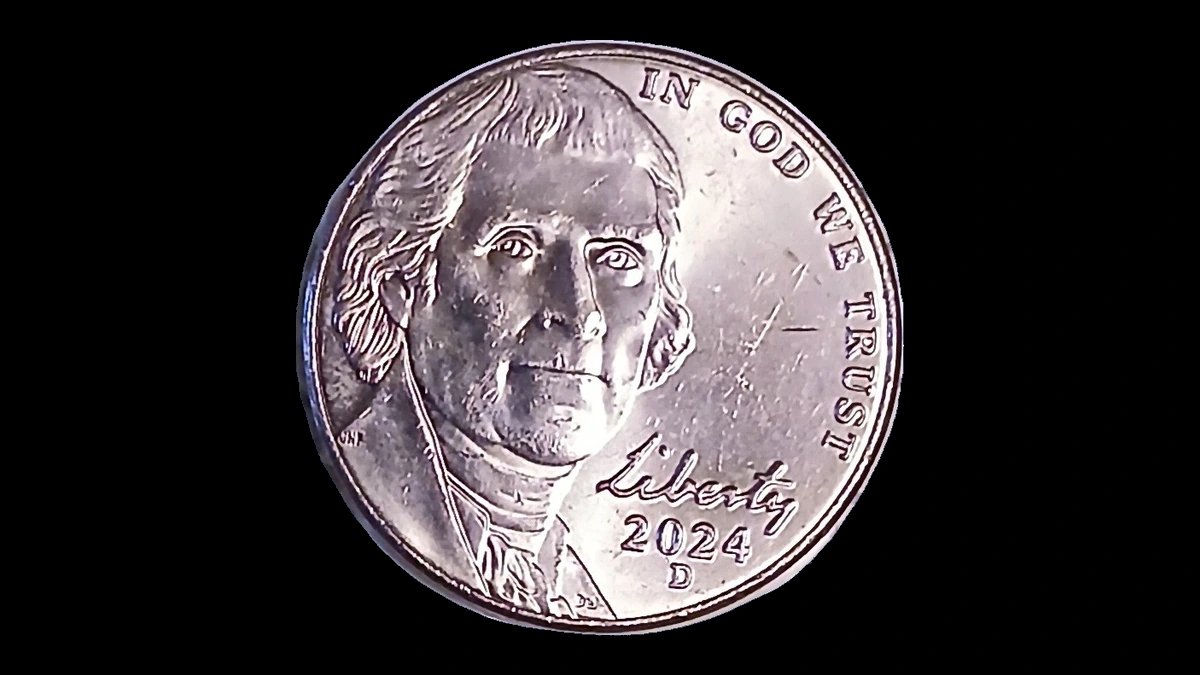
Check the mint letter, then choose the particular feature you see in the 2024 variety listings. Eye, motto, and window patterns need separate comparisons.
The shared hub pattern includes the left roof triangle, nearby building edges, and left center steps. Other small tool marks can vary even when that shared pattern matches.
Doubling is also reported for 2024-D, but a P photograph does not establish a D match. A flat shelf beside a letter may come from movement during striking rather than doubled tools.
What It’s Worth
$5–$200 is the estimated range for clearly identified doubled designs. Obvious separated detail on a clean unworn coin has more appeal than tiny or blurred outlines.
A shared hub pattern is not automatically rarer because several dies carry it. Use the visible strength and correct identification rather than assuming every thick-looking letter earns a premium.
2. 2024 Nickel Die Clash Traces Error
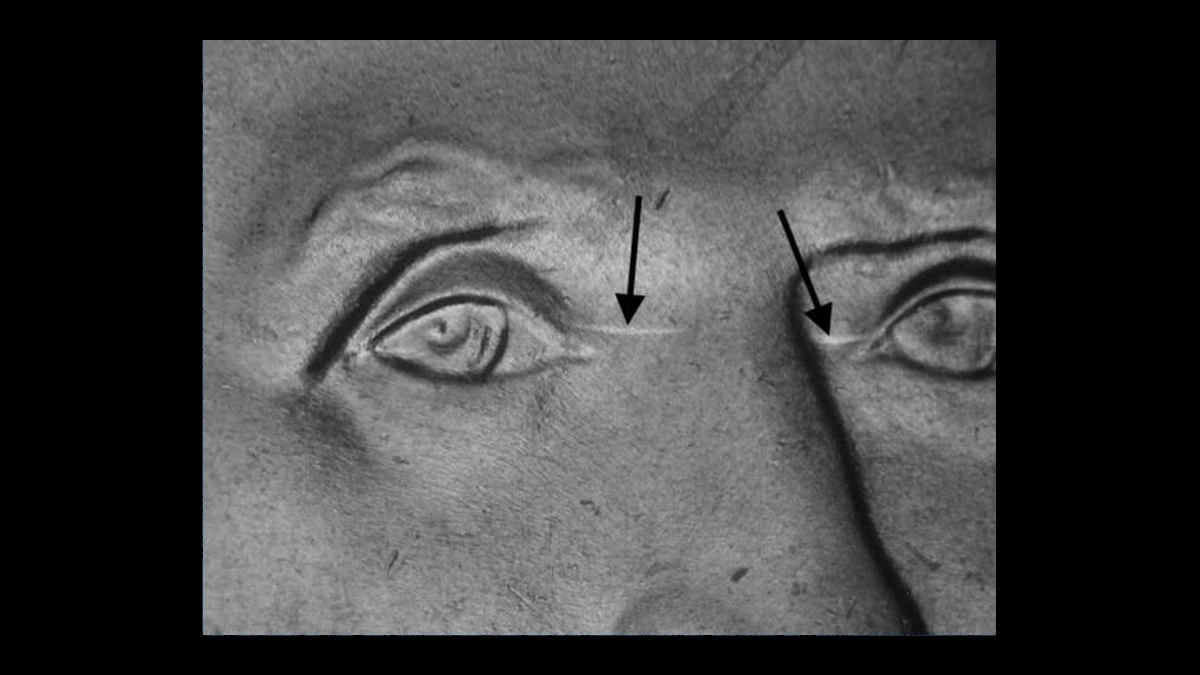
Fine marks cross Jefferson’s eyes on one listed 2024-P, with related traces below and left of the center steps. The dies touched without a blank between them and transferred parts of the opposing design to later coins.
The same coin also has doubled lettering. That added lettering and the clash traces have separate causes even though they appear on one nickel.
How to Identify
Compare the eye area with the back near the center steps. Each extra trace should relate to the opposite design rather than run like an arbitrary scratch.
Keep the doubled motto separate during this check. Extra outlines attached to its letters differ from fragments borrowed from the other face.
What It’s Worth
$5–$60 is the estimated range for clear 2024-P clash traces. Recognizable shapes and clean surfaces make the effect easier to show.
The additional doubled lettering may interest a variety collector, but the complete coin receives one value. Do not add the highest doubling and clash estimates together.
3. 2024 Nickel Die Cracks and Rim Cuds Error
A fine raised line can form when metal enters a crack in a stamping tool. A small internal chip may leave a bump, while a larger missing edge section can leave a rim-connected patch called a cud.
These forms are reported for 2024 nickels. Their different sizes matter more than simply giving every raised dot the cud name.
How to Identify
Move the light across the mark to tell a raised line from a cut. For a cud, follow the patch all the way to the rim.
Inspect the edge for crushed metal pushed inward or material stuck on top. A broken tool can leave an unformed patch beside sharp detail, whereas a later rim hit may flatten and displace existing design.
What It’s Worth
$3–$300 covers the estimated group. Small cracks or chips may fit around $3–$30, while substantial rim-connected breaks can fit around $40–$300.
These figures are estimates for genuine examples, not one auction result for all shapes. Wear that hides a small line can remove much of its appeal.
4. 2024 Nickel Struck Through Grease or Debris Error
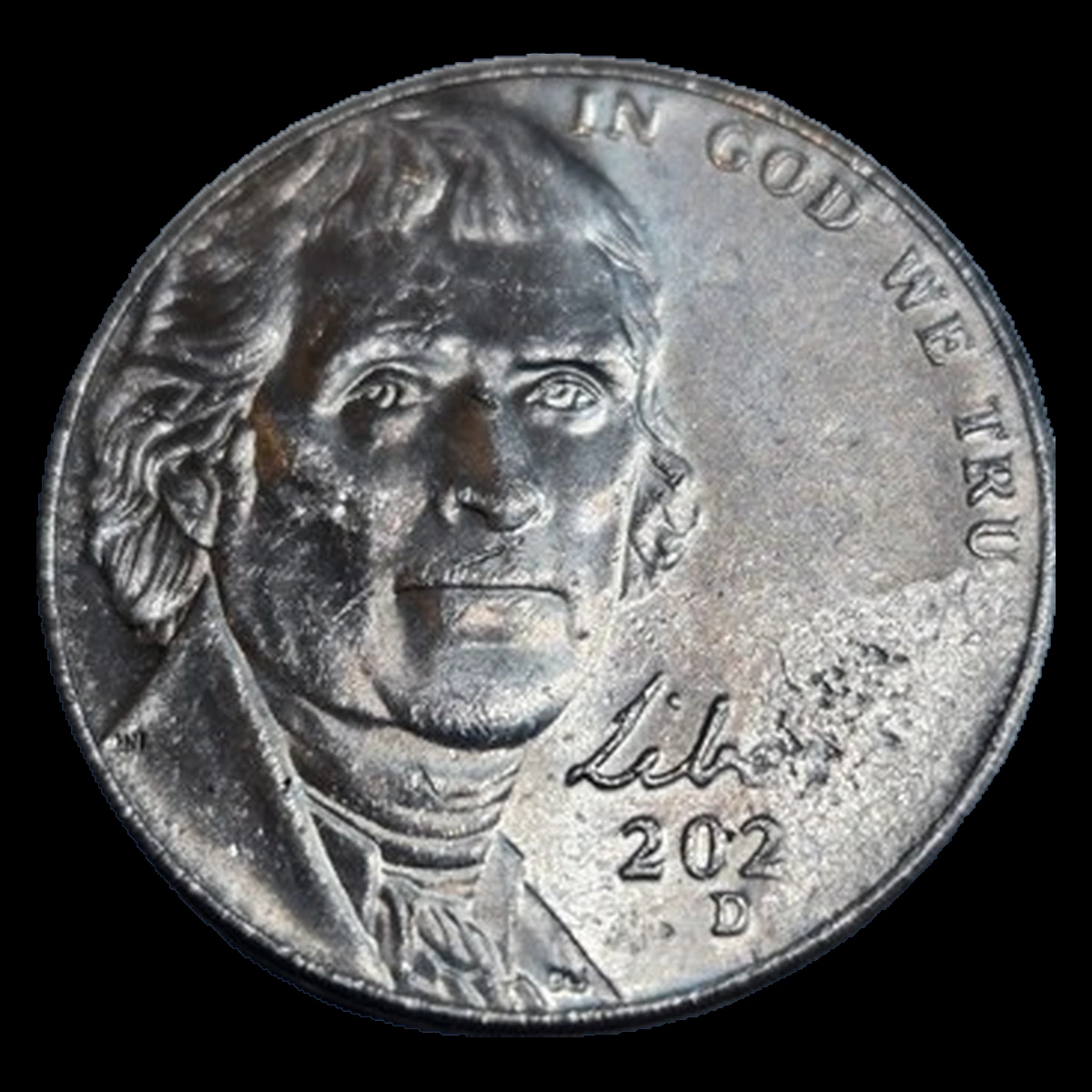
A partly missing design beside sharp detail may show that material blocked the strike. Soft grease can blur detail, while a solid object may leave a more distinct depression.
A seller reports a 2024-D example as struck through grease. The weak patch alone does not identify the material, and an attached substance needs separate examination.
How to Identify
Compare the affected area with nearby high points for wear, scraping, or pushed-up metal. Local weakness without those damage signs can support an interrupted strike.
Check the D mint letter before matching the seller example, and leave any attached material untouched. It should not be called retained grease simply because the design looks weak.
What It’s Worth
$5–$100 is the estimated range for genuine weak patches or small struck-through depressions. A large recognizable obstruction mark can be more appealing than slightly soft lettering.
A 2000-D nickel struck through a coin stuck to a die sold for $84 in September 2025. That earlier coin involved a different obstruction and does not confirm the seller’s grease identification.
5. 2024 Nickel Clipped Blank Error
A clipped blank starts with an incomplete outline before it receives any design. A punch can overlap an earlier hole or the edge of the metal strip and cut an incomplete disc.
This group is reported for 2024, but a particular clip’s shape and size must come from its own coin. Later filing can also remove an edge section.
How to Identify
Inspect both ends of the gap for natural softening where the design meets the incomplete edge. Sharp cutting ridges or file lines across finished detail suggest later work.
A normal nickel weighs 5.00 grams and measures about 21.21 mm across, with a plain edge. A clip usually lowers its weight, while possible rim weakness opposite the gap offers supporting evidence rather than a required sign.
What It’s Worth
$15–$150 is the estimated range for genuine 2024 clips. Larger clear openings on clean coins generally attract more interest than tiny gaps on worn examples.
A 1997-P nickel with a 20% curved clip brought $124 in March 2025. Neither that percentage nor its result should be assigned to an unmeasured 2024 coin.
6. 2024 Nickel Broadstrike Error
A broadstrike is wider than normal but keeps its complete design. Without proper support from the collar, the ring around the blank, the strike spreads metal beyond the usual outline.
It is a reported 2024 type. A smooth edge alone proves nothing because ordinary nickels already have plain edges.
How to Identify
Measure the full outline and look for genuine expansion beyond the normal 21.21 mm diameter. The coin should usually retain close to its ordinary weight.
Check both faces for a complete design and examine the transition into the wider outer area. Hammering or squeezing a finished coin may widen it while crushing its raised details.
What It’s Worth
$40–$300 is the estimated range for genuine 2024 broadstrikes. Clear expansion and good surfaces support stronger comparisons than an uneven rim alone.
A 1999-P broadstrike graded PCGS MS63 sold for $89 in March 2025. That unworn earlier coin supplies context rather than a documented 2024 result.
7. 2024 Nickel Off-Center Strike Error
A bare crescent beside an incomplete portrait or building can show a misplaced blank. Both dies struck the disc away from its intended position, so parts of the designs missed the metal.
Reported 2024 examples need individual checks for their mint, direction, and percentage. The year alone does not establish those details.
How to Identify
Find the complete date and compare both faces using the same physical edge as a guide. Matching displacement on both sides supports an off-center blank rather than one misaligned tool.
Inspect the bare area for flattened letters, scraping, or abrasive lines. Those can show that a design was removed later instead of missing the original blow.
What It’s Worth
$30–$400 is the estimated range for genuine dated 2024 offsets. Readable dates, clear mint letters, and attractive displacement help the comparison.
A 1999-P nickel struck 15% off center sold for $64 in March 2025. The result is an earlier-year comparison, not a rate to multiply by the percentage missing.
8. 2024 Nickel Split Blank Error
An internal weakness can let a nickel separate through its thickness. The surviving piece is thinner and lighter, but its surfaces depend on when the split occurred.
After-strike separation can leave one normal design opposite exposed internal metal; a piece split before striking may receive designs on both sides. This is a reported 2024 group, not a missing outer coating from a plated nickel.
How to Identify
Compare thickness, weight, and both faces without bending the piece. A struck face opposite a rough internal surface supports a different sequence from two struck faces on a thin blank.
Examine the edge and back for saw lines or a neatly machined surface. Artificial thinning also reduces weight, and a normal nickel is a uniform copper-nickel alloy rather than a layered clad coin.
What It’s Worth
$50–$500 is the estimated range for a genuine 2024 split piece with an identifiable date and convincing surfaces. This is an estimate for the reported type rather than a documented same-year sale.
One separated piece is not the same offering as a matched pair of halves. Value only the metal and design actually present.
9. 2024 Nickel Sunken Mirror-Image Brockage Error
A backward design pressed into the surface can be a brockage. An already struck coin became a temporary striking surface and transferred its raised image into another blank.
The other side could receive the normal die design. A reported 2024 brockage may cover part or much of a face, unlike faint fragments from clashed dies.
How to Identify
Read the reversed lettering with a mirror, then use side lighting to confirm that it is sunken. A second normal raised portrait is a different striking effect.
Check both faces and the edge for later pressure damage, since coins squeezed together outside the Mint can also transfer images. The 2024 date must belong to the error itself, not another coin in the photograph.
What It’s Worth
$100–$1,000 is the estimated range for authenticated 2024 brockages. Broad clear transfers generally display better than small distorted patches.
An undated Jefferson nickel with a 30% brockage from an off-center strike sold for $336 in June 2024. The transaction is a useful comparison but does not establish the coin’s year as 2024.
10. 2024 Nickel Die Cap Error
A coin that sticks to a die can begin wrapping around it during repeated blows. The stretched edge forms a wall around a shallow bowl or deeper cap.
The cap itself differs from a flatter coin struck beneath that obstruction. Both involve the same kind of accident, but their shapes and roles are different.
How to Identify
Photograph the base, wall, and surviving design together without trying to flatten the coin. Look for stretched metal consistent with repeated strikes rather than plier folds or later bending.
The normal diameter is only a starting reference for such a distorted piece. Read the date from the actual design before assigning the cap to 2024.
What It’s Worth
$300–$1,500 is the estimated range for authenticated 2024 die caps. A strong wall, clear original design, and readable date help support the higher end.
An undated Jefferson reverse die cap graded NGC MS62 sold for $300 in December 2025. That is an actual cap comparison, unlike a flat coin struck through a cap or a nickel bent into a bowl later.
Conclusion
Use a close-up to match doubled eyes or letters, but keep the whole outline visible for clips, broadstrikes, and caps. A backward transfer needs a depth check as well as a readable image.
The estimated $3–$1,500 range applies to identified examples with very different features. Keep the date, mint letter, and actual surfaces tied to the coin being assessed, especially when the price comparison comes from an undated piece.