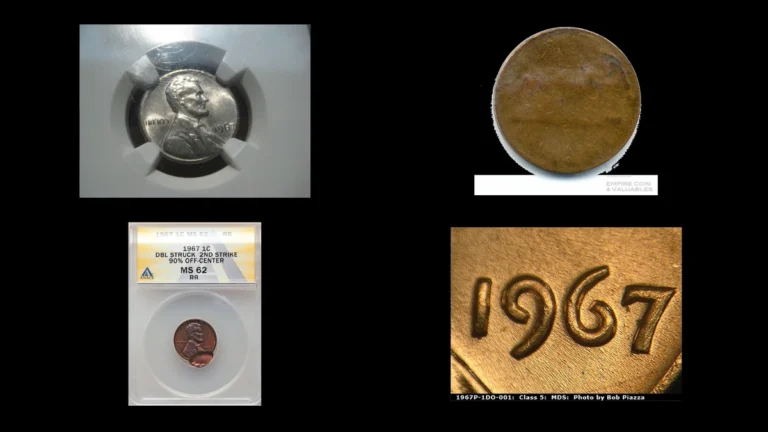
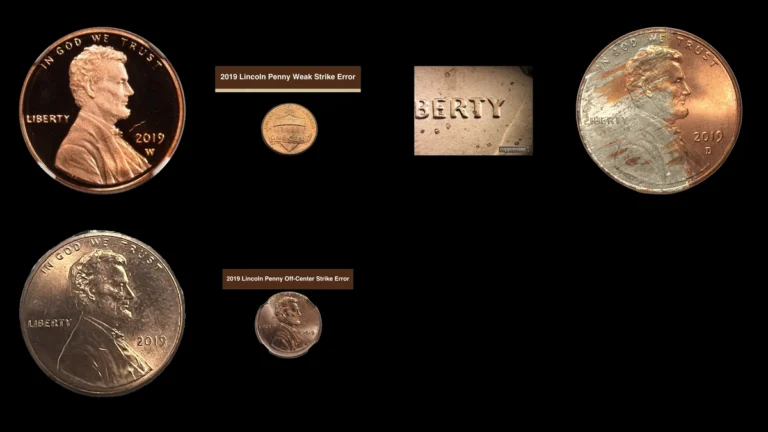
Rare 1812 Penny Errors (List & Pictures)
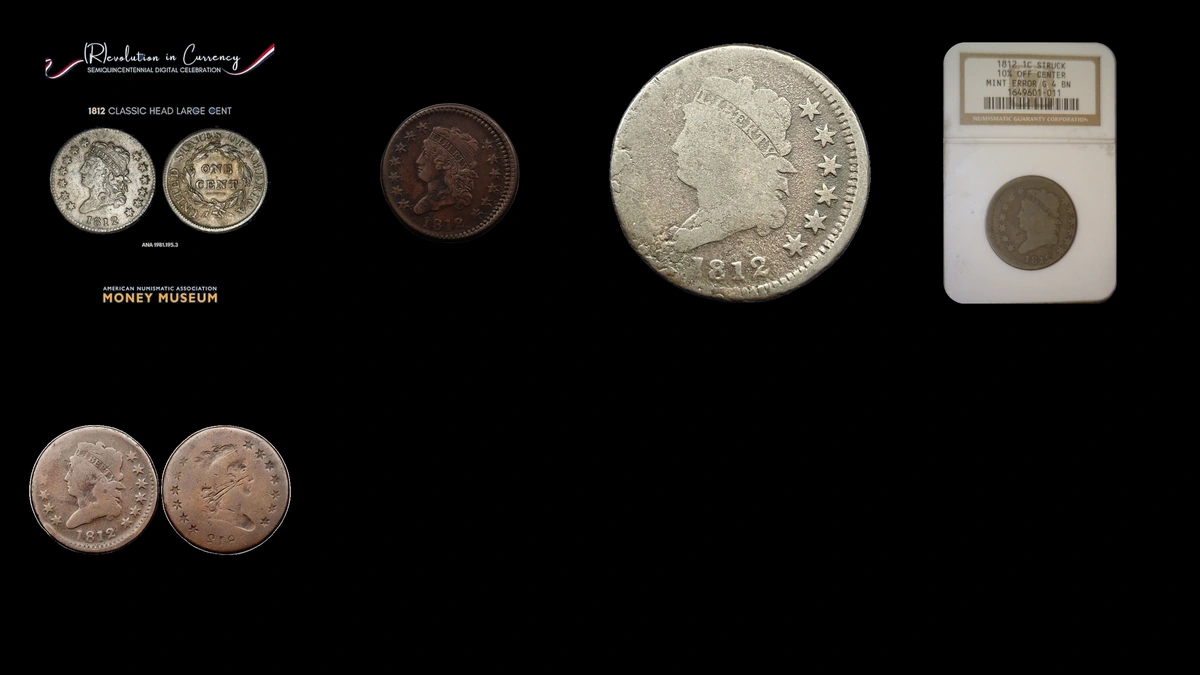
An 1817 brockage reached a $7,500 winning bid before fees in January 2015. That different-year coin provides context for the reversed designs included among 1812 penny errors.
Estimated whole-coin values run $100–$20,000. Start by deciding whether a mark is raised, recessed, or an opening in the copper, then compare both faces for displaced or backward designs.
| Clue | Category | Estimated value |
|---|---|---|
| Small metal opening or peeling layer | Blank flaw or lamination | $100–$600 |
| Raised line | Die crack | $100–$1,000 |
| Crack through the copper | Cracked planchet | $200–$1,500 |
| Transferred design traces | Clash | $250–$2,000 |
| Repeated or displaced designs | Double strike or combined strike errors | $250–$15,000 if confirmed |
| Recessed backward design | Brockage | $4,000–$20,000 |
A normal copper Classic Head cent weighs about 10.89 g and measures roughly 28–29 mm, with a plain edge. Record measurements only when handling will not disturb fragile metal.
1. 1812 Penny A Small Opening or Peeling Sheet: Metal Flaws and Lamination Error
A cataloged Large Date coin has a two-millimeter blank flaw above ONE. A separate year guide reports lamination, which means a weak metal layer has separated.
How to Identify
The auction description locates a small flaw but does not establish that it peeled. Do not treat that opening as a photographically confirmed lamination.
A lamination candidate should show an attached sheet or the boundary of a missing thin layer. Neither report establishes a coin split into two complete thickness layers.
What It’s Worth
Estimated whole-coin values are $100–$600 for worn cents with modest original metal flaws. Sound surfaces and a clearer layer separation may improve the comparison.
The above-ONE coin received a catalog estimate of $115–$140, not a reported sale price. It was ANACS F15 Details with corrosion, which affects the value of the entire coin.
2. 1812 Penny A Raised Line above Liberty: Die Cracks and Reported Cuds Error
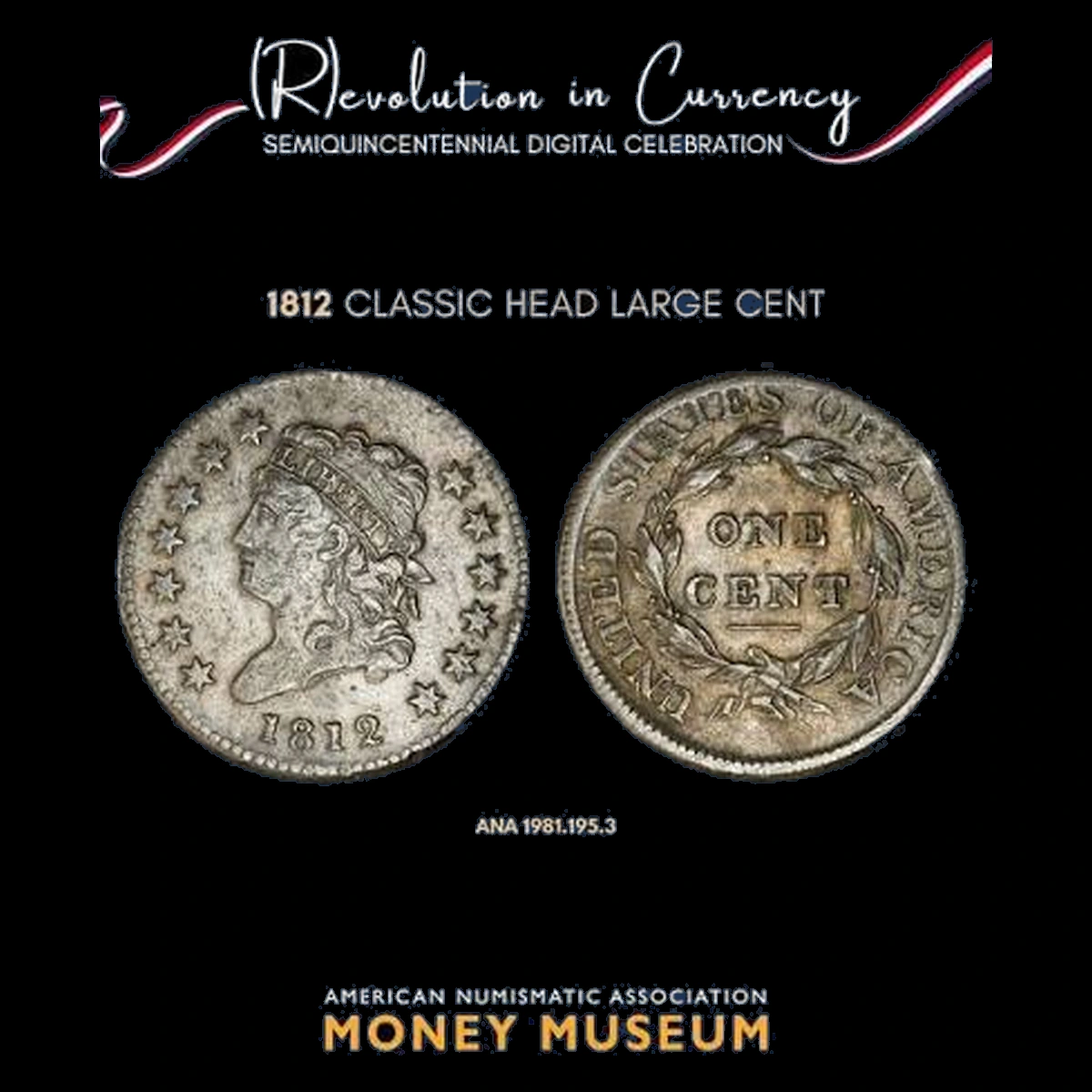
A known Small Date pattern has a fine raised crack above Liberty’s head. Other descriptions place cracks through nearby stars or along the date’s base.
A die crack admits copper and leaves a ridge on the finished cent. A larger rim-connected break can create a cud, but the supplied general guide identifies no particular 1812 cud specimen.
How to Identify
Compare the line above the head with surrounding hair and stars under side lighting. A raised ridge differs from a groove scratched into the copper.
A broad suspected cud needs its own edge photograph and evidence that design is missing because of the die. The documented thin head crack does not prove that larger category on another coin.
What It’s Worth
Worn 1812 cents with visible die cracks have an estimated whole-coin range of $100–$1,000. Much of that value may belong to the date and overall condition.
An 1829 Coronet cent with three rim breaks sold for $810 in September 2020 at PCGS AU50. That different-year, lightly worn coin does not establish an 1812 cud sale.
3. 1812 Penny A Crack Opens in the Copper: Cracked Planchet Error
A blank may already contain a crack when the dies strike it. Pressure can alter the opening, leaving evidence in the surrounding design.
GreatCollections lists an 1812 example as struck on a cracked blank and graded ANACS VF25 Details. The supplied description gives neither the crack’s position nor the separate condition problem behind the Details grade.
How to Identify
Inspect both ends of the opening, the adjacent design, and the edge without flexing the coin. An actual separation in copper differs from a raised die-crack line on intact metal.
Fresh tearing or a bend beside the opening may indicate later damage. The relationship between struck letters and the split helps assess whether it existed before the blow.
What It’s Worth
An estimated $200–$1,500 applies to worn 1812 cents with a confirmed original blank crack. No completed sale is supplied for the ANACS specimen.
An 1829 Coronet cent graded VG was offered at $395 with a cracked blank. That is a different-year asking price, not a transaction or a substitute for reading the 1812 holder’s qualifier.
4. 1812 Penny Faint Extra Shapes beside ONE CENT: Die Clash Error
A Small Date auction description places clash marks on both sides of ONE CENT. These traces came through dies that contacted each other without a blank.
A separate Large Date owner reports light repeated reverse clashes and a line at the base of N. That line requires its own design match before it can be attributed to clashing.
How to Identify
Compare a front photograph with the extra reverse shapes inside the wreath. A genuine clash should correspond to recognizable parts of the opposite design.
Keep the Small Date and Large Date examples separate. A random ridge or the owner’s N-base line is not a universal marker for this date.
What It’s Worth
Estimated whole-coin values are $250–$2,000 for worn collectible examples. Smooth surfaces and clear surviving detail influence the comparison.
The owner of a Large Date PCGS VF35 coin reported paying $1,500 at a show in November 2025. This is an owner-reported purchase, not an auction result or a price for the clash alone.
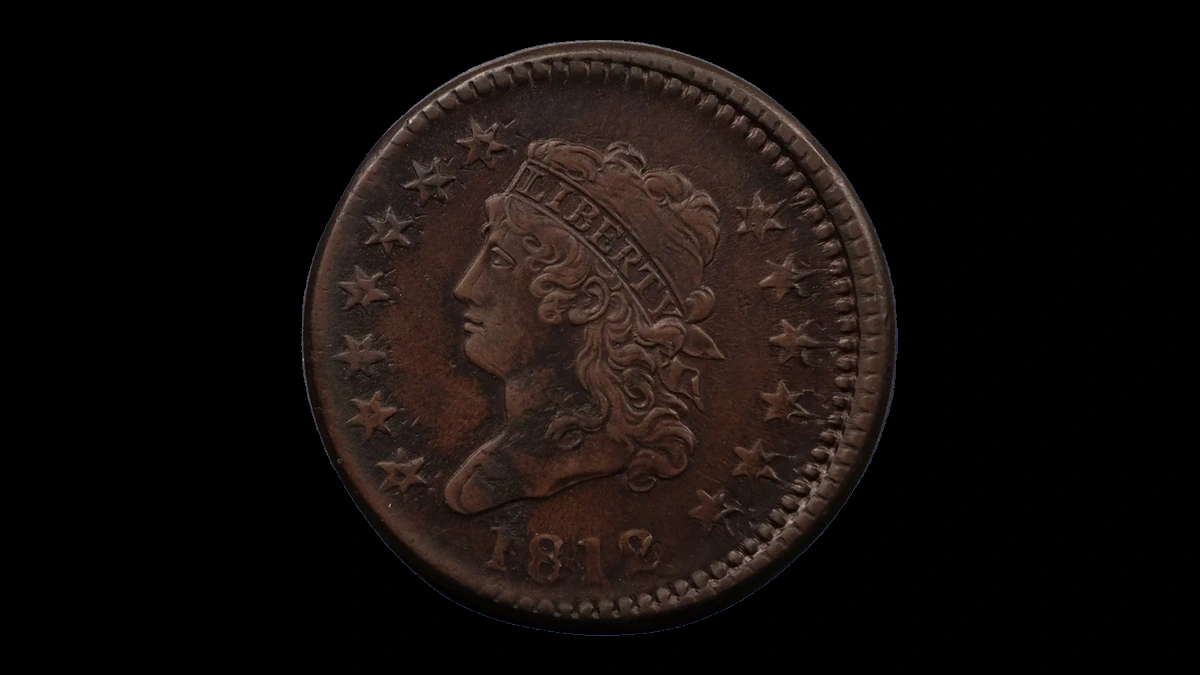
5. 1812 Penny Apparently Overlapping Details: Reported Double Strike Error
A collector presented an 1812 cent as double struck, but the photographs prompted competing explanations. Other collectors considered die misalignment or a nearly overlapping second blow.
How to Identify
The discussion focuses on the portrait and E in CENT. Trace the suspected repetitions into neighboring details to see whether one second-strike movement explains both faces.
A single uneven border does not establish two blows. Later squeezing must also be excluded through examination of the surfaces and edge.
What It’s Worth
A confirmed worn 1812 double strike has an estimated whole-coin range of $250–$4,000. That conditional range is not an authentication of the debated forum coin.
An 1817 Coronet cent with a 95% off-center second strike sold for $264 in June 2019. Heavy wear and environmental damage affected that different-year example despite its dramatic displacement.
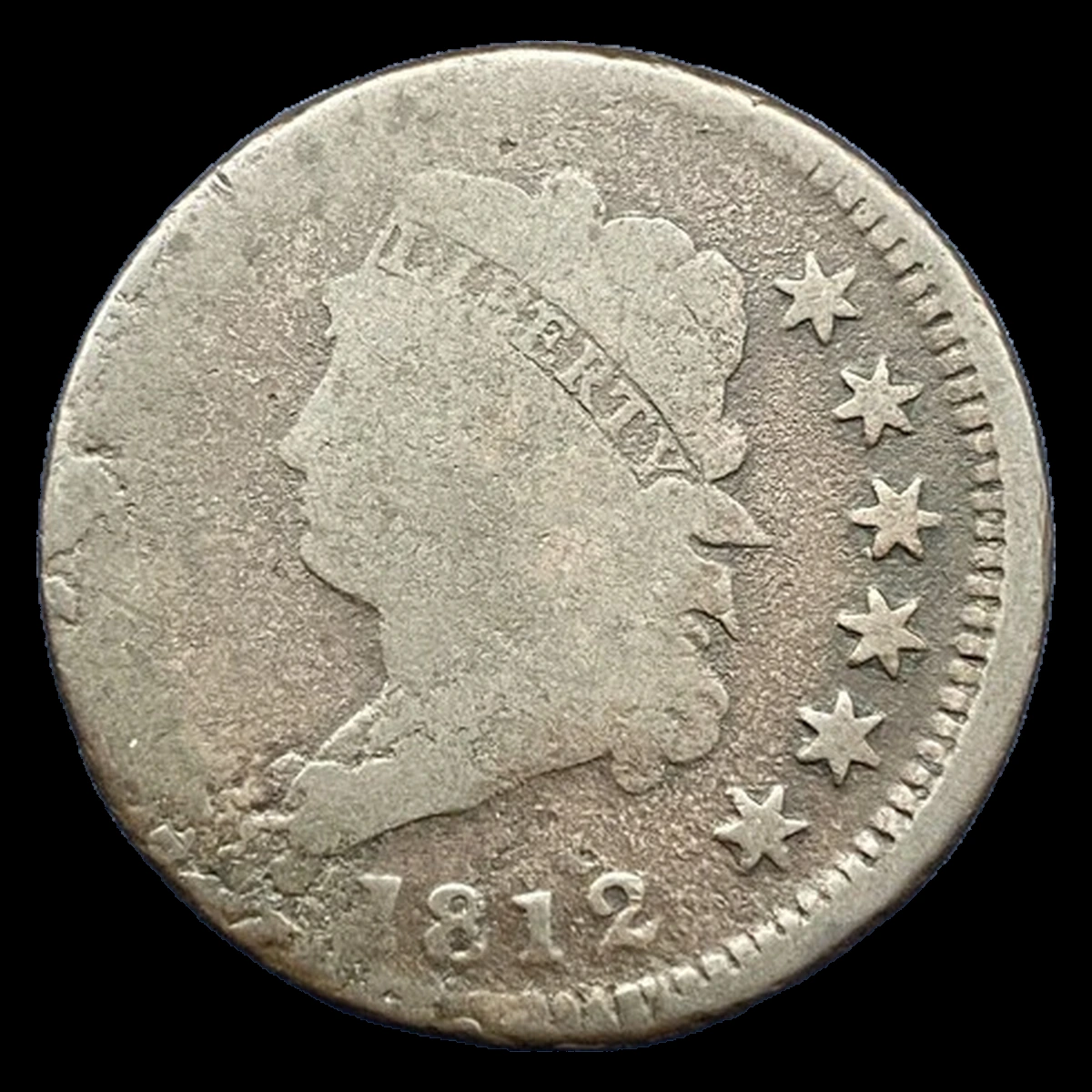
6. 1812 Penny A Slightly Shifted Front with a Backward Face: Misaligned Die Error
A recorded 1812 error combines a front design shifted toward nine o’clock with a brockage on the other face. The small front displacement involves the tool’s position, not its rotational alignment.
How to Identify
Compare the border spacing on both faces separately. The historical description supplies no displacement percentage, so the slight shift should not become a large off-center claim.
The brockage must show a recessed mirror image, produced by contact with a previously struck coin. Its evidence is separate from the front’s unequal borders, even though both occur on one piece.
What It’s Worth
The estimated whole-coin range is $3,000–$10,000 for a worn, clearly identifiable example of this combination. The backward impression likely contributes more interest than the slight die shift.
An 1817 NGC VF20 brockage reached a $7,500 winning bid before fees in January 2015. That different-year comparison does not establish a sale for the 1812 combination.
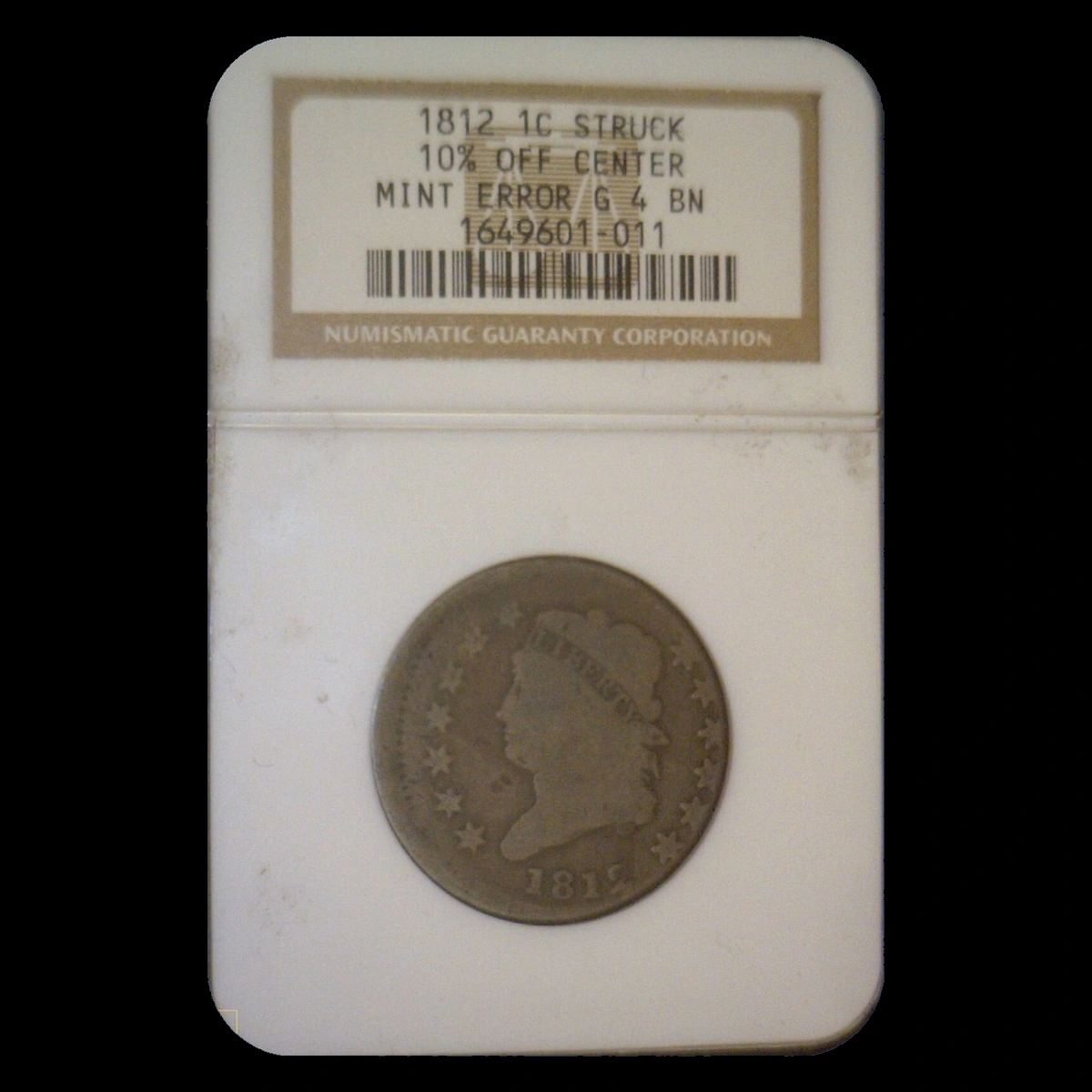
7. 1812 Penny Bare Copper beside a Brockage: Off-Center Strike Error
An early-cent reference records an 1812 brockage struck 10% off-center toward one o’clock. The misplaced blank and backward impression are features of the same coin.
How to Identify
With the normal portrait upright, compare the direction of displacement and the boundary of untouched copper. The surface should not look like a finished design that was ground away.
Examine the backward impression independently for its recessed, mirrored form. This example differs from the separate coin with a slightly shifted front die toward nine o’clock.
What It’s Worth
An identifiable 1812 off-center brockage may fit an estimated $4,000–$15,000. The quality of the reversed design can matter more than the modest 10% displacement.
The same 1817 $7,500 winning-bid comparison offers context, not an 1812 transaction. Do not add a separate full brockage value to this combined-error range.
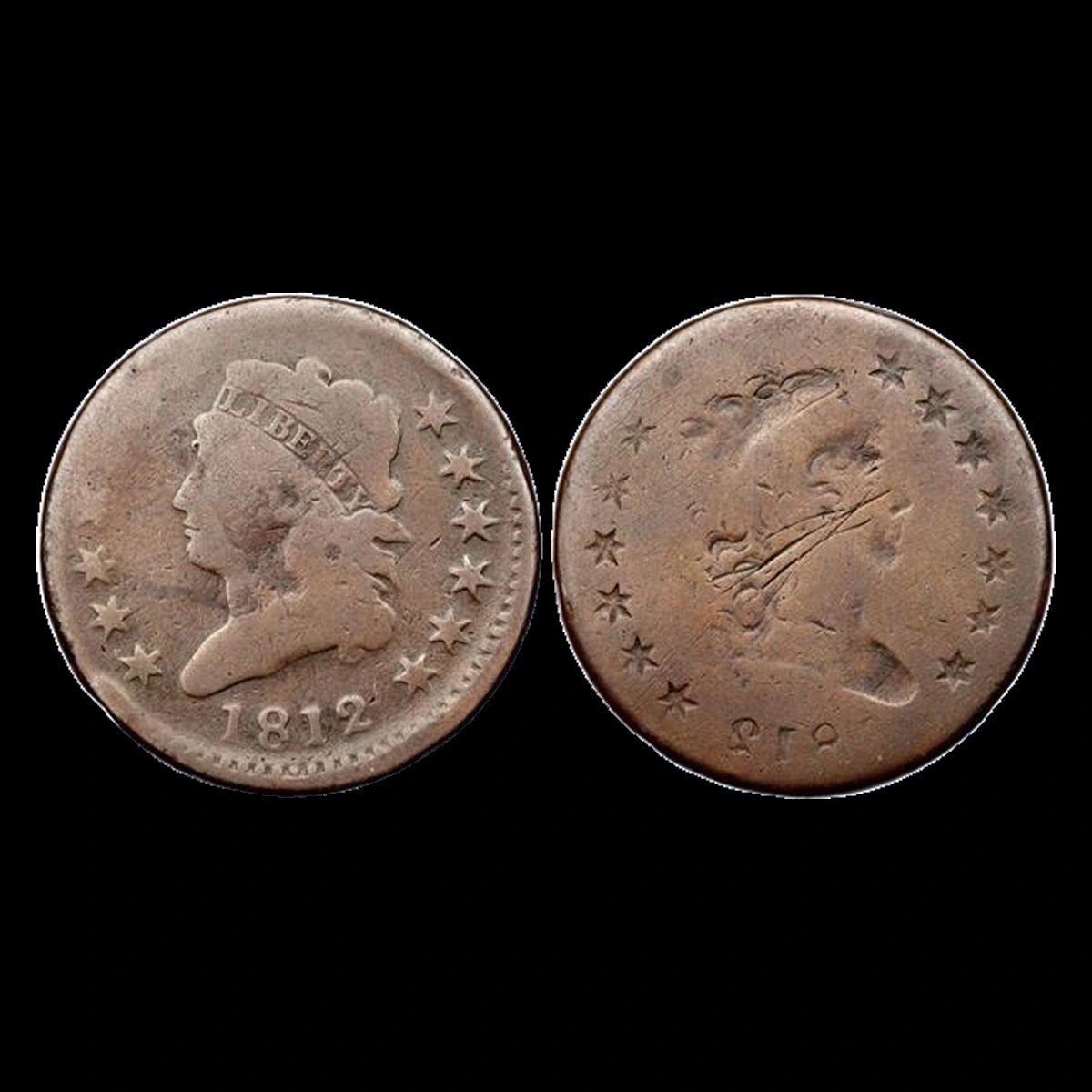
8. 1812 Penny Letters Run Backward below the Surface: Brockage Error
A struck coin trapped in the press can impress its raised design into the next blank. That contact produces a sunken mirror image where the normal die design should be.
Early-cent records include both portrait-side and wreath-side 1812 brockages. Those are separate pieces, not two faces to combine into an imaginary example.
How to Identify
Read a reversed letter and use angled light to establish that it lies below the surface. A mirrored photograph alone proves nothing about whether the actual design is raised or recessed.
Compare both faces of one coin with the early-cent reference. A specialist should also look for pressure damage from a later coin-against-coin squeeze.
What It’s Worth
Estimated values are $4,000–$20,000 for clear 1812 brockages, depending on wear, surfaces, and completeness. Additional errors remain part of the same whole-coin valuation.
The 1817 NGC VF20 brockage received a $7,500 winning bid in January 2015 before buyer fees. It is the different-year comparison used above, not several separate transactions.
Conclusion
A fine raised ridge, a crack through copper, and a backward impression call for different evidence. Record the whole coin before enlarging a small mark so its position and relationship to the opposite face remain clear.
Keep reported possibilities separate from confirmed specimens. The debated double strike remains unresolved, and the two combined brockage examples have different movements that should not be transferred from one coin to another.