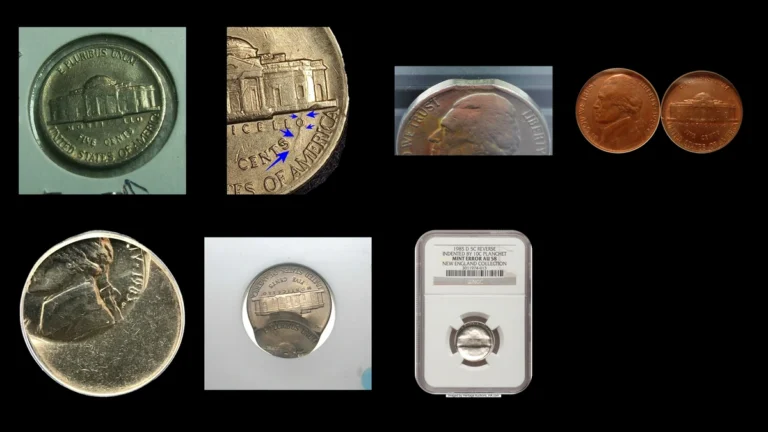
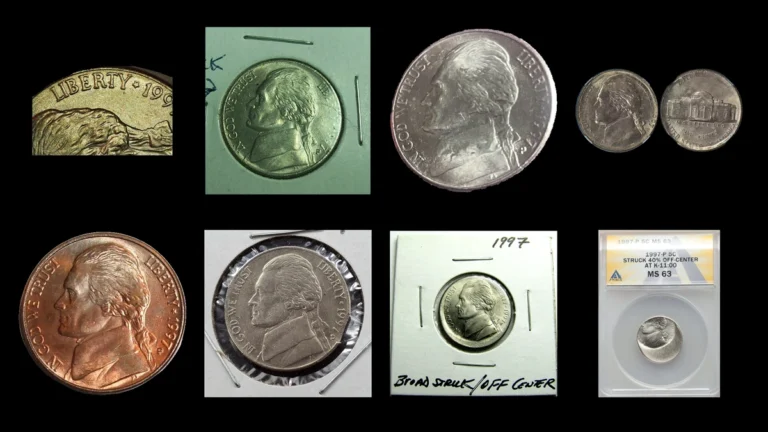
Rare 1995 Nickel Errors (List & Pictures)
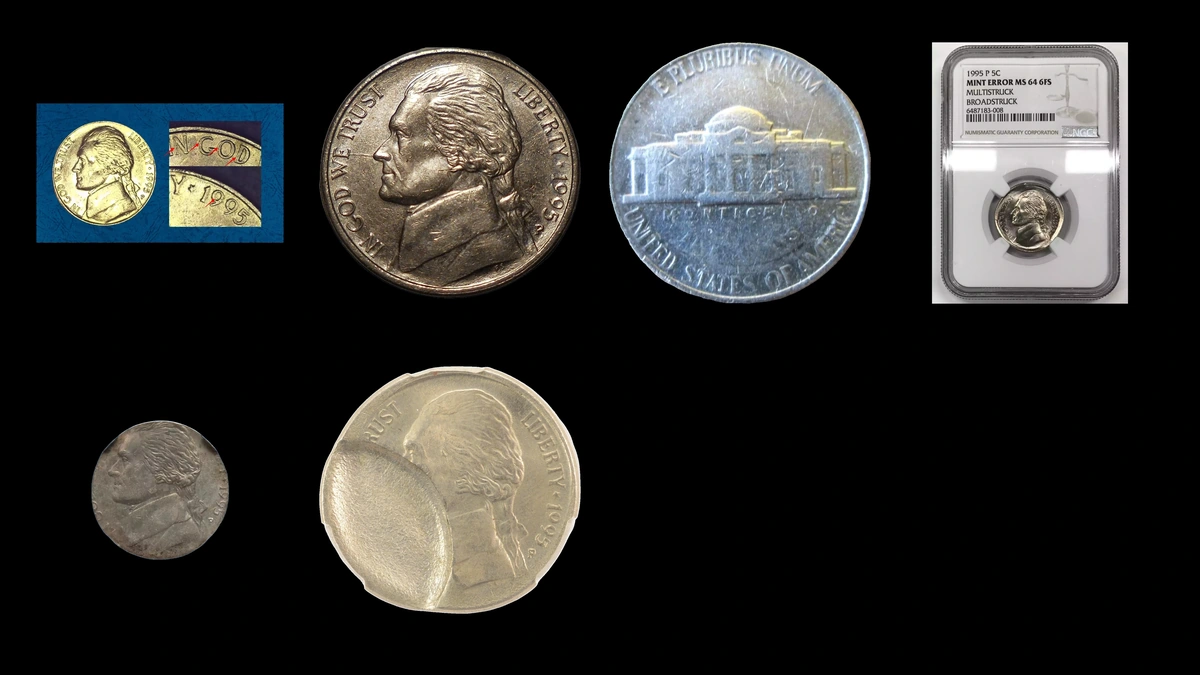
A different-year nickel struck over a cent sold for $1,320 in September 2024; a 1995-P nickel on a dime blank brought $336 in July 2022. These are separate comparisons within 1995 nickel errors, with estimated whole-coin values of $3–$2,500.
Compare small surface details first, then the edge, complete designs, and evidence of the wrong blank or an earlier coin.
| Clue | Category | Estimated value |
|---|---|---|
| Extra outlines or peeling surface | Reported doubled die or lamination | $10–$150 |
| Raised ridge or rim patch | Die crack or cud | $3–$500 |
| Weak front, sharp reverse | Strike through a die cap | $50–$300 |
| Incomplete or widened outline | Clip, broadstrike, or off-center strike | $15–$750 |
| Extra full design position | Double strike | $150–$2,500 |
| Light disc or older cent details | Wrong blank or double denomination | $150–$2,500 |
A normal nickel weighs 5 g and measures about 21.2 mm, with a plain edge. Its copper-nickel alloy is uniform rather than the bonded-layer construction used for modern dimes.
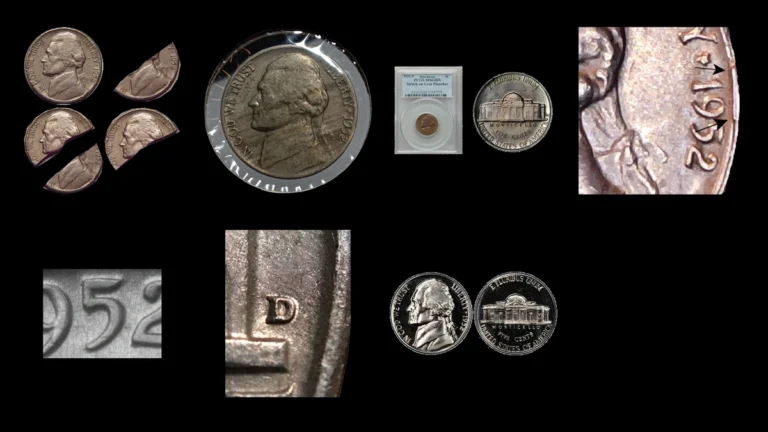
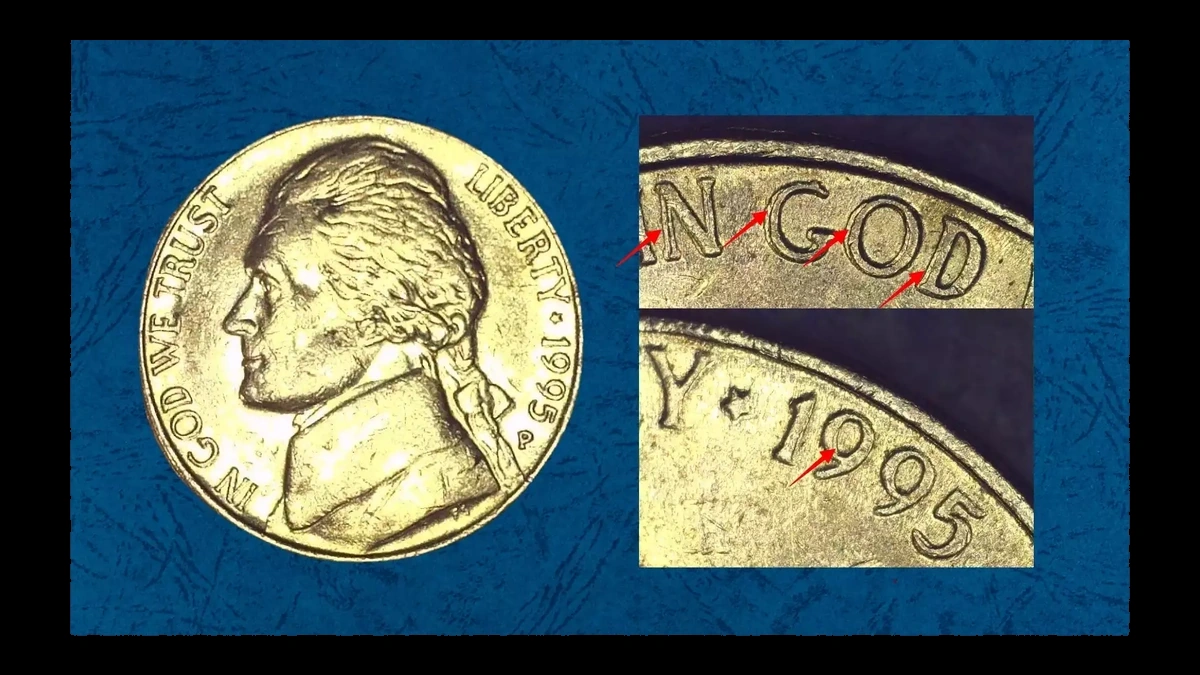
1. 1995 Nickel Repeated Eye, Lip, or Letter Outlines: Reported Doubled Die Error
Reports mention extra raised contours near Jefferson’s eyes, lips, or LIBERTY. A true doubled die carries repeated details in the tool and can transfer them during one blow.
How to Identify
Compare normal portrait contours before accepting an additional line. Rounded separation or split letter corners require a match with a confirmed example.
The supplied report establishes no numbered variety. A flat shelf that narrows a letter, or a reflection that moves with the light, does not provide the same evidence.
What It’s Worth
A confirmed example in the reported areas has an estimated value of $10–$150. Ordinary flat doubling does not receive that premium.
No documented 1995 nickel auction result is supplied here. Prices for the famous 1995 doubled-die Lincoln cent concern a different denomination.
2. 1995 Nickel A Thin Flake Lifts from the Surface: Lamination Error
A weak layer within the nickel’s alloy can separate into a flap or shallow missing patch. This is lamination within its own metal, not loss of a normal clad outer layer.
How to Identify
Follow the separation and nearby design under side lighting without lifting the flap. A scrape can leave a trench without the same thin-layer boundary.
A small missing flake may slightly reduce weight. A much lighter layered coin requires a separate wrong-blank assessment.
What It’s Worth
Estimated values are $10–$150 for identifiable lamination on an otherwise ordinary 1995 nickel. A clear retained flap can attract more interest than minor roughness.
This range is not a valuation for a defective clad blank. Unrelated scraping or cleaning can reduce the coin’s appeal.
3. 1995 Nickel A Raised Ridge or Rim-Connected Patch: Die Crack or Cud Error
Cracked dies leave raised lines where metal enters the opening. A missing edge piece can instead produce a larger rim-connected patch, called a cud.
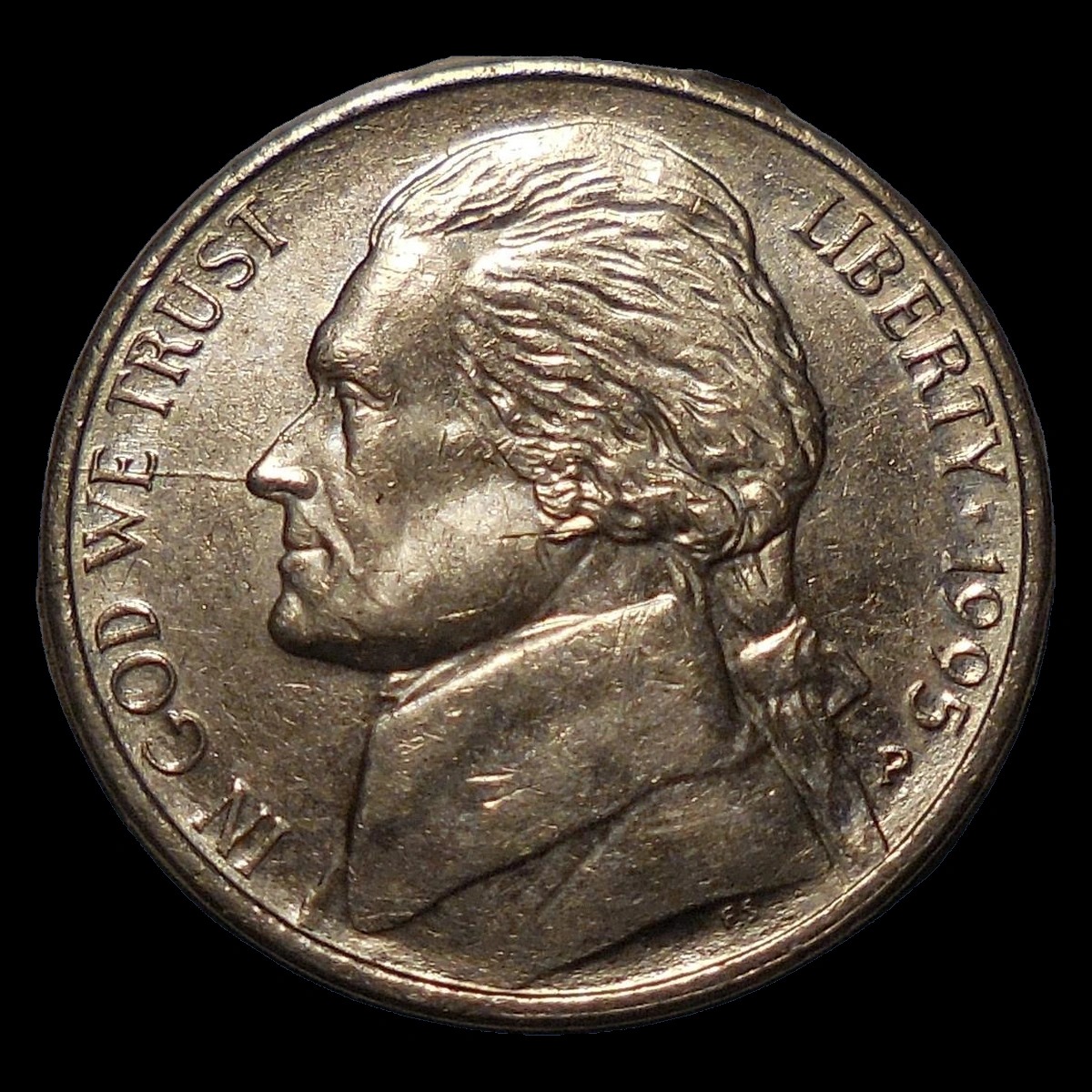
A documented 1995-P major front break was graded NGC MS64. The supplied description does not establish a particular clock position or portrait path.
How to Identify
Check that the feature rises above the surface. A scratch is recessed even when narrow lips stand along its sides.
For a cud, follow the patch to the rim and inspect the edge for an impact dent. Folded metal over normal design has a different origin.
What It’s Worth
Small cracks have estimated values of $3–$30, while clear rim-connected breaks may fit $50–$500. Size and preservation determine the relevant comparison.
A 1983-P cud nickel graded AU53 sold for $63 in July 2022. That worn, earlier-year coin is not a sale of the stronger 1995-P example.
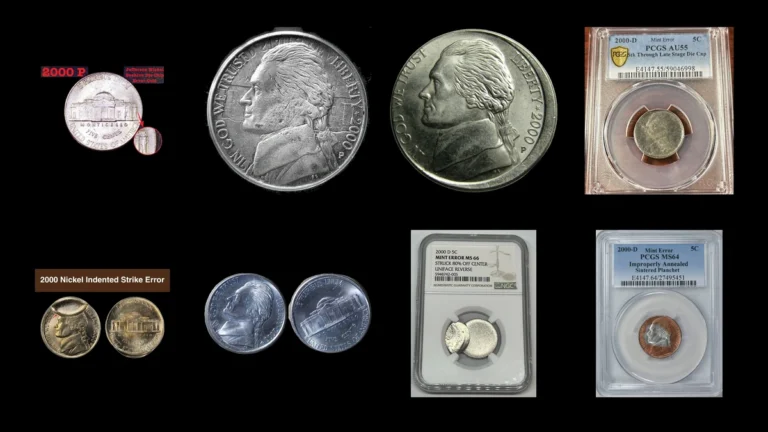
4. 1995 Nickel A Softened Portrait opposite Sharp Steps: Struck Through a Cap Error
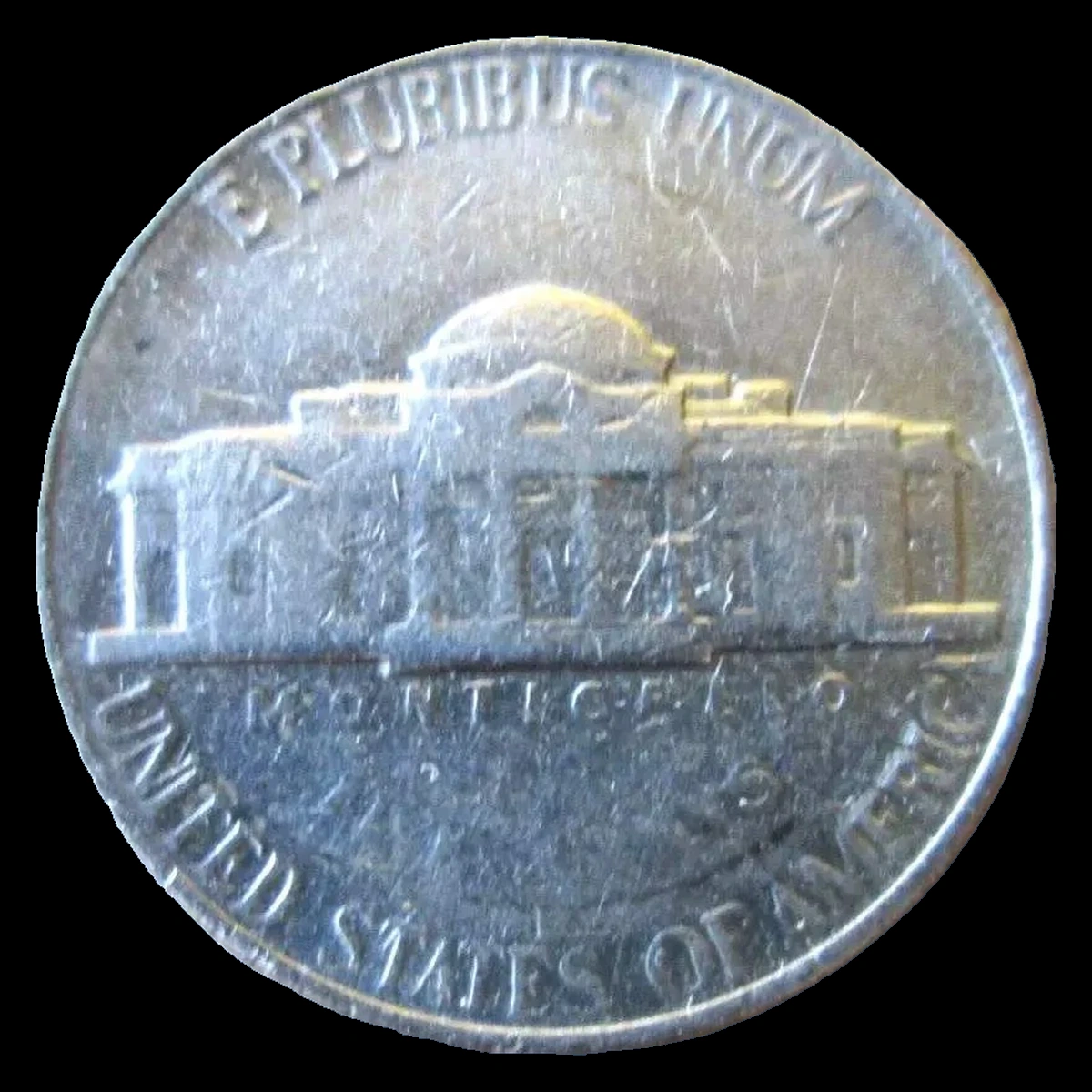
A recorded 1995-P has a distorted front opposite a well-preserved reverse. Another coin covered the front die and interfered with the impression delivered to the fresh blank.
How to Identify
Compare Jefferson’s softened design with Monticello’s sharper details. The coin was graded NGC MS64 Full Steps; Full Steps describes reverse detail quality, not another error.
The coin examined here received a strike through the covering cap and was not necessarily the cap itself. Compare its broad distortion with an authenticated example rather than assuming any weak letter proves this mechanism.
What It’s Worth
A clear 1995-P cap-struck example has an estimated value of $50–$300. Strong contrast between the two faces helps demonstrate the effect.
A 2000-D example graded NGC MS64 Full Steps sold for $84 in September 2025. It is a later-year comparison, not a recorded sale for the 1995 piece.
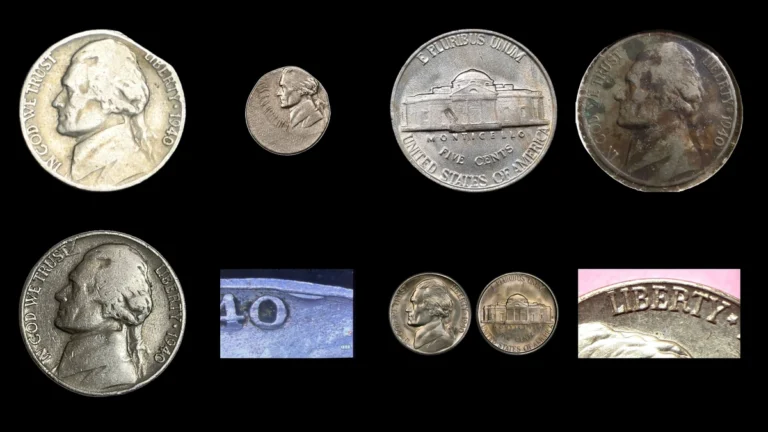
5. 1995 Nickel One or Several Curved Edge Gaps: Clipped Planchet Error
Separate 1995-P examples include a 5% curved clip, a 35% double clip, and four curved clips. Each began with an incomplete blank before striking.
How to Identify
Inspect each opening and the way adjacent struck details approach it. Saw marks, fresh filing, or a cut through finished letters can reveal later removal.
Opposite-rim weakness may support a clip but is not required on every genuine coin. Keep the percentages and number of gaps with their individual examples.
What It’s Worth
Estimated values are $15–$350, with modest clips around $15–$100 and larger or multiple clips around $100–$350. The number of gaps alone does not determine price.
The four-clip NGC MS62 Full Steps coin sold for $154 in July 2022. The separate 35% double clip graded PCGS MS63 brought $141 in July 2014.
6. 1995 Nickel A Wide Border with the Design Present: Broadstrike Error
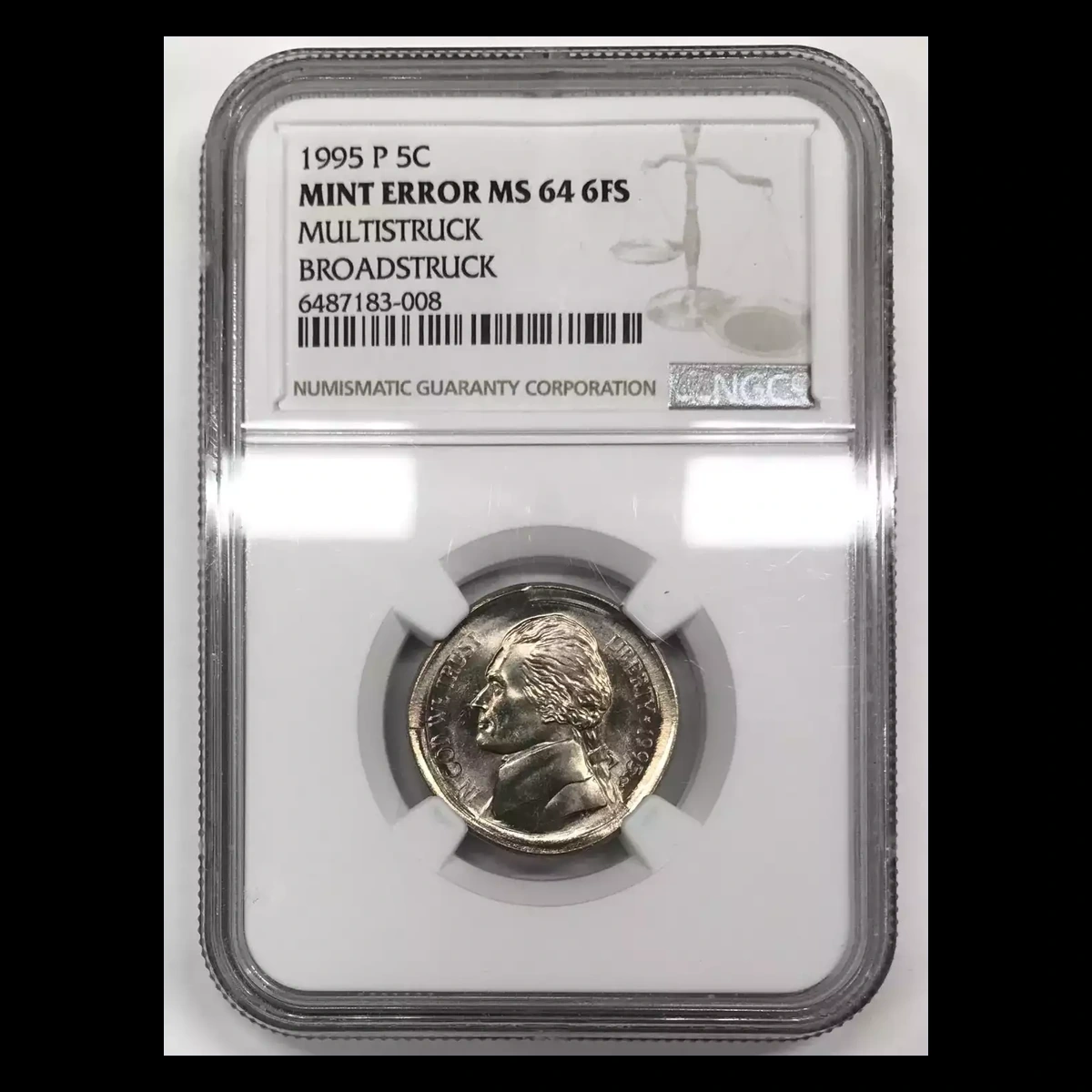
The collar normally limits outward metal flow. When it fails to contain the blank, the coin may spread while retaining its intended design.
A 1995-P example also received repeated blows, producing overlapping impressions on the broadstruck shape. It was graded NGC MS65 Full Steps.
How to Identify
Compare the expanded border with the completeness of the outer lettering. Later flattening can widen a nickel while crushing its finished details.
To establish repeated strikes as well, trace a separate impression through the overlap. A wide outline alone proves neither multiple blows nor missing metal.
What It’s Worth
Simple broadstrikes have estimated values of $25–$200, while clear examples with repeated impressions may fit $100–$750. These are whole-coin estimates.
The 1995-P MS65 Full Steps combined example sold for $154 on December 22, 2025. Its several features are already included in that one price.
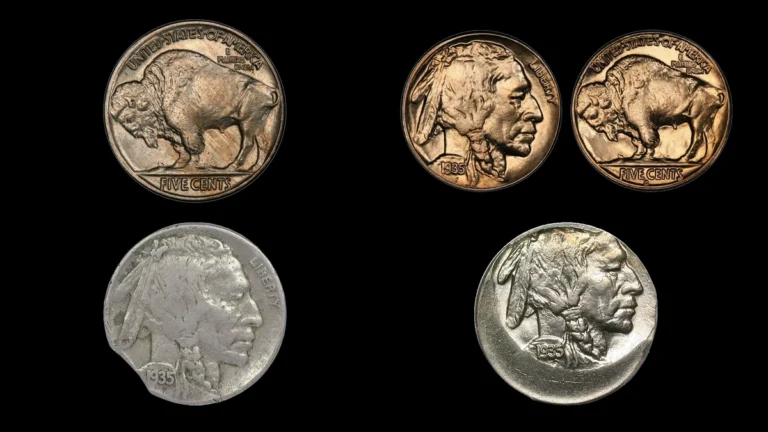
7. 1995 Nickel Bare Metal beside an Incomplete Design: Off-Center Strike Error
A reported 1995-D off-center nickel uses an ordinary nickel blank. Part of the design missed the metal while another part of the blank remained unstruck.
How to Identify
Check the date and D mintmark, then compare the boundaries on both faces. The report assigns no particular displacement percentage or direction.
An unstruck crescent still contains metal. A light coin or copper-colored blank needs another explanation, such as the separate Philadelphia wrong-blank combination discussed below.
What It’s Worth
Estimated values span $25–$500, with many ordinary-blank examples around $25–$200. Larger attractive displacements with readable dates may reach more.
A 1999-D nickel struck 65% off-center sold for $75 in September 2024. That different-year result shows why percentage alone does not establish a high price.
8. 1995 Nickel A Light or Layered Disc: Wrong and Defective Blanks Error
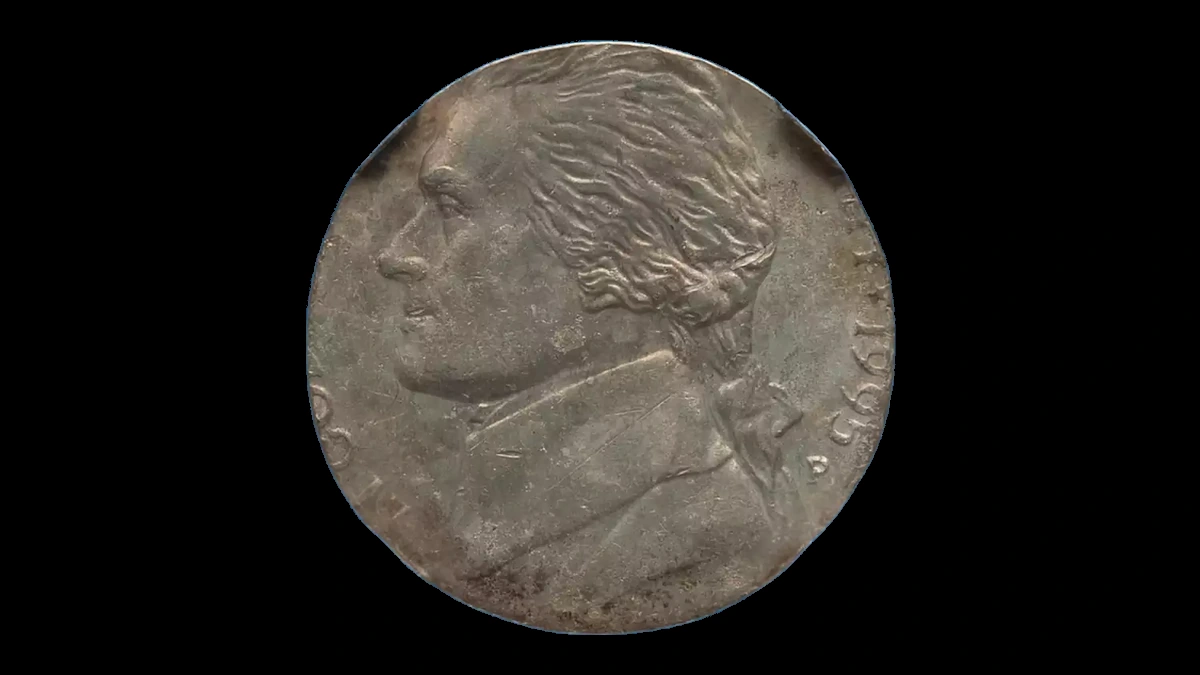
Three 1995-P records involve distinct blanks: a defective cent blank struck 10% off-center, a dime blank weighing 2.3 g, and a defective clad blank weighing 2.54 g. The intended denomination of the last piece was not stated.
How to Identify
Assess weight together with the metal, edge, and space available for the nickel design. A light layered coin cannot be identified as a dime blank from weight alone.
The dime blank need not acquire a finished dime’s reeded edge under nickel dies. Keep the 10% offset with the cent-blank specimen, and exclude plating or filing before accepting an unusual blank.
What It’s Worth
Estimated values are $150–$700 for clear dime or defective clad-blank examples and $300–$1,500 for the defective cent blank with an off-center strike. Each range values a complete coin.
The 2.3 g dime-blank nickel sold for $336 in July 2022. The separate 2.54 g defective clad-blank coin brought $186; its blank denomination remains unspecified.
9. 1995 Nickel Another Design Appears near the Edge: Displaced Double Strike Error
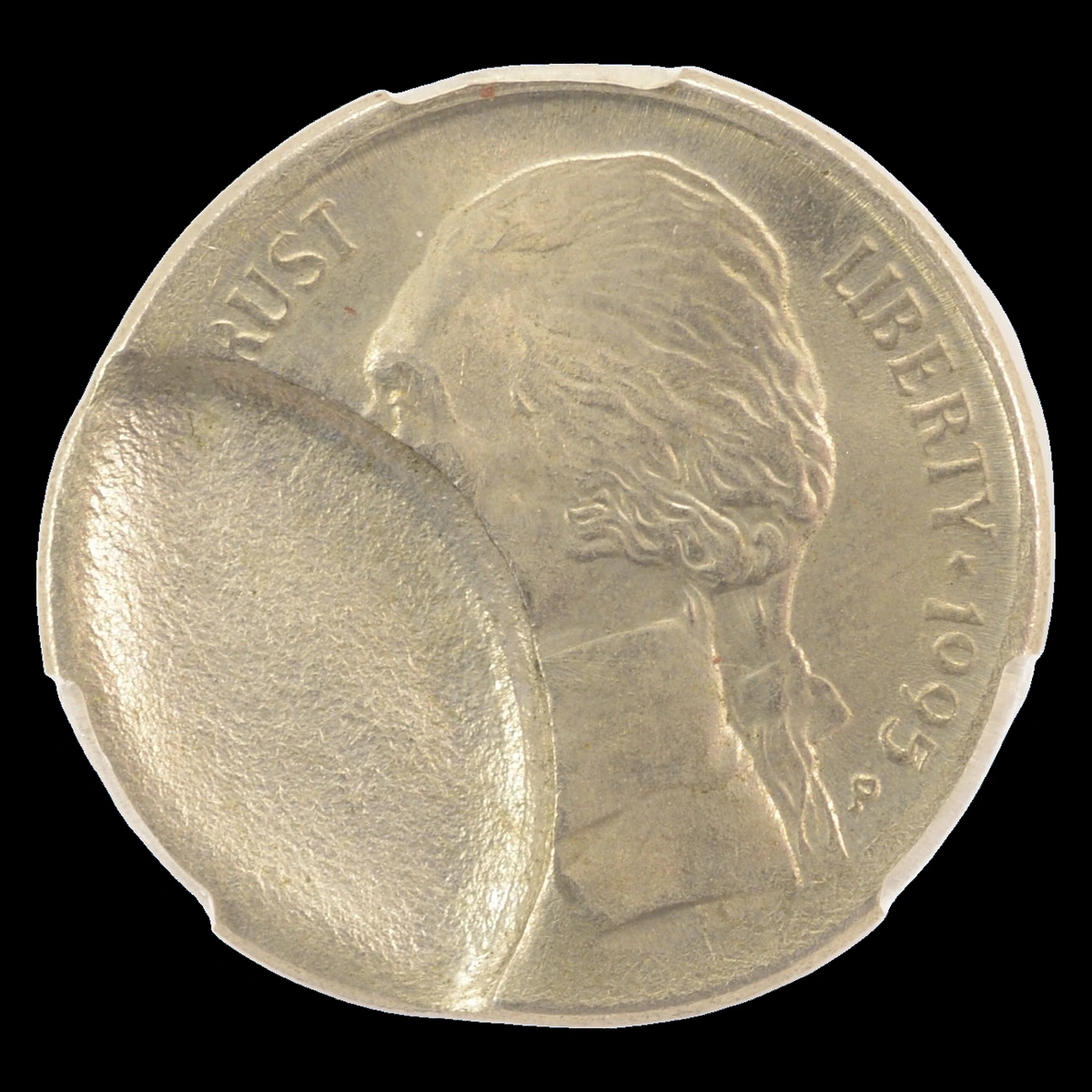
Recorded 1995-P coins include second strikes 75% or 80% off-center. A separate coin has a 60% off-center second strike with a smooth front indent and an area of the back shielded from that blow.
Another example flipped between strikes, bringing Jefferson and Monticello onto the same face. These different movements should remain separate.
How to Identify
Trace recognizable parts of each impression and inspect where the later blow flattened earlier details. On a flip-over, raised fragments of the opposite design should fit the change of faces.
The smooth indent and blocked reverse area belong to the 60% example. Do not add them to the 75% or 80% descriptions simply because all involved repeated striking.
What It’s Worth
Estimated values are $150–$1,000 for clear displaced double strikes and $500–$2,500 for attractive flip-over or complex overlapping-blank examples. Preservation and readable intersections matter.
A 2007-D double strike with major outward spread sold for $1,260 in August 2025. That later-year combination is not a transaction assigned to any of these 1995 coins.
10. 1995 Nickel Lincoln Details beneath the Nickel Design: Double Denomination Error
A published 1995 report describes a nickel struck over a finished Lincoln cent. The earlier cent design can remain beneath the later nickel impression.
How to Identify
Match surviving Lincoln or Memorial fragments with a cent design on both faces. They should fit an earlier struck coin, rather than merely a smaller copper-colored blank.
The nickel date does not establish the cent’s year or mintmark. Modern cents normally begin at 2.5 g and older copper cents around 3.11 g, so the underlying coin must be identified before choosing a weight comparison.
Inspect the edge and overlaps for seams, plating, or later pressure damage. Backward sunken transfers require a different explanation from earlier raised details beneath a later strike.
What It’s Worth
An authenticated 1995 nickel over a struck cent has an estimated whole-coin value of $600–$2,500. Identifiable evidence of both denominations is essential.
A 1999-D nickel over a 1999-D cent sold for $1,320 in September 2024. That known later-date pairing is a comparison, not proof of the date or mint of the cent beneath the reported 1995 piece.
Conclusion
Separate normal nickel metal from clad material before interpreting a flake or light weight. Then use the full designs and edge to distinguish a missing blank segment, a displaced blow, and a second impression.
The estimated $3–$2,500 range covers very different features. Keep individual percentages, mintmarks, and blank identifications with their documented specimens, especially when one coin combines several errors.