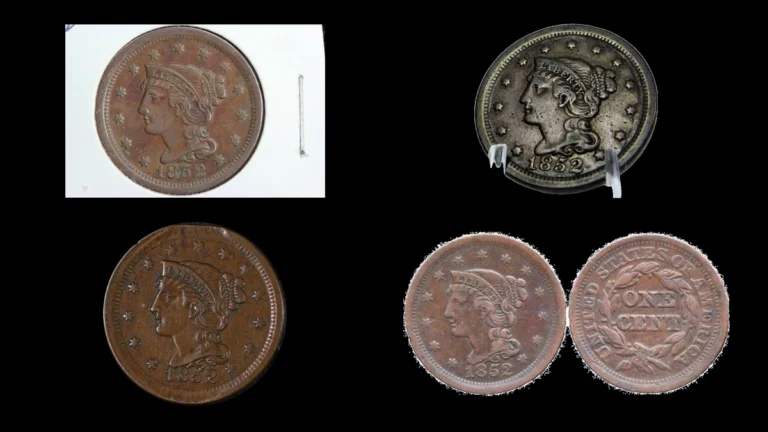
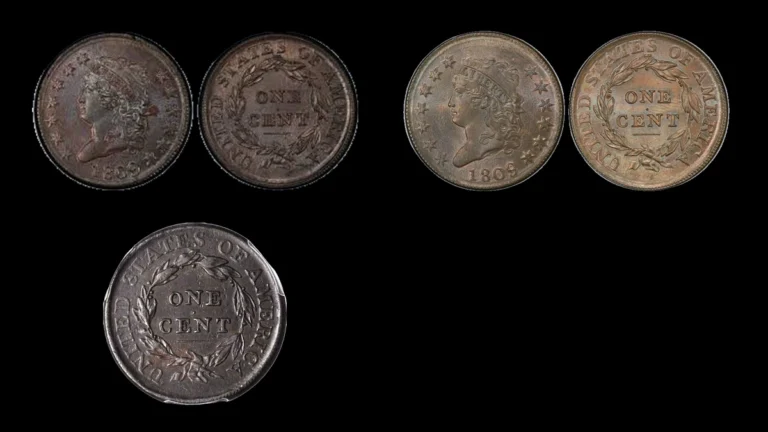
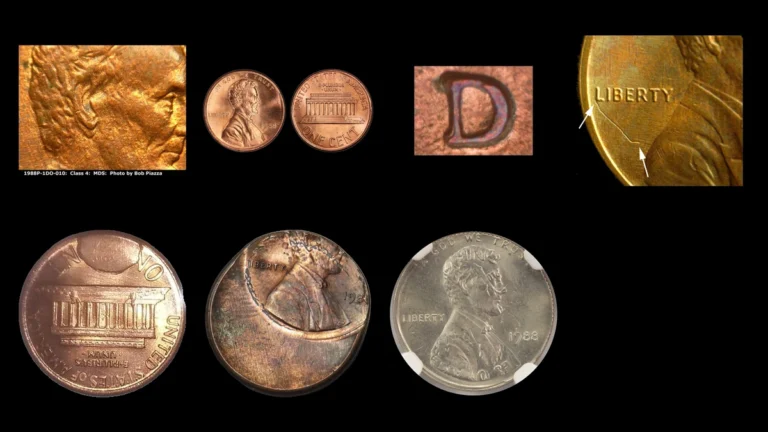
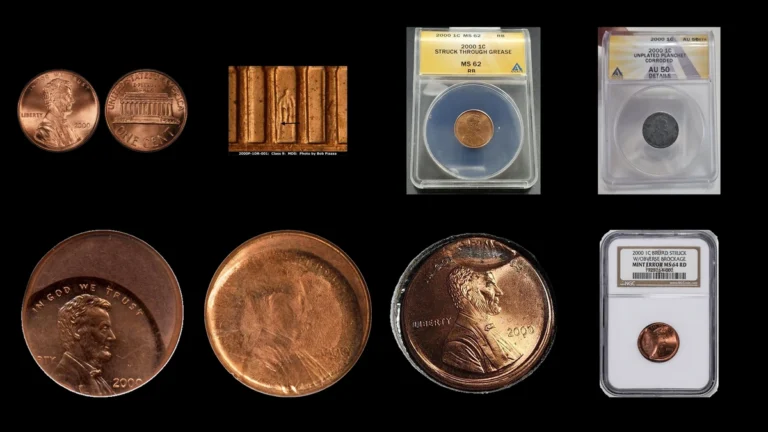
Rare 1834 Penny Errors (List & Pictures)
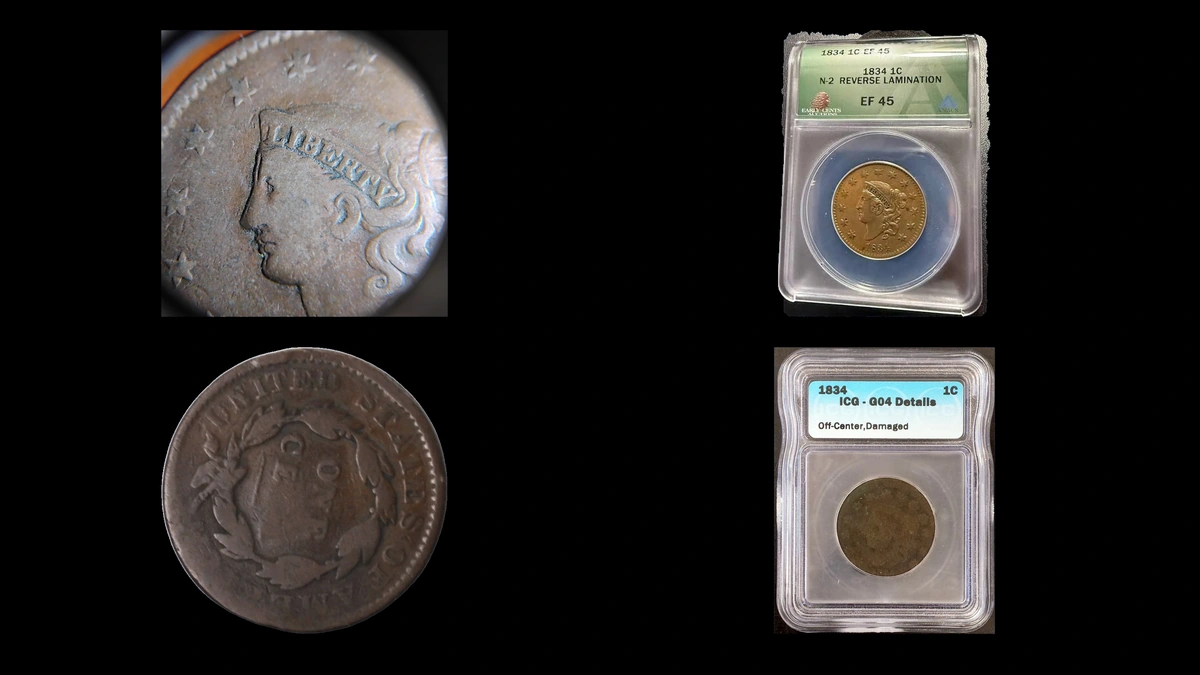
An 1834 cent with three portrait outlines and a small reverse lamination sold for $2,640 in January 2022. Those features share one coin and one auction price.
Estimated whole-coin values for 1834 penny errors range from $30–$8,000. Compare the face contours, small surface faults, rim, and relationship between the two designs before choosing a price range.
| Observation | Category | Estimated value |
|---|---|---|
| Repeated portrait contours | Double or triple profile | $75–$3,500 |
| Small copper separation | Lamination | $40–$3,000 |
| Raised line or rim patch | Die crack or cud | $30–$2,500 |
| Missing edge segment | Clip | $40–$1,000 |
| Reverse tilted after a fixed flip | Rotated dies | $40–$2,000 |
| Displaced or repeated full designs | Off-center or double strike | $200–$8,000 |
The copper Coronet cent normally weighs 10.89 g and measures roughly 28–29 mm, with a plain edge. N-numbers identify particular pairs of dies used to strike the coins.
1. 1834 Penny Two or Three Outlines of Liberty: Repeated Profile Error
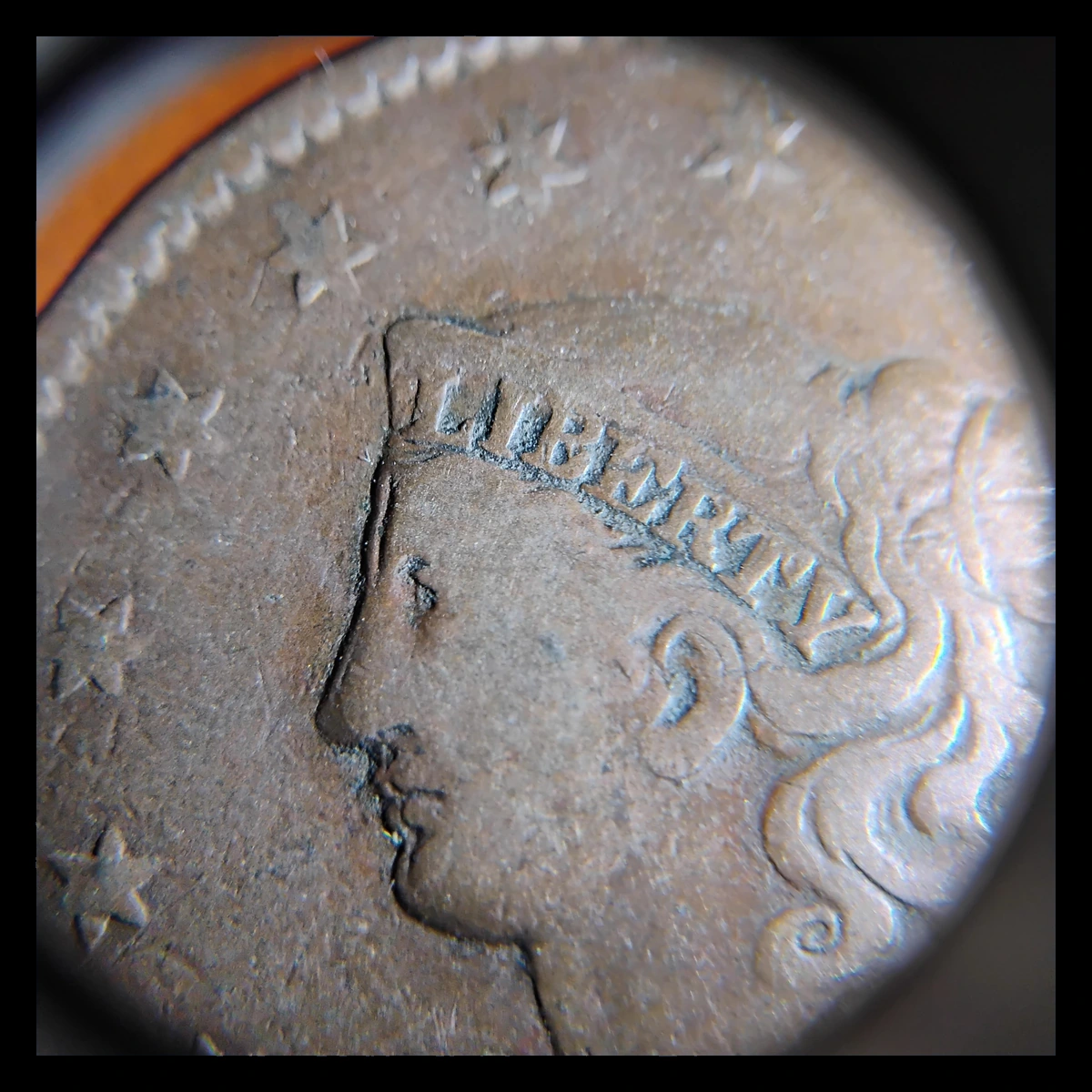
A bold N-6 example has three visible facial outlines. An N-3 description records doubling from chin to nose, while another N-6 description includes the forehead, ear, and RTY in LIBERTY.
These observations describe the appearance without automatically establishing its mechanism. Movement during striking can repeat edges without a doubled die or a separately identifiable second blow.
How to Identify
Trace the nose, lips, and chin as connected contours, then inspect any affected ear or lettering. Moving the light helps distinguish a real outline from glare.
Keep flat shelves separate from rounded repeated detail. A claim of two strikes must explain additional features on both faces, rather than rely on one thick-looking edge.
What It’s Worth
Estimated values are $75–$3,500, with worn examples around $75–$750 and attractive lightly worn pieces around $750–$3,500. The complete variety and surfaces influence the result.
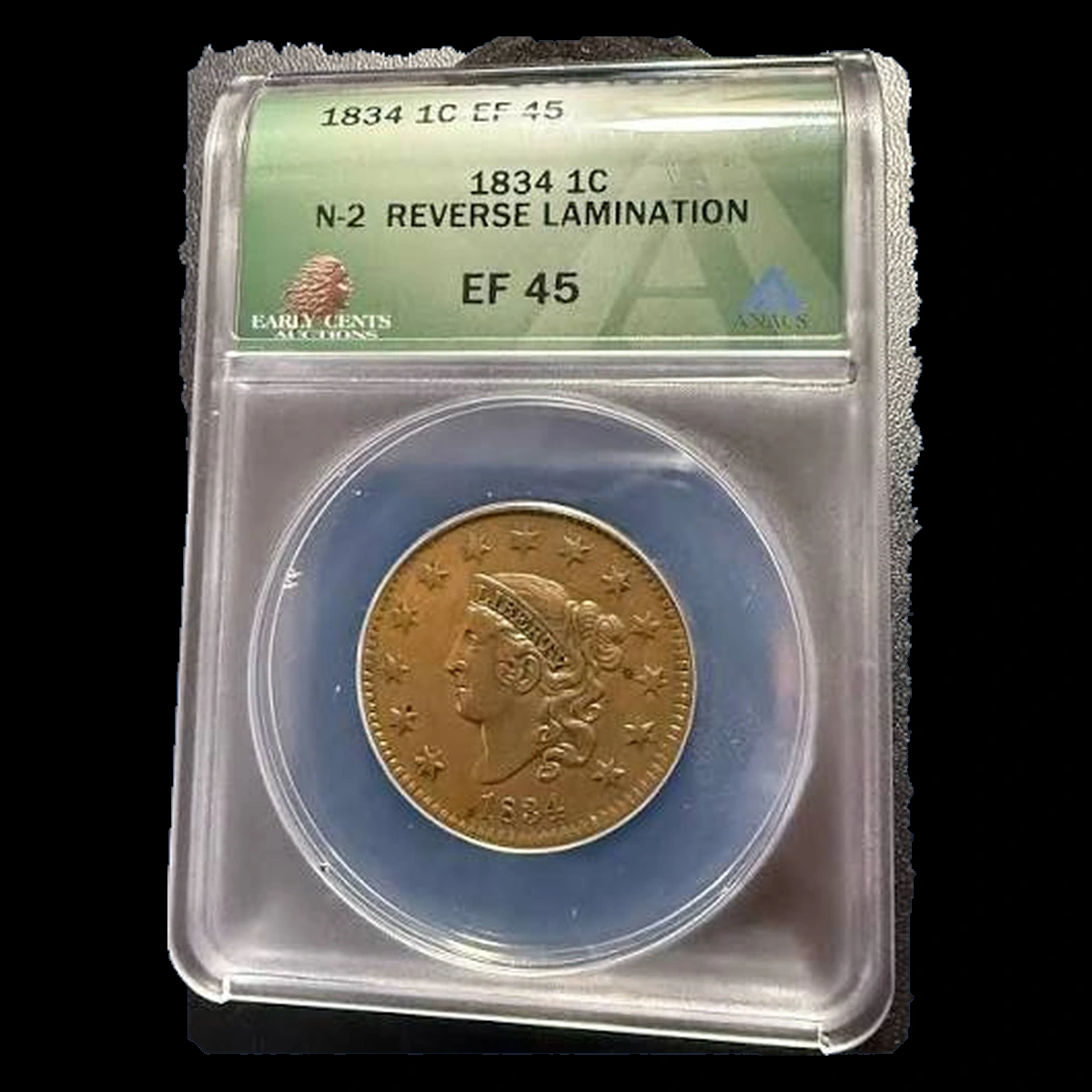
The N-6 tripled-profile PCGS AU50 cent sold for $2,640 in January 2022. Its reverse lamination is included in that price.
2. 1834 Penny Small Openings in the Copper: Lamination Error
An N-5 auction example has a tiny original lamination in the open area beyond Liberty’s nose. A separate N-6 has a faint reverse split near the boundary between two brown tones.
How to Identify
Examine the actual separation under low-angle light. Color alone cannot establish a metal-layer fault.
Keep the N-5 front location separate from the N-6 reverse location. Preserve attached copper and distinguish a fine layer boundary from scraping or scattered corrosion.
What It’s Worth
Estimated values are $40–$3,000, with worn small laminations often around $40–$400. Attractive examples of scarcer varieties account for much of the higher tier.
The $2,640 January 2022 N-6 sale is the same tripled-profile coin described above. The small reverse separation does not receive a second independent valuation.
3. 1834 Penny A Raised Line by the Date or Patch above STA: Die Breaks Error
An N-3 crack runs from the rim below the date’s 4 through stars 13 and 12 before returning to the border. A separate N-1 report describes a small reverse cud above STA.
Both features copy damaged steel, but one is a narrow crack and the other a rim-connected missing piece. Neither is peeling copper.
How to Identify
Count stars from the lower left with Liberty upright, then follow the N-3 ridge through the final two stars. Its center should rise above the surface rather than cut downward.
On an N-1 candidate, inspect the patch above STA and its connection to the rim. Exclude an edge dent or added material before attributing a cud.
What It’s Worth
Estimated whole-coin values are $30–$2,500, with worn cracks and small breaks around $30–$750. Attractive coins with stronger detail need higher-condition comparisons.
An unworn 1838 large cent with several strong breaks sold for $1,762.50 in September 2016. That different-year result does not price the small 1834 STA patch by itself.
4. 1834 Penny The Metal Outline Has a Gap: Clipped Blank Error
A seller offered a Fine 1834 cent described as clipped. The report supplies no precise gap shape or direction.
A genuine clip starts when an incompletely cut blank enters the press. The design forms around copper that was already absent.
How to Identify
Read the date and inspect the two ends of the missing section with the adjacent design. Fresh file strokes or cuts through finished letters point toward later damage.
Opposite-border weakness can support an original clip but needs the rest of the boundary to agree. Reduced weight only establishes missing copper, not when it disappeared.
What It’s Worth
Estimated values are $40–$1,000, including roughly $40–$200 for worn modest clips. Stronger examples with better preservation may reach more.
The guide’s approximately $53 Fine example was an asking price. An 1852 clip graded NGC MS63 Brown brought $384 in June 2024, offering an unworn different-date comparison.
5. 1834 Penny The Wreath Leans Clockwise: Rotated Dies Error
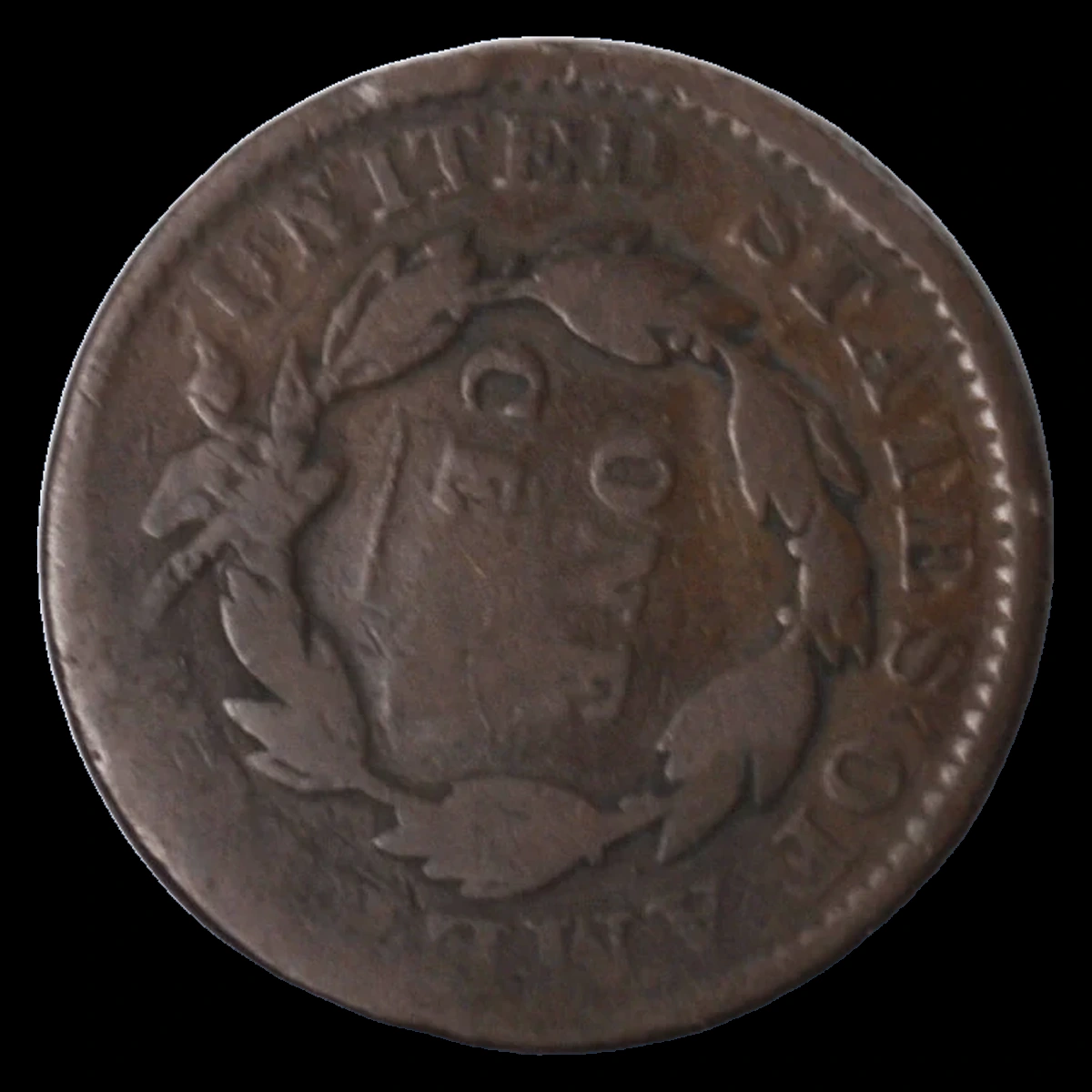
A Heritage N-3 description records a reverse nearly 45 degrees clockwise from normal. Another catalog reports a similar angle on a separate N-6.
How to Identify
Hold Liberty upright and turn the coin top to bottom without twisting sideways. Record the reverse before independently straightening its photograph.
Repeat the movement to confirm the angle. This relationship between the dies differs from a coin rotating between two strikes that leave overlapping designs.
What It’s Worth
Estimated values are $40–$2,000, with worn clear rotations around $40–$500. Attractive coins with little wear require stronger condition comparisons.
The documented N-3 was graded NGC AU58 and also carries a doubled profile and die crack. No sale amount is assigned to it here, and any eventual price would cover those features together.
6. 1834 Penny A Bare Crescent beside a Repeated Profile: Off-Center Strike Error
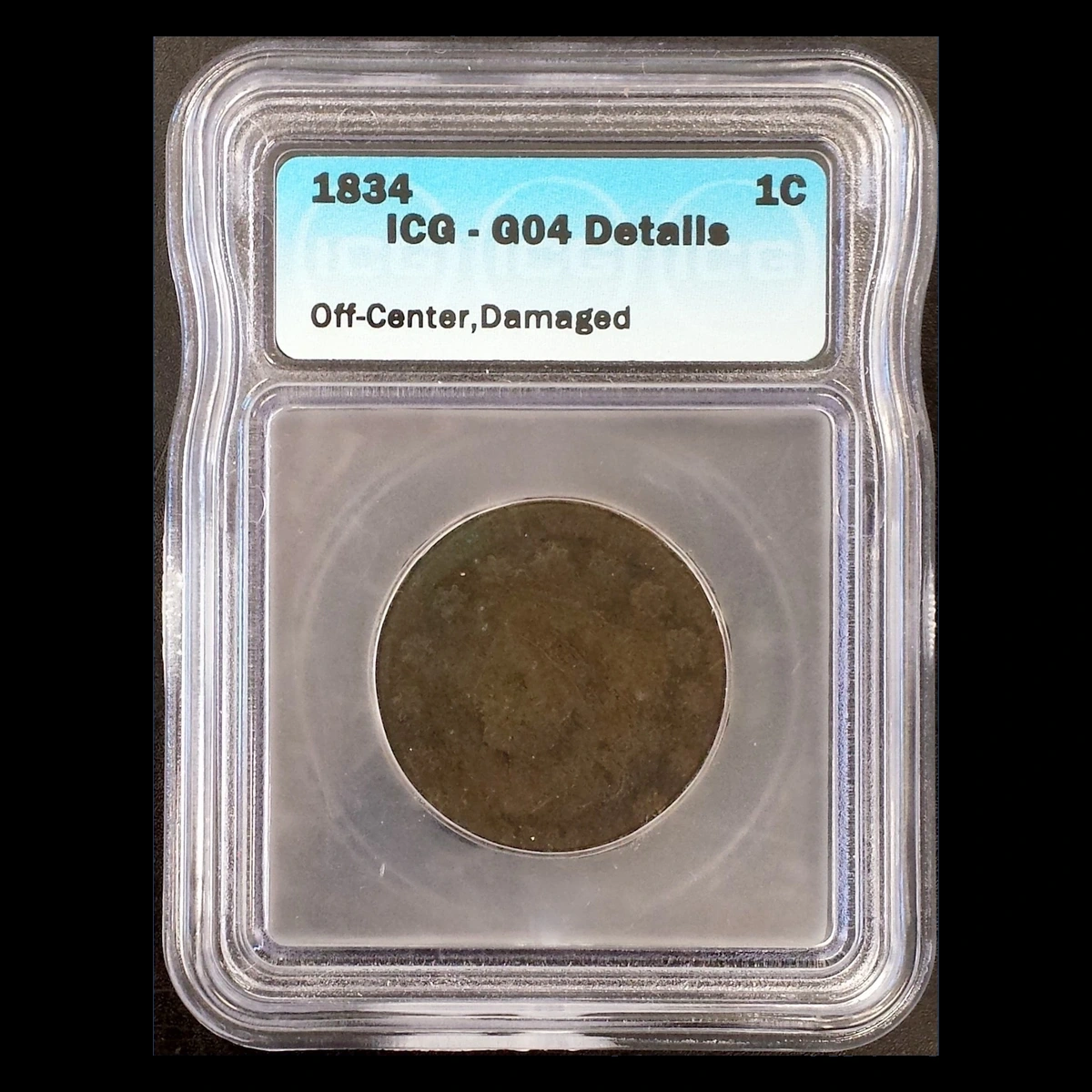
A collector’s N-1 reportedly combines a 10% off-center strike with a strong double profile. The misplaced blank left part of the intended design outside the copper.
How to Identify
Compare both designs against the same outline and preserve the date in the full view. Bare metal should explain the unstruck area without requiring a section to have been cut away.
The repeated face contour does not alone establish two blows. The report gives a displacement percentage but no direction to assign here.
What It’s Worth
Estimated values are $200–$5,000, with worn examples around $200–$1,500. Stronger attractive coins benefit from clear dates and convincing original unstruck surfaces.
No quoted sale is supplied for the 10% N-1. Its repeated profile belongs to the same coin and does not create a separate amount to add.
7. 1834 Penny A Later Reverse Impression and Flattened Front: Double Strike Error
A cataloged N-3 moved about 25% off-center and turned roughly 25 degrees clockwise before its second blow. Another blank lay against the front during that strike, flattening about three-quarters of the earlier portrait-side design.
The backward portrait was impressed into that other blank, not into the described cent. The catalog graded this coin VG8 and noted a separate dig near the lips.
How to Identify
Trace the later reverse impression against the earlier one, then compare the broad blunted front area with the overlap. The evidence on both faces should fit the same second-strike event.
Do not expect the brockage made on the companion blank to appear on this coin. Keep the lip-area dig separate as later damage.
What It’s Worth
Estimated values are $500–$8,000, with worn readable double strikes around $500–$2,500. Better preservation and clearer design relationships support the upper range.
The old catalog offered the N-3 at $750, an asking price rather than a confirmed auction result. A scratched 1856 cent with a displaced second strike sold for $2,640 in January 2023, a different-date and different-sequence comparison.
Conclusion
A repeated profile describes what is visible before it explains how the mark formed. Compare connected outlines, the reverse, and any flattened areas before deciding whether the coin received another blow.
The N-3 rotation, N-1 off-center report, and N-6 tripled-profile sale concern separate examples. Keep their measurements and condition together, and value a coin with several features as one complete piece.