Rare 1938 Penny Errors (List & Pictures)
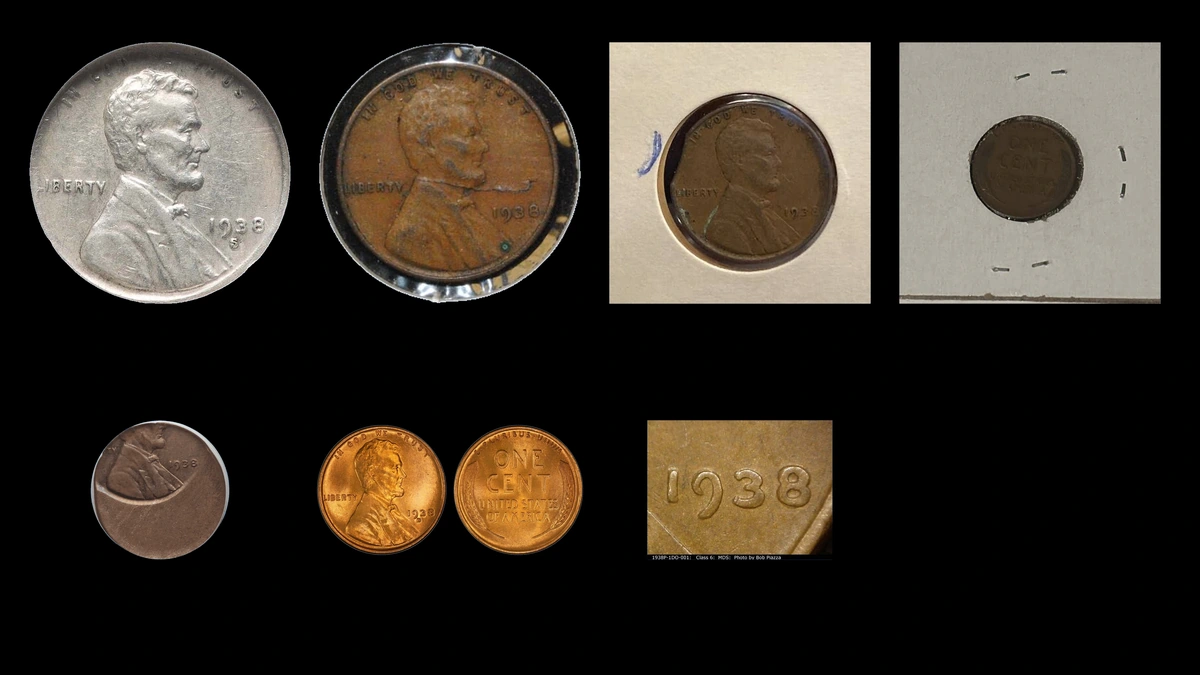
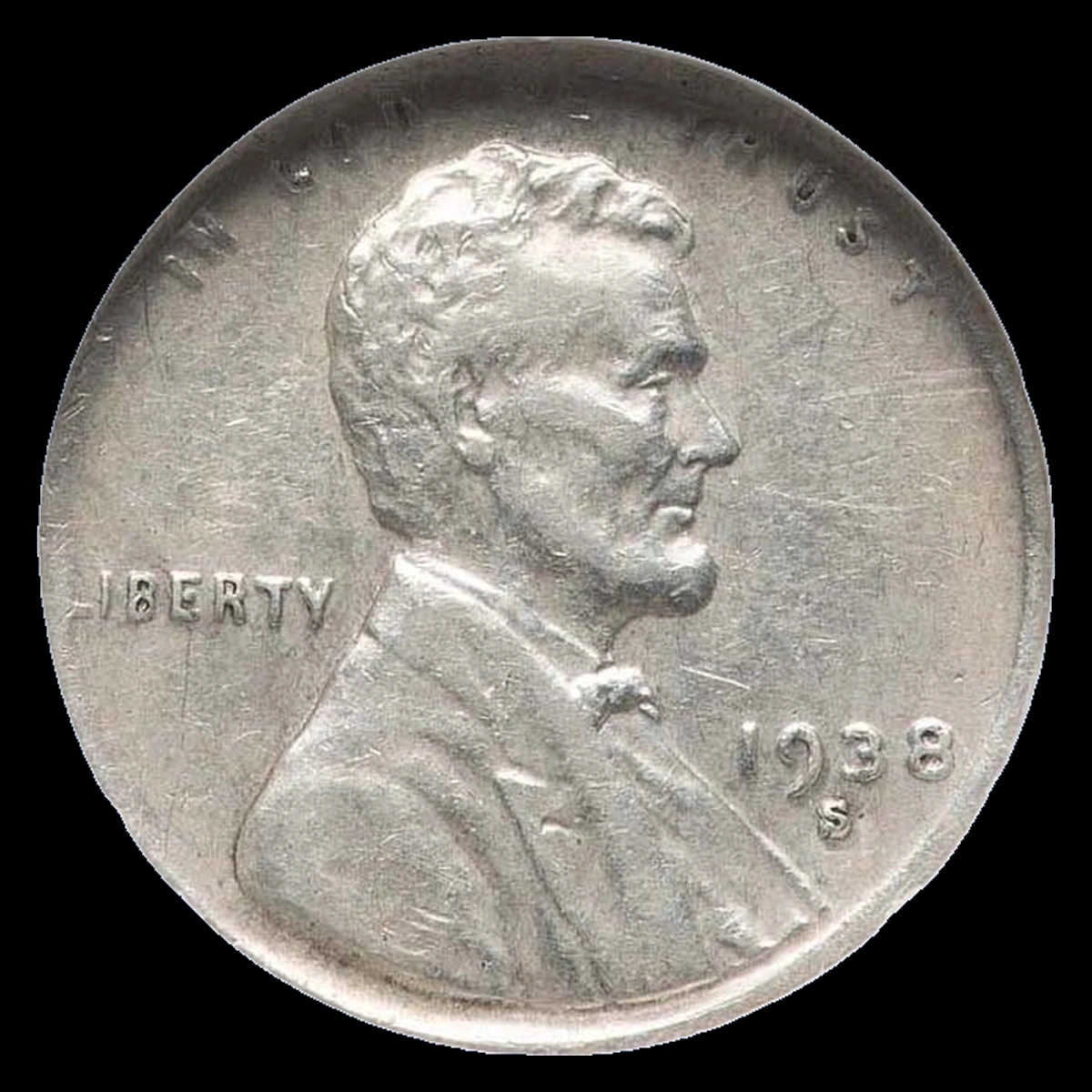
A dime blank can expand until its width approaches that of a cent, so diameter alone can miss an important clue. The silver San Francisco example leading these 1938 penny errors brought $10,200 on August 28, 2025.
Estimated values span $3–$15,000. Check metal and surface layers, follow the outline and strike positions, then inspect the small raised letter and eyelid details.
| Visible clue | Category | Estimated value |
|---|---|---|
| Pale metal with low weight | Silver dime blank | $5,000–$15,000 |
| Thin reverse layer separates | Lamination | $5–$300 |
| Part of the blank is missing | Clip | $15–$400 |
| Complete design in widened border | Broadstrike | $25–$500 |
| Unused crescent beside lost design | Off-center strike | $30–$1,500 |
| Another shifted impression | Double strike | $200–$3,500 |
| Letter-space bar or rim-connected patch | BIE or cud | $3–$500 |
| Earlier D or S strokes | Repunched mintmark | $5–$750 |
| Extra eyelid or thickened reverse design | Doubled die | $5–$300 ordinary; $100–$1,500 Proof |
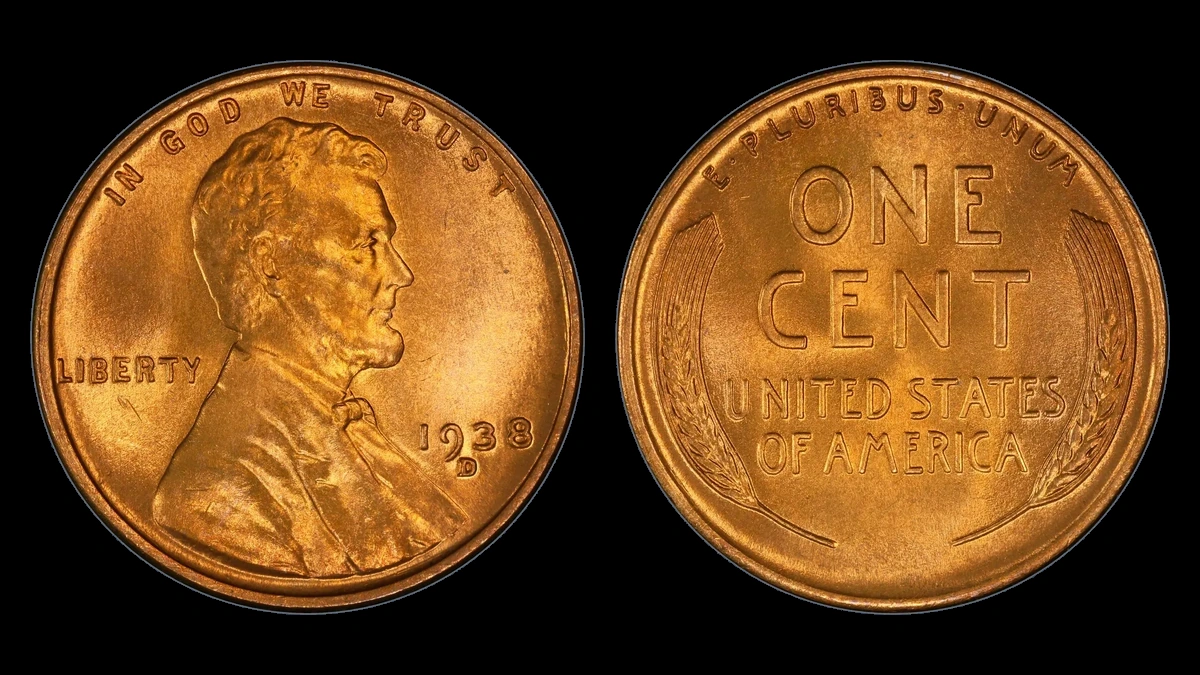
A normal 1938 cent is copper alloy throughout, weighs 3.11 g, and measures 19.05 mm across a plain edge. Document both faces and the edge, using a 10× magnifier plus safe scale and caliper measurements for accessible coins.
1. 1938 Penny Light Silver Metal Carries a Wide Cent Design: 1938-S Dime Blank Error
The documented San Francisco coin weighs 2.5 g and contains ninety-percent silver. Its original dime blank spread during the cent strike to roughly a normal cent’s width.
The date, S, and right wheat lines are clearer near collar contact, while other rim areas are softer and the upper motto stretches outward. NGC graded the circulated piece XF45.
How to Identify
Compare measured weight and composition rather than rejecting a candidate solely because its diameter approaches 19.05 mm. The documented example expanded under striking pressure.
Inspect the date and S, then examine the edge for plating or filing. Professional nondestructive metal testing can separate silver alloy from a copper cent given a pale coating.
What It’s Worth
A comparable authenticated silver-blank example has an estimated $5,000–$15,000 range. Its confirmed identity and preservation govern the comparison.
The NGC XF45 coin brought $10,200 on August 28, 2025. That rare wrong-metal result does not apply to a plated or merely underweight ordinary cent.
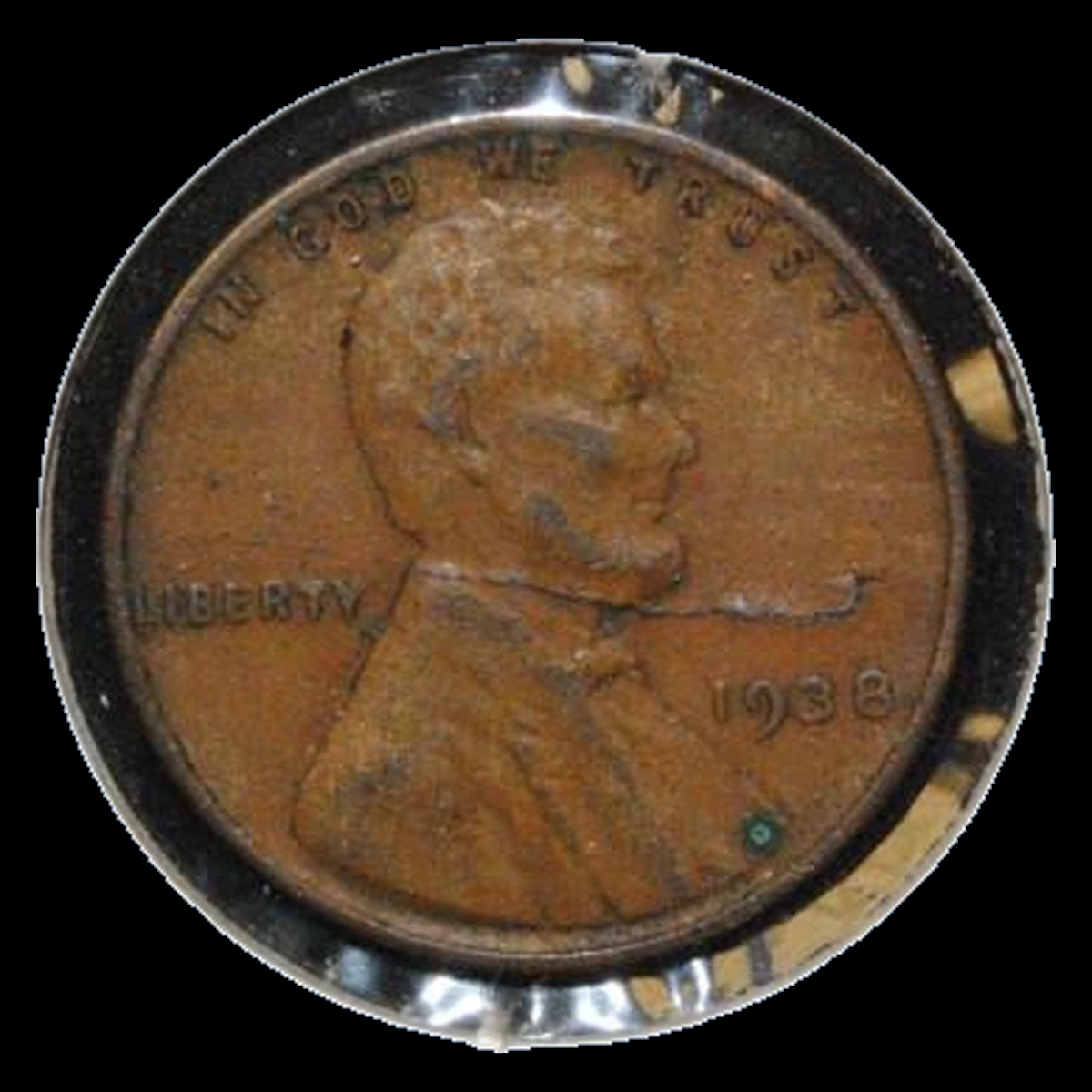
2. 1938 Penny A Thin Sheet Peels from the Reverse: 1938 Lamination Error
The certified Philadelphia example has reverse lamination and a PCGS MS64 Red grade. A weak layer within the alloy separated from the metal beneath it.
This is an individual blank defect, so the peeling outline need not repeat on another coin. It does not expose a modern zinc core.
How to Identify
Follow the existing layer boundary under low light without lifting or pressing it. Examine how nearby letters meet the separation rather than a tool-cut patch.
Photograph any opening that reaches the edge and keep measuring tools away from fragile metal. Weight can stay close to normal if the flap remains attached.
What It’s Worth
Genuine laminations have an estimated $5–$300 range. A recognizable original layer offers clearer evidence than an unexplained rough spot.
A 1941-S retained reverse lamination in PCGS MS66 Red brought $69 in April 2020. That nearby-year transaction does not price the Philadelphia 1938 MS64 Red example.
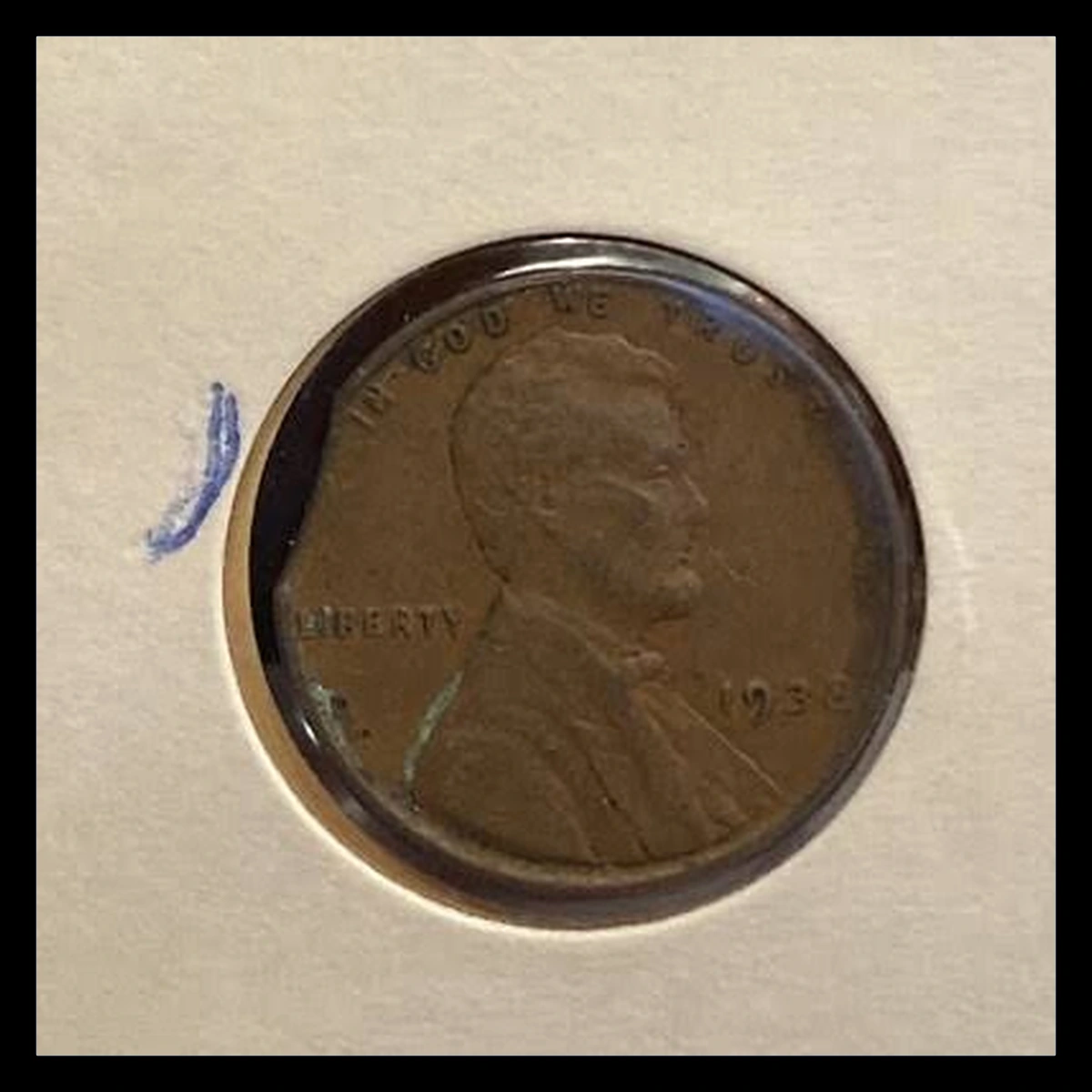
3. 1938 Penny The Edge Contains an Original Gap: 1938 Clipped Blank Error
The recorded Philadelphia clipped-planchet cent is graded PCGS MS64 Red and Brown. Part of its prepared blank was absent before the design arrived.
The record supplies no universal percentage for the year. Each missing boundary needs inspection rather than a measurement borrowed from a similar photograph.
How to Identify
Compare the gap with adjoining rim and lettering for design formed beside missing metal. Fresh burrs or cuts through completed details point toward later removal.
Opposite-rim weakness can support the identification without appearing equally on every clip. Measure intact spans and preserve the actual remaining weight.
What It’s Worth
Identified clips have an estimated $15–$400 range. A readable date and natural edge support comparison better than a damaged notch.
A 1939 clipped cent in MS64 Brown brought $180 in January 2023. That result does not establish an amount, shape, or missing percentage for the 1938 specimen.
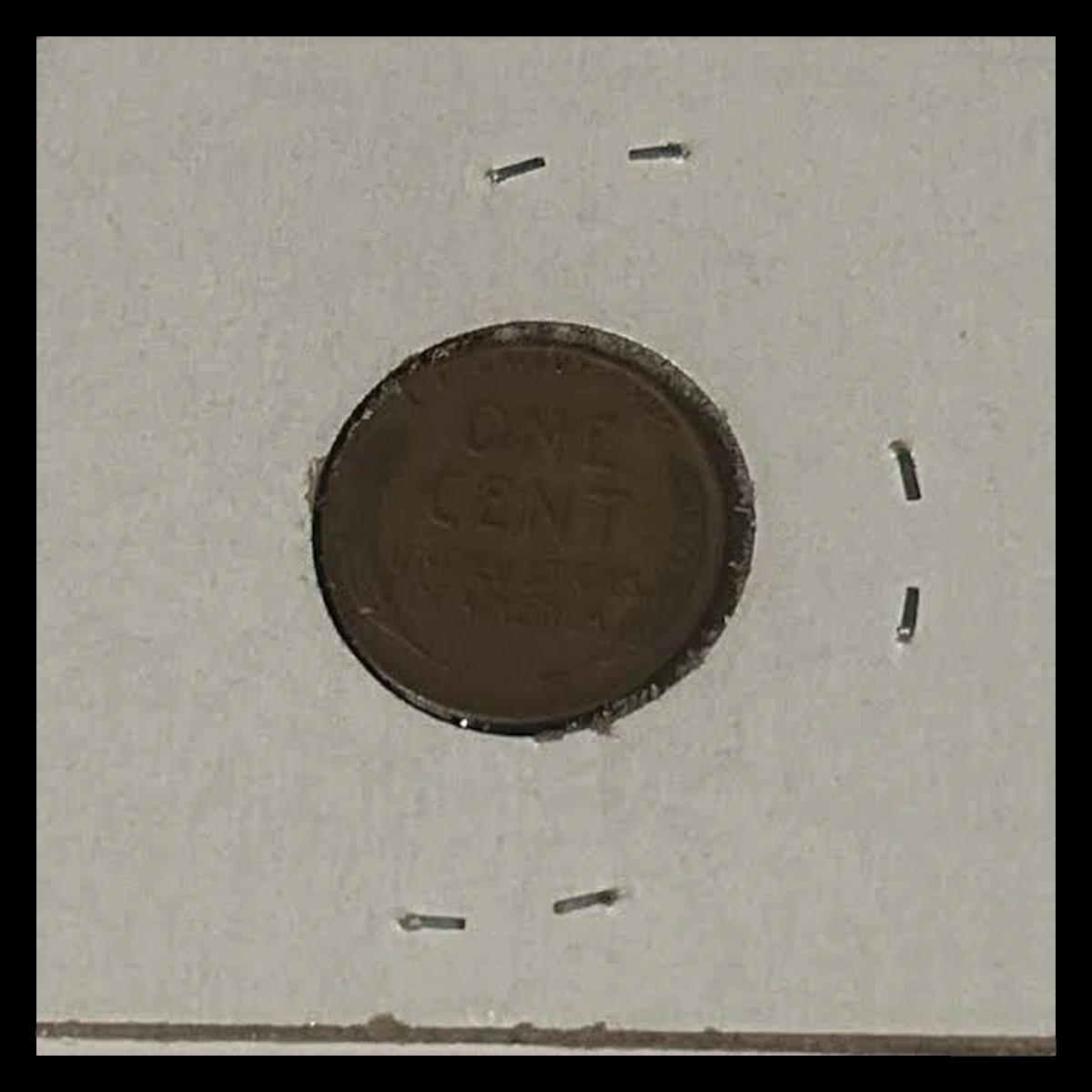
4. 1938 Penny Every Outer Letter Fits within a Wider Coin: 1938 Broadstrike Error
A collar normally limits the blank’s outward spread. When it fails to contain the metal, the resulting broadstrike can retain full design within extra border.
A year guide reports an MS60 example. The grade does not establish its mint or any exact enlarged diameter.
How to Identify
Trace all outer design on both faces, including the narrowest margin. Uneven centering can accompany a broadstrike as long as intended detail remains on the metal.
Inspect for added rings, hammer marks, or flattened finished letters. Widening an ordinary coin afterward does not reproduce detail formed during unrestricted striking.
What It’s Worth
Genuine broadstrikes have an estimated $25–$500 range. Natural spread and surface quality guide the comparison.
A 1920 NGC MS62 Brown example brought $119 in March 2026. It supplies Wheat-cent context rather than a transaction for the reported 1938 MS60 coin.
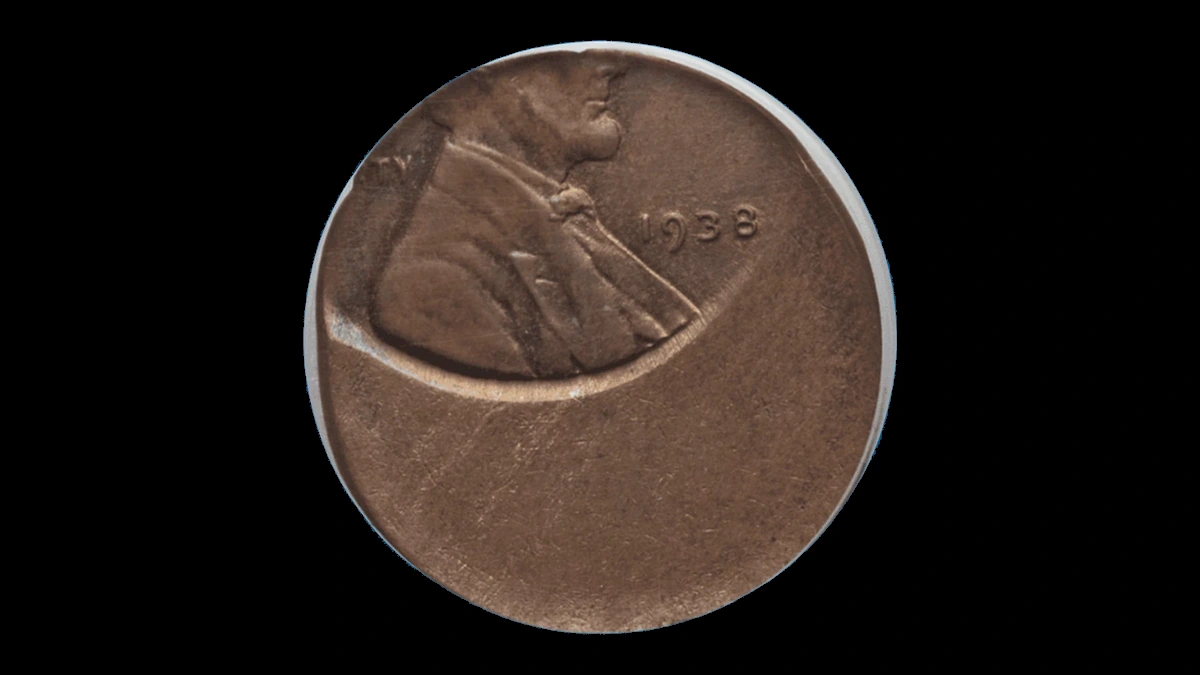
5. 1938 Penny An Unstruck Crescent Borders Missing Design: 1938 Off-Center Strike Error
Separate Philadelphia coins are described as twenty percent and fifty percent off center. Their grades are MS62 Brown and MS64 Brown respectively.
Each displaced blank received only part of the intended image. The bare crescent remains original metal rather than a section that broke away.
How to Identify
Find the surviving date and compare both faces for consistent design loss. Establish each example’s direction separately from its stated percentage.
Inspect the bare area for abrasion that could have removed completed lettering. If the full design survives inside expanded metal, consider the broadstrike explanation instead.
What It’s Worth
Dated examples have an estimated $30–$1,500 range. Original surfaces and a clear year strengthen the comparison.
A 1950-D thirty-five-percent off-center cent brought $192 in October 2021. That later Wheat-cent result is not a recorded price for either Philadelphia 1938 coin.
6. 1938 Penny A Later Impression Crosses the First: 1938 Double Strike Error
The cataloged Philadelphia example received its second strike seventy-five percent off center. Only part of the later design reached the existing coin.
NGC graded it MS63 Red and Brown. Its widely separated design positions are different evidence from one extra eyelid copied by a doubled die.
How to Identify
Trace the first impression and a coherent second letter or portrait group with another center. Examine the crossing points where the later blow altered earlier detail.
The seventy-five-percent figure describes strike position, not missing blank metal. Inspect the edge for later pressing or assembly before accepting the overlapping images.
What It’s Worth
Authenticated double strikes have an estimated $200–$3,500 range. Readable overlap and preserved surfaces matter alongside displacement.
A 1916 double strike with an off-center second blow brought $600 in October 2022. It is a same-series comparison without establishing a realized amount for the 1938 coin.
7. 1938 Penny A Letter Bar or Rim Patch Rises above the Surface: 1938 BIE and Cud Error
A small die chip between B and E creates the BIE bar. A larger missing die section connected to the edge leaves a raised patch called a cud.
The general 1938 cud report fixes no universal mint, face, or clock position. Its actual boundary must establish the type.
How to Identify
Confirm the letter gap for BIE and follow a suspected cud into the rim. Check for solder, squeezing, or other later additions around the raised shape.
If design survives within a stepped area, consider a retained broken die section rather than assuming all of it fell away. Side lighting helps distinguish relief from cuts.
What It’s Worth
Small BIE chips have an estimated $3–$40 range; genuine larger cuds are approximately $40–$500. The amount of replaced design and preservation affect appeal.
A 1946-S major break brought $288 in March 2021. That substantial later-year failure is not a price for a small 1938 letter chip.
8. 1938 Penny Several D or S Curves Survive: 1938 Repunched Mintmarks Error
Denver patterns include leftward, downward, and tilted D remnants. A separate San Francisco pattern preserves left and upper-left traces from three punch positions.
Repeated punching altered the die’s mint letter, not the number of coin strikes. Some dies also pair with doubled reverses or develop cracks as they wear.
How to Identify
For Denver, compare placement beneath the date as well as direction, since several patterns point left. Lower D varieties also need their own surviving remnant shapes.
For San Francisco, distinguish an upward S from the three-position leftward form. Check the mintmark base for alteration and remember that die wear can reduce previously visible strokes.
What It’s Worth
The estimated range is $5–$750 across minor repunches and stronger named examples. Attribution, separation, and preservation determine the useful comparison.
No transaction is supplied for every catalog number. If a repunch and doubled reverse share one coin, assess the complete combination rather than adding both maximum estimates.
9. 1938 Penny Eyelids or Reverse Details Repeat: 1938 Doubled Dies Error
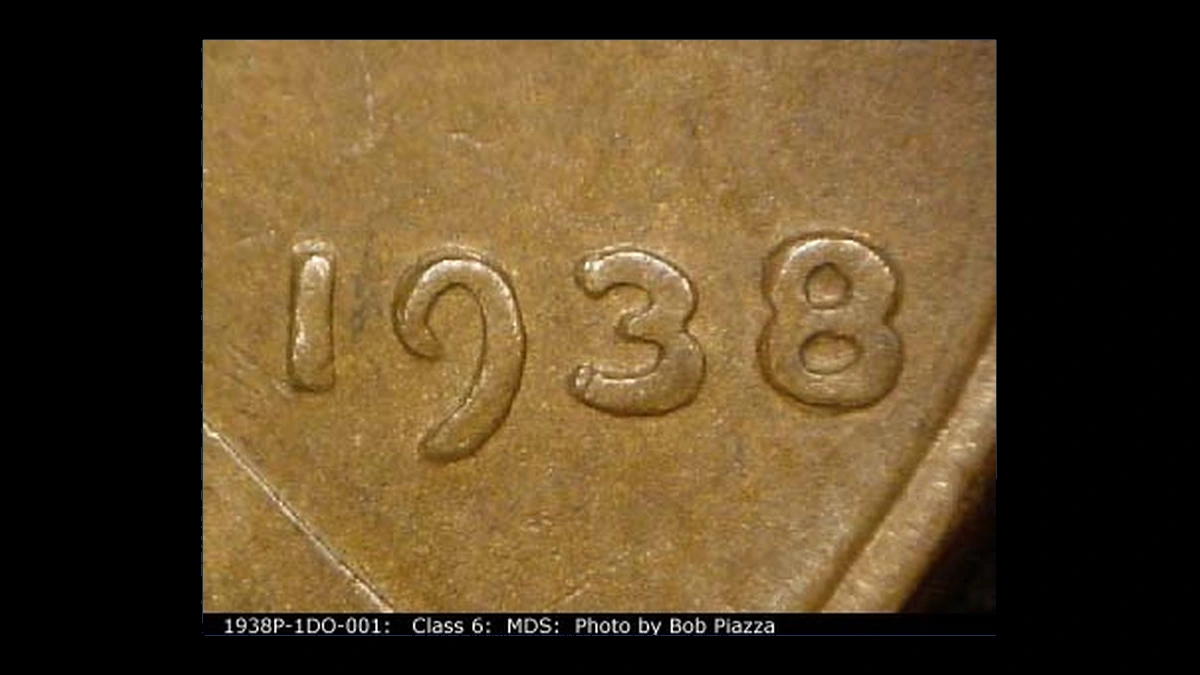
Philadelphia front varieties can add an eyelid above, below, or in two extra lines; Denver has a separate eye variety. Reverse doubled dies can thicken motto and wheat features.
Philadelphia Proofs include their own patterns, one showing strong thickening and inward separation at the left wheat ear. The specially prepared collector finish must be established before those diagnostics are used.
How to Identify
Select mint, face, and finish, then compare more than one matching detail. A small raised die mark on the nose is not automatically an extra eyelid.
Use changing light to distinguish fixed raised shapes from shadows. Thick letters on an ordinary coin cannot borrow a Proof reverse attribution.
What It’s Worth
Minor matched ordinary varieties have an estimated $5–$300 range. Well-preserved Proof varieties can fall around $100–$1,500, with the collector finish contributing much of the whole value.
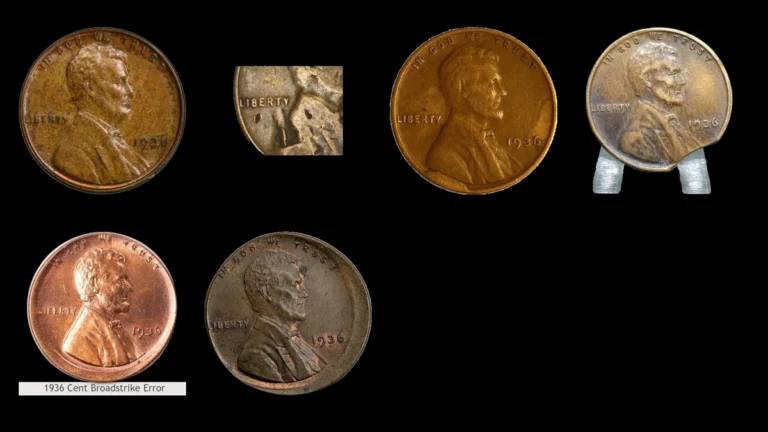
A 1936 doubled-front coin in MS63 Brown brought $70 in June 2024. That different-year ordinary variety is only general context for the distinct 1938 forms.
Conclusion
The $10,200 silver-disc sale shows why a nearly normal diameter cannot settle the metal identity of a 1938 cent. Its lower weight, silver composition, and original cent design must be considered together.
Across the estimated $3–$15,000 range, keep the same attention to detail: match each mintmark pattern, establish Proof finish independently, and distinguish an expanded complete design from an off-center incomplete one. Protect peeling metal while recording the evidence.