Rare 2009 Nickel Errors (List & Pictures)
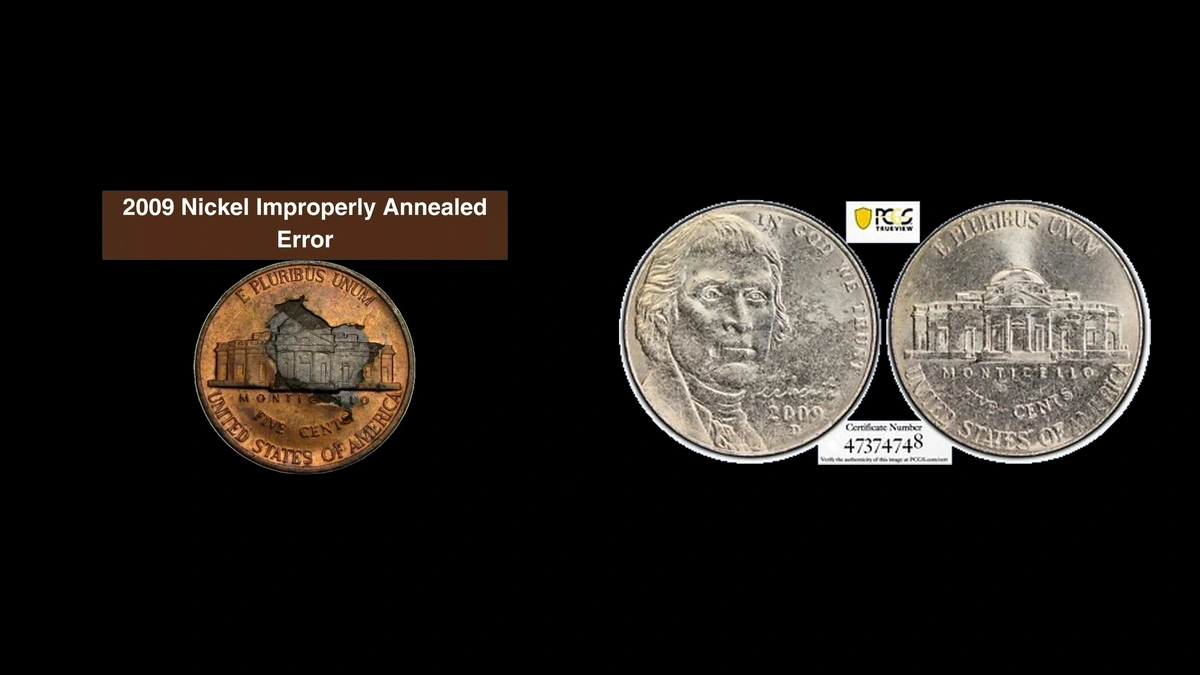
A 1977-D die cap sold for $487.20 at Heritage in July 2021, offering a documented comparison for the cap reported here. Estimated whole-coin values for 2009 nickel errors range from $10–$1,500.
Several higher 2009 guide figures lack linked original lots. Match the visible design, metal, and shape first, then compare the correct mintmark, finish, and condition.
| Clue | Category | Estimated value |
|---|---|---|
| Repeated fine contours | Doubled die | $10–$100 |
| Opposite-side design fragments | Die clash | $30–$850 |
| Abnormal original color | Improper annealing | $30–$200 |
| Missing detail or peeling metal | Grease strike-through or lamination | $20–$750 |
| Two missing edge curves | Double clip | $50–$850 |
| Wide or displaced design | Broadstrike or off-center strike | $50–$1,100 |
| Expanded cup shape | Die cap | $300–$1,500 |
A normal nickel weighs 5.00 g and measures 21.21 mm, with a plain edge and a uniform alloy of 75% copper and 25% nickel. The year includes ordinary and satin-finish P and D coins plus S Proofs, so original finish matters in comparisons.
1. 2009 Nickel Extra Contours on the Front or Back: Reported Doubled Die Error
The year guide describes a Denver coin with doubling in the front motto, date, and eye, plus MONTICELLO and building details on the reverse. Those reports concern one coin with both faces affected.
A doubled die carries repeated detail before it strikes a blank. A single blow can therefore produce the extra design.
How to Identify
Keep the date and D mintmark in a full photograph, then compare each repeated shape. A flat shelf or reflection beside a thick letter does not establish die doubling.
Check both faces without assuming every reported area must be equally strong. The actual direction and form of the extra contours need a confirmed match.
What It’s Worth
Minor clearly identified doubling has an estimated value of $10–$100. Bold and easily demonstrated features are better comparisons than vague thick lettering.
The guide reports $410 in 2021 for a 2009-D MS60 coin with both faces doubled. No original listing is matched to those details here, and the figure should not become an automatic premium.
2. 2009 Nickel Portrait Fragments near Monticello: Die Clash Error
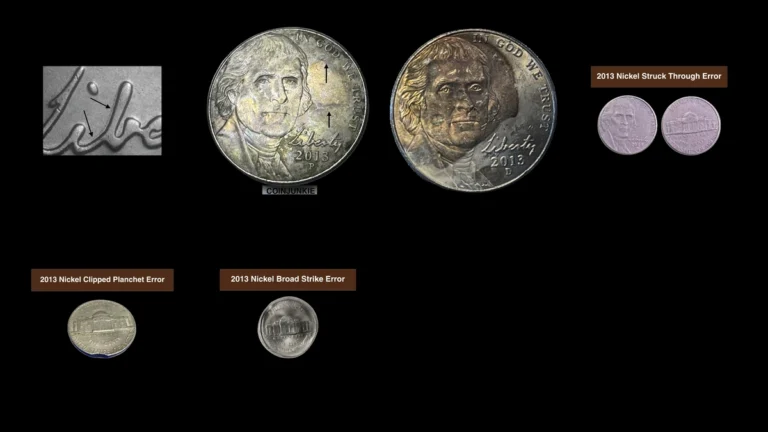
A 2009-P report describes portrait-like traces near the building and architectural traces on the front. They can form when dies collide without a blank and later copy the exchanged marks onto coins.
How to Identify
Use the correct forward-facing Jefferson portrait when matching the opposite design. An older side-facing portrait would place the expected shapes incorrectly.
Compare one distinctive curve or corner at a time. Stray scratches or polishing lines should not be joined into an imagined complete portrait.
What It’s Worth
Estimated values are $30–$850, with faint traces near the lower end. The upper range requires exceptional clarity and suitable preservation.
The guide reports $830 in 2022 for a Philadelphia MS63 example. That secondary information is not a guaranteed result for another clashed 2009 nickel.
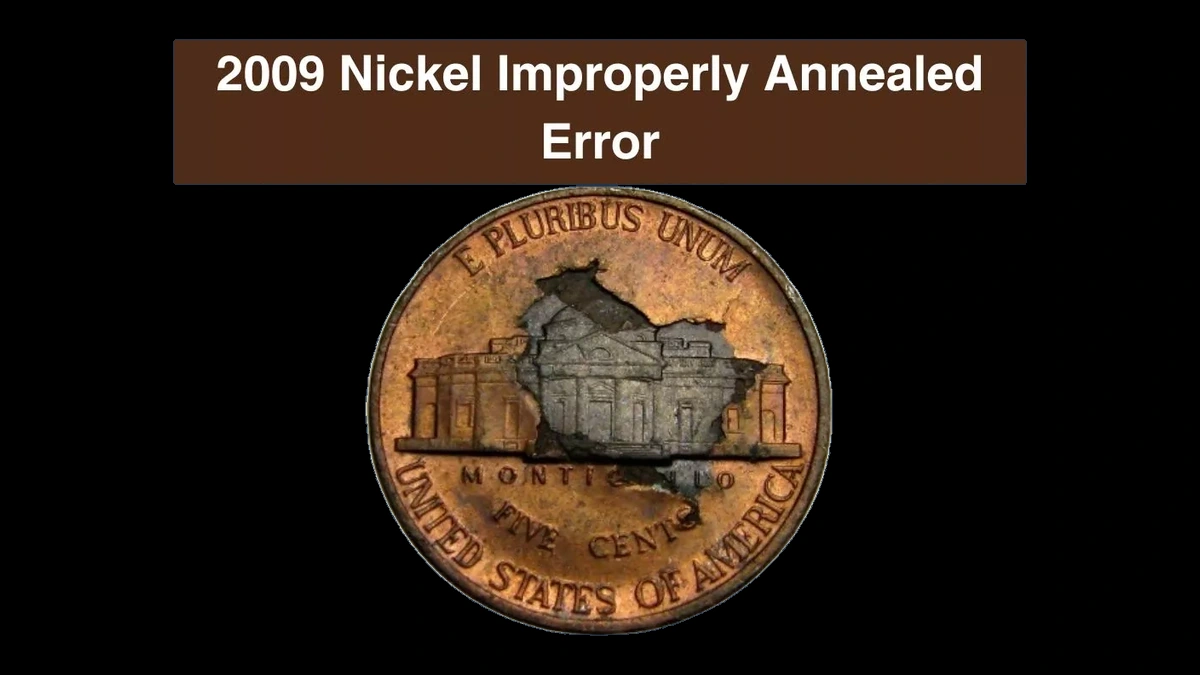
3. 2009 Nickel Dark or Colorful Original Surfaces: Improper Annealing Error
The Denver report links unusual color to improper annealing, the heating used to soften blanks. Later heat, chemicals, or damp storage can also change a nickel’s appearance.
How to Identify
Identify the mintmark and original finish before judging the color. A satin collector coin should be compared with the same finish rather than a circulation strike.
Under neutral light, inspect both faces and the edge for an intact original surface versus coatings, pits, or residues. Normal measurements cannot authenticate the color’s origin.
What It’s Worth
A confirmed heating-related error has an estimated value of $30–$200. Color alone does not justify this range.
The guide’s $515 figure concerns a reported Denver example. It does not price every dark nickel or establish the cause on a different coin.
4. 2009 Nickel A Large Area Failed to Form: Struck Through Grease Error
Grease in die recesses can prevent parts of the intended design from forming. The reported 2009-P example has a broad affected area without a firmly established location in the supplied description.
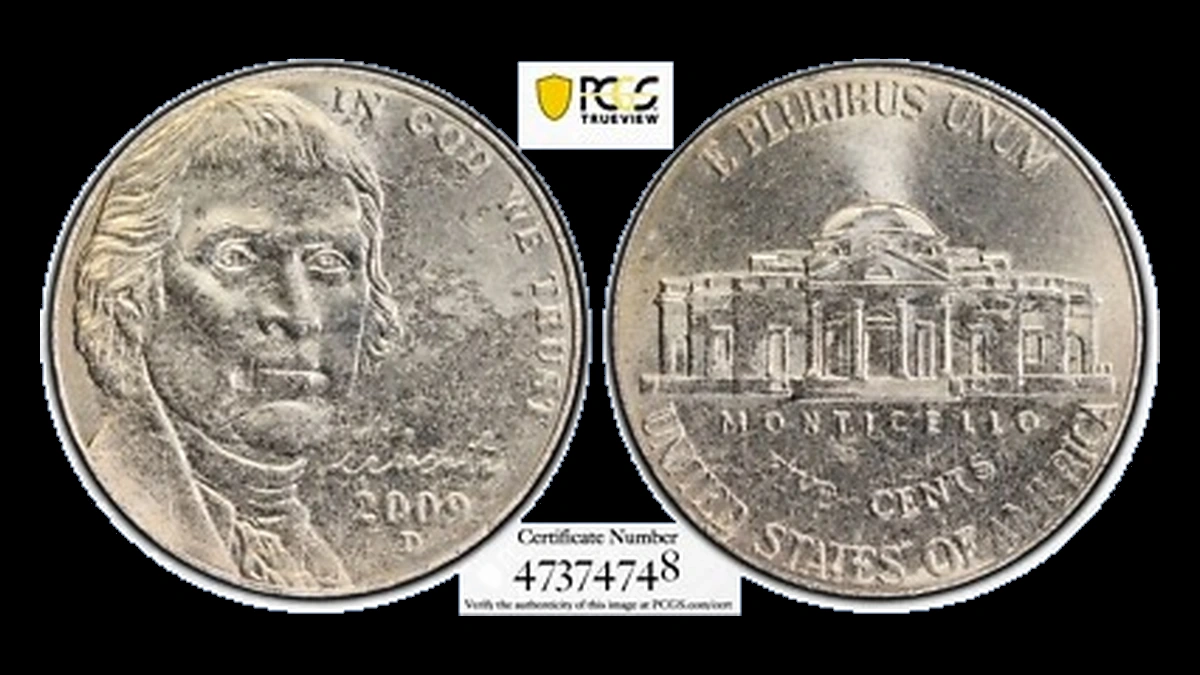
How to Identify
Compare the weak patch with nearby sharp details and the high points on both faces. General wear affects exposed design in a different pattern.
Look for a transition from normally struck detail into the blocked area. Abrasive lines or remnants of removed letters may indicate later scraping instead.
What It’s Worth
Estimated values are $20–$650, with small weak patches around $20–$100 and larger convincing interruptions around $100–$650. The whole coin’s condition remains relevant.
The guide reports $630 in 2021 for a Philadelphia MS64 coin without identifying an original auction lot. That amount should not be transferred to ordinary worn steps or a generally weak portrait.
5. 2009 Nickel A Flap or Split within the Alloy: Lamination Error
The Philadelphia lamination report concerns a weakness inside the original metal. A thin layer can lift or separate along that weakness.
How to Identify
Follow the opening into the surrounding metal under side lighting, keeping any flap attached. A corrosion pit alone does not demonstrate a continuous layer.
Paint or added plating may peel from the surface instead. The normal nickel has no clad skins around a copper core, and the report gives no fixed flaw location.
What It’s Worth
Estimated values span $25–$750, with tiny original flakes near the low end. Large clear separations on well-preserved coins require stronger comparisons.
The guide reports $715 for a 2009-P MS61 example. That secondary figure is not a standard premium for every surface crack or rough patch.
6. 2009 Nickel Two Curved Gaps Interrupt the Edge: Double Clip Error
The described Denver coin has two curved clips. Overlap with earlier holes during blank cutting can leave an incomplete disc that later receives the design.
How to Identify
Map both gaps and inspect each boundary independently. Two similar later cuts do not become an original double clip merely by appearing together.
Check for filing, saw marks, and completed design cut away after striking. Opposite-rim weakness may help, but neither both weak spots nor low weight alone proves the attribution.
What It’s Worth
A genuine double clip has an estimated value of $50–$850. The size of the missing areas, preservation, and readable date influence the comparison.
The guide reports $810 in 2021 for a Denver MS63 example. A separate 1961 nickel with two small clips totaling about 2%, graded PCGS MS65, sold for $61 at Heritage in September 2024.
7. 2009 Nickel Complete Design inside an Expanded Border: Broadstrike Error
A collar normally restrains metal as the dies strike. If it fails to contain the blank, the coin may expand while retaining all intended details.
How to Identify
Follow the outer lettering on both faces and inspect the edge’s outward flow. Hammer marks, smeared letters, or a folded rim can indicate later flattening.
The reported 2009-P has no confirmed diameter in the supplied evidence. A plain edge is normal and cannot establish collar failure by itself.
What It’s Worth
Estimated values are $50–$1,100, with modest broadstrikes generally well below the upper end. Clear expansion and original surfaces support stronger interest.
The supplied year guide reports $1,040 in 2020 for a Philadelphia MS62 coin. It does not provide an original auction page establishing the specimen’s dimensions.
8. 2009 Nickel Missing Outer Design beside Bare Metal: Off-Center Strike Error
The Philadelphia example is reported as 10% off-center. A displaced blank missed part of the dies, leaving a bare crescent and incomplete outer design.
How to Identify
Compare both faces against the same physical outline and retain the date and P in the photographs. A shift on only one face may involve a misaligned die instead.
The description supplies no clock direction. Inspect the unstruck area for original surface rather than sanding or cuts through finished letters.
What It’s Worth
Estimated values are $50–$650 for readable genuine examples. The upper end calls for an especially appealing coin rather than merely a small measured shift.
The guide reports an eBay result of $600 in 2020 for the 10% Philadelphia MS65 example. It remains a secondary report rather than a linked original transaction here.
9. 2009 Nickel Repeated Striking Forms a Cup: Die Cap Error
A coin can remain attached to a die and repeatedly contact fresh blanks. Metal spreads and can rise around the tool, forming the cap itself.
The year guide names a 2009-D reverse cap but also discusses coins that received its impression. Those receiving coins are different objects.
How to Identify
Inspect the side profile and the relationship between raised walls and stretched design. A bent ordinary nickel needs a different explanation.
Mint Error News describes modern cap formation. Compare the actual expanded cap with flatter coins struck through it, without forcing measuring tools against delicate walls.
What It’s Worth
An authenticated die cap has an estimated value of $300–$1,500. Shape, surviving design, and preservation determine useful comparisons.
A 1977-D obverse cap graded NGC MS67 sold for $487.20 at Heritage in July 2021. It differs in year, portrait design, and cap side from the reported 2009 reverse cap.
The year guide’s $1,010 amount is secondary information. It applies meaningfully only after the described object is established as the cap itself.
Conclusion
The visible evidence should explain why a coin looks unusual before a guide price is considered. Match the correct forward-facing portrait for clashes, preserve loose metal, and inspect both boundaries of a double clip.
Finish and condition matter across the estimated $10–$1,500 range. For the most dramatic category, keep the cup-shaped cap distinct from another nickel that received a distorted impression through it.