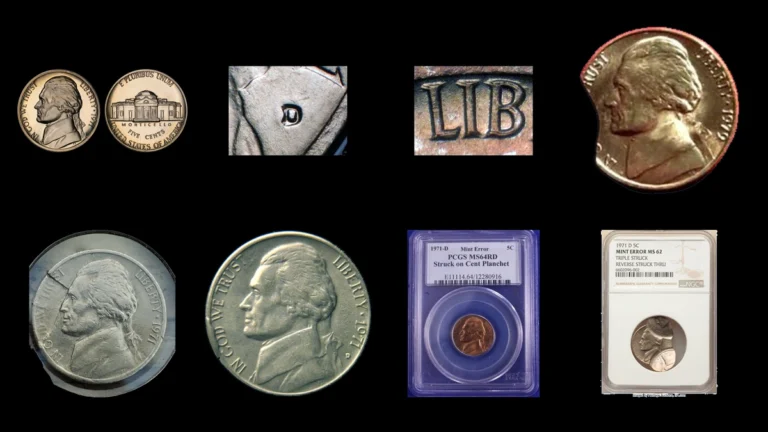
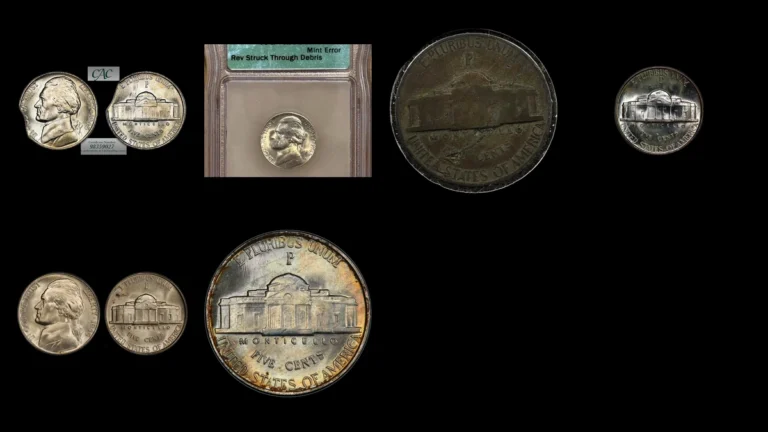
Rare 1984 Nickel Errors (List & Pictures)
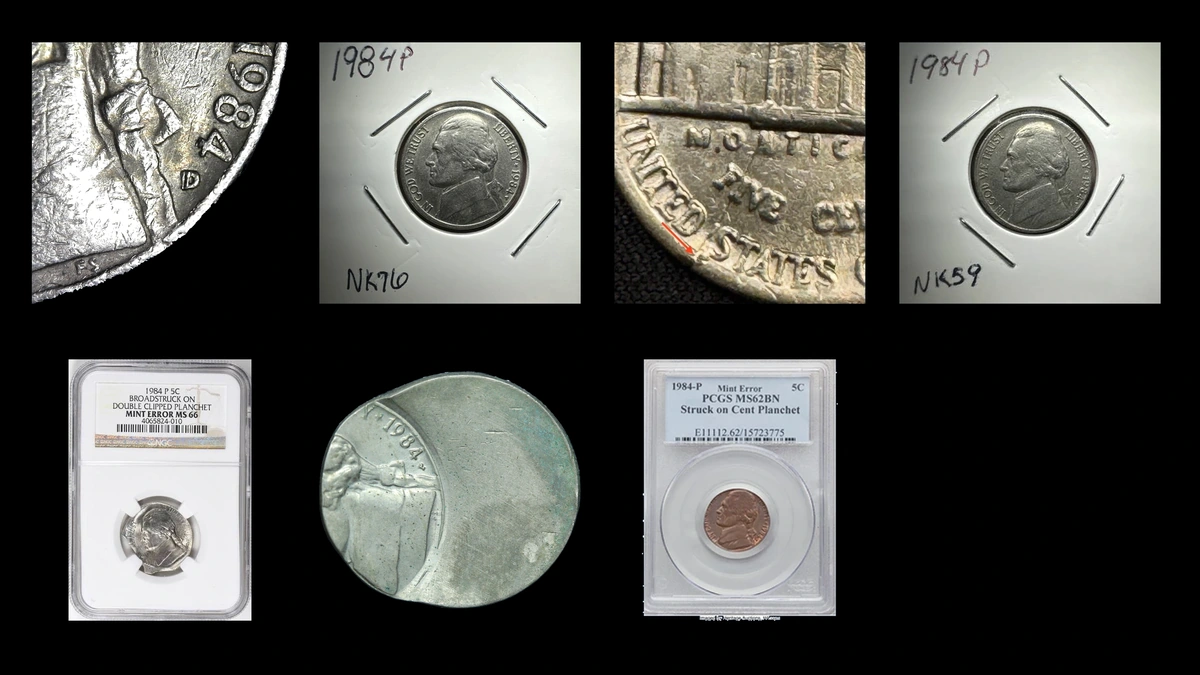
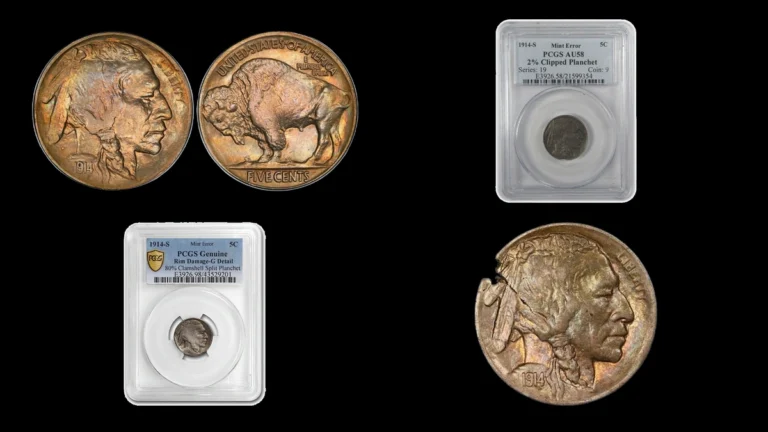
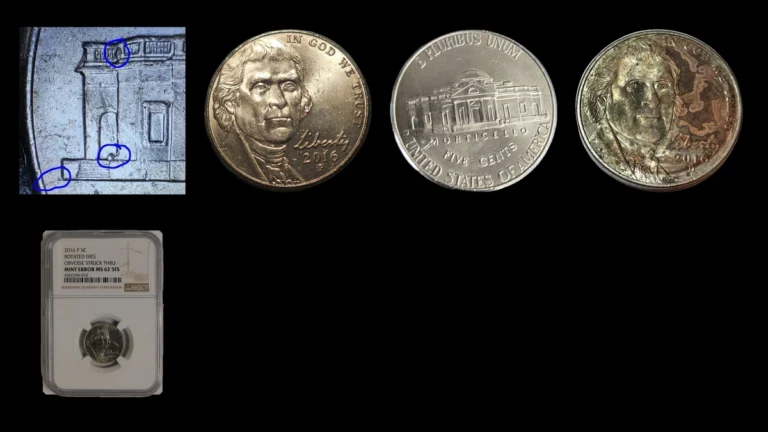
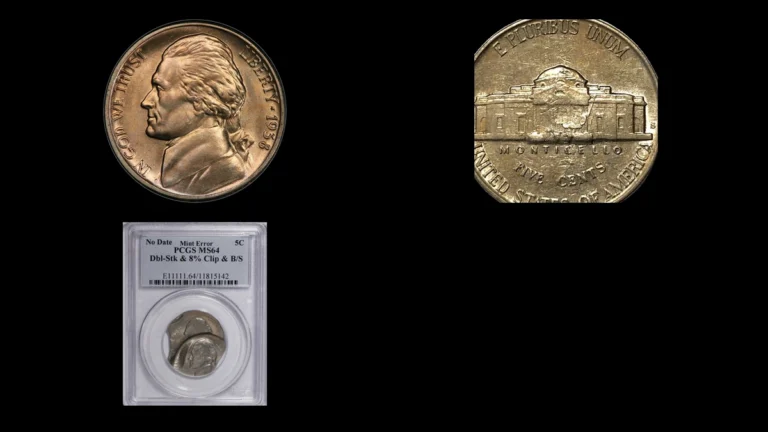
Some 1984 nickel errors barely disturb a border, while others put Jefferson on a much smaller blank. Estimated whole-coin values range from $10 to $4,000, depending on the actual error and preservation.
A Philadelphia nickel double struck on a dime blank brought $1,495 in August 2010. Inspect lettering and surfaces before comparing the outline, repeated impressions and metal, since several similar-looking examples have very different production histories.
| Observation | Category | Estimated range |
|---|---|---|
| Extra D above the mintmark | Repunched mintmark | $10–$300 |
| Repeated front or reverse lettering | Doubled die | $20–$400 |
| Weak detail or missing P | Struck through or missing-mark report | $10–$350 |
| M-shaped trace near the forehead | Die clash | $20–$600 |
| Raised rim-connected patch | Die break or cud | $25–$700 |
| Metal separates in a thin layer | Lamination | $20–$400 |
| Dark or orange-brown color | Improper annealing | $30–$500 |
| One face has unequal borders | Misaligned die | $10–$200 |
| Expanded perimeter with full design | Broadstrike | $20–$250 |
| Two gaps plus expansion | Double clip and broadstrike | $75–$600 |
| Design displaced or stretched near an edge | Off-center strike | $75–$1,000 |
| Recessed mirror image with altered edge | Brockage combination | $50–$1,500 |
| Overlapping or opposite-face impressions | Multiple or flipover strike | $75–$2,000 |
| Smaller copper-colored blank | Cent planchet | $300–$2,000 |
| Cent details remain beneath nickel design | Double denomination | $400–$2,500 |
| Small layered-metal blank, sometimes with extra errors | Dime planchet | $400–$4,000 |
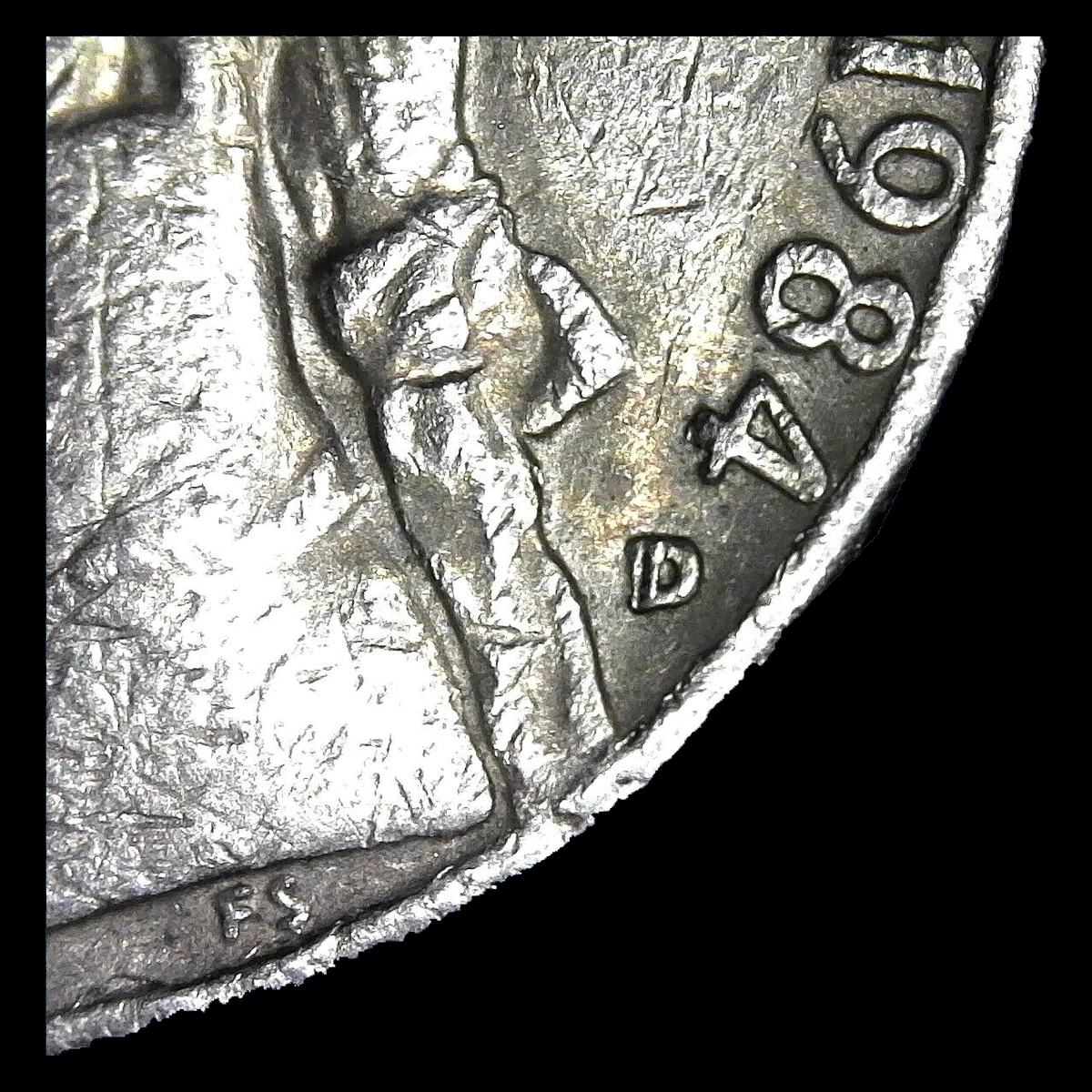
1. 1984 Nickel An Upper Outline beside the D: Reported Repunched Mintmark Error
A year source describes a possible earlier D above the main Denver mintmark. At the time, the letter was punched separately into a working die, and another placement could leave traces of the first impression.
How to Identify
Keep the date in the photograph and follow the upper trace to see whether it forms part of another D. A fixed rounded stroke deserves a different explanation from glare, a scratch or a flat mechanical shelf.
The supplied report does not establish a specialist catalog number. Match the candidate to an attributed example before assigning one.
What It’s Worth
$10–$100 is a conditional estimate for genuine minor repunching, with $100–$300 for a strong attractive example. No verified transaction for a specialist-attributed specimen is supplied here.
Letter thickness alone does not qualify for those values. Preservation and a clear earlier punch impression are the relevant evidence.
2. 1984 Nickel Repeated Front or Reverse Inscriptions: Doubled Die Error
The Philadelphia report concerns the front motto and date, while the Denver reverse report concerns E PLURIBUS UNUM and UNITED STATES OF AMERICA. Each describes duplicated design already present in a die before it struck the coin.
How to Identify
Choose the correct face after reading the mintmark, then compare the actual repeated shapes with a specialist reference. The reports do not require both patterns to occur on one nickel.
Change the lighting to separate reflections from raised detail. A flat shelf cutting into a letter or a second full coin strike has a different origin from a doubled die.
What It’s Worth
$20–$125 is estimated for genuine minor doubled designs, with $125–$400 for strong attractive examples with little wear. These figures are not documented sales of numbered Philadelphia or Denver varieties.
The visible pattern needs a convincing match. Prices for dramatic doubling on unrelated dates do not establish the value of a faint 1984 contour.
3. 1984 Nickel Detail Is Weak or the P Is Absent: Struck Through and Missing-Mark Reports Error
Grease-filled die areas are reported on 1984 nickels as one explanation for locally missing design. A separate auction specimen was specifically cataloged as missing its P, without establishing the precise cause in the title.
Ordinary Philadelphia nickels of this date carry P. The cataloged absence should not automatically be equated with a proven grease blockage.
How to Identify
For the missing mark, examine its expected position beneath the readable date for scraping or disturbed texture. Local weakness elsewhere should be compared with neighboring sharp design and general wear.
Polishing or removal of a finished letter can leave a blank-looking patch. The missing feature and its production cause are separate questions.
What It’s Worth
$10–$100 is estimated for small genuine blocked areas, with $100–$350 for clear larger effects or an authenticated missing-letter example. The missing-P coin, graded NGC MS63, sold for $149.50 in August 2010.
That unworn specimen’s result cannot be assigned to a scraped-off mintmark. Its grade and actual surface evidence remain part of the comparison.
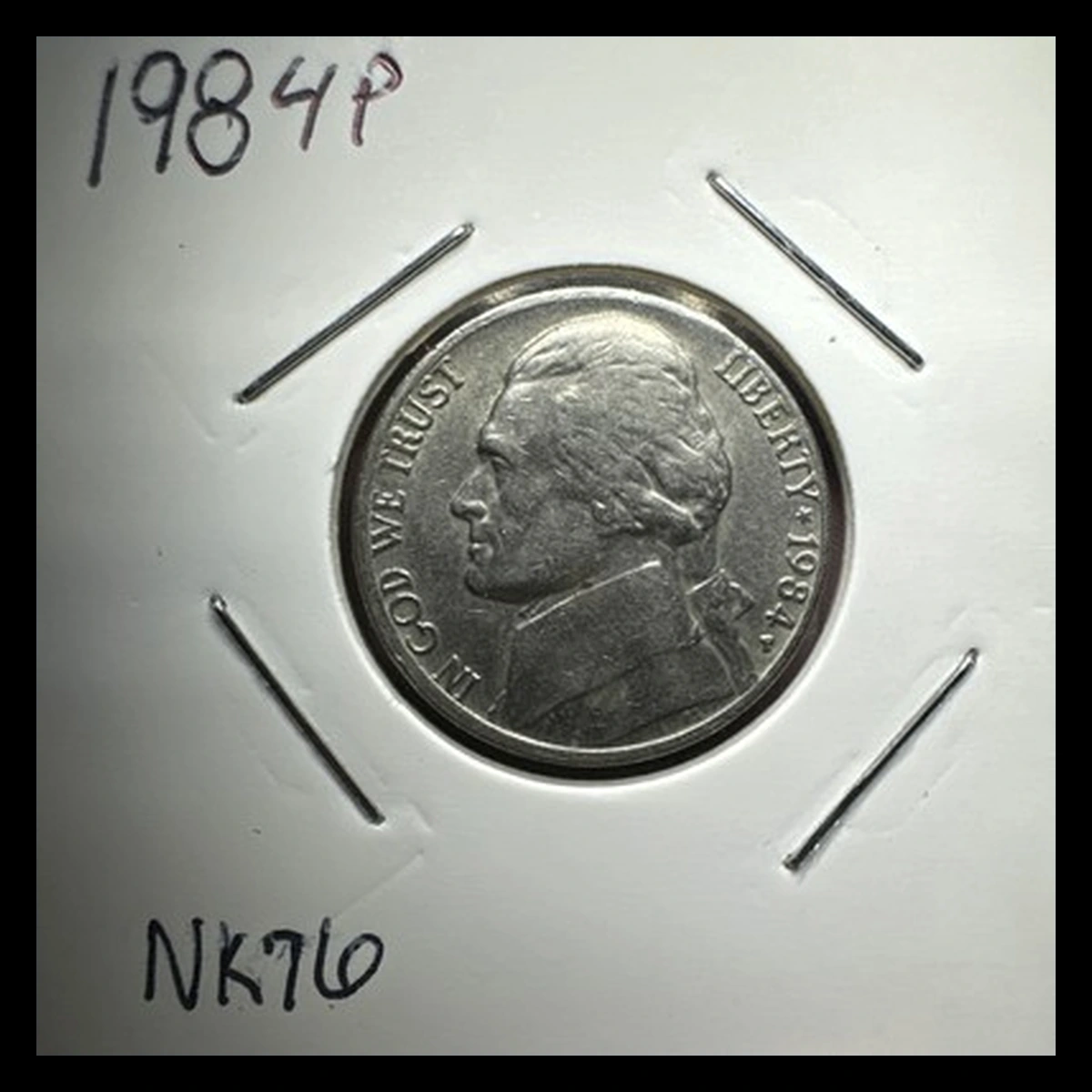
4. 1984 Nickel An M Appears near the Forehead: Die Clash Error
The specialist-described strong single clash transferred an M from MONTICELLO into the open area in front of Jefferson’s forehead. The dies contacted each other without a blank, and subsequent coins copied the transferred mark.
The written entry describes unpolished clash traces but does not identify the mintmark. A separate Philadelphia cud-and-clash group should not supply that missing attribution.
How to Identify
Compare the surviving fragment with the reverse M and its relationship to the portrait. Do not complete an imagined word from unrelated scratches.
Read the actual mintmark and preserve the full face views. Polishing lines are not required on a clash specifically described as remaining unpolished.
What It’s Worth
$20–$150 is estimated for a recognizable clash, with $150–$600 for strong attractive examples. No sale is supplied for the forehead-M specimen.
A 2000-P nickel with clashes on both faces and slight wear brought $408.25 in August 2010. That different-year result provides context rather than a fixed price for this transferred letter.
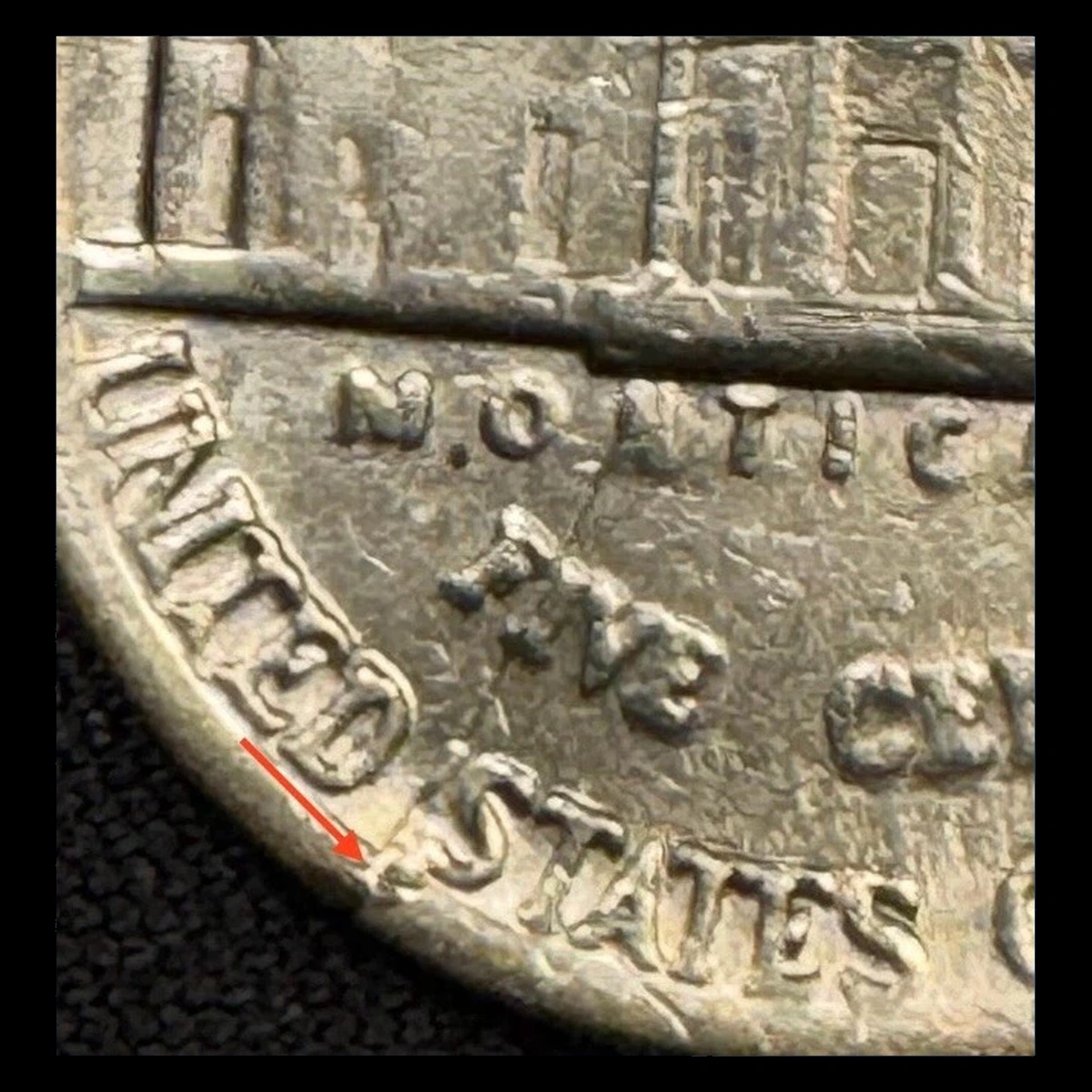
5. 1984 Nickel Raised Patches Join the Rim: Die Break and Cud Error
Several Philadelphia and Denver die-break patterns are recorded for 1984. They include a Philadelphia two-patch example and a separate complex group with front and reverse cuds plus strong clash traces.
A cud forms when an edge section of a die breaks away and metal rises into the vacant area. A reported lower-right front patch is one layout, not the required position for every 1984 cud.
How to Identify
Follow each raised patch to the rim and inspect the adjacent edge for impact damage, added solder or a seam. An isolated interior lump does not satisfy the same rim-break description.
After confirming the mintmark, compare the complete pattern with the 1984 cud catalog photographs. Keep the double-patch example and the complex clash group separate.
What It’s Worth
$25–$150 is estimated for small clear rim breaks, with $150–$700 for dramatic attractive patches or combinations. A PCGS AU58 Philadelphia coin with front and reverse cuds plus clashes sold for $159 in July 2022.
That slight-wear result prices the complete specimen. Multiple patches or catalog labels do not create separate whole-coin amounts to add together.
6. 1984 Nickel A Layer Splits within the Surface: Lamination Error
A thin flap or shallow layered opening can expose weakness inside the copper-nickel alloy. The 1984 reports establish this category without a particular certified specimen’s face or location.
How to Identify
Examine the internal boundary under side lighting and leave attached metal untouched. An added coating or deposit above an intact design differs from a sheet separating within the coin.
Normal nickels are uniform copper-nickel alloy, not a copper core covered with nickel plating. Corrosion and scraping must be distinguished from genuine layered separation.
What It’s Worth
$20–$100 is estimated for small clear laminations, with $100–$400 for larger appealing examples. No specific specimen sale supports a narrower figure here.
Surviving date and design matter alongside the defect. A large missing flap that obscures important detail can be less attractive than a smaller well-preserved separation.
7. 1984 Nickel Dark Gray or Orange-Brown Surfaces: Improper Annealing Error
Reported 1984 examples have unusual color attributed to annealing, the heating stage that prepares blanks for striking. The Black Beauty nickname describes appearance without proving that furnace conditions caused it.
How to Identify
Use neutral light to compare both faces and the edge for corrosion, deposits or later chemical exposure. Preserve the surface rather than polishing the darker areas.
A substantially smaller, lighter coppery coin may have begun on a different blank. Normal dimensions can help separate that question, but cannot establish when color developed.
What It’s Worth
$30–$150 is estimated for genuine circulated annealing errors, with $150–$500 for attractive unworn examples. Those ranges require a mint-made surface change rather than unexplained darkness.
A 2005-D Bison nickel with an improper-annealing description sold for $119 in December 2022. Its different design and date make it a comparison, not a price record for 1984.
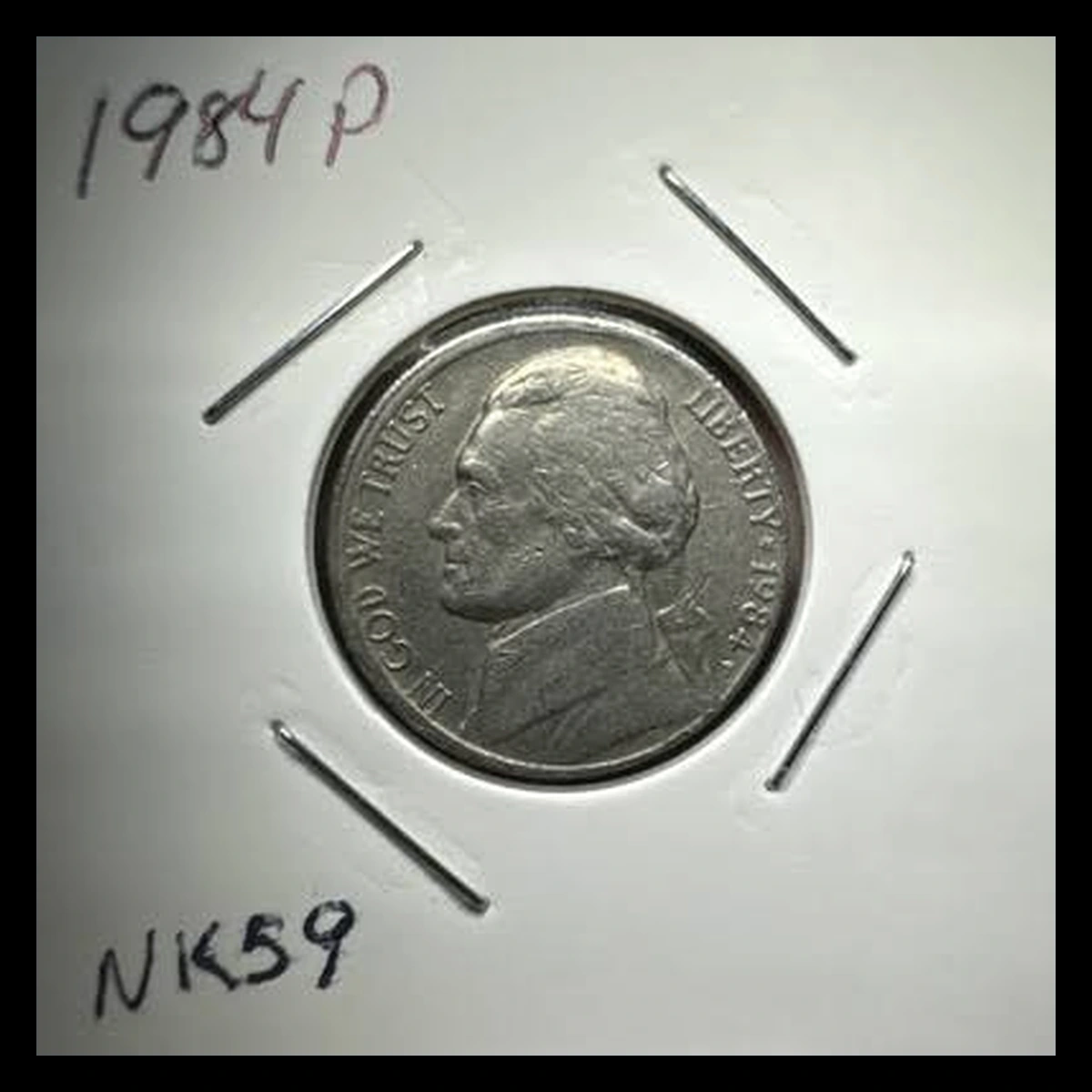
8. 1984 Nickel One Face Sits Closer to the Edge: Misaligned Die Error
The ICG MS62 Philadelphia example has a design displaced relative to its border while the opposite face remains more centered. A die positioned incorrectly can shift one impression without moving the whole blank off center.
How to Identify
Take straight-on photographs and compare the narrowest and widest margins on each face. An angled camera view or damaged rim can create an apparent imbalance.
A loose normal nickel is about 5 grams and 21.21 millimeters across, with a plain edge. Inspect that edge for flattening or pushed-up metal before attributing unequal margins to the press.
What It’s Worth
$10–$75 is estimated for small clear shifts, with $75–$200 for pronounced displacement on attractive coins. The ICG MS62 1984-P sold for $14 in December 2008.
That unworn coin with noticeable marks is a modest direct comparison. The estimate is a whole-coin value, not a premium for any uneven-looking border.
9. 1984 Nickel Full Design Sits within an Expanded Disc: Broadstrike Error
Recorded Philadelphia broadstrikes spread beyond the usual outline when the collar did not contain the blank. A simple example retains all intended design without a separate wrong-planchet or repeat-strike event.
How to Identify
Inspect every outer inscription on both faces and compare the full perimeter with an ordinary nickel. An empty crescent opposite missing design indicates off-center placement rather than a simple broadstrike.
Look for natural outward flow instead of impacts crossing finished details. Later hammering can widen a coin while crushing the portrait and lettering.
What It’s Worth
$20–$100 is estimated for straightforward broadstrikes, with $100–$250 for especially attractive expansion. An ANACS MS64 1984-P sold for $20 in August 2021.
The prices of complex errors on dime blanks should not be transferred to this ordinary nickel-blank category. Complete design and preservation matter more than width alone.
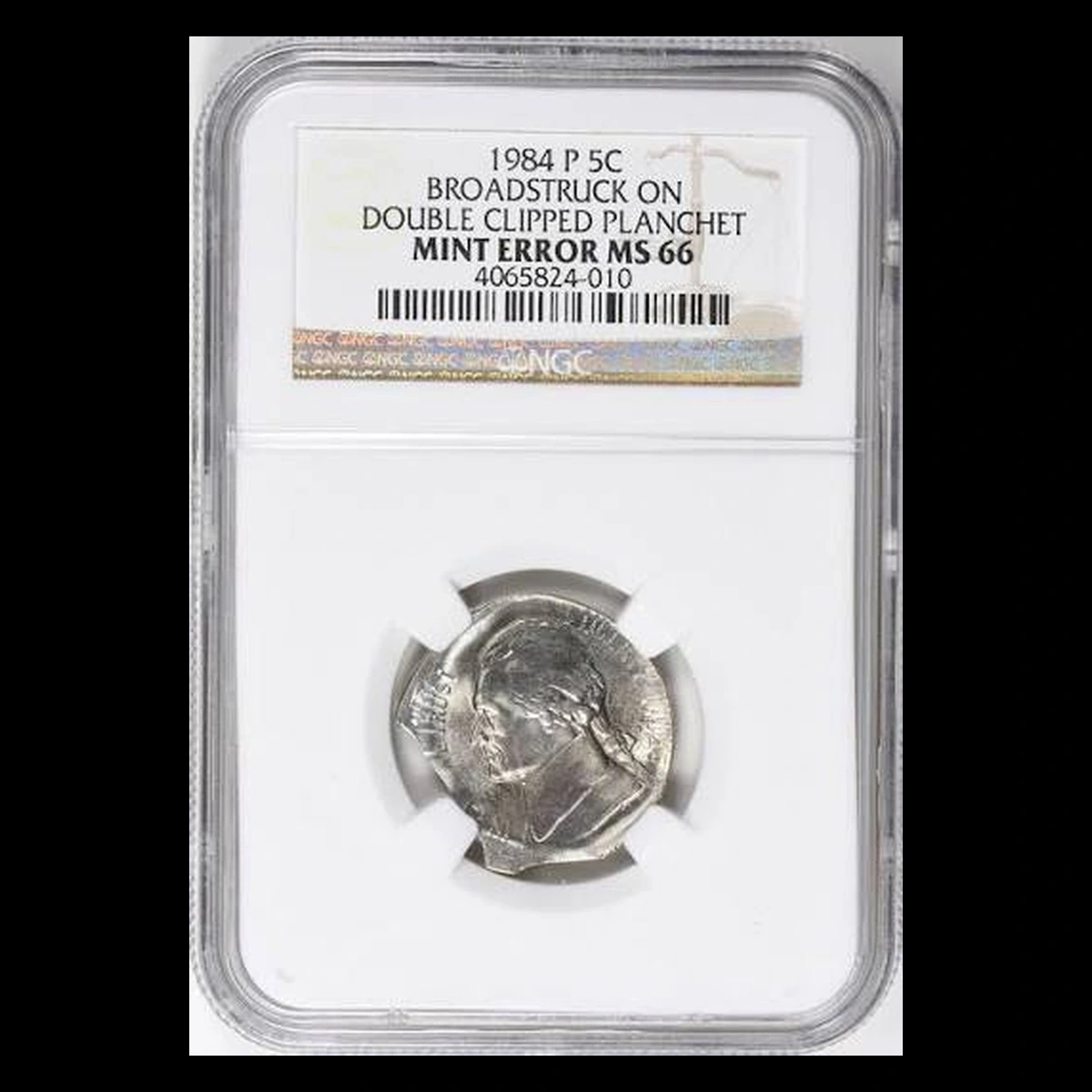
10. 1984 Nickel Two Missing Sections on a Wide Coin: Double Clip and Broadstrike Error
A documented NGC MS66 Philadelphia specimen combines two original clipped areas with broadstrike expansion. The blank was incomplete before striking, then its remaining metal spread without normal collar restraint.
How to Identify
Examine each gap’s endpoints and nearby design for original striking effects rather than sawing or filing. Check the expanded perimeter and high points separately for later hammering.
The coin can be wider yet lighter than normal because spreading does not replace the metal lost from the blank. Opposite-rim weakness may support a clip, but it need not be clear at every gap.
What It’s Worth
$75–$250 is estimated for clear combinations with ordinary preservation, rising to $250–$600 for striking attractive pieces. The recorded MS66 1984-P sold for $156 in July 2021.
That figure covers both clips and the broadstrike on one coin. Two missing sections do not automatically make it worth twice a single clip.
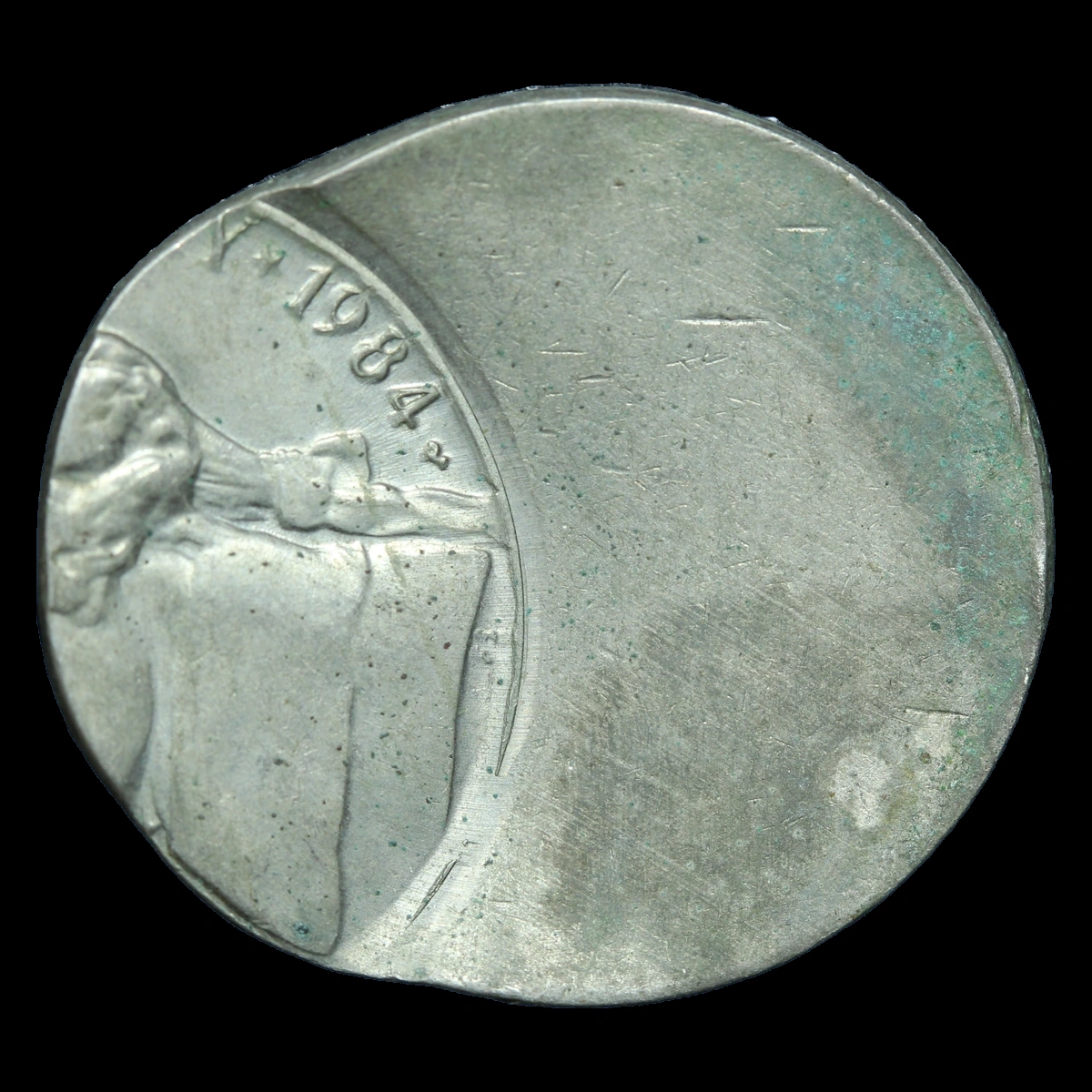
11. 1984 Nickel Displaced or Elongated Design beside Bare Metal: Off-Center and Stretch Strike Error
One Philadelphia example is about 50% off center toward eleven o’clock. Another combines an 80% off-center strike with stretched design in its small struck portion.
The bare area remains part of the blank, while some intended design missed the metal. The stretch specimen’s elongated detail adds a separate visible characteristic to its displacement.
How to Identify
Orient the portrait and surviving date, then compare both faces for corresponding struck and unstruck areas. Keep the fifty-percent coin’s eleven-o’clock direction with that specimen.
Follow the elongated detail on the stretch strike to distinguish metal movement during striking from a later bend, scrape or flattening. Its 80% figure does not describe an unrelated off-center second strike.
What It’s Worth
$75–$300 is estimated for ordinary dramatic off-center coins, with $300–$1,000 for unusually attractive stretched or strongly displaced examples. The 50% coin sold for $132 in March 2021, and the 80% stretch strike brought $168 in May 2021.
Both recorded examples had unworn grades. Readable dates and original bare surfaces influence comparisons alongside the displacement.
12. 1984 Nickel A Recessed Mirror Image with a Changed Edge: Brockage Error
Philadelphia examples include front brockage with a partial collar, one described as about 20% affected. A separate expanded front-brockage coin has no mintmark established in its supplied listing.
A brockage comes from a struck coin pressing its raised design into another blank. The partial collar or broadstrike describes how the blank’s edge was restrained during that event.
How to Identify
Confirm that the unusual image is both backward and sunk into the metal. Later pressure between finished coins must be distinguished from a genuine press event.
View the edge for a step on the partial-collar form, or wider spreading on the broadstrike. A nickel normally has a plain edge, so neither diagnosis requires reeds.
What It’s Worth
$50–$400 is estimated for clear partial examples, reaching $400–$1,500 for dramatic attractive combinations. The PCGS AU55 20% partial-collar coin sold for $57 in October 2022; the expanded front brockage brought $336 in June 2025.
The latter specimen’s Full Steps designation describes sharp Monticello steps rather than another error. Each result prices the complete coin.
13. 1984 Nickel Extra Impressions Cross or Change Faces: Multiple and Flipover Strike Error
Philadelphia records include later strikes 95% or 75% off center, repeated strikes on expanded discs, and coins that flipped between blows. An in-collar flip remained within the edge-controlling ring, while another flip’s second blow was 80% off center.
On the 80% flip, a fresh blank blocked one die during the later strike. The 75% example separately has recorded reverse damage.
How to Identify
Trace surviving impressions on each face and look for opposite-face details that support a flip. A coin can retain a nearly normal diameter when the extra blow occurred inside the collar.
The 80% flip’s later strike runs toward seven o’clock, crossing earlier E PLURIBUS UNUM and including parts of IN GOD WE TRUST. The blocking blank distorted the earlier front where it contacted the coin, a sequence specific to that example.
What It’s Worth
$75–$600 is estimated for clear multiple strikes, with $600–$2,000 for outstanding combinations. The NGC MS66 in-collar flip sold for $480 in September 2024.
The 80% flip brought $86.25 in April 2002, and the 95% second strike sold for $99 in May 2021. These different layouts and conditions should not be priced by adding a fixed amount for each blow.
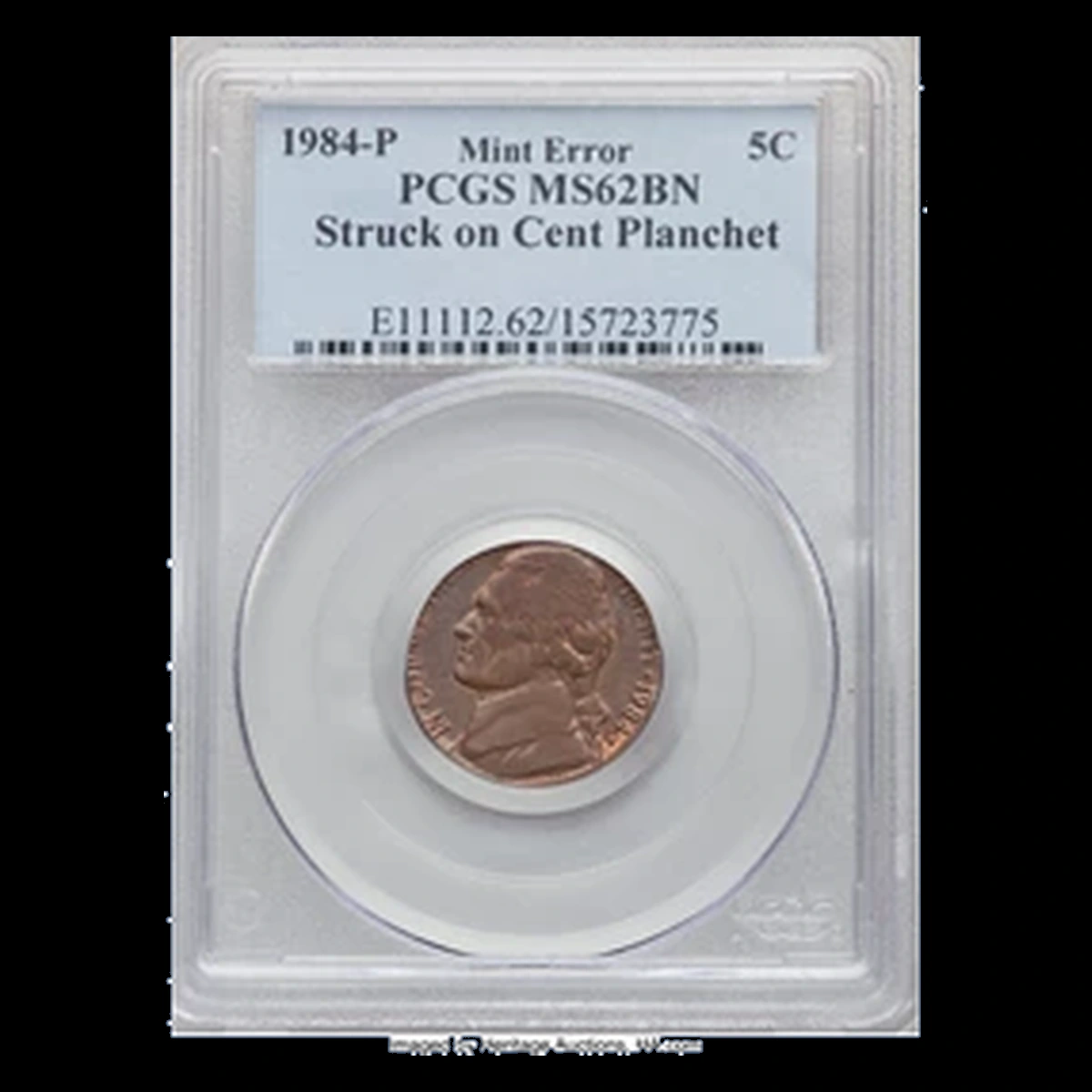
14. 1984 Nickel The Nickel Design Outgrows a Copper-Colored Disc: Cent Planchet Error
The PCGS MS62 Brown Philadelphia example received a nickel design on an unused cent blank. The smaller disc could not accommodate all the outer nickel detail.
The supplied catalog gives no measured weight or cent alloy. Brown describes color and cannot settle the blank’s composition.
How to Identify
Record actual measurements instead of selecting an alloy from appearance: zinc cents normally weigh 2.50 grams, while older copper-alloy cents weigh 3.11 grams. A cent blank begins at 19.05 millimeters, though the later nickel strike can spread it.
Inspect the incomplete outer lettering and edge for filing, acid damage or added copper coating. Search independently for lower Lincoln detail, which would indicate a previously struck cent rather than this unused-blank category.
What It’s Worth
$300–$1,000 is estimated for clear genuine cent-planchet nickels, with $1,000–$2,000 for exceptional preservation or presentation. The PCGS MS62 Brown 1984-P sold for $528 in August 2020.
That price belongs to the recorded specimen without establishing an unspecified alloy. Brown color alone cannot justify a rarer-metal claim.
15. 1984 Nickel Lincoln Cent Detail Survives underneath: Double Denomination Error
A separate Philadelphia coin preserves parts of an earlier Lincoln cent design beneath Jefferson and Monticello. Nickel dies struck an already finished cent, leaving two denominations on one piece.
The recorded coin is PCGS MS65 Red and Brown. Its supplied description does not establish a readable host-cent date.
How to Identify
Locate an unmistakable Lincoln or Memorial feature and follow it beneath the later design. Copper color without lower design cannot demonstrate this sequence.
Keep the later 1984 nickel date separate from the unidentified host year. Appropriate cent weight and edge checks should agree with one overstruck object rather than joined pieces or added material.
What It’s Worth
$400–$1,200 is estimated for readable examples with ordinary unworn preservation, with $1,200–$2,500 for especially attractive combinations. The PCGS MS65 Red and Brown overstrike sold for $780 in September 2017.
Strong lower design makes the production sequence easier to display. The recorded result and estimated upper range do not depend on adding the two face values.
16. 1984 Nickel A Small Dime Blank Receives Nickel Strikes: Wrong Planchet Combinations Error
Philadelphia records include a 2.29-gram single strike, a 2.3-gram blank scratched before striking, and a 2.3-gram double strike with its second blow about 60% off center. A fourth specimen combines broadstrike expansion with a front indent.
On the indented coin, another blank about 90% off position prevented normal collar engagement. That percentage describes the obstruction, not a 90% off-center strike of the dime blank itself.
How to Identify
A dime blank starts near 17.91 millimeters and about 2.27 grams, with layered metal; the nickel strike may enlarge it. Reeds are unnecessary because the blank did not receive a normal dime strike in its own collar.
The double strike’s first impression leans slightly toward ten o’clock, while the later blow is toward seven on the coin, or nine relative to the first design. Keep those directions with that specimen.
The broadstrike’s front indent lies from ten to twelve o’clock, with the obstruction described as probably a nickel blank rather than positively identified. On the pre-scratched specimen, inspect how the strike crosses existing scratches instead of assuming they were added afterward.
What It’s Worth
$400–$1,200 is estimated for simpler dime-planchet errors, with $1,200–$4,000 for outstanding combinations. The double strike brought $1,495 in August 2010, and the expanded indent brought $1,063.75 that month.
The 2.29-gram single strike sold for $833.75 in January 2011, while the pre-scratched blank brought $528 in October 2021. Each amount includes the complete coin and all its features.
Conclusion
The same missing detail can lead to very different questions about a 1984 nickel. Determine whether it failed to form, fell beyond a smaller blank or was covered by a later impression before selecting a comparison.
Keep each specimen’s weight, mint, strike direction and condition together. That discipline prevents a simple broadstrike from borrowing a wrong-planchet price, or an unused cent blank from being mistaken for an overstruck Lincoln cent.