Rare 1968 Nickel Errors (List & Pictures)
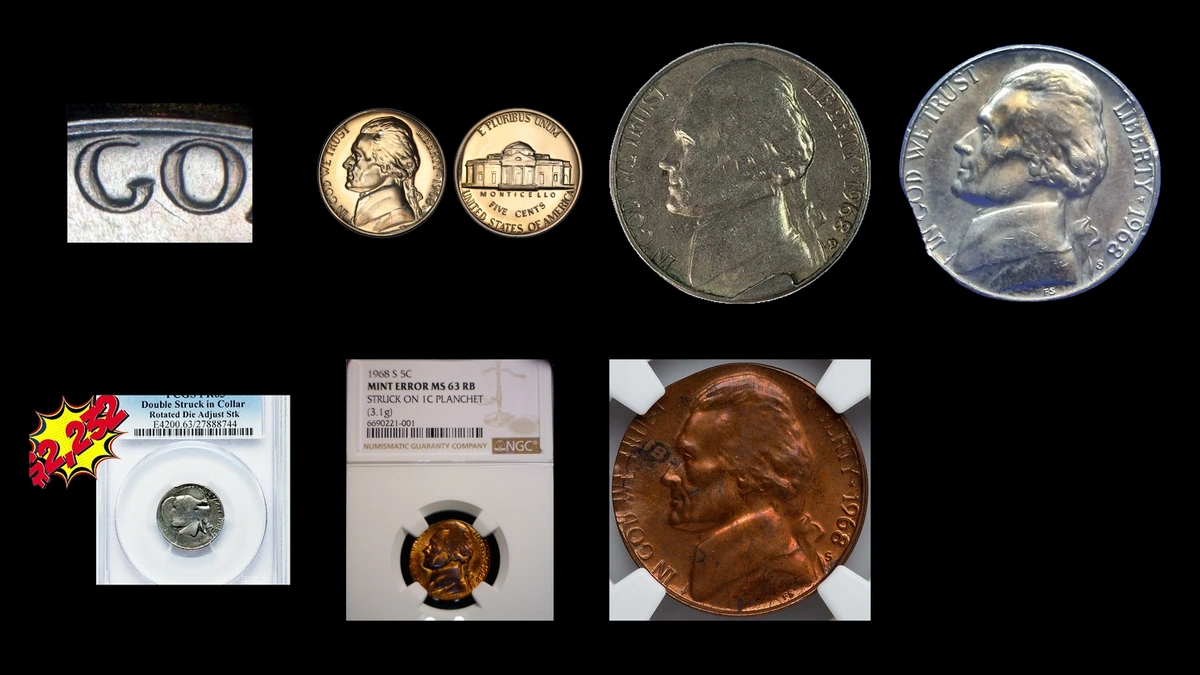
An S mintmark does not automatically make a 1968 nickel a Proof: San Francisco made ordinary coins too. One ordinary S nickel struck over a finished S cent brought $3,737.50 in August 2010.
The 1968 nickel errors below span about $20–$7,000. Start by separating ordinary and collector finishes, then examine extra outlines, changed surfaces, and signs of a second coin underneath.
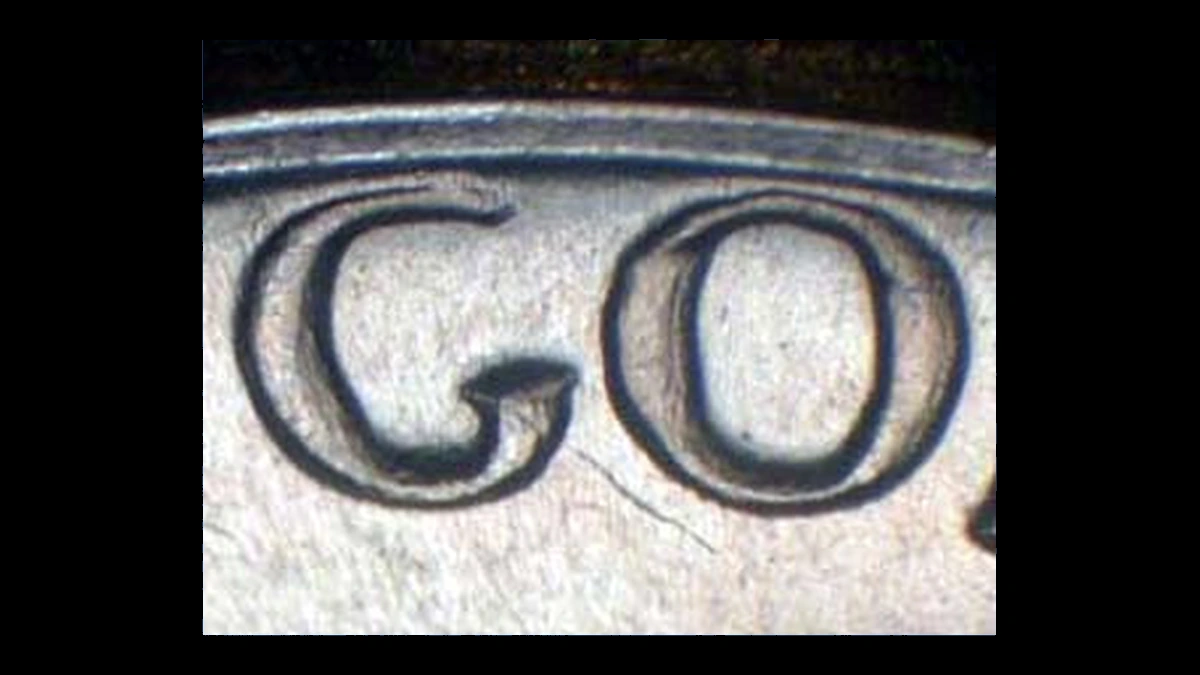
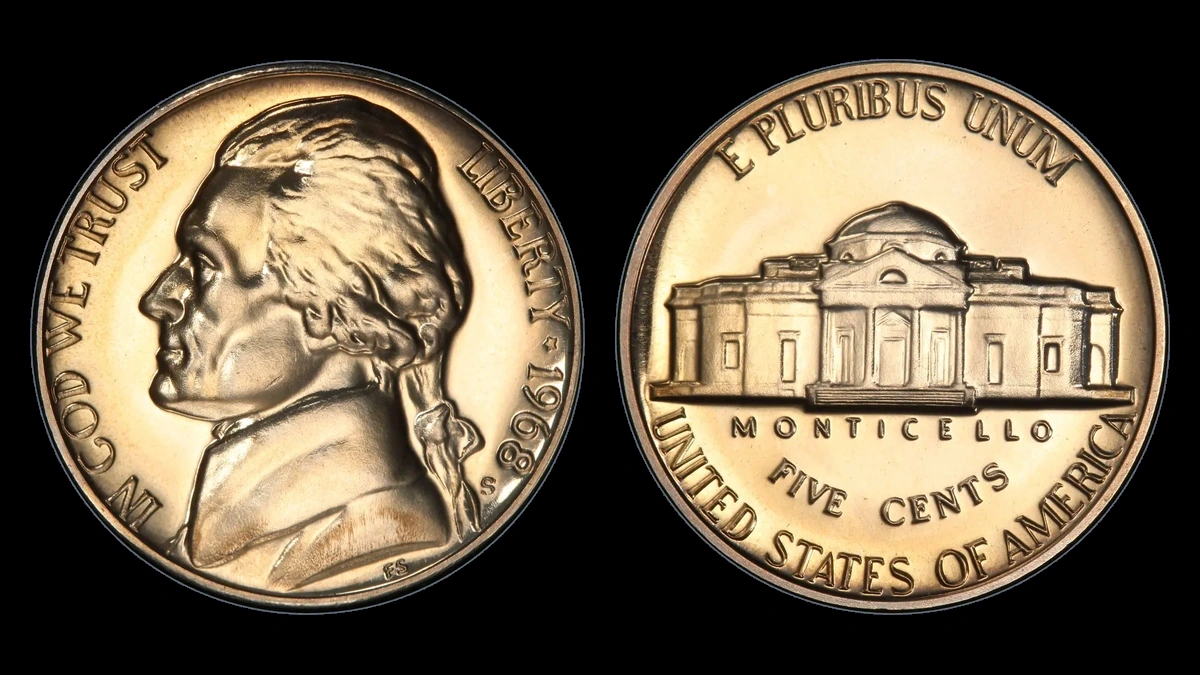
1. 1968 Nickel Extra Letter Outlines from Doubled Dies Error
Denver examples can show repeated detail in LIBERTY, the date, motto, star, or FS designer initials. S Proofs have separate front and back patterns, including some with tripled outlines.
The doubling began on the die, which is the tool that stamps the design. Ordinary S doubling is also reported, but a Proof photograph cannot establish that different category.
How to Identify
Sort the coin as D ordinary, S ordinary, or S Proof before choosing comparison photographs. Study several connected details rather than one thick letter.
On the back, compare the motto, country name, and Monticello together. If both faces show doubling, match each separately because a front die could be paired with different backs.
A flat shelf beside a letter may come from movement during striking. Here the small FS below the portrait names Felix Schlag; it is not a claim about Monticello’s steps.
What It’s Worth
$20–$1,200 covers minor matched examples around $20–$200 and stronger attractive pieces around $200–$1,200. The figures span several patterns rather than one shared variety.
No single auction record prices all these reports. Proof preservation, visible separation, and a correct match matter, and doubling on both faces still belongs to one coin.
2. 1968 Nickel An Earlier D or S from a Repunched Mintmark Error
A shifted or tilted mintmark punch can leave part of an earlier letter on the die. Denver examples include extra D impressions toward the top or left, while S Proofs have several distinct earlier S outlines.
FS-501 is the catalog name of a recognized S Proof variety. Similar-looking directions do not make every repunched S an FS-501.
How to Identify
Find the mintmark below the date and trace its entire shape with a magnifier. Look for a curved part of the earlier letter, not simply a bright nick beside it.
Match both the direction and the surviving outline to the correct variety image. Preserve Proof surfaces while taking close-ups, since fingerprints and scratches can hide tiny details.
What It’s Worth
$20–$2,500 spans minor Denver examples around $20–$200 and S Proof pieces around $75–$2,500. Strong identification and attractive collector surfaces are necessary for the upper range.
An FS-501 graded PR67 brought $1,705 at GreatCollections in April 2014, according to PCGS. A worn ordinary S nickel or another S pattern should not inherit that result.
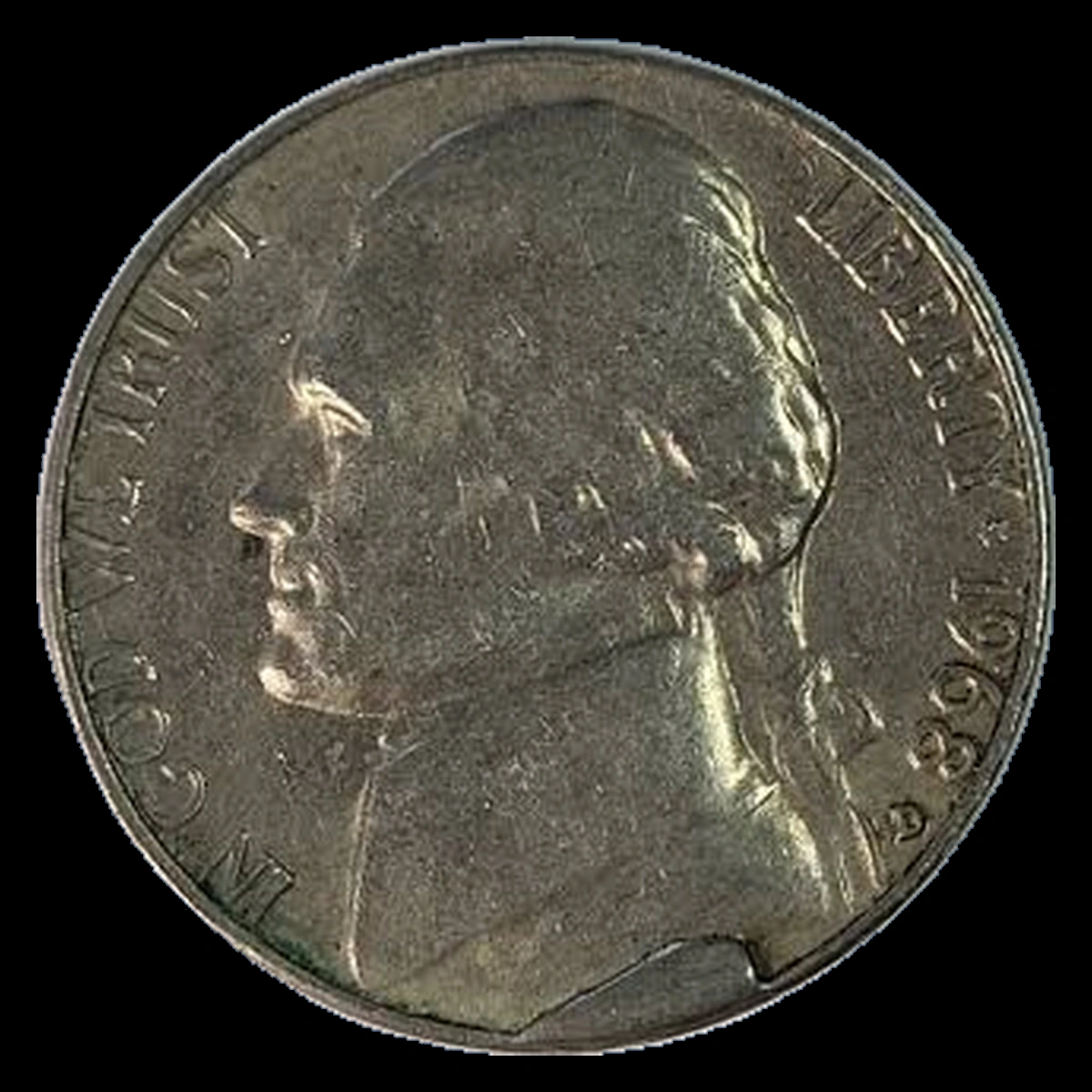
3. 1968 Nickel A Raised Step below Jefferson Error
An illustrated 1968-D nickel has a small platform beneath the portrait, carrying its lower border and FS initials. An angled view makes the change in height easier to see.
The feature has been called a retained cud, but specialist Mike Diamond proposed deformation beneath a die crack instead. The step is visible; a fully detached die fragment is not established.
How to Identify
Light the lower portrait from the side and compare the platform with the main portrait surface. Follow the boundary without pressing or scraping it.
Check for a seam around added metal or an edge impact that pushed the finished surface upward. The published angled study provides the visible pattern to match.
What It’s Worth
$50–$500 is the estimate for a clear example of the documented stepped pattern. It prices the visible defect without requiring one disputed explanation of the die’s interior.
A 1972-D nickel with a large die break sold for $94 in July 2021. That related comparison has a different break shape and does not establish this 1968-D coin’s sale price.
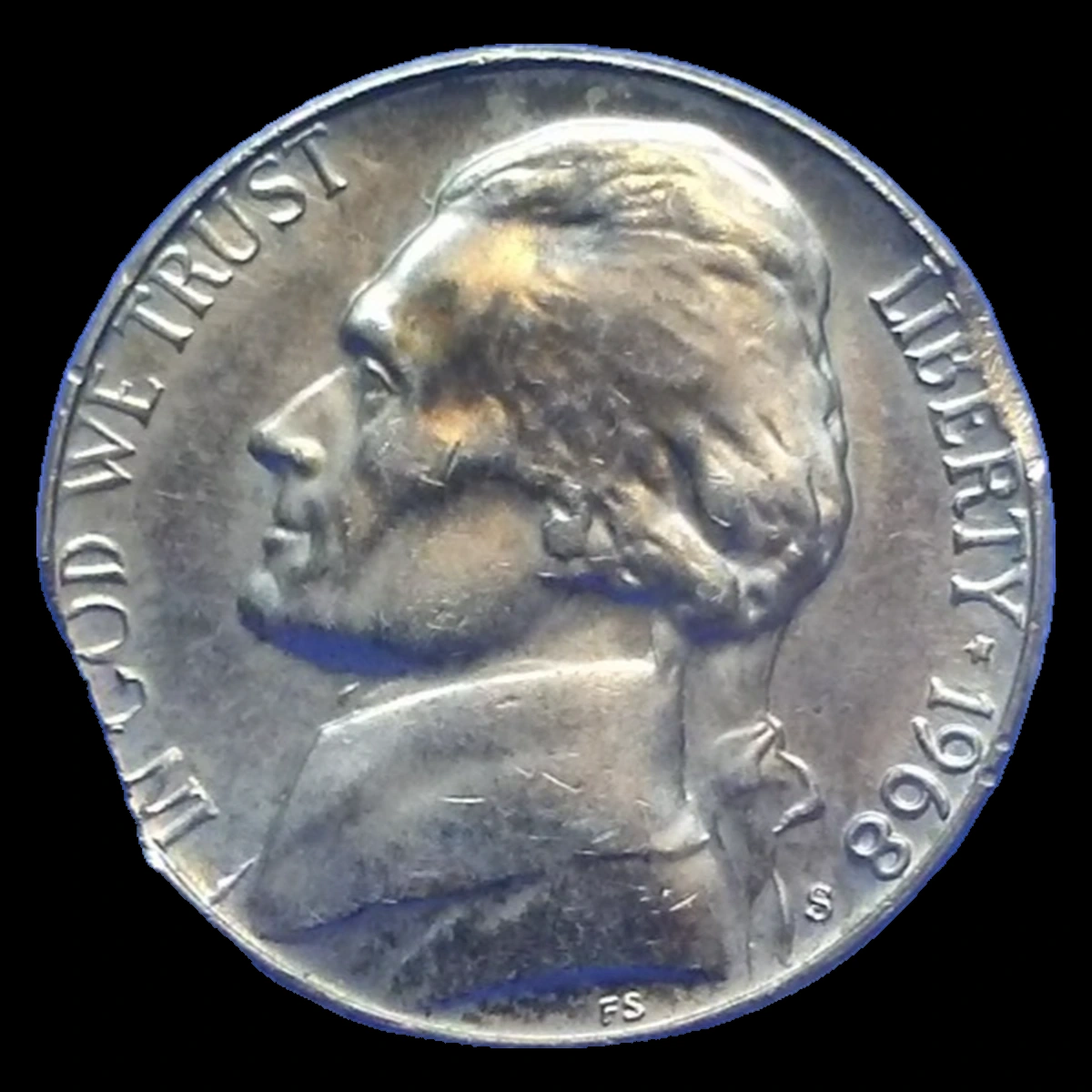
4. 1968 Nickel A Small Curved Clip in the Edge Error
A Denver example with an approximately 5% clip appeared in a Mint Set. A separate ordinary S nickel has a roughly 5% clip near ten o’clock.
The blank was already incomplete when it received the design. The S example’s location should not be assigned to the Denver coin.
How to Identify
Examine the opening’s two ends for metal flow and check the opposite rim for possible weakness. Saw marks or a cut through finished lettering suggest later removal.
A normal nickel weighs about 5 grams and measures 21.21 mm across, with a plain edge. Measure a loose coin only; an intact Mint Set need not be opened just to force a weight check.
What It’s Worth
$20–$200 is the estimate for genuine small 1968 clips. A readable date, mintmark, and original gap make a useful comparison.
The Denver coin appeared in a five-coin Mint Set lot that sold for $126.50 in August 2010. That is the group’s price, while a separate 1997-P nickel with a larger 20% clip sold for $124 in March 2025.
5. 1968 Nickel Overlapping Designs from Repeated Strikes Error
A Denver triple strike received blows about 35%, 80%, and 75% off center. Another blank entered before the third blow, leaving a large hollow on the front.
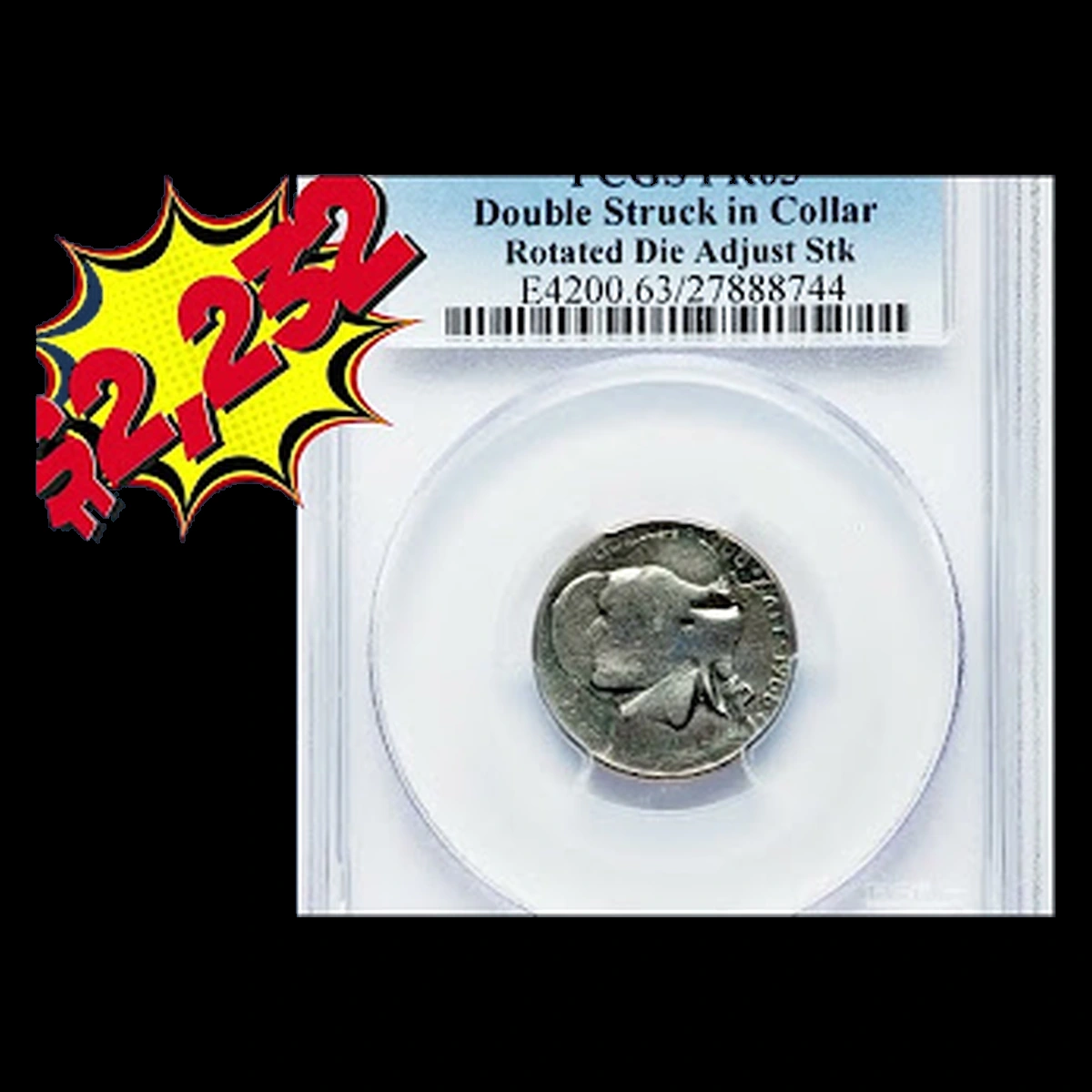
Separate S Proofs include one with two expanded strikes and another with a weak double strike turned about 90 degrees within the collar. The latter was described as a press-adjustment piece.
How to Identify
On the Denver specimen, locate the original date near TRUST from the second impression, with the D still visible. Follow each design position and the hollow made by the additional blank.
The Proofs need their own photographs: an expanded outline differs from weak rotated impressions confined within the collar. Weakness alone cannot demonstrate a setup operation.
What It’s Worth
$500–$4,000 covers dramatic ordinary repeated strikes at about $500–$1,500 and comparable S Proof errors at $1,000–$4,000. The Denver triple strike sold for $1,150 in May 2008.
The Proof with two expanded strikes brought $1,840 in September 2010, and the separate rotated weak double strike sold for $2,232.50 in August 2017. Each amount prices one complete coin, including its combined features.
6. 1968 Nickel A Smaller Copper Disk from a Cent Blank Error
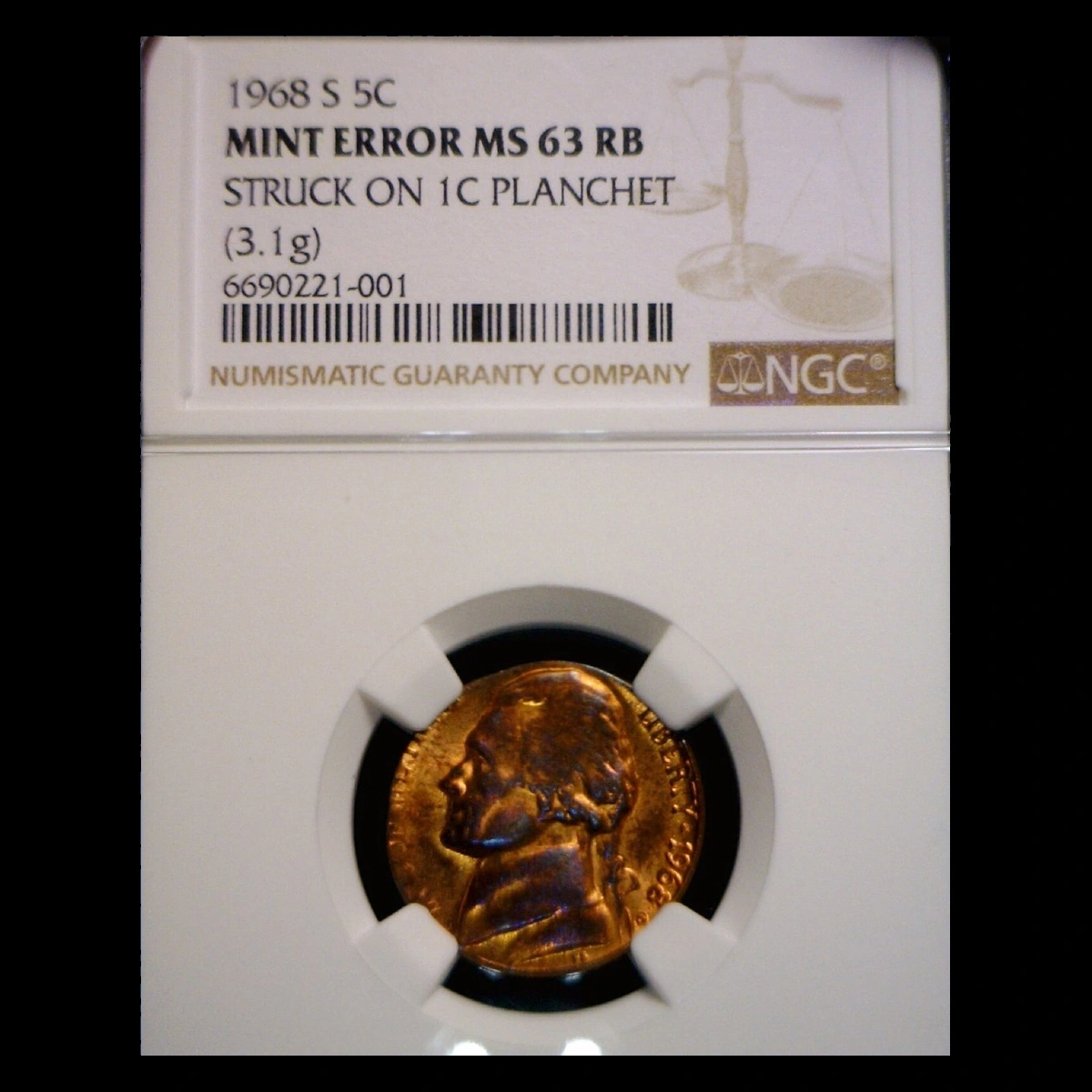
Nickel designs appear on copper blanks intended for cents in both Denver and ordinary S examples. A separate S Proof was also struck on a cent blank.
The smaller disk cannot hold the entire nickel design. Because it was unused before that strike, it does not need an earlier Lincoln portrait or cent date.
How to Identify
Compare a loose coin with period cent standards of about 3.11 grams and 19.05 mm, allowing for spreading. Follow the outer nickel lettering into the smaller boundary.
Inspect the edge for plating or filing, since color alone proves little. Then separate ordinary S from S Proof surfaces; polishing adds shine but does not create original Proof preparation.
What It’s Worth
$200–$5,000 includes ordinary pieces around $200–$1,000 and S Proofs around $2,000–$5,000. An ordinary S MS65 example sold for $480 in September 2024.
The S Proof PR66 Red coin brought $2,640 in May 2022. A Denver example with slight wear sold for $218.50 in August 2009, providing a separate ordinary-strike comparison.
7. 1968 Nickel Lincoln Details beneath a Nickel Overstrike Error
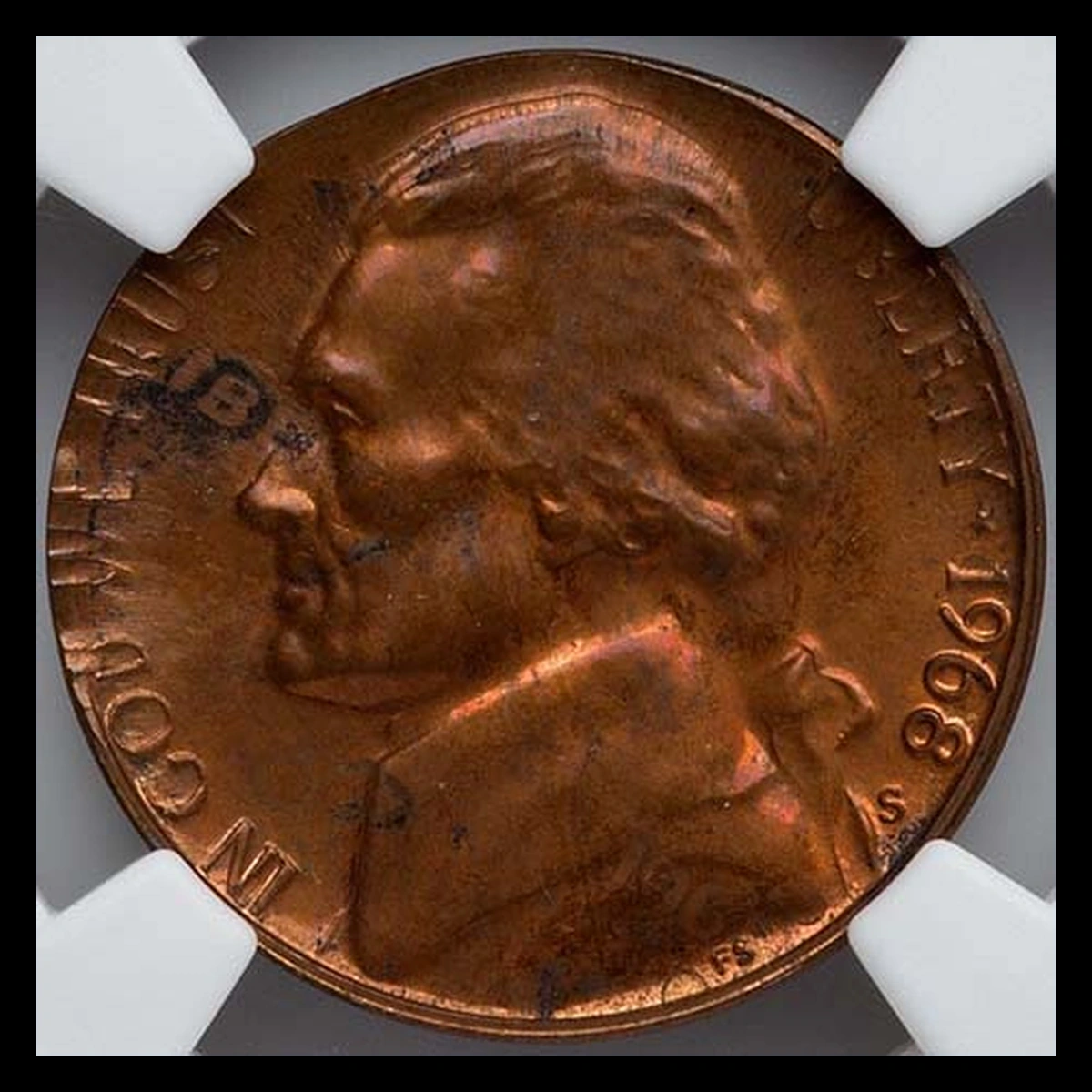
A finished 1968 Lincoln cent received the 1968-S nickel design, leaving evidence of both denominations. One example shows two dates, repeated LIBERTY, and Memorial outlines.
On that MS63 specimen, the nickel design turns more than 90 degrees clockwise relative to the cent. A separate highly preserved example is specifically recorded over a 1968-S cent.
How to Identify
Trace the earlier cent letters before estimating the angle between designs. Several recognizable features provide better evidence than an isolated scratch or copper color.
The MS63 auction description identifies a 1968-dated cent. Do not give every host cent an S merely because the later nickel carries that mintmark.
What It’s Worth
$800–$7,000 is the estimated range for authenticated examples. The PCGS MS63 Red specimen brought $1,265 in July 2002.
An NGC MS67 Red example over a 1968-S cent sold for $3,737.50 in August 2010. An MS67 Red example described with that host type later brought $3,600 in July 2022.
Preservation and readable older designs help explain the difference from the lower-grade coin. These are whole-object prices, not separate nickel and cent values to combine.
8. 1968 Nickel Reported Brockage Involving a Costa Rican Coin Error
Ken Potter reported a 1968-S Jefferson nickel brockaged over a Costa Rican five-centimos coin. Brockage is a recessed, backward design transferred through contact with another struck coin.
This involves a finished foreign coin, rather than merely an unused foreign blank. The brief report does not establish the host date, exact face arrangement, or nickel finish.
How to Identify
Photograph both faces and identify surviving Costa Rican design before reconstructing the sequence. Separate sunken reversed traces from ordinary raised overstruck detail.
Record weight and dimensions, and check the edge for later squeezing or joined pieces. Leave the unknown date and finish unassigned unless the actual specimen supports them.
What It’s Worth
$1,500–$6,000 is the estimate for an authenticated example matching this unusual combination. The PCGS-published auction report records $2,070 for the 1968-S error involving a Costa Rican five-centimos coin.
Readable foreign design and preservation affect a modern comparison. The range does not apply automatically to any nickel on a foreign blank or any coin with a depressed mark.
Conclusion
For 1968, establish the finish before using a price comparison: an ordinary S and an S Proof can share a mintmark but have very different markets. Small repeated details also need their own exact pattern.
On copper-colored or overlapping pieces, search for an earlier coin’s readable design. That evidence separates a cent blank from a finished cent used again and helps keep unusual foreign-coin reports accurately described.