Rare 1813 Penny Errors (List & Pictures)
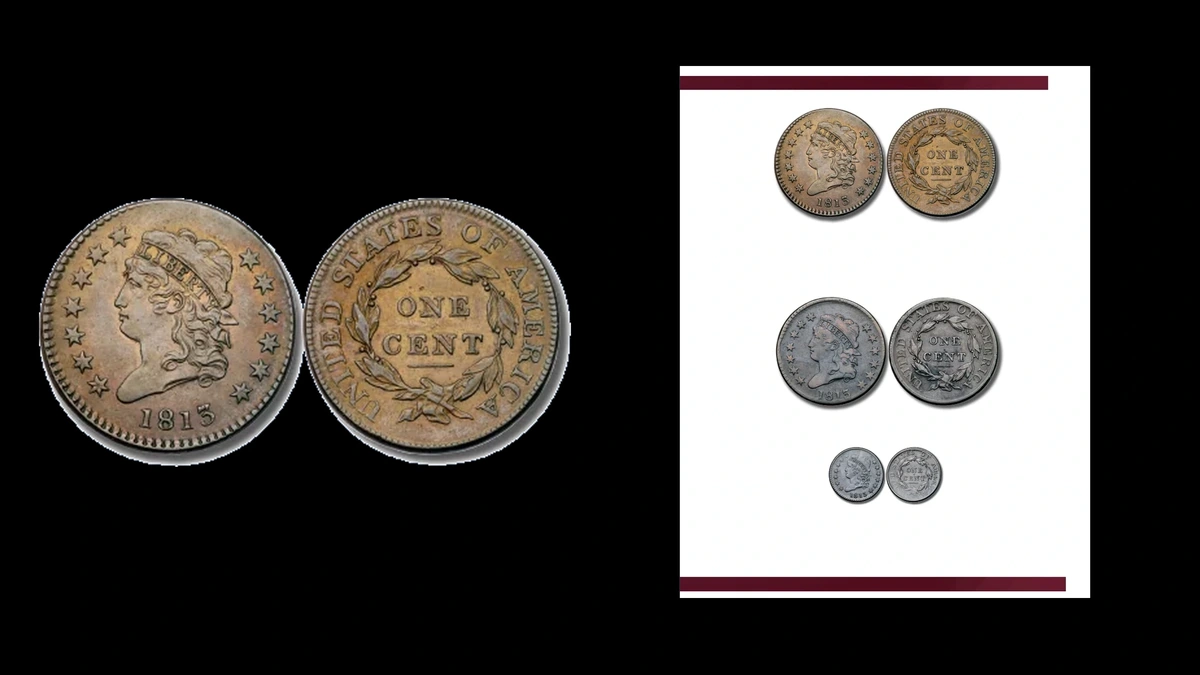
Three kinds of lines can appear on 1813 penny errors: a raised die-crack ridge, a transferred design fragment or an opening in the copper itself. Estimated whole-coin values for this Classic Head cent guide span $75–$10,000.
An exceptionally preserved 1818 cent with circular die cracks brought $8,700 in August 2020, a different-year comparison strongly influenced by quality. Begin by deciding whether a feature is raised, recessed or physically split before comparing alignment and repeated designs.
| Clue | Type | Estimated whole-coin value |
|---|---|---|
| A narrow ridge above the surface | Die crack | $75–$700 |
| Faint curves near a wreath berry | Die clash | $100–$1,500 |
| A slightly displaced front border | Misaligned die | $100–$900 |
| A thin layer separates | Lamination | $100–$1,200 |
| The copper itself opens | Cracked planchet | $150–$1,800 |
| Bare copper beside displaced design | Off-center strike | $300–$4,000 |
| A complete recessed mirror image | Full brockage | $1,500–$10,000 |
1. 1813 Penny A Thin Ridge Stands above the Copper: Die Crack Error
A die crack is a fracture in the steel striking tool that allows copper to enter the opening during a blow. It can leave a raised line without splitting the coin’s own metal.
The 1813 year material and a catalog heading mention cracks without establishing a dependable path for the reported feature. An individual specimen therefore needs its own visible evidence.
How to Identify
Use light from opposite directions to establish whether the line’s center is raised. A scratch may have bright raised edges while its actual floor remains cut into the surface.
Follow the line toward the edge and check whether it becomes an opening through the copper. That would raise a cracked-planchet question rather than simply documenting a ridge from a damaged die.
What It’s Worth
$75–$250 is a conditional estimate for genuine cracks on worn cents, with $250–$700 for sharper examples. These figures include the underlying collectible cent, and a minor crack may add little by itself.
An exceptionally preserved 1818 cent with circular cracks sold for $8,700 in August 2020. Its quality and different date make it a poor direct price match for an ordinary worn 1813 crack.
2. 1813 Penny Faint Curves near the Berry above N: Die Clash Error
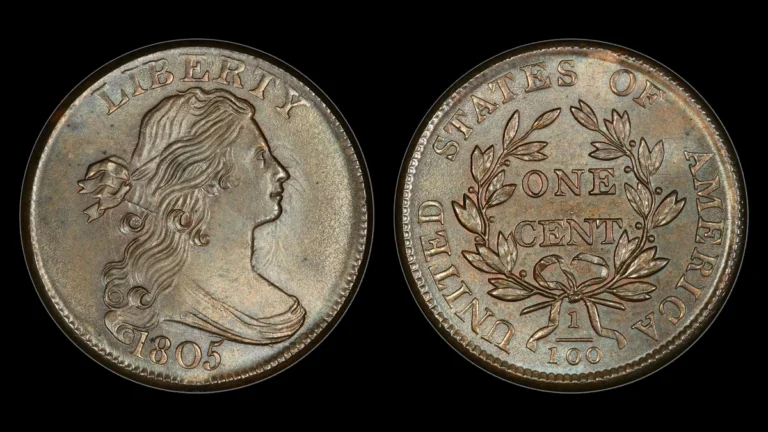
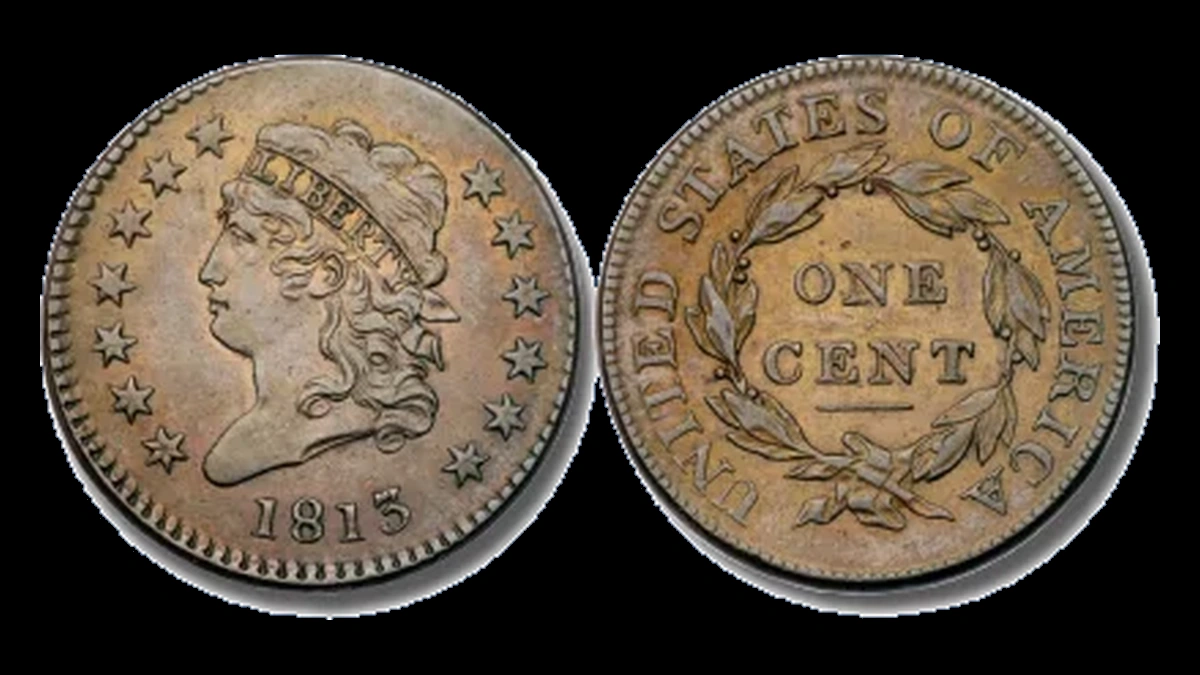
A cataloged 1813 cent has its clearest clash traces near the berry above N in ONE. Contact between the dies without a blank transferred fragments of the opposing design, which then appeared on coins struck afterward.
The same coin has three fine scratches above CENT and a slight front misalignment. Those are separate features, and the scratches should not become evidence of the clash.
How to Identify
Use the berry and main lettering to orient the suspected curves before comparing them with the obverse design. The 2026 Early Cents Auctions catalog provides the specimen-specific location.
Separate cut grooves above CENT from shallow transferred relief near the berry. Several connected design fragments offer stronger evidence than isolated bright lines.
What It’s Worth
$100–$450 is estimated for worn cents with recognizable clashes, increasing to $450–$1,500 for sharper examples. These are whole-coin values rather than prices for individual traces.
The cataloged coin’s misalignment and later scratches belong in the same assessment. No separate completed sale amount is supplied for its clash feature.
3. 1813 Penny The Front Design Leans toward One O’Clock: Misaligned Die Error
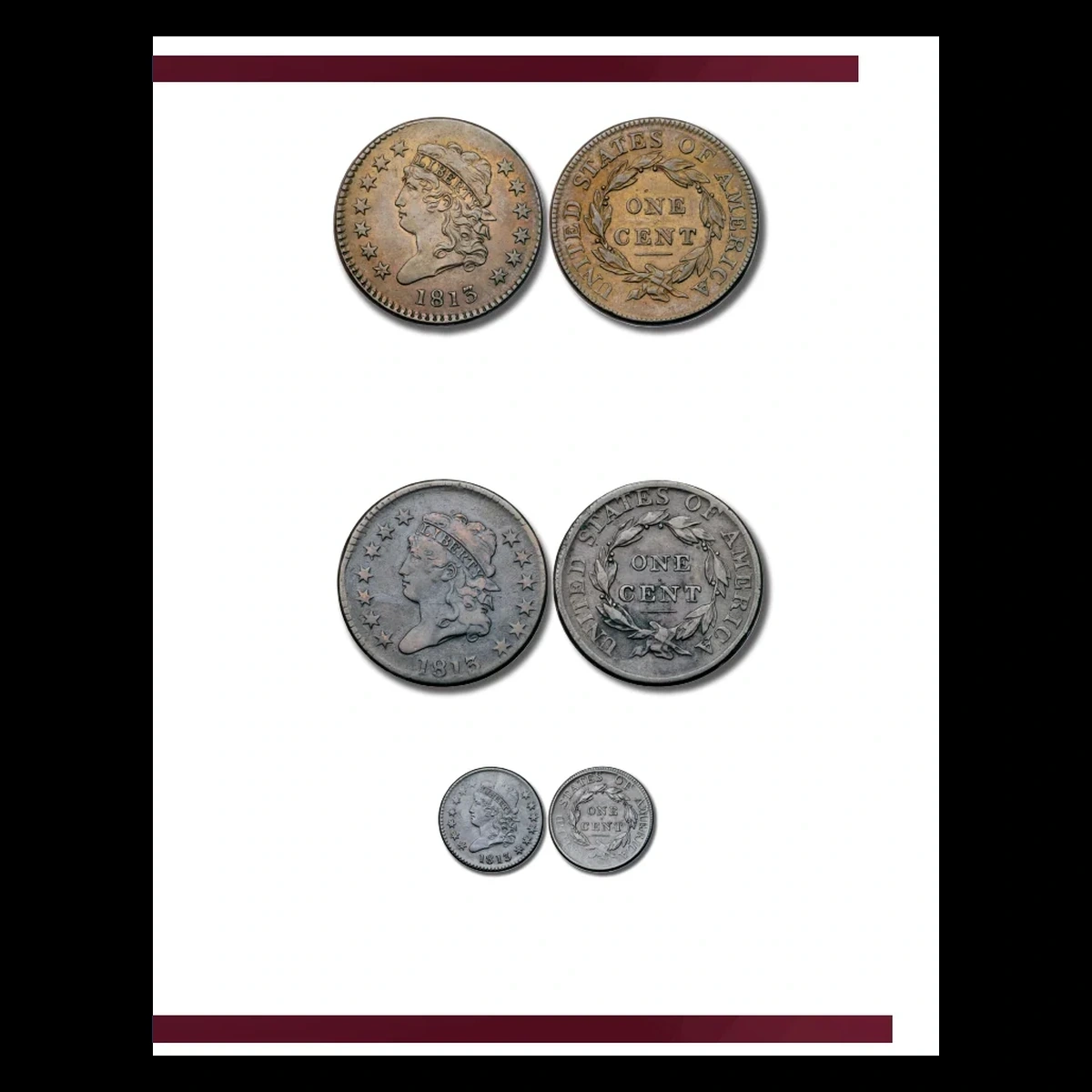
The 2026 catalog describes that same cent’s obverse die as slightly shifted toward one o’clock, or upper right with Liberty upright. A misplaced die can narrow one border while the blank itself remains in its usual position.
How to Identify
Compare both full faces instead of judging a cropped portrait. One shifted design differs from a displaced blank that loses portions of both impressions and leaves unstruck copper.
Inspect the narrow front rim for later flattening or an impact that pushed metal inward. Straight-on photographs help distinguish actual alignment from a sloping camera view.
What It’s Worth
$100–$350 is estimated for a clearly matched worn example, with $350–$900 for a sharper cent. A slight shift can contribute less to value than the copper’s preservation.
The catalog assesses its coin as VF35, a descriptive moderate-wear grade rather than an established grading-service certification. The clash and shifted border should not each receive a full separate price.
4. 1813 Penny A Flap or Shallow Layered Opening: Lamination Error
The reported 1813 lamination category concerns a weak layer separating within the original copper. A sheet may stay attached or leave a shallow patch after detaching.
No exact specimen location is established in the year report. Roughness alone is insufficient because corrosion and later scraping can also interrupt a surface.
How to Identify
Study the edge of the layer under low-angle light without lifting an attached flap. The separation should relate to the original metal, rather than a coating peeling from an otherwise intact design.
For loose cents stable enough to measure, normal references are 10.89 grams and roughly 28–29 millimeters, with a plain edge. Keep measuring tools away from fragile copper and preserve the patch with its surrounding design in photographs.
What It’s Worth
$100–$400 is estimated for worn cents with identifiable lamination, with $400–$1,200 for clearer attractive examples. These values require actual internal metal separation.
An 1841 large cent with a front lamination brought $564 in December 2021. Its later date and different preservation provide broad context rather than a documented 1813 result.
5. 1813 Penny An Opening Runs into the Copper: Cracked Planchet Error
West Coast Coins listed an 1813 cent with a cracked planchet and described its detail as Very Fine to Extra Fine. Unlike a die-crack ridge, this category concerns a split in the metal disc itself.
The supplied description does not establish the opening’s direction or depth. The timing and origin require examination rather than assumption from the word crack.
How to Identify
Support the coin without flexing it and photograph the opening from both faces and the edge. Follow how the struck design meets the split and inspect its walls for cutting, corrosion or evidence of later bending.
A raised ridge without an actual opening points back toward a die crack. Measurements can document remaining metal, but cannot by themselves establish when a split occurred.
What It’s Worth
$150–$700 is estimated for authenticated examples with ordinary wear, with $700–$1,800 for stronger preservation and a clearly original crack. The dealer’s $695 figure was an asking price.
An out-of-stock label does not prove the coin sold at that amount. A crack made by bending a finished cent should not receive an original-planchet premium.
6. 1813 Penny Bare Copper Remains beside a Shifted Portrait: Off-Center Strike Error
A 1982 catalog reproduced by Mint Error News describes an 1813 cent struck 20% off center toward eleven o’clock. The old listing calls it Fine and notes some green corrosion.
The blank was out of position, causing part of the intended design to miss its surface. The corrosion is a separate condition issue rather than the cause of the displacement.
How to Identify
Find the surviving date and the copper that received no design, then compare the reverse using the same physical edge for orientation. Both faces should support the misplaced blank.
The original bare area should be distinguished from design ground away later. Keep the documented eleven-o’clock direction with this specimen and preserve its surfaces without scraping off the green material.
What It’s Worth
$300–$1,200 is estimated for worn dated examples, with $1,200–$4,000 for sharper attractive cents. The 1982 listing’s $175 was a historical asking price, not a verified auction result.
An undated cent attributed to 1808 brought $6,462.50 in February 2018 with a 30% displacement and very light wear. Its different date, larger shift and preservation prevent direct transfer of that figure to the corroded 1813 report.
7. 1813 Penny One Face Repeats a Complete Backward Design: Full Brockage Error
Walter Breen’s early-cent reference records full brockages for 1813. A struck coin acted as the pressing surface against another blank, creating a recessed mirror copy of its raised design.
The particular specimen determines which design is repeated. Different die pairings do not change the basic need for a normal raised face and a corresponding incuse, backward image.
How to Identify
Read letters on both faces and inspect their relief under low light. A full brockage requires connected design across the affected face, not a few faint clash traces.
Examine the edge and surrounding surfaces for a join or evidence of later coin-to-coin squeezing. Keep the normal dated face and the mirror image together in the photographic record.
What It’s Worth
$1,500–$5,000 is estimated for genuine worn but readable full brockages, with $5,000–$10,000 for especially attractive pieces. No newly established 1813 sale is supplied.
A different-year 1817 brockage reached a $7,500 winning bid at Goldberg in January 2015, before the buyer’s fee. That hammer figure should not be described as a fee-inclusive sale or assigned automatically to an 1813 candidate.
Conclusion
A raised line usually asks about the die, a layered opening asks about the copper, and a backward design asks what contacted the blank during striking. These distinctions help prevent several visually similar features from receiving the same diagnosis.
Keep small alignment shifts separate from whole-blank displacement, and record later scratches or corrosion alongside original errors. Price comparisons remain whole-coin assessments, especially when one early cent carries several features.