Rare 1977 Nickel Errors (List & Pictures)
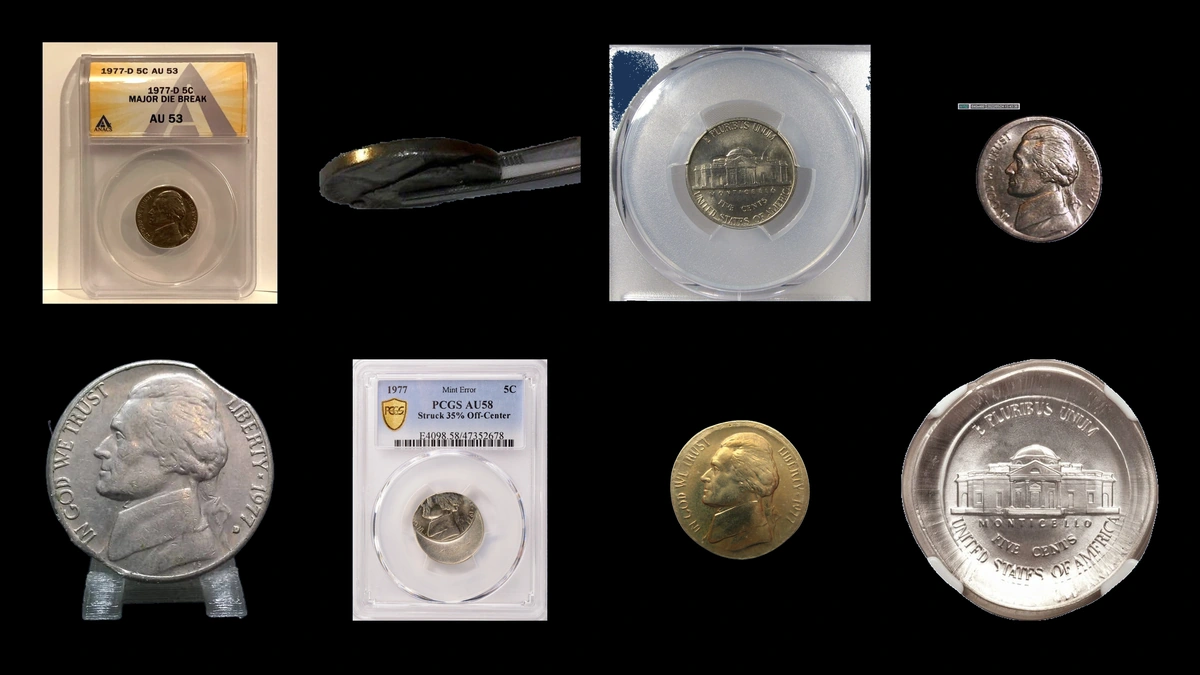
Ordinary circulation coins and specially made proofs provide very different examples of 1977 nickel errors. Estimated values span $5–$10,000, from small die chips to a proof struck over a finished dime.
Specialist Mike Byers reports a $9,300 Heritage sale for one nickel-over-dime proof. Begin with small surface details and relative centering, then use the edge and surviving designs to distinguish expanded coins, repeat strikes and different blanks.
| Observation | Category | Estimated value |
|---|---|---|
| Raised line, bump or filled D | Die crack or chip | $5–$75 |
| A remnant beside D or S | Repunched mintmark | $10–$100 |
| Repeated small design contours | Doubled die | $15–$150 |
| A thin surface sheet separates | Lamination | $15–$150 |
| Opposing-design fragments | Die clash on ordinary coins | $15–$150 |
| Interrupted detail or an impression | Struck through | $10–$200 |
| One face shifts within its border | Misaligned die | $5–$100 |
| A missing section of the outline | Clipped planchet | $15–$175 |
| Bare crescent beside displaced design | Off-center strike | $15–$250 |
| Edge step and a separate hollow | Partial collar with indent | $30–$300 |
| Wider outline with full design | Broadstrike | $40–$350 |
| Cup opens toward Monticello | Reverse die cap | $300–$1,500 |
| Later impression plus an indent | Double strike combination | $100–$2,000 |
| Design on a smaller unused blank | Wrong planchet, sometimes with rotation | $250–$3,500 |
| Earlier cent or dime detail remains | Double denomination | $500–$10,000 |
1. 1977 Nickel Raised Lines, Bumps or a Filled D: Die Crack and Chip Error
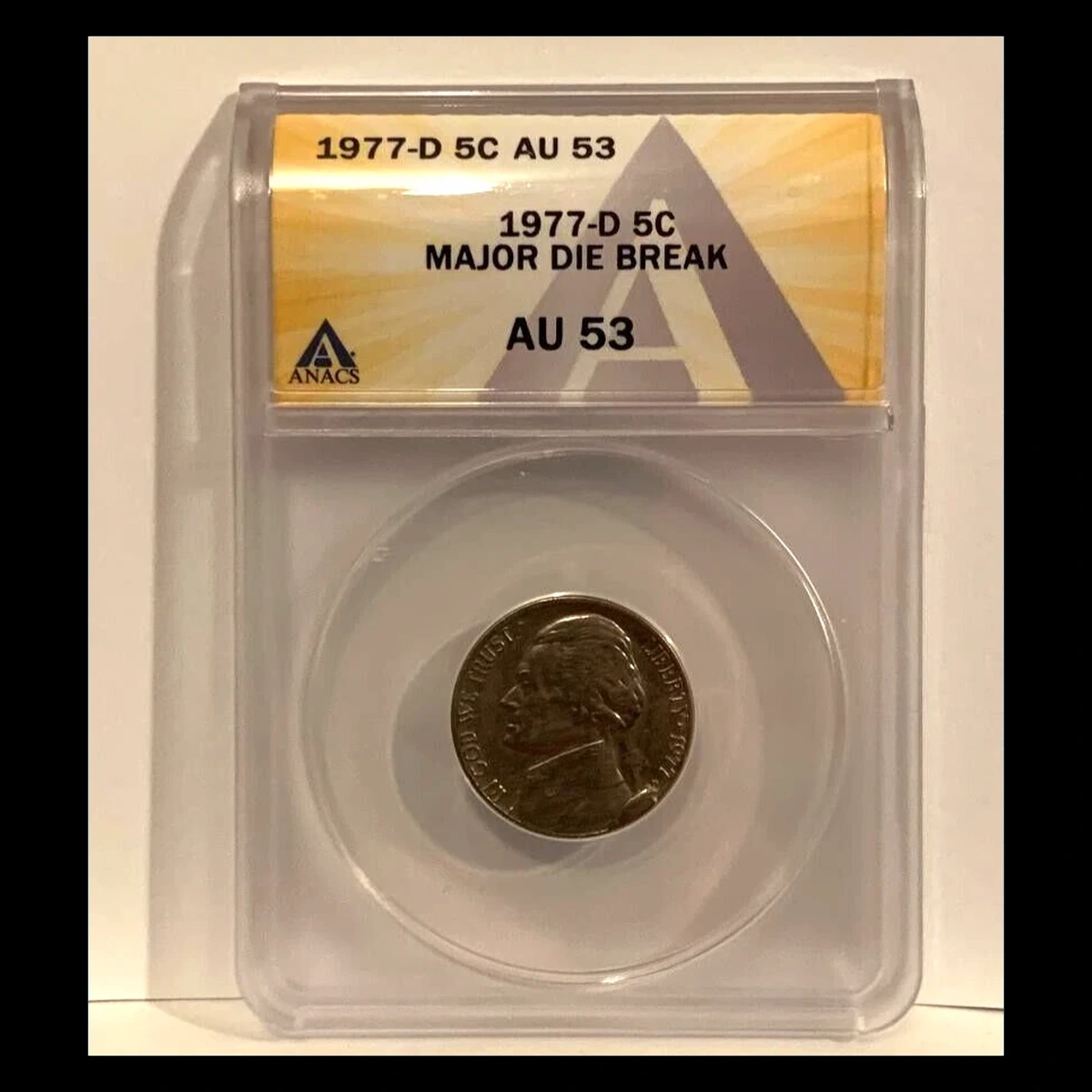
Metal entering a crack or small missing area in a die leaves a ridge or lump on the nickel. Reports include Denver coins with raised metal filling the center of D.
A filled D is not evidence of a second mintmark punch. It also differs from grease blocking the die, which can prevent raised detail from forming rather than add a solid center.
How to Identify
Check that the feature is raised metal rather than dirt or dark toning. Follow a line across nearby design to distinguish it from a scratch with a cut floor and displaced edges.
A lump with a seam or different surface texture may be attached material. Its relationship to the original struck surface is more informative than its nickname.
What It’s Worth
$5–$75 is estimated for modest cracks and chips. Larger visible features tend to be easier to appreciate than tiny filled spaces that require difficult lighting.
No completed price is assigned to every filled-D report. Preservation and clarity influence the whole-coin estimate.
2. 1977 Nickel Another Letter Outline beside D or S: Repunched Mintmark Error
A repeat application of the mintmark punch could leave part of an earlier letter in a different position on the die. This mechanism is reported in year guides for 1977 without a specifically matched direction or catalog variety here.
How to Identify
Philadelphia nickels have no mintmark in 1977, so an empty area beneath the date is normal. A repunching comparison begins with a D or S actually present.
Trace the proposed earlier outline to see whether it fits another letter rather than a center-filling chip or random bump. Reflections move with the light, and flat mechanical shelves need a different explanation.
What It’s Worth
$10–$100 is an estimate for confirmed repunching with an identifiable earlier impression. The range is not an auction record for a specific cataloged 1977 variety.
Sharp recognizable overlap is more useful than a thick or damaged mintmark. A guide’s category listing does not authenticate an individual candidate.
3. 1977 Nickel Extra Rounded Contours in the Design: Doubled Die Error
A doubled die contains repeated design detail before any coin is struck from it. Reported 1977 examples call for examining the date, inscriptions and portrait rather than assuming a single confirmed pattern applies to every mint.
How to Identify
Follow neighboring letters or portrait contours to test whether the repeated shapes have a consistent relationship. General blur or thickness is less persuasive than separated rounded detail.
Match the actual pattern to an attributed example of the same mint. A flat shelf caused during striking does not demonstrate duplicated design made into the die.
What It’s Worth
$15–$150 is estimated for clearly confirmed doubled dies with visible separation. Stronger comparisons require an identifiable pattern and well-preserved detail.
No specific 1977 auction result is supplied for this broad report. Worn-die blur and mechanical doubling should not inherit its estimated premium.
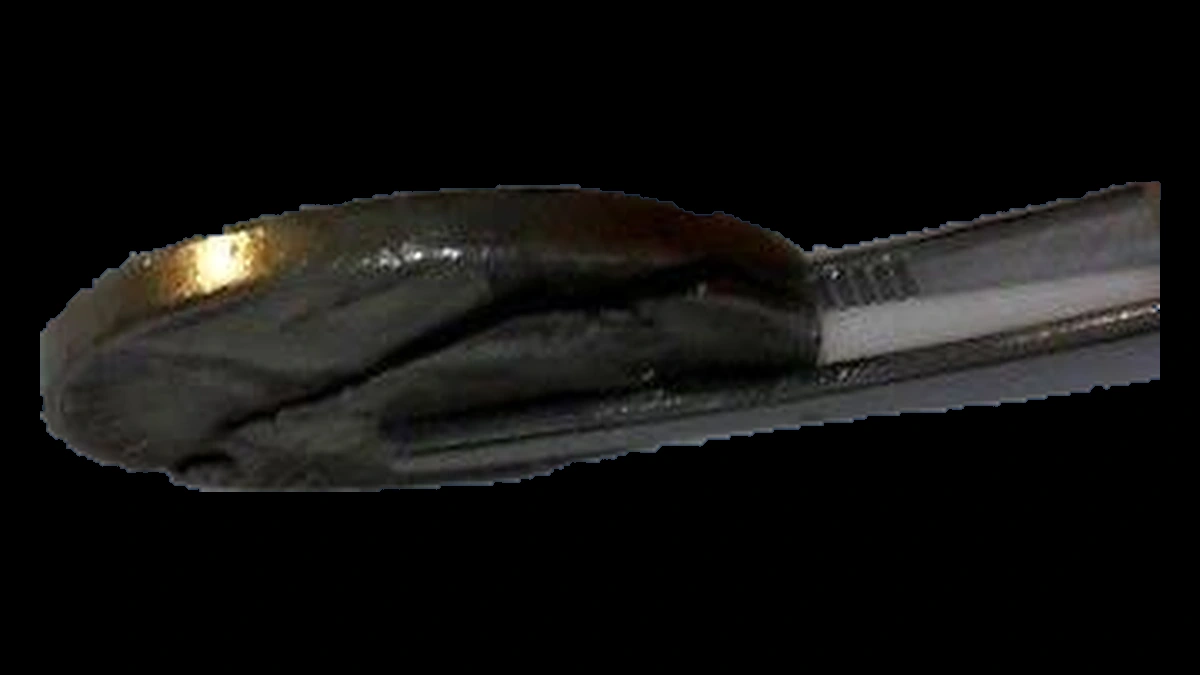
4. 1977 Nickel A Sheet Peels from the Front: Lamination Error
The recorded Philadelphia front lamination is graded NGC AU58, indicating slight wear. A weak area within the alloy allowed metal to separate in a thin layer.
The normal nickel has uniform copper-nickel metal rather than a dime-like layered construction. A local peel does not establish a missing outer clad layer.
How to Identify
Inspect the connection of any retained flap and the surrounding original design without lifting it. If the layer is already gone, examine the connected boundary and rough floor rather than treating scattered corrosion pits as the same feature.
Parallel scraping across finished detail suggests later damage. Preserve the separated metal exactly as found.
What It’s Worth
$15–$150 is estimated for recognizable front laminations. Clear natural separation can be more appealing than a tiny rough patch.
The AU58 example appeared in a four-coin lot sold for $161 in September 2010. That total also includes three other dates and is not its individual realized price.
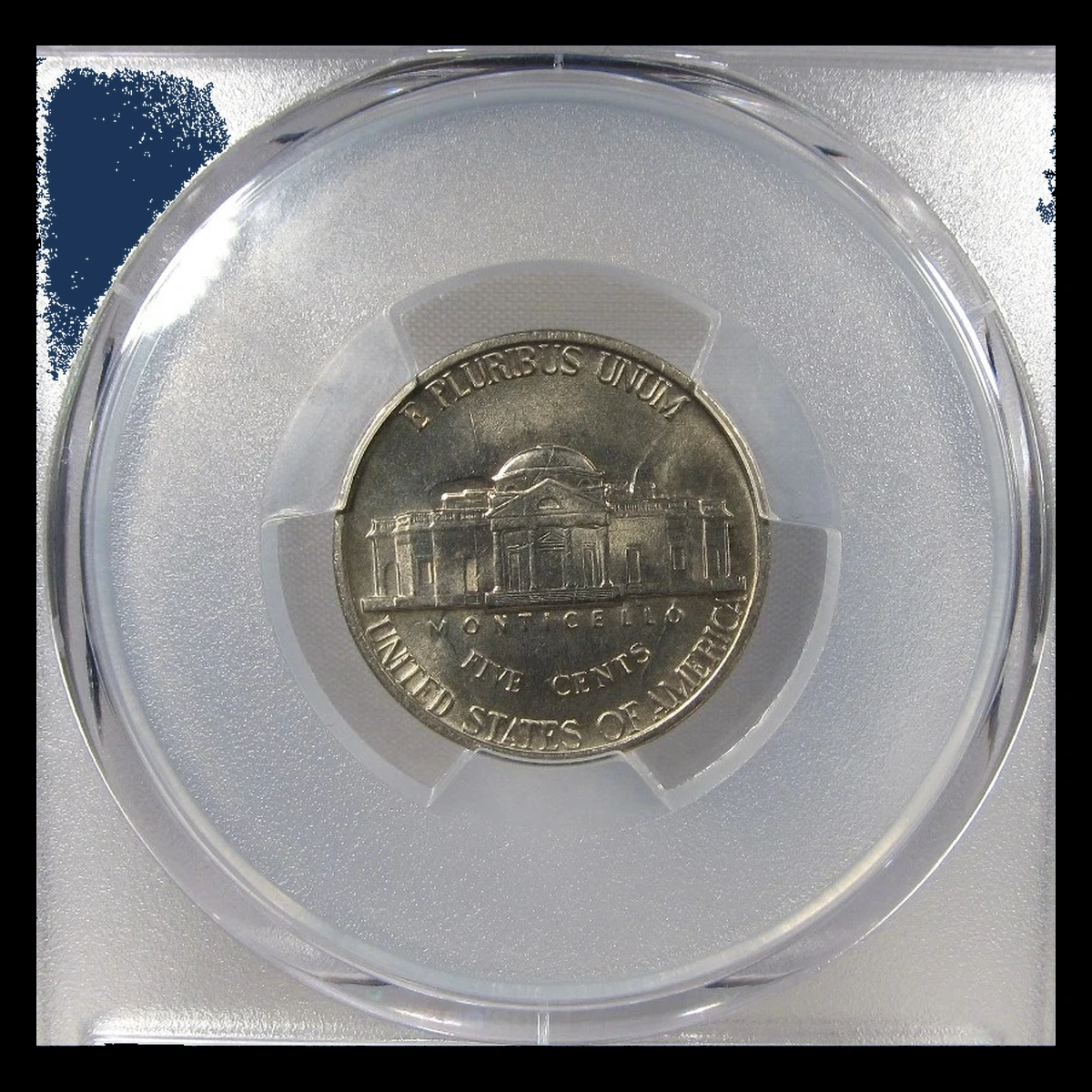
5. 1977 Nickel Faint Fragments Come from the Other Face: Die Clash Error
A documented 1977-S proof on a dime blank also has clash marks. The wrong blank explains its size, while contact between dies without a blank explains the extra fragments subsequently transferred to the coin.
Clashes are also reported on ordinary 1977 nickels. Their traces need separate matches rather than inheriting the proof’s identity.
How to Identify
Compare the unexpected lines with real parts of the opposite design, using more than one matching fragment where possible. Random scratches in open areas are not enough.
On the dime-blank proof, identify clash traces independently of outer lettering lost from the small disc. Its recorded approximately 2.3 grams differs from a normal five-gram nickel.
What It’s Worth
$15–$150 is estimated for visible clashes on ordinary-sized 1977 nickels. A separate 1977-S proof clash appears in a December 2025 sale record at about $124.
The proof on a dime blank belongs to the higher wrong-planchet comparison as one complete coin. Its clash does not justify adding another whole-coin price.
6. 1977 Nickel Material Interrupts the Impression: Struck Through Error
An object or debris can keep part of a die from contacting the blank, leaving a depression or missing detail. The reported 1977 category does not identify a particular material for every specimen.
How to Identify
Follow the intended design into the affected area to see whether an obstruction explains its interruption. Later impacts can crush finished lettering and leave a raised lip around a dent.
Inspect the boundary from several lighting directions and leave anything still attached untouched. A hollow by itself does not establish cloth, wire or any other named object.
What It’s Worth
$10–$200 is an estimate for genuine struck-through examples with visible affected areas. Faint weakened lettering generally makes a less compelling comparison than a large defined impression.
No specific sale is assigned to a named obstruction or mint. Surface quality and the evidence of a strike-time interruption matter more than an unusual-looking shape alone.
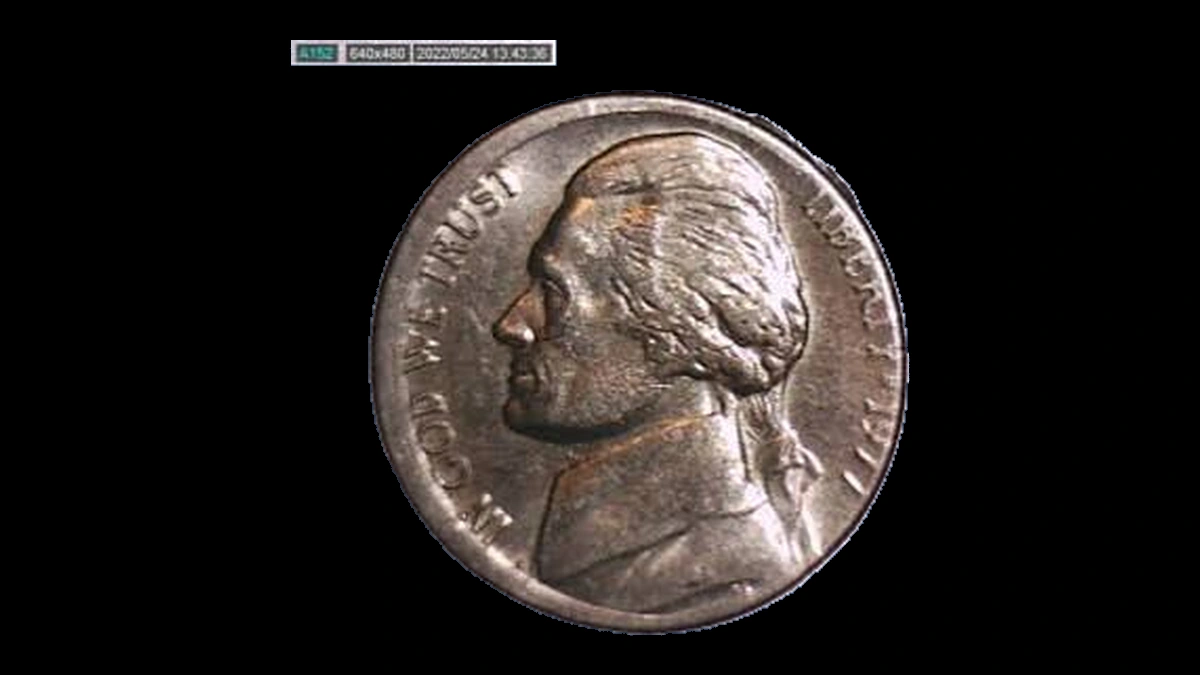
7. 1977 Nickel The Front Border Is Uneven while the Back Is Centered: Misaligned Die Error
A collector discussion identified one-sided die movement on a Philadelphia nickel initially described as a partial collar. Misalignment concerns where the front design sits, while a partial collar concerns the shape of the edge.
How to Identify
Photograph both faces straight on and compare their widest and narrowest margins. Camera tilt and rim damage can imitate a displaced design.
A normal loose nickel is about 5.00 grams and 21.21 millimeters across, with a plain edge. Inspect for an actual edge step separately rather than assuming that an uneven front border proves partial-collar striking.
What It’s Worth
$5–$100 is estimated for visible front misalignment. Slight unevenness on a worn coin may attract little interest.
The collector example is a reported type without an established sale. A stronger one-sided shift and a clearly centered reverse provide a more useful comparison than a tilted photograph.
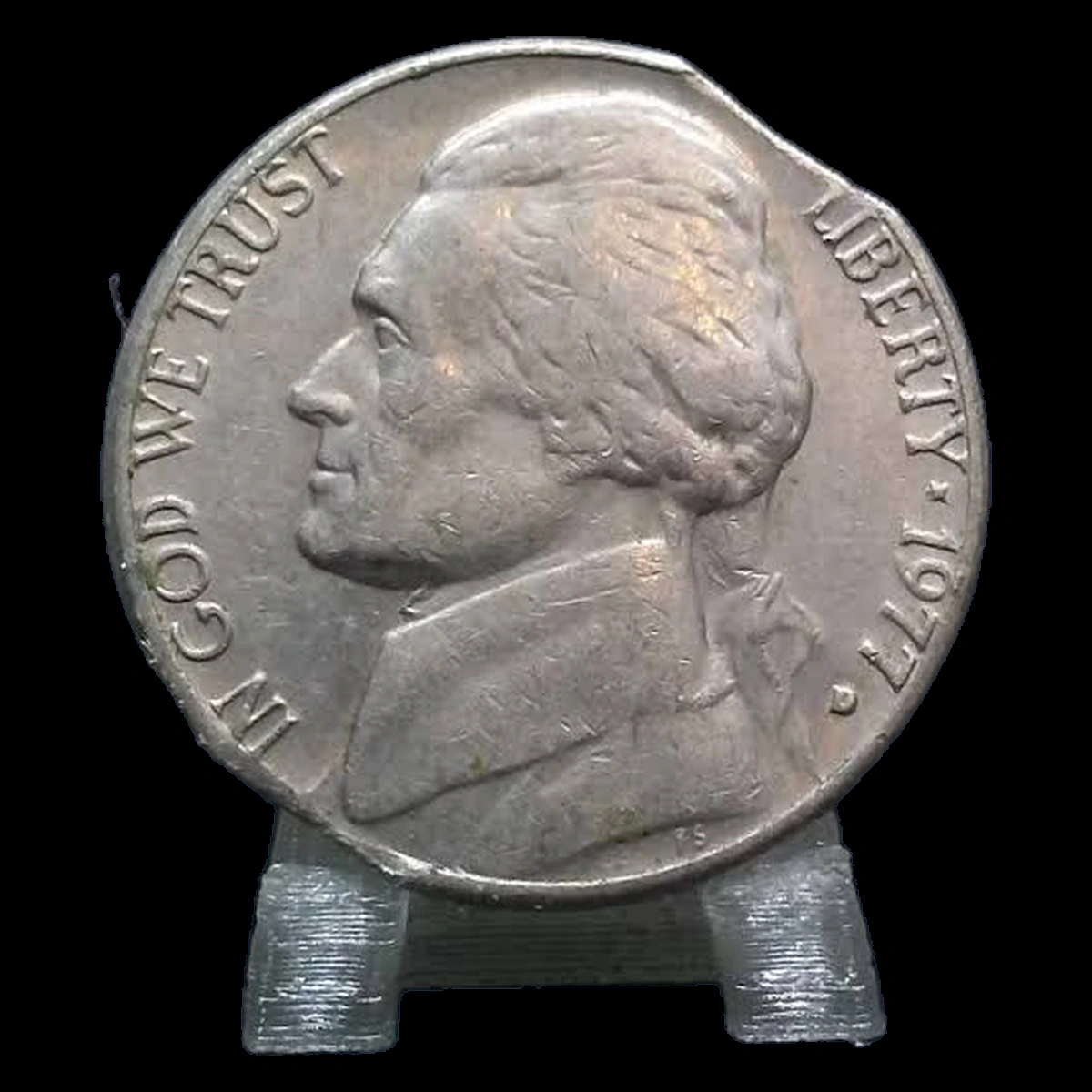
8. 1977 Nickel A Section of the Original Disc Is Absent: Clipped Planchet Error
Curved or straight missing sections can arise when blank cutting overlaps a previous hole or reaches a strip edge. The remaining incomplete disc is struck afterward.
Reports for 1977 do not establish one gap shape or direction for every example. Its boundary must be assessed on the individual coin.
How to Identify
Look for natural rim weakening or design flow at both ends of the gap. Saw grooves, file marks or a folded burr can reveal a cut made after striking.
Low weight and an opposite weak rim can support a clip, but neither is decisive alone. The struck rim’s transition into the opening is more useful than the gap’s size by itself.
What It’s Worth
$15–$175 is estimated for genuine clipped nickels of this date. Larger natural gaps with readable identity and clean surfaces can support stronger comparisons.
A 1981-P double clip graded NGC MS64 appears in a January 2024 sale at $168. Its different date and two openings prevent direct transfer of that price to every 1977 clip.
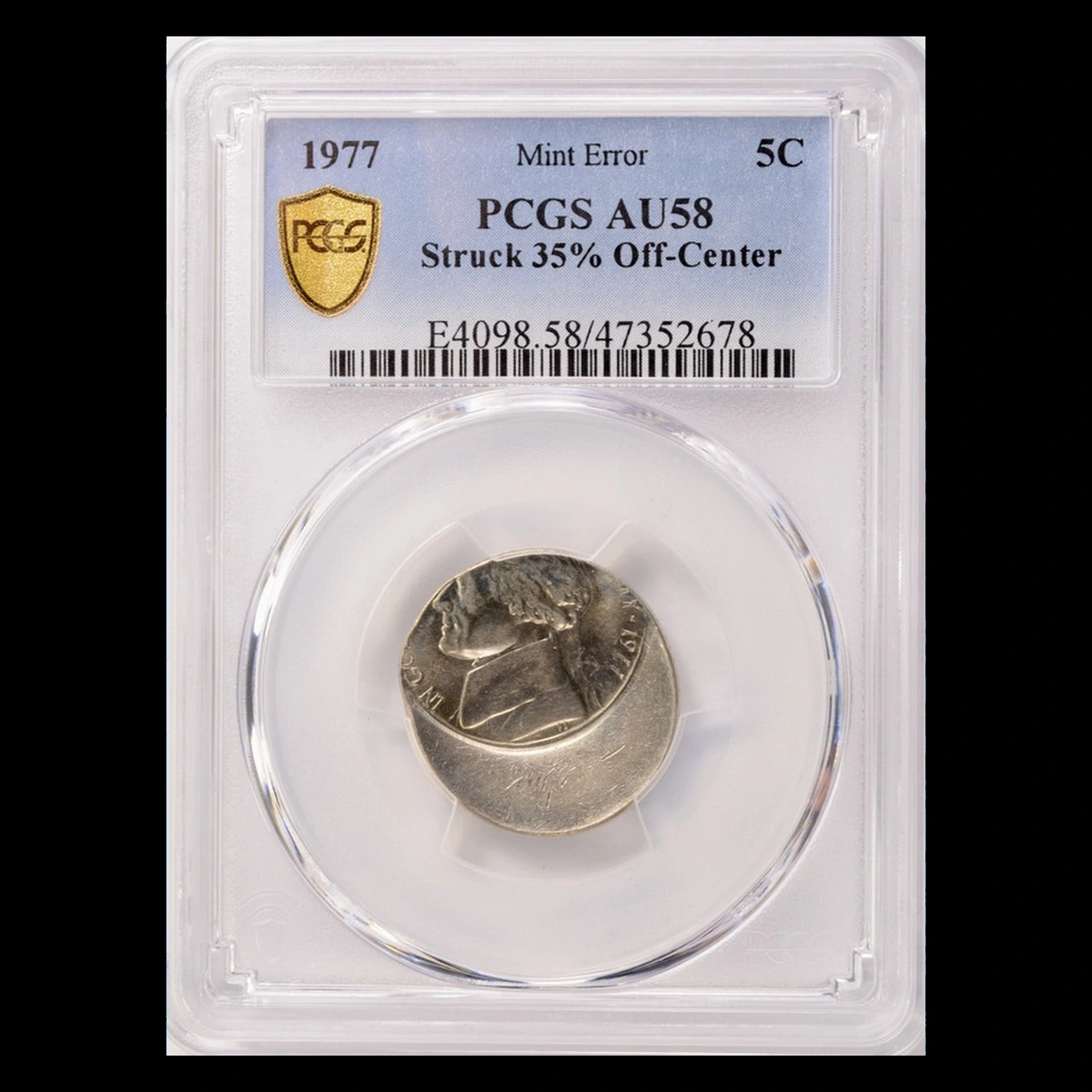
9. 1977 Nickel A Small Bare Crescent Borders a Shifted Design: Off-Center Strike Error
A collector who searched original bags reported a Philadelphia nickel about 5% off center toward ten o’clock. The misplaced blank left unstruck metal while some design missed the opposite edge.
How to Identify
Compare both faces for the corresponding struck and unstruck areas. A displaced front with a normally centered reverse instead points toward die misalignment.
Check for original bare surface rather than scraping across the boundary. Sharp Monticello steps describe surviving detail but do not enlarge the offset or establish a professional grade.
What It’s Worth
$15–$250 is estimated for 1977 off-center nickels across different shifts and preservation. The reported 5% bag find belongs with modest comparisons rather than half-off-center coins.
No realized price is adopted for that example. Larger displacement can be attractive when identity remains readable, but wear and marks on bare metal can reduce that appeal.
10. 1977 Nickel An Edge Step Accompanies a Hollow: Partial Collar and Indent Error
The ANACS MS64 Philadelphia example combines incomplete collar engagement with an indent. Part of the thickness spread more freely, while another object occupying the striking space created a separate depression.
A collector’s slight reverse-side collar feature on another bag coin is a different report. It does not establish the auction specimen’s indent position.
How to Identify
Examine the side for a step between restrained and expanded edge portions, then inspect the indent’s boundary independently. A plain-edged nickel is not judged by alternating reeded and smooth sections.
A cut seam, added ring or later dent needs a different explanation. Both the edge and hollow should fit the original struck metal.
What It’s Worth
$30–$300 is estimated for a clear partial-collar and indent combination. A visible step and well-defined depression support stronger comparisons.
A different-year 1981 listing including partial collar and front misalignment is recorded at $24. It does not establish an individual price for the 1977 ANACS specimen.
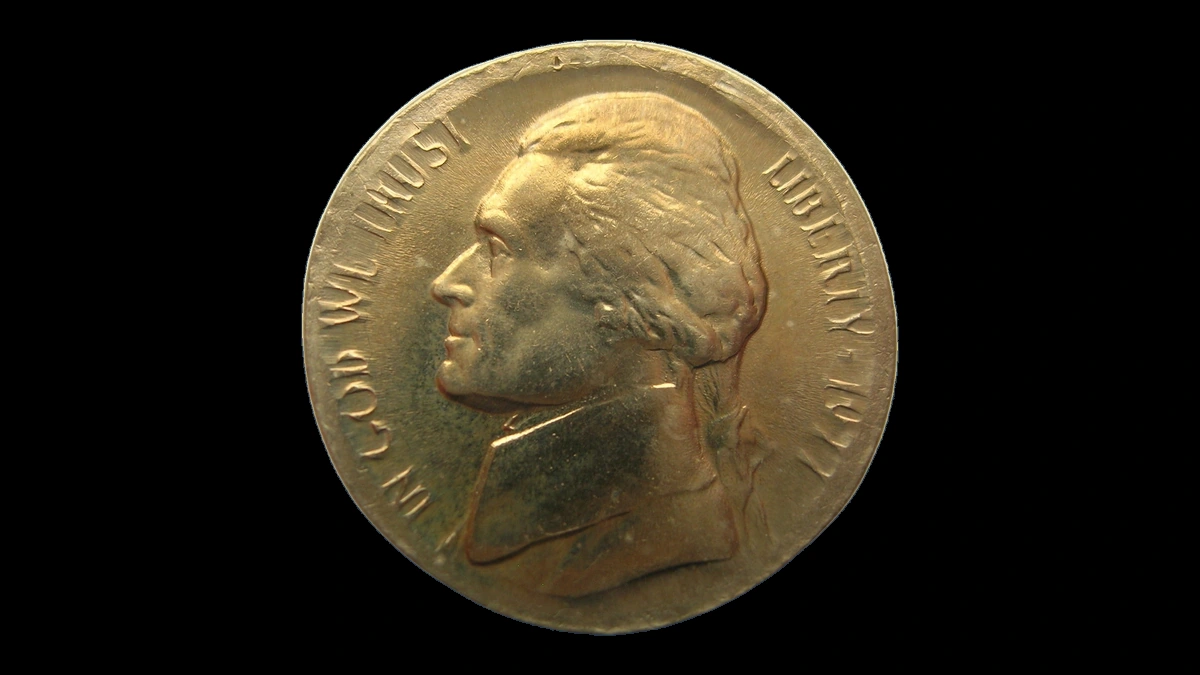
11. 1977 Nickel The Design Remains inside a Wide Border: Broadstrike Error
Philadelphia broadstrikes were reported from original bags, while a separate Denver coin was described as approximately quarter-sized and graded NGC MS66 Full Steps. Both concern outward spreading without normal collar containment.
Full Steps describes the preservation of Monticello’s stairs, not another error. The seller’s size comparison is not a precise diameter for all similar pieces.
How to Identify
Trace the full intended design inside the expanded outline and inspect the outer metal for natural flow. Hammering may enlarge a coin while smearing or crushing details already struck.
Record actual dimensions without squeezing a thin border. A broadstrike spreads existing metal rather than adding an extra ring.
What It’s Worth
$40–$350 is estimated across visible 1977 broadstrikes. The Denver MS66 Full Steps example was offered for $225 in April 2004, an asking price rather than a confirmed sale.
A modest Philadelphia bag find needs its own comparison. The very wide Denver example’s grade and description should not be assigned to it.
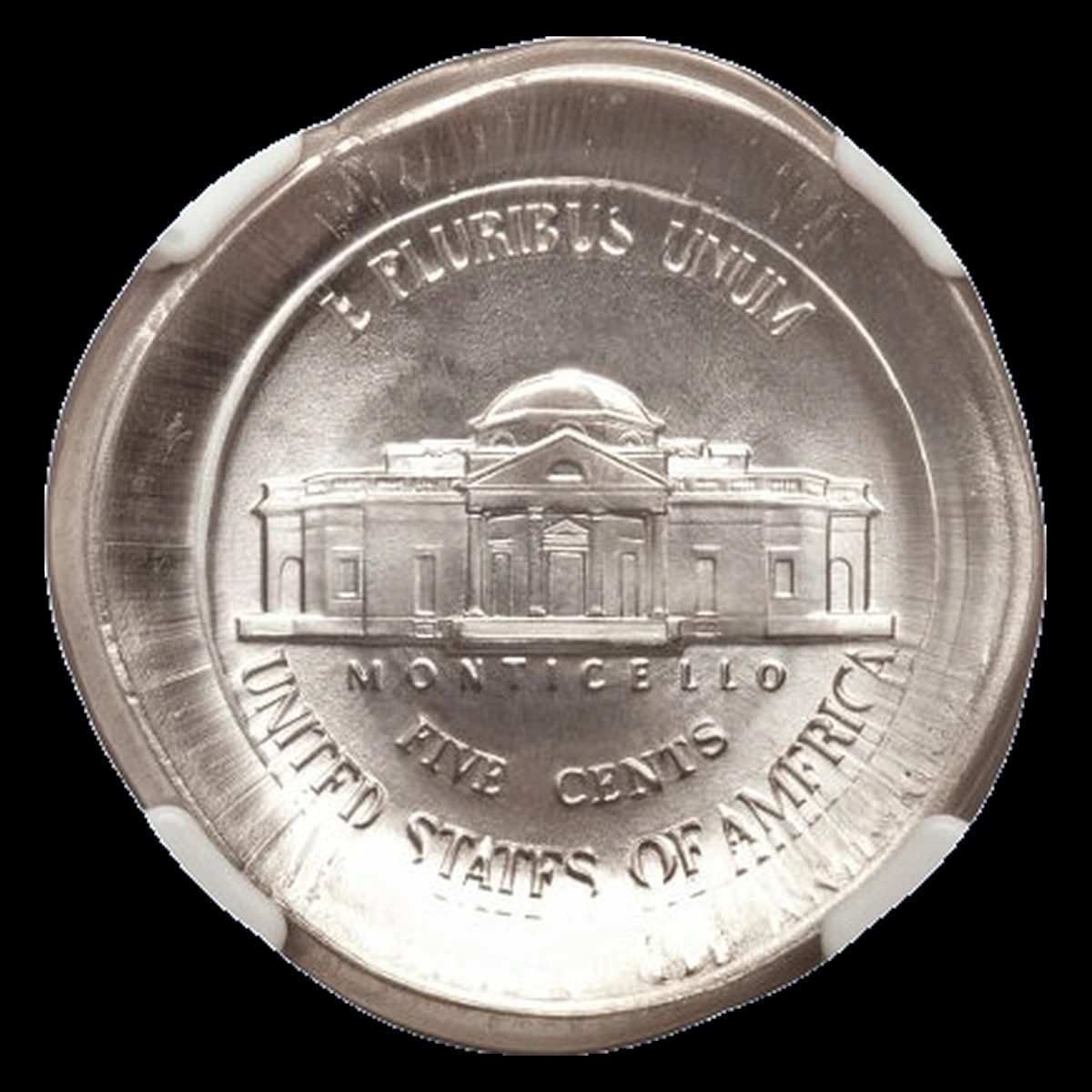
12. 1977 Nickel The Cup Opens toward Monticello: Reverse Die Cap Error
The 1977-D reverse cap illustrated by Error-Ref stayed attached to the reverse die. Its edge curved around that tool, while contact with at least one fresh blank above it spread the obverse design outward.
How to Identify
Use a side view to show the rim cupping toward the Monticello face, then compare the expanded front. Those two observations should explain the same cap-forming sequence.
Leave the curved wall untouched and distinguish a continuous cup from a sharply bent corner. A broad flat coin lacks the directional cupping needed for this diagnosis.
What It’s Worth
$300–$1,500 is estimated for a clear reverse cap retaining readable Denver identity. Depth, surviving design and an undamaged shape affect the comparison.
A separate 1977-D obverse cap graded NGC MS67 sold for $487.20 in July 2021. Its opposite cap direction makes it context rather than a sale record for the Error-Ref reverse specimen.
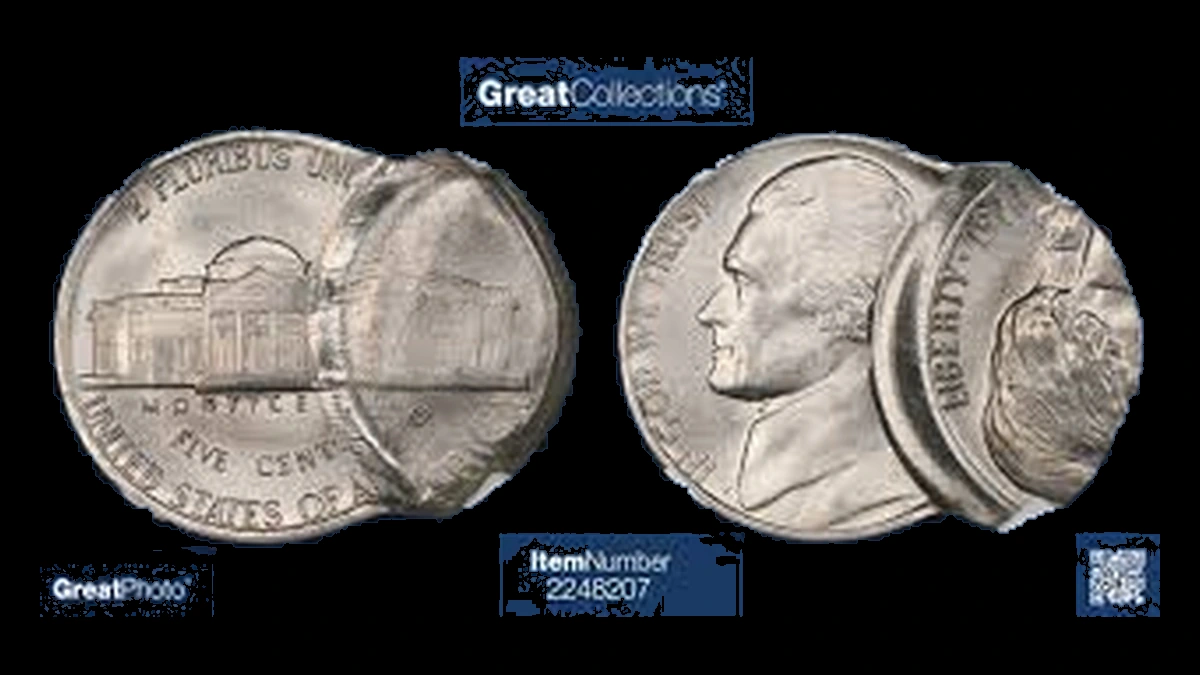
13. 1977 Nickel A Later Strike Lands beside an Indent: Double Strike Combination Error
The ordinary Philadelphia example has an approximately 80% off-center second strike and a reverse indent. A separate 1977-S proof has a 95% off-center second strike and a front indent, graded NGC PR65 Ultra Cameo.
How to Identify
Follow genuine later letters or portrait detail into the earlier impression, then locate the indent beside that strike area. A flat doubled letter or unrelated dent cannot establish the same sequence.
Keep the Philadelphia reverse hollow separate from the proof’s front hollow. Ultra Cameo describes strong contrast between the proof’s frosted design and reflective background, rather than another error.
What It’s Worth
$100–$600 is a working estimate for ordinary Philadelphia double strikes, with $600–$2,000 for comparable proof combinations. The supplied price record lists $720 in July 2021 for the PR65 Ultra Cameo proof.
The ordinary 80% example did not sell in its September 2004 appearance. Its two impressions and indent belong to one coin and should not be priced as separate purchases.
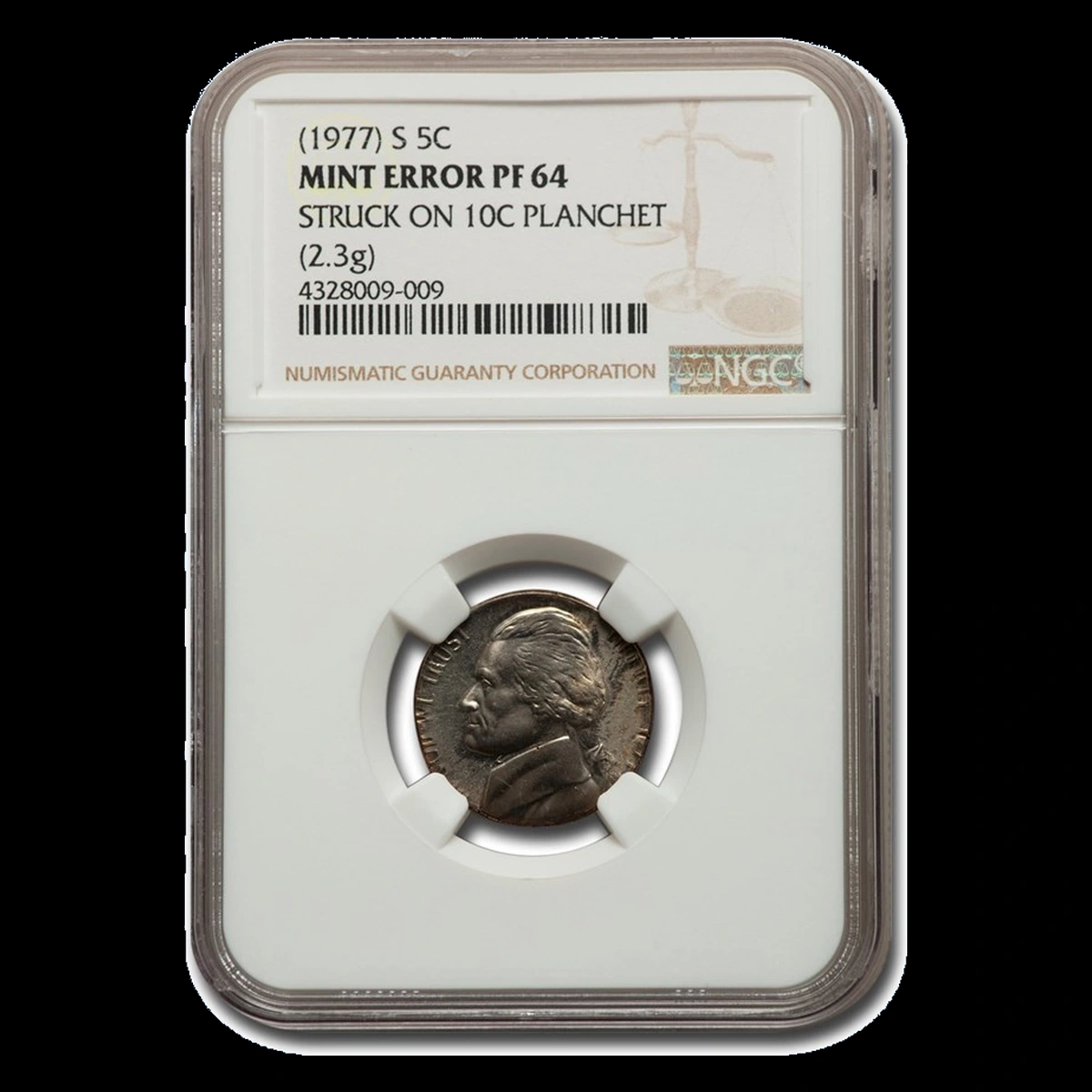
14. 1977 Nickel A Smaller Blank Carries the Design: Wrong Planchet and Rotated-Dies Combination Error
Recorded examples include a 1977-S proof on a clad dime blank and ordinary Philadelphia and San Francisco proof nickels on cent blanks. The ordinary cent-planchet example and the proof cent-planchet example are each recorded at 3.1 grams.
The cent-blank proof also has a reverse nearly in medal alignment, about half a turn from normal U.S. coin alignment. Wrong metal and relative rotation are separate errors on that one specimen.
How to Identify
Test orientation by holding Jefferson upright and flipping top to bottom; the rotated proof’s reverse appears nearly upside down. Assess that relationship independently of the smaller blank.
Cent and clad dime blanks start around 3.11 and 2.27 grams, with diameters of 19.05 and 17.91 millimeters, respectively. An unused blank has no earlier Lincoln or Roosevelt design beneath the nickel impression, even if the later strike expands it.
What It’s Worth
$250–$1,000 is estimated for ordinary cent-planchet examples, with $1,000–$3,500 for these proof combinations. The PCGS PR68 Cameo dime-blank proof sold for $1,440 in May 2022.
The NGC PR65 Red and Brown cent-blank proof with rotated dies brought $1,860 in August 2021. That is the entire coin’s price, not an additional rotation premium to add again.
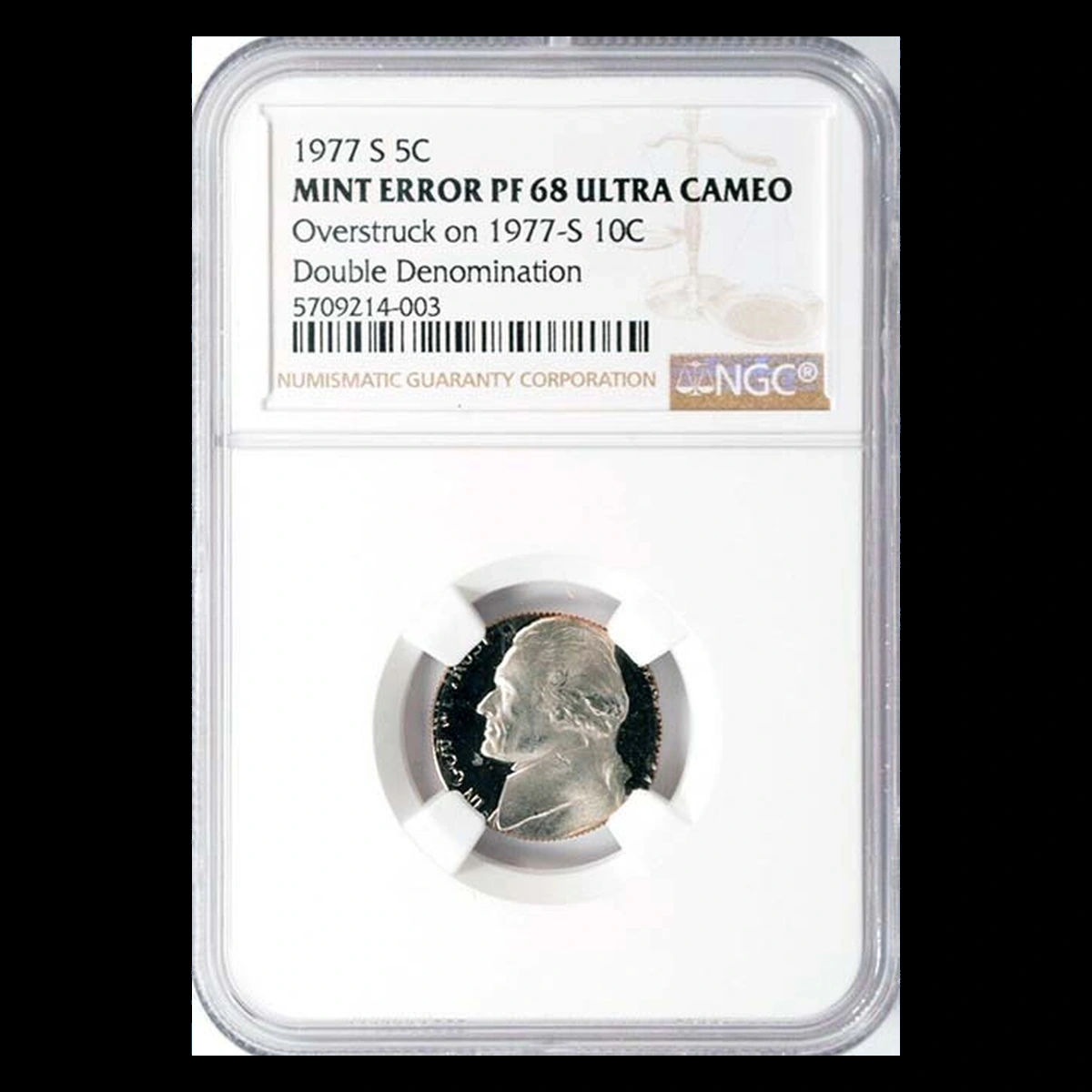
15. 1977 Nickel An Earlier Cent or Dime Design Survives: Double Denomination Error
An ordinary 1977 nickel over a Lincoln cent has been offered as NGC MS65. A separate 1977-S proof was struck over a finished 1977-S dime, retaining Roosevelt under Monticello and dime reverse details beneath Jefferson.
The illustrated proof retains both dates and changed faces between the dime and nickel strikes. Its earlier date remains beside Roosevelt’s neck, while portions such as the olive branch survive on Jefferson’s side.
How to Identify
Find recognizable earlier design on each face and trace it beneath the nickel impression. The opposite-face arrangement supports the reported flip between denominations.
Small size or copper color alone can suggest another blank but cannot prove an already finished host coin. A cent-based example and a clad-dime example also require different starting weight comparisons.
What It’s Worth
$500–$1,500 is estimated for ordinary nickel-over-cent examples, with $3,000–$10,000 for proof nickel-over-dime errors. Readable remnants of both designs make the sequence easier to demonstrate.
Mike Byers reports a $9,300 Heritage sale for a similar proof without a visible dime date. That amount belongs to a separate coin, not his illustrated two-date specimen.
Conclusion
Separate ordinary coins from proofs and distinguish an unused wrong blank from a finished cent or dime carrying an earlier design. Those choices change both the diagnosis and the relevant price comparison.
For altered shapes, examine the edge alongside both faces: expansion, a collar step and a reverse-facing cup are different effects. Keep retained flakes and curved walls intact, and value combined features as parts of the same coin.