Rare 2006 Nickel Errors (List & Pictures)
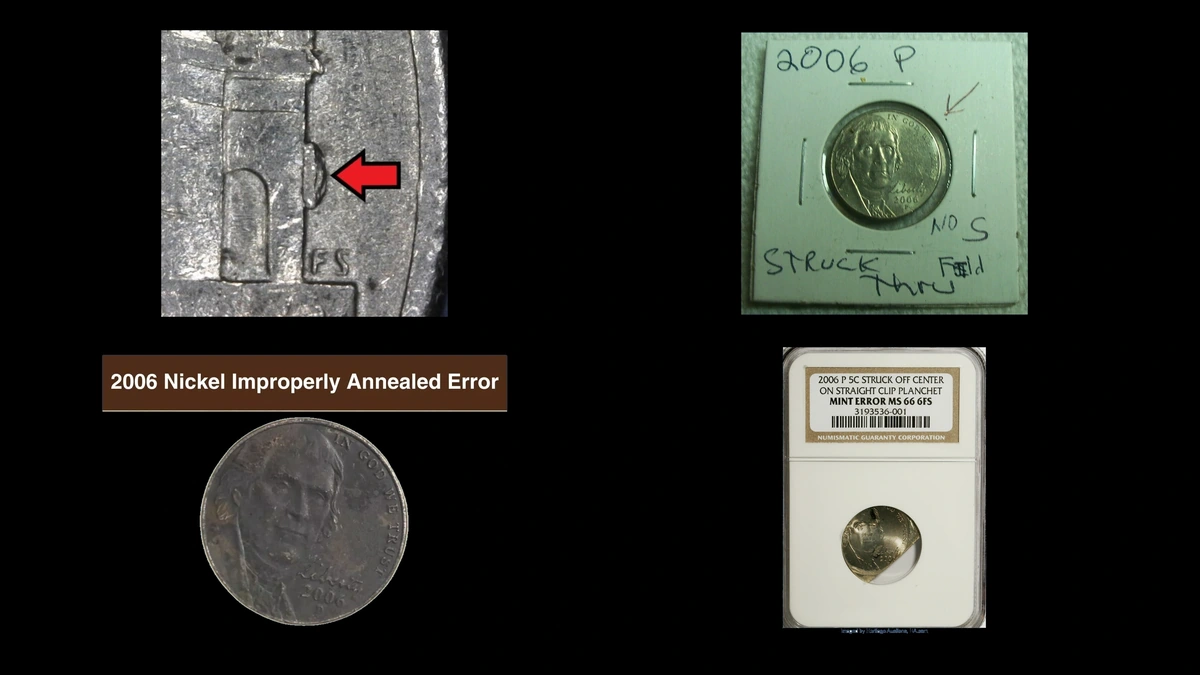
The forward-facing Jefferson portrait makes 2006 nickels easy to recognize. One 2006-P coin with a straight clip and an off-center strike brought $431.25 in September 2010.
Other 2006 nickel errors are smaller and more affordable, with the types here estimated at $5–$600. Compare the portrait with an ordinary coin, then check the back and outline to understand what changed.
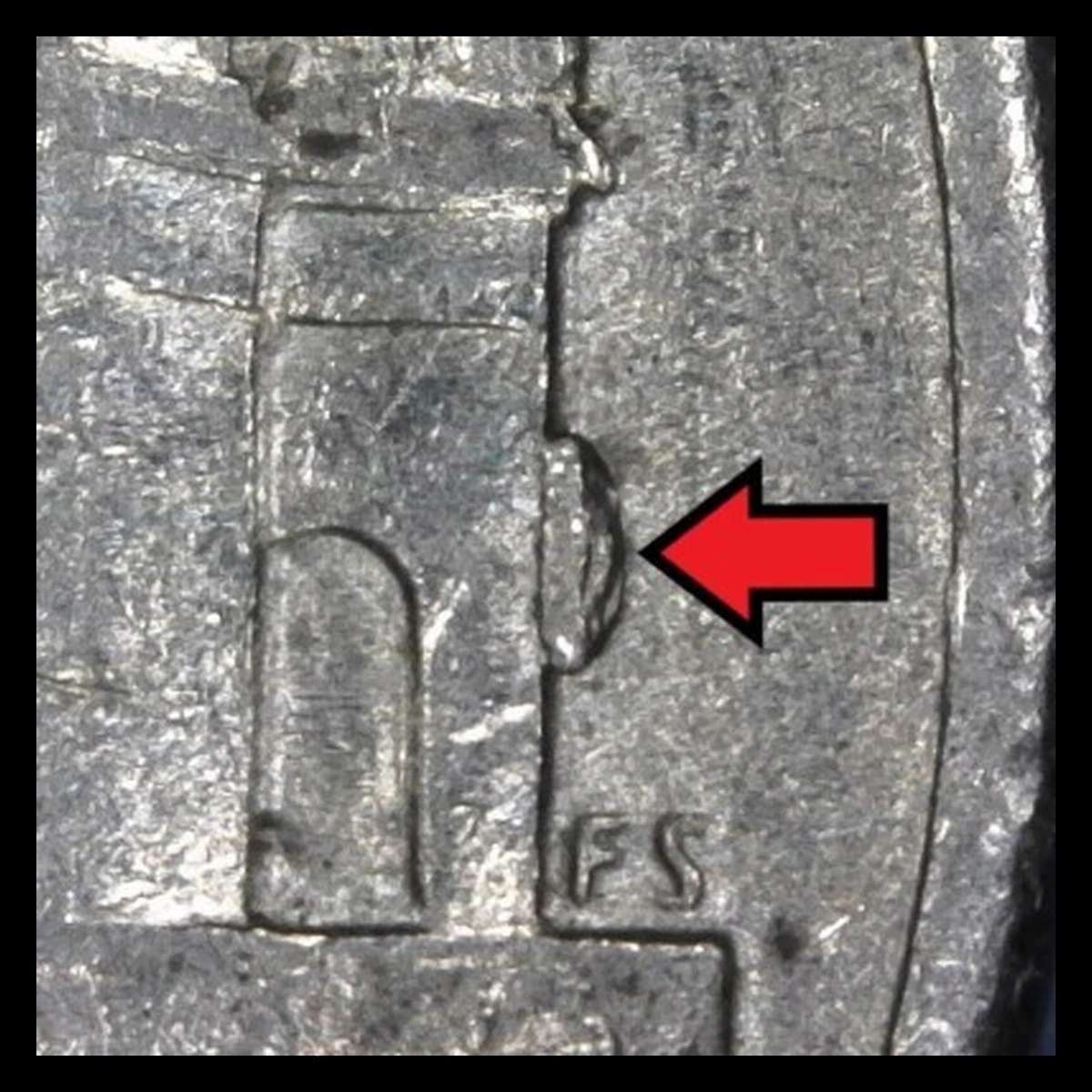
1. 2006 Nickel Raised Facial Lines and Back Chips Error
A crack in a die, the tool that stamps the design, can leave a raised line on Jefferson’s face. Denver examples are reported, while separate Philadelphia reports describe small raised back chips.
A chip forms when metal fills a space left by a tiny broken part of the die. The reports do not establish one shared location or require both features on the same coin.
How to Identify
Compare the same area on an ordinary 2006 nickel so normal facial contours or building details are not mistaken for extra metal. Side lighting helps show whether a line rises above the surface.
A scratch may have raised edges but a sunken center. For a lump, examine its connection and texture without scraping away possible dirt.
What It’s Worth
$5–$100 includes minor genuine cracks or chips around $5–$30 and stronger attractive features around $30–$100. An easily photographed facial line can be more appealing than a tiny hidden bump.
These are estimates rather than individual 2006 auction records. Several small features remain part of one coin and do not each earn a full separate value.
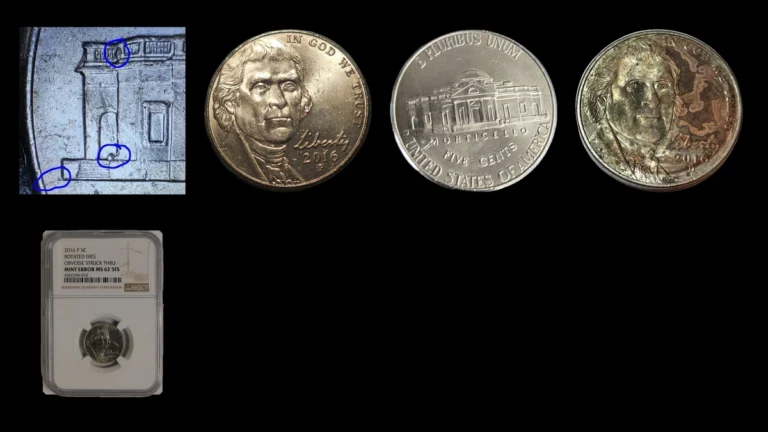
2. 2006 Nickel Extra Portrait or Doorway Detail from a Doubled Die Error
Reports mention extra outlines around the earlobe, portrait, and front lettering, plus the central doorway of Monticello. The repeated detail began on the die rather than through a second misplaced strike.
How to Identify
Keep the whole earlobe or doorway visible around the close-up so the extra line has a clear location. Compare the exact mint and finish.
Ordinary P and D coins, satin collector pieces, and S Proofs need suitable reference images. A flat shelf or a shadow beside a letter is not the same as a matched doubled-die pattern.
What It’s Worth
$10–$150 is the estimate for identified examples, with minor clear varieties around $10–$50 and stronger attractive pieces around $50–$150. The reports do not supply one shared sale for every front and back pattern.
Correctly matched rounded outlines matter more than enlargement alone. A large blurry photograph cannot establish a small variety.
3. 2006 Nickel Missing Detail from a Strike-Through Error
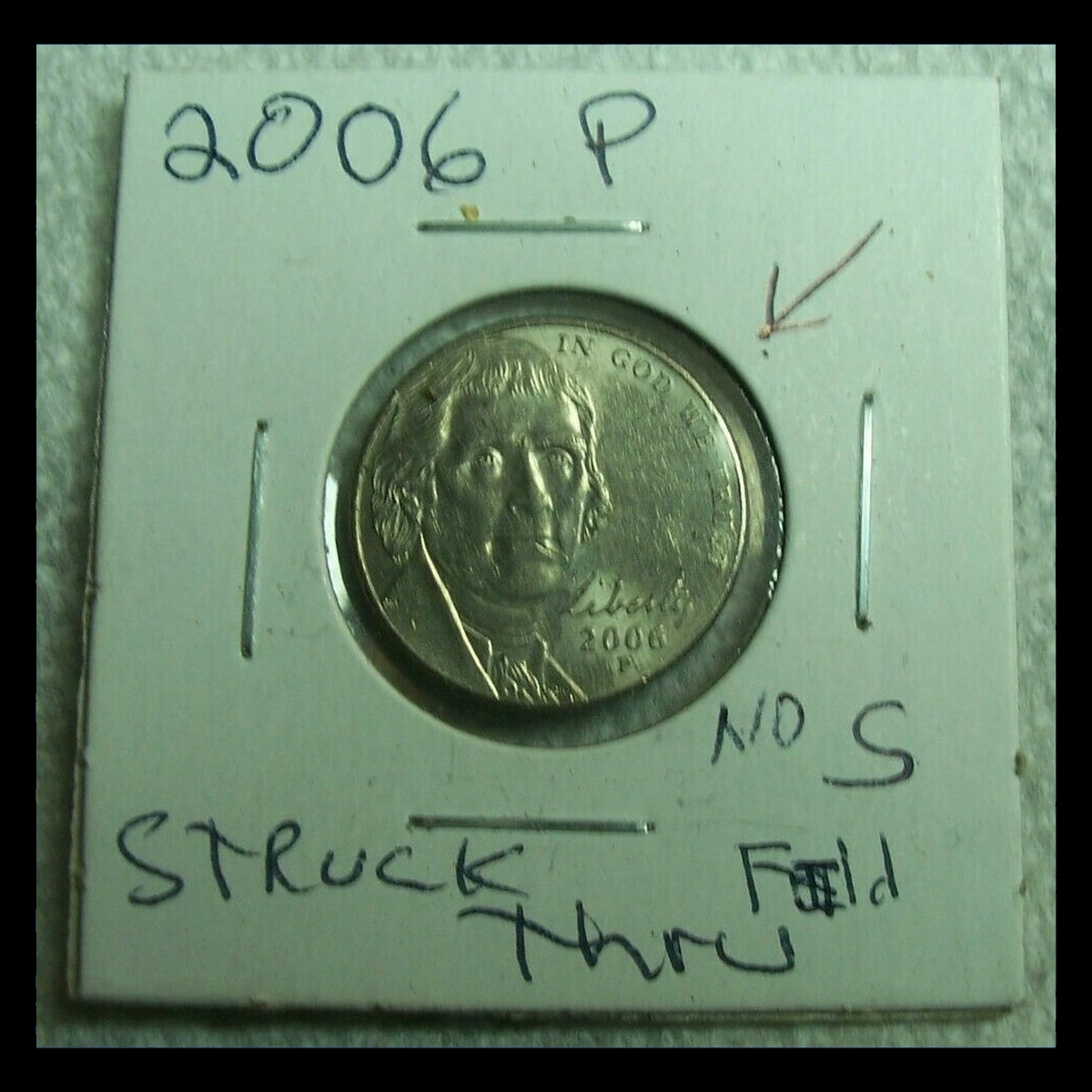
Foreign material caught between a die and the blank can leave a depression or block part of the design. Philadelphia and Denver reports describe this type without naming one shared obstruction or location.
How to Identify
Compare the affected area with nearby clear details and the opposite face. Local interruption differs from even wear across the whole portrait.
Follow the boundary for fresh cuts, torn metal, or evidence of a later impact. Keep any attached material in place and name it only if its visible shape or texture supports that identification.
What It’s Worth
$10–$250 allows roughly $10–$75 for a clear smaller blocked area and $75–$250 for a larger distinctive impression. The figures are type estimates rather than a matched 2006 sale.
Readable surrounding design helps explain the error. A deep later gouge does not qualify simply because it looks dramatic.
4. 2006 Nickel Unusual Surface Color from Improper Annealing Error
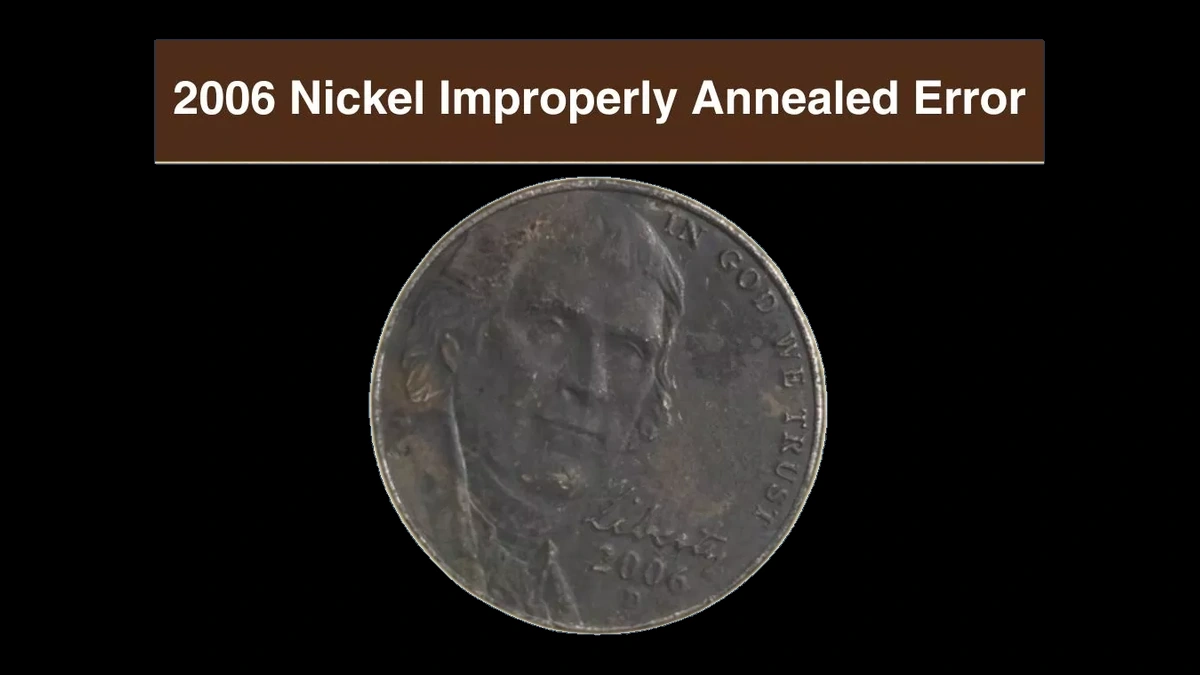
Annealing heats blanks before striking to make the metal easier to shape. Incorrect conditions can affect the finished coin’s color.
Philadelphia examples are reported, and a dealer list records a Denver PCGS MS64 example. A nickel uses copper and nickel mixed throughout, not a removable outer layer over a copper center.
How to Identify
Look at both faces and the edge in neutral light for coatings, corrosion, and original surface texture. Later chemicals or heating can change color too.
A holder’s numerical grade alone does not establish improper annealing; read the error description. Leave a loose coin unpolished so its original surface remains available for examination.
What It’s Worth
$20–$200 is the working range for an identified Mint heating error. The historical dealer asking price for the 2006-D MS64 coin was $175.
A 2005-D example sold for $119 in December 2022. That different-year sale and the dealer ask provide context without authenticating any newly found dark nickel.
5. 2006 Nickel One Shifted Face from a Misaligned Die Error
If Jefferson moves toward one rim while Monticello stays centered, one die may have shifted. The blank itself can remain in place.
Year reports do not give one mint or direction for this category. An uneven border therefore needs more than a quick glance at the front.
How to Identify
Take straight-down photographs of both faces and compare their positions. Camera tilt, rim wear, and dents can make an ordinary border look uneven.
A loose normal nickel is about 5 grams and 21.21 mm across. If both designs shift beside solid unused metal, compare it with an off-center strike instead.
What It’s Worth
$5–$75 is the estimated range for a visible original misalignment. Tiny rim differences on a worn coin may add little.
No particular 2006 auction result is supplied for this report. A clear contrast between the two faces and attractive surfaces make a stronger case than edge damage alone.
6. 2006 Nickel A Wider Coin from a Broadstrike Error
A broadstrike spreads outward because the collar does not fully contain the metal. The whole design can remain inside the enlarged outline.
A Philadelphia example was graded NGC MS65 with six full steps. The steps describe sharp Monticello detail rather than a second error.
How to Identify
Follow the outside words around both sides to see whether they remain on the coin. Design lost beyond the edge suggests an off-center strike instead.
Measure several spans and inspect the wider border for crushed letters or hammer marks. A plain edge is normal on nickels, so it cannot identify the broadstrike by itself.
What It’s Worth
$30–$300 spans moderate spreading at $30–$100 and especially clear attractive examples at $100–$300. The Philadelphia MS65 listing records a November 2018 auction without displaying the result publicly.
A starting bid is not a completed sale price. For comparison, a 1999-P broadstrike brought $89 in March 2025.
7. 2006 Nickel Missing Metal from Clips, Sometimes with an Off-Center Strike Error
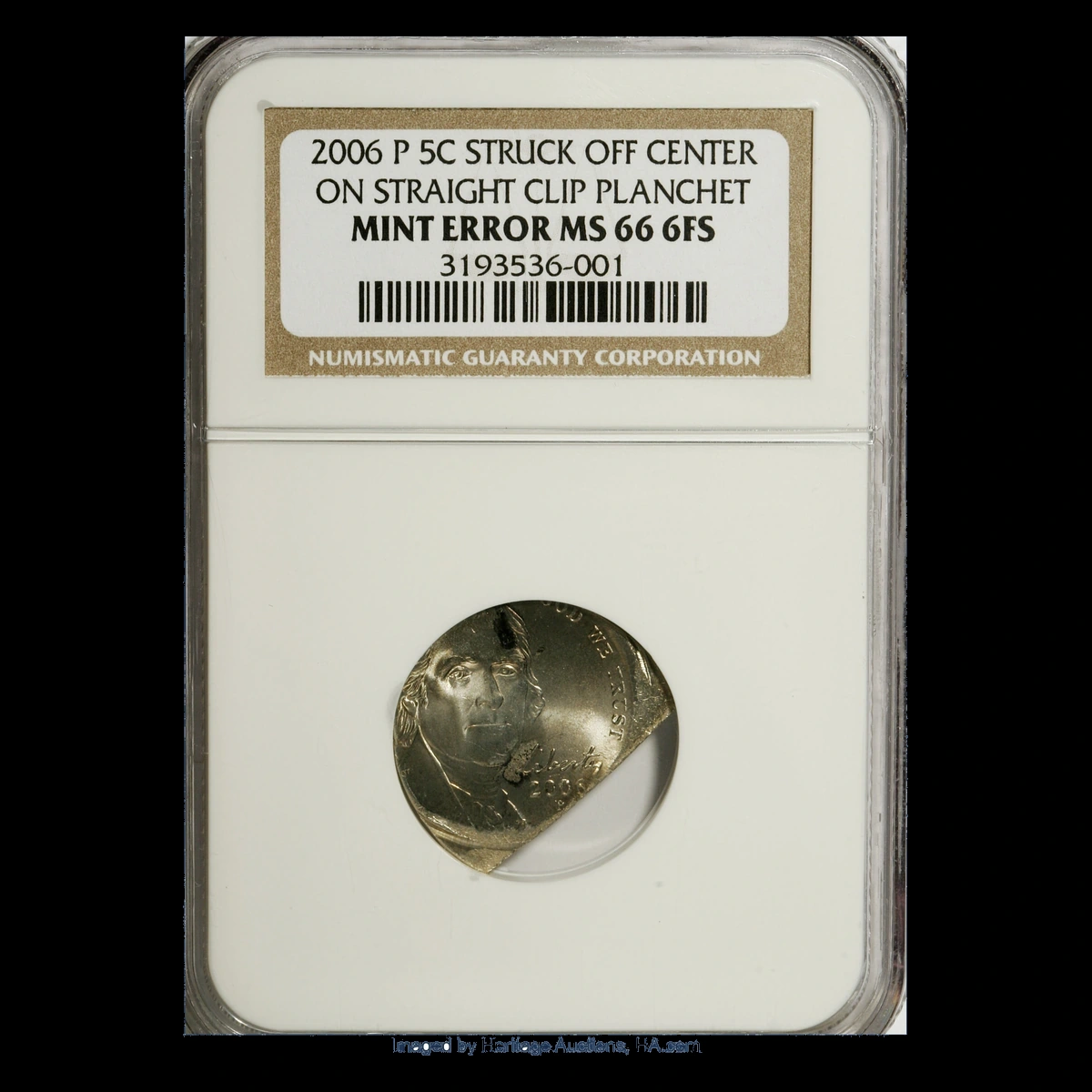
The 3.7-gram Philadelphia coin combines a straight clip with an off-center strike and carries an NGC MS66 six-full-steps grade. Metal was missing before the remaining blank received its displaced design.
A separate 4.74-gram Philadelphia ANACS MS63 coin has two clips. Its description does not give it the first coin’s off-center strike.
How to Identify
Separate actual missing metal from solid metal that received no design. The combined coin shows both a straight gap and an unused area from the offset.
Inspect each clip boundary for natural metal flow rather than saw or file marks. On a double clip, both openings need their own check.
Keep recorded weights with their matching specimens. Neither source supplies a direction that should be applied to all 2006 clipped nickels.
What It’s Worth
$25–$600 covers straightforward clips around $25–$200 and attractive clip-plus-offset examples around $150–$600. The straight-clip, off-center coin sold for $431.25 on September 26, 2010.
That result prices the complete combination. The separate double clip needs its own comparison, and the first coin’s two errors should not be assigned two full values.
Conclusion
A small extra ridge, a missing patch, and a wider outline lead to different explanations on a 2006 nickel. Begin by showing the feature clearly beside ordinary design details.
Then compare both faces and keep the mint, finish, and measurements attached to the correct specimen. This is especially useful for the two documented clipped coins, whose weights and strike patterns describe different objects.