Rare 1949 Nickel Errors (List & Pictures)
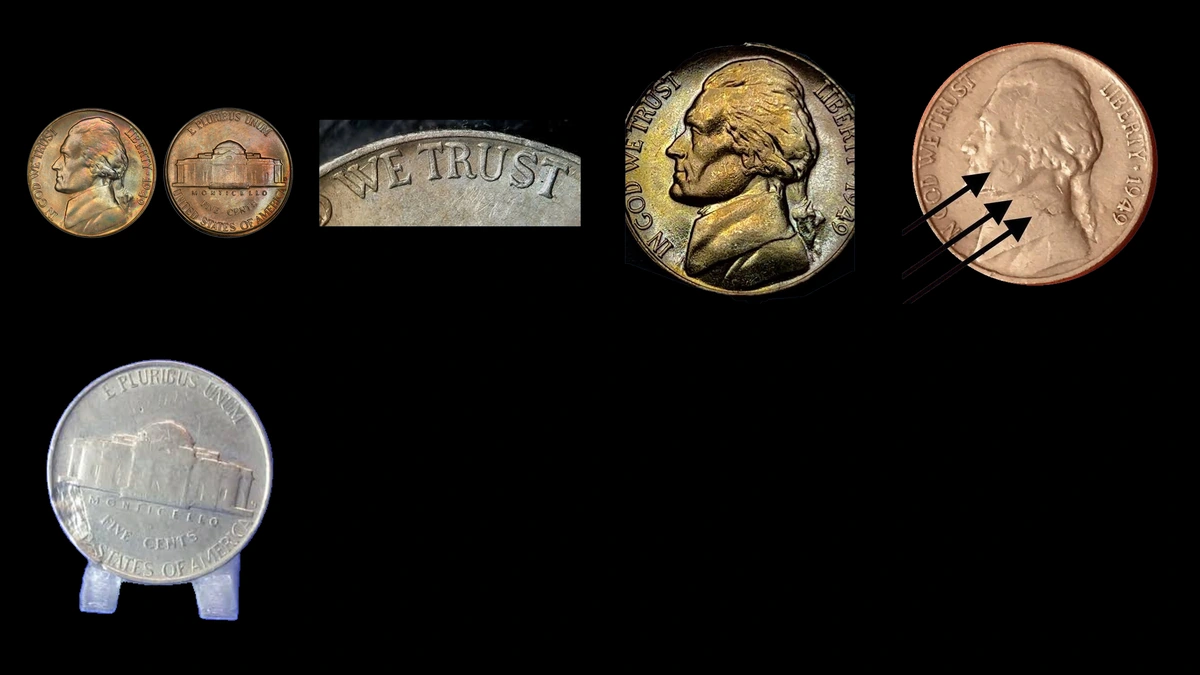
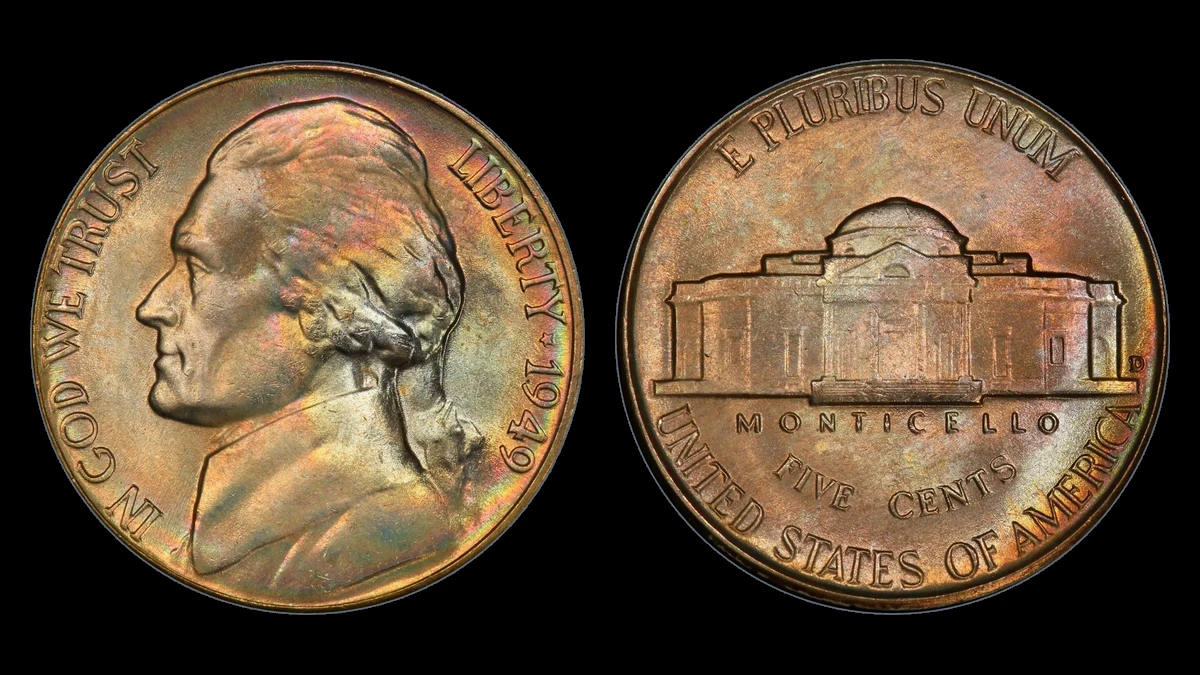
The famous 1949-D/S nickel reached $32,900 in June 2014 in exceptional MS67 Full Steps condition. That price includes outstanding preservation, not just the small S beneath its D.
These 1949 nickel errors span about $5–$35,000, from modest tool flaws to that high-end variety. Read the mintmark first, then inspect the lettering, surface, and shape for separate clues.
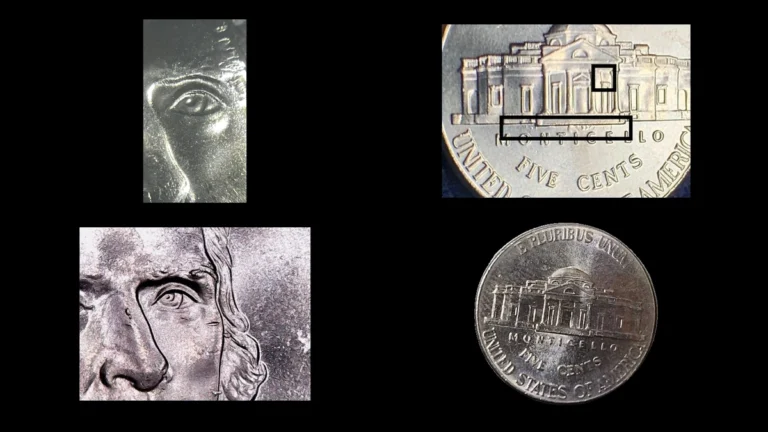
1. 1949 Nickel Earlier Mintmark Outlines, Including D over S Error
On D/S, a D was punched into the die over an earlier S. Other varieties repeat the same letter and leave D/D or S/S outlines instead.
The die is the stamping tool, so these marks existed before the coin received its design. All appear at the small mintmark position to the right of Monticello.
How to Identify
For D/S, look for recognizable S remnants beneath D rather than merely a thick letter or another D curve. Same-letter repunching needs its own matching comparison.
Check the steps separately from the mintmark. Full Steps describes clear stair lines on Monticello, not another error, and a genuine D/S can lack that designation.
What It’s Worth
$5–$35,000 covers several markets: ordinary D/D or S/S pieces around $5–$100, typical identified D/S examples around $30–$3,000, and exceptional Full Steps coins around $10,000–$35,000. Condition makes a major difference.
PCGS records $32,900 for an MS67 Full Steps D/S in June 2014. A worn mintmark with an extra stroke is not an equivalent comparison.
2. 1949 Nickel Repeated Lettering from Doubled Dies Error
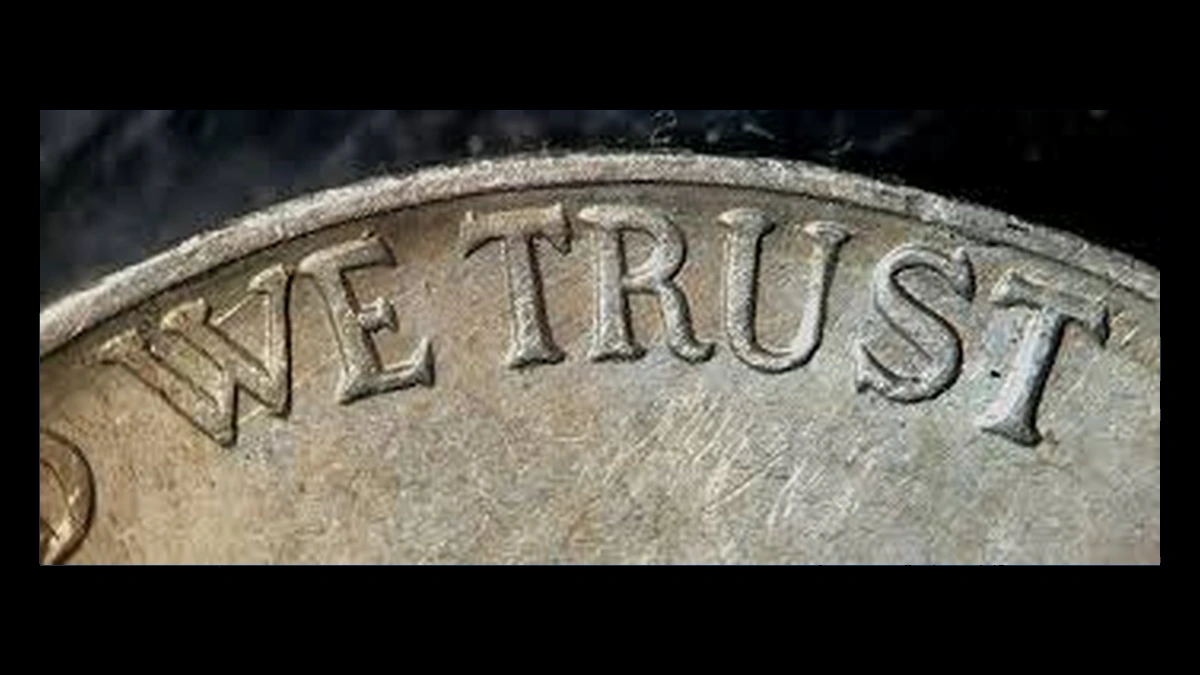
Listed front varieties include Philadelphia and San Francisco examples, while back varieties occur across all three mints. A Denver pattern also affects detail near the right side of the steps.
The repeated shape came from the die rather than a second strike on each coin. No Proof nickels were issued for 1949, so shine alone does not establish a Proof variety.
How to Identify
Choose the mint before comparing the catalog photographs. D and S sit beside Monticello, while Philadelphia normally has no letter.
Follow the exact rounded extra outlines in the relevant letters or step detail. A flat shelf, soft building, or thick worn lettering needs a different explanation unless the pattern matches.
What It’s Worth
$10–$250 is the estimate for identified minor doubled dies. Stronger separation and attractive preservation support the upper part.
The range does not assign a sale to every listed variety. A brighter coin is not automatically a scarcer variety or a Proof.
3. 1949 Nickel A Clash Mark near the Final O Error
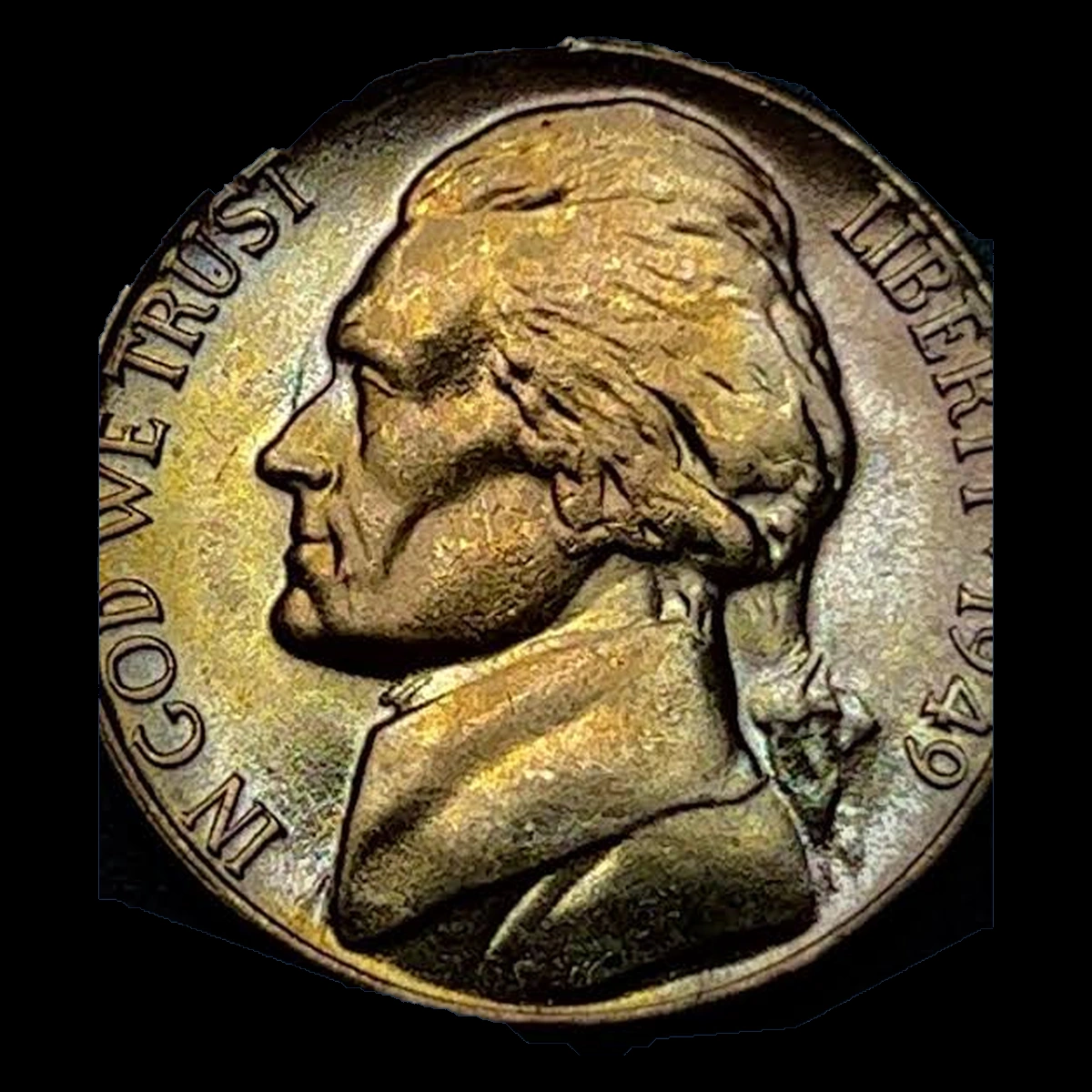
A Denver doubled-die listing records a clash mark near the second O in MONTICELLO. It came from the dies contacting each other without a blank and later passing the transferred trace to a coin.
The clash and doubled lettering can occur together but explain different details. A random line beside the word is not enough to establish that match.
How to Identify
Start at the final O and compare the exact mark with the Denver catalog image. Follow its shape through nearby detail with changing light.
A cut or an unrelated raised crack has a different origin. The line must fit the recorded transferred pattern, rather than simply occupy the same general area.
What It’s Worth
$15–$125 is the estimate for a clear matching 1949-D clash. Visibility and surface condition affect its appeal.
No separate auction amount is supplied for the cataloged feature. If doubled lettering occurs on the same nickel, price the combined coin once.
4. 1949 Nickel Raised Lines and Patches from Die Breaks Error
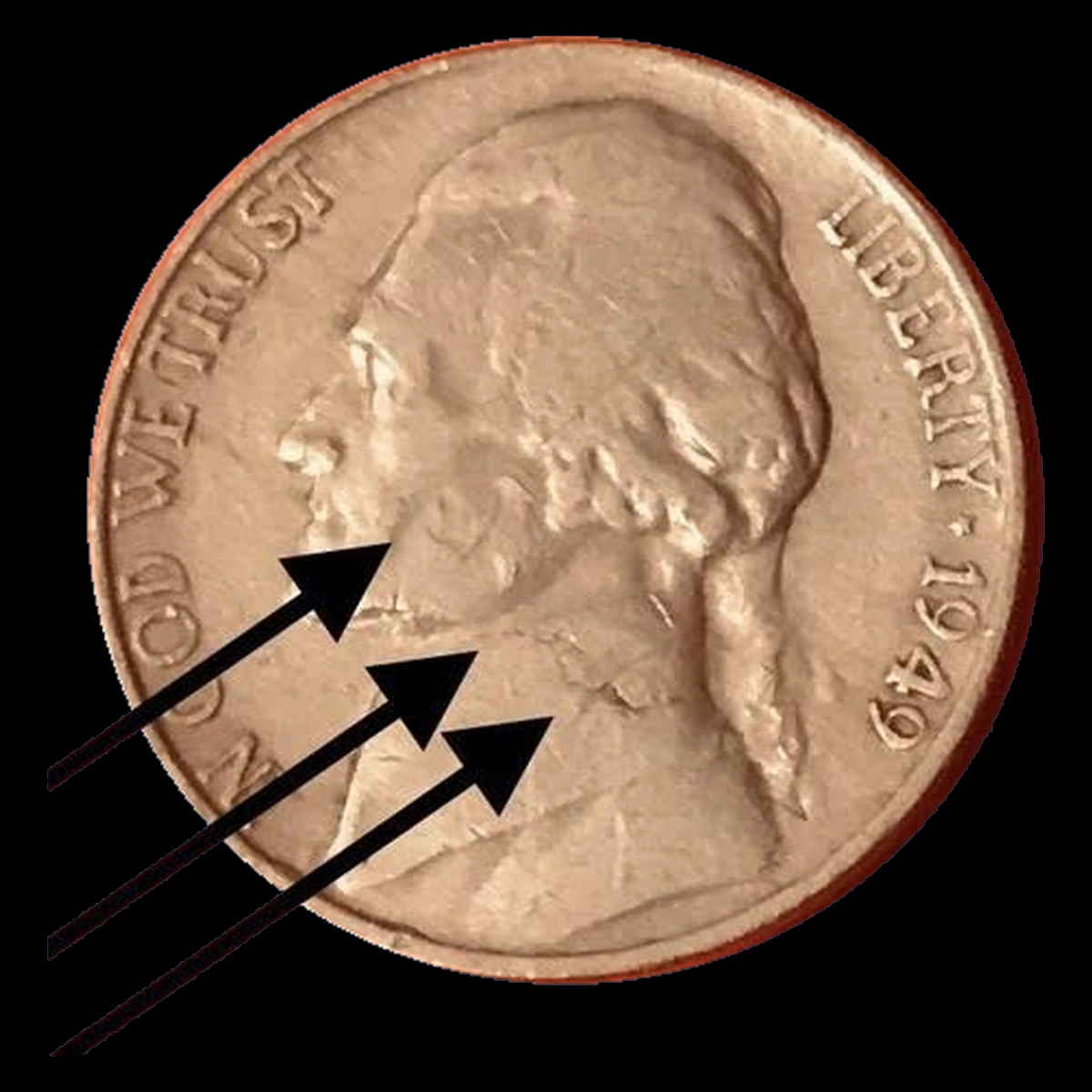
A crack in a die fills with metal and leaves a raised line. A small missing piece can leave a broader raised patch instead.
The 1949 year-list report gives no particular mint or location. It does not automatically establish a named crack or rim cud.
How to Identify
Inspect the center of the line: a die crack rises, while a scratch can have a low center between raised sides. Check that a larger patch belongs naturally to the struck surface.
Follow any claimed cud to its rim connection and examine the edge for an impact. Dirt, solder, or displaced metal from damage can otherwise imitate a raised feature.
What It’s Worth
$5–$100 is the estimated range for confirmed modest cracks and small breaks. A clear original feature on an attractive coin is more useful than an insignificant line.
The broad report has no individual 1949 sale assigned here. Its name alone does not give an unidentified lump a premium.
5. 1949 Nickel A Peeling Surface or a Complete Split Error
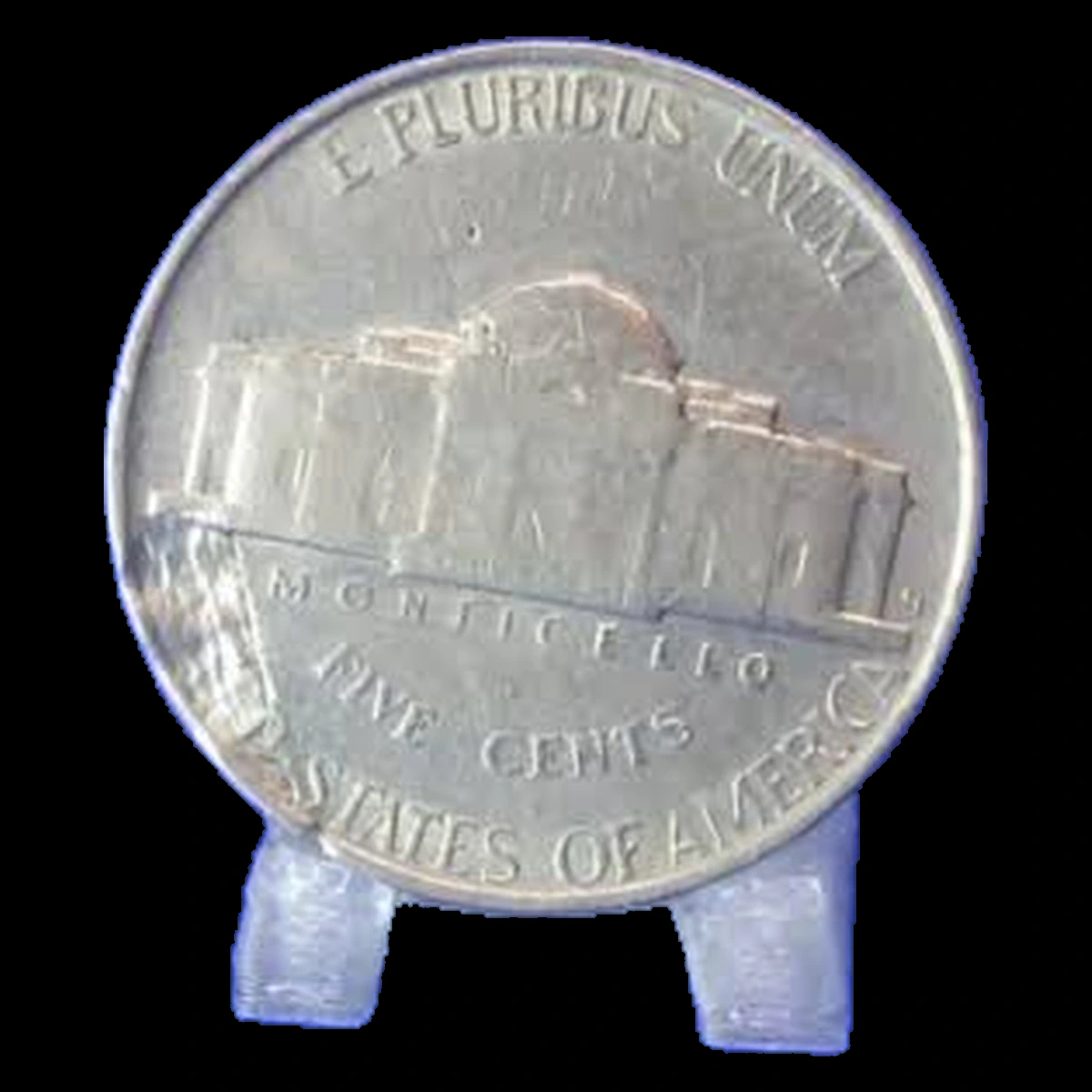
A 1949-S example has a diagonal lamination across Jefferson’s portrait. A separate Philadelphia coin split into two thin discs after it had already circulated.
One matching half retained the front and the other the back. They are parts of one original nickel, rather than two coins struck on thin blanks.
How to Identify
For the pair, inspect the exposed interiors and matching edges without rubbing them together. The worn outer designs and inner fracture surfaces should explain one coin separating.
The local S lamination needs a different check: follow the diagonal layer boundary and leave attached metal alone. Neither separated half should be required to weigh the full normal 5 grams.
What It’s Worth
$15–$300 spans surface laminations around $15–$100 and identified matching split pairs around $75–$300. The Philadelphia halves sold together for $114 in April 2020.
PCGS graded the front Fine15 and the back VF20. The $114 is one pair total, not a price that each half automatically receives.
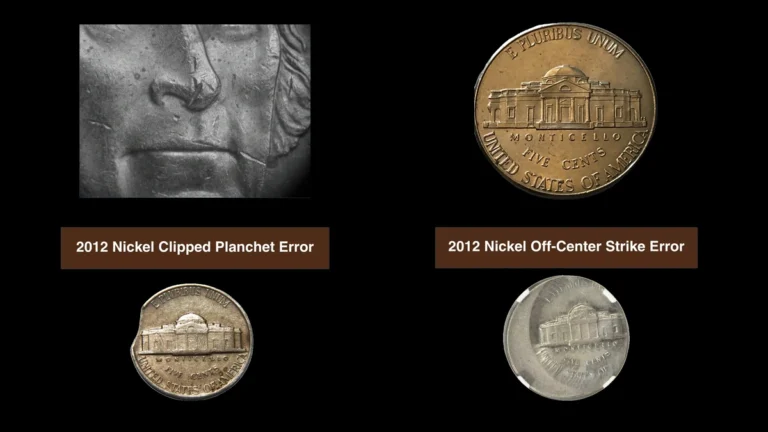
6. 1949 Nickel A Gap from a Clipped Blank Error
A blank can reach the press with metal missing after cutting overlaps a hole or incomplete strip edge. The design then forms beside the existing gap.
The 1949 guide does not specify one mint or clip size. A chunk missing from a finished coin is not enough to prove this earlier cause.
How to Identify
Examine the rim at both ends of the gap for weakening or metal flow toward the opening. Opposite-rim weakness can support a clip when visible.
Look for saw grooves or file marks and measure across intact spans. Reduced weight records missing metal but cannot tell whether it disappeared before or after striking.
What It’s Worth
$20–$200 is the estimate for genuine clips of differing size and condition. A readable date and original boundary make the error easier to assess.
No particular sale accompanies the guide’s report. An extreme gap that removes the coin’s identity may be less useful than a smaller clearly dated example.
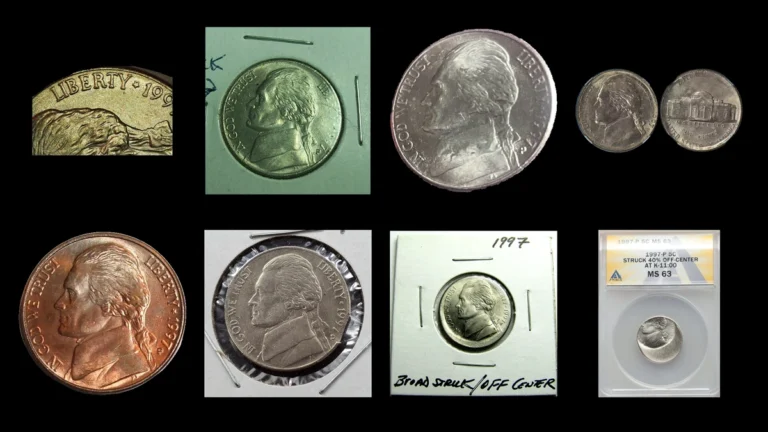
7. 1949 Nickel A Wider Outline from a Broadstrike Error
The collar normally contains the blank’s edge during striking. A broadstrike spreads wider when that ring fails to hold the metal properly.
A Denver example graded NGC MS62 is recorded. Its design remains on the expanded metal, unlike an offset that sends part of the image beyond the blank.
How to Identify
Read the outer words on both faces and inspect the extra metal beyond them. A normal diameter is about 21.21 mm, but measure several directions to record uneven spread.
Check for crushed high points or repeated hammer marks from later flattening. A plain edge is normal and does not establish this error by itself.
What It’s Worth
$75–$400 is the estimate for comparable broadstrikes. The Denver MS62 appears in an April 2020 price record at $120.
Amount of spreading, complete design, and original surface all matter. A wide border alone does not justify the range.
8. 1949 Nickel A Displaced Design from an Off-Center Strike Error
The documented 1949-S NGC MS66 coin is 10% off center. Separate reports describe a Denver 10% shift toward four o’clock and a Philadelphia 25% example.
Each coin has its own displacement and preservation. Their percentages and directions should not be combined.
How to Identify
Find the date and surviving mintmark, then compare both faces. The unused metal and design lost beyond the edge should fit the same misplaced blank.
An uneven border on just one face can have another cause. The bare crescent still contains metal, so the error does not require weight loss.
What It’s Worth
$100–$1,000 covers comparable dated off-center pieces. The high-grade San Francisco 10% example brought $690 in September 2010.
That result does not automatically price the Denver or Philadelphia reports. A larger shift can remove useful identity rather than make the coin more desirable.
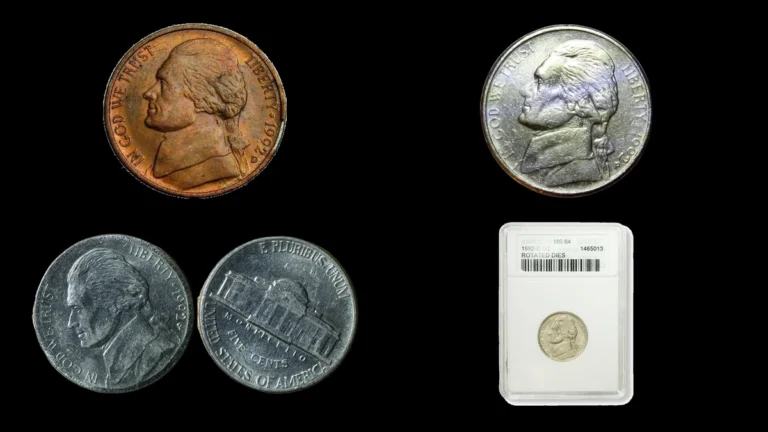
9. 1949 Nickel A Second Strike, Sometimes with Indents Error
A Philadelphia PCGS AU55 nickel received its second strike 75% off center. A separate Denver report combines double striking with two depressions made by overlapping blanks, called indents.
The Denver report gives no exact indent positions. In old auction titles, D/S can mean double struck, which is different from the small D-over-S mintmark variety.
How to Identify
Trace widely displaced portraits or letters through their overlap. Two strike positions involve the whole design, while D-over-S concerns only the mintmark.
For the indent combination, look where design was blocked by the other blank. Do not borrow the Philadelphia second-strike position to describe the separate Denver coin.
What It’s Worth
$150–$900 is the estimate for comparable repeated strikes and identified indent combinations. The Philadelphia AU55 double strike sold for $460 in June 2008.
The Denver compound error remains one object. Its two indents should not each receive an additional full coin price.
10. 1949 Nickel Nickel Designs on a Copper Cent Blank Error
The recorded Philadelphia PCGS MS61 Brown example keeps LIBERTY but has a slightly stretched date and missing IN GOD. Only part of WE TRUST and much less of E PLURIBUS fit on the smaller blank.
Those details support the wrong-blank explanation more than brown color alone. Philadelphia produced no P mintmark on these nickels; a P in a description names the mint.
How to Identify
Combine naturally cut-off lettering with metal, weight, and size. Period cent standards are about 3.11 grams and 19.05 mm before spreading, rather than measured values supplied for this exact coin.
Inspect the edge for plating or fresh trimming. A copper coating can change the color without recreating the smaller original blank and incomplete design.
What It’s Worth
$300–$1,200 is the estimate for comparable identified cent-blank strikes. The MS61 Brown example sold for $660 in September 2019.
A readable year and natural design truncation help establish the error. Cleaning or damage can reduce its appeal even when the blank identification is correct.
Conclusion
For 1949 nickels, read a small mintmark separately from widely shifted designs. D/S can describe a famous mintmark variety or abbreviate double striking in an old title, so the actual feature matters.
Preserve a matching split pair together and leave loose metal untouched. When using a price record, keep mint, condition, and the complete error combination with the coin it describes.