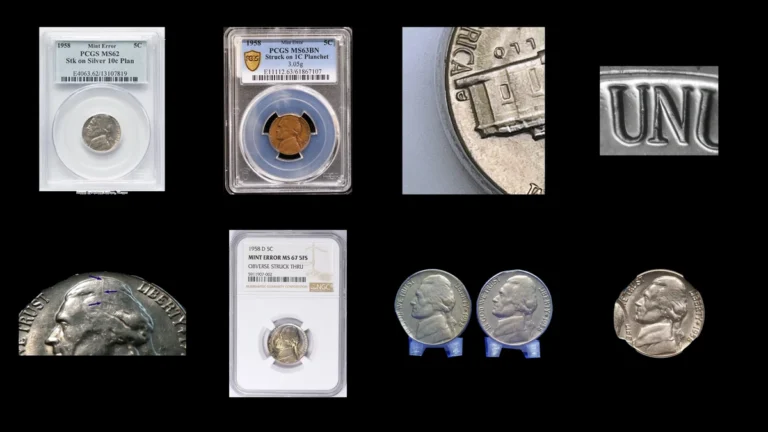
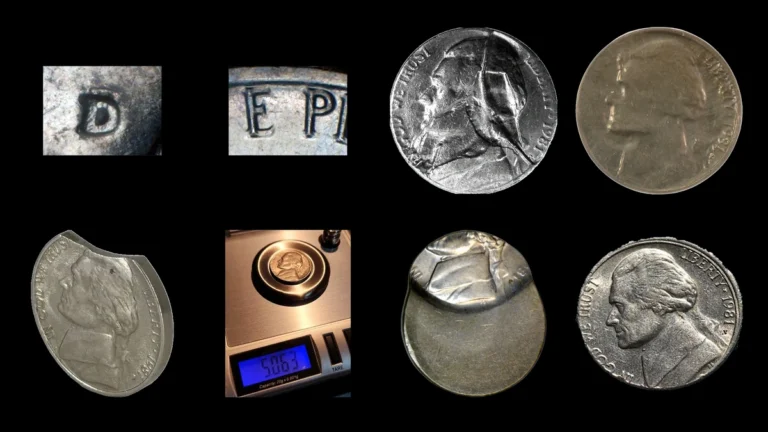
Rare 1937 Nickel Errors (List & Pictures)
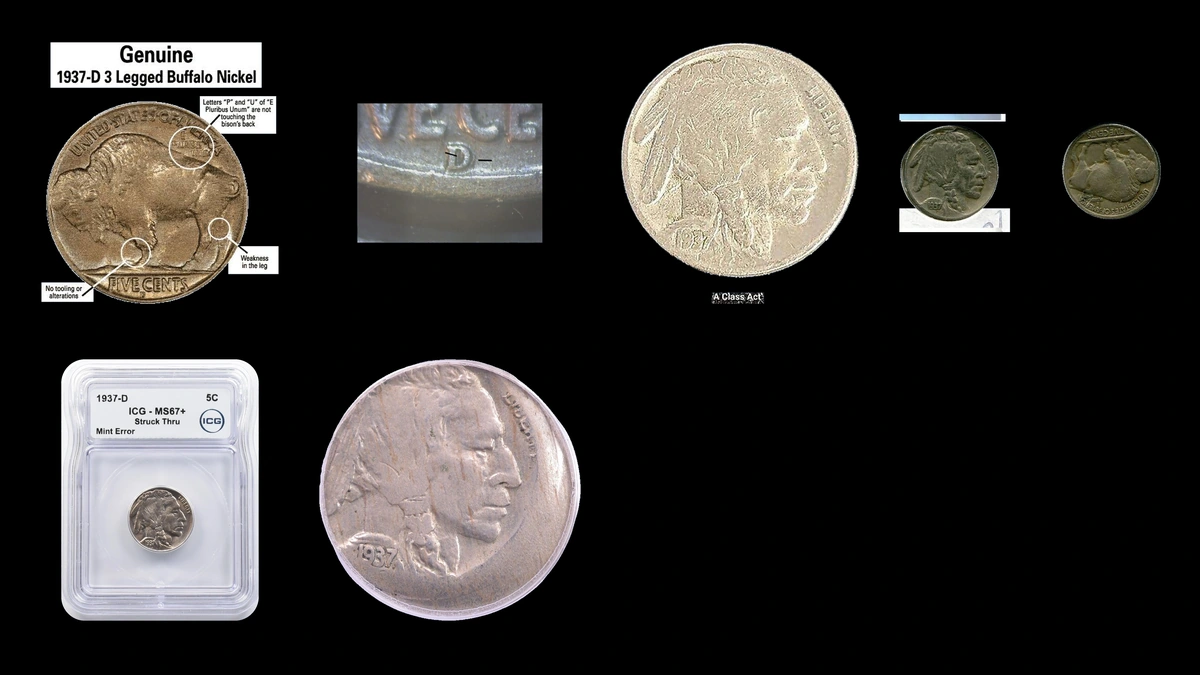
A missing leg attracts attention on a Buffalo nickel, but the remaining hoof and belly marks help identify the real variety. An exceptional 1937-D Three-Legged example sold for $99,875 in October 2021.
The 1937 nickel errors below span estimated values of $15–$100,000. Begin with the date and mint, then compare the actual feature with its own type rather than the headline record.
1. 1937 Nickel The Missing Front Leg: Three-Legged Buffalo Error
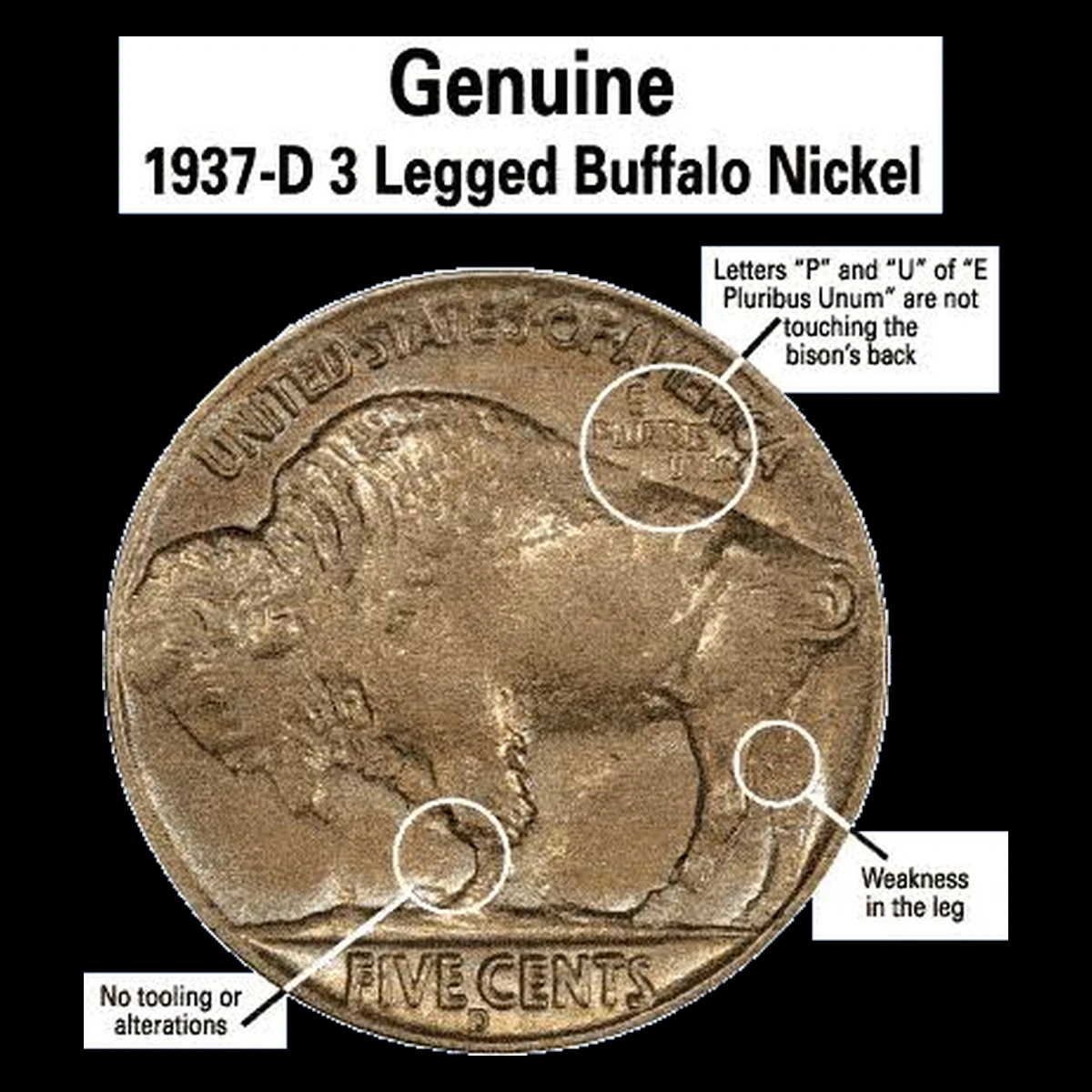
Heavy polishing removed most of the buffalo’s front right leg from a Denver die, but the hoof remained. The die also left a rough-looking rear leg and a raised trail beneath the belly.
Those companion features help identify the 1937-D Three-Legged variety. A different year’s partly missing leg needs a different comparison.
How to Identify
Read 1937 on the front and D beneath FIVE CENTS. Then examine the surviving front hoof, rough rear leg, and belly trail together.
Look for scraping or a hollowed surface where a normal leg could have been removed. Normal weight does not establish authenticity, since an alteration may remove very little metal.
What It’s Worth
$400–$100,000 covers a broad condition range: worn genuine examples around $400–$2,500 and desirable unworn coins around $3,000–$100,000. The highest figures describe exceptional pieces.
PCGS records $99,875 for an MS66+ example at Legend on October 28, 2021. That extraordinary preservation does not describe an average worn or cleaned coin.
2. 1937 Nickel An Extra D or S from a Repunched Mintmark Error
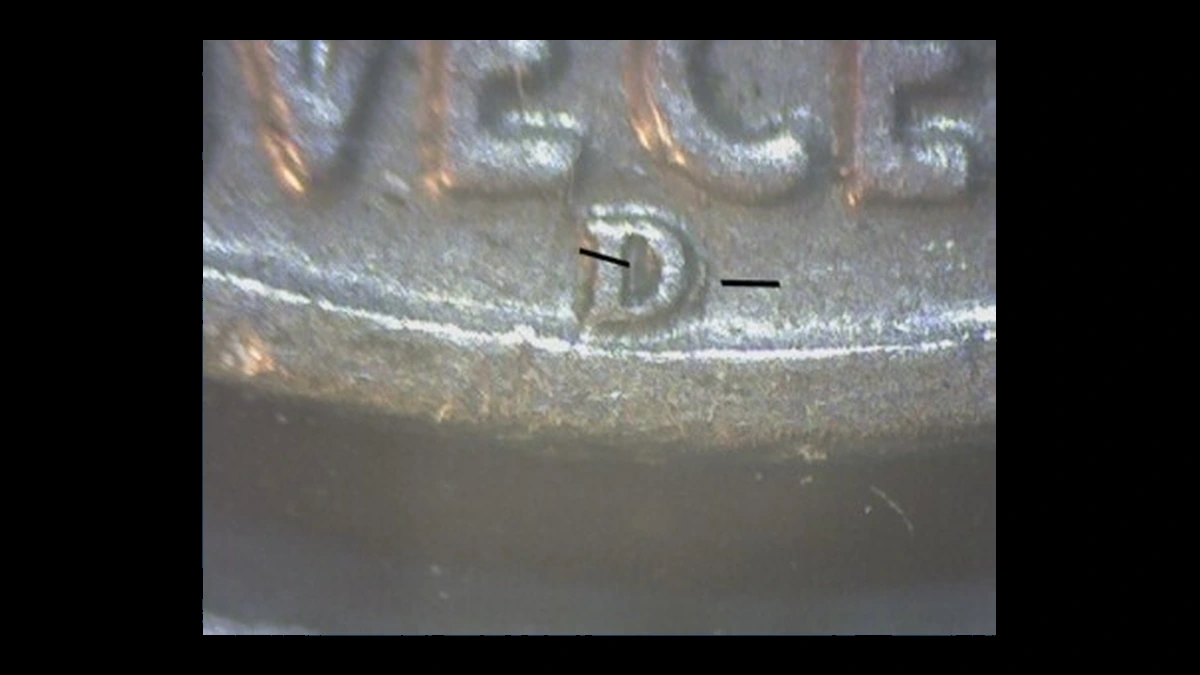
Hand-punching a mintmark into a die more than once could leave overlapping letter shapes. Reported Denver forms include rightward, upper-left, and triple-punched D impressions.
A San Francisco example has a leftward S spread, while another Denver report gives no direction. These small mintmark changes do not explain the Three-Legged design.
How to Identify
Trace the D’s opening or the S curves beneath FIVE CENTS and compare the entire shape. Direction alone cannot establish a particular variety.
A triple punch needs evidence of more than one earlier impression. Keep the letter upright in photographs and change the light to rule out a reflection or damaged corner.
What It’s Worth
$20–$250 is the estimate for these minor mintmark varieties. Clear extra curves on attractive unworn examples generally make stronger comparisons than thick worn letters.
No individual sale is assigned to every reported punch shape. The word “triple” does not automatically place a small remnant at the upper end.
3. 1937 Nickel Extra Design Outlines from Doubled Dies Error
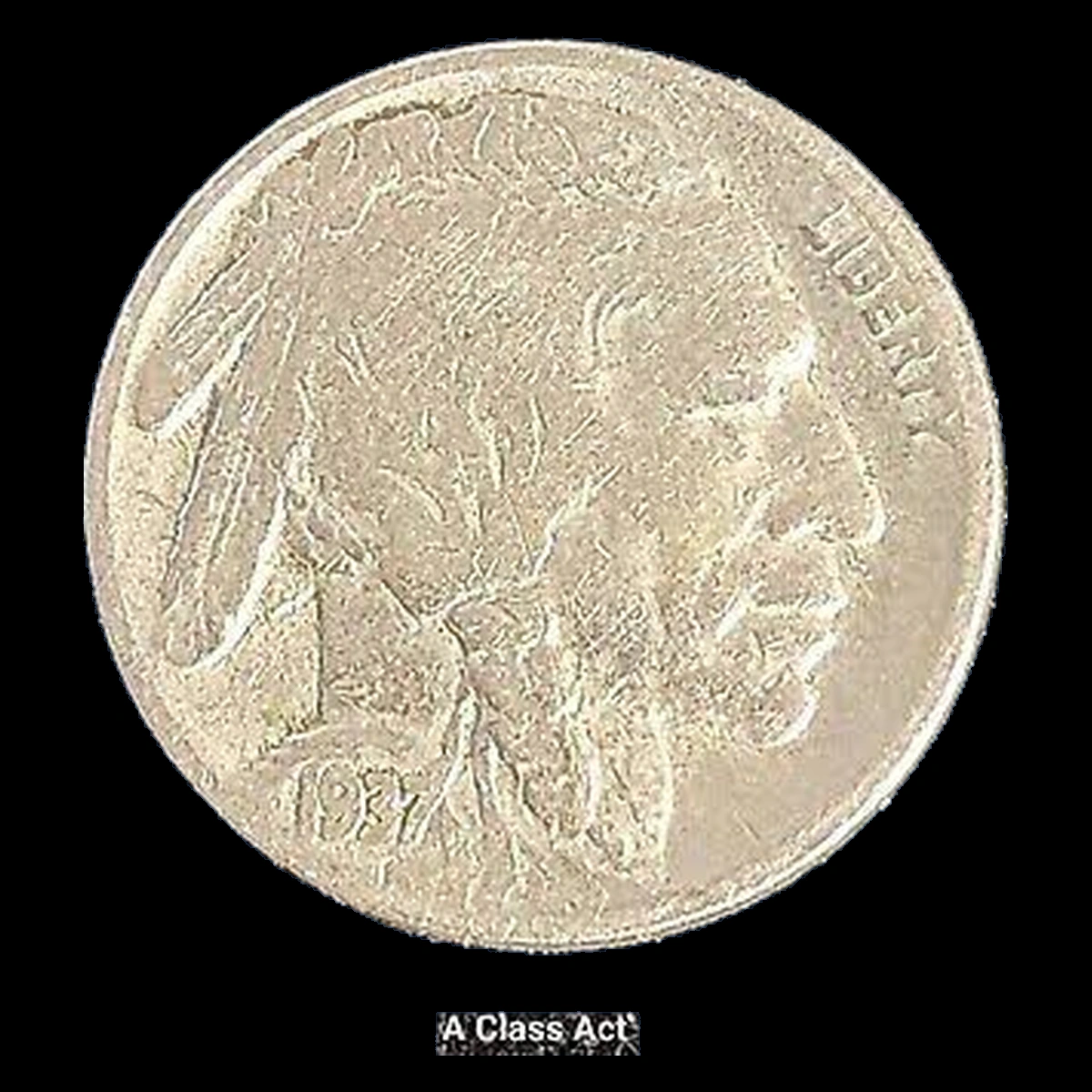
Philadelphia reports involve the date and LIBERTY on the front or separate back lettering patterns. A reported San Francisco coin combines front doubling with a repunched mintmark.
The repeated design was already on the die before striking. It is different from a finished coin receiving another blow.
How to Identify
Choose the mint and face first, then compare the exact repeated outlines. The S front report does not establish the same locations as the Philadelphia examples.
Flat shelves beside letters can come from movement during striking. Match persistent raised shapes across several details rather than relying on one thick edge.
What It’s Worth
$20–$250 is the estimated whole-coin range for these modest reported doubled designs. Clear identification and preservation matter more than the broad label.
The San Francisco coin’s doubling and repunched mintmark belong to one specimen. They should not receive two full prices added together.
4. 1937 Nickel Missing Surface Metal from Lamination Error
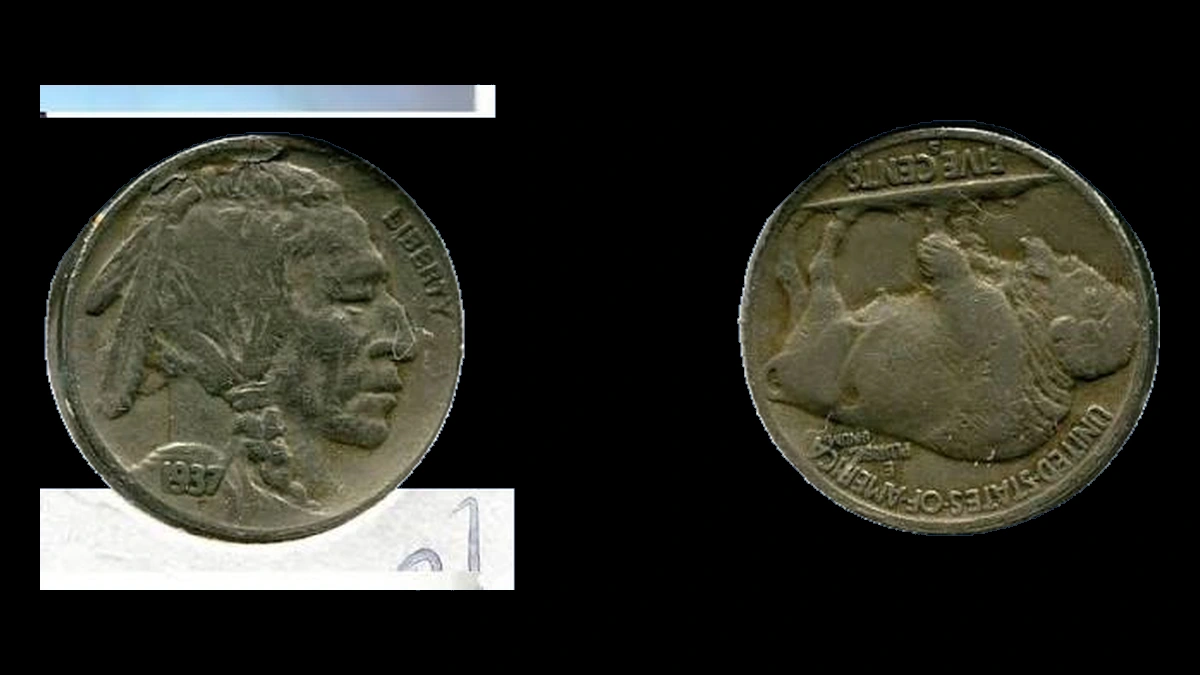
A weak area inside the alloy can leave an attached flap or a rough patch where a thin layer separated. This is lamination within the coin’s metal.
A normal Buffalo nickel uses 75% copper and 25% nickel mixed throughout. It is not a copper center covered by a separate nickel shell.
How to Identify
Find the layer boundary in side light and leave any flap attached. A scraped area often shows tool cuts or pushed metal instead of an internal separation.
Confirm that the remaining date reads 1937. A normal coin starts near 5 grams and 21.2 mm, but an attached flap may leave almost all of its weight present.
What It’s Worth
$15–$175 is the estimate for genuine local peels. A larger readable separation on a better-preserved coin can support the upper part.
A 1944-D Jefferson nickel with a back lamination sold for $27 in April 2008. Its different design and wartime alloy make it an affordability comparison rather than an exact price for a 1937 Buffalo.
5. 1937 Nickel Interrupted Detail from a Strike-Through Error
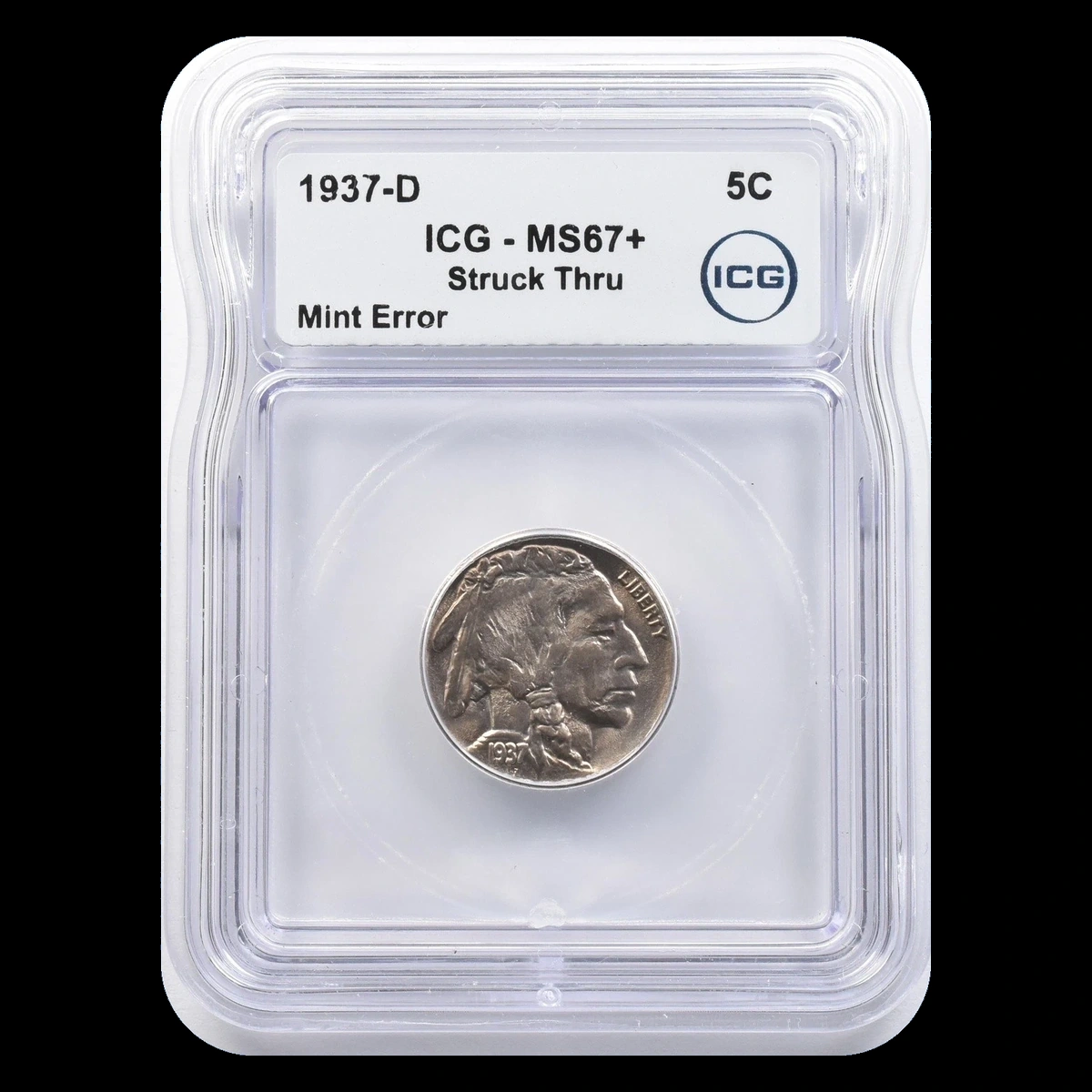
Material caught between a blank and die can leave weak detail, a depression, or a textured impression. The 1937 report does not establish a particular mint or obstruction.
A smooth patch and a sharply defined shape can have different causes. General examples involving grease or fibers do not identify the material on this year’s reported coins.
How to Identify
Compare the affected patch with nearby high points for a local interruption rather than general wear. Inspect the boundary for texture or an object outline.
Look for scraping and preserve any retained material. Include enough normal design in photographs to establish both the year and the contrast around the mark.
What It’s Worth
$20–$250 is the estimated range for confirmed strike-throughs. A distinct readable impression can be more appealing than a large vague weak area.
A later Jefferson struck-through nickel sold for $84 in February 2015. That different-year record does not supply a 1937 Buffalo sale or identify its obstruction.
6. 1937 Nickel A Missing Edge Section from a Clip Error
A clipped blank arrives at the press incomplete, so its design forms beside metal that is already missing. The 1937 report gives no fixed mint, shape, or percentage.
How to Identify
Inspect each end of the gap for natural striking flow and weakening. Severed finished detail, sawing, or filing can point toward later cutting.
Opposite-rim weakness can support some clips but is not required for every shape. A low weight confirms less metal, rather than proving when it disappeared.
What It’s Worth
$25–$350 covers genuine clips, with larger clear errors and attractive surfaces nearer the upper end. A readable Buffalo date helps identify the year.
A 1997 Philadelphia Jefferson nickel with a 20% clip sold for $124 in March 2025. Neither that percentage nor its price should be assigned directly to an unspecified 1937 gap.
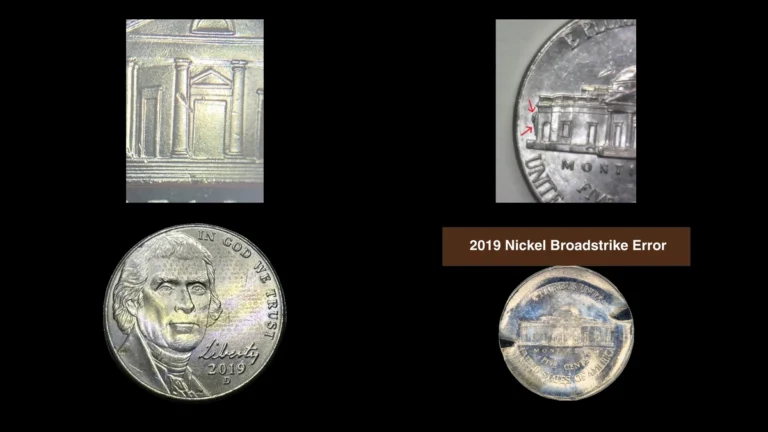
7. 1937 Nickel A Wider Border from a Broadstrike Error
A broadstrike expands when the collar fails to contain the blank properly. The design remains on the coin while metal spreads beyond its normal outline.
The reported category does not establish one example for every 1937 mint. Later hammering can also widen a nickel, so the complete shape needs examination.
How to Identify
Measure several directions and trace the full outside inscription. If design is lost beyond one edge, consider an off-center strike instead.
Inspect the border and plain edge for crushed details, repeated blows, or squeezing. Natural spread and intact struck design should support the same explanation.
What It’s Worth
$75–$400 is the estimate for recognizable broadstrikes of differing spread and wear. Attractive original surfaces strengthen the comparison.
A 1999 Philadelphia Jefferson broadstrike brought $89 in March 2025. It is a later-design reference, not a recorded 1937 sale.
8. 1937 Nickel A Displaced Design from an Off-Center Strike Error
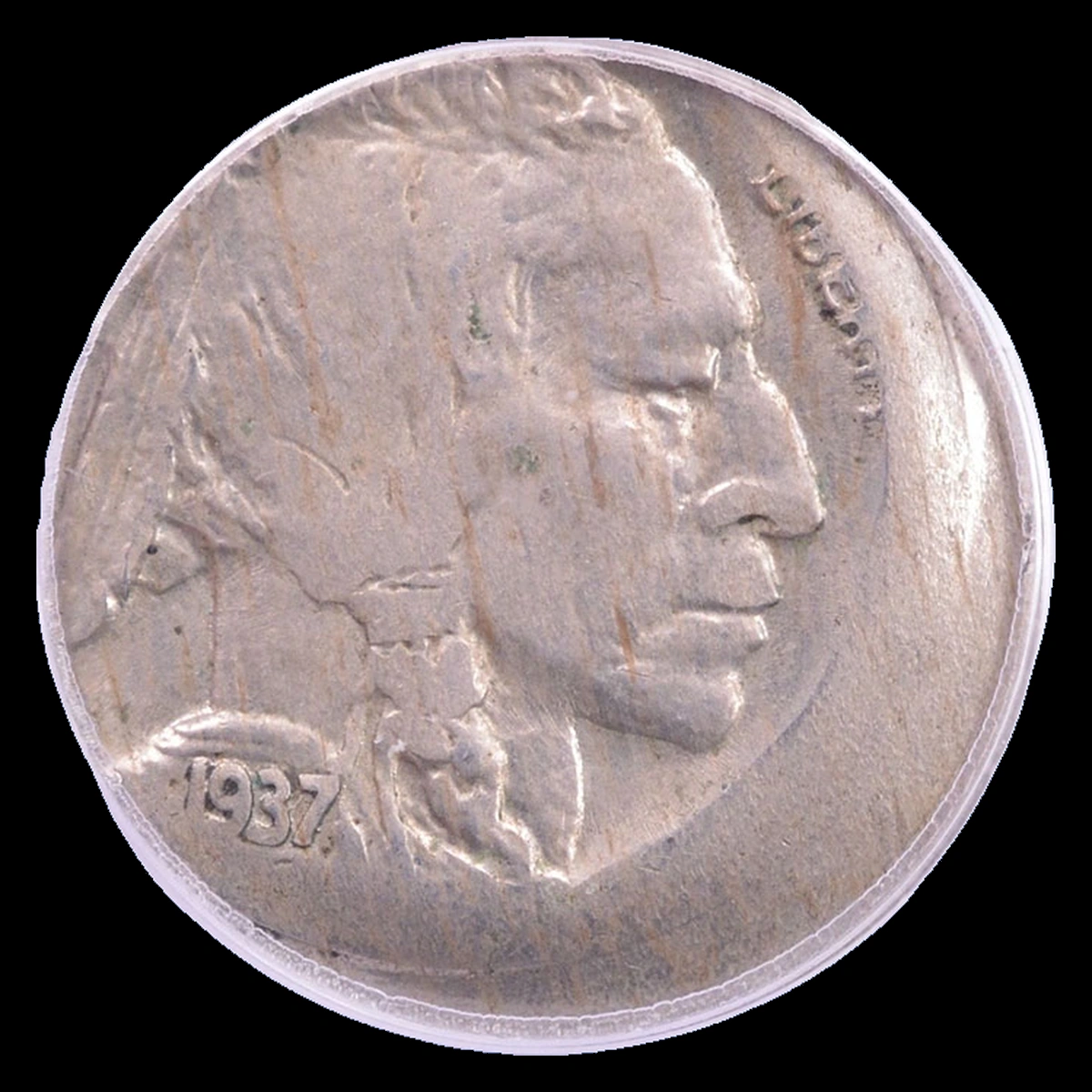
A collector records a Philadelphia MS64 example about 10% off center toward the bottom. The misplaced blank kept unused metal beside the portion that received the design.
How to Identify
Compare both faces and the design running beyond the metal opposite the unused area. An uneven border with every detail present is a different observation.
Read the date and check beneath FIVE CENTS before matching the collector’s example. If the mintmark area is missing, its absence cannot prove Philadelphia origin.
What It’s Worth
$100–$1,500 is the estimated range for dated 1937 off-center examples. The recorded 10% collector piece has no auction price assigned here.
A 1940 Philadelphia Jefferson nickel struck 15% off center brought $218.50 in October 2010. Its different design, displacement, and preservation limit a direct comparison.
9. 1937 Nickel A Copper Cent Blank under the Buffalo Design Error
A collector records a Denver example graded MS64 Brown on a copper cent blank. The smaller disk could not receive all the nickel’s outer design.
No older Lincoln portrait is required because the host was a blank. A finished cent used again would be a different error.
How to Identify
Use period cent standards of about 3.11 grams and 19 mm as comparisons, not as claimed measurements of the recorded coin. Combine the smaller outline with naturally truncated nickel detail.
Inspect the edge for a coating seam or filing, then confirm the 1937 date and D on the same object. Preserve the color for a material check rather than scratching through it.
What It’s Worth
$1,500–$7,500 is the estimate for a confirmed 1937 Buffalo on a copper cent blank. It is not a supplied sale of the collector’s MS64 Brown specimen.
A 1940 Jefferson cent-blank nickel sold for $990 in September 2019. Its different design and condition provide context, while the Buffalo range assumes the date, mint, and blank have been established.
Conclusion
A Three-Legged identification needs more than counting visible legs. The date, D, remaining hoof, rear-leg texture, and belly trail should agree before its price range becomes useful.
Other 1937 errors can be much more affordable. Match each visible feature with its own cause and condition, keeping missing metal, missing design, and a smaller original blank as separate possibilities.