Rare 2001 Dime Errors (List & Pictures)
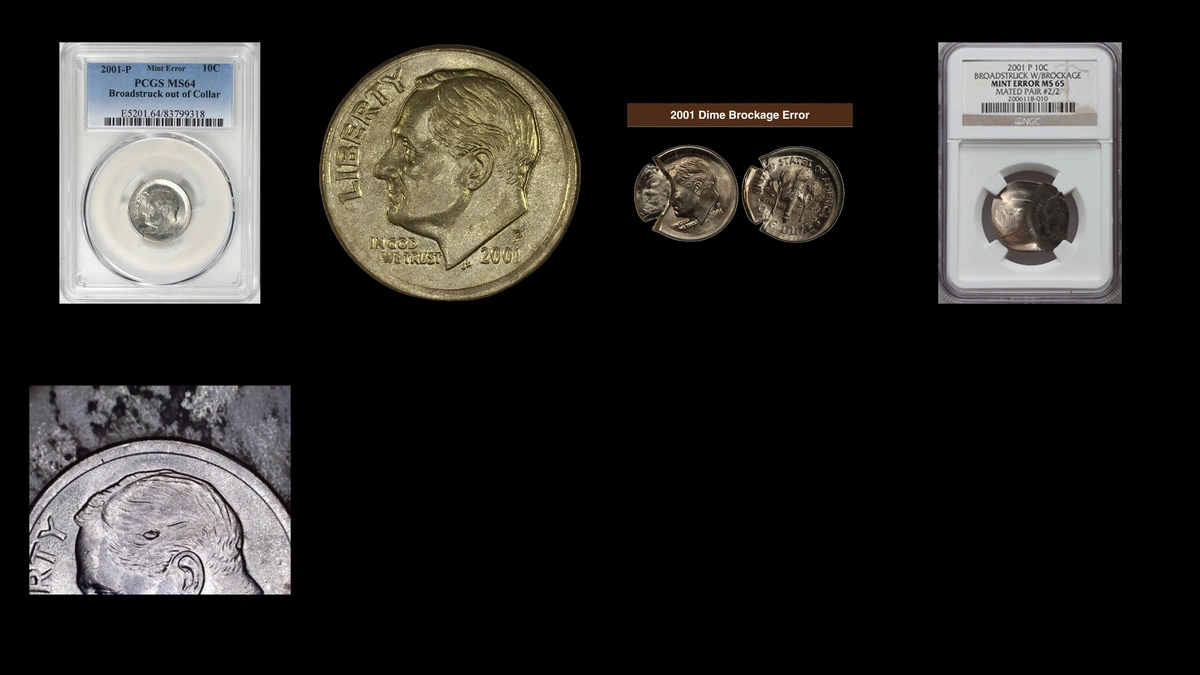
A matched 2001-P error pair sold for $470 in June 2014 for both dimes together. Estimated values for 2001 Roosevelt dime errors span $5–$2,500, from a small cheek chip to a conditionally identified wrong blank.
Compare the outline, both designs and the metal before using any price; collector Proofs and matching pairs need their own checks.
| Observation | Possible explanation | Estimated range |
|---|---|---|
| Two openings | Double clip | $20–$300 |
| Edge step or expanded border | Partial collar or broadstrike | $15–$400 |
| One shifted face | Misaligned die | $10–$200 |
| Both designs missing the same area | Off-center strike | $50–$500 |
| Overlapping impressions | Multiple strikes | $100–$1,000 |
| Backward sunken design | Brockage | $60–$600 |
| Two matching coins | Mated error pair | $350–$1,500 per pair |
| Thin piece, exposed copper or peeling | Split, missing layer or lamination | $10–$1,000 |
| Unusual starting metal | Reported wrong blank | $300–$2,500, conditional |
| Raised cheek or weak reverse detail | Die chip or strike-through | $5–$250 |
| Reverse tilted after controlled flip | Rotated dies | $20–$350 |
An ordinary clad dime weighs 2.268 grams and measures 17.91 millimeters across a reeded edge. Its copper-nickel outer layers enclose a copper center; 2001-S collector Proofs include both clad and 90% silver versions, the latter normally weighing 2.50 grams.
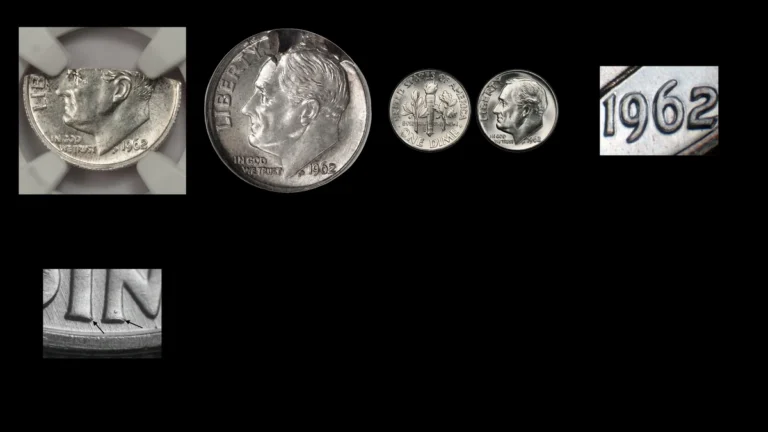
1. 2001 Dime Two Missing Edge Sections: Double Clip Error
The recorded 2001-P double clip weighs 2.09 grams and is graded ANACS MS60 Details. Both openings were identified as shortages in the blank before striking.
The Details designation indicates a condition problem but does not name it by itself. Nor does the general description establish the gaps’ clock positions.
How to Identify
Inspect each opening where the rim and letters meet it. Their ends should show metal struck around a pre-existing gap rather than cuts through completed design.
Measure intact spans and examine the remaining reeds for filing. Other genuine double clips may remove a different amount of metal, so they need not match 2.09 grams.
What It’s Worth
Original double clips are estimated at $20–$300. Clarity, identification and the actual condition problem affect the comparison.
GreatCollections sold the documented example in May 2026, but the public page hides its final amount. The visible $1 opening bid is not a sale price.
2. 2001 Dime A Step Along the Edge: Partial Collar Error
A blank only partly inside the collar can expand unevenly as the dies close. Its restrained portion may receive normal reeds while exposed metal spreads farther.
A 2001-P example is reported without a fixed step location. The edge, rather than a single face view, carries the main evidence.
How to Identify
Photograph several edge positions in order to show how the two levels connect. Inspect the transition from the grooved section to the expanded portion.
Later rolling can fold a lip over the rim and imitate a step. A smooth area with worn-away reeds alone does not prove partial restraint during striking.
What It’s Worth
Genuine partial collars are estimated at $15–$300. A clear original transition is more useful than slight unexplained unevenness.
No sale is assigned to the Philadelphia report. Its shape should not inherit the price of a much wider broadstrike.
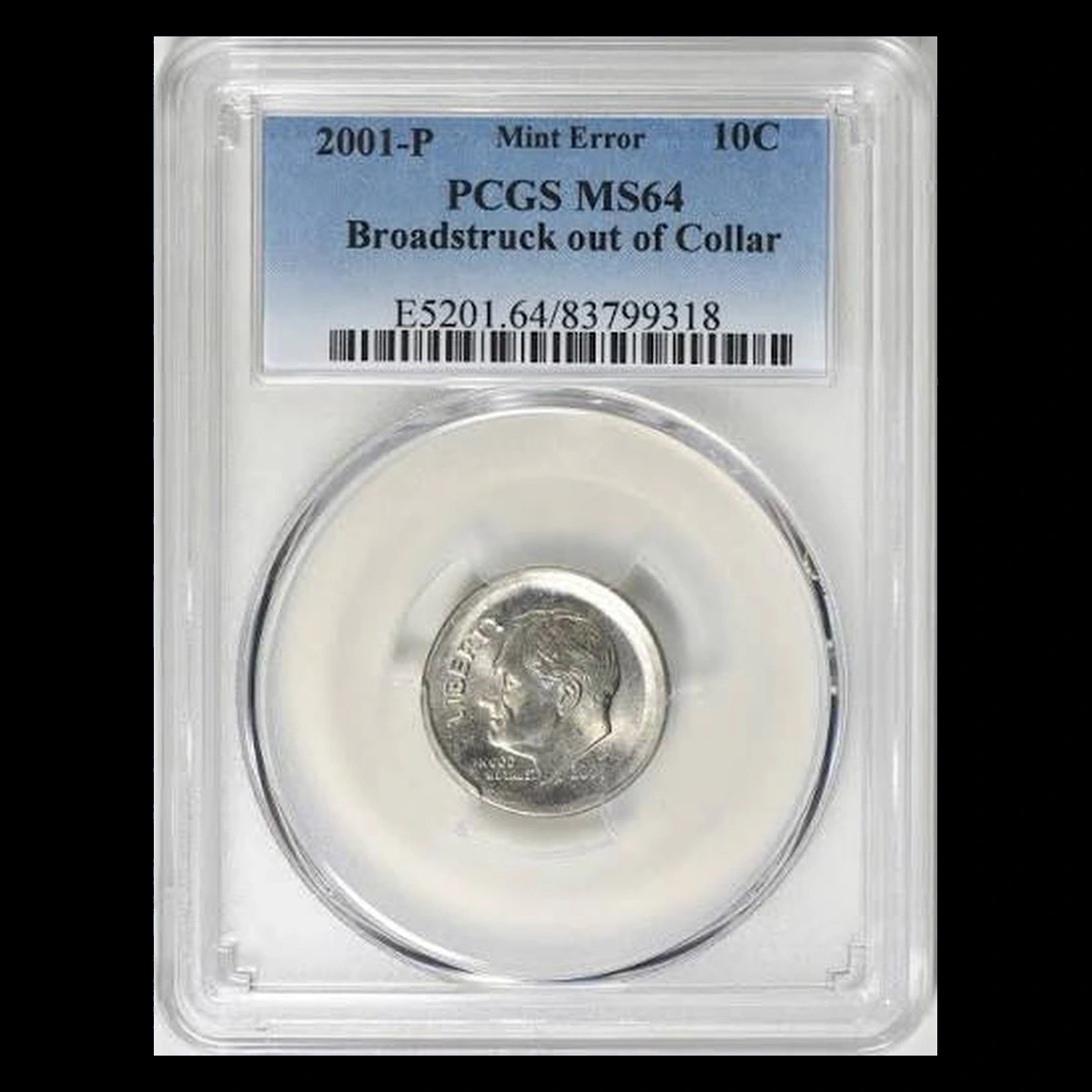
3. 2001 Dime A Wider Coin with Full Lettering: Broadstrike Error
A broadstrike spreads beyond the normal outline while keeping the intended design. The collar failed to contain the metal normally.
A professional dealer listed a 2001-D uneven broadstrike. A separate Philadelphia report gives a diameter around 19 millimeters, which is not the Denver coin’s measurement.
How to Identify
Trace the outer lettering on both faces and compare the expanded border with a normal dime. Missing design beyond the edge calls for an off-center explanation instead.
Inspect for flattened high points and pressure marks from later widening. A large diameter by itself cannot establish the cause.
What It’s Worth
Genuine 2001 broadstrikes are estimated at $25–$400. Neither report supplies a verified sale used here.
A 2000-P dime combining broadstriking and repeated strikes sold for $159 in September 2025. That different-year compound error is not a direct price for a plain 2001 broadstrike.
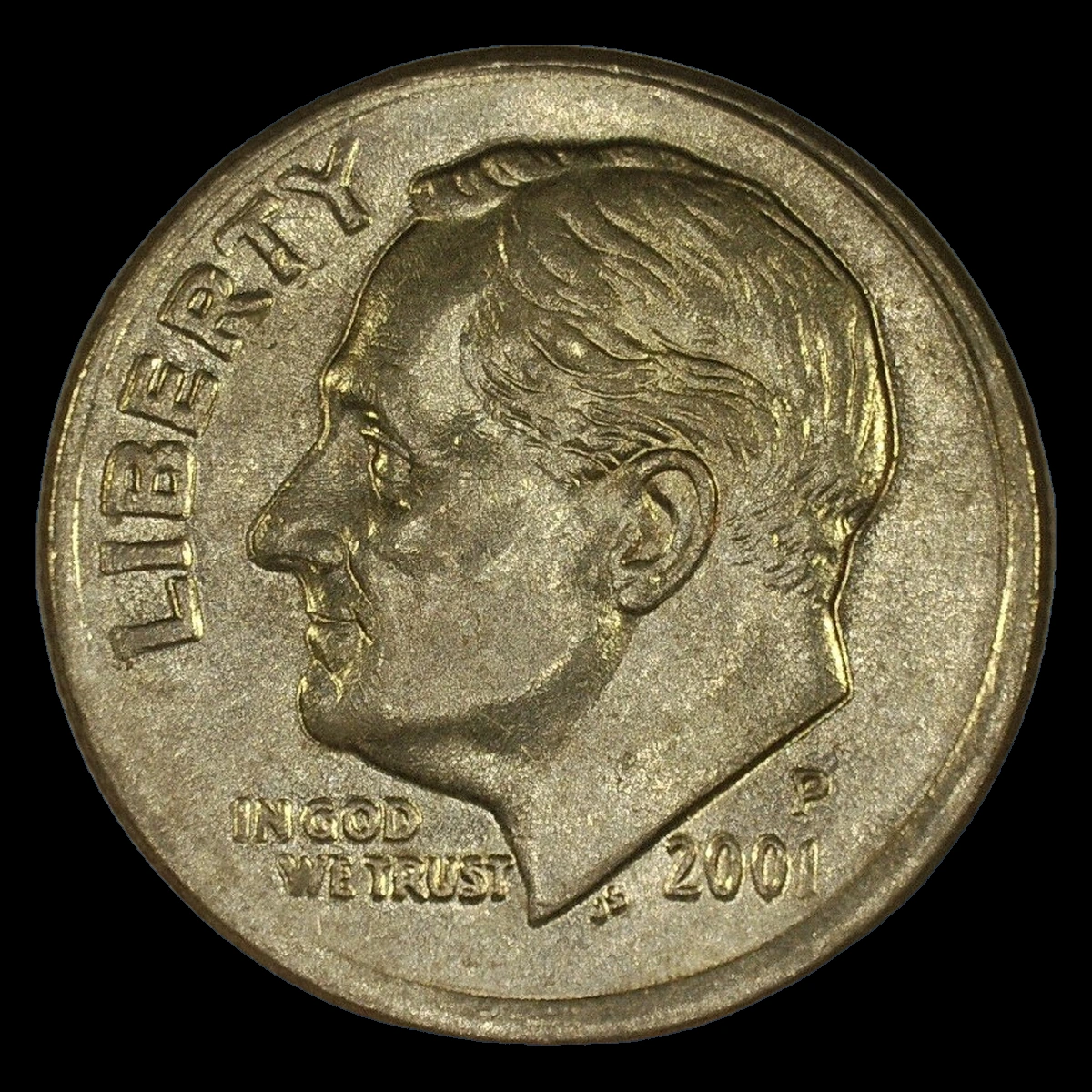
4. 2001 Dime A Shifted Torch Opposite a Centered Portrait: Misaligned Die Error
When one die shifts out of place, its design can move while the opposite face stays centered. The 2001-D report concerns the reverse, with an approximate 20% figure requiring comparison with the actual coin.
This is a die-position problem. A misplaced blank affecting both designs is a different event.
How to Identify
Compare the obverse rim around Roosevelt with the reverse rim around the torch. The reported type needs a substantially centered front opposite displaced reverse detail.
Check whether letters approach or cross the rim and inspect the edge for later squeezing. One wide border in a cropped photograph cannot establish the relationship.
What It’s Worth
Genuine one-sided shifts are estimated at $10–$200. Larger clear displacement generally makes a stronger comparison than minor rim differences.
The approximate percentage is not a sale record. It should not be treated as a two-sided off-center error.
5. 2001 Dime Incomplete Designs Beside Bare Metal: Off-Center Strike Error
The Philadelphia report describes a 2001 dime about 30% off center. Both dies met the same misplaced blank, leaving some original metal untouched.
No clock direction is established. The surviving date and P must be read from the actual specimen.
How to Identify
Compare where design disappears on both faces. Their unused areas should fit one blank that missed the center of the strike.
Look for original surface rather than ground-down letters in the bare section. A larger blank-looking area is not useful if later alteration explains it.
What It’s Worth
Genuine dated examples are estimated at $50–$500. Condition and readable identification remain important even with a substantial offset.
A 1977 dime struck 10% off center sold for $109 in June 2026. Its smaller shift and different date make it a comparison, not a 2001 auction result.
6. 2001 Dime A Later Impression Across the First: Multiple Strikes Error
The documented 2001-P PCGS MS64 coin received a second strike 75% off center. Separate design centers show movement between blows rather than doubling built into one die.
Another Philadelphia report uses the term saddle strike. That claim needs a raised bridge between strike areas and evidence consistent with the press arrangement.
How to Identify
Trace a recognizable later letter or portrait feature across the earlier design on both faces. Fine flat doubling alone cannot show a second displaced strike.
For the saddle claim, inspect the side profile without flattening it. Two images on a flat coin do not demonstrate an original bridge, and later bending can imitate the shape.
What It’s Worth
Comparable clear repeated strikes are estimated at $100–$1,000. A genuine saddle-type example has a separate conditional range of $250–$1,000.
The documented double strike sold for $114 in October 2021. That price and its MS64 grade do not belong to the separate unverified saddle report.
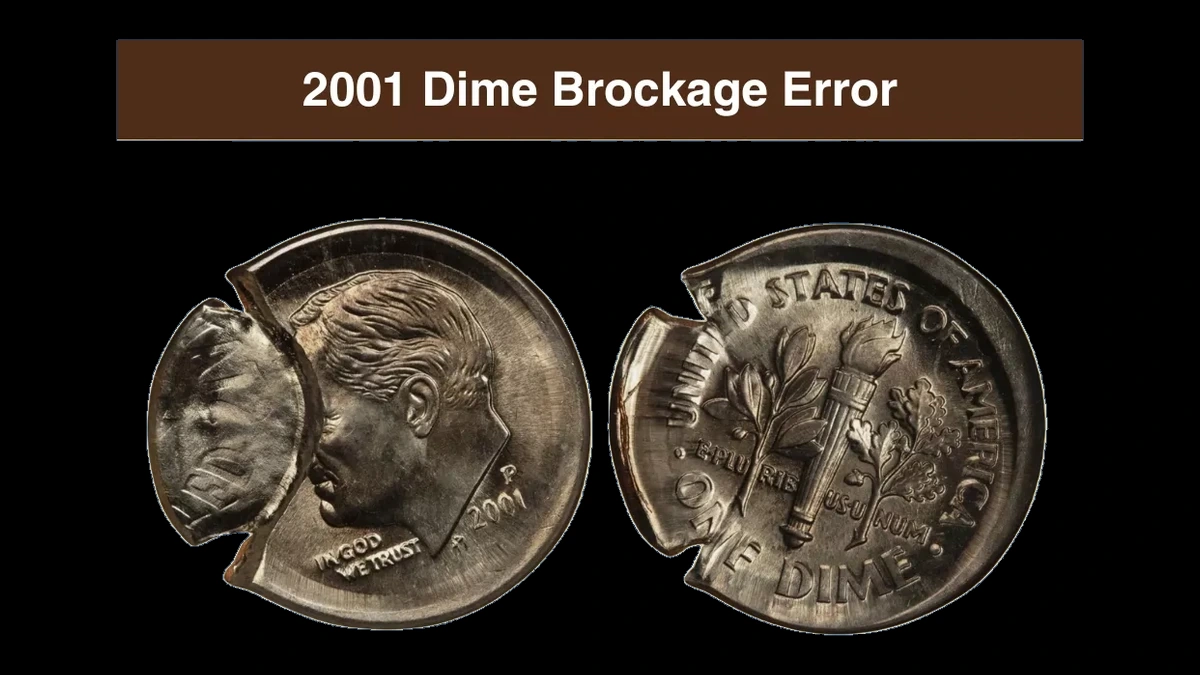
7. 2001 Dime A Sunken Mirror Image with Fainter Traces: Brockage and Clash Error
The recorded 2001-P PCGS MS64 specimen has about 25% obverse brockage. Another struck coin pressed a backward version of its design into the dime.
It also has strong clash traces on both faces from dies that contacted each other without a blank. The deeper mirror impression and shallower tool traces belong to one coin.
How to Identify
Start with a recognizable backward letter below the surrounding surface. A plain dent cannot establish brockage without transferred design.
Then compare the shallower clash marks separately and inspect the edge for joins or later squeezing. Pressing finished coins together can imitate some mirror-image effects.
What It’s Worth
Comparable partial brockages are estimated at $60–$600. Coverage, clarity and original surfaces determine the useful comparison.
The PCGS MS64 coin appears in the auction record at $79 in November 2014. That whole-coin price already includes its clash marks.
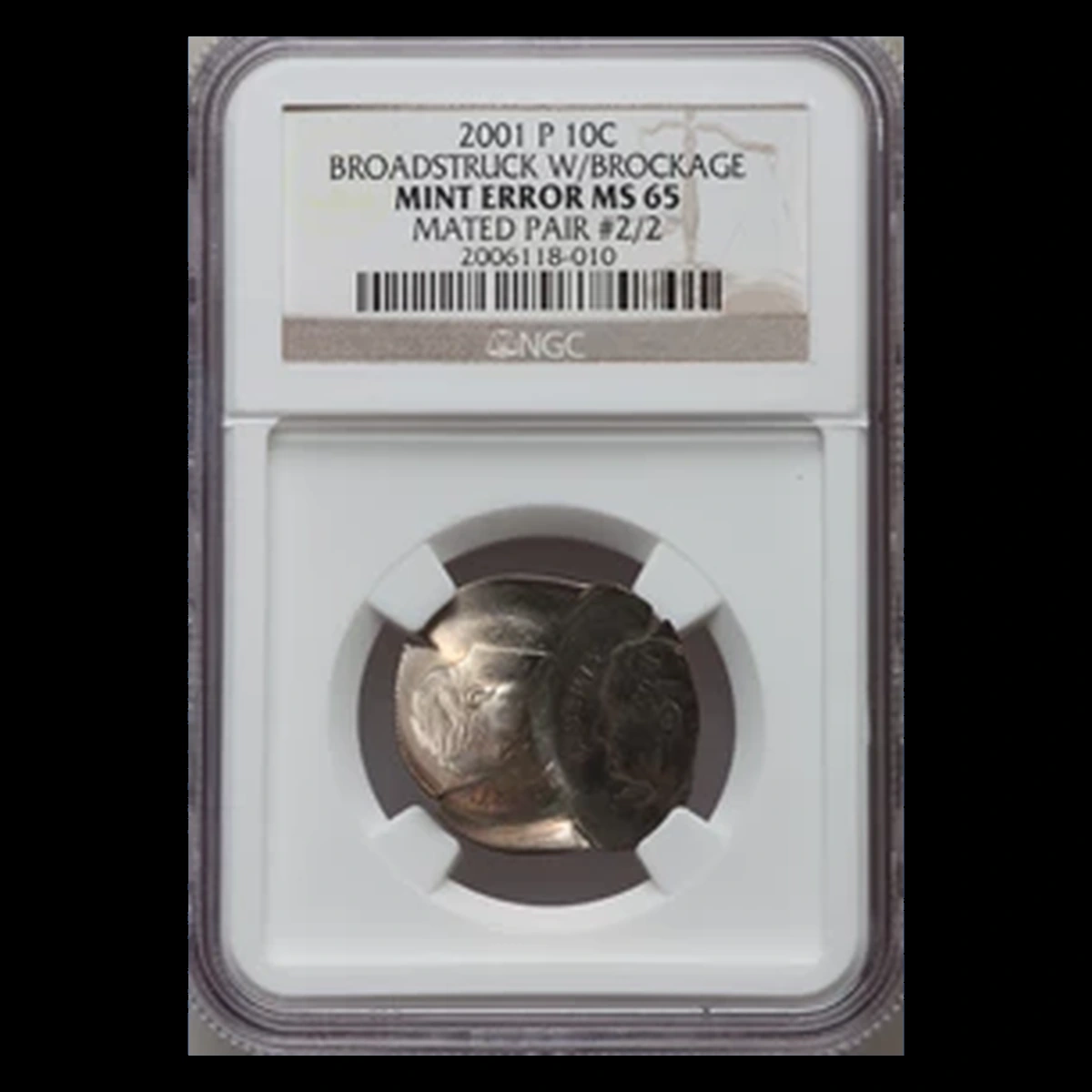
8. 2001 Dime Two Coins with Matching Contact: Mated Pair Error
The documented 2001-P pair contains a repeatedly struck dime and a broadstruck dime with brockage. Their matching transferred features connect them to the same accident.
Both are NGC MS65. They are two separate coins, not broken halves of one dime or coins that should be stuck together.
How to Identify
Compare the repeated-strike coin with the companion’s backward depression in photographs. Corresponding original detail should explain where they contacted.
Inspect all four faces and record each coin’s measurements separately. Do not force the coins together or bend them to improve their apparent fit.
What It’s Worth
A complete comparable pair is estimated at $350–$1,500 for both coins together. Separate maximum prices for each visible effect would overcount the object.
The complete pair sold for $470 in June 2014. Neither individual dime automatically carries that total on its own.
9. 2001 Dime A Thin Separated Piece: Split Disk Error
A split through the disk’s thickness can leave one original design face beside an exposed internal surface. The 2001-D report establishes neither split timing nor a surviving matching pair.
This is distinct from a small surface flap or the loss of only one clad outer layer. Grinding a dime thin can imitate low weight without producing a natural internal separation.
How to Identify
Photograph the exposed texture and any remaining design before deciding whether splitting occurred before or after striking. A surface struck after separation can differ from an interior exposed only afterward.
Inspect for regular machining or grinding lines and record thickness alongside weight. Low weight alone cannot establish the split’s timing.
What It’s Worth
Authenticated split-disk errors with readable 2001-D identity are estimated at $100–$1,000. Surviving design and natural surfaces affect the comparison.
No confirmed sale accompanies the report. If matching halves are found, they need a pair valuation, but this report does not establish such a set.
10. 2001 Dime Exposed Copper on an S Proof: Reported Missing Clad Layer Error
The San Francisco report first needs the correct issue identified: 2001-S dimes were collector Proofs, not ordinary MS issues. Only the clad Proof has the layered construction relevant to this claim.
The 90% silver Proof is a different metal structure. An incorrect grade label or a brown face cannot establish missing clad metal.
How to Identify
Confirm Proof finish and clad composition before examining the exposed face. Compare actual bonded layers at the edge with the reported loss.
Use the appropriate intact weight from the introductory specifications. Missing metal, chemical removal and other damage can all lower weight, so the original layer boundary still matters.
What It’s Worth
An authenticated 2001-S clad Proof missing an outer layer has a conditional estimate of $100–$750. No sale or grade is assigned to the conflicting report.
A 2018-P ordinary dime missing its obverse layer sold for $384 in July 2021. Its different date and finish prevent direct transfer of that result to a Proof.
11. 2001 Dime Dime Designs on a Reported Cent Blank: Wrong Blank Error
The 2001-P report claims a cent blank entered the dime press. A modern cent blank is copper-plated zinc and starts larger and heavier than a dime blank.
This is the opposite direction from a cent struck on a dime blank. It also differs from a coin made with mismatched cent and dime dies.
How to Identify
A cent blank starts near 2.50 grams and 19.05 millimeters. Record the actual candidate’s outline and metal, including how the larger disk could have behaved in the smaller dime press.
Check the edge for plating, exposed zinc or loss of a normal dime layer. Confirm genuine 2001-P dime designs on both faces and obtain metal testing before accepting the cent-blank attribution.
What It’s Worth
A genuine authenticated wrong-blank dime of the reported type has a conditional estimate of $300–$2,500. Color alone cannot justify this range.
The Mint Error News guide places modern Roosevelt foreign-blank errors around $1,500–$2,500. Those are estimates for other blanks, not a sale confirming this cent-blank claim.
12. 2001 Dime A Flap at the Neck or Shoulder: Lamination Error
The Philadelphia report describes local peeling near Roosevelt’s neck and shoulder. A weak region within the metal can lift while the rest of the outer surface remains in place.
A small lamination differs from losing an entire clad layer. Scraping and deliberate prying can also make the portrait look torn.
How to Identify
Trace the flap and any stamped portrait detail that continues onto it. Leave the attached metal undisturbed while examining its boundary.
Look nearby for corrosion, pry marks or a gouge through completed detail. A small retained flap may leave the measurements close to normal.
What It’s Worth
Original local peeling is estimated at $10–$150. An intact flap with understandable design is a stronger comparison than a rough unexplained pit.
No verified sale is supplied for the reported Philadelphia coin. Pulling the metal away adds damage rather than expanding the original error.
13. 2001 Dime Weak Flame and Olive Branch: Strike-Through Error
The reported 2001-D dime has weak reverse detail at the torch flame and olive branch. An obstruction may have prevented those areas from meeting the die normally.
The material is not identified. Weakness alone cannot tell whether grease or another substance caused it.
How to Identify
Compare the affected areas with nearby letters and other high points. If everything is similarly flat, circulation wear may explain the appearance.
Inspect the transition for original surface and interrupted relief. A stain changes color without necessarily changing how the design was formed.
What It’s Worth
Genuine blocked-design errors of this kind are estimated at $15–$250. Localized clear interruption provides a better comparison than general softness.
The range is not a sale assigned to the reported coin. Wear on the same flame and branch does not become an additional Mint error.
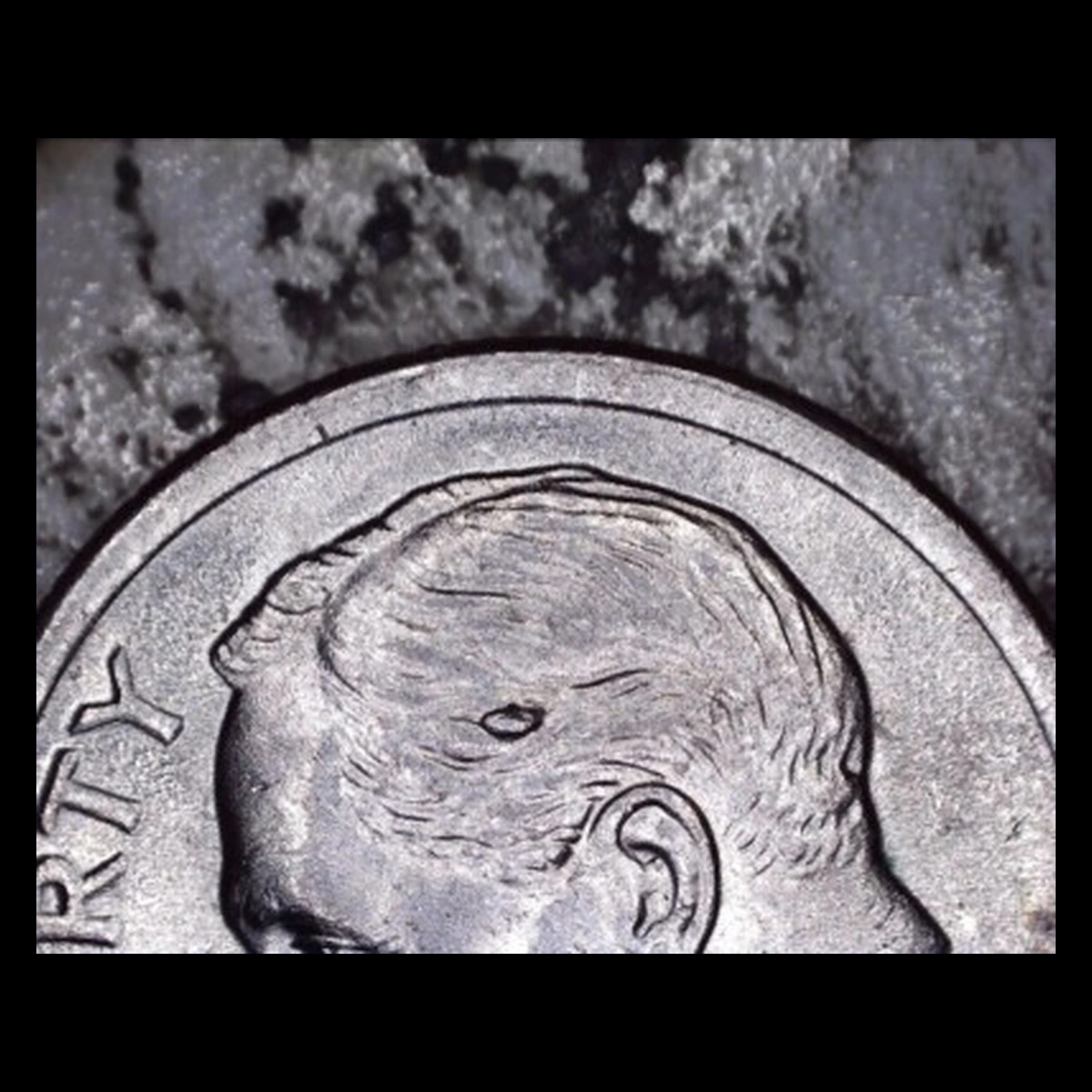
14. 2001 Dime An Extra Raised Cheek Patch: Die Chip Error
A small cheek blob is reported on a 2001-D dime. Coin metal can fill the space left by a tiny missing piece of die steel.
The shape is a die chip, even if a general list calls it a crack. A crack normally leaves a narrow ridge.
How to Identify
Compare the cheek with a normal dime under the same light. Establish that original metal continues into the raised patch rather than glue, dirt or an added seam lying on top.
Photograph its outline instead of scraping it. A stain can look prominent without creating extra relief.
What It’s Worth
Modest genuine cheek chips are estimated at $5–$75. A tiny Mint-made feature may still carry little premium.
No auction result is supplied for the reported Denver coin. A larger rim cud is a different comparison from this interior cheek patch.
15. 2001 Dime A Torch That Tilts After the Flip: Rotated Dies Error
The reverse can turn relative to Roosevelt if one die rotates in the press. The 2001-D report supplies no reliable angle.
The relationship between both faces is the error. A sideways flip, a tilted picture or movement inside a holder can create a false appearance.
How to Identify
Hold Roosevelt upright and flip top to bottom around a fixed horizontal axis. The torch should finish upright on a normally aligned coin.
Repeat without sideways twisting, then measure any consistent angle. Inspect the edge for a join and confirm that the coin did not slip during the test.
What It’s Worth
A clear original rotation is estimated at $20–$350. Substantial repeatable displacement usually supports more interest than a tiny uncertain tilt.
A 2015-D nickel with a 90-degree rotation sold for $79 in October 2021. Its denomination and angle do not establish either detail for the reported 2001-D dime.
Conclusion
The best 2001 dime identification connects the edge, designs and original metal. One shifted face differs from a misplaced blank, and a thin split piece differs from a Proof missing an outer layer.
Keep the correct collector issue and metal structure with every comparison. Preserve fragile surfaces, leave uncertain materials unnamed and treat matching-pair prices as totals for both coins, while hidden sale amounts remain unknown rather than being replaced by opening bids.