Rare 1880 Nickel Errors (List & Pictures)
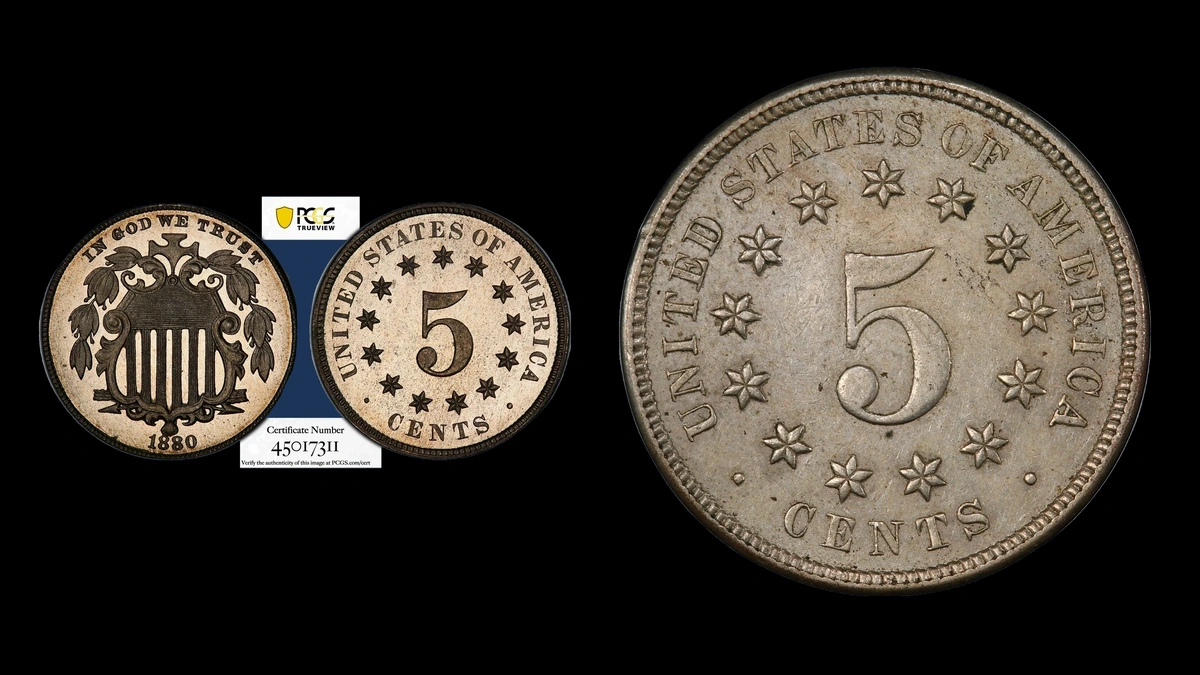
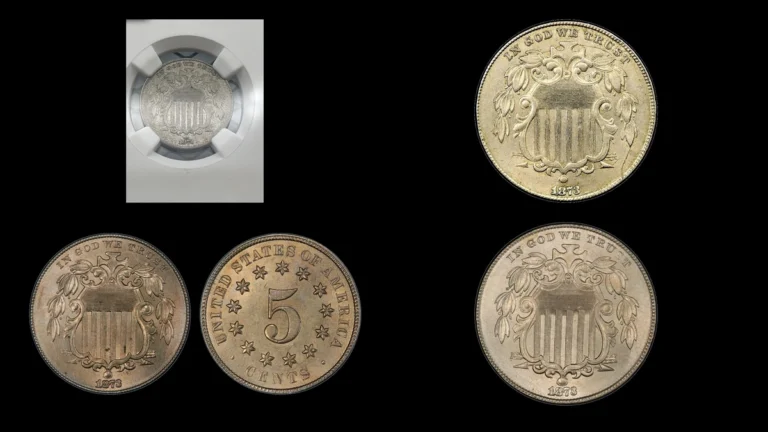
Production type makes an unusually large difference when comparing 1880 Shield Nickel errors. An ordinary-strike MS65 coin with a repunched second 8 sold for $46,000 in January 2006, but similar date traces also appear on collector Proofs.
The estimated whole-coin ranges below span $300–$50,000. Establish the coin’s production type, then inspect the date, reverse letters, and any peeling metal before choosing a price comparison.
1. 1880 Nickel Another Curve Appears below the Second 8: Repunched Date Error
The nickname “dropped 8” describes a remnant below the second 8 in 1880. It does not mean a loose numeral fell onto the blank.
The date punch entered the die in more than one position, leaving part of an earlier 8 beneath the final one. The die is the tool that transfers the design to the coin.
This date feature occurs on Proofs and on a cataloged ordinary-strike example. A die prepared for Proof production could later make ordinary coins, so the extra outline cannot settle production type by itself.
How to Identify
Read the grading description if the coin has one: PR or PF identifies a Proof. A dull surface alone cannot distinguish a worn Proof from an ordinary strike.
Inspect beneath the second 8 for the raised curved remnant of another numeral. Compare it with an attributed image rather than confusing it with a normal digit approaching the round ornament nearby.
A flat ledge from movement during striking or a scratch below the date has a different shape. Include all four numerals in the photograph so the extra curve keeps its proper context.
Both production types normally weigh about 5 grams and measure 20.5 millimeters, with a plain edge. Those measurements help check a loose coin but do not resolve Proof versus ordinary manufacture.
What It’s Worth
Estimated whole-coin values are $500–$3,000 for Proofs and $5,000–$50,000 for ordinary strikes. Grade and surface condition are central to these very different comparisons.
Heritage sold the NGC MS65 ordinary-strike example for $46,000 in January 2006. That result reflects a scarce issue with strong preservation, rather than the isolated value of an extra date stroke.
A Proof dulled by wear remains a Proof. Its reduced reflectivity does not justify moving it into the much higher ordinary-strike range.
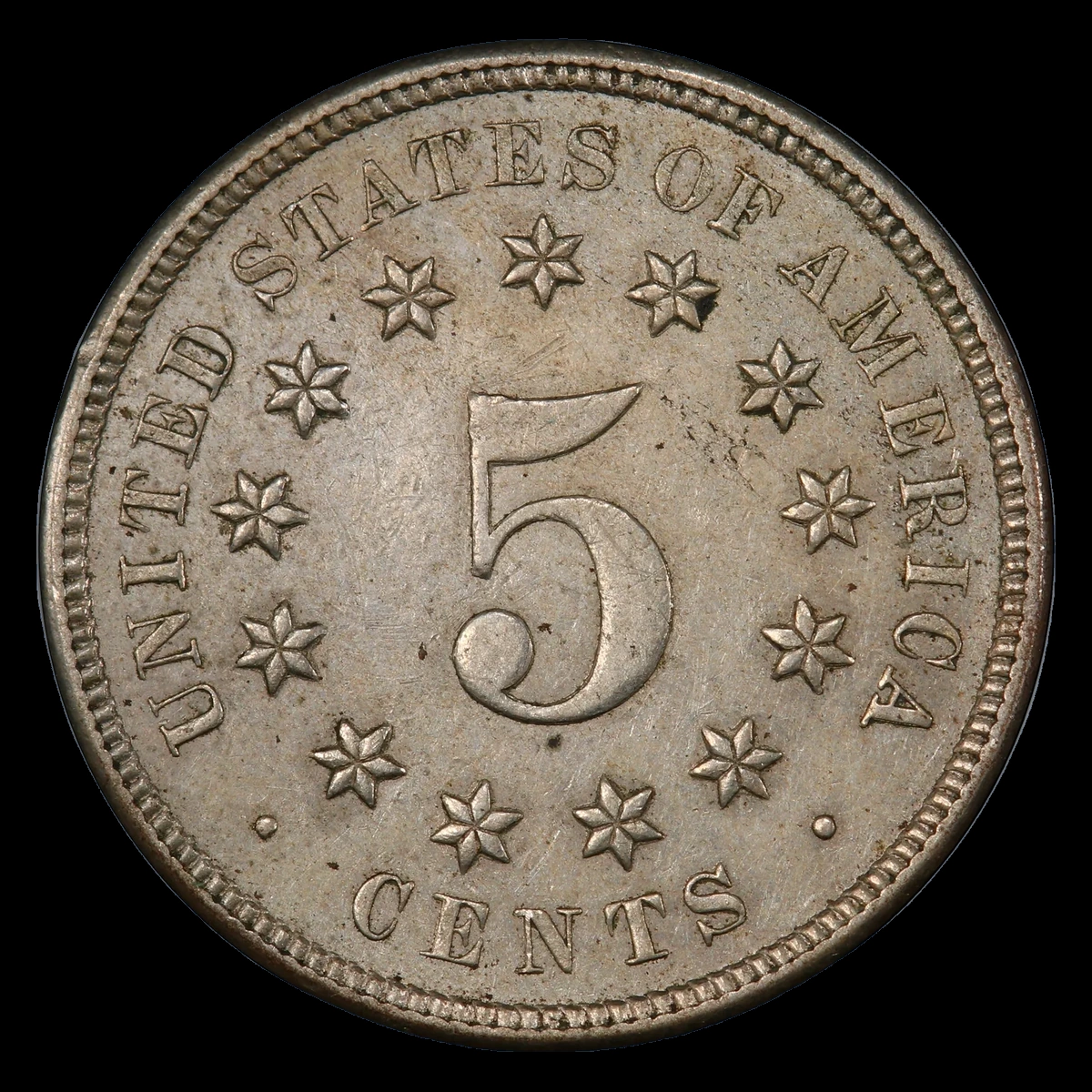
2. 1880 Nickel The Ends of Reverse S Letters Look Hooked: Re-engraved Lettering Error
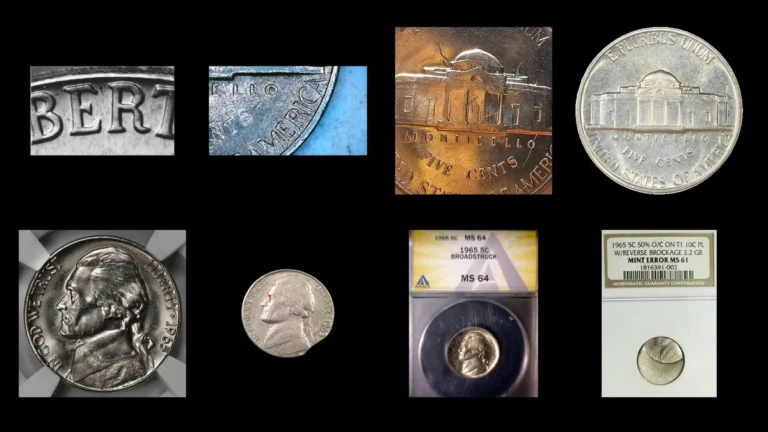
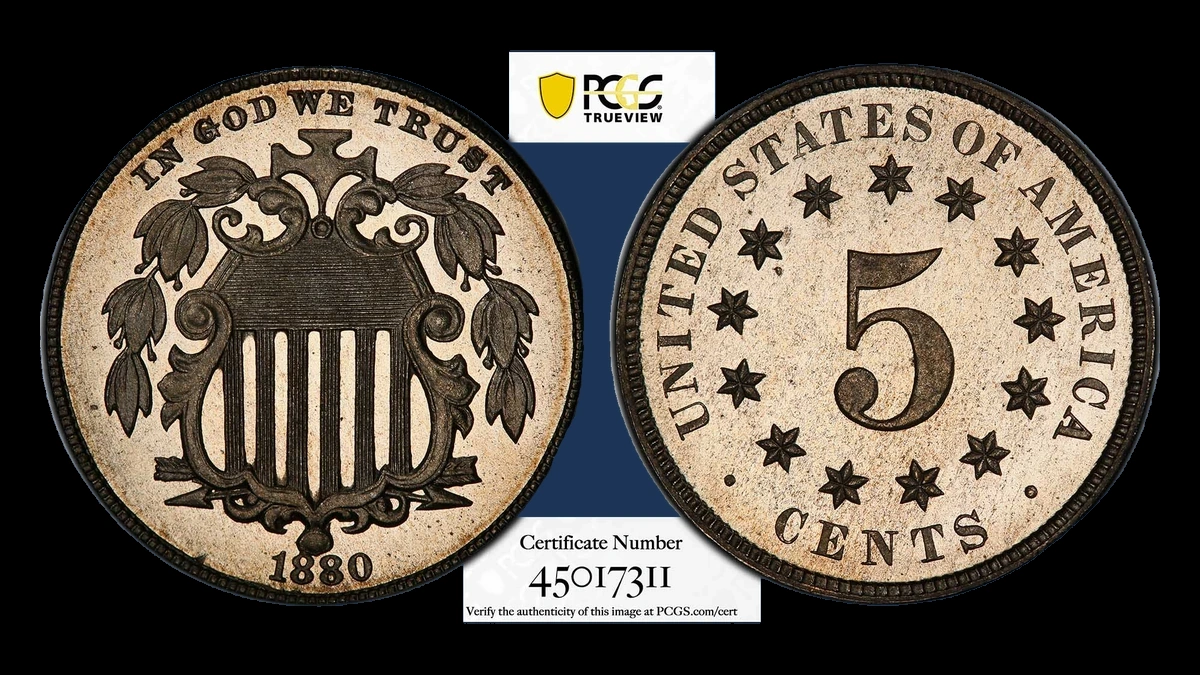
The final S in STATES and the final S in CENTS can show unusual hooked contours. Hand repairs to damaged lettering earlier in the tool-making process could pass into the finished die and appear on struck coins.
The PCGS illustration of an 1880 Proof shows this fishhook S feature. These are letters within the reverse inscriptions, not San Francisco mintmarks.
How to Identify
Begin with the top of the final S in STATES, then examine the bottom of the final S in CENTS. The reported repairs affect different ends of those letters.
Compare the hooked forms with normally rounded letter contours under a magnifier. Damage, a rough edge, or bright glare should not automatically become a hand-repair attribution.
The illustrated specimen is a Proof, but the S shape alone is not a test for that production type. Assess the complete coin and its grading description before applying the Proof comparison.
What It’s Worth
Collectible Proof examples with clear repaired lettering are estimated at $500–$2,500. The range prices the whole coin, not an amount to add separately for each hooked S.
Surface quality can matter more than the apparent size of a hook. Scratches or harsh cleaning can substantially weaken an otherwise clear example.
Use another 1880 Proof as the starting comparison. The exceptional ordinary-strike price in the date section concerns a different production category.
3. 1880 Nickel A Small Reverse Patch Separates: Lamination Error
An owner displayed an 1880 nickel with a small reverse lamination and later reported a PCGS PR55 grade. That identifies a worn Proof with a separation in its original metal.
A separate seller record describes an AU55 coin with minor lamination but does not settle how it was produced. The first owner’s Proof identification cannot be transferred to that second specimen.
Shield nickels use copper and nickel mixed throughout. A local layer splitting within the alloy is not a modern outer clad layer peeling from a different core.
How to Identify
Inspect the opening under side light for a thin separating edge above rough metal. Do not probe or lift the area to test whether it moves.
The owner’s report places the flaw on the reverse without an exact clock position. Follow the actual break on the candidate instead of expecting a location the report never establishes.
A very small separation may barely affect weight. The nature of the peeling boundary and the coin’s independently established production type matter more than a normal scale reading.
What It’s Worth
A worn Proof with a small genuine lamination is estimated at $300–$1,500. A coin confirmed as a scarce ordinary strike could instead fall around $5,000–$20,000, depending on condition.
Most of that difference belongs to the underlying coin, not a reward for the peeling patch. The AU55 seller description needs its production type resolved before either comparison is chosen.
Conclusion
The unusual feature on an 1880 Shield nickel is only part of its identity. A repunched 8, hooked reverse S, or small lamination cannot independently establish whether it is a Proof or a scarce ordinary strike.
Keep production type and preservation at the center of the price comparison. Photograph the whole coin along with the small feature, and preserve any separating metal so that its original evidence remains available.