Rare 1954 Nickel Errors (List & Pictures)
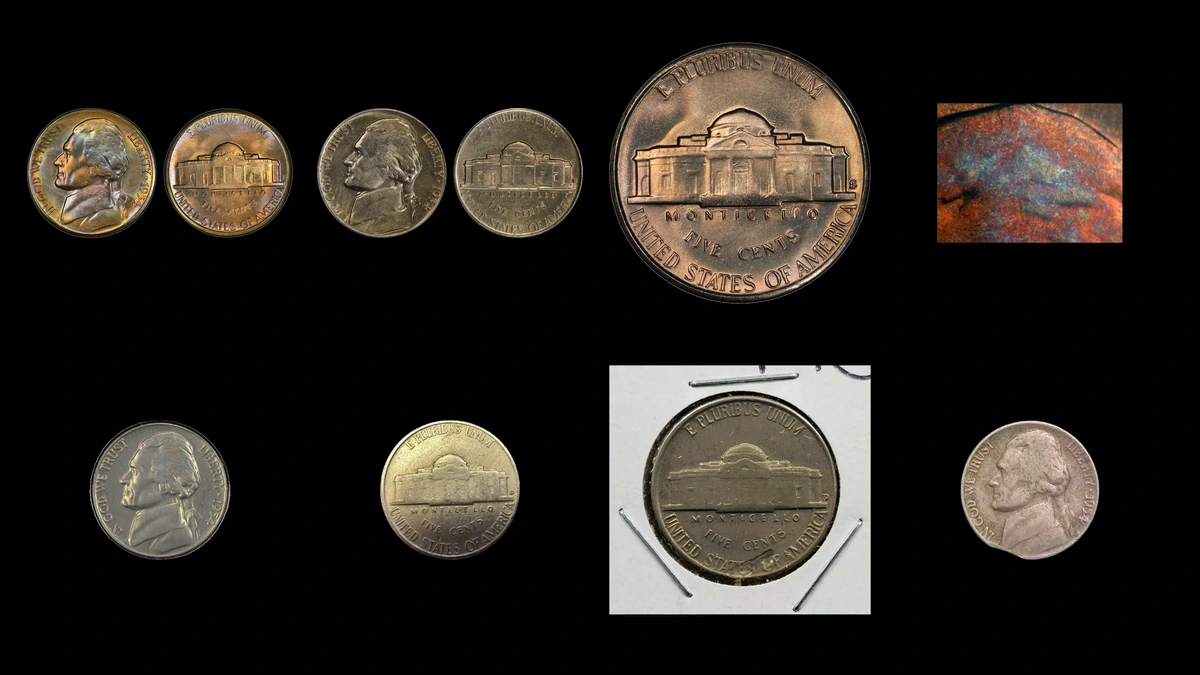
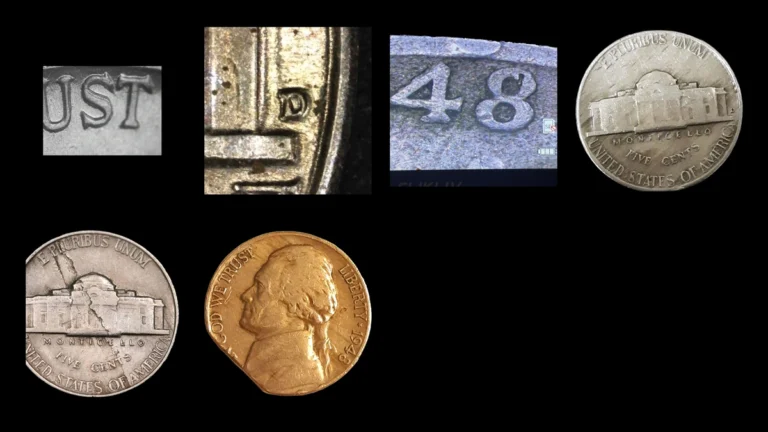
Several different extra-letter patterns occur beside Monticello on a 1954 nickel. An S over another S and an S over a D require different diagnostic matches, even when both look like extra metal beneath the mint mark.
Estimated values for 1954 nickel errors span $2–$3,500, with an exceptional S-over-D example recorded at $3,450. Begin with the mint letter, then follow design changes, metal defects, and displaced strikes.
| Feature | Category | Estimated range |
|---|---|---|
| D remnants under S | Overmintmark | $20–$3,500 |
| Another impression of the same letter | Repunched mint mark | $10–$600 |
| Repeated letters or step details | Doubled die | $10–$750 |
| Swollen design or raised hair lines | Die deterioration or cracks | $2–$100 |
| Blocked reverse details | Strike-through | $5–$150 |
| Peeling surface or uneven blank | Lamination or planchet defect | $10–$300 |
| Missing section or expanded design | Clip or broadstrike | $10–$500 |
| Design displaced across intact metal | Off-center strike | $40–$1,000 |
| Sunken reversed image | Reported brockage | $150–$1,500 |
| Nickel design on copper-cent stock | Wrong planchet | $300–$2,500 |
1. 1954 Nickel Part of a D Survives beneath the S: Overmintmark Error
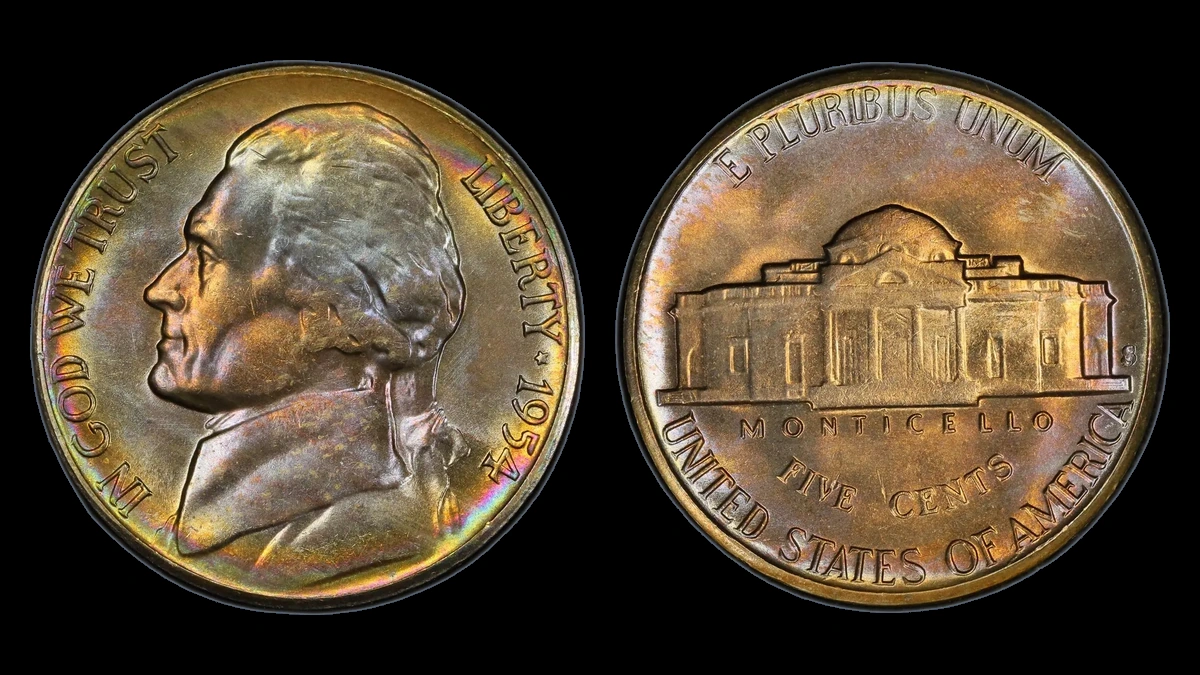
The 1954-S-over-D variety preserves remnants of a D below and toward the lower left of the final S. The die received two different mint letters before it struck the coins.
How to Identify
Trace the earlier letter’s straight and curved portions beside Monticello and match them with an attributed example. A repeated S leaves a different outline from an underlying D.
As the die wore and the lower S filled, the D remnant could become less distinct. A thick or filled S alone is therefore insufficient.
What It’s Worth
$20–$3,500 is an estimated range across worn through exceptional examples. PCGS records an MS66 sale of $3,450 in August 2004, alongside later MS66 results of $480 in November 2025 and $561 in June 2026.
The historical maximum is not a routine price for the variety. Remaining D detail and the individual surfaces matter even within the same numerical grade.
2. 1954 Nickel Another D or S Repeats the Main Letter: Repunched Mint Mark Error
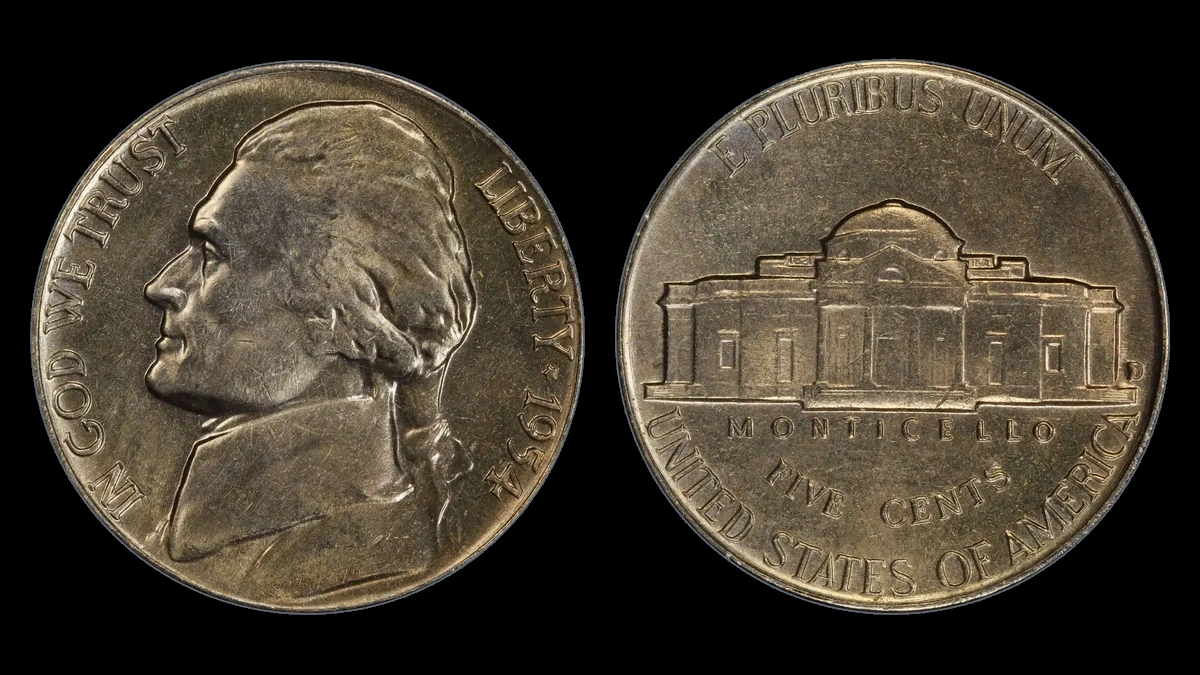
Repeated hand punching can leave a displaced or tilted impression of the same mint letter. Denver and San Francisco have separate 1954 patterns, including the northward S/S cataloged as FS-502.
How to Identify
Compare the complete secondary shape using the illustrated repunched-mint-mark listings. Extra metal on one side of the letter can occur in more than one variety.
The Denver D/D labeled FS-501 is not the San Francisco S-over-D overmintmark. Catalog numbers need their date, mint, and feature context, while flat shelves from striking movement are a separate effect.
What It’s Worth
$10–$600 is an estimate across minor repunches and stronger recognized patterns. The upper end requires a clear, well-preserved attribution rather than any doubled-looking D or S.
3. 1954 Nickel Letters or Monticello Steps Have Raised Repetition: Doubled Die Error
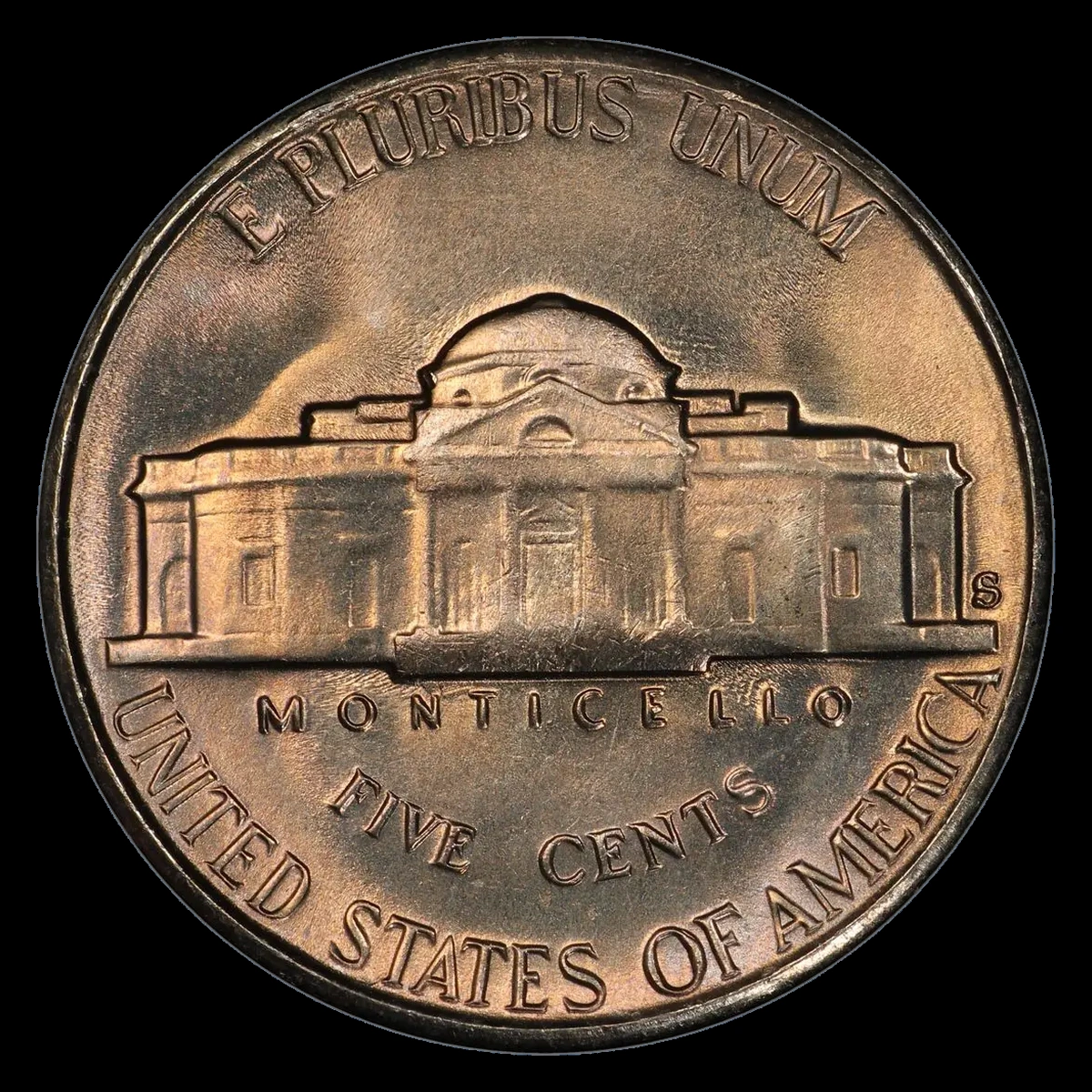
Denver varieties involve obverse date and LIBERTY details or an area beneath the right-hand steps. San Francisco examples include reverse lettering and a separate left-step pattern.
How to Identify
Match the actual mint, face, and affected details with Brian’s variety photographs. The San Francisco left-step comparison concerns the area above NT in MONTICELLO.
A Philadelphia obverse variety is recorded on a Proof, but other Philadelphia reverse reports do not automatically inherit that collector finish. Repeated rounded outlines or split ends should match the chosen pattern rather than a flat movement-doubling shelf.
What It’s Worth
$10–$750 is an estimate spanning different attributed patterns and levels of preservation. A Proof also carries value from its manufacture and surfaces, so it needs a same-finish comparison rather than the price of a worn circulation coin.
4. 1954 Nickel Reverse Details Look Swollen and Spread Outward: Die Deterioration Error
A specialist-described 1954-S coin shows mushroom-like reverse details and lines extending toward the rim. Unusually early die deterioration is the feature under discussion, with a soft die proposed as the cause.
How to Identify
Compare the full Monticello distortion and surrounding outward lines with the reported pattern. General wear lowers high points, while pressure after minting may crush relief and the edge instead.
The appearance alone cannot measure die hardness, blank hardness, or striking pressure. Keep the S, date, and expanded design together before applying the specialist’s explanation.
What It’s Worth
$2–$50 is an estimate for a clearly recognizable example of this swollen pattern. General softness on a worn San Francisco nickel does not establish the unusual early deterioration or a significant premium.
5. 1954 Nickel Raised Lines Cross the Hair or Portrait Base: Die Cracks Error
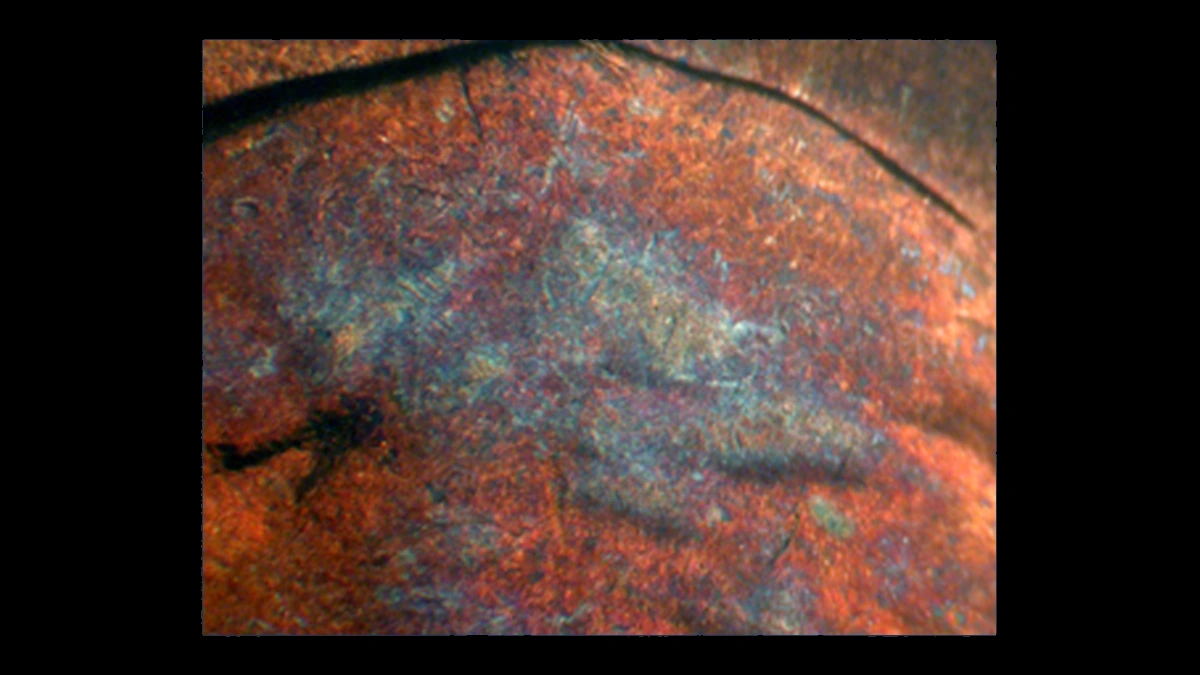
One repunched-S die stage has a diagonal hair crack and a separate line along the portrait’s base. Another S-over-D die can develop a lighter hair crack as it wears.
How to Identify
On the reported repunched-S coin, follow the diagonal line from upper left toward lower right through the hair. Check that it rises from the surface rather than forming a cut with pushed-up edges.
Match the mint-letter pattern and die stage as well as the line. The lighter S-over-D crack belongs to another die and should not be combined with the first coin’s paths.
What It’s Worth
$5–$100 is an estimate for small genuine cracks, with visibility and condition guiding the comparison. When a collectible mint-letter variety is also present, value the actual combination once rather than adding complete separate estimates.
6. 1954 Nickel Part of the Reverse Design Is Locally Weak: Reported Grease Strike-Through Error
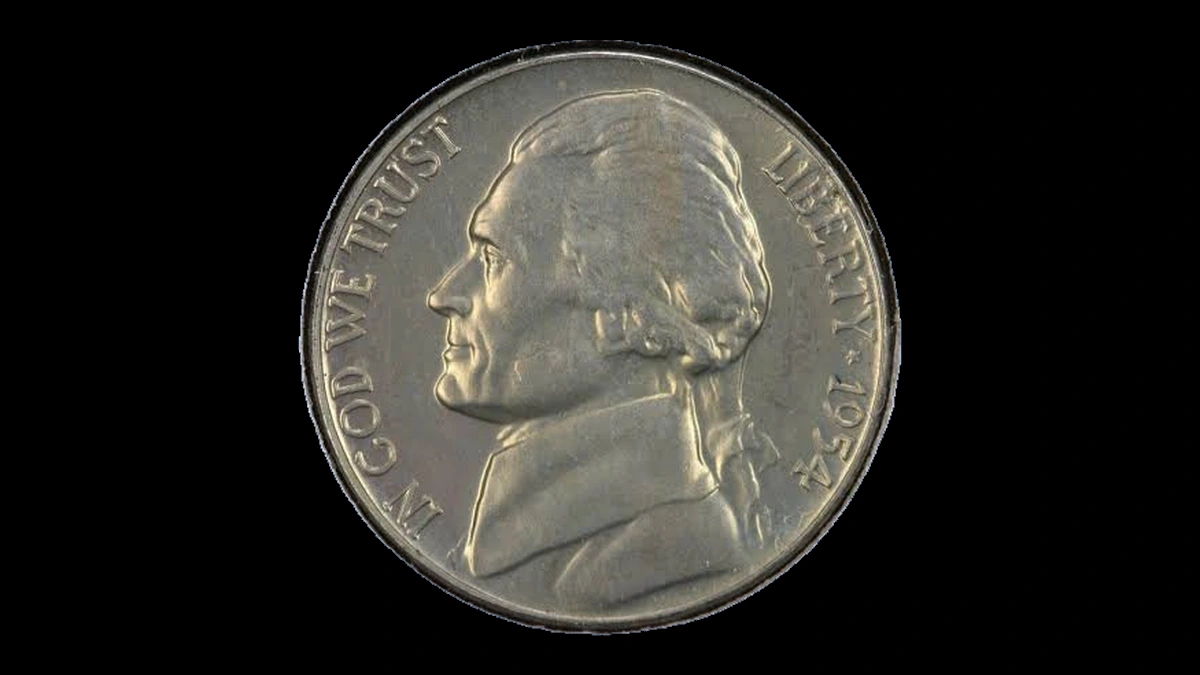
A dealer describes a 1954-S reverse grease strike without identifying particular missing letters. Material can block a local part of the die, but the stated substance remains the dealer’s explanation.
How to Identify
Compare the weak patch with neighboring features of similar relief. General wear, a weak blow, or polishing can soften detail without a local obstruction.
Inspect the transition for scraping, crushed relief, or altered surfaces. A naturally formed interruption may support strike-through while still leaving the material unidentified.
What It’s Worth
$5–$150 is an estimate for genuine local blocked-design errors on 1954-S nickels. A clear interruption beside sharp relief provides a stronger comparison than a faint weak letter, with no completed sale supplied for this dealer example.
7. 1954 Nickel A Reverse Layer Has Detached: Lamination Error
The seller-described 1954-D coin lost a loose reverse layer while resting in a container. The internal weakness and the later moment when the fragment fell away are different parts of the account.
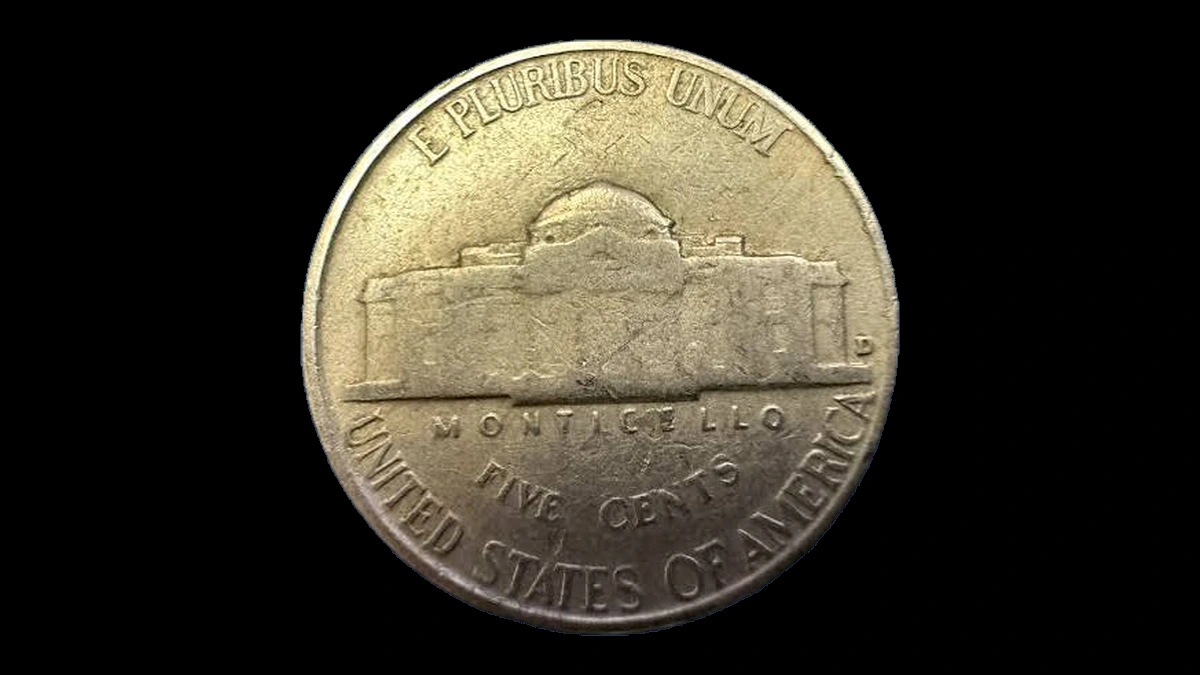
How to Identify
Photograph the exposed reverse and any surviving fragment separately, without gluing it back or enlarging the separation. Compare natural broken texture with tool tracks and corrosion pits.
The report describes an unworn coin but establishes no exact clock position or proof that the fragment left the Mint separately. This is alloy separation, not missing silver plating.
A loose normal nickel weighs about 5 grams, measures 21.21 millimeters, and has a plain edge. Use those references to document missing metal and the blank-related errors below without disturbing fragile areas.
What It’s Worth
$10–$200 is an estimate for a genuine 1954-D surface lamination. A 1966 nickel split into three matching pieces sold for $109.25 in August 2010, a different-year and more extensive separation rather than a sale of this reverse flaw.
8. 1954 Nickel Thickness or Metal Quality Is Uneven: Tapered and Defective Planchets Error
Two Philadelphia tapered-blank examples are recorded at 4.6 grams and 4.40 grams, each graded MS62. A separate 1954-S NGC MS65 coin has an abnormal area left of Monticello under a broader defective-planchet attribution.
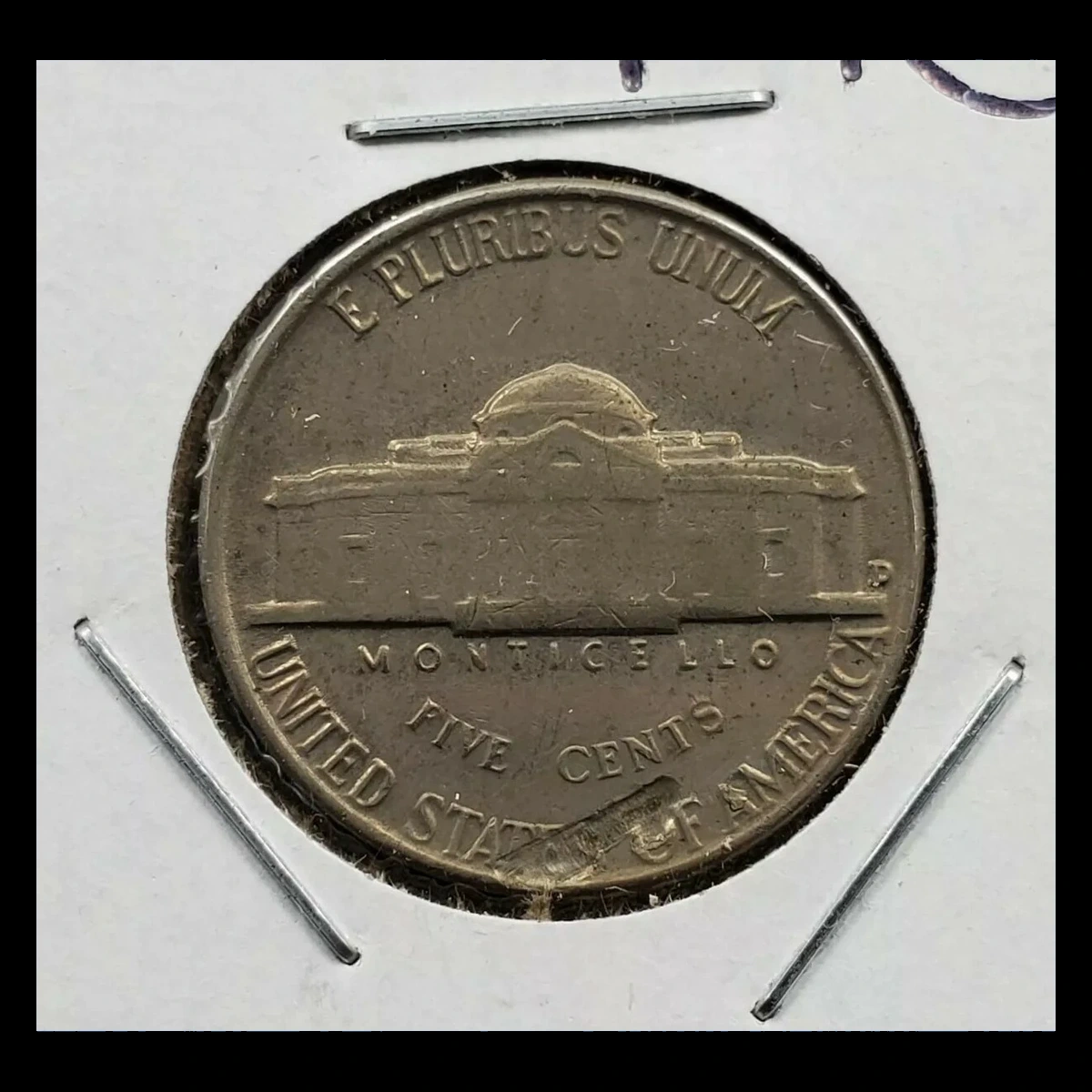
How to Identify
View a suspected taper edge-on for a gradual thickness change and compare the weaker struck area with it. Grinding can also thin a coin, so examine the surface for parallel tool marks.
The two Philadelphia weights belong to separate pieces. Neither weight nor their taper should be assigned to the San Francisco coin, whose exact metal defect is unspecified.
What It’s Worth
$20–$300 is an estimate for these genuine blank defects. The 4.40-gram Philadelphia example is reported at $64 in December 2024.
The San Francisco coin appeared in a three-coin lot sold for $161 in September 2010. That total also covers defective 1959 and 1966 nickels, not an individual $161 sale for the 1954-S.
9. 1954 Nickel An Original Section of the Edge Is Missing: Reported Clipped Planchet Error
The year list includes clips without establishing one specimen’s mint, shape, or position. A genuine clip begins with an incomplete blank, around which the dies form the design.
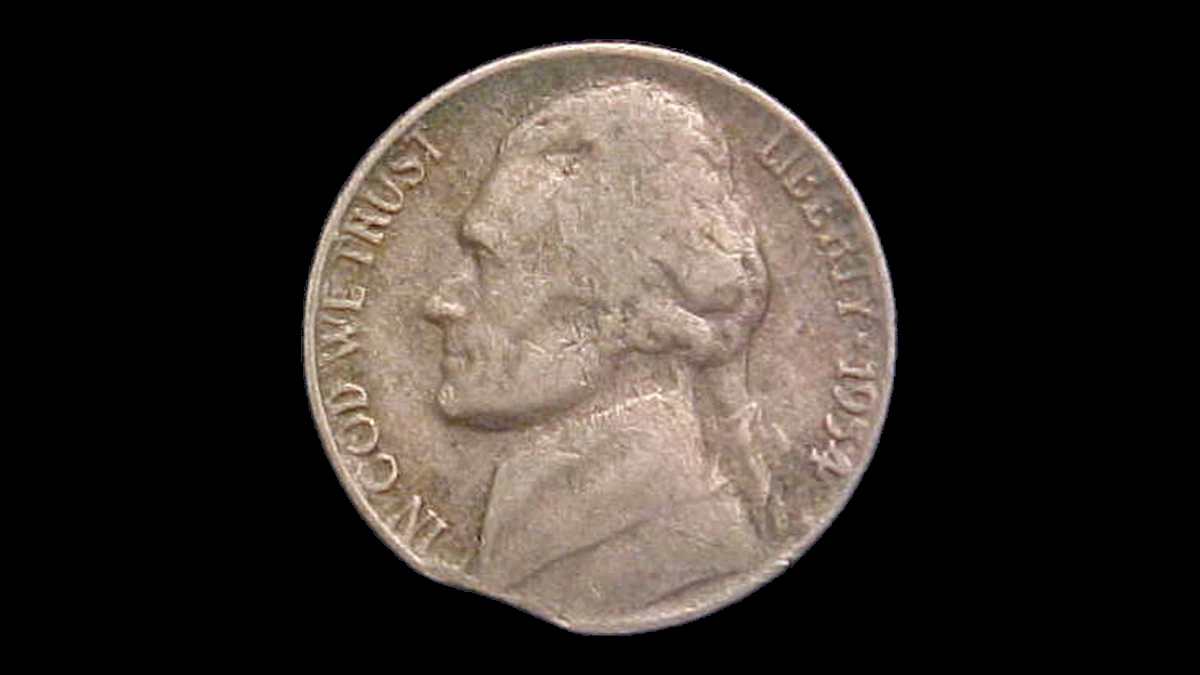
How to Identify
Inspect the rim at both ends of the opening and the way nearby details formed beside it. Saw grooves, filing, or a fresh cut through completed lettering indicate later removal.
Opposite-rim weakness can support clipping but is not essential in every photograph. Low weight also follows later cutting, so it must agree with the boundary evidence.
What It’s Worth
$10–$350 is a conditional estimate for confirmed 1954 clips. A 1974 nickel with two curved clips sold for $132 in July 2021, but its two gaps supply no shape or count for the unspecified 1954 report.
10. 1954 Nickel A Larger Border Contains Every Design Element: Reported Broadstrike Error
A collector recalled a 1954-S broadstrike with six full steps. The recollection lacks the original auction photographs, so the coin’s expanded complete design still needs direct confirmation.
How to Identify
Trace peripheral details on both faces and check that the enlarged outline reflects natural spreading without normal collar restraint. Hammer marks or crushed relief can explain a coin widened later.
Confirm the date and S before examining the stairs. Six full steps concerns sharp Monticello detail, not six separate strikes or independent proof of a broadstrike.
What It’s Worth
$50–$500 is a conditional estimate for a genuine 1954-S broadstrike. Exceptional preservation or confirmed sharp steps may matter, but the recollection alone does not establish those qualities.
A 1974 Philadelphia MS64 broadstrike sold for $24 in August 2021. That different date and mint provide context rather than a direct valuation of the reported San Francisco coin.
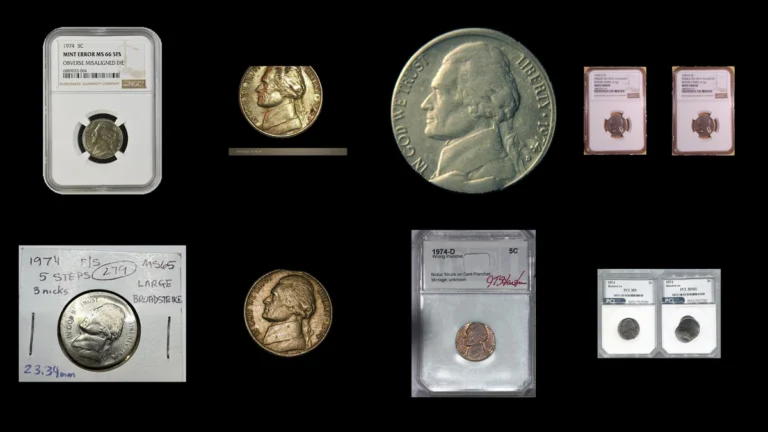
11. 1954 Nickel Unused Metal Sits beside Cropped Design: Off-Center Strike Error
A 1954-S PCGS MS61 example has a 15% offset. A separate Philadelphia ANACS AU50 Details coin is 20% off-center near eleven-thirty and has scratches.
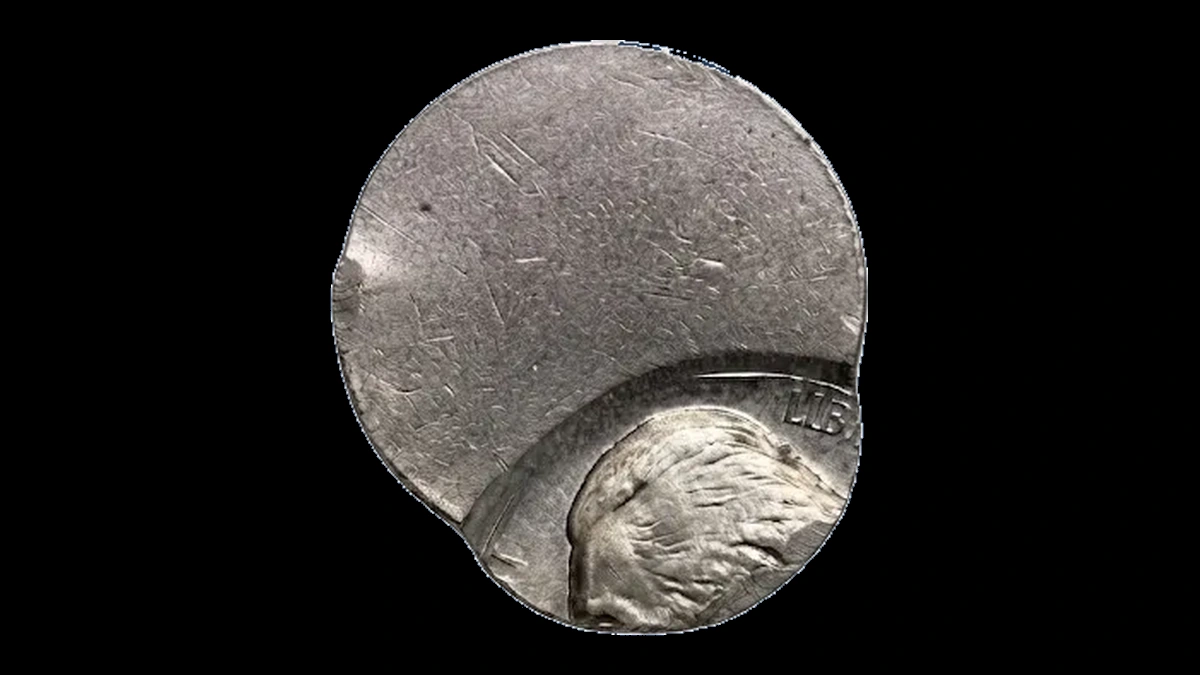
How to Identify
Read the date and surviving mint area, then compare the struck-to-blank boundary on both faces. A one-sided rim shift can have a different cause from the whole blank entering off-center.
Inspect apparently bare metal for scraped-away design. The eleven-thirty direction and scratches belong to the Philadelphia specimen, not the San Francisco MS61.
What It’s Worth
$40–$1,000 is an estimate across dated 1954 off-center nickels. The 15% San Francisco coin sold for $139 in March 2023, while the scratched 20% Philadelphia coin is reported at $63 in October 2022.
These records illustrate why a larger offset can bring less when condition differs. Grade numbers also should not be mistaken for percentages of surviving design.
12. 1954 Nickel Backward Design Is Pressed below the Surface: Reported Brockage Error
A struck coin trapped in the press can act as a stamp, leaving a recessed mirror image in another blank. The 1954 category is reported without an identified mint or affected face.
How to Identify
Match recognizable sunken letters or portrait details with a mirrored normal design. A weak patch, dent, or raised doubled contour does not demonstrate a brockage.
Inspect the other face, date, and edge for a consistent original strike. Finished coins squeezed together later can imitate reversed impressions but may show crushing and disturbed surrounding relief.
What It’s Worth
$150–$1,500 is a conditional estimate for an authenticated 1954 brockage with recognizable reversed detail. It is based on comparable Jefferson errors rather than a documented sale of the unspecified reported piece.
13. 1954 Nickel The Nickel Design Crowds a Copper Cent Blank: Wrong Planchet Error
The supplied Denver and Philadelphia examples are separate MS63 Brown coins. A third, NGC MS64 Brown specimen combines a three-gram cent blank with a 75% off-center strike.
How to Identify
Compare composition, naturally incomplete outer lettering, and the smaller blank. A contemporary cent blank normally started near 3.11 grams and 19.05 millimeters, but the combined error’s actual recorded weight is three grams.
The 75% specimen’s catalog puts 1954 in parentheses because its date is incomplete. A fully dated Denver example cannot supply its missing digits or mint identity.
Look for edge trimming or plating, and distinguish an unused cent blank from a coin retaining earlier Lincoln detail. The latter would require an additional struck-cent history.
What It’s Worth
$300–$2,500 is an estimate for identified cent-planchet strikes. The Denver MS63 Brown sold for $558.13 in January 2014, and a separate Philadelphia MS63 Brown is reported at $576 in September 2025.
The partly dated 75% off-center specimen is recorded at $1,110 in June 2018. That amount covers its combined features once and should retain the qualification about its assigned year.
Conclusion
For 1954 nickels, a precise mint-letter match can matter more than the size of an obvious weak patch. Separate repeated letters from an overmintmark, and compare each coin’s die stage, finish, and preservation.
Reported categories without photographs remain conditional, while partly dated errors need their inferred identity preserved. Keep detached fragments and original surfaces intact, and price combined defects as features of one coin rather than adding independent maximums.