Rare 1951 Dime Errors (List & Pictures)
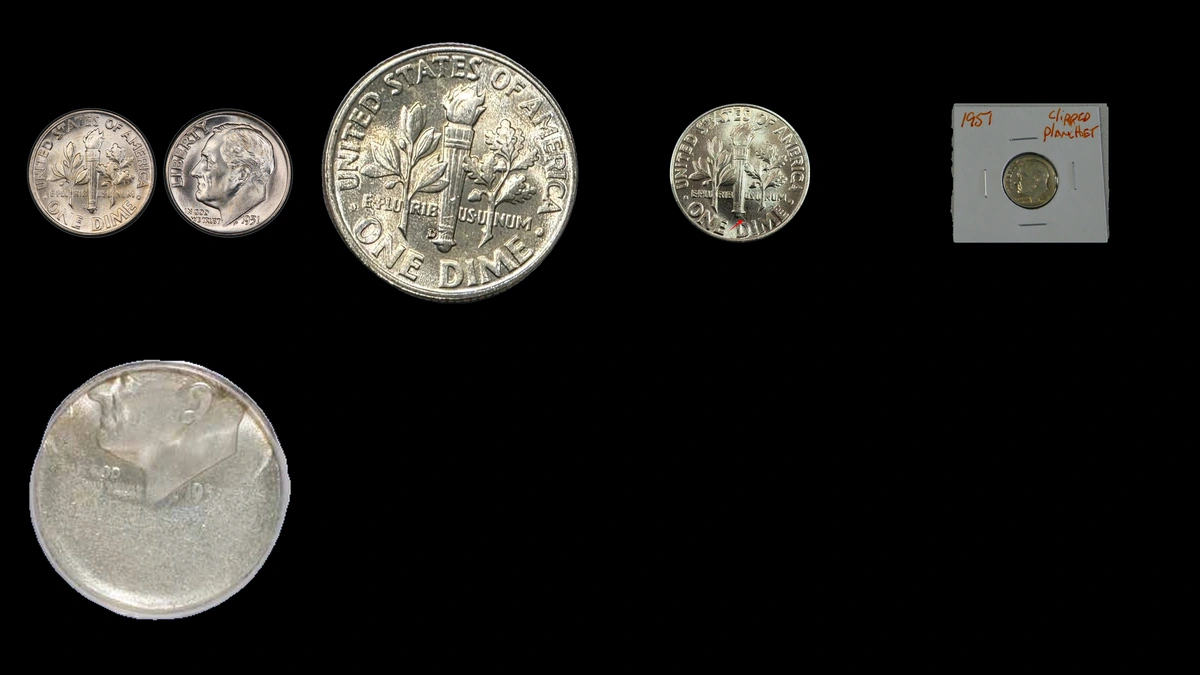
Turn a 1951 dime over before deciding what looks unusual: its mintmark, torch detail, and alignment can explain more than the portrait alone. The 1951 dime errors covered here have estimated values of $10–$1,000, and a 65% off-center example sold for $372 in June 2023.
Begin with the small die details, then compare the two faces and the coin’s outline.
| Inspection point | Possible error | Estimated value |
|---|---|---|
| D or S beside the torch | Repunched mintmark | $15–$350 |
| Lips or repeated reverse detail | Reported doubling or die polishing | $10–$400 |
| Raised lines or rim lumps | Die cracks, chips, and cuds | $10–$250 |
| Torch angle after a controlled flip | Rotated die | $25–$400 |
| A gap in the coin’s outline | Clipped planchet | $25–$300 |
| Extra width beyond a complete design | Broadstrike | $40–$500 |
| Blank crescent opposite lost design | Off-center strike | $100–$1,000 |
1. 1951 Dime Another D or S Appears beside the Mintmark: Repunched Mintmark Error
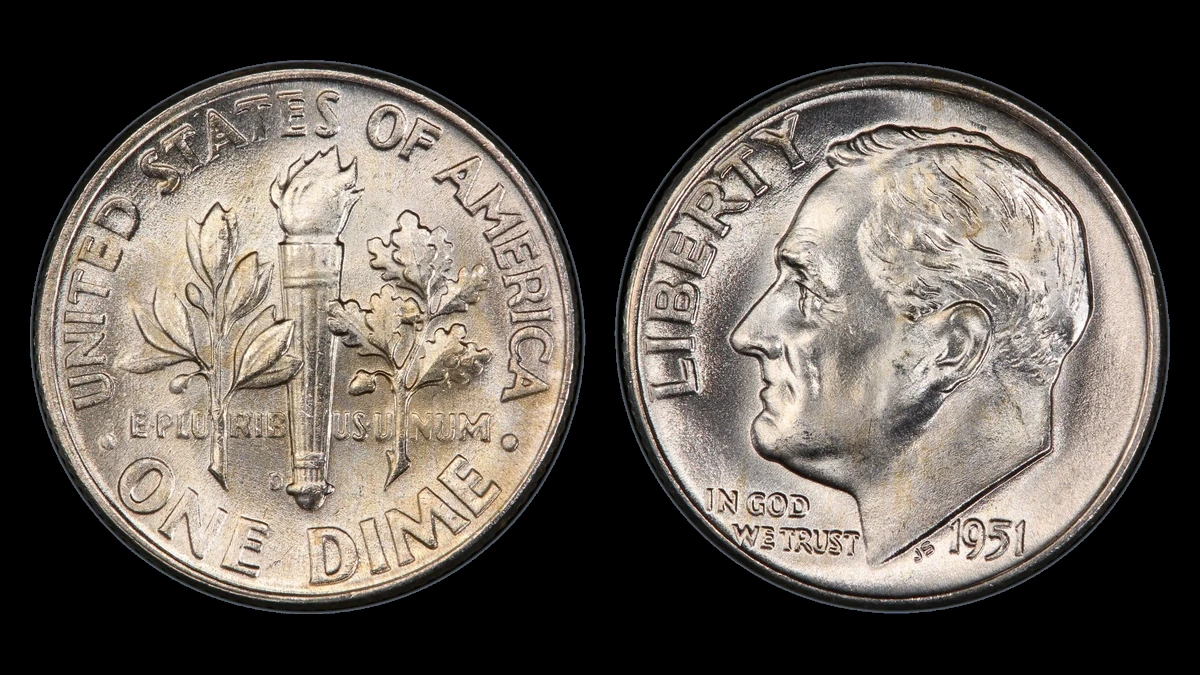
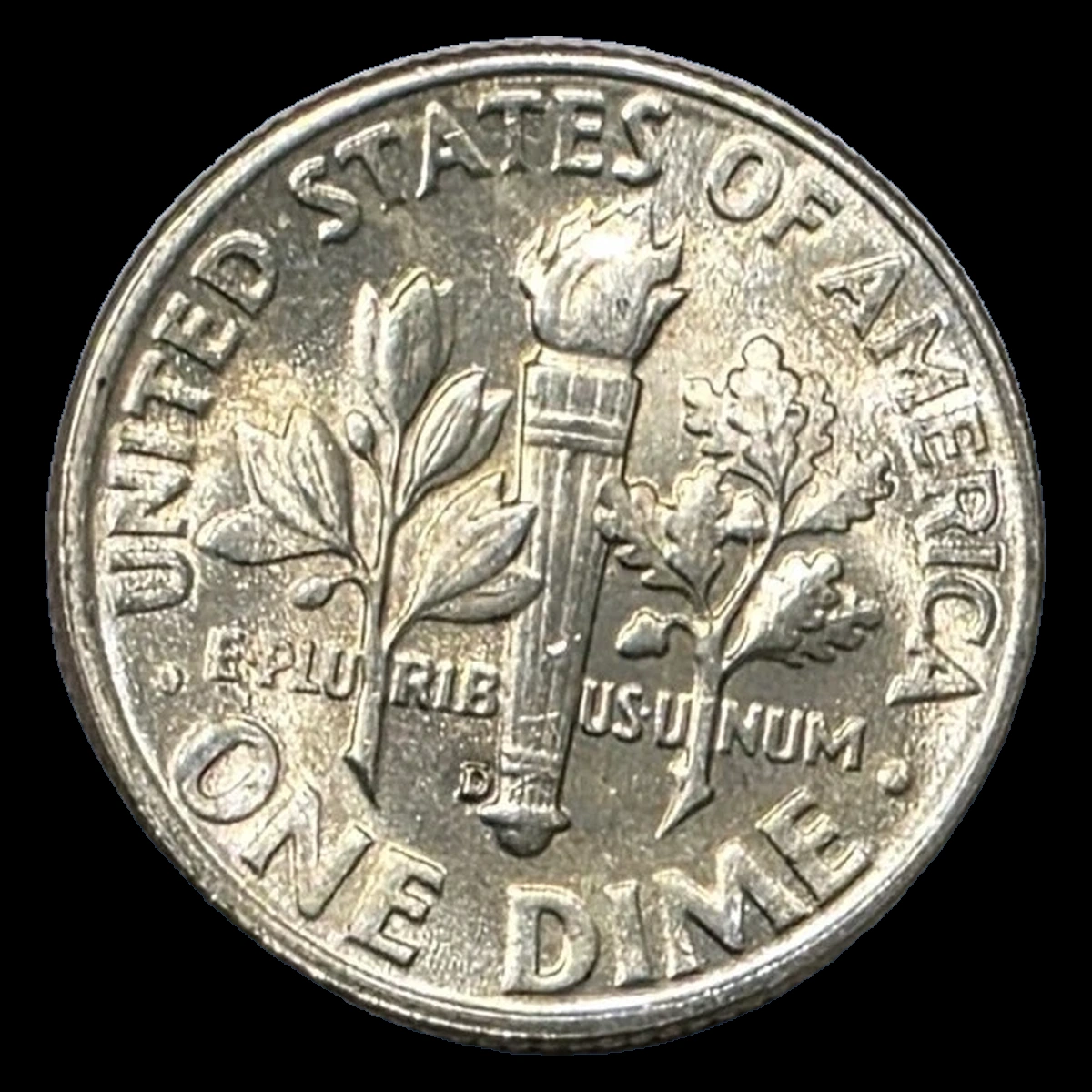
The small mintmark to the left of the torch’s base was applied to the die with a hand punch. An earlier impression can remain visible when a later punch does not cover it completely.
Denver FS-501 shows an earlier D at the lower left, while Denver VP-001 has earlier detail above the final D. The San Francisco VP-001 and VP-002 listings describe separate S patterns.
How to Identify
Choose a reference for the correct mint before comparing the shape and position of the extra strokes. The Denver directions do not identify the San Francisco varieties.
A remnant should resemble part of a punched letter rather than a flat shelf along its edge. A holder’s Full Bands designation refers to sharp horizontal torch bands and does not describe another mintmark error.
What It’s Worth
$15–$350 is the estimated range for identifiable repunched mintmarks. Clear remnants and attractive surfaces can separate a desirable example from a worn, uncertain one.
The GreatCollections FS-501 Full Bands archive records grades 63–66 at roughly $35–$115. Those results concern the named Denver variety and do not establish prices for every S/S pattern.
2. 1951 Dime The Lips or Reverse Details Look Repeated: Reported Doubled Designs Error
Two Philadelphia listings describe rightward detail beside Roosevelt’s lips, with the nose area also worth inspecting. Their appearance requires careful interpretation because polishing a die can change a small contour without producing a true doubled die.
A true doubled die already carries repeated design elements before it strikes a coin. A separate Denver reverse-doubling report has no fixed catalog number in the supplied material.
How to Identify
For the first Philadelphia listing, compare diagonal lines near the reverse lettering. The second has small tool marks and circular polishing lines on the reverse’s left half.
These markers can match a particular die, but they do not prove the cause of the lip outline. An earlier, less-polished example of the same die can help determine whether genuine repeated detail existed before polishing.
On the reported Denver reverse, seek rounded repeated contours or split details. Mere thickening or a flat shelf is insufficient to confirm a doubled die.
What It’s Worth
$20–$400 is the conditional estimate for confirmed doubled design detail; $10–$50 is the more modest estimate for Philadelphia lip features explained by die polishing. The correct range depends on establishing the cause.
No completed sale was supplied for these particular reports. A listing or an unusual mouth shape alone should not be presented as an authenticated doubled-die result.
3. 1951 Dime A Ridge or Lump Rises from the Design: Die Cracks and Breaks Error
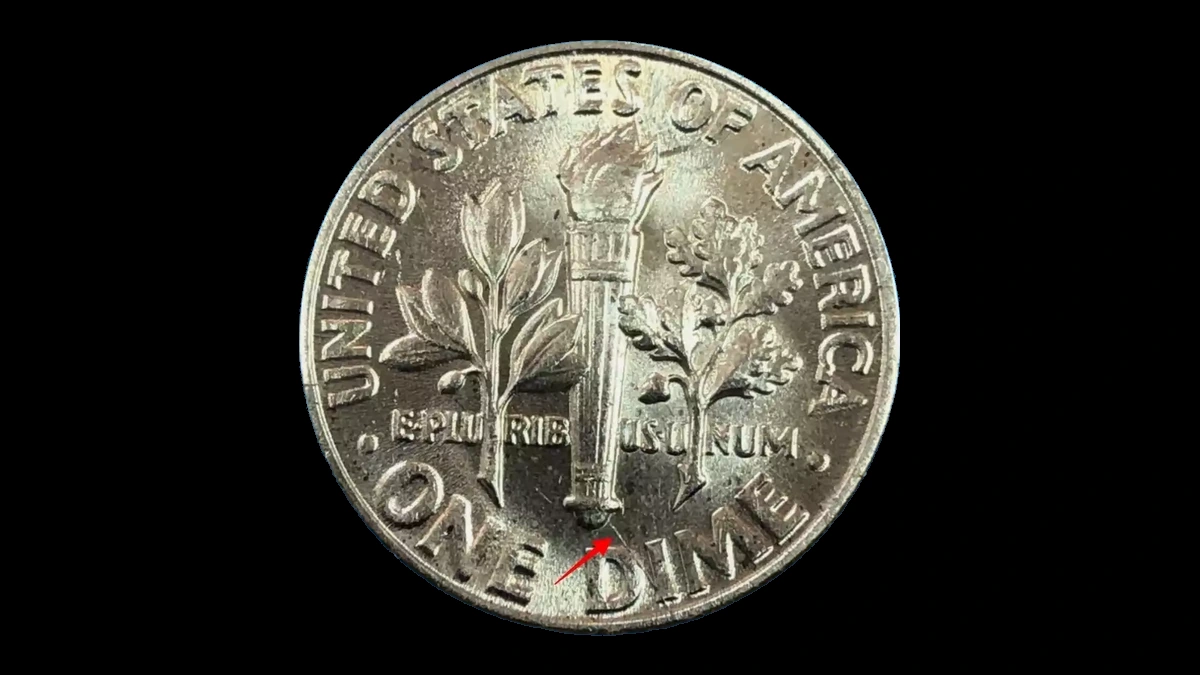
Raised lines form when coin metal enters cracks in a striking die. A chipped die leaves a raised patch, while a larger missing piece at the edge can create a rim-connected lump called a cud.
The 1951 reports cover cracks, small breaks, and cuds without one shared location. A narrow line that happens to reach the rim does not establish that a large die fragment fell away.
How to Identify
Under side lighting, distinguish a raised ridge from a scratch cut into the surface. For a proposed cud, check that a broader raised area meets the rim and replaces design that should be present.
An impact at the edge can also push up metal, but the associated dent usually helps explain its source. Several raised features on one coin still need a single coherent assessment.
What It’s Worth
$10–$50 is the estimate for small cracks and chips, increasing to about $40–$250 for stronger rim-connected breaks. These ranges cover whole coins, including their condition and silver content.
A 1970-D nickel with two cuds sold for $63 in October 2022. Its different denomination, size, and date make it a general comparison rather than a sale record for a 1951 dime.
4. 1951 Dime The Torch Points the Wrong Way after a Flip: Rotated Die Error
A centered, round dime can still have its two designs at an incorrect angle to each other. This happens when one die is turned relative to the normal alignment.
The reported 1951 example has no established mint or measured angle in the supplied evidence. Those details must come from the actual coin.
How to Identify
Hold Roosevelt upright and flip the coin top to bottom around a fixed horizontal axis. On a normally aligned United States coin, the reverse should then appear upright.
Repeat the movement without twisting sideways and record the torch’s direction. A loose coin rotating within a holder can make a photograph or a casual hand flip misleading.
For a loose 1951 dime, the normal references are about 2.5 grams, 17.91 mm, and a reeded edge. Inspecting the edge also helps rule out an assembled coin with a seam.
What It’s Worth
$25–$400 is the estimated range for noticeable genuine rotation. A large, repeatable deviation generally attracts more attention than a slight angle on a worn coin.
A 2015-D nickel rotated 90 degrees counterclockwise sold for $79 in October 2021. That angle and result belong to the nickel, not to the unmeasured 1951 dime report.
5. 1951 Dime A Section Is Missing from the Edge: Clipped Planchet Error
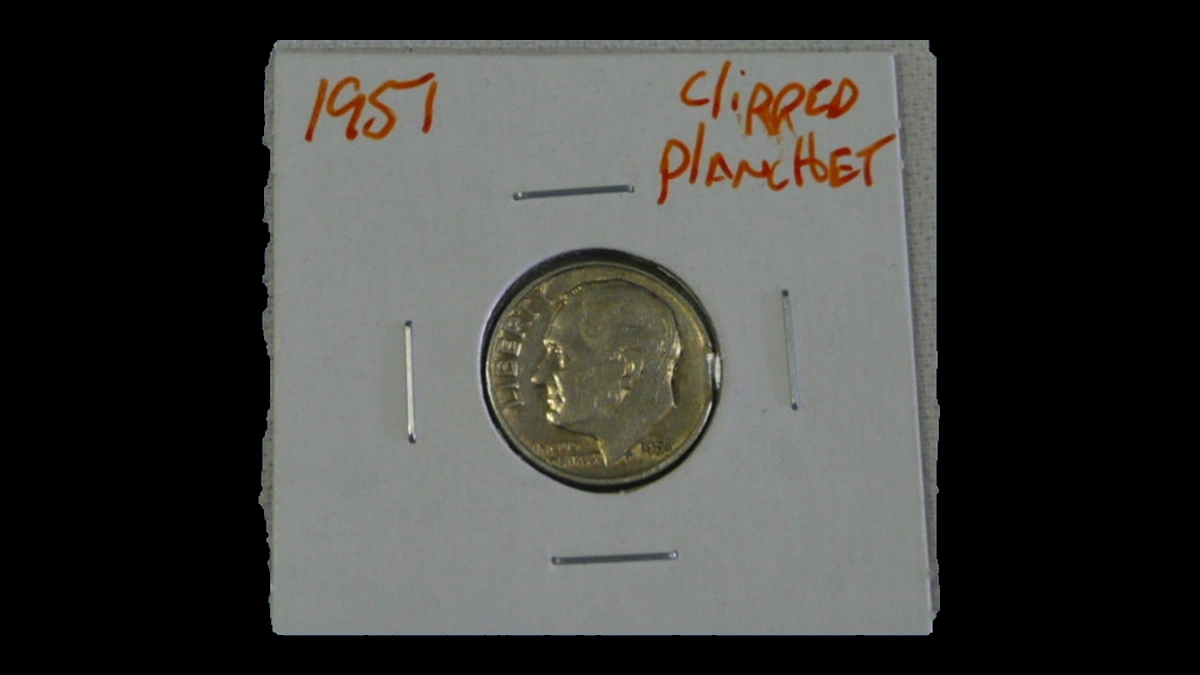
The rim can reveal whether a gap existed before the design was struck. A genuine clip begins in the blank, the metal disk from which the coin is made.
Overlapping an earlier punched hole produces a curved clip, while cutting at the strip’s edge can leave a straight shortage. No particular mint, clip percentage, or location is established for the supplied 1951 reports.
How to Identify
Inspect both ends of the gap for natural rim formation and a gradual weakening of the border. The opposite rim may also be weak, although that clue need not appear on every genuine clip.
File marks, burrs, or fresh cuts through an already formed design suggest later damage. A missing section should generally reduce the weight, but low weight alone cannot distinguish clipping from deliberate removal.
What It’s Worth
$25–$300 is the estimated range for genuine clipped 1951 dimes. The size of the shortage, a readable date, and remaining surface quality help determine where a coin fits.
A 1997-P nickel with a 20% clip sold for $124 in March 2025. That different-year nickel illustrates demand for clipped coins but does not establish a specific dime price.
6. 1951 Dime A Complete Design Sits inside an Expanded Border: Broadstrike Error
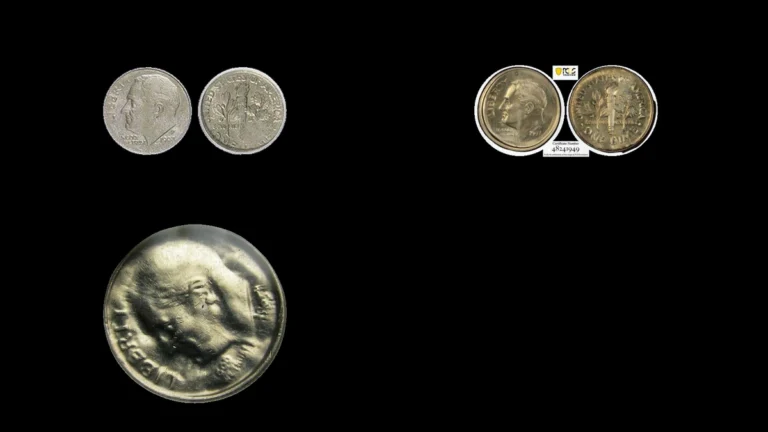
A broadstrike spreads outward because the collar, the restraining ring around the blank, fails to contain the metal properly. The complete design can remain visible despite the enlarged outline.
A reported 1951-D example is described as MS62. The grade alone supplies neither its measured width nor a complete account of its edge.
How to Identify
Compare several widths with the normal dime diameter and inspect the space beyond the lettering. Natural outward metal flow is more persuasive than width by itself.
Weak or incomplete edge grooves may accompany the expansion, depending on the blank’s contact with the collar. Hammering after the strike can also widen a coin, but usually batters the design and changes the surface.
Confirm the D beside the torch on a claimed Denver example. A broadstrike retains the intended design, whereas a blank crescent opposite missing design points toward the next category.
What It’s Worth
$40–$500 is the estimated range for genuine 1951-D broadstrikes. Clear expansion and original surfaces can matter more than a small increase in diameter.
A 1988-P dime with an expanded second strike sold for $80.50 in May 2005. Its multiple-strike history and different metal limit the comparison, and it is not a sale of the reported 1951-D MS62 coin.
7. 1951 Dime The Strike Leaves a Blank Crescent: Off-Center Strike Error
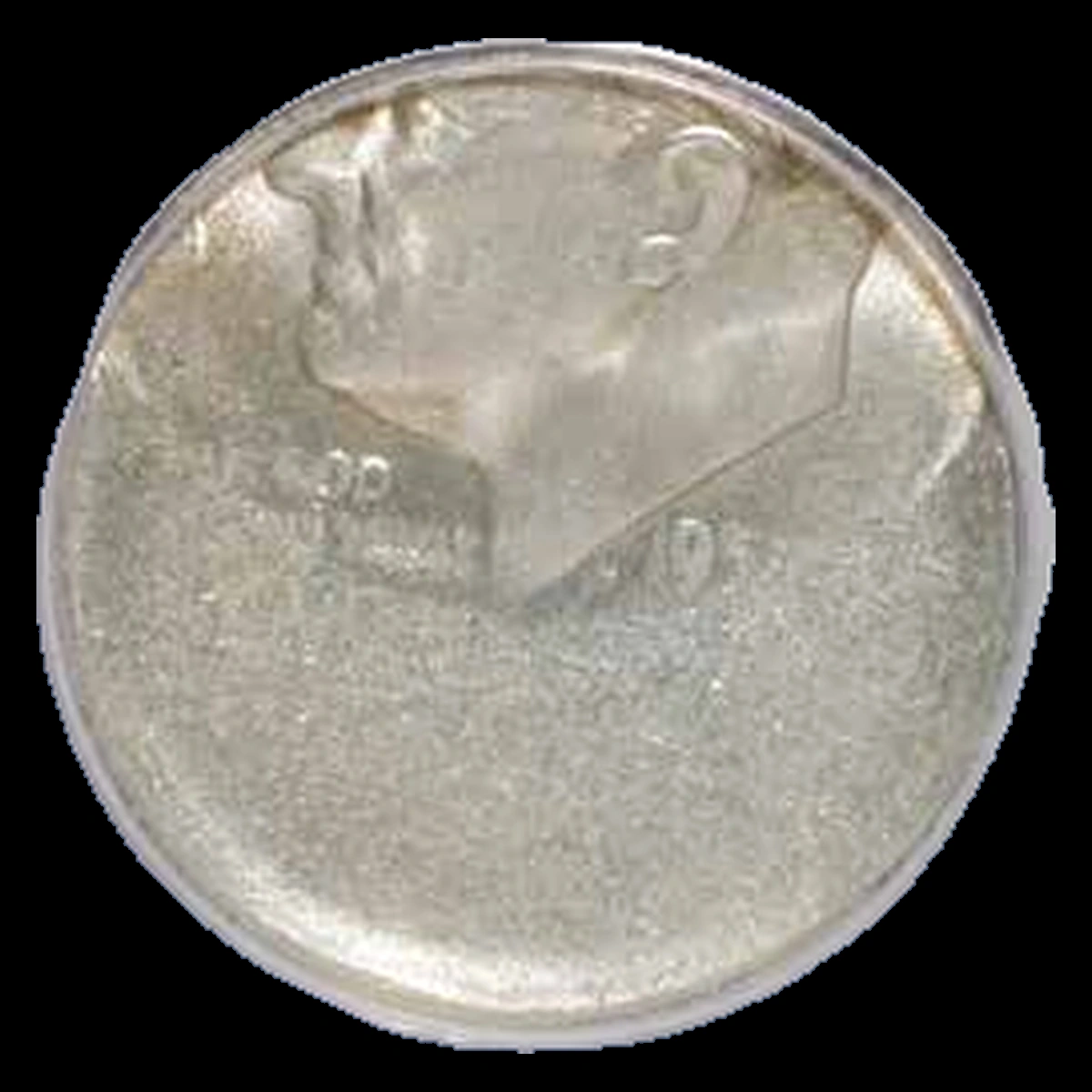
When a blank sits partly outside the striking position, some of each die’s design misses the metal. The resulting coin combines an unstruck crescent with a cropped portrait and reverse.
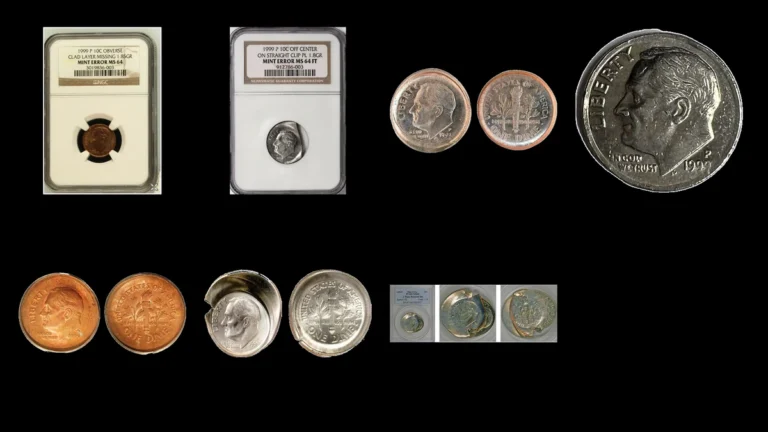
The supplied examples include a 50% off-center ANACS MS62 dime and a separate 65% off-center NGC MS63 dime. Neither description establishes a clock direction for the displacement.
How to Identify
Locate the surviving date, then compare the struck and untouched areas on both faces. Their positions should be consistent with the same displaced blank.
A shifted design on only one side needs examination for a different alignment problem. Grinding away a finished coin can imitate a smooth area, so inspect its boundary for removed details and tool marks.
What It’s Worth
$100–$1,000 is the estimated range for genuine dated 1951 off-center dimes. Readable identity and preservation can be as important as the size of the blank area.
The 50% off-center ANACS MS62 example sold for $322 in June 2008. The separate 65% NGC MS63 example realized $372 in June 2023.
A larger displacement does not automatically produce a higher price. Cleaning, damage, or the loss of the date can make a dramatic-looking piece less desirable.
Conclusion
A careful examination of a 1951 dime starts with the reverse mintmark and ends with how the two faces relate to the outline. Separate a changed lip contour from confirmed doubling, and a rotated torch from sideways displacement.
Use the documented off-center sales for coins with comparable displacement and condition. For other reported categories, the estimates remain guides that depend on identifying a genuine mint-made feature.