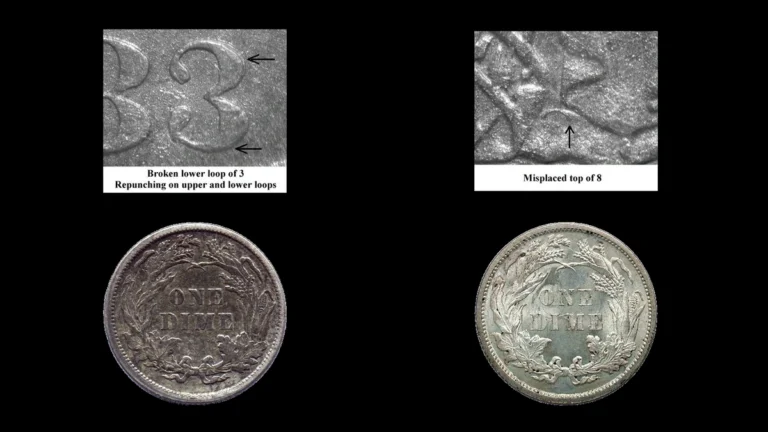
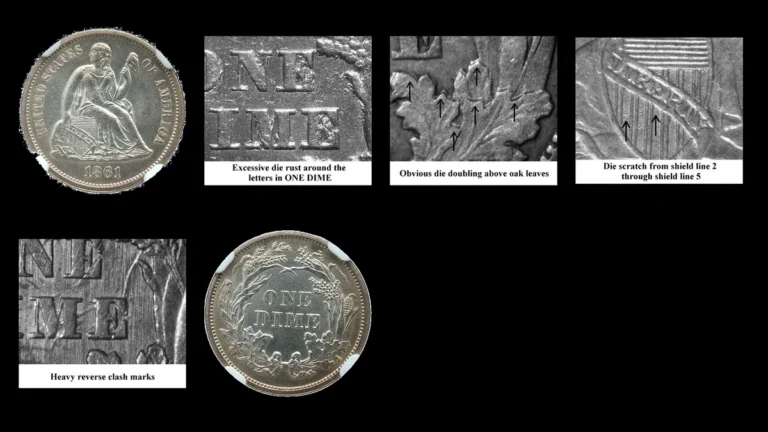
Rare 1849 Dime Errors (List & Pictures)
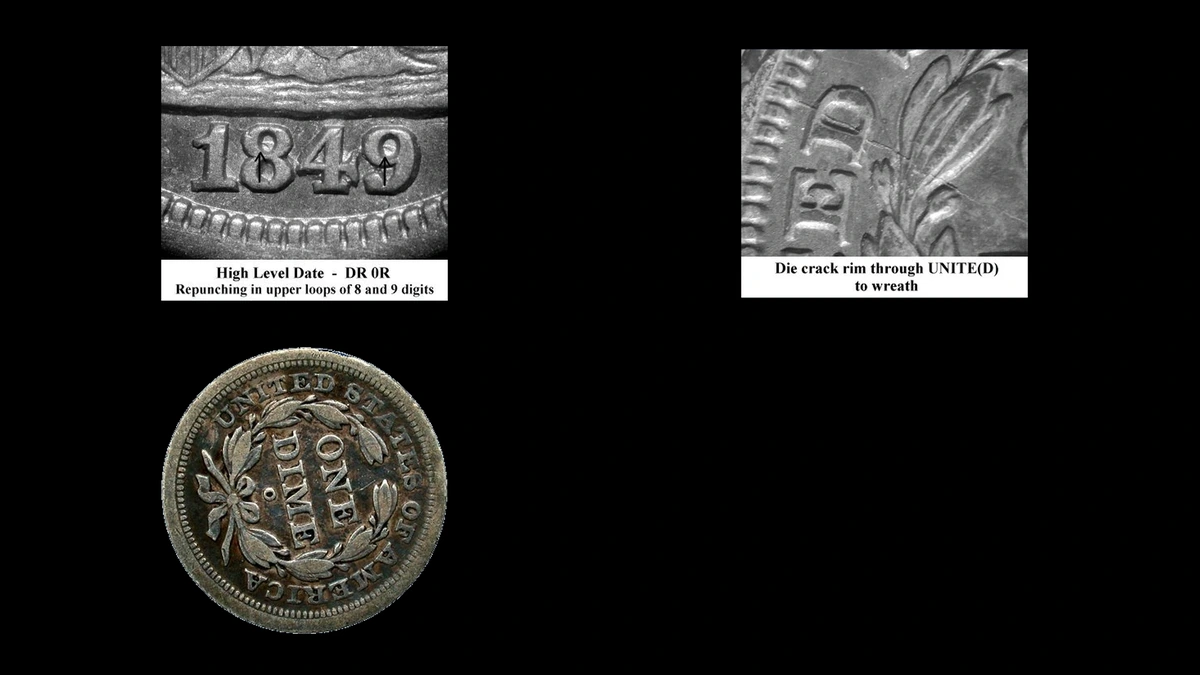
The mintmark is a useful first stop when examining 1849 dime errors, because Philadelphia and New Orleans have different recorded patterns. Estimated values range from $50–$3,500, and a New Orleans repunched-date VF35 sold for $371.25 in July 2026.
Identify the mint, compare the extra date strokes and reverse lines, then test the relationship between the two faces with a controlled flip.
| Check | Possible feature | Estimated whole-coin range |
|---|---|---|
| Extra strokes in the date | Repunched date | $50–$500 Philadelphia; $100–$2,000 New Orleans |
| Raised reverse line | Die crack | $75–$1,500 |
| Tilted reverse after a fixed flip | Rotated dies | $150–$3,500 |
An O below the wreath identifies New Orleans; the size and tilt of that O can help choose a reference. Both mints used 90% silver dimes of about 2.67 grams and 17.9 millimeters, with grooved edges and possible weight loss from wear.
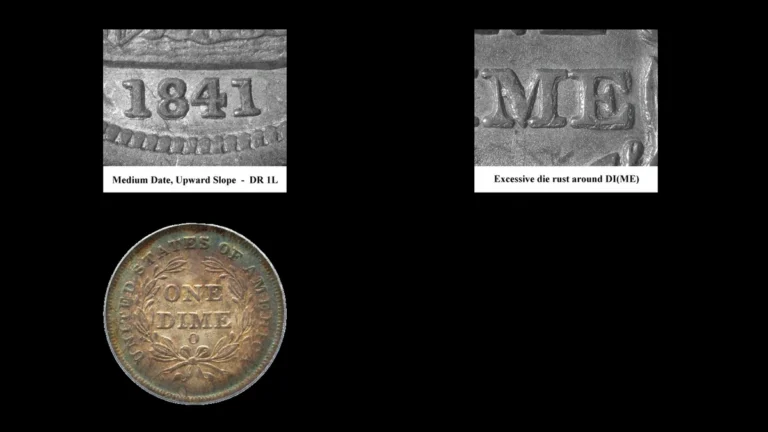
1. 1849 Dime Earlier Number Strokes in the Date: Repunched Date Error
Philadelphia examples show extra outlines inside 8 and 9. Although older descriptions used “1849/8,” the feature is treated as date repunching rather than a proven change from an earlier year.
New Orleans has a different pattern, with earlier strokes below the top of 1, the lower loop of 8, and the base of 4. Repeated placement of the date punch in the die left those remnants for later coins to receive.
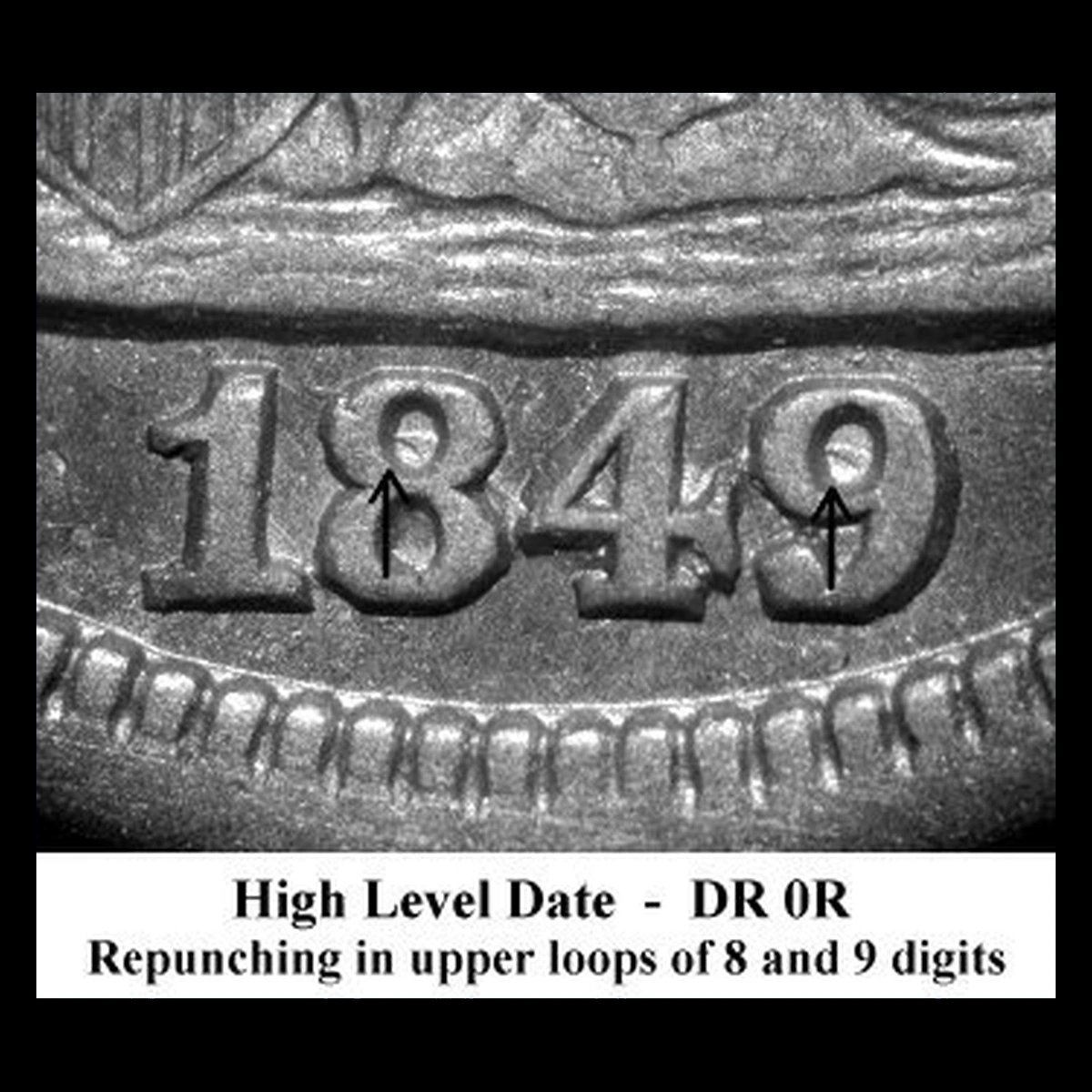
How to Identify
Check the reverse for O before choosing a date close-up. Then compare recognizable parts of the earlier numerals at the positions appropriate to that mint.
A flat ledge beside a digit can result from movement during striking and is not the same as an earlier punched stroke. The historical 1849/8 name also does not settle what numeral lies beneath the visible date.
What It’s Worth
Circulated Philadelphia pieces are estimated at $50–$500, while worn through lightly worn New Orleans examples range around $100–$2,000. A New Orleans F-104 graded PCGS VF35 sold for $371.25 in July 2026.
That transaction directly supports the New Orleans comparison. Its price should not be applied automatically to the differently repunched Philadelphia date.
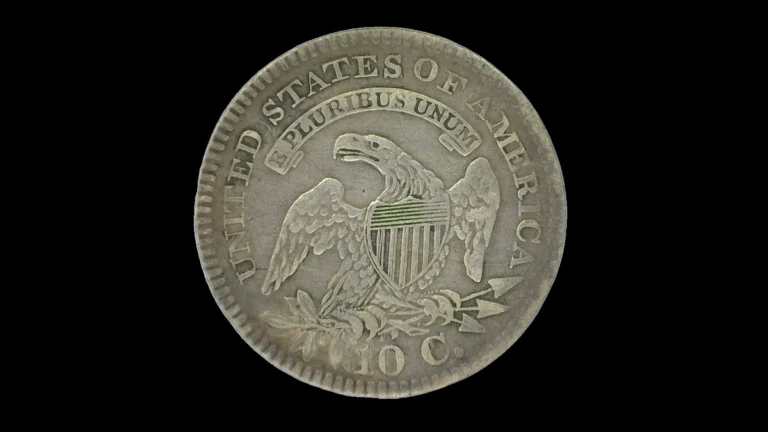
2. 1849 Dime A Raised Line toward AMERICA: Reverse Die Crack Error
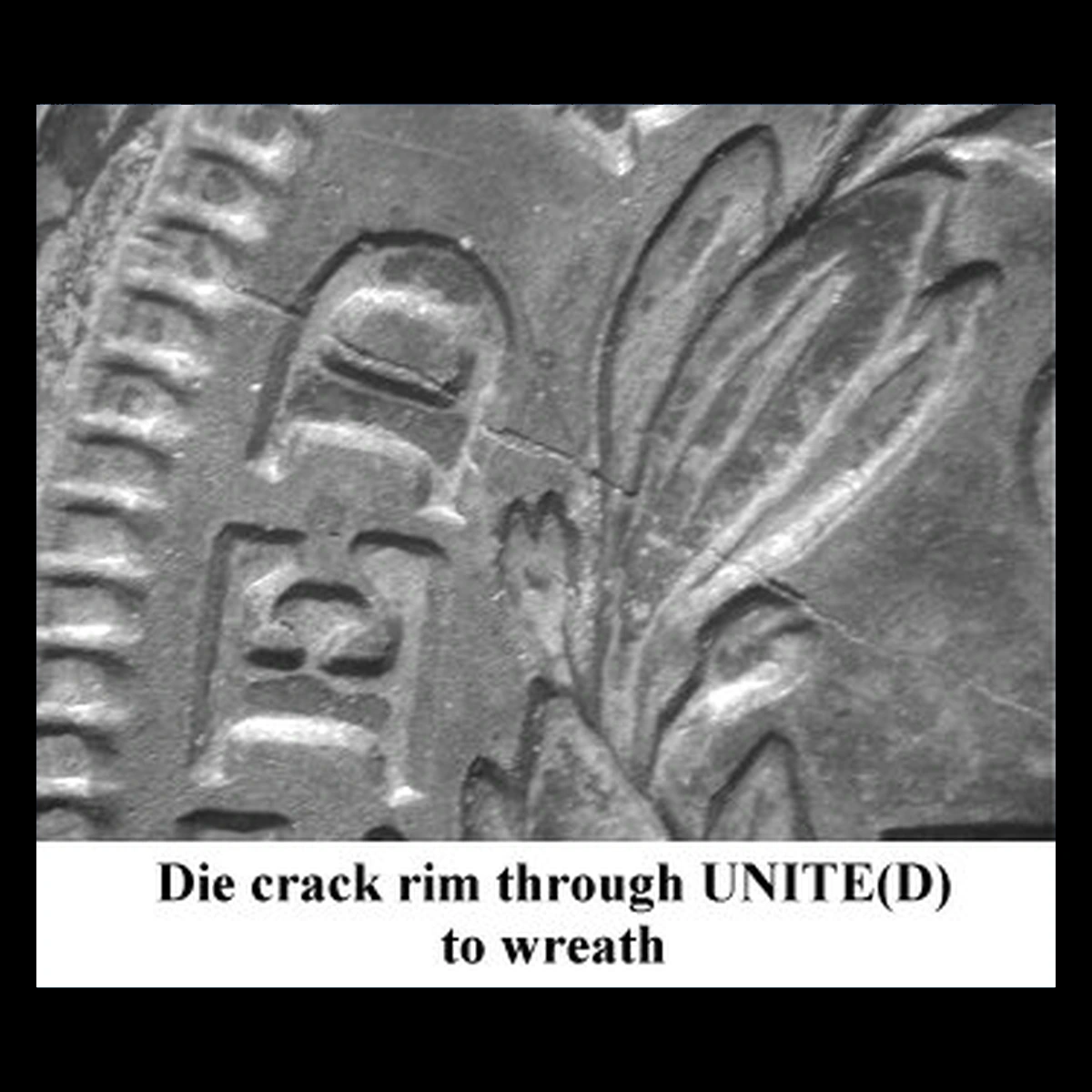
On a small-O reverse, a crack runs from the rim toward C in AMERICA. A separate large, tilted-O example also has reverse cracking, but along its own route.
The raised line formed as silver entered a narrow opening in the striking die. The tool cracked; the dime itself did not need to split.
How to Identify
Follow the entire ridge between C and the edge on a small-O candidate, keeping nearby letters visible. A large-O coin requires a matching large-O reference rather than the same assumed path.
Move the light to distinguish a ridge from a scratched trench, and inspect the point where it meets the edge for later damage. The mintmark style narrows the comparison but does not prove a crack exists.
What It’s Worth
Circulated New Orleans dimes with identified reverse cracks are estimated at $75–$1,500. The $371.25 repunched-date sale gives same-year mint context, not a sale of the exact small-O crack or a separate price for the line.
Remaining design and original surfaces account for much of the coin’s value. A crack also does not establish that the reverse was rotated.
3. 1849 Dime ONE DIME Lands at an Angle: Rotated Reverse Error
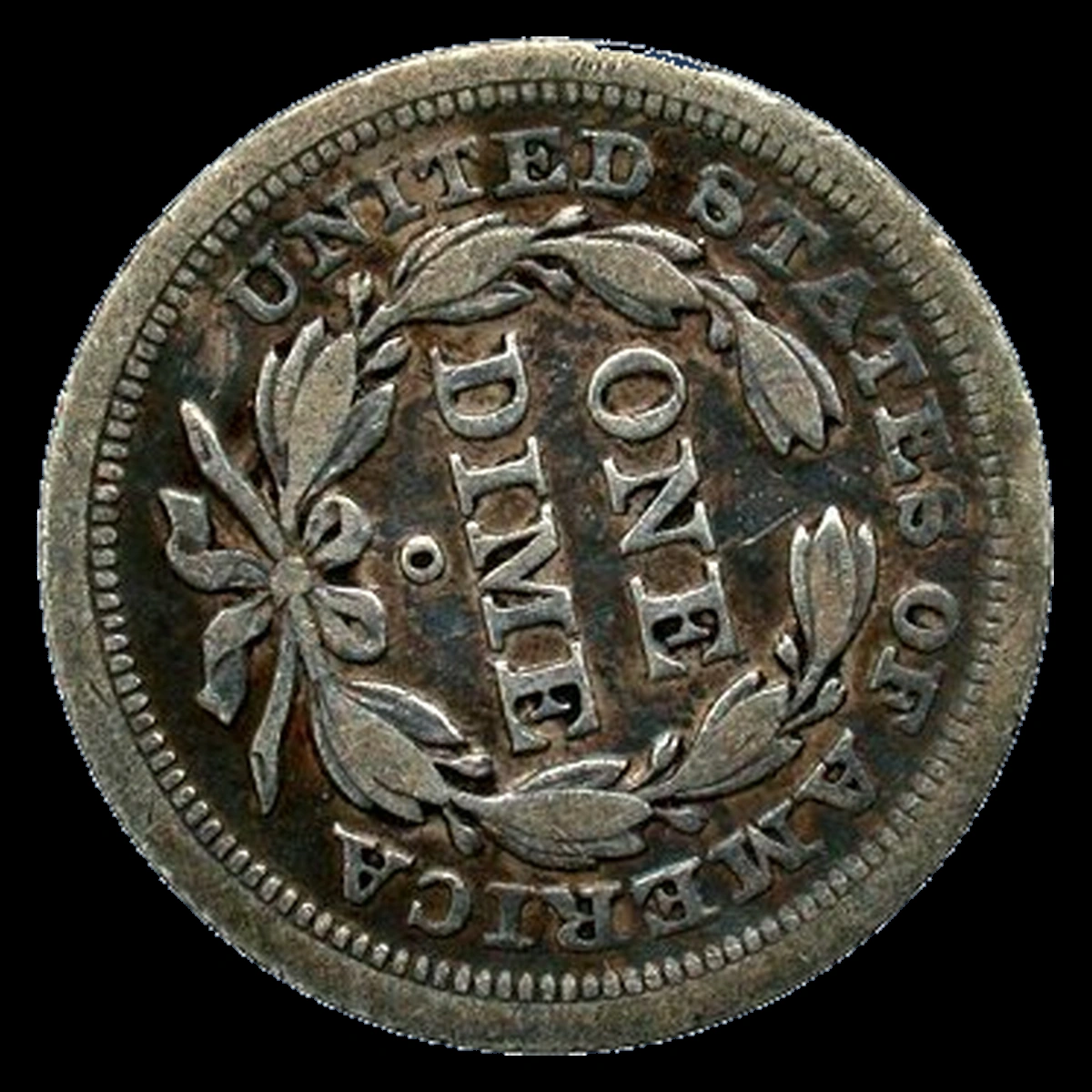
A rotated die changes how the reverse faces relative to Liberty. Specialist listings describe separate large-O examples turned left about 52 or 34 degrees, and small-O examples around 85 or 48 degrees.
Those measurements belong to different specimens, not changing positions of one coin. A repunched date can occur with a rotation, but it cannot supply the angle.
How to Identify
Hold Liberty upright against a vertical reference and flip the coin top to bottom without twisting sideways. Repeat the motion to see whether ONE DIME consistently lands at the same unusual angle.
Keep that relationship intact when documenting both sides, since rotating each photograph upright separately conceals the evidence. Compare the correct O style and note that references may describe viewing direction differently.
Inspect the edge for a joining seam or machining that could indicate assembled pieces. Normal weight and diameter do not rule out a genuine rotation.
What It’s Worth
Estimated values range from $150–$3,500 for circulated through attractive lightly worn examples. An AU58 was offered for $2,450 in March 2008, an asking price rather than a completed sale.
The degree of rotation, surfaces, and underlying variety all affect the comparison. Neither that offer nor the recent repunched-date auction establishes a fixed value for every tilted reverse.
Conclusion
Use the mintmark to choose the right date and crack references, then test orientation as its own feature. A New Orleans dime may combine more than one unusual characteristic, but one does not prove another.
Record the actual strokes, line route, and repeatable reverse angle before comparing prices, keeping an old dealer offer distinct from a completed sale and judging the whole coin’s condition.