Rare 2022 Dime Errors (List & Pictures)
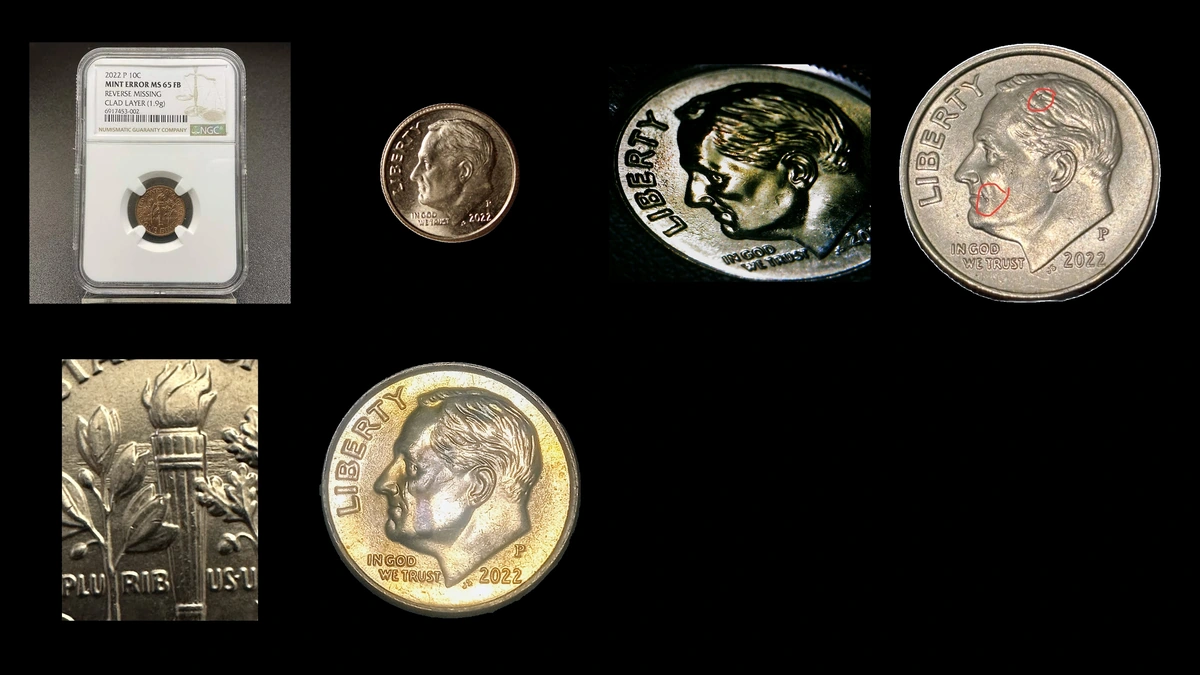
A copper-colored back is a very different finding from a tiny bump near Roosevelt’s mouth. Estimated values for 2022 dime errors span $3–$1,500, with the highest wrong-blank figures remaining conditional.
A dealer’s $1,199 missing-layer price is an asking price, not a documented auction result. Compare the coin’s outline and metal first, then inspect small design details.
| What stands out? | Possible explanation | Estimated value |
|---|---|---|
| Copper-colored reverse | Missing clad layer | $150–$1,200 |
| Wide outline, complete design | Broadstrike | $30–$150 |
| Weak part of the flame | Struck through grease or debris | $5–$30 |
| Raised lip or nose lump | Die chip | $3–$30 |
A normal P or D circulation dime weighs 2.268 grams and measures 17.91 millimeters. Record those measurements on a loose candidate once; the normal 2022-S silver Proof is a different collector issue, weighing about 2.537 grams and containing 99.9% silver.
1. 2022 Dime Copper Showing Across the Back: Missing Clad Layer Error
The copper stripe along an ordinary dime’s edge is expected. A copper-colored reverse face needs closer examination because a normal clad dime has pale copper-nickel layers over its copper core.
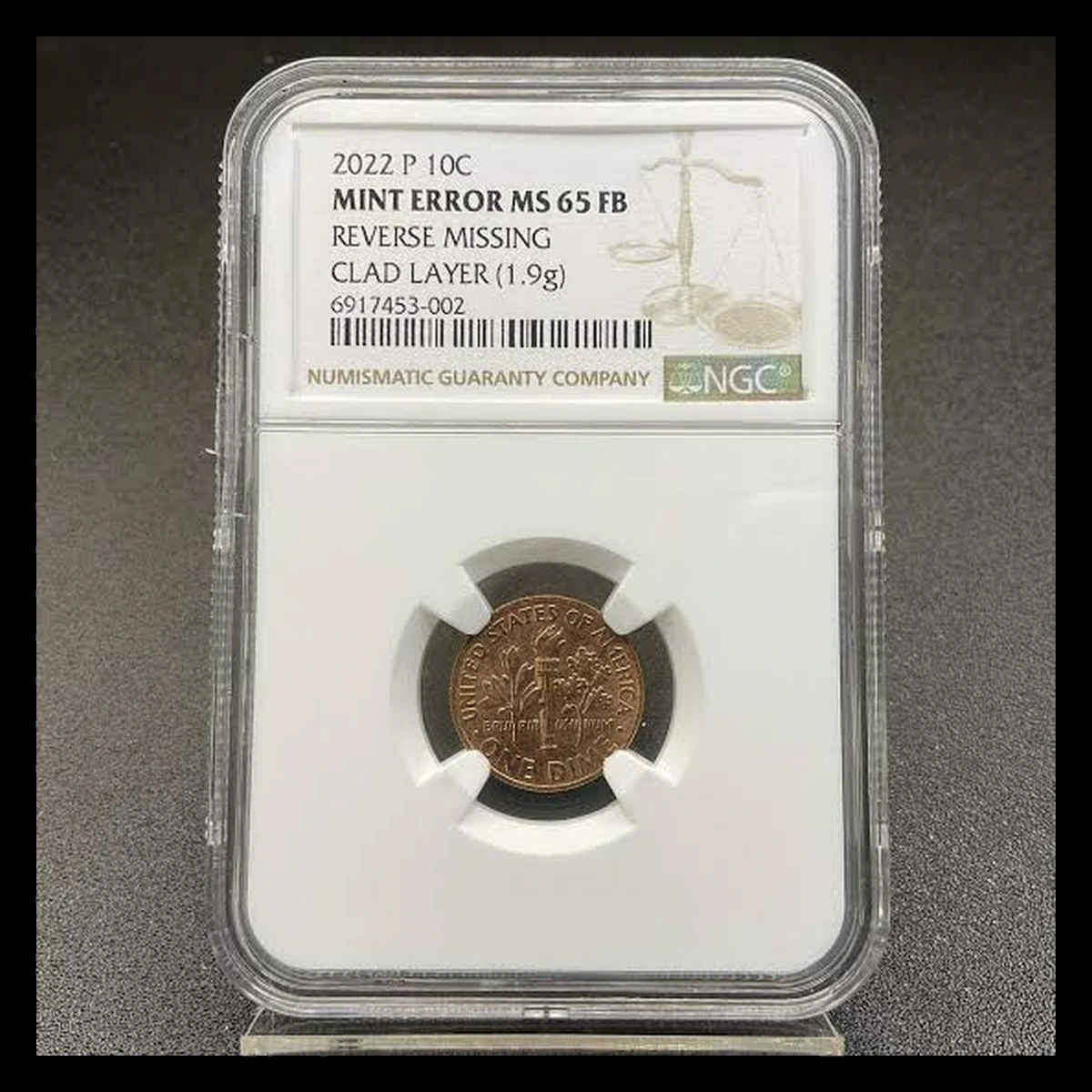
An NGC MS65 2022-P example is listed with its reverse layer missing. MS65 describes an unworn coin with relatively few marks.
How to Identify
Check for an original struck copper surface on the back and a normal pale front. A genuine missing layer should also leave the coin below its normal weight.
Staining can alter color without removing metal, while grinding or chemical treatment can remove metal after minting. Inspect the edge and surface for those changes, or read the certified error description on a sealed coin.
What It’s Worth
About $150–$1,200 is an estimated range for genuine missing-layer examples, with condition making a substantial difference.
Mallard Collectibles offers the 2022-P MS65 coin for $1,199. The offer does not establish a completed sale at that price.
2. 2022 Dime The Metal and Size Do Not Fit: Wrong Planchet Error
A planchet is the blank prepared for striking. If the press receives one intended for a different denomination, the dime design may appear on unexpected metal or dimensions.
The supplied year guide discusses cent and quarter blanks, but it does not confirm an individual 2022 specimen. These remain possibilities to investigate rather than established examples for this date.
How to Identify
A modern cent blank starts around 2.50 grams and 19.05 millimeters, making it larger than a dime blank. A clad quarter blank starts around 5.670 grams and 24.26 millimeters.
Compare measurements and metal composition with a plausible blank type, allowing for shape changes during striking. Unusual color alone cannot distinguish the wrong metal from plating or a stain.
What It’s Worth
A confirmed cent-blank example would have a conditional comparison range of $750–$1,500; a confirmed quarter-blank example, $750–$1,200.
Neither range is a recorded sale for a known 2022 coin. The actual blank, recognizable design, and condition would need to be established before either estimate became useful.
3. 2022 Dime A Curved Bite or Straight Gap: Clipped Planchet Error
During blank cutting, an overlapping punch can cross a previous hole in the metal strip and leave a curved opening. Cutting at the strip’s edge can leave a straight missing section instead.
Both forms are reported for 2022 dimes without a single established mintmark or clip size. The defining point is that metal was missing before striking.
How to Identify
Inspect the missing boundary on both faces and the edge for original metal flow. Saw marks or a cut through finished design suggest later damage.
A weak rim opposite the clip, often called the Blakesley effect, can support the identification. It is not required on every genuine example.
What It’s Worth
Estimated values of $20–$200 allow for differences in clip size and preservation. A clear original boundary and readable date make a stronger collectible.
The supplied report does not provide an auctioned specimen with a measured clip percentage. Do not turn the upper estimate into a supposed sale for an unspecified coin.
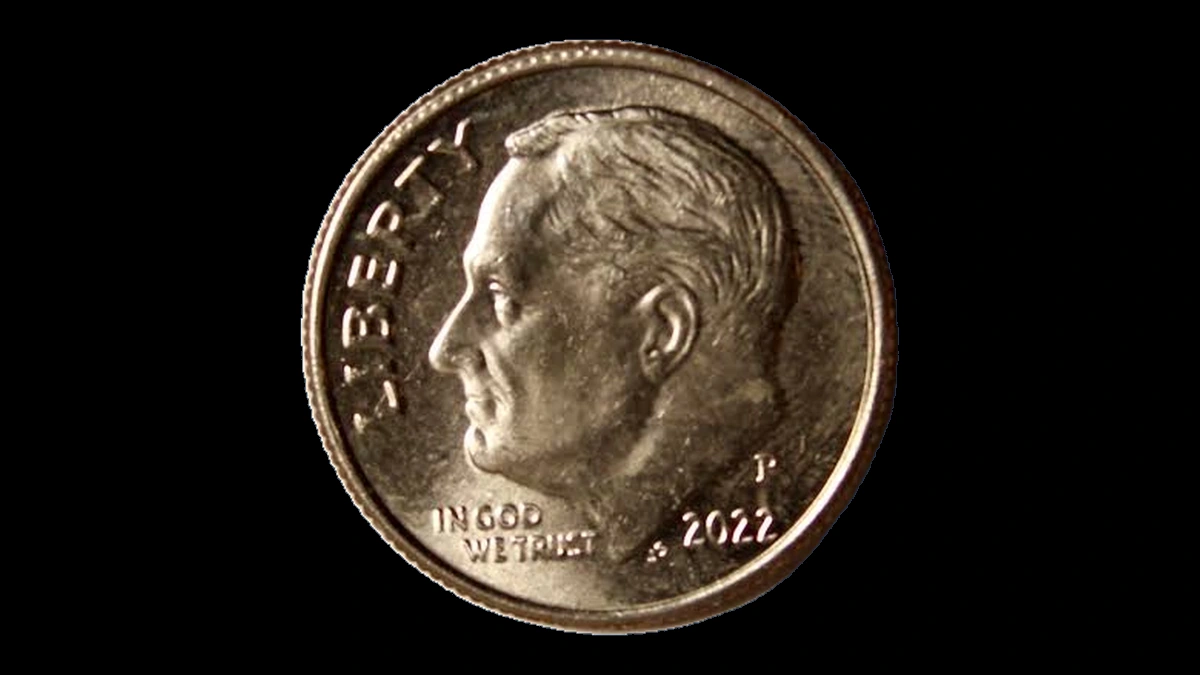
4. 2022 Dime A Thin Wall Above the Rim: Rim Fin Error
View the edge level with your eye to look for metal projecting above the face. A fin forms when striking pressure pushes metal into a narrow gap near a die and the collar ring.
The collar controls the coin’s width and forms its edge grooves. Reported 2022 fins may be more even around the rim or higher on one side.
How to Identify
A thin upward extension differs from a thick, rounded edge. Examine nearby detail and the edge grooves for crushing or rubbing caused by later rolling.
A one-sided high rim does not reveal the exact position of the press tools by itself. Preserve the projection instead of pressing it down to test its strength.
What It’s Worth
A clear original fin suggests around $20–$50. Small changes that barely rise above the ordinary rim may attract little interest.
This is a guide estimate without a named auction result. A damaged rolled edge does not qualify simply because it is unusually high.
5. 2022 Dime An Expanded Dime with All Its Design: Broadstrike Error
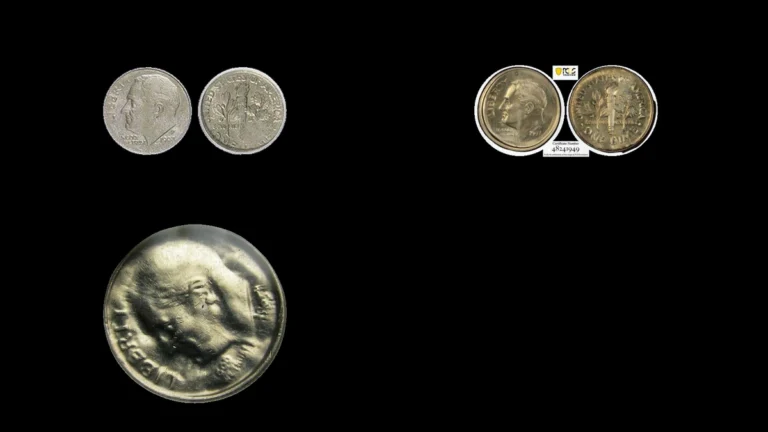
If the collar fails to contain the strike, metal can spread outward into a wider coin. The portrait, date, and reverse design remain complete on a broadstrike.
The edge may be smooth where normal grooves failed to form. No measured 2022 specimen is supplied, so its exact width cannot be assumed.
How to Identify
Check the full circumference and design before judging from extra width. A broadstrike should retain original detail rather than show the widespread crushing caused by later flattening.
Compare the outline with the recorded diameter and weight. Outward spreading with little weight change is consistent with the process, but it does not independently prove a mint origin.
What It’s Worth
For genuine 2022 broadstrikes, a working estimate is $30–$150. Attractive surfaces and a clear expanded shape favor the stronger prices.
The range is not a sale record for a specific coin. Very slight spreading requires a more modest comparison than a dramatic example.
6. 2022 Dime Blank Crescent Beside Cut-Off Design: Off-Center Strike Error
Here the blank sat partly outside the dies, so some intended design did not reach the coin. The unstruck part of the blank remains visible beside the shifted strike.
The year guide describes offsets around 5–10% and gives estimates for more dramatic errors. Those larger estimates do not establish a known high-percentage 2022 specimen.
How to Identify
Locate genuine design cutoff and compare it on both faces with the unstruck area. A narrow border on only one face can instead result from a misaligned die.
Read whatever remains of the date and mintmark. An undated error should not receive a 2022 attribution merely because its design is modern.
What It’s Worth
Small clear offsets may bring roughly $10–$50, while a dramatic dated example has an estimated range of $75–$500.
These figures describe possible comparisons, not completed sales for each degree of displacement. Preserving the date can matter as much as the size of the blank crescent.
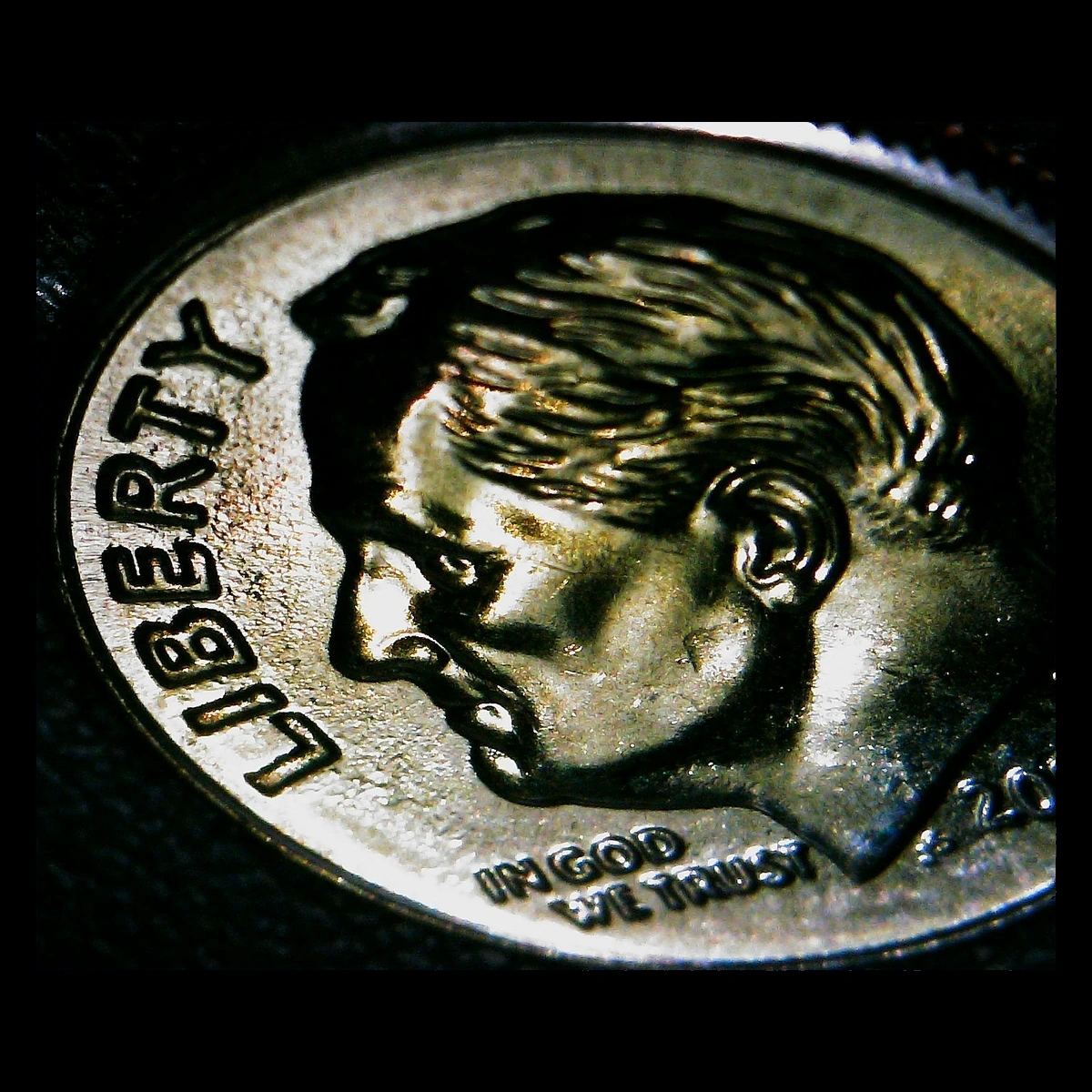
7. 2022 Dime A Faint Part of the Torch: Struck Through Grease or Debris Error
Inspect the left portion of the flame beside the stronger right-hand detail. The appearances called Burning Torch and Smokey Torch are attributed in the year guide to blocked die recesses.
Grease or debris can keep metal from filling part of the tool’s design. Weak torch bands or letters may occur too, although missing sharpness alone does not prove a blockage.
How to Identify
Compare the flame with a normal dime under modest magnification. Sharp surrounding features beside localized weakness provide more useful evidence than an entirely worn reverse.
Check the affected area for scraping or grinding. General wear and an incomplete strike are other explanations that must be distinguished from material trapped during striking.
What It’s Worth
Clearly localized missing detail is estimated at $5–$30. Small affected letters tend to draw less attention than a visible flame defect.
No documented auction price is supplied for a particular 2022 Burning Torch coin. The nickname does not create a second error premium.
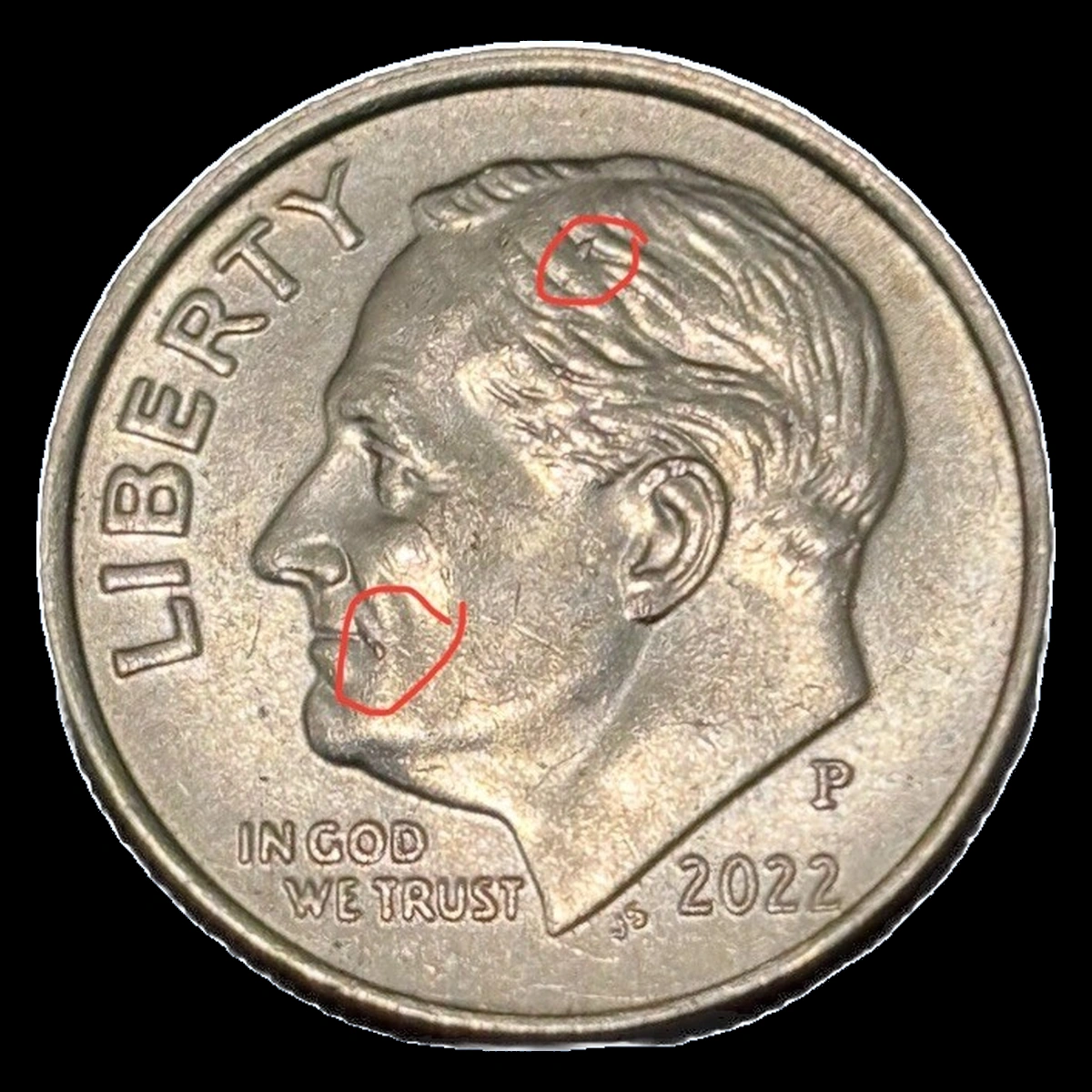
8. 2022 Dime A Raised Spot at the Mouth: Die Chips and Cracks Error
A lip chip may look like a drop below Roosevelt’s mouth, prompting the nickname Drooling Frank. Similar raised spots are reported near the nose or chin on separate P and D coins.
A small broken area in the die fills with coin metal to produce a chip. A narrow crack in the tool instead produces a raised line, including a reported location near the torch base.
How to Identify
Use side lighting to check whether the spot forms a continuous part of the metal. An attached substance can have a visible boundary and should not be scraped as an identification test.
Trace a suspected crack to distinguish it from a scratch with displaced metal beside it. A portrait chip is not a rim cud unless it connects to the rim.
What It’s Worth
Small chips and fine cracks generally fit an estimated $3–$30 range. A bold feature on an unworn coin makes an easier comparison than a tiny worn bump.
The reports do not provide a single shared pattern for all P and D coins. Price the actual feature and condition rather than the nickname.
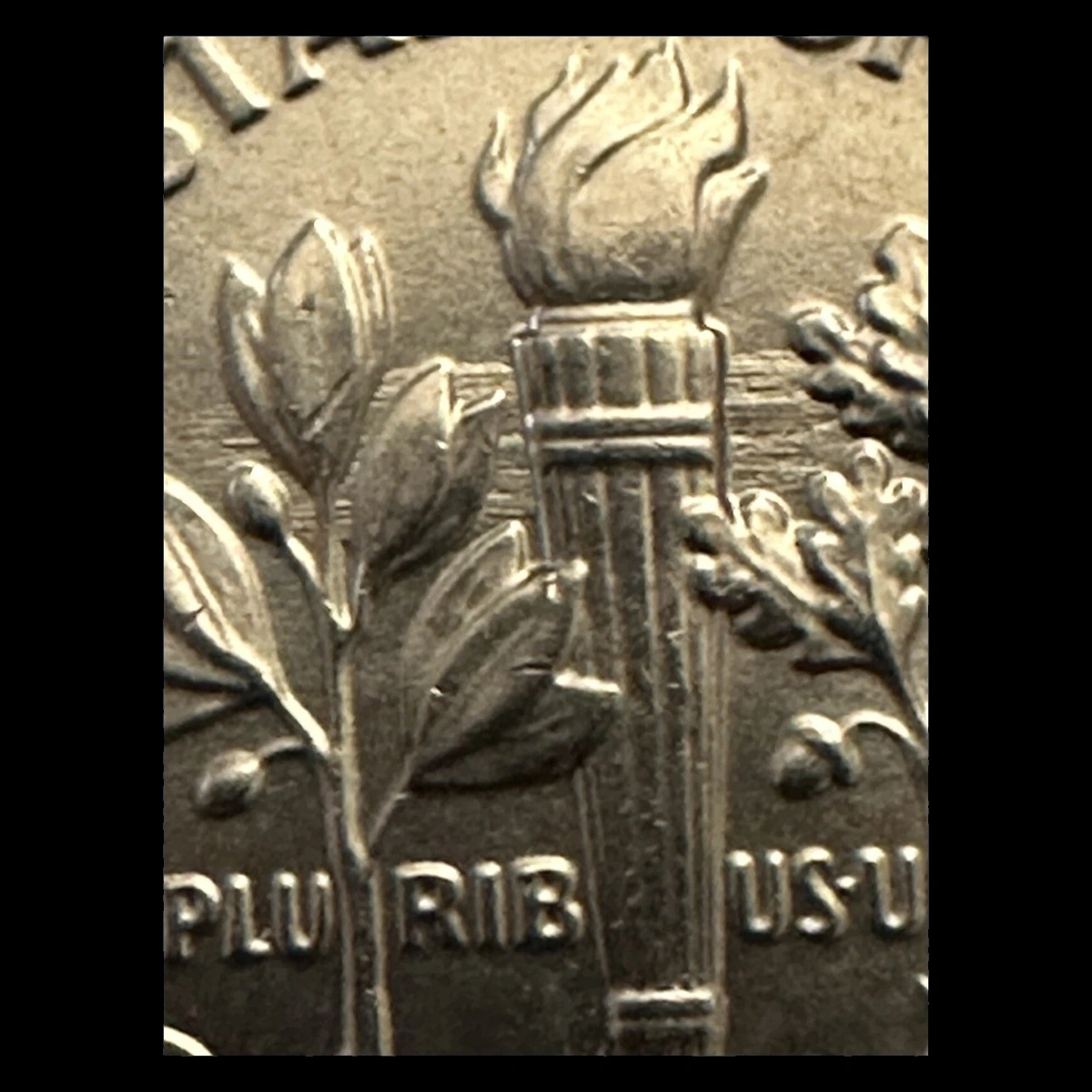
9. 2022 Dime Parallel Raised Lines: Feeder-Related Die Marks Error
Lines above the portrait, and separately behind the torch, are described as feeder-finger marks. A feeder finger moves a blank into place and can mark a die if it contacts the tool.
The damaged die may then reproduce the lines on later coins. This differs from a feeder part being struck directly against one blank.
How to Identify
Photograph the whole line pattern with nearby design so its position is clear. Check whether the lines stand above the surface instead of cutting into the finished coin.
Parallel spacing alone cannot establish feeder contact because die polishing can also leave repeated lines. A matched pattern on other coins from the same die provides better support.
What It’s Worth
The guide estimate is $50–$100 for clearly identified examples. Strong visible lines on attractive coins support more interest than faint worn traces.
This estimate assumes the proposed mechanism has been distinguished from scratches and ordinary polishing. No specific auction realization accompanies the supplied report.
10. 2022 Dime A Second Design Contour: Doubled Die Error
Reported front-side doubling involves LIBERTY, date digits, or the portrait; separate reverse reports concern lettering and torch details. The available guide does not establish one common pattern or mintmark for all of them.
A doubled die already carries the repeated contour before it strikes the blank. It does not require two strikes on the individual dime.
How to Identify
First compare the area with an ordinary dime, especially the torch’s normal paired horizontal bands. Those two bands are part of the intended design.
Examine letter corners and curves for separately raised contours that match an identified pattern. Flat shelves caused by movement during striking are a frequent lookalike.
What It’s Worth
A properly matched doubled design suggests approximately $10–$150. The estimate covers a broad range of visibility and preservation.
Prices quoted for combinations of features are not sales of every standalone doubled die. Additional weak detail must be identified separately on the same coin.
11. 2022 Dime A Portrait Trace on the Torch Side: Die Clash Error
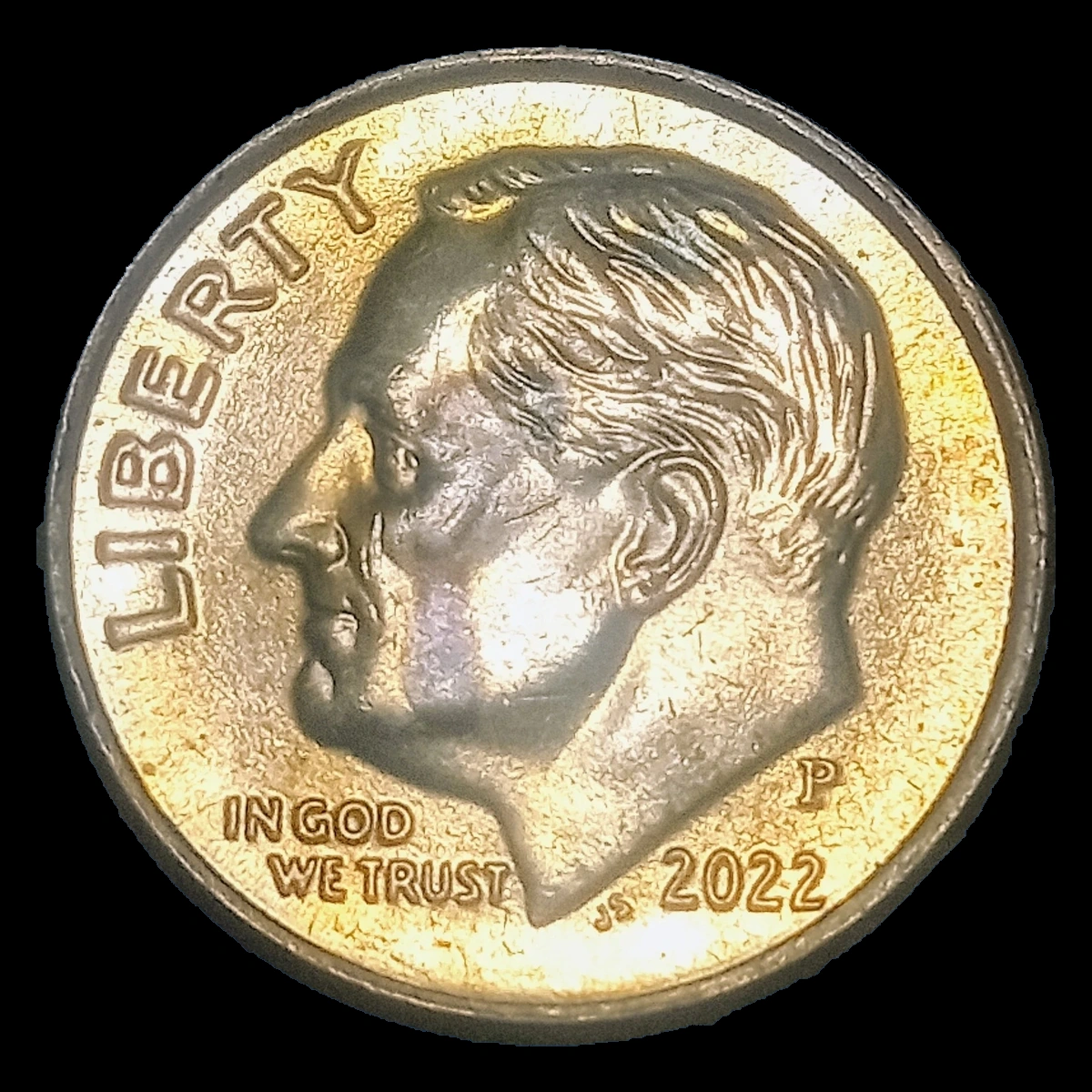
A faint shape on the reverse may belong to Roosevelt’s portrait rather than the branches or torch. A clash happens when the dies touch without a blank between them and mark each other.
Subsequent dimes can show those transferred outlines. The 2022 report does not map a particular specimen’s complete clash pattern.
How to Identify
Try to match the unexpected line to a recognizable part of the opposite design. A random curve in the background is insufficient.
Inspect its continuity under changing light and compare both faces. Later scratches and polishing lines need not preserve any meaningful relationship to the portrait.
What It’s Worth
A recognizable clash on a collectible circulation coin has an estimated range of $30–$50. Unclear or heavily worn traces offer weaker comparisons.
The supplied figure comes from the year guide rather than a named auctioned example. Numerous faint lines are not automatically more valuable than one clear transferred outline.
12. 2022 Dime Torch Turned Relative to Roosevelt: Rotated Dies Error
The last check concerns how the two faces align. A 2022-P sales description reports a rotated reverse but does not state its angle.
Such a rotation results from the tools’ relative positions. It can occur while the designs on each face remain single and complete.
How to Identify
With Roosevelt upright, flip the coin from top to bottom without adding a sideways twist. The torch should normally finish upright.
Record the continuous movement and repeat it with the same grip. Independently rotated photographs cannot demonstrate the relationship between the faces.
What It’s Worth
A verified substantial rotation may fall around $20–$250, with angle and condition determining the useful comparison.
The reported P example supplies neither a measured angle nor a confirmed auction total. A small deviation should not be assigned a dramatic rotation’s price.
Conclusion
A 2022 dime’s unusual appearance needs an explanation before it needs a price. Compare edge shape, metal, and design detail separately so that a small chip does not become confused with a missing layer or wrong blank.
The supplied values are mainly estimates, with one clearly identified dealer asking price. Keep uncertain wrong-blank claims conditional and use the actual coin’s mintmark, measurements, and visible features in any comparison.