Rare 1946 Nickel Errors (List & Pictures)
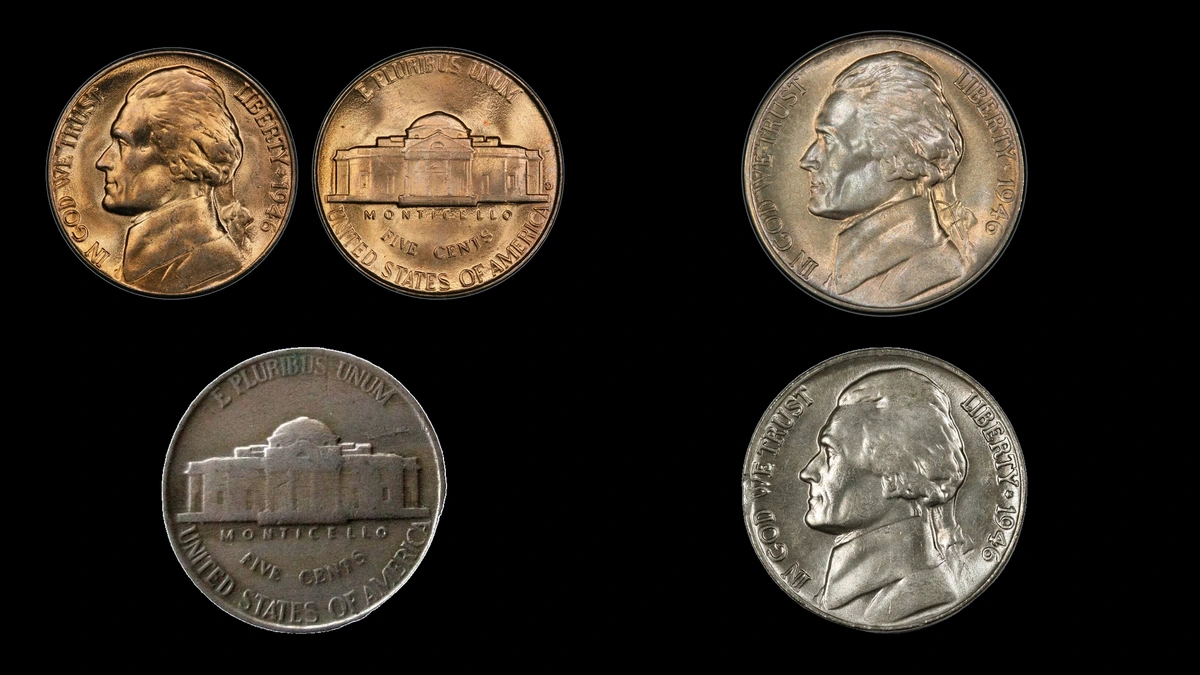
A worn 1946 nickel brought $9,600 in November 2022 because it used leftover wartime silver-alloy metal. Its normal-looking design and roughly normal weight could easily hide the mistake.
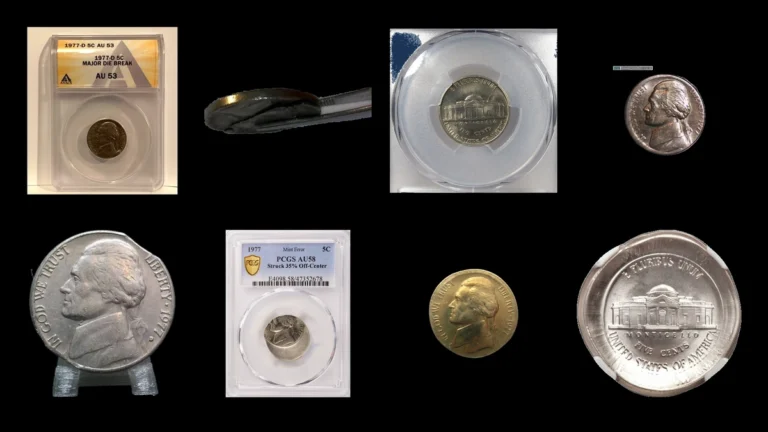
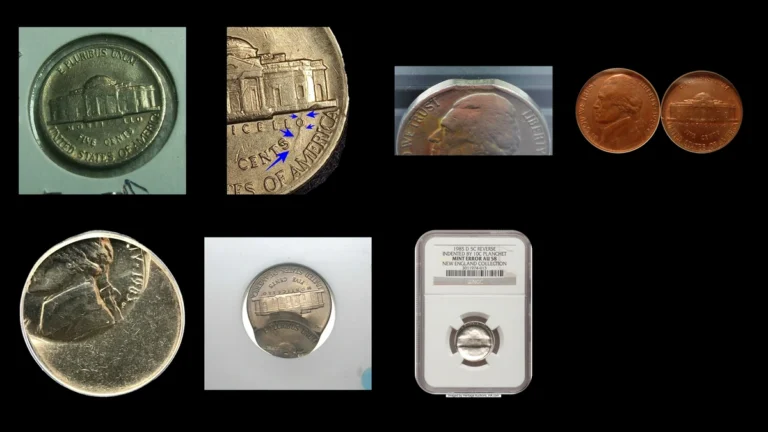
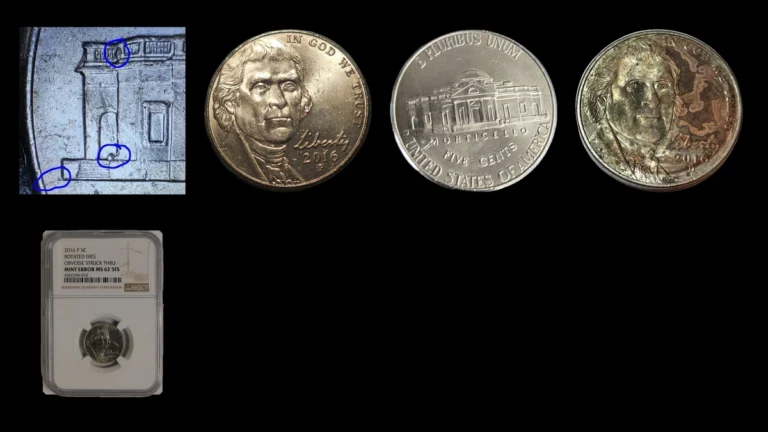
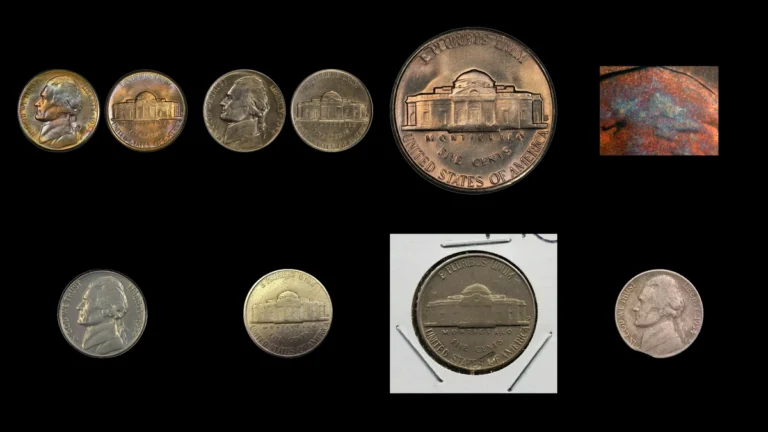
These 1946 nickel errors have estimated values of $5–$15,000. First establish the mint and metal, then compare small design details and the larger changes to the blank.
1. 1946 Nickel The Right Date on Wartime Metal: Silver-Blank Error
Regular nickel production returned to copper-nickel metal in 1946. The documented error instead received its design on a leftover wartime blank containing 35% silver.
It is a Philadelphia coin graded PCGS Fine 12, meaning clearly worn with the main design recognizable. The regular 1946 design has no large P above Monticello.
How to Identify
Check that all four date digits are original, then photograph the back. A changed wartime date is not the same thing as a genuine 1946 strike on leftover metal.
Normal and wartime nickel blanks both started near 5 grams and 21.21 millimeters. Weight and size alone therefore cannot separate the two alloys.
Have a qualified service test the metal without damaging it. Silver-like color can come from surface treatment, while the error requires silver in the original alloy.
What It’s Worth
$5,000–$15,000 is an estimated range for genuine 1946 wartime-alloy examples. Reliable identification is essential, even when the coin looks ordinary.
The Fine 12 coin sold for $9,600 in November 2022. This is a rare-error value, not simply the value of its silver.
2. 1946 Nickel Copper Color With a Smaller Design Area: Cent Blank Error
A cent blank gives the larger nickel design less space. The documented Philadelphia example keeps its complete date but loses parts of GOD WE TRUST and UNITED STATES OF at the edge.
It was graded PCGS MS63 Brown, describing an unworn coin with noticeable marks and brown copper surfaces. The catalog also notes olive-green and lilac color.
How to Identify
A contemporary cent blank normally starts at 3.11 grams and 19.05 millimeters. These are standard figures, not published measurements of this particular error.
Match the complete date and cropped wording to the smaller metal disk. The recorded example met the collar near 4 o’clock, with weak lower-front and upper-back areas.
Check the edge for trimming or a copper coating. No P mintmark is correct for a Philadelphia nickel dated 1946.
What It’s Worth
$400–$1,500 is an estimated range for comparable genuine cent-blank examples. A readable date and original surface help collectors identify and compare the coin.
The PCGS MS63 Brown example is reported at $840 in September 2019. A normal nickel changed to brown by a coating does not qualify for that comparison.
3. 1946 Nickel Another Outline Beside D or S: Repunched Mintmark Error
Workers once punched the mint letter into each die separately. Repeating that punch at a different position could leave an earlier D or S outline on the finished coins.
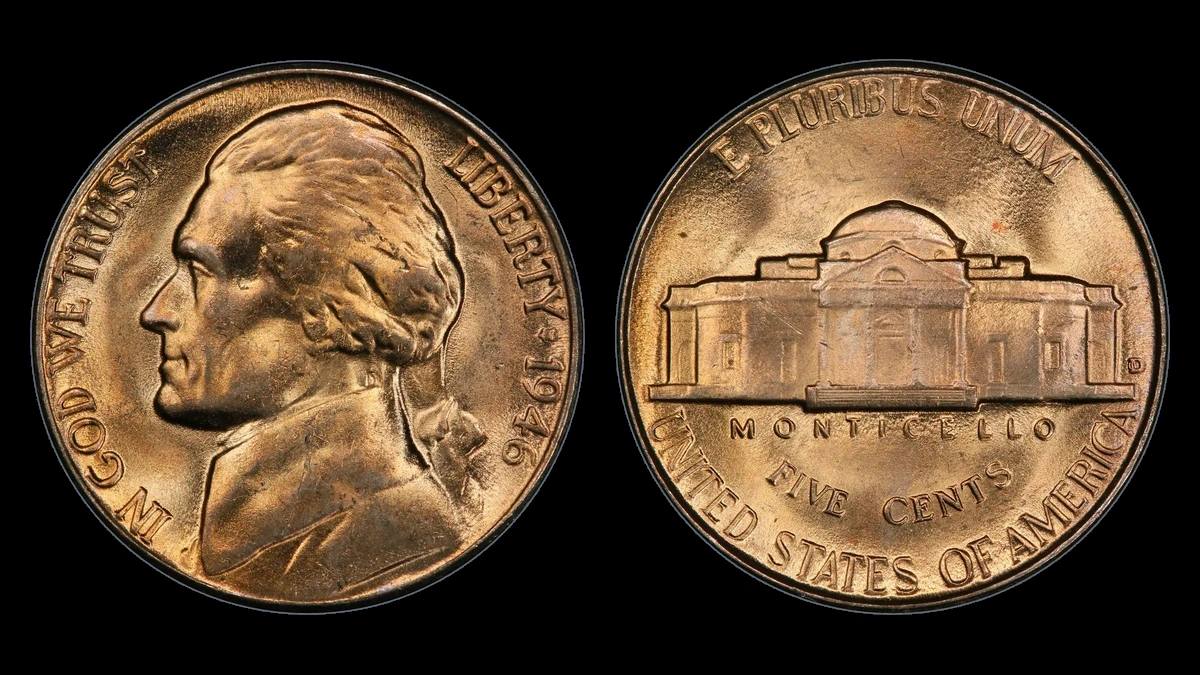
One Denver variety has an upright D over an earlier upside-down D. Other D patterns are tilted or shifted, and San Francisco coins have their own S-over-S patterns.
How to Identify
Find the small letter to the right of Monticello on the back. Compare the complete extra outline with the photographed 1946 mintmark varieties.
An inverted D needs the surviving shape of an upside-down letter. A tilted extra D or an isolated bump is not automatically that variety.
The letter was inverted in the die, the stamping tool. The finished coin did not need to turn upside down or have a rotated back.
What It’s Worth
$10–$750 is an estimated range across minor repunches and clearer named patterns. Visibility and preservation help determine the complete coin’s value.
A strong earlier letter on an attractive unworn nickel needs a different comparison from a vague mark beside a worn D. Each extra stroke is not a separate premium to add.
4. 1946 Nickel A Claimed S Beneath the D: Over-Mintmark Error
A D-over-S would mean a D was punched over an earlier S in the die. That description appears in a 1946 year guide.
Recognized same-letter varieties, including the inverted D, do not establish a hidden S. This different-letter claim requires its own supporting specimen.
How to Identify
Compare the extra curve with the documented inverted-D pattern first. An upside-down D can explain an unexpected outline without involving another mint letter.
To support D-over-S, the lower traces must fit recognizable parts of an S. Keep the 1946 date connected to the mintmark photograph rather than using an example from another year.
A normal weight cannot resolve the earlier letter. Its actual shape and a reliable variety identification are the deciding evidence.
What It’s Worth
$50–$1,000 is an estimated comparison range for a genuine 1946 D-over-S supported by reliable identification. It is not an established premium for every coin described that way in a year list.
A recognized 1954 S-over-D nickel graded MS66 sold for $561 in June 2026. That is another date and the opposite letter order, providing only broader context.
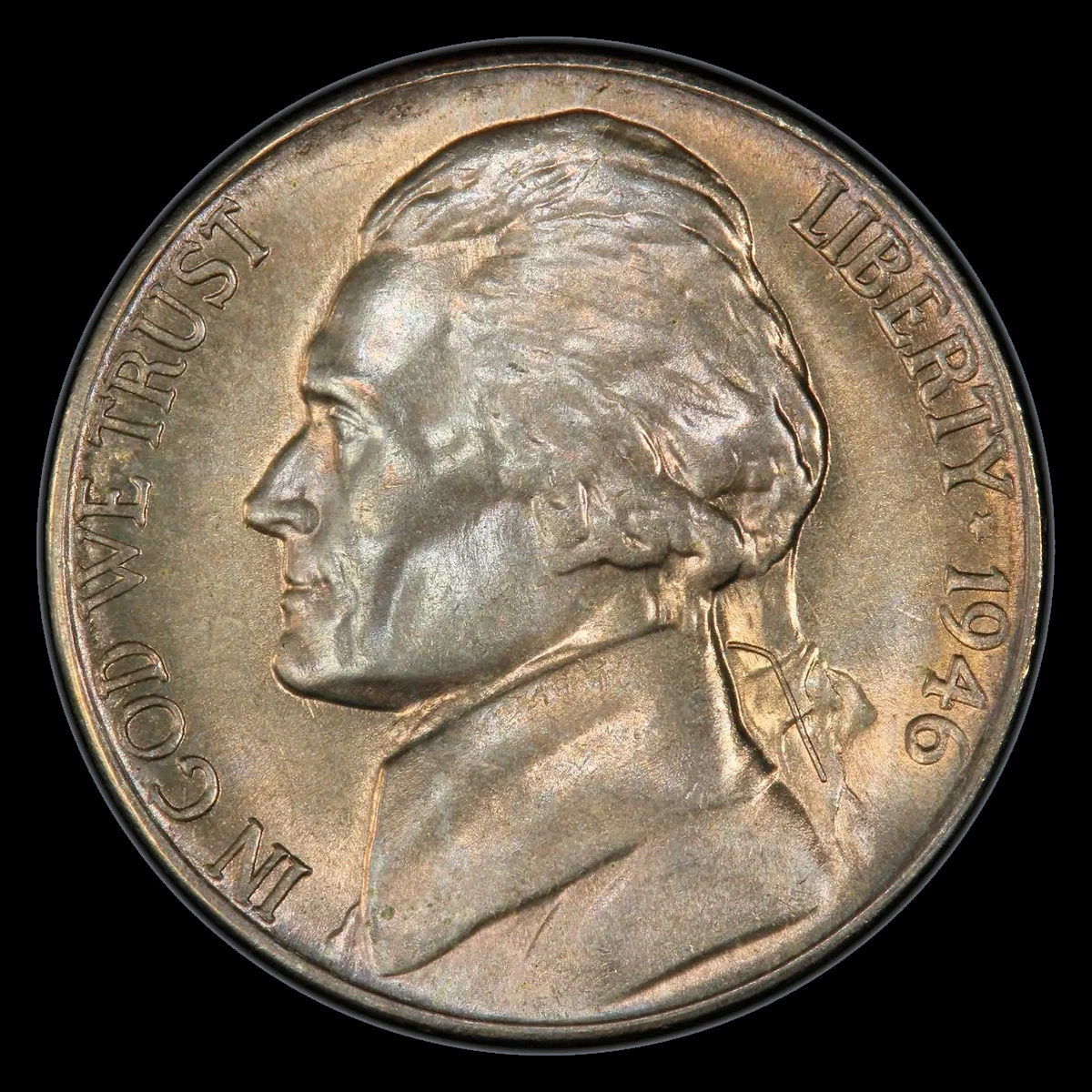
5. 1946 Nickel Repeated Date or Letter Edges: Doubled Die Error
A doubled design in a die can leave closely repeated outlines on a coin. A single strike is enough to transfer those outlines.
The San Francisco FS-101 front pattern involves LIBERTY, the star, date, hair, and IN. Separate Denver and San Francisco varieties affect other front or back details.
How to Identify
Choose the mint and face before selecting a reference. Philadelphia nickels have no mint letter, and their back varieties include repeated or thickened detail in MONTICELLO and FIVE CENTS.
Use the illustrated 1946 patterns to match the direction and shape. No single coin needs every doubled area listed for the year.
Look for related extra contours or split letter ends. A flat shelf caused by movement during striking is a different form of doubling.
What It’s Worth
$10–$2,500 is an estimated range across minor and stronger identified varieties. Bold recognizable separation can appeal more than slight thickening.
A Philadelphia FS-801 doubled reverse in MS65 is reported at $504 in May 2019. That unworn back variety does not set the value of San Francisco FS-101.
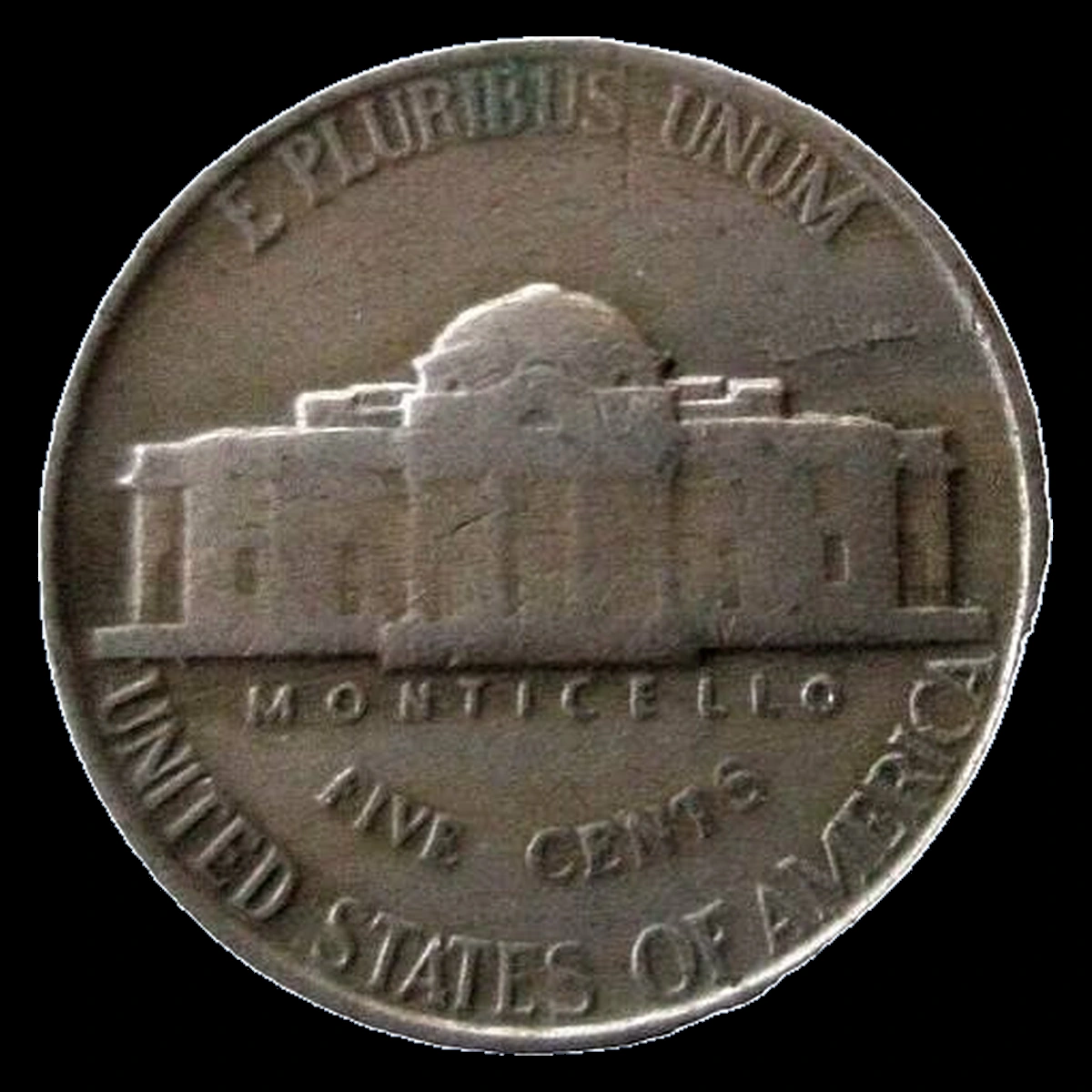
6. 1946 Nickel A Raised Ridge or Rim Patch: Die Cracks and Cuds Error
Metal entering a crack in a die forms a raised line on the nickel. If a larger part of the tool breaks away at the edge, it can leave a raised rim-connected patch called a cud.
The 1946 reports do not specify one mint or required location. The feature must be assessed on the actual coin.
How to Identify
Light a narrow line from the side and check whether it rises or cuts into the surface. A scratch may push up a ridge but usually leaves a groove beside it.
For a cud, follow the raised patch into the rim. A rim hit or added metal may leave folds, a seam, or other damage instead.
What It’s Worth
$5–$250 is an estimated range from small cracks to clearer original rim breaks. Fine faint lines often add little to an ordinary nickel’s price.
A 1970-D coin with two front breaks sold for $63 in October 2022. That different-year example provides price context without supplying a break location for 1946.
7. 1946 Nickel Thin Metal or a Separated Half: Split Planchet Error
A blank can divide into thinner layers before striking, or a finished coin can separate afterward. The designs on the remaining faces help tell those sequences apart.
A Philadelphia coin struck on a split blank weighs 2.81 grams and is graded ANACS AU50. Separate reports concern an NGC AU55 front half and a cleaned 2.7-gram piece split after striking.
How to Identify
A blank that split first can receive designs on both faces of its remaining thin metal. A piece that separated later can preserve an outside design beside a rough inner face.
Compare that inner texture with the smooth tracks left by grinding or machining. Leave attached metal alone and do not force separated pieces together.
Record each loose piece’s weight separately. The 2.81-gram and 2.7-gram measurements belong to different coins and different reported sequences.
What It’s Worth
$25–$500 is an estimated range for genuine split blanks and surviving separated portions. Clear identity, original separation, and surface condition affect the comparison.
The 2.81-gram AU50 example is reported at $75 in August 2021. The AU55 front half was in a two-coin lot with a separate 1960 nickel, reported at $104 in August 2010.
That lot total cannot be assigned wholly to the 1946 piece. Cleaning also affects the appeal of the separate 2.7-gram example.
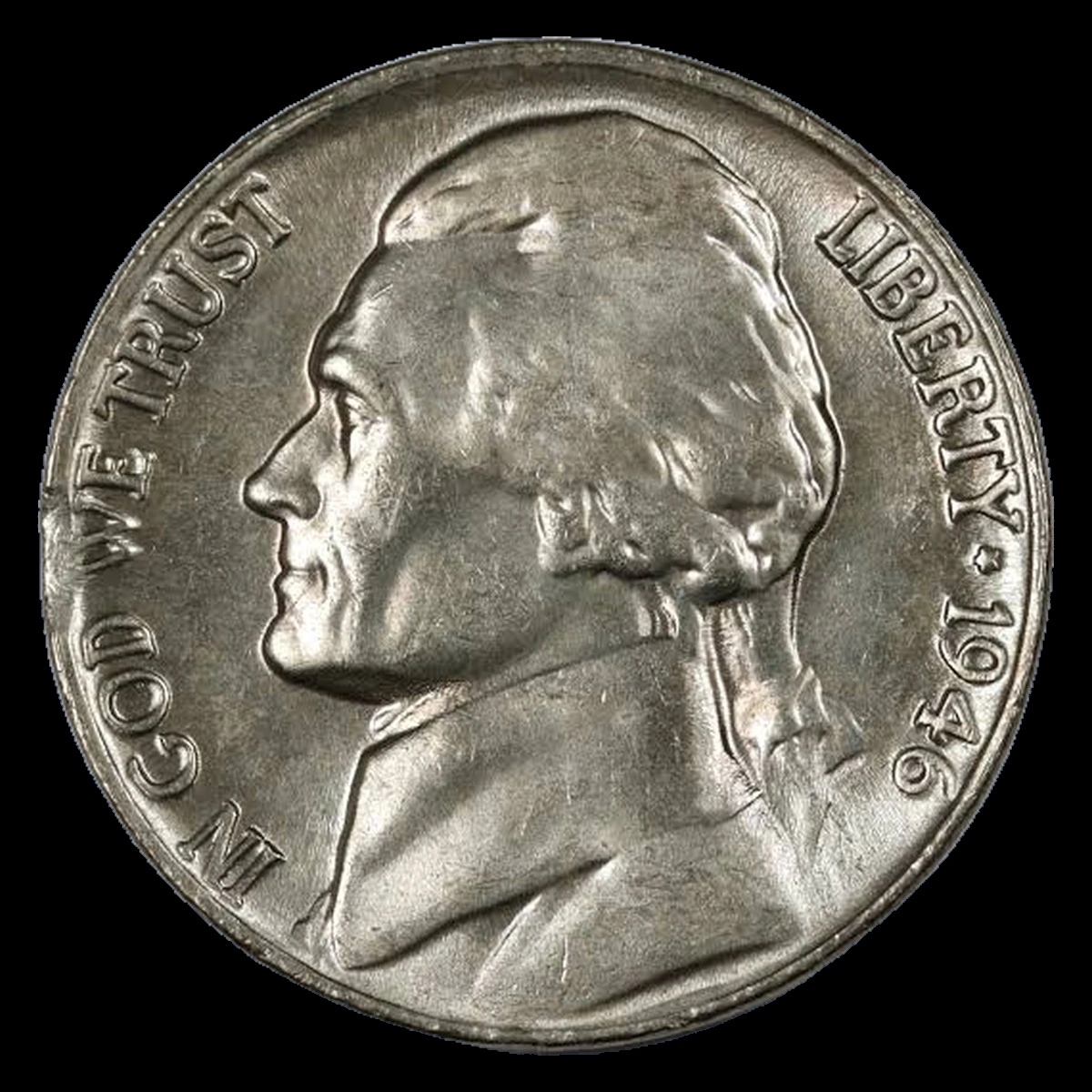
8. 1946 Nickel A Gap in the Outline: Clipped Planchet Error
A clipped blank lacked part of its metal before receiving the design. The rim and nearby lettering formed around that existing shortage.
An auction-listed Philadelphia 1946 example is graded PCGS MS65. The supplied description does not state whether its clip is curved or straight.
How to Identify
Look closely at the rim ends on both sides of the gap. Naturally formed details differ from letters or rims abruptly cut through after striking.
Check for file tracks and burrs. Reduced weight can support missing metal, but a later cut also reduces weight.
Measure across intact portions of the outline rather than through the gap. Weakness on the opposite rim can help, though not every genuine clip shows it clearly.
What It’s Worth
$15–$300 is an estimated range for genuine clips with varying size and condition. A larger original shortage can be more noticeable when the date remains readable.
The PCGS MS65 example is reported at $30 in March 2025. Its modest result shows why certification and an unworn grade do not guarantee a large clip premium.
9. 1946 Nickel Two Levels Along the Edge: Partial Collar Error
Part of a blank can spread farther when the collar restrains only its lower or side portion. The result can be a ledge dividing areas of different width.
A Philadelphia example is recorded as NGC MS64. The supplied description does not establish an exact position for its edge step.
How to Identify
Use a side view and turn the coin slowly to follow the ledge. A normal nickel already has a plain edge, so smoothness alone is not an error.
Inspect how the two levels formed and compare the faces for flattening. A machined cut, joined pieces, or later squeezing can create misleading edge shapes.
What It’s Worth
$20–$350 is an estimated range for comparable genuine partial-collar examples. A clear natural step is easier to appreciate than a slightly uneven border.
The NGC MS64 coin is reported at $98 in February 2005. Compare the strength of its edge feature as well as the grade.
10. 1946 Nickel A Design That Misses the Blank: Off-Center Strike Error
If the blank sits too far to one side, part of the design falls beyond its edge. Untouched metal remains next to the area that did receive a strike.
The supplied 1946 reports do not identify one mint, percentage, or clock direction. General examples of 10% or 50% shifts are not measurements of a specific coin.
How to Identify
Find the surviving date before judging how dramatic the bare area looks. Both faces should fit the same displaced blank.
One uneven border with a centered opposite face may instead come from a shifted die. Scraped-away letters do not create an original untouched surface.
The unstruck portion still contains metal. An off-center strike therefore need not make the coin much lighter.
What It’s Worth
$25–$800 is an estimated range for genuine dated 1946 off-center nickels. Displacement, condition, and readable identification shape the comparison.
A 1950 Philadelphia nickel with a 65% shift and a back crack is reported at $528 in July 2022. That different-year combined error is not a sale of a 1946 example.
11. 1946 Nickel Front and Back Details Overlap: Flipover Double Strike Error
A nickel can be struck, turn over, and receive another blow. Earlier details from the opposite face may remain beneath the later design.
The 1946 report concerns a Philadelphia example graded MS66. It does not specify a strike direction or a particular surviving letter.
How to Identify
Compare the two faces together and trace details that normally belong on the other side. The flip should explain the relationship of both designs.
Look where a later impression crosses or flattens an earlier feature. A sunken mirror image needs a different explanation from two normal struck designs sharing a surface.
Do not confuse a flipped coin with the inverted mintmark discussed earlier. That mintmark began in the die, while this coin itself received two strikes.
What It’s Worth
$200–$1,500 is an estimated range for genuine flipover double strikes of this year. Recognizable opposite-face details make the sequence easier to demonstrate.
The supplied year guides report a $431 Heritage result in 2010 for the MS66 example. The amount values one coin with two strikes, not two separate impressions to price individually.
Conclusion
For 1946 nickels, first separate unusual metal from unusual design. A normal weight cannot rule out the wartime silver blank, and a brown surface cannot prove a cent blank.
The estimated $5–$15,000 range also includes small die details and dramatic strike mistakes. Match each mintmark shape, split sequence, and displaced design to its own evidence before using a price comparison.