Rare 1939 Dime Errors (List & Pictures)
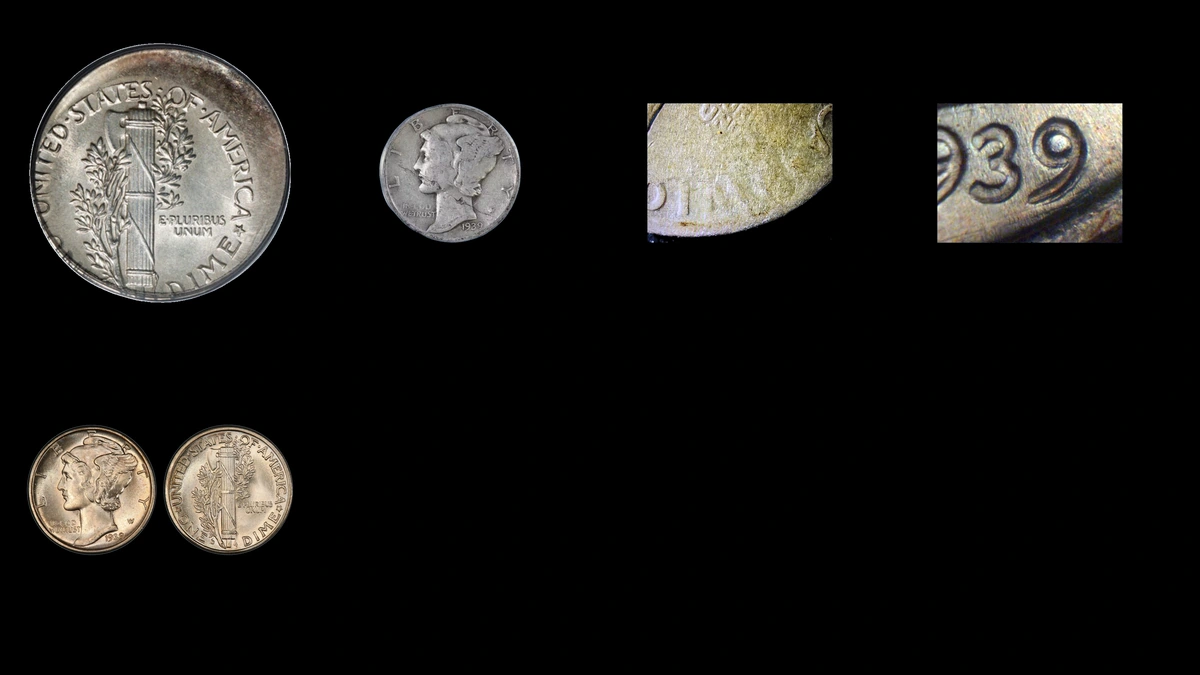
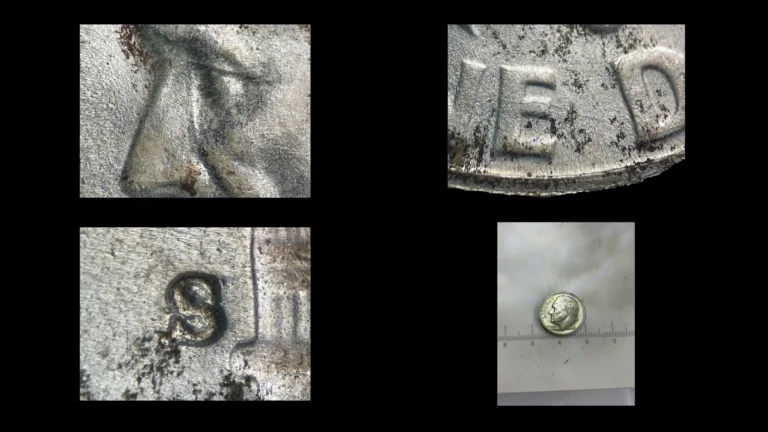
The highest confirmed same-year transaction supplied for these 1939 Mercury Dime errors concerns a repunched Denver mintmark. PCGS records $2,795 in November 2018 as an eBay fixed-price purchase.
Estimated values across the categories span $10–$5,000, with the highest range conditional on confirming a wrong blank. Begin with the whole coin’s metal and outline, then inspect the motto, date, and small reverse mintmark.
1. 1939 Dime The Metal or Size Seems Wrong: Unconfirmed Wrong-Blank Report Error
A wrong-planchet error occurs when a blank intended for another coin receives the dime design. The 1939 report supplies no particular certified specimen or identified replacement blank.
Cent, foreign-coin, and quarter blanks therefore remain possible categories to investigate, not proven examples for this year. Odd color alone can result from toning or later treatment.
How to Identify
A normal 1939 dime is 90% silver and 10% copper, weighs about 2.5 grams, and measures 17.9 millimeters with a grooved edge. It is not a modern copper-core clad coin.
Record actual measurements, then inspect the design’s fit and edge for trimming or an added coating. Weight lost through wear or damage does not prove a different starting blank.
Non-destructive composition testing can help identify an unusual alloy. The proposed replacement blank must explain metal, size, and original striking together.
What It’s Worth
A confirmed 1939 wrong-blank dime has a conditional estimated value of $1,000–$5,000. The blank’s identity and surviving date would be central to any comparison.
A 1957 Roosevelt dime on an El Salvador one-centavo blank sold for $4,080 in July 2022. That other-series example does not establish the reported 1939 error or a price for an untested discolored dime.
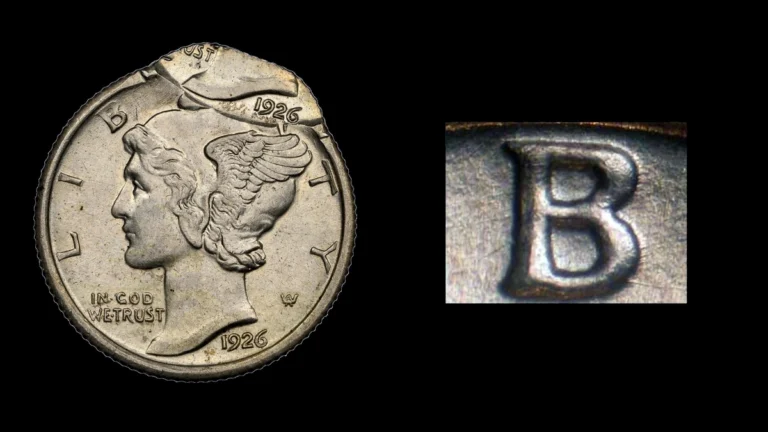
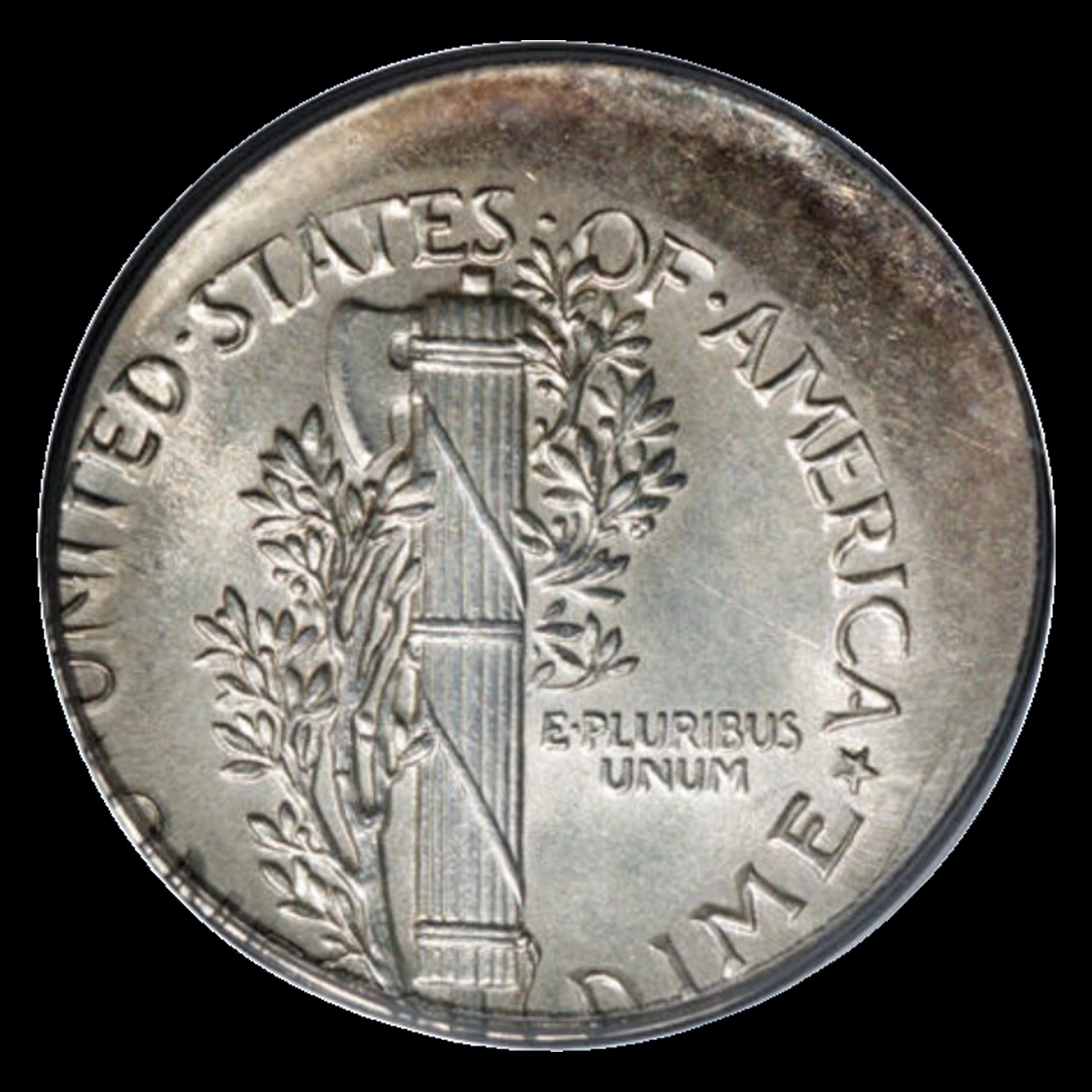
2. 1939 Dime Bare Metal Sits beside a Partial Design: Off-Center Strike Error
An off-center blank misses part of the striking area and leaves an untouched portion beside the design. The 1939 reports do not provide a measured percentage or clock position for a particular example.
A large undated Mercury dime cannot be assigned to 1939 from appearance alone. The surviving year matters as much as the unusual outline.
How to Identify
Read the date, then compare both faces for corresponding displacement. A shifted front design with a centered reverse can involve one misaligned tool instead.
Inspect the transition from unused metal into struck detail for a natural boundary. Grinding can remove lettering and create a bare-looking patch after minting.
What It’s Worth
Small genuine offsets are estimated at $75–$350, while dramatic authenticated examples with readable dates may reach $500–$2,000. Preservation affects both comparisons.
A 1943 Mercury dime struck 40% off center brought $1,680 in July 2021. That result establishes neither a 40% displacement nor a sale for a 1939 specimen.
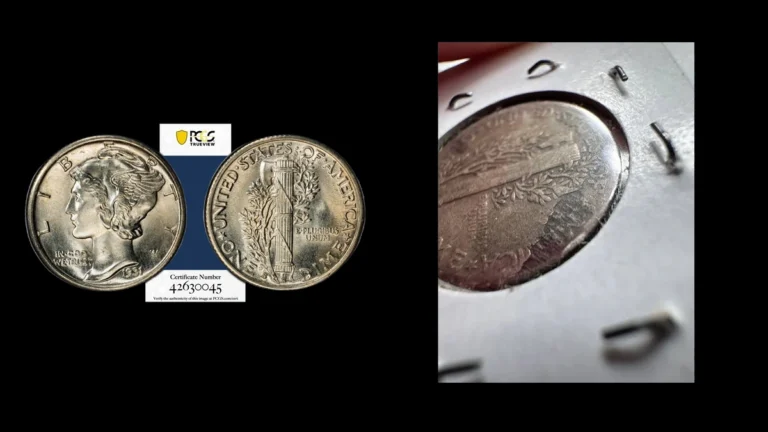
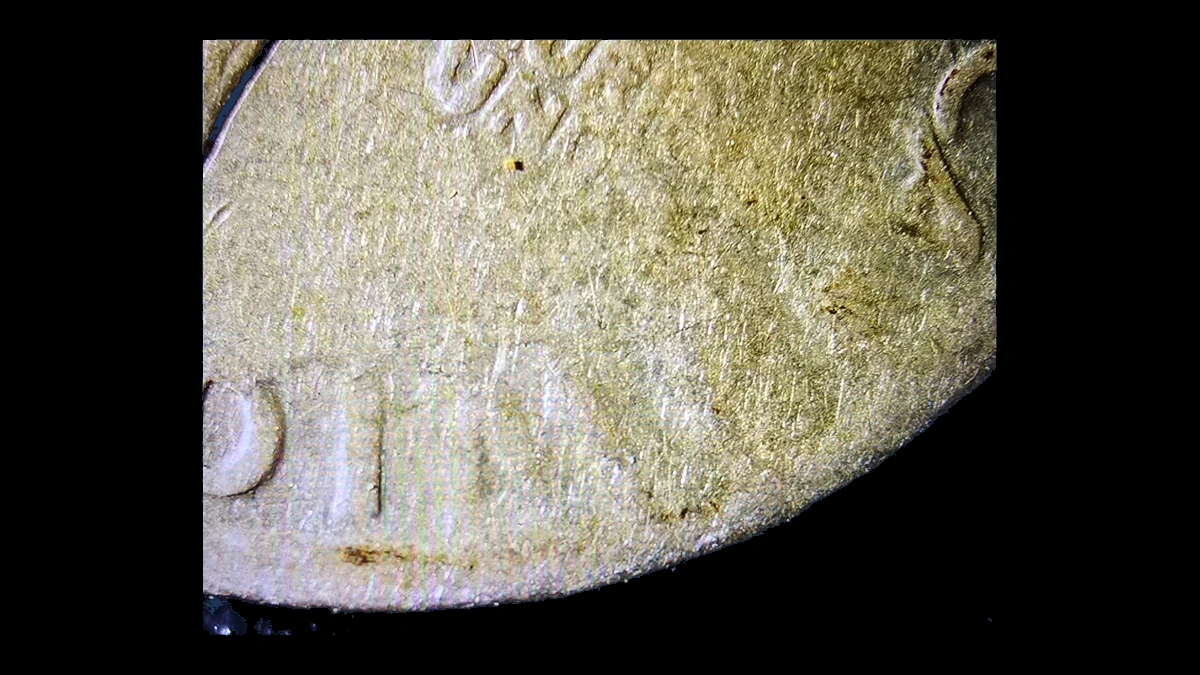
3. 1939 Dime A Thin Patch Peels beside UNUM: Lamination Error
The seller-described 1939 example has a shallow metal separation beside UNUM on the reverse. Weakness within the silver-copper alloy can allow a thin layer to lift or flake away.
An older “split planchet” label does not establish that this entire coin separated into two halves. The actual report supports a local peeling feature.
How to Identify
Leave attached metal in place and inspect the boundary beside the lettering. A thin natural seam differs from a gouge with metal pushed up around a cut.
Compare any surviving struck detail across the flap and surrounding surface. A small loss may barely alter weight, so the measurement alone cannot resolve the mechanism.
What It’s Worth
Modest natural peeling on worn coins is estimated at $15–$80, with larger clear flaws on attractive pieces around $80–$250. These are whole-coin estimates.
No verified auction price is supplied for the UNUM specimen. Forcing a layer open or scraping the area would change the evidence and reduce the usefulness of an original-error comparison.
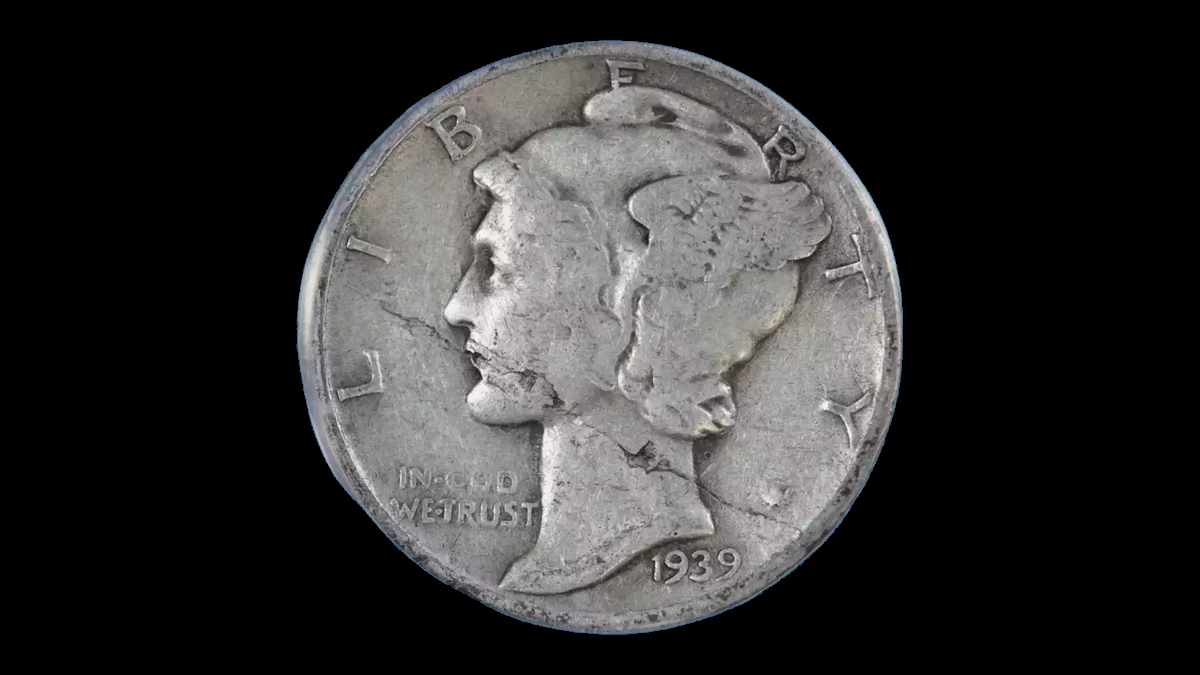
4. 1939 Dime The Motto Appears to Lose Its G: Reported Missing Letter Error
A reported 1939 coin appears to read IN OD WE TRUST. Its cause has not been established.
Grease or debris in the die could prevent the G from forming fully, but wear or later damage can also remove a letter. The appearance does not by itself prove a blocked-die error.
How to Identify
Compare the G position with OD, WE TRUST, and nearby portrait details. Widespread flattening of exposed high points may explain the loss through circulation.
Inspect for a dent, scraping, or displaced metal crossing the letter’s former position. Preserved adjacent detail and an undamaged local surface support investigating a blockage without naming the substance.
What It’s Worth
If a blocked die caused the missing G, the estimated whole-coin range is $10–$60, with especially clear attractive examples potentially approaching $100. No completed sale is assigned to the report.
Ordinary wear or damage removes the proposed error premium. A dramatic nickname for the motto does not settle that distinction.
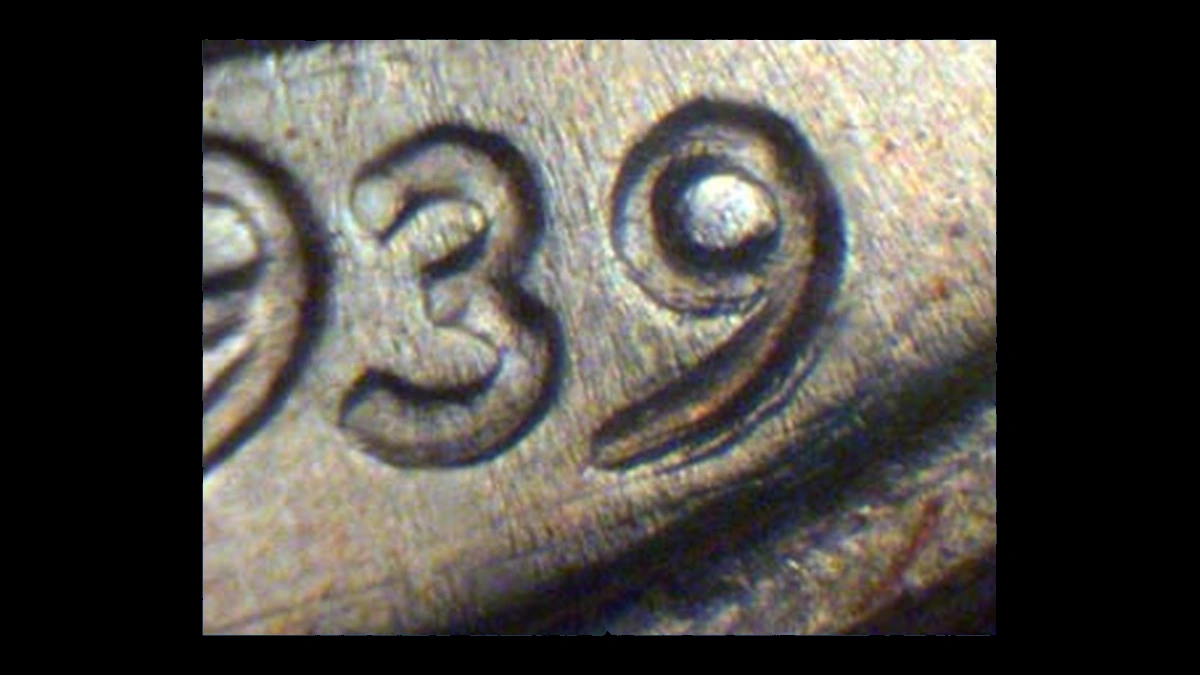
5. 1939 Dime Extra Raised Metal Appears among Date Digits: Die Gouge Error
A specialist sale list describes a Denver coin with a date-area die gouge. A groove cut into the tool can fill with metal during striking and leave a raised mark on the coin.
The supplied description does not establish its exact shape or affected digit. It is not evidence that every line near 1939 belongs to that example.
How to Identify
Tilt the date beneath a single light to determine whether the extra feature rises from the surface or cuts into it. A scratch on the finished coin produces the opposite kind of mark.
Confirm the reverse D and compare the raised shape with an identified image. Distinguish the extra metal from the date’s normal contours before assigning a match.
What It’s Worth
Small genuine marks are estimated at $15–$75, with clearer examples on attractive unworn coins around $75–$150. Condition can account for much of the whole price.
No individual transaction is supplied here. A faint mark beside damaged digits does not offer the same comparison as a distinct raised shape on an original surface.
6. 1939 Dime Date or Letter Details Have Repeated Edges: Doubled Die Error
Philadelphia ordinary strikes include several small date-doubling patterns. Proof collector coins have a stronger thickening pattern around the date and AW initials.
Denver reports include front thickening and a separate reverse pattern involving words, dots, and stars. Those different entries do not describe one combined specimen.
An older Philadelphia FS-101 label was removed from a later guide. That catalog change does not replace the need to examine the actual reported doubling.
How to Identify
Establish ordinary or Proof manufacture before selecting the same-mint comparison. A polished circulation coin can look reflective without becoming a Proof.
Inspect inner date edges for the Philadelphia ordinary patterns, and the date plus AW for the Proof pattern. Use the Denver reverse’s own words, dots, and stars when examining that separate variety.
Match the full arrangement and nearby die details rather than borrowing features from several entries. Flat shelves caused during striking are different from repeated design already present in the die.
What It’s Worth
Correctly identified small doubling on ordinary coins is estimated at $20–$250. Recognized Proof varieties are estimated at $150–$800, including the collector coin’s underlying value.
Original surfaces and a readable pattern support stronger comparisons than details hidden by wear. No individual auction result is adopted for these doubled-design categories.
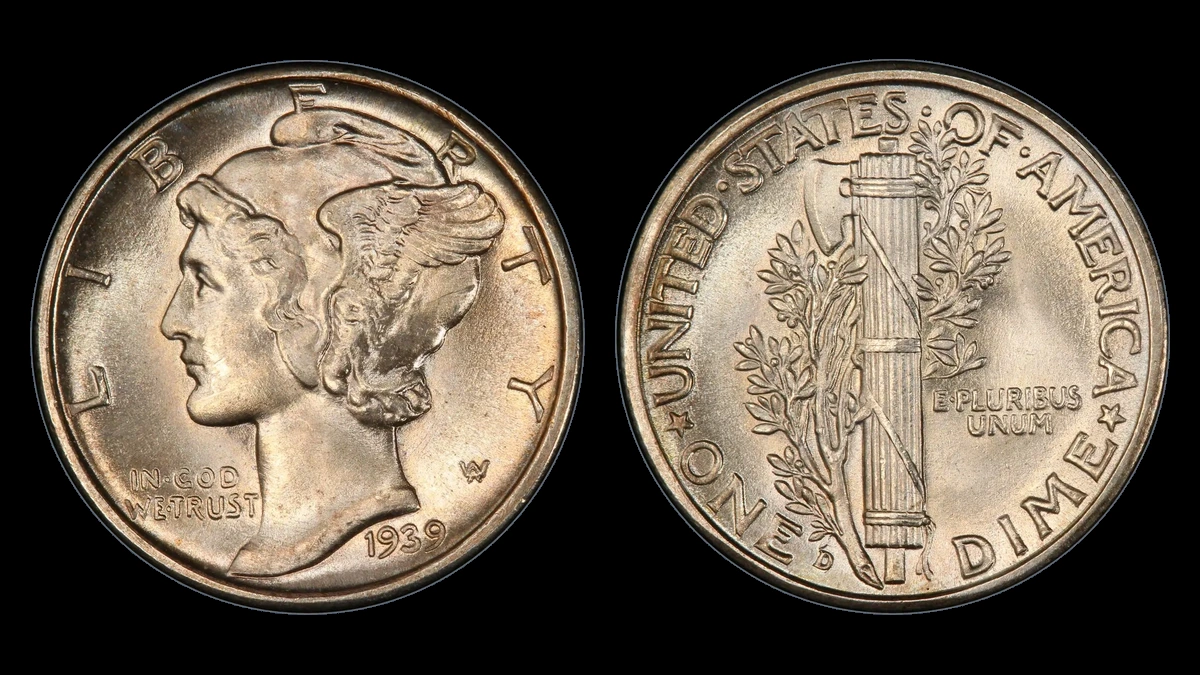
7. 1939 Dime Another D or S Outline Survives: Repunched Mintmark Error
The Denver FS-501 variety has a D remnant below the main letter. Other Denver repunches have different directions or positions relative to the nearby leaf.
Workers added mintmarks with a separate punch, allowing an earlier application to remain visible. A reported San Francisco S/S has no secure professional catalog number or direction established here.
How to Identify
For FS-501, inspect immediately below the D and compare its relationship with the leaf. Similar downward patterns can differ in whether the main D extends into the leaf or touches its bottom.
An oddly placed single mintmark does not establish repunching. The earlier letter-shaped remnant must match the specific attribution, and the S/S report needs its own evidence.
Full Bands describes separated central reverse straps, not the mintmark. Keep that condition designation distinct from the error itself.
What It’s Worth
Ordinary repunched-mintmark examples are estimated at $20–$300, with exceptional recognized pieces around $500–$3,000. High grade and Full Bands can contribute heavily to the upper range.
PCGS records $2,795 for a 1939-D FS-501 MS65 Full Bands in November 2018. It was an eBay Buy It Now purchase, not competitive auction bidding.
Conclusion
A 1939 Mercury dime’s date, mintmark, and original metal each answer different questions. A missing G remains a cause to investigate, while a matched repunched D can support a specific variety comparison.
Keep ordinary and Proof issues separate, and preserve a peeling surface rather than testing it by touch. The upper wrong-blank range remains conditional on an identified specimen, so color alone cannot justify the most expensive category.