Rare 1986 Dime Errors (List & Pictures)
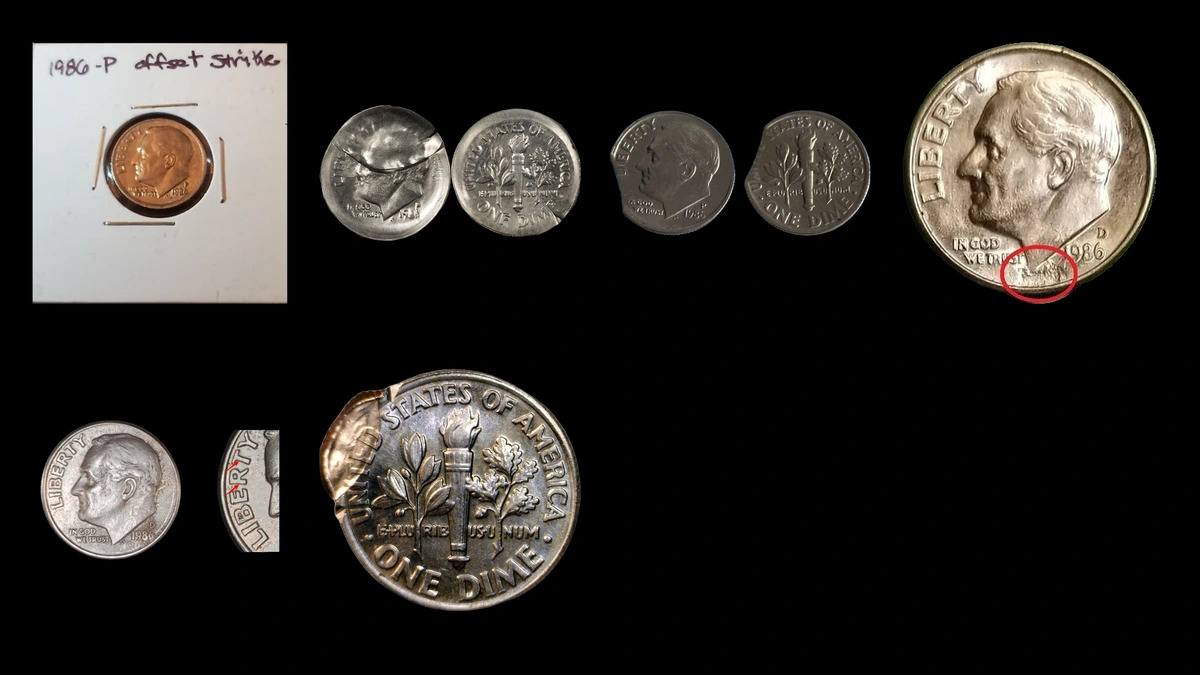
A nearly blank 1986-P dime sold for $528, while a different-year 1999-D dime on cent metal brought $6,325. Those prices describe very different errors.
Estimated values for 1986 dime errors run from $5–$8,000, with the wrong-cent-blank range still conditional. Compare both faces, the edge, and any missing metal before choosing between a displaced strike, a dent, and a transferred design.
| First observation | Possible explanation | Estimated value |
|---|---|---|
| Only front design shifted | Misaligned die | $5–$100 |
| Mostly untouched blank | Off-center strike | $30–$800 |
| Plain depression and expanded outline | Indent with broadstrike | $75–$400 |
| Backward recessed design | Brockage with broadstrike | $100–$600 |
The normal 1986 dime weighs 2.268 grams and measures 17.91 millimeters with a grooved edge. These standards apply to P and D circulation coins and S Proofs, which are specially made collector coins.
1. 1986 Dime One Face Moves Sideways: Misaligned Die Error
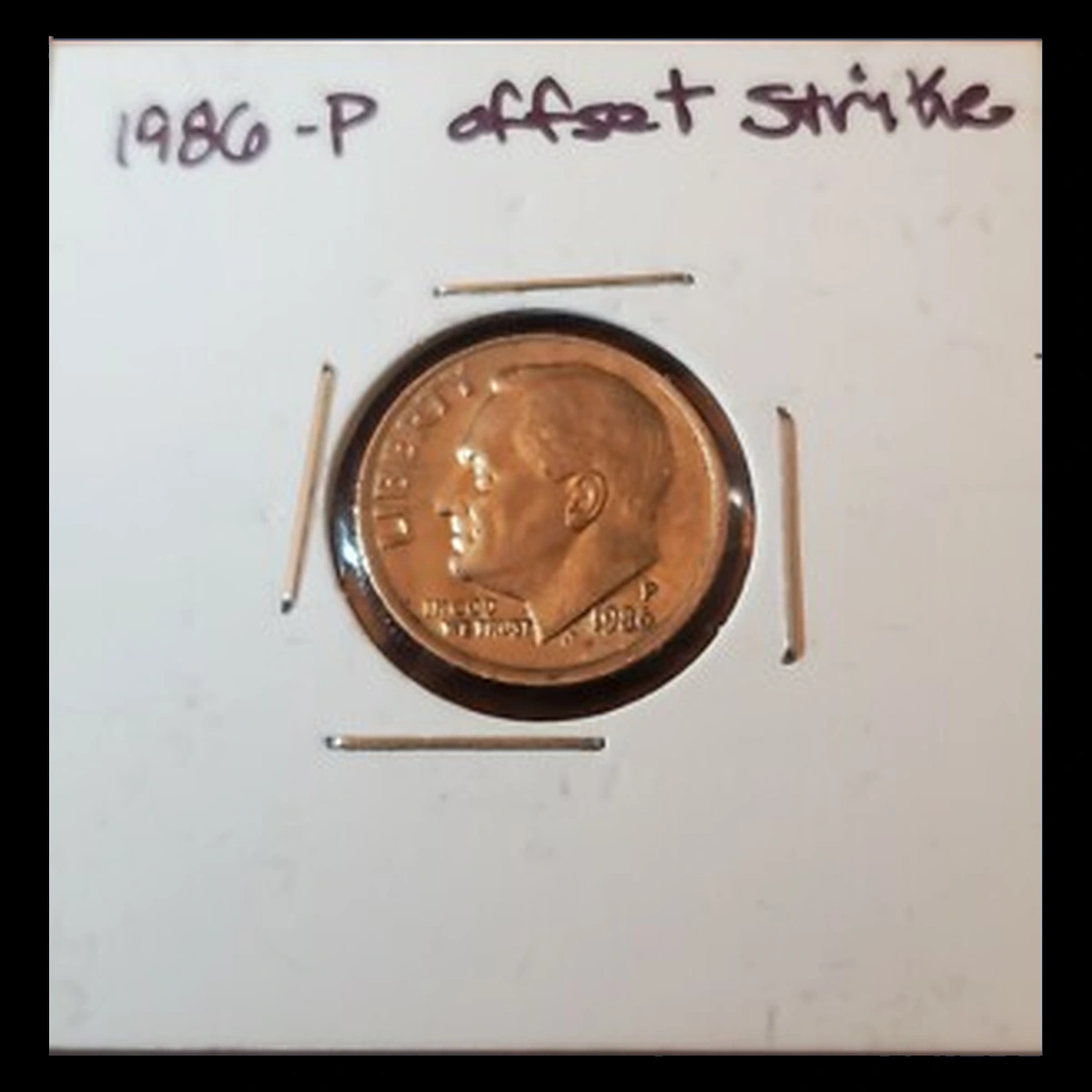
A seller-described Denver ANACS AU58 coin has a misaligned front. The proposed error concerns one die’s position while the reverse stays centered.
The precise shift and holder details still need to be matched to that specimen. No direction or percentage is established by the supplied description.
How to Identify
Place straight-on views of both faces at the same size and compare their design centers. One uneven front beside a centered reverse supports die misalignment.
Inspect the rim for dents, squeezing, or a camera angle that exaggerates the difference. If both designs move together beside untouched metal, assess an off-center strike instead.
What It’s Worth
Confirmed visible shifts suggest approximately $5–$100. Slight border unevenness may add very little.
The seller’s AU58 description is a condition claim, not a transaction result. No final sale amount is supplied for that coin.
2. 1986 Dime Nearly All the Blank Escapes the Design: Off-Center Strike Error
A Philadelphia ANACS MS64 example was struck 95% off center toward 10:30. Only a small portion of the blank received a design, making its grading record especially useful for identification.
A separate Denver ANACS MS66 dime is 50% off center toward one o’clock. It illustrates the same displaced-blank mechanism at a different scale.
How to Identify
Read only the details actually surviving in the small struck region. Keep the label and original photographs associated with a nearly blank example instead of filling in absent digits.
On a less extreme coin, compare both faces for a corresponding untouched region. Later grinding removes metal rather than preserving an original blank crescent.
What It’s Worth
Genuine dated examples suggest a broad estimated $30–$800 range, with readability and surfaces affecting value.
The Philadelphia 95% ANACS MS64 sold for $528 in January 2022. At the same auction, the Denver 50% coin shared a $552 lot with a 1989-D dime; that total is not its individual price.
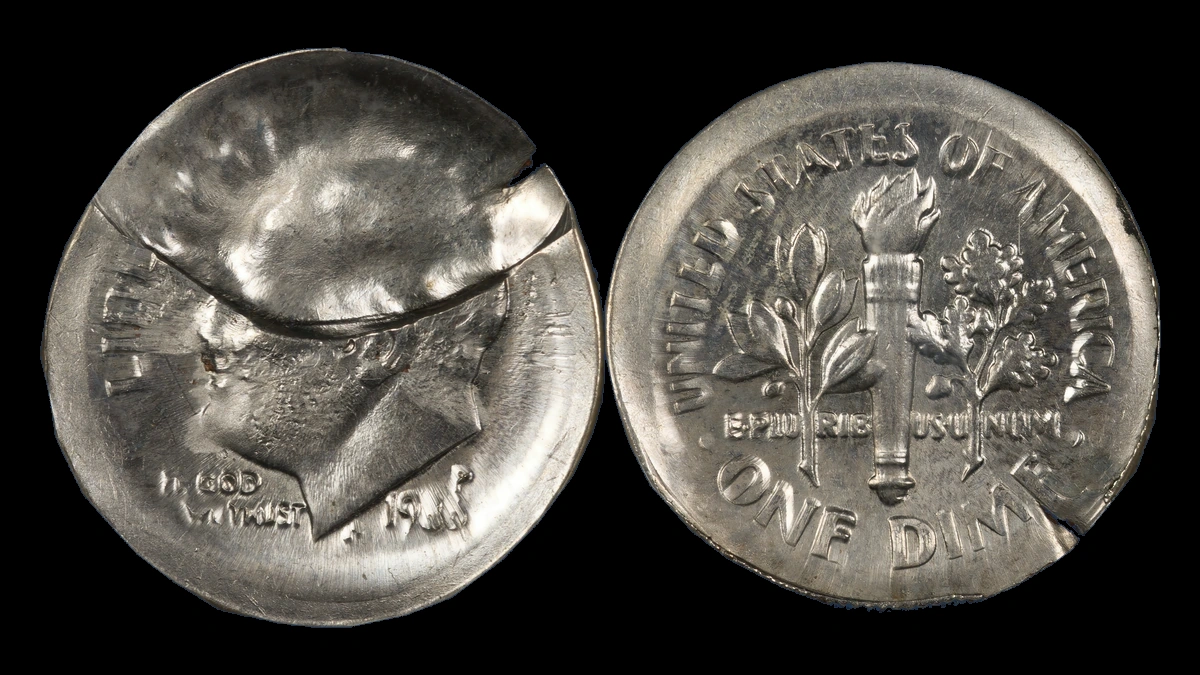
3. 1986 Dime A Wide Border Retains Complete Design: Broadstrike Error
The collar ring normally confines metal during striking. Without proper support, the dime can spread outward, sometimes unevenly, while retaining all intended design.
Standalone broadstrikes are reported separately from the documented coins that also have an indent or brockage. A broad outline alone does not establish either contact error.
How to Identify
Compare the candidate with an ordinary dime and read the outer lettering on both faces. Original complete detail should sit within the expanded border.
Check several widths and inspect for hammer flattening or grinding. Natural spreading may leave weight close to normal, while lost metal requires another explanation.
What It’s Worth
Ordinary modern broadstrikes suggest $20–$150, depending on spread and condition.
A different-year high-grade 1995-P broadstrike sold for $45. This comparison does not supply a named sale for the standalone 1986 report.
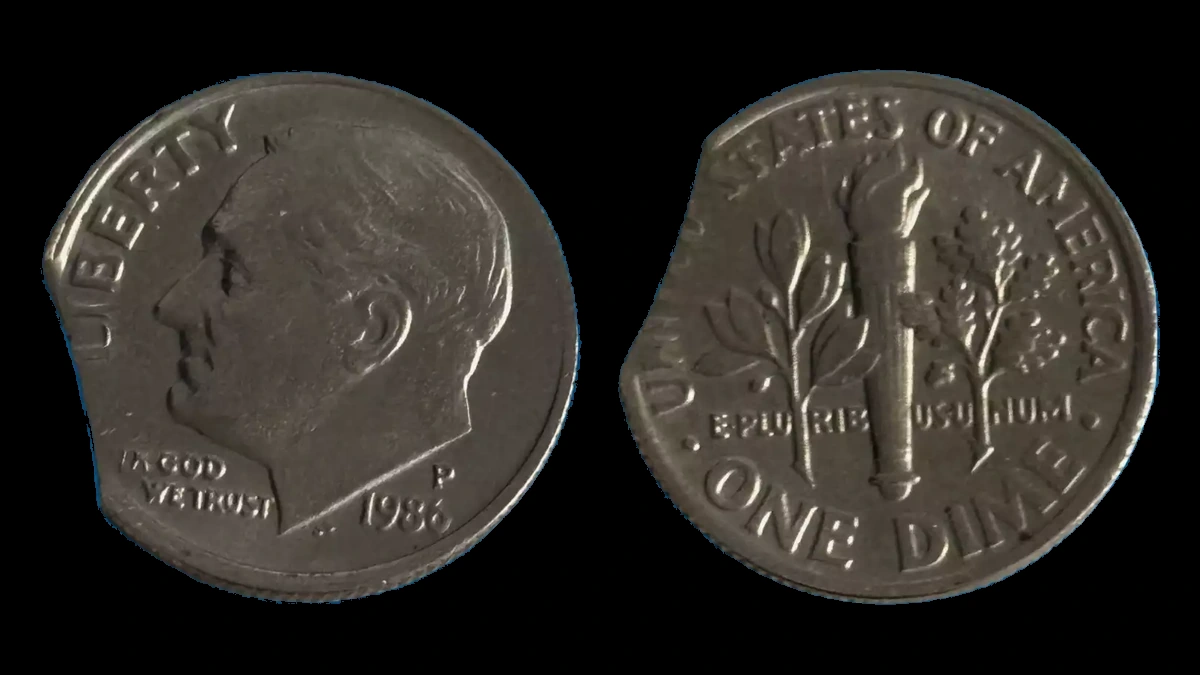
4. 1986 Dime A Gap Was Present Before Striking: Clipped Planchet Error
An incomplete blank can result when the cutting punch overlaps a previous hole or reaches a metal-strip boundary. Curved, straight, or irregular shortages can result.
The supplied 1986 listing establishes no particular mint, shape, or missing percentage. Those details must come from the actual specimen.
How to Identify
Inspect how struck design approaches both ends of the gap. An original blank boundary should be distinguished from a cut through completed detail.
Opposite-rim weakness can help, but it is not present on every genuine clip. Saw tracks, sharp burrs, and filed surfaces suggest later removal.
What It’s Worth
Genuine clips suggest an estimated $15–$125. A readable date and clear original edge generally make better comparisons.
This is a modern clad-dime estimate rather than a result for an identified 1986 clip. A tiny doubtful notch should not receive a large-clip comparison.
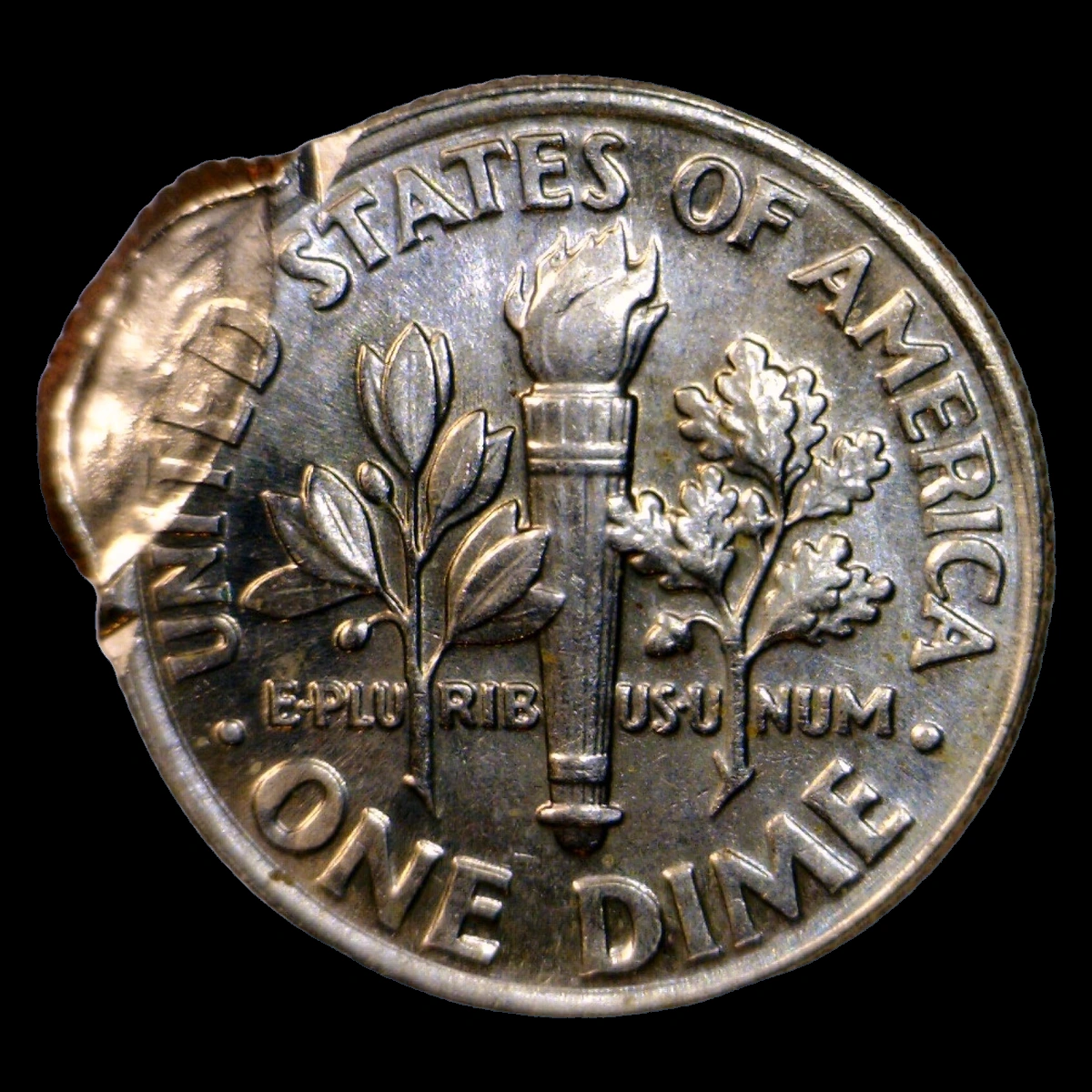
5. 1986 Dime A Wide Coin with a Plain Depression: Indent and Broadstrike Error
A Philadelphia ANACS MS62 example combines an expanded outline with an indentation. An overlapping blank blocked part of the strike and pressed into the receiving dime.
The collar also failed to contain normal outward flow. The published description does not establish the indent’s clock position.
How to Identify
Trace the depression’s boundary and its relationship to surrounding struck detail. A plain hollow differs from a recessed mirror image with recognizable letters.
The Calkins collection description identifies the combined ANACS MS62 example. Compare actual edge expansion and original flow rather than assigning it a position from a different dime.
What It’s Worth
A comparable indent-and-broadstrike combination suggests $75–$400. Clear boundaries and clean surfaces make the contact easier to understand.
No sale total is supplied for this specimen. Both visible effects contribute to one coin’s value instead of two prices added together.
6. 1986 Dime Backward Design Inside the Depression: Partial Brockage Error
The reported Philadelphia brockage covers about 40% of the front near eleven o’clock and accompanies a large uneven broadstrike. A previously struck coin pressed its raised design into the blank.
The result is an incuse mirror image rather than a plain indent. Repeated appearances of the same description in catalogs do not establish several separate specimens.
How to Identify
Find a recognizable backward letter or design feature within the sunken patch and compare it with the opposite design. A hollow without readable transferred detail is insufficient.
Inspect the adjoining surfaces for original striking flow rather than later squeezing between coins. The 40% measures brockage coverage, not the percentage of an off-center strike.
What It’s Worth
Similar clear brockage-and-broadstrike coins suggest $100–$600.
The dealer listing reproduced in the Mint Error News catalog gives a $59 minimum bid. That starting amount does not establish the final price paid.
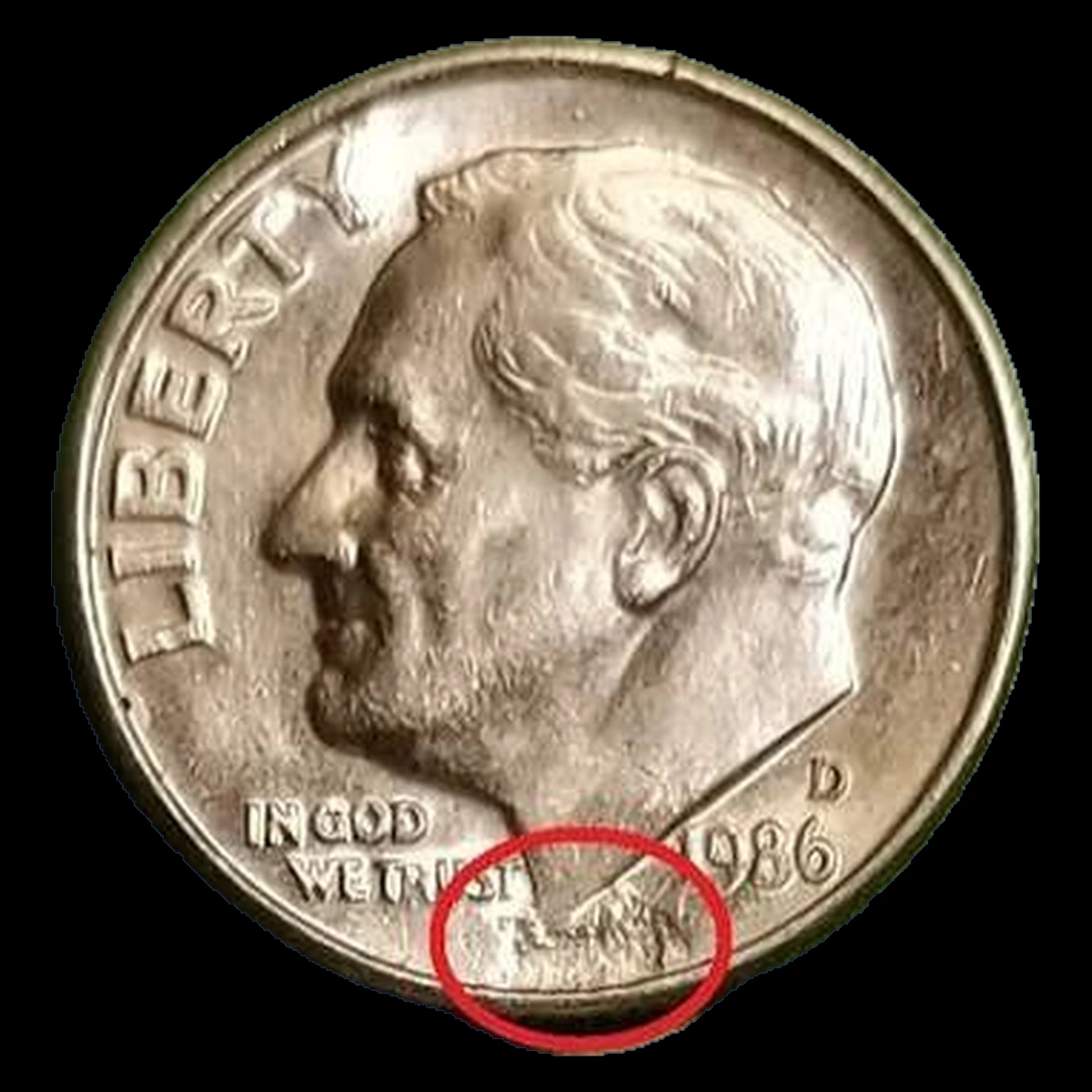
7. 1986 Dime A Front Patch Fails to Form: Struck Through Material Error
A Denver marketplace report describes a front struck-through area without identifying its position or material. Something between the blank and die interrupted the design and could have fallen away afterward.
A soft obstruction can weaken detail, while firmer material may leave a more defined impression. An empty groove does not reveal its cause by itself.
How to Identify
Inspect sharper neighboring details and the transition into the affected patch. Look for an original impressed surface instead of parallel scratches or a sharp impact lip.
Check the reverse and edge for associated later damage. Do not identify a wire or retained object unless the actual surviving evidence supports it.
What It’s Worth
Confirmed struck-through examples suggest $5–$200, spanning modest weakness and larger recognizable impressions.
The reported Denver listing asked $4.50. That seller request is not an auction result or proof of the exact obstruction.
8. 1986 Dime Reddish-Brown Front with a Bright Reverse: Missing Clad Layer Error
The documented Denver PCGS MS63 dime has a deep reddish-brown front with darker streaks. Its reverse remains bright but is weakly struck at the lower right.
The front copper-nickel layer was absent, allowing the exposed copper core to receive the portrait. These particular color and reverse details belong to this specimen.
How to Identify
Compare both faces with the edge layers and an actual weight reading. A whole missing layer should lower weight from the ordinary standard, although this coin’s exact measurement is not supplied.
Check exposed copper for original design rather than chemical etching or tool marks. Staining can turn a normal face brown without removing its layer.
What It’s Worth
Comparable missing-front-layer dimes have an estimated range of $60–$350.
The PCGS MS63 example sold for $58.65 in November 2003. A separate 1995-P front-layer-loss coin brought $75 in July 2022, providing another limited comparison.
9. 1986 Dime Different Metal and Dimensions: Reported Wrong Cent Blank Error
A dime struck on a cent blank would combine Roosevelt’s design with material meant for a cent. The year guide mentions this for 1986 without establishing a matching certified specimen.
A normal 1986 cent blank has copper plating over zinc and is larger than a dime blank. A Lincoln cent struck on a dime blank is the reverse combination and does not confirm this report.
How to Identify
Compare actual measurements with a cent blank’s normal 2.50 grams and 19.05 millimeters, allowing for outline changes during striking. Confirm the metal beneath the surface rather than deciding from copper color.
Missing dime cladding, added plating, and an overstrike on an already finished coin require different explanations. A genuine wrong-blank claim needs the dime design on identified cent material.
What It’s Worth
If confirmed, a 1986 dime on a cent blank has a conditional comparison range of $1,500–$8,000.
A documented 1999-D dime on a cent blank, also broadstruck, sold for $6,325 in April 2006. That later coin supplies a comparison without proving a 1986 specimen exists.
10. 1986 Dime Two Positions of the D: Reported Repunched Mintmark Error
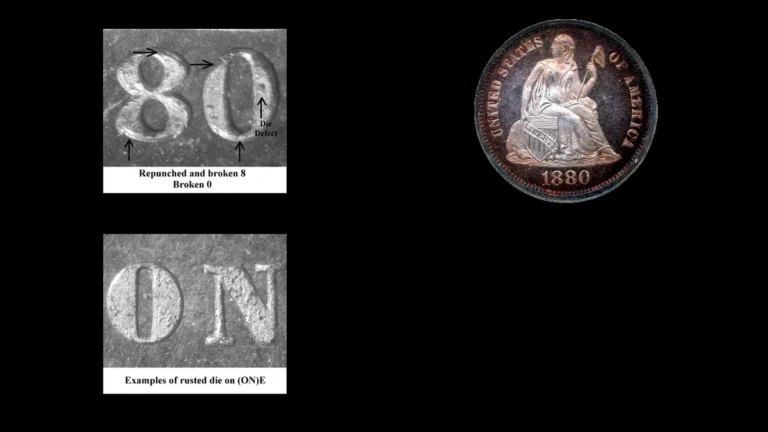
An earlier D impression can remain when the mintmark punch is entered again in a shifted position on the die. The proposed 1986-D example is reported by a year guide without an established matching specialist listing.
The actual extra stroke therefore needs a specific comparison. No punch direction is supported by the supplied report.
How to Identify
Photograph the D straight on and inspect its opening, stem, and curve under different light directions. An extra portion must fit another D rather than a scratch or swollen edge.
Match it with an identified Denver pattern before naming a direction or catalog number. A flat shelf from striking movement is a different effect.
What It’s Worth
A properly identified minor repunched D suggests $15–$45, following the modest guide range.
The estimate applies after the feature is established. Reflective edges and wear-blurred outlines alone do not justify the attribution.
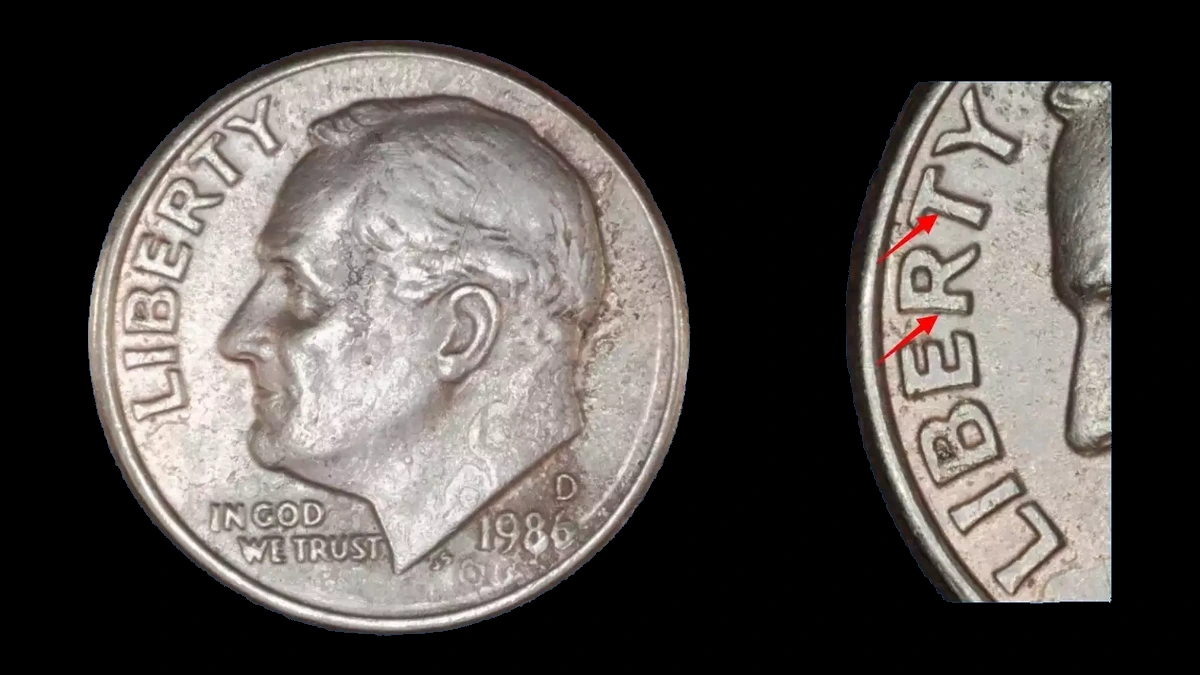
11. 1986 Dime A Second Contour in the Main Design: Doubled Die Error
Front reports mention LIBERTY, the date, and motto, while reverse reports mention the torch and lettering. They establish no shared mint, finish, or specific catalog variety.
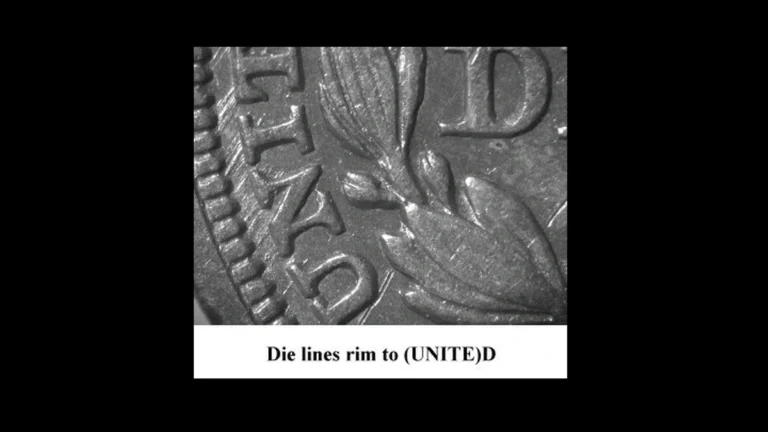
A doubled die carries the extra outline before striking. It can repeat on coins made with that tool without each coin receiving two displaced blows.
How to Identify
Inspect front and reverse claims separately and compare the actual area with an ordinary dime. Look for rounded duplicate contours or split corners rather than uniform thickness.
Keep the lamp moving to distinguish reflections from real metal edges. A large close-up of a flat mechanical shelf does not make it a true doubled-die feature.
What It’s Worth
Genuine minor matched doubled dies suggest $15–$100. Clear repeatable separation supports more interest than vague broad lettering.
This is not an auction record for a named 1986 variety. The coin’s own pattern and issue must be identified before applying the estimate.
12. 1986 Dime The Second Blow Is Off Center and One-Sided: Double Strike Error
The Philadelphia ANACS AU58 example first received a normal design, then moved for a second strike 70% off center. One side of the later strike was blocked, making that impression uniface.
The term concerns the second struck area. It does not mean the entire finished dime has a blank face.
How to Identify
Map a recognizable feature from each impression and follow where the later border crosses the earlier design. Compare the opposite face to identify the blocked part of the second blow.
Both impressions must fit one physical sequence on the same coin. Small doubled letter edges do not establish this kind of repeat strike.
What It’s Worth
Comparable dated double strikes suggest an estimated $150–$750. Readable overlapping designs and clean surfaces help explain the event.
The ANACS AU58 coin sold for $288 in April 2022. The blocked second-strike feature is included in that whole-coin result.
Conclusion
A plain indent, an incuse mirror image, and a second strike can all distort a dime, but they preserve different evidence. Use that evidence to identify the event before borrowing a price from another coin.
Keep a tiny struck area’s grading record with an extreme off-center piece, distinguish lot totals from individual sales, and leave the 1986 cent-blank claim conditional. A copper-colored surface alone cannot establish the most valuable category.